
How is the price of silver determined? The short answer is that silver price discovery happens across multiple connected markets where buyers and sellers continuously compete, hedge, arbitrage, invest, manufacture, and transfer risk. There is no single person, bank, exchange, government agency, or dealer that simply declares what silver is worth for everyone else.
The number most investors call the silver spot price is the market’s continuously changing reference for silver available for near-term settlement. That reference is strongly influenced by heavily traded futures markets such as COMEX, the global over-the-counter market centered in London, foreign-exchange movements, physical supply and demand, and arbitrage between venues. Retail prices for coins and bars then build on top of that wholesale reference by adding fabrication costs, distribution expenses, dealer margins, product scarcity, and collector premiums.
For anyone asking how is the price of silver determined, the first distinction is between wholesale price discovery and the final retail price of a finished bullion product.
Understanding that chain is the key to understanding silver pricing. The futures quote on a screen is not the same thing as the price of an American Silver Eagle at a coin shop. The LBMA Silver Price is not simply another name for a continuously moving spot quote. A dealer’s ask price is not evidence that the underlying silver market has changed by the same amount. Each number belongs to a different layer of the market.
This guide breaks those layers apart and reconnects them so you can see how silver moves from global price discovery to the actual price you pay for physical metal.
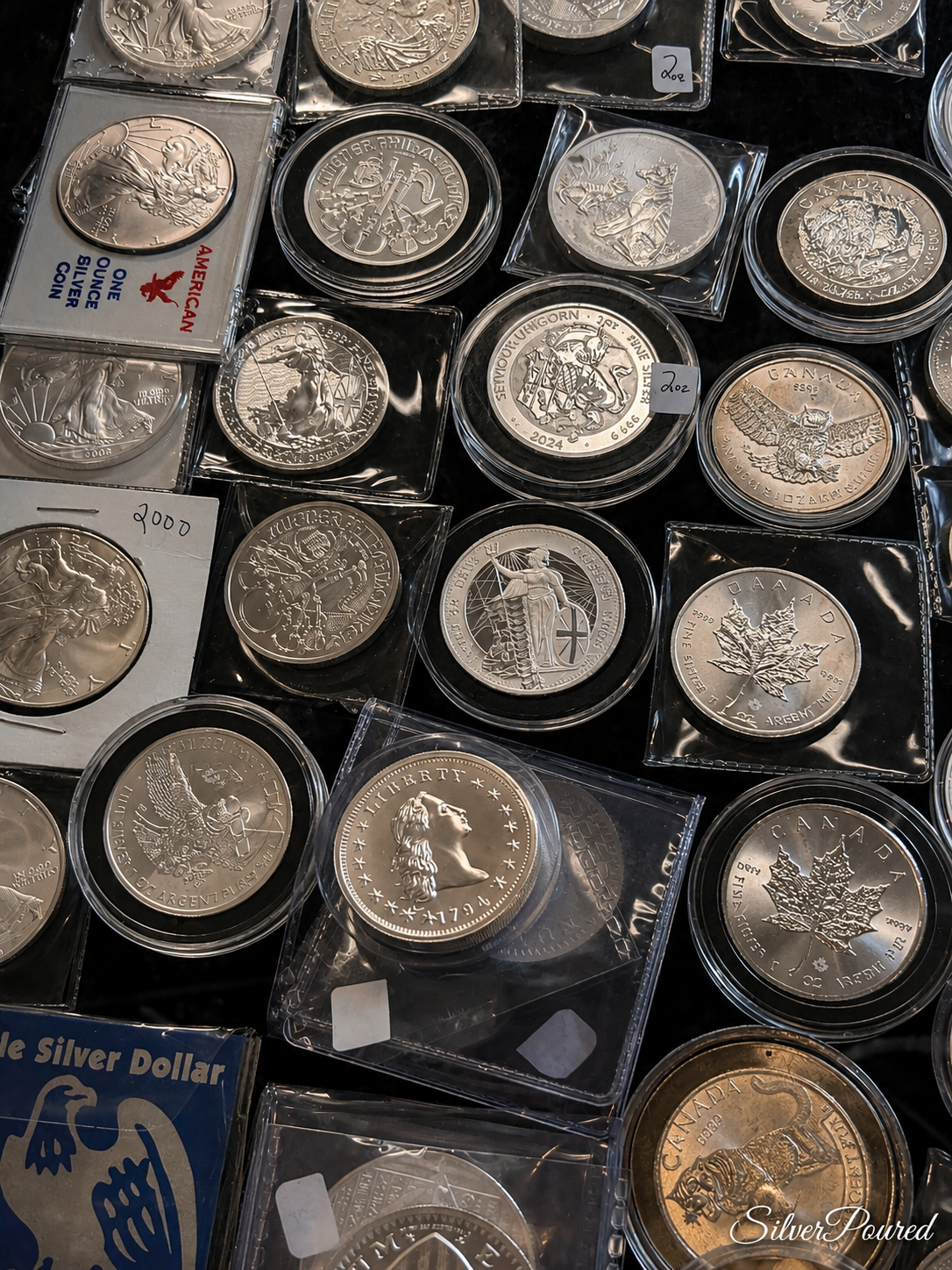
Silver Price Discovery at a Glance
| Market Layer | What It Does | Why It Matters |
|---|---|---|
| COMEX Silver Futures | Provides a highly liquid, transparent futures market for standardized silver contracts | Futures prices are a major global reference for silver price discovery |
| London OTC Market | Facilitates large institutional spot and forward transactions in silver | Connects banks, refiners, industrial users, investors, and bullion-market participants |
| LBMA Silver Price | Produces a once-daily benchmark through an electronic auction | Used as a benchmark for valuation, transactions, and financial products |
| Physical Wholesale Market | Moves large bars between refiners, vaults, dealers, manufacturers, and institutional users | Links financial prices to deliverable metal |
| Retail Bullion Market | Sells coins, rounds, and bars to individual buyers | Adds fabrication, distribution, dealer, and product-specific premiums |
The question how is the price of silver determined becomes easier once spot, futures, benchmarks, physical supply, and retail premiums are treated as connected but separate layers.
The U.S. Commodity Futures Trading Commission defines price discovery as the process of determining a commodity’s price through the interaction of buyers and sellers under supply-and-demand conditions. That definition is a useful starting point because silver pricing is exactly that: a competitive process rather than a single administrative decision.
Silver trades in different forms, time frames, contract structures, and geographic markets. Those markets remain connected because professional participants constantly compare prices. When one venue moves too far away from another after accounting for time, financing, transportation, storage, and other costs, arbitrage can pull them back toward alignment.
What Does “Spot Price of Silver” Actually Mean?

To understand how is the price of silver determined, start with the market reference for raw silver before adding the costs attached to a specific coin, round, or bar.
The silver spot price is best understood as a current wholesale market reference for silver for near-term settlement. It is usually quoted in U.S. dollars per troy ounce. The number changes throughout the trading day as new bids, offers, trades, futures prices, foreign-exchange rates, and related market information enter the system.
Spot is not the guaranteed price at which every person can instantly buy or sell any form of physical silver. A refiner moving large wholesale bars, an industrial fabricator purchasing metal, a bullion bank managing inventory, a futures trader, and a retail customer buying one American Silver Eagle operate in different parts of the market.
That distinction explains one of the most common questions in precious metals: if silver spot is a certain price, why does a one-ounce silver coin cost more? The answer is that spot references the metal. A finished retail product has to be manufactured, transported, inventoried, marketed, sold, and often sourced through multiple commercial layers.
When investors ask how is the price of silver determined, they are usually asking where the constantly changing wholesale reference originates.
The market value of the metal is therefore the starting point, not necessarily the final transaction price.
A silver price on a financial screen and a silver price on a dealer website can both be correct at the same moment. The screen may be showing the underlying wholesale metal reference, while the dealer price includes the cost of turning that metal into a specific product and getting it into a buyer’s hands. Understanding which layer you are looking at prevents many apparent pricing contradictions.

At this stage, how is the price of silver determined comes down to competing bids and offers.
Why COMEX Silver Futures Matter

COMEX silver futures are one of the most important price-discovery mechanisms in the global silver market. The standard Silver futures contract represents 5,000 troy ounces of silver, and CME Group identifies the contract’s quality standard as 99.9 percent fineness. Futures allow participants to buy or sell standardized exposure to silver for specified future delivery months.
A useful answer to how is the price of silver determined begins with bids, offers, and actual transactions rather than with a single institution choosing a number.
The scale matters. A single standard contract controls exposure to 5,000 troy ounces. Thousands of contracts can change hands during an active session, allowing an enormous quantity of silver exposure to be repriced rapidly as information enters the market.
CME Group has described the standard-sized Silver futures contract as trading average daily volume equivalent to hundreds of millions of troy ounces. That does not mean hundreds of millions of ounces of physical bars are being loaded onto trucks every day. Futures contracts transfer price exposure and obligations, while only a fraction of contracts typically proceed through physical delivery.
The mechanics behind how is the price of silver determined are visible whenever buyers raise bids or sellers lower offers until a trade can occur.
The important pricing point is liquidity. A market with many active buyers and sellers produces a constantly changing sequence of bids, offers, and trades. Those transactions reveal where participants are willing to exchange risk at that instant.
Futures are used by different participants for different reasons. A mining company may hedge future production. An industrial user may manage input-cost risk. A bullion dealer may hedge inventory. A fund may speculate on price direction. A market maker may provide liquidity. Their motivations differ, but all of their orders meet in the same market.
For the question how is the price of silver determined, COMEX matters because a liquid futures market can absorb and reprice large amounts of silver exposure quickly.
That interaction is price discovery.
Does COMEX “Set” the Price of Silver?
It is more accurate to say COMEX is a major venue where silver’s price is discovered than to say COMEX simply sets the price. The difference matters.
Anyone researching how is the price of silver determined should distinguish an exchange that provides trading infrastructure from the participants whose orders create the traded price.
An exchange establishes contract rules, trading infrastructure, margin requirements, delivery specifications, surveillance systems, and settlement procedures. Market participants then place orders and trade within that framework. The resulting prices emerge from those transactions.
Because COMEX silver futures are highly visible and liquid, their prices become an important reference throughout the broader market. Dealers, financial platforms, traders, and data vendors can incorporate futures information into the prices they display. But that does not mean the rest of the global silver market disappears.
Physical Delivery Keeps Futures Connected to Metal
The connection between futures and deliverable metal is an important part of how is the price of silver determined across financial and physical markets.
COMEX Silver futures are physically deliverable contracts. That feature is significant even though many positions are closed, rolled, or offset before delivery.
Delivery rules create a mechanism that links the futures market to qualifying physical silver held in exchange-approved depositories. CME publishes inventory categories and deliverable-supply analysis for silver, including registered and eligible stocks that meet applicable specifications.
One reason how is the price of silver determined cannot be answered with COMEX alone is that London remains a major institutional center for global bullion trading.
The existence of delivery does not guarantee that futures and every form of physical silver will always trade at the same price. A one-ounce retail round is not the same product as exchange-grade wholesale silver. But deliverability helps prevent the futures market from becoming completely detached from the economics of physical metal.
The London Silver Market and the LBMA
London is another central part of global silver pricing. The London bullion market is primarily an over-the-counter market, meaning large institutions transact directly or through counterparties rather than routing every transaction through a centralized futures exchange.
LBMA, the London Bullion Market Association, plays a major role in standards, market practices, good-delivery specifications, and benchmark infrastructure. London is especially important for institutional transactions involving unallocated precious-metal accounts and large wholesale bars.
For readers asking how is the price of silver determined, the LBMA Silver Price is best understood as a formal benchmark rather than the entire live silver market.
This market operates alongside futures markets rather than in isolation from them. Banks and other professional participants can compare London prices, futures prices, forward rates, financing costs, exchange rates, and physical-market conditions. Those relationships help connect the major pricing centers.
This is another part of how is the price of silver determined across connected global markets.
What Is the LBMA Silver Price?

The LBMA Silver Price is a specific benchmark, not a generic term for the continuously moving spot price.
The distinction matters because how is the price of silver determined throughout the day is a broader question than how one daily benchmark auction is calculated.
According to LBMA, the benchmark is set once each working day through an electronic auction beginning at 12:00 noon London time. ICE Benchmark Administration independently administers the auction and provides the platform on which the benchmark is calculated.
LBMA describes the process as electronic, tradeable, auditable, and transaction-based. Buying and selling interest enters the auction, and the process works toward an equilibrium between those interests. The final auction price becomes the LBMA Silver Price benchmark.
A complete answer to how is the price of silver determined requires both New York futures activity and London bullion-market activity without pretending the two markets are identical.
This benchmark can be used in valuation, contracts, transactions, and financial products. It gives market participants a defined reference at a particular point in the trading day.
That is fundamentally different from watching a live silver quote that changes second by second. The daily benchmark is a formal price-setting event. The broader spot and futures markets continue moving before and after it.
The LBMA Silver Price and the live silver spot price are related, but they are not interchangeable terms. The LBMA benchmark comes from a defined once-daily auction beginning at noon London time. A live spot quote is a continuously updating market reference. Mixing the two can make silver pricing look more mysterious than it actually is.
COMEX vs. LBMA: Which One Determines Silver’s Price?
The global nature of how is the price of silver determined becomes especially clear when prices in different venues are compared after financing, delivery, and location costs.
Neither market exists in a vacuum, and asking which one alone determines the silver price oversimplifies how global markets work.
COMEX provides transparent centralized futures trading. London provides a major institutional OTC market and the daily LBMA Silver Price benchmark. Other regional markets, refiners, banks, manufacturers, investment products, and physical bullion dealers also participate in the larger price network.
Arbitrage is central to how is the price of silver determined because it gives professional traders an incentive to act when comparable silver exposure becomes mispriced between markets.
The markets remain economically connected because the same underlying commodity can be valued across locations and time periods. Differences can emerge because contracts are not identical. Delivery location, bar specifications, settlement timing, financing, storage, currency, transportation, and counterparty structure all matter.
Professional traders account for those differences rather than expecting every silver quote to match perfectly at every moment.
| Feature | COMEX Silver Futures | LBMA Silver Price |
|---|---|---|
| Market Type | Centralized futures exchange | Daily electronic benchmark auction |
| Primary Function | Trading, hedging, speculation, and price discovery | Producing a defined benchmark price |
| Timing | Trades through broad electronic-market hours | Auction begins once daily at noon London time |
| Standard Reference | Futures contracts by delivery month | Benchmark price for silver delivered in London |
| Administration | CME Group exchange infrastructure | ICE Benchmark Administration |
That relationship helps explain how is the price of silver determined without relying on one venue alone.
How Arbitrage Connects Silver Markets
Understanding futures curves adds another layer to how is the price of silver determined because a price for immediate silver is not economically identical to a price for delivery months later.
Arbitrage is one of the least glamorous but most important parts of understanding how the price of silver is determined.
Suppose economically comparable silver exposure becomes noticeably cheaper in one venue than another after accounting for all relevant costs. A professional participant may buy the cheaper exposure and sell the more expensive exposure. If enough traders act on the same discrepancy, their buying pressure tends to raise the cheap side while their selling pressure tends to lower the expensive side.
For anyone asking how is the price of silver determined, the bid and ask reveal that even a live market has two sides rather than one perfectly universal number.
Real arbitrage is more complicated than comparing two numbers on a website. Traders have to account for contract specifications, delivery location, financing rates, storage, insurance, transportation, refining, taxes, currency, timing, and market liquidity.
But the principle explains why silver markets around the world generally remain connected even though there is no single global exchange running every transaction.
Why Futures Prices Can Differ by Delivery Month
Different quotation methods are one reason searches for how is the price of silver determined can produce slightly different live prices on reputable websites.
Silver futures do not have just one price. Different contract months can trade at different prices because each represents a different future settlement period.
If later delivery months trade above nearby months, the market structure is commonly described as contango. Financing, storage, insurance, and interest rates can contribute to that relationship. If nearby silver trades above later contracts, the curve may move into backwardation, which can reflect stronger demand for immediately available metal or other market stresses.
The difference between futures months does not mean somebody made an error. Time has economic value. Holding physical silver for months carries costs, and those costs can appear in the relationship between spot and futures prices.
Bid, Ask and the Price Between Them
Supply and demand remain the foundation of how is the price of silver determined even though the market uses sophisticated futures, benchmarks, and institutional trading systems.
A market does not really have only one price. At any moment there can be a highest current bid from a buyer and a lowest current ask from a seller.
The bid is the price at which a participant is currently willing to buy. The ask is the price at which a participant is currently willing to sell. The difference is the bid-ask spread.
Industrial consumption is part of how is the price of silver determined because silver is not only an investment metal but also an important manufacturing input.
Some silver-price displays show a last trade. Others display a bid, an ask, or a derived midpoint. That is why two reputable financial sites can show slightly different silver numbers at exactly the same moment without either necessarily being wrong.
SilverPoured calculators use transparent pricing logic so readers can understand the reference being applied instead of treating a displayed number as magic. When a midpoint is used, it represents the mathematical center between the quoted bid and ask rather than pretending either side of the spread is the only legitimate market price.
When two silver websites disagree by a few cents, first check what each site is displaying. One may show the bid, another the ask, another the last futures trade, and another a midpoint derived from market data. Small differences often reflect quotation methodology rather than a genuine disagreement about silver’s value.
For physical buyers, how is the price of silver determined also includes the premium attached to the product.
What Makes the Price of Silver Move?
Mine output and recycling affect how is the price of silver determined by changing the amount of physical metal available to satisfy industrial, investment, and fabrication demand.
Once the pricing machinery is understood, the next question is what causes buyers and sellers to change the prices they are willing to accept.
Silver is unusual because it is both an investment metal and a heavily used industrial material. That combination exposes it to several forces at once.
Industrial Demand
Industrial demand influences how is the price of silver determined because manufacturers consume physical silver across electronics, photovoltaics, electrical applications, brazing, medical products, and other technologies.
Silver has exceptionally high electrical and thermal conductivity and is used in electronics, electrical contacts, photovoltaics, brazing and soldering applications, catalysts, medical products, and other industrial technologies. Expectations for manufacturing activity can therefore affect silver demand.
Unlike gold, a meaningful share of annual silver consumption is tied directly to industrial activity. Strong industrial demand can support the market, while economic slowdowns can reduce expectations for some forms of consumption.
Mine Supply and Recycling
Mine supply and recycling influence how is the price of silver determined because newly mined and recovered metal together form major sources of physical silver available to the market.
Newly mined silver and recycled silver are major sources of physical supply. Mine production does not respond instantly to price because developing or expanding mines can take years.
Silver is also frequently produced as a by-product of mines primarily targeting lead, zinc, copper, or gold. That means the economics of silver supply can depend partly on the economics of other metals.
Recycling also affects how is the price of silver determined because higher prices can encourage additional scrap, jewelry, industrial material, and other recoverable silver to return to the market.
Recycling can respond more quickly when prices rise enough to encourage people and businesses to sell scrap, jewelry, industrial material, and other recoverable silver.
Investment Demand
Investment flows can move rapidly. Futures positions, exchange-traded products, coins, bars, institutional allocations, and retail demand can all change as investors react to inflation expectations, financial stress, monetary policy, currency movements, geopolitics, and momentum.
Periods of financial stress show why how is the price of silver determined cannot be reduced to one variable, since liquidity needs and safe-haven demand can pull in opposite directions.
This is one reason silver can move sharply even when mine output has not changed overnight. Financial demand can reprice much faster than physical production can adjust.
The U.S. Dollar
Silver is commonly quoted globally in U.S. dollars, so currency markets matter. A strengthening dollar can make dollar-priced commodities more expensive for holders of other currencies, while a weakening dollar can work in the opposite direction.
The relationship is not mechanical. Silver can rise alongside the dollar or fall alongside it when other forces dominate. Currency is an influence, not an automatic trading rule.
Interest Rates and Monetary Policy
Interest rates and monetary policy influence how is the price of silver determined because they affect financing costs, inflation expectations, investment preferences, and the opportunity cost of holding a non-yielding precious metal.
Interest rates affect the opportunity cost of holding assets that do not produce cash flow. Real interest rates, central-bank policy, inflation expectations, and bond-market movements can therefore influence precious-metal investment demand.
Again, silver is not simply gold with a lower price. Industrial demand gives silver an additional economic sensitivity that can amplify or offset traditional precious-metals drivers.
Geopolitical and Financial Risk
Geopolitical and financial risk can influence how is the price of silver determined as investors reassess currencies, liquidity, inflation expectations, economic stability, and demand for precious-metals exposure.
Periods of financial stress can increase demand for precious metals, but silver’s reaction can be more volatile than gold’s. During a liquidity crisis, investors may initially sell many assets to raise cash. Later, precious-metals demand may strengthen as concerns about monetary stability or inflation increase.
Why Silver Is More Volatile Than Many Investors Expect
Silver is a large global commodity market, but it is smaller in dollar value than several other major financial markets. Investment flows that would be modest in currencies or government bonds can therefore have an outsized effect on silver.
Market size and competing investment and industrial demand help explain how is the price of silver determined during volatile periods, when relatively large capital flows can move silver sharply in either direction.
The metal also sits between two narratives. It can trade as an industrial commodity when investors focus on manufacturing and economic growth, and it can trade as a monetary or safe-haven asset when financial conditions dominate.
That dual identity can create sharp reversals. Strong economic expectations may increase projected industrial demand but also push interest rates higher. Financial stress may increase precious-metals interest while simultaneously hurting industrial forecasts. Silver prices reflect the market’s attempt to balance those competing forces continuously.
This market link is essential to understanding how is the price of silver determined in practice.
Spot Silver vs. the Price of Physical Silver
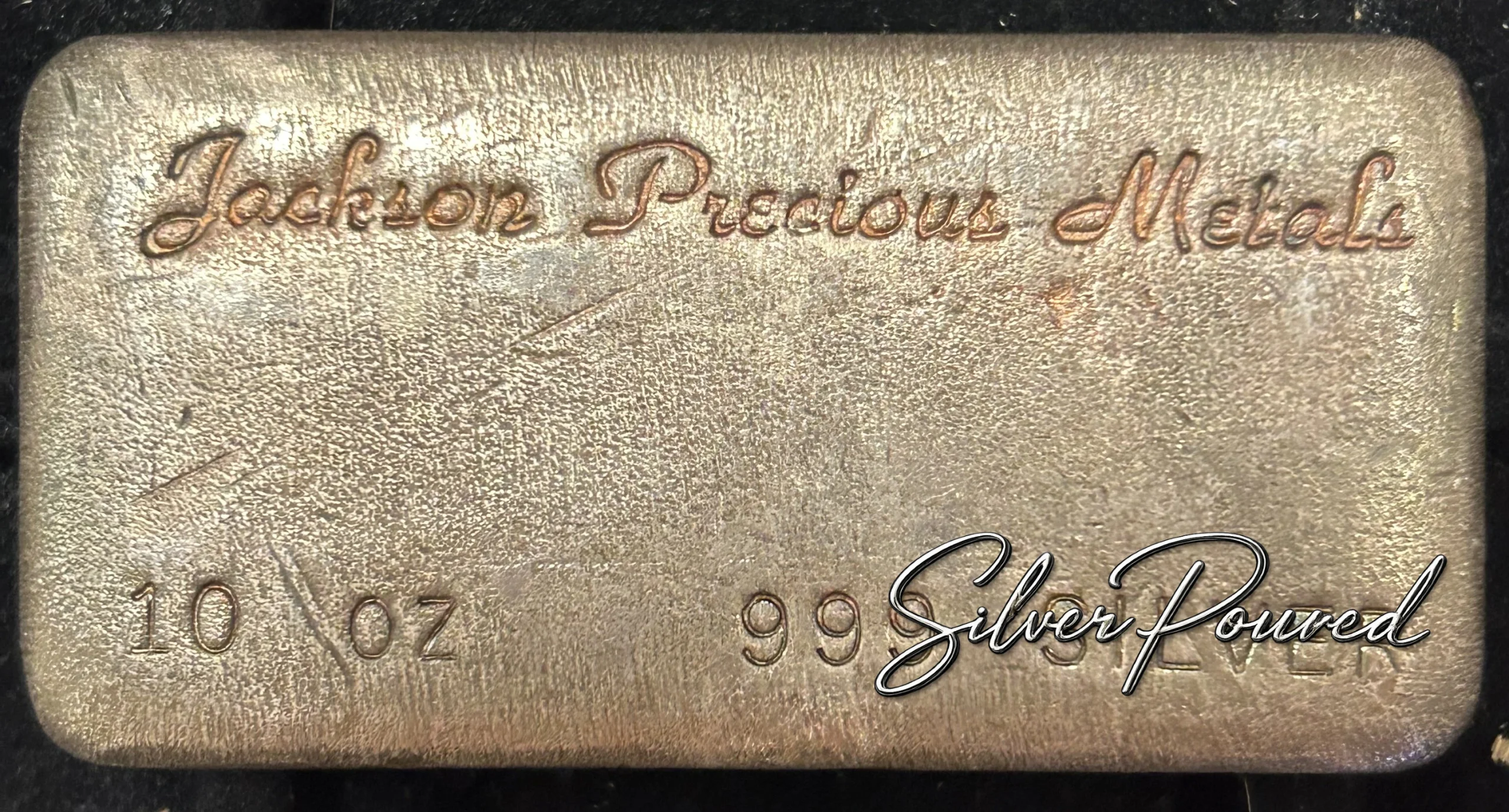
A falling spot quote does not fully answer how is the price of silver determined for retail bullion when coin and bar inventories are simultaneously becoming harder to replace.
This is where global price discovery reaches the individual buyer.
If the spot price of silver is $X per troy ounce, a dealer usually cannot sell a newly manufactured one-ounce product for exactly $X and remain in business. Raw metal has to become a retail product.
American Silver Eagles provide a practical example of how is the price of silver determined at retail because the coin contains metal value plus minting, distribution, and product-specific demand.
A refiner or mint acquires silver, processes it, fabricates a bar or round, tests it, packages it, and distributes it. A wholesale dealer may then purchase inventory. A retail dealer stores, insures, markets, and sells that inventory while managing price exposure and operating expenses.
Those costs become part of the premium over spot.
| Physical Silver Price Component | What It Represents |
|---|---|
| Underlying Silver Value | Metal value based on weight, purity, and market reference price |
| Fabrication Premium | Cost of refining, minting, pouring, finishing, and packaging |
| Wholesale / Distribution Cost | Moving inventory through the supply chain |
| Dealer Margin | Retail operating margin and compensation for inventory risk |
| Market Availability | Temporary shortages can widen premiums even if spot changes little |
| Product / Collector Premium | Brand, government backing, scarcity, design, mintage, condition, or collector demand |
Dealer spreads are part of how is the price of silver determined in real transactions because the same business normally has both a buy price and a sell price.
A generic secondary-market silver round and a newly issued American Silver Eagle can contain approximately the same amount of pure silver yet sell at meaningfully different prices. The underlying metal value is similar; the products are not.
Why Physical Silver Premiums Can Rise While Spot Falls

This often confuses buyers during periods of intense retail demand.
Retail supply conditions affect how is the price of silver determined for physical buyers because shortages of coins and small bars can increase product premiums even when the underlying wholesale silver reference is falling.
Imagine silver futures fall sharply during a market panic, reducing the headline spot price. At the same time, retail customers rush to buy coins and small bars. Dealers begin selling through inventory faster than distributors can replace it. Mints may face production bottlenecks. Wholesale premiums can increase.
The result can be a lower underlying silver price but a higher premium on a specific retail product.
This does not mean spot is fake or the retail dealer is ignoring the market. It means wholesale metal and fabricated retail inventory are related but distinct markets with different supply constraints.
A shortage of one-ounce silver rounds is not necessarily a shortage of all silver. Large wholesale bars can remain available while retail minting capacity becomes constrained. This is why physical premiums can surge without requiring the global spot price to rise by the same percentage.
The same mechanism contributes to how is the price of silver determined as conditions change.
Why an American Silver Eagle Costs More Than Spot

American Silver Eagle premiums help show how is the price of silver determined at retail because buyers pay for the underlying silver plus U.S. Mint production, distribution, availability, and product-specific demand.
An American Silver Eagle contains one troy ounce of .999 fine silver, but buyers are purchasing more than an unbranded ounce of metal.
The coin is produced by the United States Mint, carries government-guaranteed specifications, has a recognizable design, is distributed through an established dealer network, and has substantial collector and investor demand. Minting and distribution costs are added before the coin reaches a retail customer.
The number of participant types involved helps explain how is the price of silver determined without requiring every buyer and seller to have the same motive.
Premiums can also vary from year to year and even from week to week. Supply, wholesale allocations, market demand, specific finish, condition, certification, and collector interest can all influence the final price.
The same concept applies to private-mint bars, hand-poured silver, fractional bullion, vintage bars, limited-mintage rounds, and other physical products. Spot values the silver. The market separately values the form that silver takes.
Why Dealers Have a Buy Price and a Sell Price
Dealer bids and asks are part of how is the price of silver determined in actual retail transactions because dealers must account for inventory costs, market risk, operating expenses, and the price at which a product can realistically be resold.
Retail dealers operate with their own bid-ask structure.
A dealer may sell a product at spot plus a premium and buy the same product back at a lower price. The difference compensates for operating costs, market risk, inventory management, verification, payment processing, shipping, insurance, and the possibility that the product may take time to resell.
Product liquidity also affects how is the price of silver determined for an individual transaction because highly recognizable bullion can support tighter dealer spreads than specialized products that may take longer to resell.
The spread can be narrow for highly liquid products and wider for specialized collectibles. During unusual demand conditions, a dealer may even bid above spot for certain products because replacement inventory is difficult to obtain.
That is another reminder that there is no single universal silver transaction price. Every transaction has a buyer, seller, product, quantity, location, and time.
This distinction belongs in any complete answer to how is the price of silver determined.
How Silver ETFs and Investment Products Fit Into Pricing
The paper-versus-physical debate is easier to evaluate after understanding how is the price of silver determined across instruments that provide different forms of exposure to the same underlying metal.
Exchange-traded products can provide investors with silver-related exposure without requiring them to store coins or bars personally. Large inflows or outflows can influence the wider market because some products hold physical silver or use structures tied closely to silver prices.
However, an ETF share is not the same thing as a one-ounce retail coin. Share pricing reflects the fund structure, expenses, market trading, underlying holdings, and creation-redemption mechanisms. Comparing an ETF price directly with a retail bullion price without understanding those differences can be misleading.
Global trading hours are part of how is the price of silver determined because price discovery continues across major time zones rather than stopping with the U.S. stock-market close.
The important point for price discovery is that institutional investment vehicles create another channel through which investor demand can enter or leave the silver market.
Does the Physical Silver Market Affect Futures Prices?
Yes, but not always in the simple way people imagine.
Wholesale physical conditions influence how is the price of silver determined because inventories, refinery capacity, industrial demand, delivery availability, and regional premiums can affect the relationship between physical metal and futures prices.
Wholesale physical availability, refinery capacity, exchange inventories, industrial demand, mine supply, lease rates, transportation constraints, and regional premiums can influence relationships between physical and futures markets.
If obtaining deliverable silver becomes unusually expensive relative to futures, that difference can create incentives for market participants to adjust positions, move metal, or exploit arbitrage opportunities. Conversely, abundant physical supply can reduce tightness.
Retail shortages have to be interpreted more carefully. Coin-shop shelves can empty because customers suddenly want small denomination products even while large wholesale bars remain available. Retail tightness is real, but its meaning depends on which part of the supply chain is constrained.
Taken together, these forces show how is the price of silver determined through market interaction.
Who Actually Participates in Silver Price Discovery?
Understanding who participates helps explain how is the price of silver determined because miners, industrial users, refiners, dealers, banks, funds, trading firms, and individual investors enter the market with different objectives.
Silver price discovery includes far more than individual speculators.
| Participant | Why They May Trade Silver |
|---|---|
| Mining Companies | Hedge future production or manage revenue risk |
| Industrial Users | Manage the cost of future silver requirements |
| Refiners and Fabricators | Manage metal inventory and processing exposure |
| Bullion Dealers | Hedge physical inventory and customer transactions |
| Banks and Market Makers | Provide liquidity, financing, intermediation, and market access |
| Funds and Asset Managers | Seek investment exposure, hedging, diversification, or tactical trades |
| Commodity Trading Firms | Trade spreads, arbitrage, and directional opportunities |
| Individual Investors | Buy futures, funds, coins, rounds, and bars |
Because these participants have different objectives, their buying and selling can respond to different information. A manufacturer worried about future input costs may buy while a short-term fund is selling. A miner may hedge production even though management expects prices to rise. A dealer may short futures while owning physical silver because the futures position protects inventory value.
A professional approach to how is the price of silver determined begins by identifying the exact instrument, currency, unit, time stamp, and side of the market being quoted.
Looking only at whether someone is “long” or “short” without understanding the commercial exposure behind the position can therefore produce incorrect conclusions.
What About Silver Price Manipulation?
Silver has a long history of public debate over market concentration, large trading positions, spoofing, benchmark conduct, and alleged suppression. Those issues deserve serious treatment, but they should be separated from the basic mechanics of how legitimate price discovery works.
Documented manipulation can affect how is the price of silver determined during specific periods or transactions, but proven misconduct must be distinguished from the normal competitive process of legitimate market price discovery.
Manipulative behavior can occur in financial markets, and regulators have brought enforcement actions involving precious-metals trading. That fact does not mean every downward price move proves manipulation, nor does it mean futures markets have no legitimate price-discovery function.
A proper analysis has to distinguish documented misconduct from broader theories about market structure. SilverPoured treats silver-price manipulation as its own authority subject so the evidence, enforcement history, arguments, and counterarguments can be examined without turning a basic pricing guide into an advocacy piece.
Paper Silver vs. Physical Silver
Paper and physical markets both contribute to how is the price of silver determined because futures, unallocated accounts, exchange-traded products, and physical bullion provide different forms of exposure that remain economically connected to the same underlying metal.
Another common source of confusion is the phrase “paper silver.” Futures contracts, unallocated accounts, exchange-traded products, options, and other financial instruments can all provide forms of silver exposure, but they are not identical products.
Physical ownership gives direct possession or allocated ownership of metal, but it introduces storage, insurance, shipping, verification, and liquidity considerations. Futures provide leverage and standardized exchange trading but involve contract rules, margin, expiration, and potentially delivery mechanics. ETFs provide exchange-traded convenience but depend on a fund structure.
COMEX belongs in the answer to how is the price of silver determined because its transparent futures trading provides a major stream of continuously updated price information.
Those differences deserve their own detailed comparison. For this page, the key point is that financial and physical markets interact in price discovery without becoming the same thing.
This is why how is the price of silver determined cannot be reduced to a single posted number.
Why the Silver Price Changes When U.S. Markets Are Closed
Silver is a global market. Trading activity moves across time zones, and electronic futures trading covers much of the day during the business week. London, New York, Asia, foreign-exchange markets, institutional OTC transactions, and electronic platforms overlap rather than operating as one short U.S. stock-market session.
The LBMA benchmark belongs in the answer to how is the price of silver determined because it provides a defined transaction-based reference at a specific time each working day.
That is why a silver quote can move late at night in the United States. New information may be entering the market somewhere else in the world, or futures may be trading electronically outside traditional U.S. daytime hours.
The detailed hour-by-hour schedule is best handled separately because holiday calendars, daily maintenance breaks, and product-specific trading schedules matter. The conceptual point is simpler: silver price discovery is global and extends far beyond 9:30 a.m. to 4:00 p.m. Eastern Time.
Why Silver Prices Differ Slightly Between Websites
Weight units matter to how is the price of silver determined because international bullion prices are normally quoted per troy ounce, while buyers may also encounter silver values expressed in grams or kilograms.
Two reputable websites can show slightly different silver prices because they may use different market-data feeds, update intervals, futures months, bid/ask methodology, spot calculations, or data-vendor conventions.
A site might derive a spot reference from nearby futures and carry adjustments. Another may display an OTC feed. Another may show bid rather than ask. Small discrepancies are therefore normal.
Physical premiums belong in the answer to how is the price of silver determined because the cost of a real coin or bar includes more than its contained metal.
Larger discrepancies deserve investigation. The first questions should be: What exact instrument is being quoted? Is the number live or delayed? Is it bid, ask, midpoint, last trade, settlement, or benchmark? What currency and weight unit are being used?
Once those variables are matched, many apparent contradictions disappear.
For investors, this is a practical part of how is the price of silver determined.
Silver Price Units: Troy Ounces, Grams and Kilograms
The international precious-metals market normally quotes silver in U.S. dollars per troy ounce, but silver can also be priced in grams, kilograms, and other currencies.
| Unit | Equivalent |
|---|---|
| 1 troy ounce | 31.1034768 grams |
| 1 kilogram | Approximately 32.1507 troy ounces |
| 5,000 troy ounces | Standard COMEX Silver futures contract size |
Dealer bids belong in the answer to how is the price of silver determined because liquidation value depends on what an actual buyer is currently willing to pay.
Using the correct weight standard matters because the ordinary avoirdupois ounce used for groceries is lighter than a troy ounce. A silver price quoted “per ounce” in the bullion market normally means per troy ounce.
How to Read a Silver Price Quote Like a Professional
Before reacting to any silver price, identify exactly what the number represents.
Reading the quote correctly is essential to understanding how is the price of silver determined because spot, futures, settlement, benchmark, bid, ask, midpoint, and retail prices represent different market references.
Look for the instrument or reference source. Determine whether the quote is spot, futures, settlement, LBMA benchmark, bid, ask, last trade, or a retail dealer price. Check the delivery month if it is a futures contract. Confirm the currency. Confirm whether the price is per troy ounce. Check whether the feed is live or delayed.
Then compare like with like.
Comparing equivalent references is another key part of understanding how is the price of silver determined because a futures contract, LBMA benchmark, dealer bid, and retail ask should not be expected to display identical prices.
A December futures contract should not be expected to match a retail Silver Eagle price. Yesterday’s LBMA benchmark should not be expected to match this second’s electronic futures quote. A dealer’s buyback bid should not be expected to equal the dealer’s retail ask.
Much of the confusion surrounding how the price of silver is determined comes from comparing numbers that were designed to answer different questions.
Knowing exactly which price is being quoted makes how is the price of silver determined much easier to understand in real transactions.
Frequently Asked Questions About How Silver Is Priced
Who sets the price of silver?
The question how is the price of silver determined does not have a single institution as its answer because market prices emerge from competing buyers and sellers across interconnected silver markets.
No single person or institution sets one universal silver price. Prices emerge from buying and selling across futures, OTC, physical, investment, and retail markets. COMEX futures and the London bullion market are especially important parts of global price discovery.
Does COMEX determine the silver price?
COMEX is a major silver price-discovery venue because its futures contracts are highly liquid and transparent. It is more accurate to say market participants discover prices through COMEX trading than to say the exchange arbitrarily determines the price.
What is the LBMA Silver Price?
The LBMA benchmark is part of how is the price of silver determined because it provides a defined transaction-based silver reference through a formal electronic auction each working day.
The LBMA Silver Price is a benchmark generated through an electronic auction administered independently by ICE Benchmark Administration. LBMA states that the auction begins at 12 noon London time each working day.
Is the LBMA Silver Price the same as spot silver?
No. The LBMA Silver Price is a specific once-daily benchmark. Spot silver is a broader continuously changing near-term market reference. The two are related but should not be used as interchangeable terms.
Why is physical silver more expensive than spot?
Physical premiums are part of how is the price of silver determined for retail buyers because fabricated coins and bars carry production, distribution, inventory, dealer, and product-demand costs beyond raw silver value.
Physical bullion has costs beyond the underlying silver: refining, minting or pouring, packaging, transportation, wholesale distribution, dealer operations, inventory risk, and sometimes collector demand. Those additional costs appear as premiums over spot.
Can physical silver trade below spot?
Yes in some transactions. A dealer’s buyback price for unpopular, damaged, difficult-to-resell, or high-processing-cost material can fall below the displayed spot reference. Retail selling prices for standard investment bullion are more commonly above spot.
Why does silver move at night?
Global trading hours are part of how is the price of silver determined because silver continues trading across international markets and electronic futures sessions while many U.S. businesses are closed.
Silver trades globally and electronic futures markets operate across much of the business week. Trading activity in other time zones and overnight futures sessions can move silver while many U.S. retail businesses are closed.
Why do different websites show different silver spot prices?
Websites may use different data vendors, update intervals, bid/ask conventions, futures references, or spot-price calculations. Small differences are normal if the underlying methodology differs.
What is a silver futures contract?
A futures contract is a standardized agreement traded on an exchange for silver associated with a future delivery period. The standard COMEX Silver contract represents 5,000 troy ounces, although smaller silver contracts also exist.
Do all silver futures contracts result in physical delivery?
Physical delivery remains relevant to how is the price of silver determined because deliverable futures contracts maintain an economic connection between standardized financial trading and qualifying physical silver.
No. Many futures positions are offset or rolled before delivery. However, the standard COMEX Silver contract is physically deliverable, so approved physical silver remains part of the contract structure.
Does retail coin demand determine silver spot price?
Retail demand is one part of the physical market, but global silver pricing also reflects institutional trading, industrial demand, mine supply, recycling, futures, OTC activity, currencies, investment flows, and wholesale bullion markets. Strong retail demand can have a much larger immediate effect on premiums than on global spot price.
In practical terms, how is the price of silver determined is answered by the combined actions of buyers and sellers across these connected markets.
The Bottom Line: How Is the Price of Silver Determined?
A complete understanding of how is the price of silver determined comes from following the chain from futures and London benchmarks through spot references, wholesale metal, and finally retail bullion.
The price of silver is determined through a global network of markets rather than by a single authority.
COMEX Silver futures provide one of the world’s most liquid and visible silver price-discovery venues. The London OTC bullion market connects major institutional participants, while the LBMA Silver Price provides a formal once-daily benchmark through an electronic auction. Wholesale physical markets, investment flows, industrial demand, mine supply, recycling, currencies, interest rates, and arbitrage link those pricing centers together.
That market chain explains how is the price of silver determined without relying on the misleading idea that one organization controls every silver transaction.
Then the retail market adds another layer. The spot reference values the underlying metal. A silver bar, round, or coin adds fabrication, distribution, dealer margin, availability, and sometimes substantial collector value.
That is why several different silver prices can exist at the same moment without contradicting each other. A futures price answers one question. A London benchmark answers another. A dealer bid, retail ask, and collectible-coin price answer still others.
Once those layers are separated, how is the price of silver determined becomes much easier to understand. There is no mysterious single hand choosing the number. There is a constantly moving contest between buyers and sellers across interconnected markets, with physical metal, financial contracts, and real-world supply and demand keeping the system tied together.
Related SilverPoured Resources
Understanding how is the price of silver determined is only the first step. These SilverPoured resources connect market price discovery to live spot pricing, melt value, physical silver premiums, calculators, and the prices buyers actually encounter when purchasing bullion.
Silver Price & Market Structure
Silver Price
Silver Spot Price Today (Live Price Per Ounce)
What Is the Silver Spot Price?
Silver Spot vs Bid vs Ask Price (3 Key Differences Explained)
Poured’s Cheat Sheet — Live Silver Values
Silver Value & Calculators
What Is My Silver Worth? Value, Premiums & Market Structure Explained
Silver Melt Value Calculator (Live Silver Price)
Silver Coin Values (Live Melt Value Calculator)
Junk Silver Value (90% Silver Calculator & Melt Value)
Silver Eagle Calculator (Live ASE Melt Value & Silver Price Tool)
Physical Silver Premiums & Buying
Premium Over Spot Explained: 7 Reasons Silver Sells Above Melt Value
Silver Bullion Premiums: 2026 Smart Pricing Guide
Why Silver Premiums Change in 2026
Why Bullion Dealers Charge Premiums in 2026
Best Place to Buy Silver Online: 5 Trusted Sites for 2026
Purchase Precious Metals from a Trusted Dealer
Once you understand how is the price of silver determined, the next step is recognizing the difference between the underlying silver market price and the final retail price of a physical product.
Coins, rounds, and bars normally trade above their underlying metal value because fabrication, minting, distribution, inventory, dealer costs, product demand, and market conditions can all contribute to the premium. Compare the total delivered price and the product you are receiving rather than judging a purchase from spot price alone.
Collector Insight
Knowing how is the price of silver determined helps separate two decisions that are often confused: what the underlying metal is worth and what a particular physical product is worth. COMEX futures, the LBMA benchmark, spot references, and wholesale trading help establish the metal-price framework, while fabrication, scarcity, brand, condition, and retail demand shape the price of the item in your hand. A changing spot quote therefore does not require every silver product to move by exactly the same amount.
Keep SilverPoured Free
SilverPoured is built to help collectors and precious-metals investors make smarter decisions through free calculators, original photography, coin research, value references, collector education, and independent market resources. Every page is created to make valuable precious-metals information available without requiring a paid subscription.
Researching how is the price of silver determined requires separating futures markets, benchmark pricing, spot references, physical premiums, and retail values so readers can understand what each number actually represents. Every contribution helps support the continued development and maintenance of free SilverPoured market education, calculators, original photography, and collector resources.
Your support allows SilverPoured to remain independent while building one of the web’s most comprehensive free libraries for coin collectors, bullion buyers, precious-metals researchers, and long-term investors.