
Why American Silver Eagle Values Matter
American Silver Eagle Values remain heavily influenced by silver spot prices, collector demand, grading competition, government-backed trust, and premium-over-spot market behavior.
Why the American Silver Eagle Was Created
The American Silver Eagle was created in 1986 following the passage of the Liberty Coin Act of 1985. The legislation authorized the United States Mint to produce an official silver bullion coin using silver from the nation’s strategic stockpile. Lawmakers sought a way to reduce government-held silver reserves while creating a trusted investment-grade bullion product backed by the United States government.
At the time, global demand for precious metals ownership was growing, and investors increasingly wanted recognizable bullion products with guaranteed silver content. The American Silver Eagle was designed to meet that demand by combining one troy ounce of .999 fine silver with the credibility and security of an official United States Mint issue. Unlike privately produced silver rounds, every American Silver Eagle carried government-backed specifications and legal tender status.
The launch of the American Silver Eagle quickly transformed the bullion market. Investors appreciated the coin’s standardized silver content, while collectors were drawn to its iconic Walking Liberty design and government-backed authenticity. Over time, the series evolved beyond a simple bullion product and developed into one of the largest modern coin-collecting ecosystems in the world.
Today, the American Silver Eagle remains the flagship silver bullion coin of the United States and one of the most widely recognized silver products globally. Understanding why the American Silver Eagle was created helps explain why American Silver Eagle values continue to be influenced by both bullion demand and collector demand nearly four decades after the series first debuted.
What Drives American Silver Eagle Values
The American Silver Eagle, often called the ASE by collectors and stackers, is the official silver bullion coin of the United States. First introduced in 1986, the series has become one of the largest and most recognizable silver bullion ecosystems in the global precious-metals market.
Each American Silver Eagle contains one troy ounce of .999 fine silver and carries a one-dollar legal tender face value backed by the United States government. While Silver Eagles are technically bullion coins, the market treats many ASEs as both collectible numismatic assets and high-liquidity silver bullion products. Collectors and stackers frequently monitor American Silver Eagle Values alongside live silver spot prices, graded population reports, and shifting premium-over-spot market conditions.
American Silver Eagles occupy a unique position in the precious metals market because they appeal to both investors and collectors. Their value is influenced by silver prices, collector demand, grading competition, premium-over-spot market conditions, registry-set participation, and the long-standing trust associated with government-backed bullion. This combination of bullion and numismatic demand helps explain why many American Silver Eagles trade above melt value and remain among the most actively traded silver coins in the world.
Because of this, Silver Eagles often trade substantially above silver melt value, especially during periods of elevated physical silver demand.
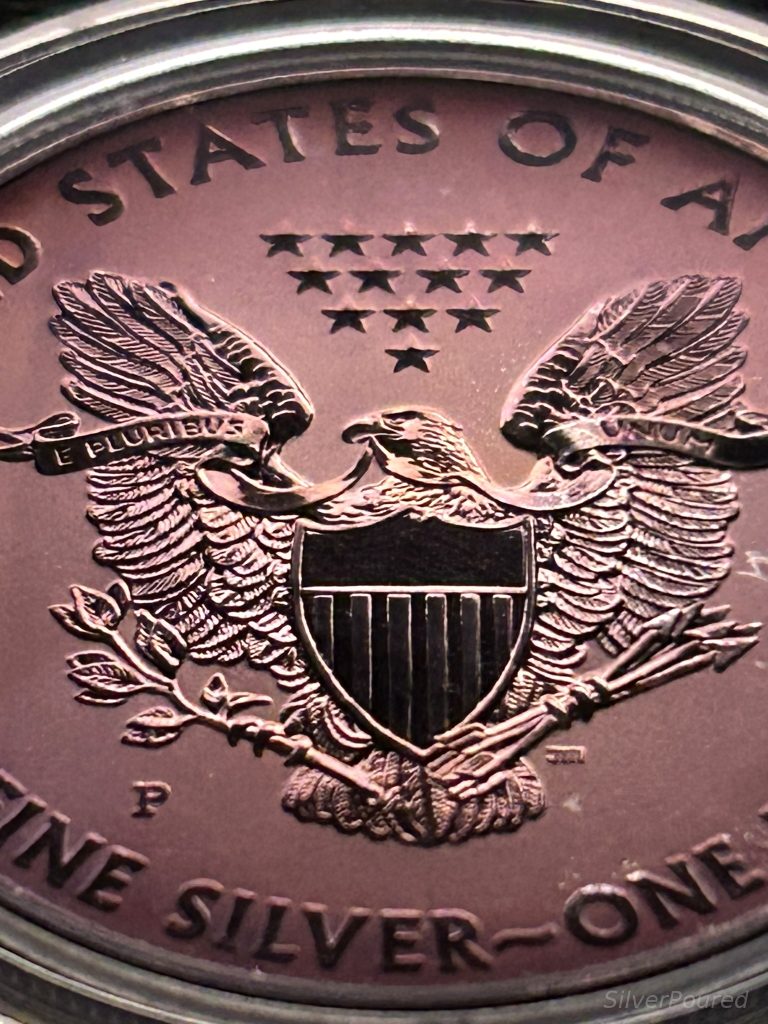
American Silver Eagle Silver Content
Every American Silver Eagle contains one troy ounce of .999 fine silver and carries a one-dollar legal tender face value backed by the United States government. This standardized silver content makes American Silver Eagles one of the easiest bullion products to value and compare against live silver prices.
Although every ASE contains exactly one ounce of silver, Silver Eagle values frequently move independently from raw silver spot price because collector demand and bullion premiums heavily influence the market.
Collectors and investors closely monitor American Silver Eagle premiums, silver spot prices, dealer buy-and-sell spreads, monster box pricing, graded coin premiums, key-date issues, and special releases when evaluating market value. While silver content provides the foundation, collector demand and premium expansion often have an equally important impact on American Silver Eagle values.
Because of this, American Silver Eagles have become one of the most actively tracked modern bullion products in the silver market.
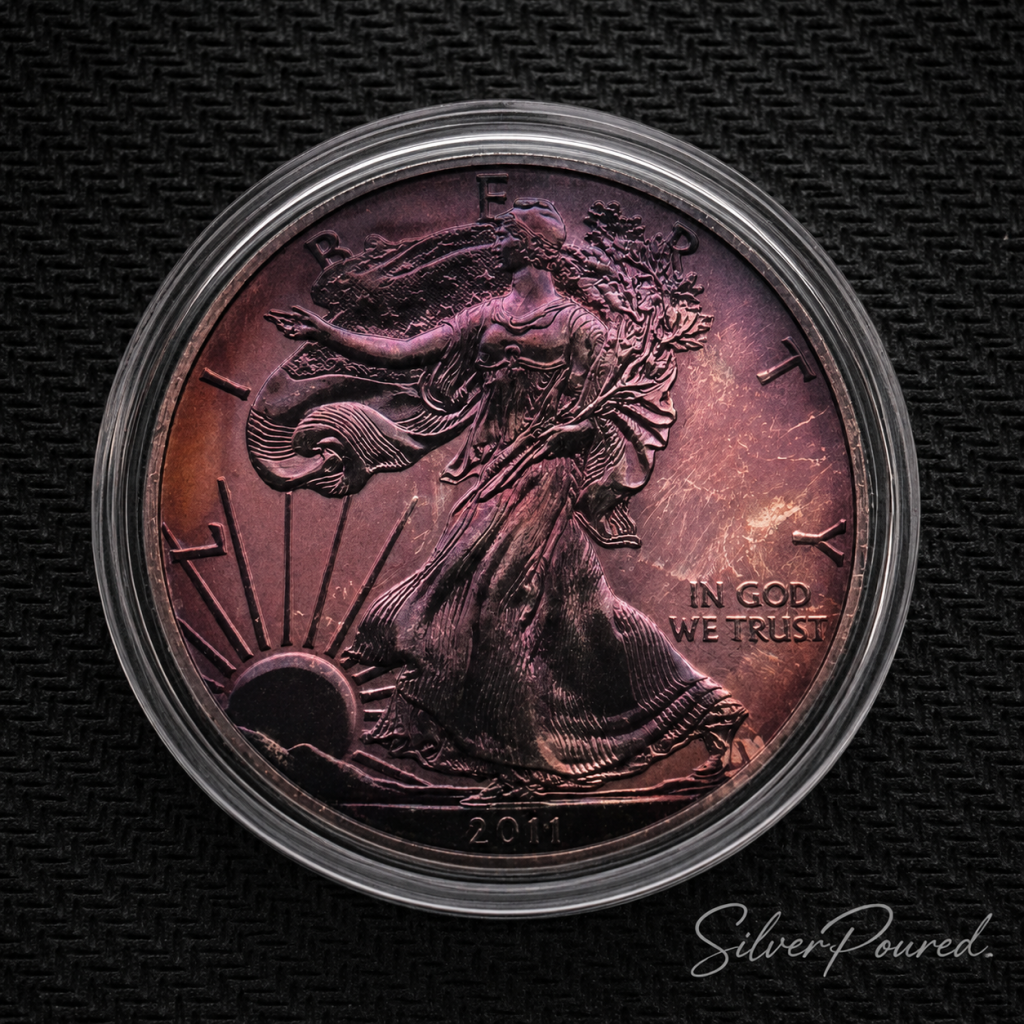
Why American Silver Eagles Sell Above Spot
American Silver Eagle values almost always sell above silver melt value because buyers are paying for more than just raw silver content.
During periods of strong silver demand, American Silver Eagle premiums can rise dramatically even if silver spot prices remain relatively stable. American Silver Eagle Values can change rapidly depending on silver spot prices, collector demand, grading scarcity, and overall bullion market liquidity.
ASE premiums are influenced by several market forces, including trust in United States Mint products, worldwide recognition, collector demand, grading activity, proof and burnished issues, limited mintages, dealer inventory levels, and overall demand for physical silver. During periods of elevated bullion demand, premiums can expand significantly even when the underlying silver spot price remains relatively stable.
This premium-over-spot behavior is one reason Silver Eagles remain one of the most important products in the physical silver market.
Experienced collectors regularly compare American Silver Eagle Values with live silver prices, grading populations, and dealer premiums before adding new coins to their collections.
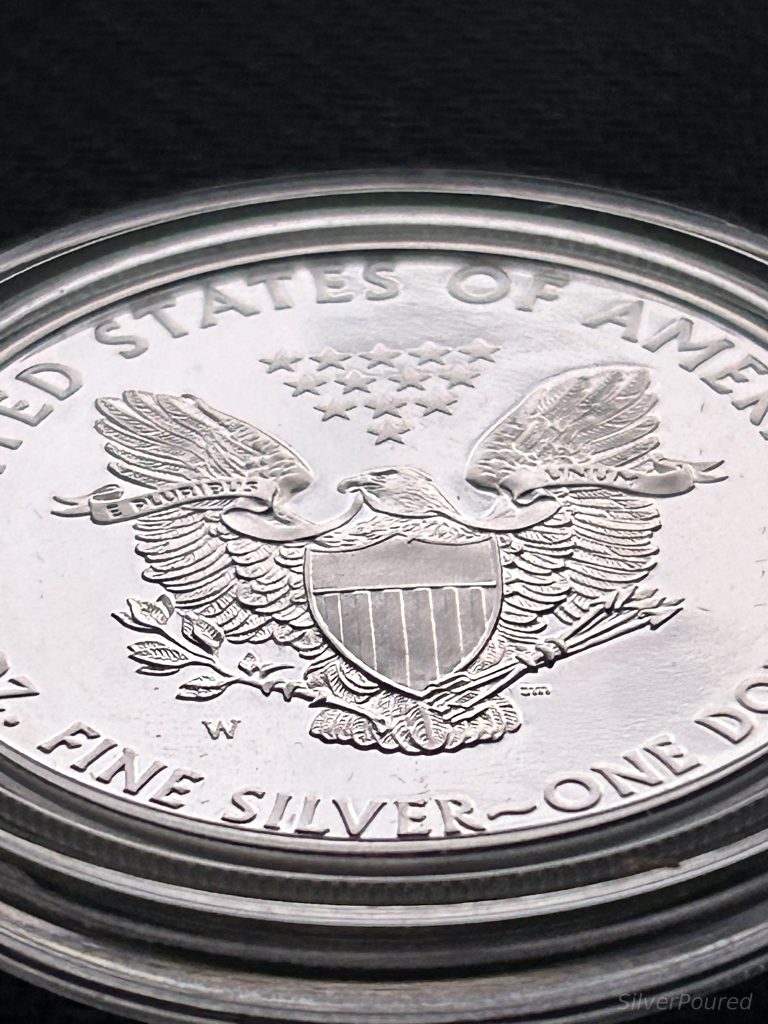
Type 1 vs Type 2 American Silver Eagles
Collector Fact: The 2021 transition year is unique because both reverse designs were produced, making it one of the most important modern date-and-type combinations in the series.
Many collectors intentionally acquire both versions to document the transition between the original Heraldic Eagle reverse and the new Eagle Landing design.
One of the most significant developments in the history of the American Silver Eagle series occurred in 2021 when the United States Mint introduced a completely redesigned reverse. Collectors commonly refer to Silver Eagles struck before the design change as Type 1 American Silver Eagles, while coins produced after the redesign are known as Type 2 American Silver Eagles.
Type 1 American Silver Eagles feature John Mercanti’s Heraldic Eagle reverse design, which appeared on the series from 1986 through mid-2021. This classic design became one of the most recognizable images in modern bullion collecting and helped establish the American Silver Eagle as the flagship silver bullion coin of the United States.
Type 2 American Silver Eagles introduced a new reverse design created by Emily Damstra featuring a detailed American eagle approaching a landing while carrying an oak branch. The redesign also included enhanced security features intended to help combat counterfeiting and improve product authentication.
Because 2021 contains both Type 1 and Type 2 American Silver Eagles, the year holds special significance for collectors. Many buyers actively pursue both versions, while some collectors build complete sets that include examples of each design type. As a result, Type 1 and Type 2 American Silver Eagles have become an important area of study within the broader American Silver Eagle values market.
Understanding the differences between Type 1 and Type 2 American Silver Eagles can help collectors evaluate collector demand, key dates, special releases, grading populations, and long-term market interest when researching American Silver Eagle values.
Proof vs Burnished vs Bullion American Silver Eagles
Not all American Silver Eagles are produced for the same type of buyer. The United States Mint has released bullion, proof, and burnished American Silver Eagles, each serving a different role within the market and often carrying different premium levels.
Bullion American Silver Eagles are the most widely distributed version of the series and are primarily purchased by investors and silver stackers seeking government-backed silver ownership. These coins are sold through authorized dealer networks and typically trade closest to bullion value, although collector demand can still influence American Silver Eagle values for certain dates and releases.
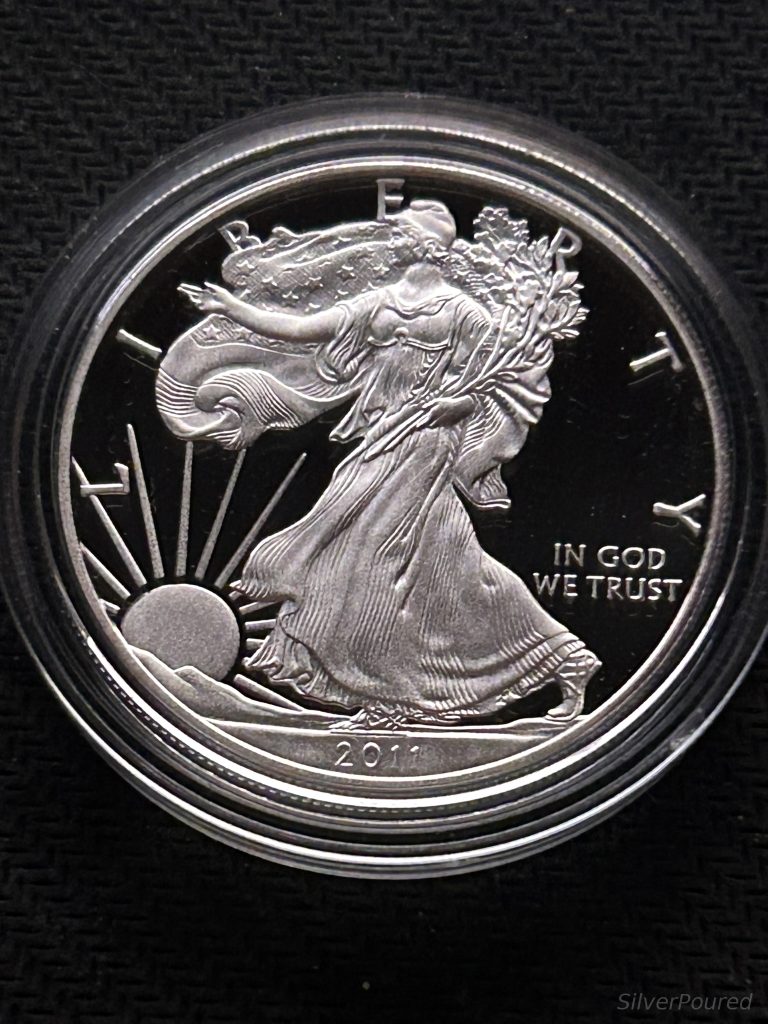
Proof American Silver Eagles are produced using specially prepared dies and polished planchets that create highly reflective mirror-like fields and frosted design elements. Because proof issues are marketed directly to collectors and often have lower mintages than bullion releases, proof American Silver Eagles frequently command stronger premiums and collector demand.
Burnished American Silver Eagles occupy a unique position between bullion and proof issues. Produced on specially prepared blanks and carrying the West Point Mint’s “W” mint mark, burnished Silver Eagles are often sought by collectors because of their distinctive finish, lower production numbers, and connection to West Point collector programs. Certain burnished releases have become especially desirable as collectors pursue complete American Silver Eagle sets.
Understanding the differences between bullion, proof, and burnished American Silver Eagles can help collectors evaluate American Silver Eagle values more accurately when comparing premiums, rarity, grading populations, and long-term collector demand across the series.
Key Date American Silver Eagle Values
Certain American Silver Eagles command significantly higher collector premiums because of lower mintages, special releases, or grading scarcity.
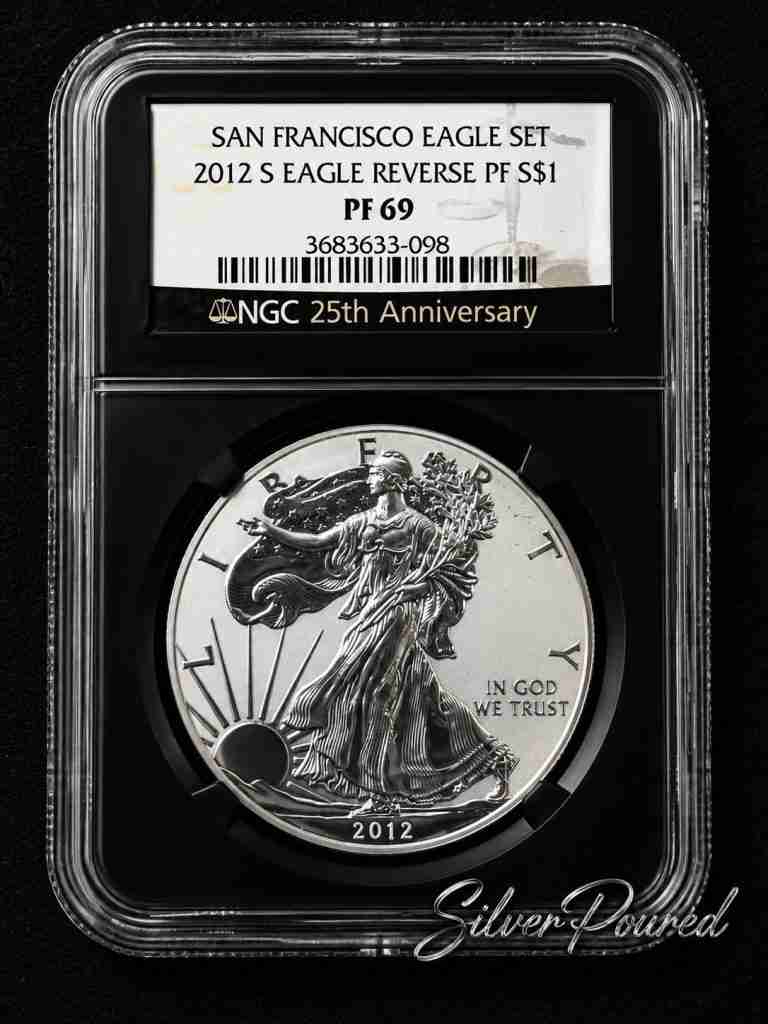
Popular collectible American Silver Eagle categories include first-year issues, key-date releases, burnished coins, reverse proofs, West Point and San Francisco mint issues, anniversary sets, emergency production coins, and low-population certified examples. These coins often command substantial premiums because collector demand, scarcity, and grading rarity can have a much greater impact on value than silver content alone.
Collectors frequently pay substantial premiums for scarce Silver Eagles in high certified grades.
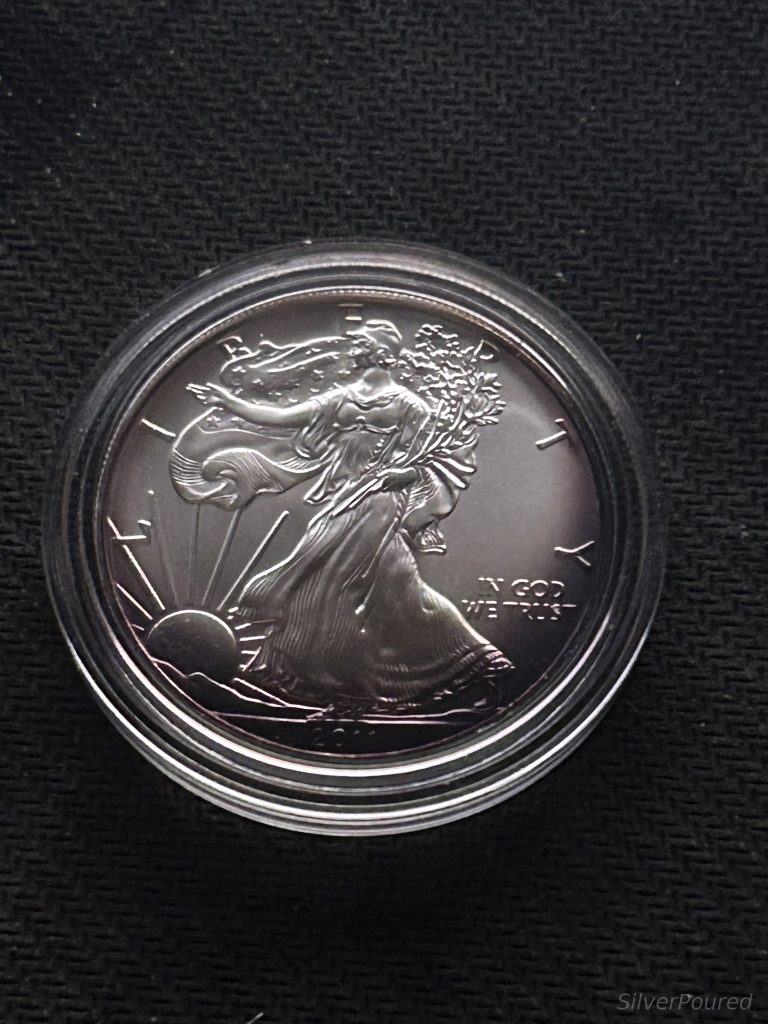
American Silver Eagle Mintages by Year
Collector Fact: Annual production totals provide valuable context, but long-term collector demand, grading populations, and survival rates often influence premiums just as much as original mintage.
Experienced collectors evaluate several scarcity indicators before determining whether a particular date deserves a significant premium.
Annual production is one of the most important factors collectors study when evaluating American Silver Eagle values. Every standard bullion Silver Eagle contains the same one troy ounce of .999 fine silver, but production levels have varied dramatically since the series began.
Lower mintage does not automatically make a coin valuable. Collector demand, survival, condition, grading populations, finish, packaging, and historical importance also influence premiums. However, annual production figures provide an essential starting point for identifying scarcer dates and understanding long-term availability.
| Year | Bullion Mintage |
|---|---|
| 1986 | 5,393,005 |
| 1987 | 11,442,335 |
| 1988 | 5,004,646 |
| 1989 | 5,203,327 |
| 1990 | 5,840,110 |
| 1991 | 7,191,066 |
| 1992 | 5,540,068 |
| 1993 | 6,763,762 |
| 1994 | 4,227,319 |
| 1995 | 4,672,051 |
| 1996 | 3,603,386 |
| 1997 | 4,295,004 |
| 1998 | 4,847,549 |
| 1999 | 7,408,640 |
| 2000 | 9,239,132 |
| 2001 | 9,001,711 |
| 2002 | 10,539,026 |
| 2003 | 8,495,008 |
| 2004 | 8,882,754 |
| 2005 | 8,891,025 |
| 2006 | 10,676,522 |
| 2007 | 9,028,036 |
| 2008 | 20,583,000 |
| 2009 | 30,459,000 |
| 2010 | 34,764,500 |
| 2011 | 39,860,500 |
| 2012 | 33,742,500 |
| 2013 | 42,675,000 |
| 2014 | 44,006,000 |
| 2015 | 47,000,000 |
| 2016 | 37,701,500 |
| 2017 | 18,065,500 |
| 2018 | 15,700,000 |
| 2019 | 14,863,500 |
| 2020 | 31,329,500 |
| 2021 Type 1 | 13,306,000 |
| 2021 Type 2 | 14,968,500 |
| 2022 | 15,963,500 |
| 2023 | 24,750,000 |
| 2024 | 22,860,000 |
| 2025 | 11,568,000 |
The 1996 American Silver Eagle has the lowest reported mintage among the standard bullion issues in this table, making it one of the most closely watched regular-production dates. The first-year 1986 release also receives strong collector attention because it launched the series.
Production increased substantially during periods of heavy physical silver demand. The 2015 bullion issue reached 47 million coins, demonstrating how investor demand can create enormous differences between annual mintages.
The two 2021 bullion issues should be evaluated separately. Type 1 carries the original heraldic eagle reverse, while Type 2 introduced the redesigned eagle reverse and enhanced security features. Collectors frequently pursue both versions when building complete date-and-type collections.
Low-Mintage and Special American Silver Eagle Issues
Standard bullion production tells only part of the American Silver Eagle story. Proofs, burnished coins, reverse proofs, enhanced finishes, privy-marked releases, and anniversary products were often issued in much smaller quantities.
| Issue | Finish or Format | Reported Mintage |
|---|---|---|
| 1995-W | Proof | 30,125 |
| 2006-P | Reverse Proof | 248,875 |
| 2006-W | Burnished | 466,573 |
| 2011-P | Reverse Proof | 100,000 |
| 2011-S | Uncirculated | 100,000 |
| 2012-S | Reverse Proof | 224,981 |
| 2013-W | Enhanced Uncirculated | 281,310 |
| 2013-W | Reverse Proof | 281,310 |
| 2017-S | Uncirculated | 123,799 |
| 2019-S | Enhanced Reverse Proof | 29,913 |
| 2019-W | Enhanced Reverse Proof | 99,675 |
| 2020-W | V75 Privy Proof | 74,709 |
| 2021-S Type 2 | Reverse Proof | 124,917 |
| 2021-W Type 1 | Reverse Proof | 124,917 |
| 2024 | Star Privy Bullion | 500,000 |
| 2025 | Eagle Privy Bullion | 500,000 |
The 2019-S Enhanced Reverse Proof carries one of the lowest reported mintages in the entire series. Its limited production, distinctive finish, government packaging, and intense collector demand helped establish it as a major modern American Silver Eagle rarity.
The famous 1995-W Proof is another cornerstone issue. It was released as part of a special anniversary set and remains one of the most desirable coins required for a complete proof collection.
Special releases should not be compared only by production totals. Distribution method, household ordering limits, original packaging, certification populations, finish, historical importance, and registry-set demand can all have a major effect on American Silver Eagle values.
Collectors who regularly study American Silver Eagle Values often compare annual mintages with grading populations and collector demand to better understand long-term market performance.
Graded American Silver Eagles
Grading plays a major role in the American Silver Eagle market because small condition differences can create substantial pricing gaps. High-grade certified examples can push American Silver Eagle Values substantially higher than standard bullion pricing, especially for low-mintage dates and early releases.
Registry collectors and advanced bullion buyers often focus on high-grade certified American Silver Eagles because small differences in condition can create significant value differences. MS69 and MS70 bullion issues, PF69 and PF70 proofs, Early Release examples, First Strike labels, and lower-population certified coins frequently attract stronger collector demand than standard bullion strikes. As a result, grading can become a major factor when evaluating American Silver Eagle values beyond simple silver content.
PCGS and NGC certified Silver Eagles dominate the upper-end modern bullion market, especially during strong registry competition cycles.
Fake American Silver Eagles
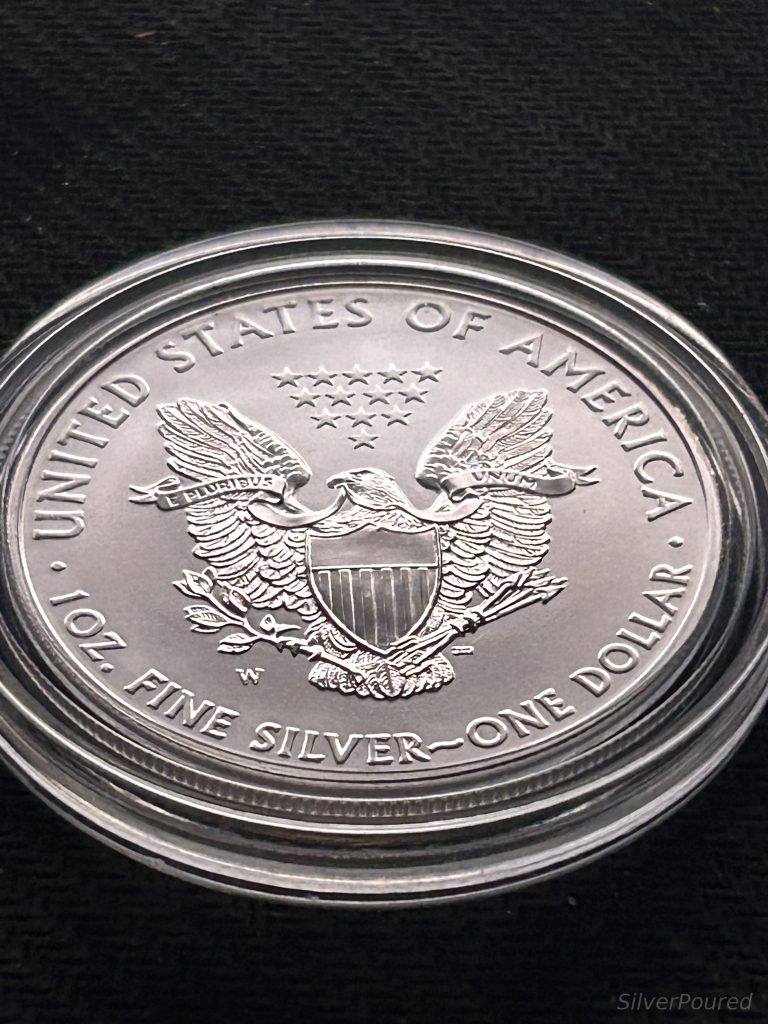
Counterfeit American Silver Eagles remain a growing concern within the bullion market because Silver Eagles are among the most recognizable silver coins in the world.
Collectors should pay close attention to weight, dimensions, edge details, strike quality, magnetic response, lettering, toning patterns, and slab authenticity when evaluating American Silver Eagles. Counterfeit coins often reveal themselves through incorrect specifications, weak design details, unusual surfaces, or counterfeit certification holders. Careful inspection remains one of the best defenses against purchasing fake bullion products.
Because counterfeit ASEs continue improving, many buyers prefer purchasing from trusted bullion dealers or certified grading services.
American Silver Eagles vs Generic Silver Rounds
While generic silver rounds often carry lower premiums, American Silver Eagles usually maintain stronger long-term liquidity and collector demand.
American Silver Eagles generally maintain stronger global recognition, higher collector demand, deeper dealer buyback markets, and greater long-term liquidity than most generic silver rounds. Their status as official United States Mint bullion coins helps support premiums
Generic silver rounds may offer lower upfront premiums, but many stackers still prefer ASEs because of their broader long-term market strength.
As SilverPoured and BullionEngine continue expanding bullion intelligence infrastructure, American Silver Eagles are likely to become one of the largest long-term data ecosystems within modern silver bullion markets.
Why American Silver Eagles Remain So Popular
American Silver Eagles remain popular because they combine one ounce of government-backed silver with exceptional liquidity, strong collector demand, active grading markets, and long-term recognition throughout the precious metals industry. Unlike many bullion products, Silver Eagles appeal to both investors seeking silver exposure and collectors pursuing premium-over-spot opportunities, helping maintain demand across multiple market cycles.
Very few modern bullion coins have maintained the same level of long-term market dominance as the American Silver Eagle, which helps explain why American Silver Eagle values remain so closely followed by collectors and investors.
Final Thoughts on American Silver Eagle Values
American Silver Eagle values are influenced by far more than silver spot prices alone. While every Silver Eagle contains one troy ounce of .999 fine silver, collector demand, grading premiums, key dates, special releases, and overall bullion market conditions can all impact real-world value. Whether you are stacking silver for investment, building a registry set, or evaluating certified examples, understanding both melt value and premium value provides a more complete picture of what an American Silver Eagle is truly worth.
Understanding American Silver Eagle values can help collectors evaluate bullion premiums, grading rarity, key dates, and long-term collector demand when comparing different Silver Eagle products.
Collectors who understand American Silver Eagle values are often better positioned to evaluate premiums, key dates, grading rarity, and long-term market demand across the series.
Many investors and collectors track American Silver Eagle values because the series combines government-backed silver content, strong liquidity, active grading markets, and long-term collector demand.
Walking Liberty Design History
One of the reasons collectors continue studying American Silver Eagle values is the coin’s connection to one of the most admired designs in United States coinage. The obverse of the American Silver Eagle uses Adolph A. Weinman’s Walking Liberty design, originally created for the Walking Liberty Half Dollar in 1916. The image of Liberty walking toward the rising sun became one of the most recognizable designs in American coin history and helped give the Silver Eagle immediate collector appeal when the bullion series launched in 1986.
This design connection matters because American Silver Eagles are not valued only as silver bullion. Many collectors view the series as a modern continuation of classic American coin artistry. The combination of one ounce of .999 fine silver, government-backed specifications, and a historically important design gives the series stronger collector identity than most generic silver rounds. That design strength continues to support American Silver Eagle values across bullion, proof, burnished, and certified markets.
Anniversary Sets and Special American Silver Eagle Releases
Anniversary sets and special releases play an important role in American Silver Eagle values because they often create concentrated collector demand around specific issues. The United States Mint has released special Silver Eagle products over the years that appeal to collectors building complete sets, registry sets, and limited-edition collections.
Special releases may include anniversary sets, reverse proofs, enhanced finishes, limited packaging, special mint marks, or coins issued during important milestone years. These products often receive stronger attention than standard bullion strikes because collectors view them as distinct pieces within the larger Silver Eagle timeline. When production numbers are limited or collector demand remains strong, premiums can rise well beyond ordinary bullion pricing.
These special issues help explain why American Silver Eagle values can vary widely even when every coin contains the same one troy ounce of .999 fine silver. A standard bullion strike may trade primarily on silver content and dealer premiums, while a special release may trade based on scarcity, finish, packaging, grading populations, and long-term collector demand.
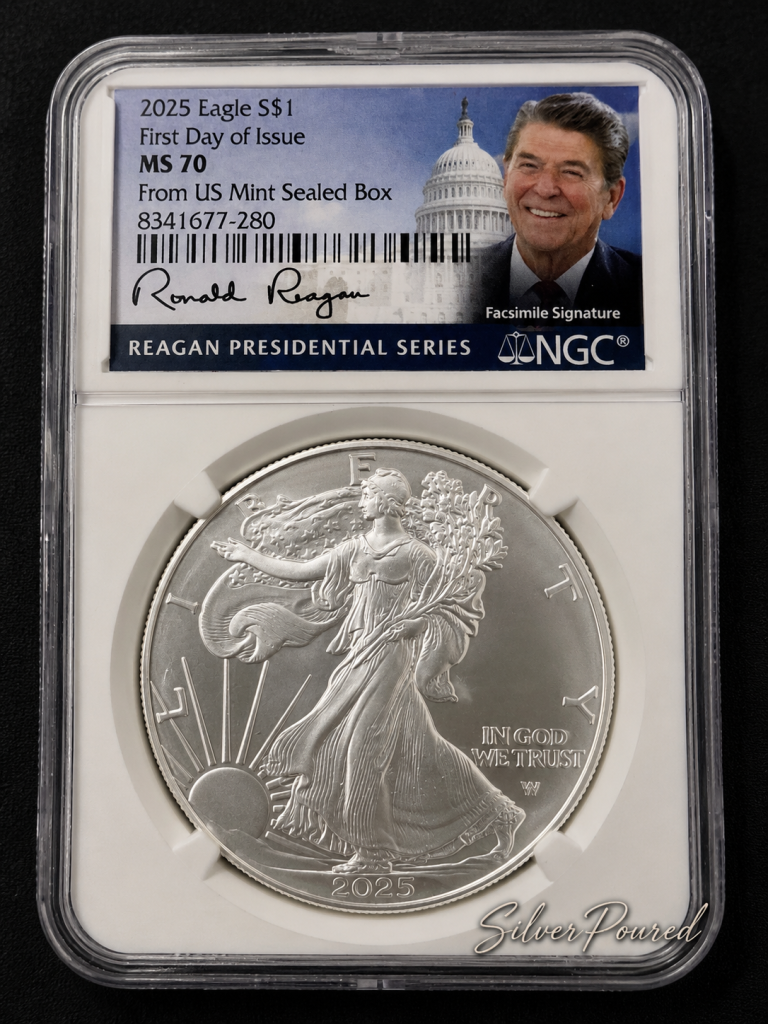
Registry competition continues to influence American Silver Eagle Values because collectors frequently pay substantial premiums for the highest-certified examples.
Registry Sets and Population Reports
Collector Fact: Registry competition frequently creates substantial premiums for top-population examples because advanced collectors often compete for the finest certified coins available.
Perfect grades combined with low certified populations can significantly influence market performance beyond bullion value alone.
Registry-set competition is another major factor behind American Silver Eagle values, especially for certified coins graded by PCGS or NGC. Many advanced collectors compete to build high-ranking sets based on date, mint mark, finish, and grade. In these markets, small differences between MS69 and MS70 or PF69 and PF70 can create large price gaps.
Population reports also influence collector behavior because they show how many examples have been certified at each grade level. A coin with a low population in MS70 or PF70 may attract stronger demand from registry collectors than a more common certified issue. This is one reason some American Silver Eagle values rise far above melt value even when the underlying silver content is identical to a standard bullion coin.
Grading competition can be especially important for key dates, burnished issues, reverse proofs, early releases, and special labels. When collectors compete for top-population examples, the market often rewards coins that combine perfect grades, lower certified populations, and strong series demand. Understanding registry sets and population reports helps explain why certified Silver Eagles can behave more like numismatic collectibles than simple bullion products.
Emergency Production American Silver Eagles
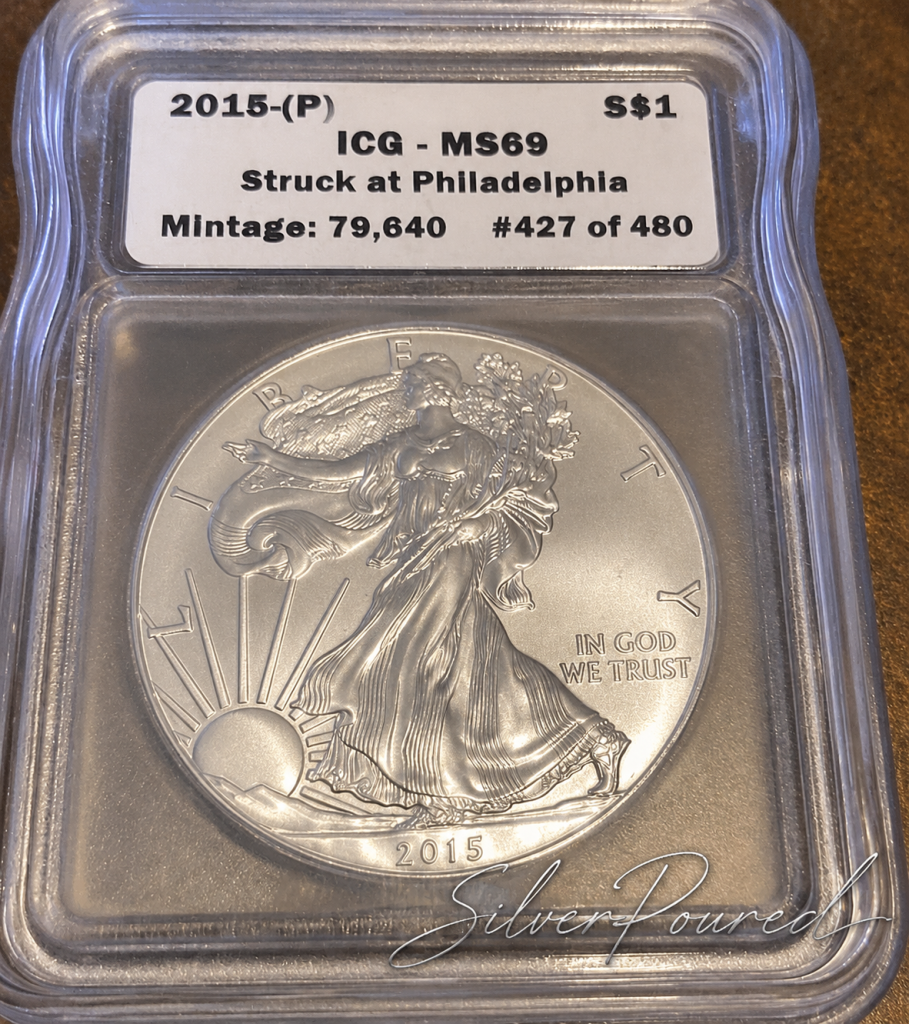
Emergency production issues have become an important modern niche within the American Silver Eagle market. During periods of unusual mint production conditions, some Silver Eagles were struck at alternate facilities or identified through special certification labels. These coins can attract collector interest because they represent unusual moments in the production history of the series.
Emergency production coins are not always visually different from standard Silver Eagles, but the story behind their production can influence demand. Collectors often value unusual production circumstances, special attribution labels, and coins tied to major market events. This creates another layer of collector interest beyond silver content alone.
For buyers researching American Silver Eagle values, emergency production issues show how context can affect pricing. A coin’s value may be influenced not only by year, grade, and finish, but also by where it was struck, how it was distributed, and how collectors respond to the story behind the release.
Monster Boxes and Bulk American Silver Eagle Investing
Collector Fact: A sealed monster box contains 500 American Silver Eagles packaged in twenty-five Mint tubes, creating one of the most recognizable bulk silver formats in the physical bullion market.
Standardized packaging, government backing, and strong dealer liquidity make sealed boxes especially attractive to large-scale investors and long-term bullion holders.
American Silver Eagles also play a major role in bulk silver investing through sealed tubes and monster boxes. A standard monster box contains 500 American Silver Eagles packaged in mint tubes, making it one of the most recognized bulk silver products in the physical bullion market.
Monster boxes appeal to investors because they offer large-scale exposure to government-backed silver in a highly recognizable format. Dealer liquidity, standardized packaging, and strong market familiarity often make sealed American Silver Eagle boxes easier to price and trade than many mixed silver products. Even when buyers are focused primarily on bullion, American Silver Eagle values can still reflect premiums tied to trust, recognition, and physical market demand.
This bulk investment side helps complete the American Silver Eagle market picture. The same series attracts casual stackers, advanced registry collectors, proof buyers, burnished specialists, bulk investors, and dealers. That broad demand base is one of the biggest reasons American Silver Eagle values remain so closely watched across the silver market.
Large-scale investors also monitor American Silver Eagle Values throughout the bullion market because changing bullion premiums and collector demand can significantly affect pricing beyond silver content alone.
To continue your research, compare values using the Silver Melt Value Calculator, check live silver prices, explore Silver Coin Values, or search the complete authority library through Poured’s BullionEngine. Collectors who regularly follow American Silver Eagle Values are better equipped to compare bullion premiums, grading rarity, and long-term market demand.
Related Resources
To continue your research, compare values using the Silver Melt Value Calculator, check live silver prices, explore Silver Coin Values, or search the complete authority library through Poured’s BullionEngine. Collectors who regularly follow American Silver Eagle Values are better equipped to compare bullion premiums, grading rarity, and long-term market demand.
American Silver Eagle Resources
American Silver Eagle Calculator
Burnished American Silver Eagles
What Is a West Point Mint Mark?
Silver Prices & Bullion Education
Why Bullion Dealers Charge Premiums
United States Mint Resources
Best Silver Coins for Stacking
Purchase Precious Metals from a Trusted Dealer
Whether you are researching American Silver Eagle values, building a Silver Eagle collection, or comparing certified modern coins, buying from an established precious-metals dealer helps you evaluate authenticity, premiums, availability, and long-term market value with confidence.
SilverPoured recommends Golden State Mint for investment-grade silver bars, silver rounds, gold bullion, copper bullion, and fractional precious metals. Comparing modern bullion alongside government-issued collector coins helps buyers better understand how grading, mint varieties, collector demand, and bullion premiums influence market pricing.
Explore current bullion offerings through SilverPoured’s recommended precious-metals partner.
Keep SilverPoured Free
SilverPoured provides free precious-metals education, live pricing tools, calculators, collector guides, original photography, and long-form research for investors and collectors.
This guide explains how grading, mintages, collector demand, proof issues, burnished releases, registry competition, and bullion premiums influence American Silver Eagle values. Understanding American Silver Eagle values helps readers evaluate collector value alongside intrinsic silver value while comparing bullion issues, proof coins, burnished releases, and other important modern United States Mint products.
Reader support helps fund continued research, educational resources, original photography, new calculators, and expansion of the SilverPoured Authority Library while keeping this information freely available.