
Precious Metals IRA Guides explain how approved bullion products, custodians, storage requirements, and retirement account structures interact within self-directed precious metals IRA planning.
Precious metals IRAs allow certain approved gold, silver, platinum, and palladium products to be held within retirement account structures under specific IRS eligibility requirements. These accounts are commonly used by investors interested in diversification, tangible assets, and long-term wealth preservation strategies involving physical bullion.
These accounts typically require:
- An approved custodian to manage the IRA structure
- An authorized storage facility for physical metals
- Compliance with IRS eligibility standards for metal purity and type
IRA-eligible metals are commonly discussed in terms of bullion standards, custodial requirements, and retirement account structures rather than personal storage ownership.
Disclaimer
This content is for educational purposes only and should not be considered financial, investment, or tax advice. Precious metals IRA rules, eligibility, and storage requirements may vary depending on custodian, provider, and IRS guidelines. Always consult a qualified financial or tax professional before making IRA-related decisions.
Precious Metals IRA Key Facts
| Asset Type | Common IRA Requirement |
|---|---|
| Gold | Typically .995+ purity (American Gold Eagles are a common exception) |
| Silver | Typically .999+ purity |
| Platinum | Typically .9995+ purity |
| Palladium | Typically .9995+ purity |
| Storage | Approved custodian and depository structure |
| Ownership | Physical bullion held within approved retirement framework |
IRA eligibility can vary depending on product type, purity standards, account structure, and custodial requirements. Approved bullion products commonly discussed in long-term metals allocation planning include gold, silver, platinum, and palladium products that meet specific IRS standards.
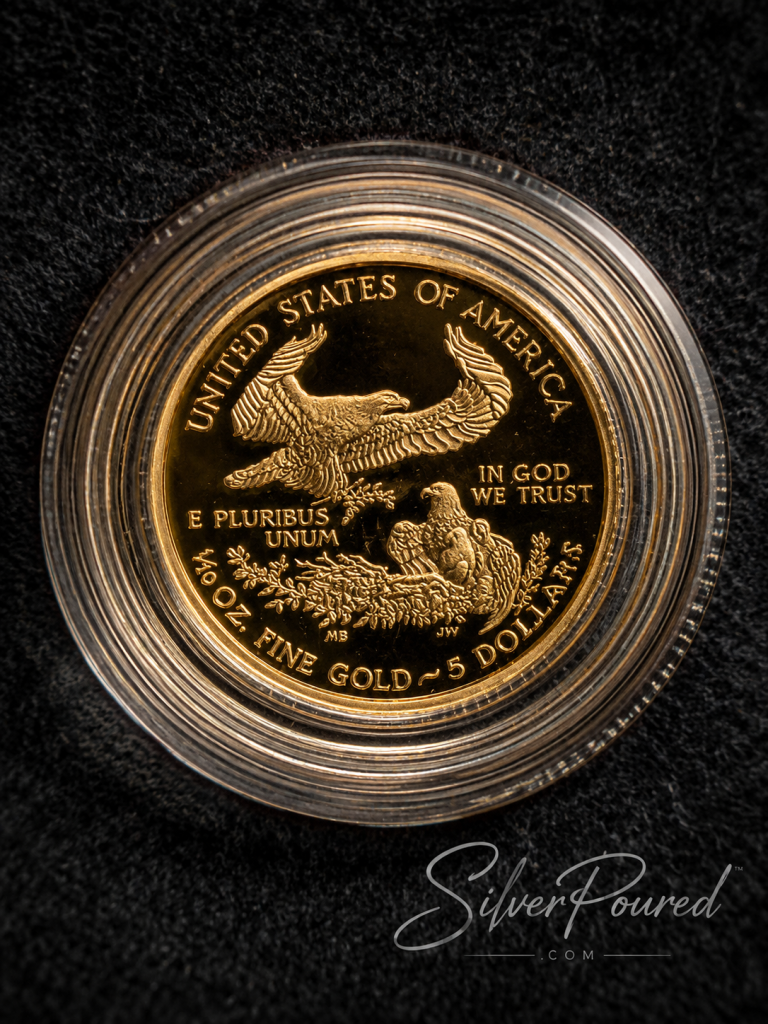
Although many IRA-approved gold products follow .995+ purity requirements, American Gold Eagles remain one of the most recognized exceptions commonly discussed in precious metals IRA education. Buyers should always verify product eligibility before making purchasing decisions because requirements can differ depending on account structure and custodial rules.
Understanding approved products, rollover considerations, storage requirements, and custodial structures helps investors compare precious metals IRA strategies with greater confidence before evaluating long-term strategies.
Before opening a precious metals IRA, understand how product eligibility, approved custodians, qualified storage, and IRS requirements work together. Precious Metals IRA Guides are most useful when they establish these fundamentals before comparing individual bullion products or retirement-account providers.

What Are Precious Metals IRA Guides?
Precious Metals IRA Guides explain how physical gold, silver, platinum, and palladium may fit within eligible self-directed retirement accounts. The useful starting point is not simply which metal an investor prefers, but how account structure, product eligibility, custody, storage, funding, fees, and applicable IRS requirements interact.
Gold is frequently researched for long-term wealth preservation, while silver may appeal to investors seeking a lower per-ounce entry point and exposure to a metal with both investment and industrial demand. Platinum and palladium represent smaller precious-metals markets but may also qualify when specific products satisfy applicable requirements.
Rather than selecting metals based only on current prices, investors can compare liquidity, premiums, account expenses, storage considerations, diversification goals, and long-term objectives. Precious Metals IRA Guides provide educational context for making those comparisons before an investor selects a custodian or purchases bullion.
A precious metals IRA differs from personally buying bullion and storing it at home. IRA-owned metals generally operate within a custodial and depository framework, making account administration and product eligibility central parts of the decision.
Types of Precious Metals IRAs
Precious-metals investing may be available through different self-directed IRA structures, including Traditional and Roth IRAs and, where applicable, retirement arrangements such as SEP and SIMPLE IRAs. The tax treatment, contribution rules, distribution requirements, and eligibility of each account type differ.
A Traditional IRA generally provides tax-deferred treatment under applicable rules, while qualified Roth IRA distributions may be tax-free when statutory requirements are satisfied. SEP and SIMPLE arrangements serve different employer and self-employed retirement situations and should not be treated as interchangeable account structures.
Because an investor’s tax and retirement circumstances are individual, Precious Metals IRA Guides should explain these structural distinctions without treating one account type as universally preferable. Account-specific questions should be reviewed with the appropriate custodian and qualified tax or financial professional.
How Precious Metals IRA Guides Help New Investors
Precious Metals IRA Guides can simplify a subject that combines retirement-account rules with the physical precious-metals market. A useful guide explains the relationship among account structure, custodians, depository storage, funding methods, product eligibility, premiums, and ongoing account costs.
Learning that framework before purchasing metal helps investors ask better questions. Instead of beginning with “Which gold coin should I buy?” an investor can first determine which account structure is appropriate, what products the custodian permits, where the metals will be stored, what fees apply, and how the account will be funded.
The order matters. Establish the retirement-account structure and custodial requirements before shopping for bullion. Buying a precious-metal product first and asking whether it qualifies afterward can create an avoidable eligibility problem.
IRA-Approved Precious Metals
IRA eligibility depends on the exact product and applicable statutory requirements rather than metal ownership alone. Gold, silver, platinum, and palladium bullion may qualify when the specific coin or bar satisfies the relevant standards and is held through the required IRA structure.
American Silver Eagles are widely recognized eligible silver coins. American Gold Eagles occupy a special position because federal law permits them even though their gold fineness is below the general .995 standard applied to many other qualifying gold products. Certain other bullion coins and qualifying bars may also be eligible when they meet applicable requirements.
Not every precious-metal coin belongs in an IRA. Collectible and numismatic products can be excluded even when they contain substantial gold or silver. Investors should therefore verify the exact product with the custodian before purchasing it for an IRA.
How Investors Fund a Precious Metals IRA
Funding may come from new contributions or from eligible retirement assets moved into the self-directed structure through transfers or rollovers. The appropriate process depends on the existing account, receiving account, and applicable retirement-plan rules.
A direct trustee-to-trustee transfer generally moves eligible IRA assets between financial institutions without the investor taking possession of the funds. A rollover can involve different procedures and timing requirements depending on how the transaction is structured. Precious Metals IRA Guides should distinguish these methods rather than treating the terms as interchangeable.
Because mistakes involving retirement assets can have tax consequences, investors should confirm the proper procedure with the custodian and an appropriate tax professional before initiating a transfer or rollover.
Funding mechanics deserve attention before bullion selection. Transfers and rollovers can involve different procedures, timing rules, and tax consequences. Confirm how the retirement assets will move before initiating the transaction or purchasing IRA-designated metals.
IRA Precious Metal Minimum Standards
| Metal | General Fineness Standard |
|---|---|
| Gold | .995 minimum, subject to statutory coin exceptions including American Gold Eagles |
| Silver | .999 minimum |
| Platinum | .9995 minimum |
| Palladium | .9995 minimum |
Meeting a fineness threshold does not by itself establish that every product qualifies. Product type and the applicable IRA rules still matter, and investors should verify eligibility before directing retirement funds toward a specific bullion purchase.
Key IRA Considerations
| IRA Consideration | Why It Matters |
|---|---|
| Product Eligibility | The specific bullion product must satisfy applicable IRA requirements. |
| Custodian | The self-directed retirement account requires appropriate administration and reporting. |
| Depository Storage | IRA-owned metals generally must remain within the required custodial/depository structure rather than personal possession. |
| Rollovers & Transfers | Funding methods can involve different procedures and tax considerations. |
| Fees | Account administration, storage, transactions, and other charges can affect long-term cost. |
| Approved Products | Metal content alone does not make every coin or bar IRA eligible. |
Common Mistakes New Buyers Make
One of the most common mistakes is assuming that every gold or silver product automatically qualifies for IRA ownership. Eligibility is more specific. Collectible or numismatic coins may be excluded, and qualifying bullion must still be purchased and held within the appropriate account structure.
Other mistakes include shopping for metals before establishing the account, overlooking custodian and storage fees, confusing transfers with rollovers, and assuming that personal possession of IRA-designated bullion is equivalent to approved depository storage.
Precious Metals IRA Guides can help investors identify these questions before money moves. Confirming product eligibility, funding procedures, custody, storage, premiums, fees, and professional guidance early can reduce avoidable complications later.
IRA eligibility depends on more than metal content. The exact product, applicable fineness requirements, account structure, custodian, storage arrangement, and retirement-account rules all matter. Verify those pieces together before treating any bullion product as appropriate for an IRA.
Why Investors Consider Physical Precious Metals
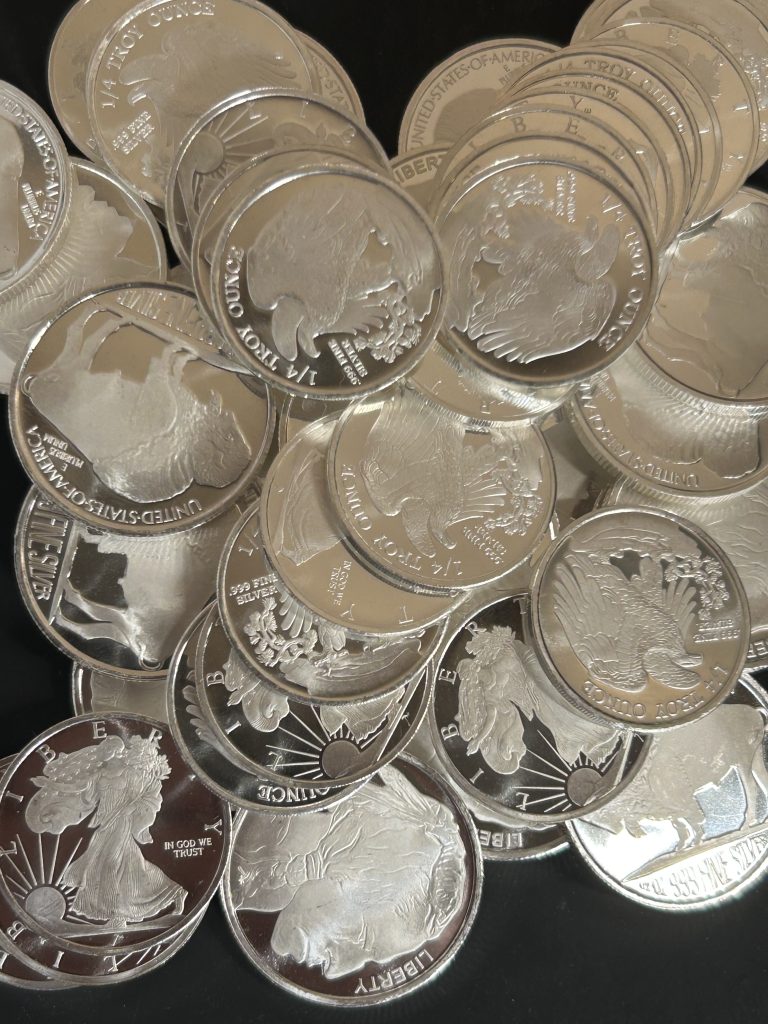
Investors research physical precious metals for reasons that can include diversification, tangible-asset exposure, long-term wealth planning, and concern about inflation or financial-market uncertainty. Those potential roles should be evaluated within a broader retirement strategy rather than treated as guarantees of performance or protection.
Gold and silver also behave differently from many income-producing investments. Physical bullion generally does not pay dividends or interest, and its market value can rise or fall. Premiums, transaction costs, storage expenses, and account fees can further affect an investor’s results.
Paper Assets vs. Physical Precious Metals
| Asset Type | General Characteristic |
|---|---|
| Individual Stocks | Ownership interest in a company with market price and company-specific risk |
| ETFs | Exchange-traded exposure that may represent securities, commodities, or other underlying assets depending on the fund |
| Mutual Funds | Pooled investment vehicle holding a portfolio selected according to the fund’s strategy |
| Physical Gold | Tangible precious metal whose value depends on the gold market and any applicable product premium |
| Physical Silver | Tangible precious metal influenced by bullion markets, industrial demand, product premiums, and sometimes collector demand |
| IRA-Eligible Bullion | Specific qualifying precious-metal products held within an applicable retirement-account structure |
Gold IRA and Silver IRA Planning Considerations
Gold IRA and Silver IRA discussions generally refer to self-directed retirement structures that can hold eligible precious metals. The underlying account rules remain important regardless of whether the investor ultimately selects gold, silver, platinum, palladium, or a combination of qualifying products.
Precious Metals IRA Guides can also help explain the practical differences between gold and silver. Product premiums, market liquidity, price volatility, storage value per unit of space, available bullion formats, and the investor’s desired allocation may differ between the two metals.
Precious Metals IRA Guides should therefore help investors compare the complete retirement structure rather than present “Gold IRA” and “Silver IRA” as fundamentally separate types of IRA. In either case, product eligibility, custody, storage, funding, fees, distributions, and applicable tax rules remain central considerations.
Choosing a Precious Metals IRA Custodian
Precious Metals IRA Guides should make the custodian’s role clear. The custodian administers the self-directed retirement account, maintains required records and reporting, processes account transactions, and coordinates with other parties involved in the IRA structure.
| Compare | Questions to Ask |
|---|---|
| Account Fees | What setup, annual administration, transaction, and other account charges apply? |
| Storage | Which depositories are available, what storage options exist, and what do they cost? |
| Experience | How much experience does the custodian have administering self-directed accounts holding physical precious metals? |
| Product Process | How are eligible bullion purchases approved and processed through the account? |
| Funding | How does the custodian handle contributions, transfers, and rollovers? |
| Service & Access | How can the investor access account information, documentation, and customer support? |
| Distributions | What procedures and fees apply when assets or cash are distributed from the account? |
Investors should distinguish the IRA custodian from the precious-metals dealer. One administers the retirement account; the other sells bullion. A business arrangement between providers does not eliminate the investor’s need to understand each party’s role, fees, policies, and responsibilities.
Comparing Precious Metals IRA Providers
Precious Metals IRA Guides can help investors compare providers without assuming that every company offers the same services. Some businesses primarily administer self-directed retirement accounts, some provide depository services, and others sell eligible bullion products.
Precious Metals IRA Guides can provide a framework for comparing transparent fees, available depositories, eligible-product procedures, customer support, account access, transaction processes, educational resources, and experience working with physical precious metals inside retirement accounts.
Investors should also understand how a company is compensated and whether dealer, custodian, storage, referral, or other financial relationships may influence the services or products being presented.
Risks and Considerations
Precious Metals IRA Guides should explain risks and costs alongside potential diversification benefits. Gold, silver, platinum, and palladium prices can decline as well as rise. Bullion premiums can change, and spreads between purchase and resale prices may affect liquidity and investment results.
Account administration and depository storage can create ongoing expenses that do not exist when an investor simply holds certain conventional assets in a low-cost brokerage account. Physical precious metals also generally do not produce dividends or interest.
Liquidity needs, retirement time horizon, allocation, taxes, required distributions where applicable, risk tolerance, and the costs of eventually selling or distributing the metal should all be considered before funding an account.
Precious metals IRAs are retirement-account structures, not short-term bullion trading accounts. Evaluate the complete cost of ownership—including premiums, spreads, administration, storage, and eventual distribution or sale—alongside the potential diversification role of the metals themselves.
Staying Current with Precious Metals IRA Rules
Retirement-account rules, contribution limits, distribution requirements, administrative procedures, provider policies, and product availability can change. Precious Metals IRA Guides should therefore be treated as educational starting points rather than permanent substitutes for current IRS guidance or professional advice.
Before acting, investors using Precious Metals IRA Guides should verify current requirements with authoritative sources and the professionals responsible for their account. Product eligibility should also be confirmed before purchasing bullion intended for IRA ownership.
Keeping current records of account fees, storage arrangements, holdings, beneficiaries, transactions, and relevant custodial documentation can also make long-term account administration easier.
Precious Metals Market Reference
Precious Metals IRA Guides should distinguish retirement-account eligibility from precious-metals market pricing because they are separate subjects. Investors researching bullion can use established market resources to understand precious-metal standards and pricing while relying on appropriate retirement-account sources for IRA rules.
The London Bullion Market Association (LBMA) publishes information about the global wholesale precious-metals market and industry standards. SilverPoured’s Silver Melt Value Calculator provides a separate tool for estimating intrinsic silver value using current silver pricing.
Why Precious Metals IRA Guides Continue to Matter
Precious Metals IRA Guides remain useful because investors researching physical metals for retirement must understand more than bullion prices. Product eligibility, account structure, custodians, depository storage, funding procedures, fees, distributions, and applicable retirement-account rules all affect how physical precious metals may be held within an IRA.
The strongest Precious Metals IRA Guides separate education from promotion. They explain the structure first, identify questions investors should ask, distinguish eligible bullion from products that may not qualify, and encourage verification before retirement assets are moved or metals are purchased.
Precious Metals IRA Guides also help investors distinguish two decisions that are often blended together: whether a precious-metals IRA fits an individual’s retirement strategy and, separately, which qualifying metals or products may be appropriate within that structure. Those decisions involve different considerations and should not be treated as interchangeable.
Final Thoughts
Precious Metals IRA Guides provide an educational framework for understanding how approved bullion products, custodial administration, depository storage, transfers, rollovers, fees, and eligibility requirements interact within self-directed retirement planning.
Physical gold, silver, platinum, and palladium can play different roles within a broader portfolio, but precious metals involve market risk and an IRA adds another layer of account rules and expenses. Understanding both the metal and the retirement structure is essential before making a decision.
Because individual tax circumstances, retirement goals, risk tolerance, and account eligibility differ, Precious Metals IRA Guides should be used as educational resources rather than individualized financial, investment, legal, or tax advice. Current requirements should be verified with authoritative sources, the account custodian, and qualified professionals as appropriate.
Related SilverPoured Resources
Continue researching Precious Metals IRA Guides with SilverPoured resources covering eligible bullion markets, precious-metals pricing, dealer comparisons, premiums, and tools for understanding physical gold and silver.
IRA & Precious Metals Research
American Silver Eagle Values
American Gold Buffalo Value
Canadian Silver Maple Leaf Value
Gold Britannia Value
Best Silver Dealers
Bullion & Premium Education
Premium Over Spot Explained
Why Silver Premiums Change
Best Hand-Poured Silver Bars
Live Silver Prices
What Is the Silver Spot Price?
SilverPoured Tools & Research
Silver Melt Value Calculator
Poured’s BullionEngine
What Is My Silver Worth?
Silver Coin Values
Proof Set Mintages
Purchase Precious Metals from a Trusted Dealer
After using Precious Metals IRA Guides to understand account structure and product eligibility, investors researching physical bullion can compare products from established precious-metals dealers. A dealer sells the metal; IRA administration, eligibility, custody, and storage remain separate considerations that should be confirmed within the retirement-account structure.
When comparing bullion, consider purity, weight, product eligibility, current metal value, premium, total delivered cost, dealer reputation, shipping policies, and availability. If a product is intended for an IRA, verify eligibility with the appropriate custodian before purchasing it for the account.
Collector Insight
The most useful Precious Metals IRA Guides help investors ask the right questions before money moves: Does the product qualify? Who administers the account? Where will the metal be stored? What fees apply? How will the account be funded? And what happens when the investor eventually sells or takes a distribution? Understanding the complete structure matters more than choosing a metal first.
Keep SilverPoured Free
SilverPoured is built to help collectors and precious-metals investors make better-informed decisions through free calculators, original photography, bullion research, coin-value references, Precious Metals IRA Guides, and independent educational resources.
These Precious Metals IRA Guides are designed to help readers understand eligible bullion, custodians, storage, funding methods, fees, account structures, and important questions to investigate before making retirement decisions. Every contribution helps support continued research, original photography, calculator development, and expansion of SilverPoured’s free precious-metals education.
Your support allows SilverPoured to remain independent while building free resources for coin collectors, bullion buyers, precious-metals researchers, and long-term investors.