
Maple Leaf value begins with one troy ounce of .9999 fine silver, but the metal is only the starting point. Canadian Silver Maple Leafs can also develop collector premiums based on mintage, date, condition, certified grade, privy marks, specialty finishes, market availability, and demand. Common bullion issues may trade relatively close to silver value, while scarcer or specialized releases can sell for substantially more.
The Canadian Silver Maple Leaf has been produced by the Royal Canadian Mint since 1988 and became one of the world’s best-known government silver bullion coins. Its exceptional purity, recognizable maple leaf design, legal-tender status, and later security innovations have helped the series attract both precious-metals buyers and dedicated collectors.
This guide explains how to evaluate Maple Leaf value from both sides of the market: intrinsic silver value and collectible value. It covers silver content, mintages, the 1997 key date, scarcity, security technology, privy marks, reverse proofs, specialty releases, grading populations, milk spots, toning, date-run collecting, and the factors that can move individual coins beyond ordinary bullion pricing.
Maple Leaf Value Calculator
Use the calculator on this page to estimate the underlying silver value of Canadian Silver Maple Leafs. Melt value provides an important baseline, but it should not automatically be treated as the market value of a collectible date, privy-mark issue, specialty release, or high-grade certified coin.
What Is a Canadian Silver Maple Leaf Worth?
A standard Canadian Silver Maple Leaf is worth at least approximately the market value of its one troy ounce of fine silver, subject to normal buying and selling spreads. Dealer premiums are then added for fabrication, distribution, inventory, market demand, and other costs associated with physical bullion.
Collector coins require another layer of analysis. A lower-mintage date, unusual privy mark, special finish, attractive toned example, complete presentation set, or certified high-grade coin can command a premium unrelated to the additional amount of silver in the piece. Two Maple Leafs with identical silver content can therefore have very different market prices.
The practical question is not simply how much silver a coin contains. It is how replaceable that exact Maple Leaf is. When collectors can easily purchase many comparable examples, premiums tend to remain more bullion-oriented. When a particular issue becomes difficult to locate and buyers continue pursuing it, collector value can become increasingly important.
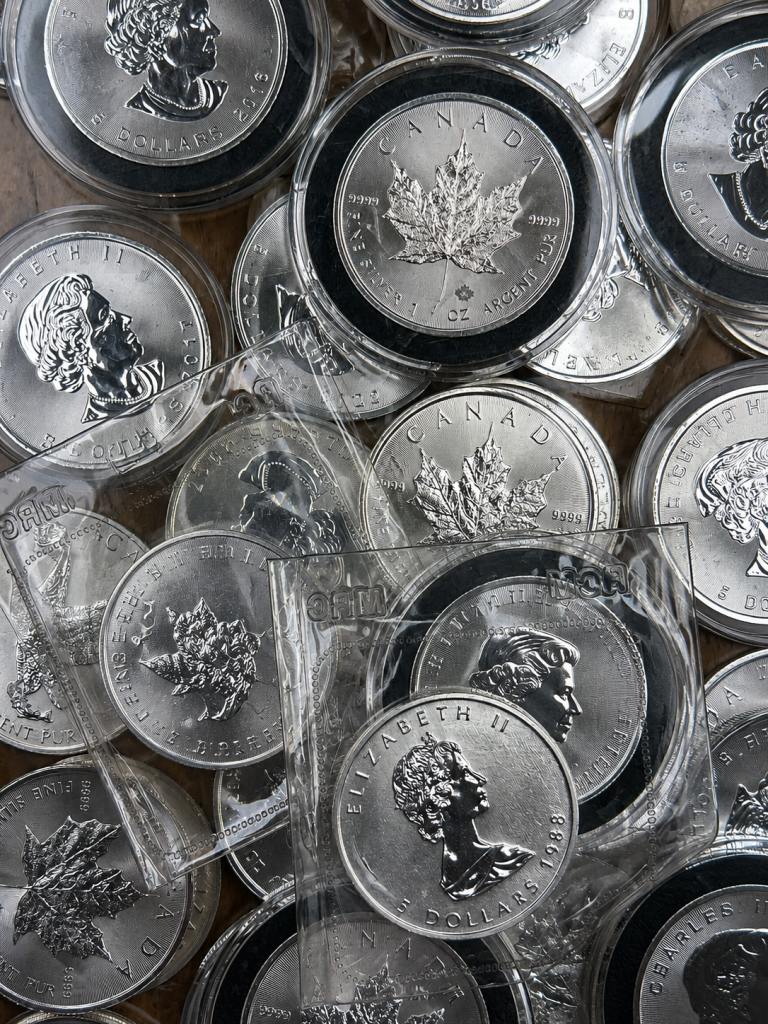
Canadian Silver Maple Leaf Specifications
The Royal Canadian Mint introduced the Silver Maple Leaf in 1988, establishing the foundation for a bullion series that would eventually develop both investment and collector markets. Early production history remains important when researching Maple Leaf value because lower-mintage dates from the first decade can behave very differently from later high-production bullion issues.
| Specification | Standard Silver Maple Leaf |
|---|---|
| Issuer | Royal Canadian Mint |
| Introduced | 1988 |
| Silver Content | 1 troy ounce |
| Approximate Weight | 31.11 grams |
| Purity | 99.99% pure silver (.9999 fine) |
| Face Value | $5 CAD |
The .9999 purity was especially notable when the series debuted. The Royal Canadian Mint identifies the 1988 Silver Maple Leaf as the world’s first 99.99% pure silver bullion coin. That high-purity identity remains central to the series decades later.
For ordinary bullion examples, changing silver prices remain the foundation of Maple Leaf value. If the silver market rises or falls, the intrinsic value of a one-ounce coin moves with it. Collector premiums can move independently because scarcity, condition and demand do not necessarily change at the same rate as spot silver.
Every standard Canadian Silver Maple Leaf begins with the same fundamental asset: one troy ounce of .9999 fine silver. The collector market begins where that uniformity ends. Date, mintage, variety, condition, finish, certification and availability can cause one Maple Leaf to trade like ordinary bullion while another carrying the same silver weight develops a substantial premium.

History of the Canadian Silver Maple Leaf
The Silver Maple Leaf joined the Royal Canadian Mint’s bullion program in 1988 and quickly developed international recognition. The reverse carries Canada’s maple leaf, while the obverse carries the reigning Canadian monarch. Over time, the program expanded well beyond its original standard bullion format.
Collectors can now encounter privy-mark issues, reverse proofs, commemorative products, fractional sets, gilded coins, colorized releases, incuse pieces and other specialty interpretations. Those products should not be treated as interchangeable with ordinary bullion issues because production methods, mintages, finishes and collector audiences can differ substantially.
The result is a series with two overlapping markets. One market buys Maple Leafs primarily for silver exposure and global bullion recognition. The other studies dates, varieties, mintages, condition and specialty products. Understanding which market is driving a particular coin is essential when evaluating Maple Leaf value.
Why Some Silver Maple Leafs Are Worth More
Collector premiums develop when an exact coin becomes more desirable or less replaceable than ordinary bullion. Original mintage is important, but it is only one factor. Surviving availability, condition, grading populations, specialty characteristics and the number of buyers pursuing the issue all influence price.
A low mintage can create the conditions for scarcity, but demand must exist for that scarcity to matter. Conversely, a coin with a larger original production can develop a strong premium in a particular certified grade if few examples reach that condition and registry collectors compete for them.
Presentation can matter as well. Collector products retaining their original Royal Canadian Mint packaging and certificates may appeal to buyers seeking complete examples. Attractive original surfaces can command stronger interest than coins with distracting spots, damage, cleaning, or poor eye appeal.
Fractional Silver Maple Leaf Collector Releases
Royal Canadian Mint fractional Maple Leaf sets provide another side of the series beyond standard one-ounce bullion. Collector releases from different years can combine multiple .9999 fine silver denominations, specialty finishes, presentation cases, certificates, and limited-production formats. These characteristics can make Maple Leaf value dependent on the completeness and desirability of the entire product rather than silver weight alone.
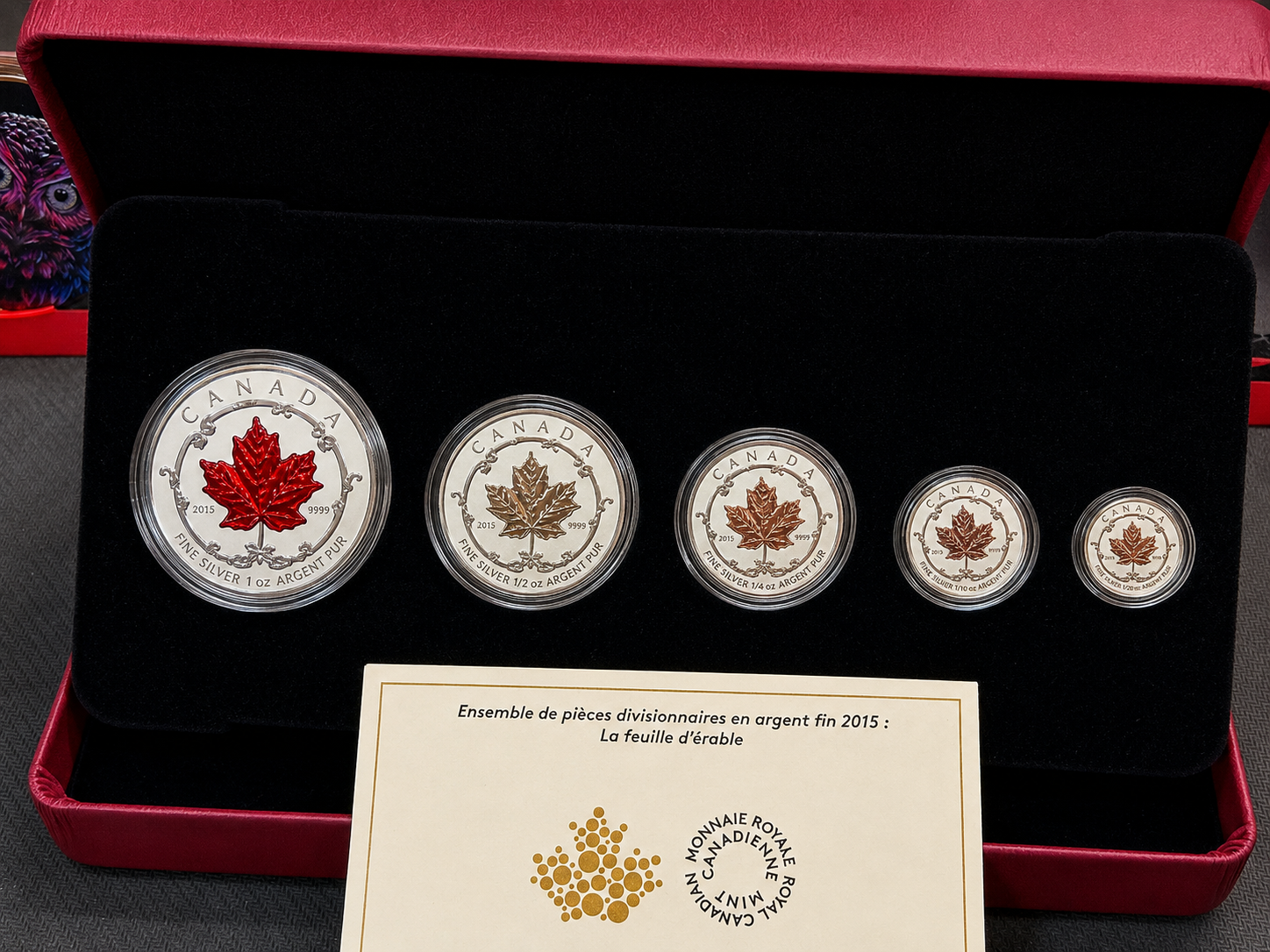
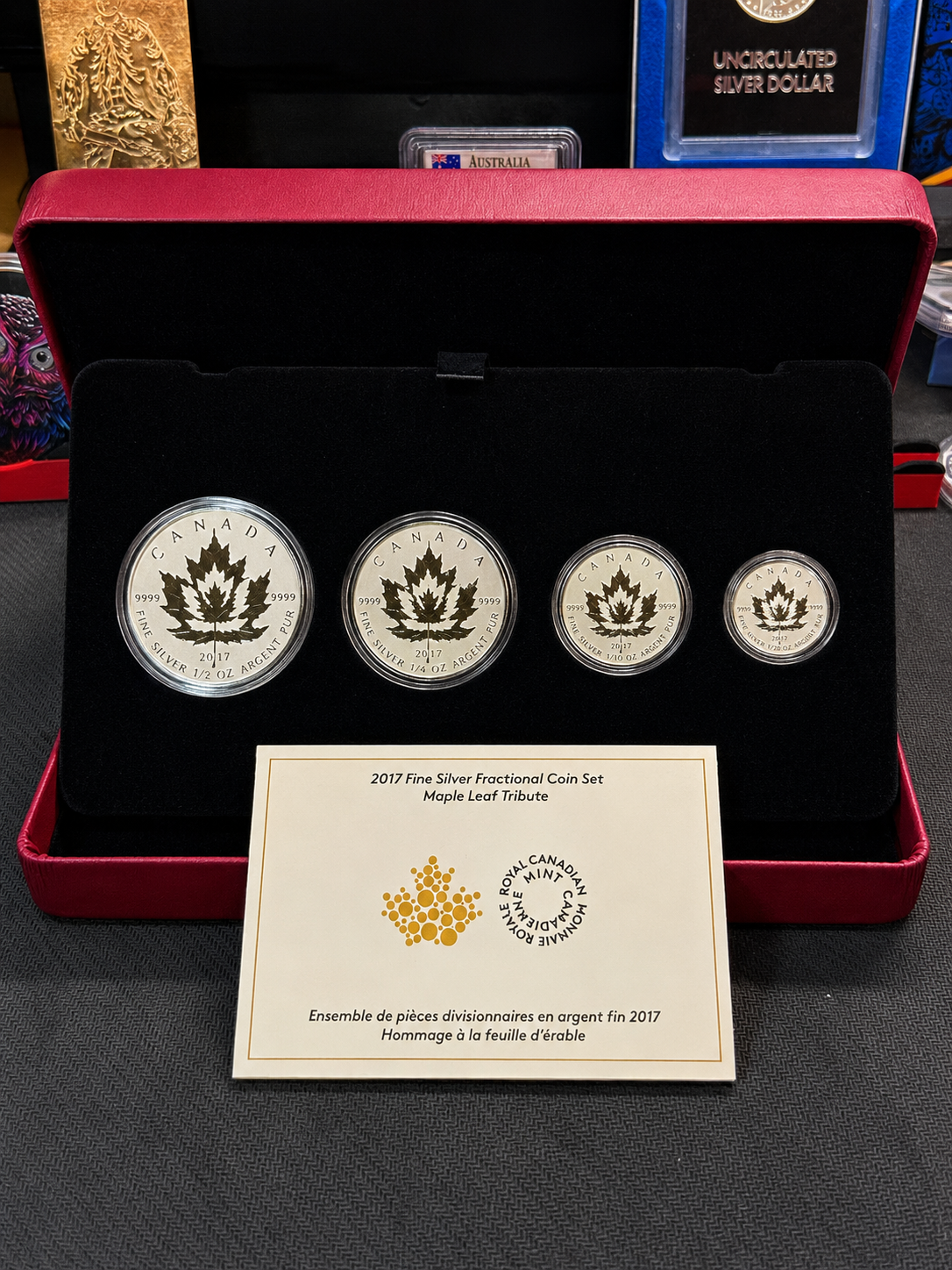
Viewing collector products from different years also demonstrates why these releases should be identified individually. Packaging, coin sizes, finishes, themes, production levels, and collector demand can change from one set to another. The underlying silver establishes a measurable foundation, but the market for a complete fractional release can extend well beyond ordinary bullion pricing.
Maple Leaf Mintages and Collector Scarcity
Annual production is one of the most frequently researched components of Maple Leaf value. Earlier standard bullion issues include several years with production far below the levels reached during the major expansion of global silver demand in the 2000s and 2010s.
Mintage should be treated as a measure of original supply, not a price guide. A low-mintage coin can remain relatively affordable if demand is weak, while an issue with greater production can become expensive in a scarce grade or desirable variety. Still, annual production provides an important starting point for understanding which dates began with smaller populations.
Silver Maple Leaf Mintages by Year
The following historical production figures show how dramatically annual Silver Maple Leaf output changed from the program’s introduction through 2014. The table also makes the unusually low production of several mid-1990s dates immediately visible.
| Year | Mintage |
|---|---|
| 1988 | 1,155,931 |
| 1989 | 3,332,200 |
| 1990 | 1,708,800 |
| 1991 | 644,300 |
| 1992 | 343,800 |
| 1993 | 1,133,900 |
| 1994 | 889,946 |
| 1995 | 326,244 |
| 1996 | 250,445 |
| 1997 | 100,970 |
| 1998 | 591,359 |
| 1999 | 1,229,442 |
| 2000 | 403,652 |
| 2001 | 398,563 |
| 2002 | 576,196 |
| 2003 | 684,750 |
| 2004 | 680,925 |
| 2005 | 955,694 |
| 2006 | 2,464,727 |
| 2007 | 3,526,052 |
| 2008 | 7,909,161 |
| 2009 | 9,727,592 |
| 2010 | 17,799,992 |
| 2011 | 23,129,966 |
| 2012 | 18,132,297 |
| 2013 | 28,222,061 |
| 2014 | 29,245,000 |
1997 Silver Maple Leaf: Key Date of the Standard Bullion Series
The 1997 Silver Maple Leaf stands out in the historical table with reported production of only 100,970 coins. That makes it the lowest-mintage regular bullion issue among the years shown and explains why the date receives significant attention from collectors building standard bullion date runs.
The surrounding years reinforce the point. Reported production was 326,244 in 1995 and 250,445 in 1996 before falling to 100,970 in 1997. Production then increased to 591,359 in 1998. That sharp difference helps explain why the 1997 issue has become such an important reference point when collectors discuss Maple Leaf value and standard bullion scarcity.
Even so, the 1997 mintage should not be treated as a price guarantee. Original production is only the starting supply. Current availability, condition, certified populations, collector participation, and actual completed sales determine how strongly that original scarcity translates into today’s market.
The distinction becomes particularly important when comparing raw and certified examples. A collector building an ordinary date run may simply want an attractive 1997 coin, while a registry collector may be pursuing a much narrower population at a specific high grade. Those buyers are competing in related but different markets.
The 1997 Silver Maple Leaf demonstrates why a key date should be identified from evidence rather than reputation alone. Its reported 100,970-coin production is dramatically below many surrounding regular bullion years, but Maple Leaf value still depends on the number of collectors seeking the date, the condition of available coins, and the supply actually reaching the market.
How Collectors Use Maple Leaf Mintage Figures
Mintage figures provide a measurable starting point for comparing Silver Maple Leaf issues, but experienced collectors rarely rank coins from production totals alone. A lower-mintage coin is not automatically worth more than every issue with a larger production number.
Instead, mintage should be evaluated alongside secondary-market availability. Maple Leaf value reflects not only how many coins were originally struck but also how frequently collectors can actually locate desirable examples today. If a supposedly scarce date appears constantly in dealer inventories and auctions, buyers may have little difficulty acquiring one.
Collector demand can reverse a simple mintage ranking as well. A specialty release with extremely small production may attract only a narrow audience, while a regular bullion key date can benefit from thousands of collectors attempting to complete the same annual series. The number of potential buyers matters alongside the number of coins.
For that reason, evaluating Maple Leaf value requires two separate questions. First, how many were originally produced? Second, how difficult is the issue to acquire in the condition and format collectors want today? The second question often explains why actual premiums do not follow production totals perfectly.
Mintage vs. Certified Population
Original mintage and certified population measure different forms of scarcity. When researching Maple Leaf value, mintage establishes how many coins were originally produced, while certified population helps identify scarcity within particular grades. Neither measurement should be interpreted without considering condition, market availability, and collector demand.
A Silver Maple Leaf can have a substantial original mintage while remaining difficult to locate in a specific top grade. Millions of coins may have been struck, but only a fraction may have been submitted for certification, and a still smaller group may receive the highest numerical grade.
That distinction is especially relevant to registry collecting. Buyers competing for high-grade certified coins are not necessarily competing for every surviving example of a date. They are competing for the much narrower certified population that satisfies their grade requirement.
Population numbers require context, however. They measure coins certified by a particular service rather than every surviving coin, and additional submissions can change the population over time. A population report should therefore complement original mintage and market research rather than replace them.
Graded Maple Leafs and Condition Rarity
Third-party certification can add another dimension to Maple Leaf value by authenticating a coin and assigning a standardized grade. Services such as PCGS and NGC allow collectors to compare certified examples within an established grading framework.
For common bullion dates, certification alone does not guarantee a large premium. The strongest grade-related premiums usually develop when buyers compete for a condition that is genuinely difficult to locate, particularly within a popular date, variety, privy issue, or specialty release.
Small grade differences can become financially important at the upper end of a certified population. A collector pursuing a registry-quality example may pay considerably more for a top-grade coin even though a lower-grade example contains exactly the same amount of silver.
This is another reason melt value and collector value must be separated. Silver content does not change when a coin enters a grading holder. What changes is the market’s ability to identify, compare, and compete for a particular certified condition.
Maple Leaf Security Features and Authentication
The Royal Canadian Mint has added advanced security technology to modern Silver Maple Leafs, strengthening one of the series’ major advantages in the bullion market. These features help buyers authenticate modern coins while giving the series a recognizable technical identity.
Precision radial lines create a detailed pattern across the coin’s fields, while a small laser-engraved maple leaf security mark adds another authentication feature. On applicable issues, the micro-engraved mark contains a numeral corresponding to the coin’s year of issue.
Security technology does not make an ordinary bullion date rare, but it can influence buyer confidence, authentication, and market recognition. Those characteristics can contribute to Maple Leaf value by strengthening the appeal of modern issues within the broader government-bullion market. Collectors comparing modern programs may consider security features alongside purity, design, liquidity, condition, and producer reputation.
Collectors evaluating older Maple Leafs should remember that security features changed during the life of the series. The absence of a feature introduced in later years is not evidence that an earlier coin is counterfeit. Authentication should always be based on the specifications appropriate to the particular date.
Privy Mark Maple Leafs
Privy mark issues form one of the most specialized areas of Silver Maple Leaf collecting. Maple Leaf value for these releases can differ substantially from standard bullion because a specific privy may combine restricted production, a distinctive theme, specialized collector demand, and much lower secondary-market availability.
For collectors, the appeal comes from differentiation. A standard Maple Leaf may be readily available, while a specific privy release can have a much smaller production and a distinct identity within the larger series. Collectors specializing in privies may therefore compete for issues that ordinary bullion buyers rarely encounter.
Production still needs to be considered with demand. A small privy mintage can create genuine scarcity, but the premium ultimately depends on how many collectors want that particular release. Popular themes and difficult-to-find issues can behave very differently from obscure privies with similarly small production totals.
Original packaging, finish, certification, and condition can also affect Maple Leaf value for specialty issues. When a product was sold as part of a particular presentation or collector release, completeness may matter more than it would for an ordinary bullion coin.
Reverse Proof and Specialty Maple Leafs
Reverse proof and other specialty finishes expand the Maple Leaf series beyond standard investment bullion. Different surface treatments change the visual relationship between the fields and design elements, giving collectors another reason to pursue a particular release rather than simply another ounce of silver.
The Royal Canadian Mint has also produced commemorative, colorized, gilded, fractional, anniversary, and other collector-focused Maple Leaf products. These issues should not automatically be compared with regular bullion mintages because their production methods, target markets, packaging, and release structures can be substantially different.
Specialty products can develop significant premiums when production is limited and collector interest remains strong after the original release. Conversely, elaborate presentation or a special finish does not guarantee future appreciation if secondary-market demand fails to develop.
Standard bullion and specialty Maple Leafs can contain the same precious metal while serving very different markets. When evaluating Maple Leaf value, compare a specialty release with products of similar format, finish, production, and collector purpose. A tiny collector-edition mintage should not be interpreted the same way as the annual production of the regular bullion coin.
2026 Maple Leaves in Motion: A Specialty Collector Example
The 2026 Maple Leaves in Motion five-ounce silver coin demonstrates how far a specialty Royal Canadian Mint release can differ from the standard one-ounce bullion Maple Leaf. The larger format, collector presentation, artistic treatment, and rose- and yellow-gold gilding place the coin in a different collecting category from ordinary annual bullion production.
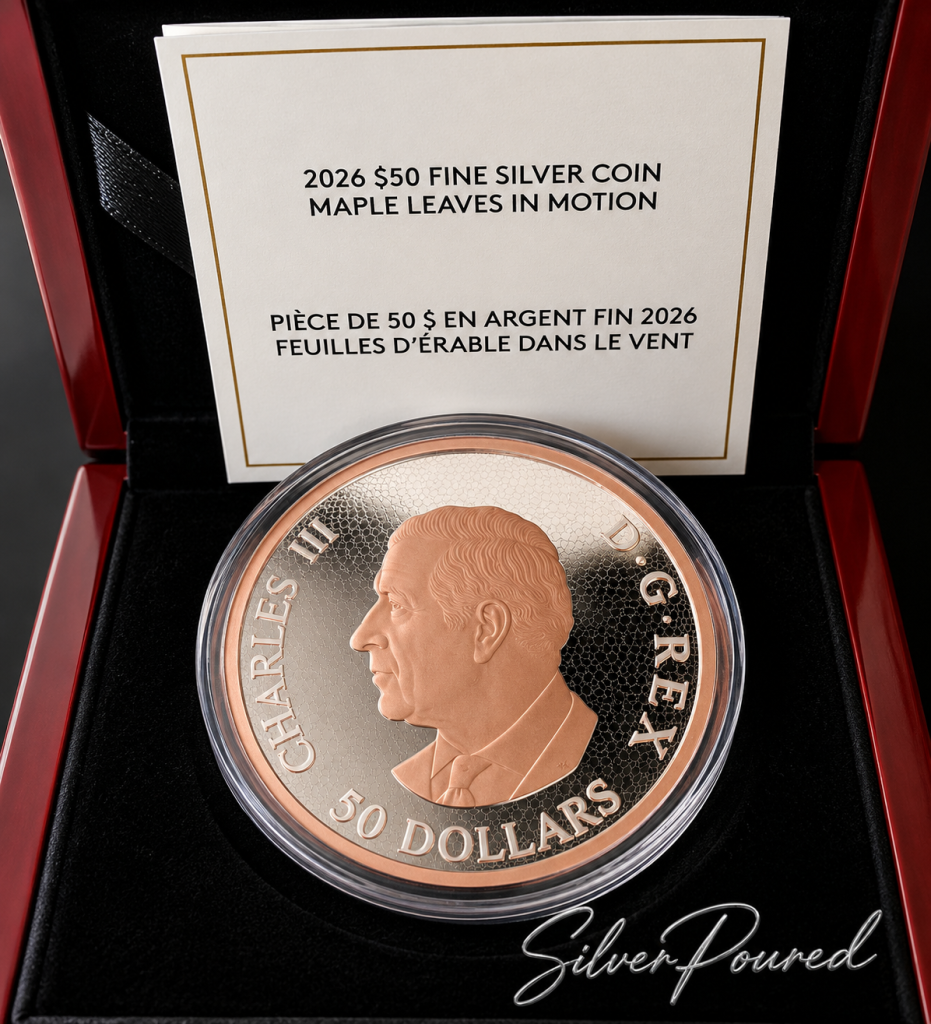
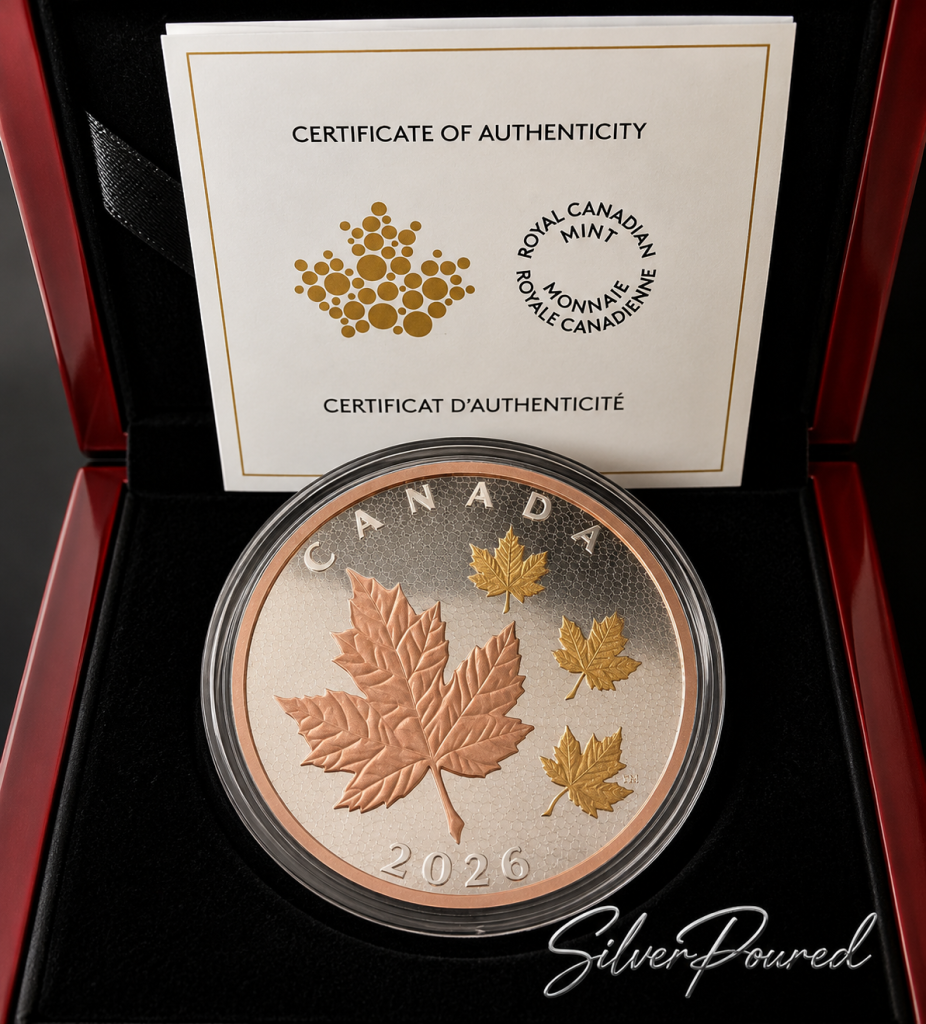
Presenting both sides together makes the distinction especially clear. The product is not simply five ounces of silver competing with generic five-ounce bullion. Its market can reflect metal content, artistic design, production level, presentation, condition, and collector demand simultaneously.
That does not mean the collectible premium is permanent. Specialty Maple Leaf value should still be tested against actual market activity. Completed sales and secondary-market availability provide stronger evidence than the original issue price alone.
Milk Spots and Their Effect on Maple Leaf Value
Milk spots are whitish surface marks that have been a well-known concern among collectors of some modern silver bullion coins, including earlier Silver Maple Leafs. They do not reduce the amount or purity of silver in the coin, but they can affect appearance and collector desirability.
The financial effect depends on the market for the particular coin. For common bullion, Maple Leaf value may remain closely tied to silver content despite visible spotting. For a scarce or condition-sensitive collector issue, however, Maple Leaf value can be affected more substantially when buyers have cleaner and more attractive examples available.
The Royal Canadian Mint later introduced MintShield surface-protection technology as part of its effort to reduce the occurrence of white spots on Silver Maple Leafs. That development is relevant when comparing different generations of the series, but collectors should still evaluate each coin individually.
Cleaning is not an appropriate solution for a collectible coin. Attempts to remove spots or alter surfaces can create hairlines or other damage and may reduce collector appeal further. When condition contributes materially to Maple Leaf value, preserving original surfaces is generally more important than trying to make them look different.
Toned Maple Leafs and Collector Interest
Silver can develop natural toning as its surfaces react with the surrounding environment over time. On Maple Leafs, that toning may range from subtle edge color to more dramatic patterns across the coin. Some collectors actively seek attractive original toning, while others strongly prefer brilliant untoned examples.
Because eye appeal is subjective, toning does not produce a predictable premium. An unusually attractive coin may bring stronger collector interest, while dark, uneven, or unattractive coloration can have the opposite effect. Artificially altered surfaces can create additional concerns, making originality an important part of the evaluation.
Toning should therefore be considered alongside date, condition, rarity, certification, and market demand rather than treated as an independent source of value. The underlying silver remains unchanged, but collector preferences can cause two otherwise similar coins to trade at different prices.
Fractional Maple Leaf Collector Sets
The Royal Canadian Mint has expanded the Maple Leaf design into fractional collector products that differ significantly from the standard one-ounce bullion series. These sets can combine multiple coin sizes, proof or specialty finishes, original presentation cases, certificates, and limited-production formats intended specifically for collectors.
Fractional sets should be evaluated as complete collector products rather than simply by adding together their silver weight. Maple Leaf value for a complete set can reflect original packaging, the presence of every coin, certificates, condition, production totals, and continued demand for the particular release.
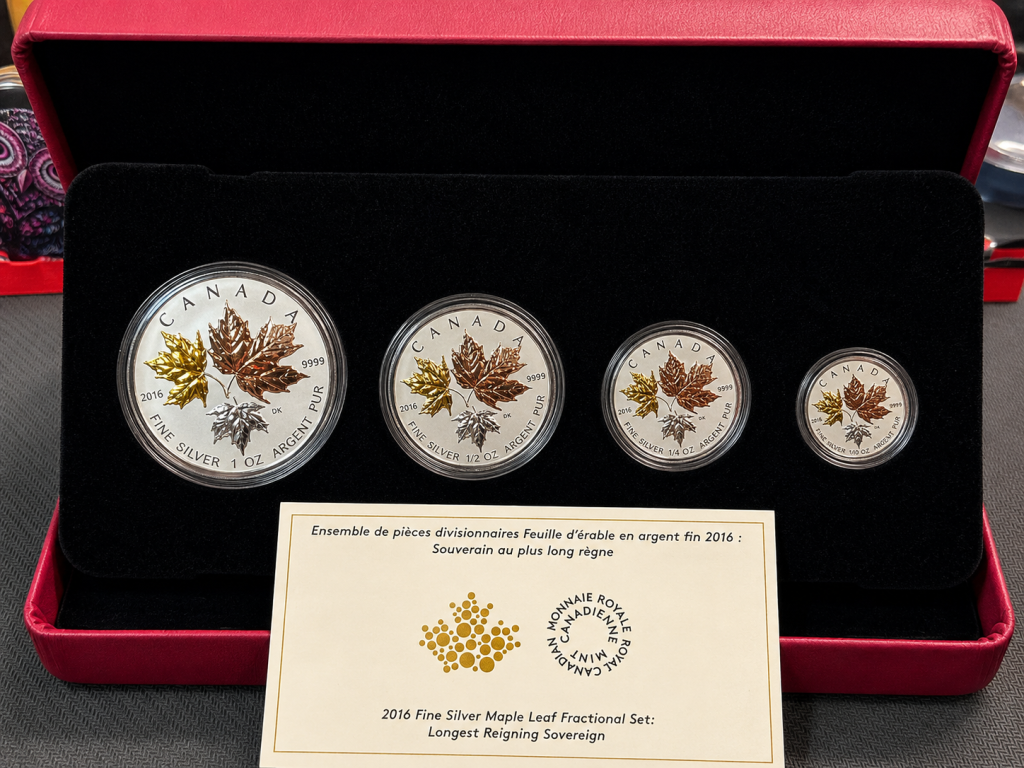
Complete presentation is particularly important when a set was originally marketed as a unified collector release. A missing coin, certificate, capsule, or damaged case may not change the intrinsic silver value, but it can make the product less desirable to buyers seeking an intact original set.
2014 Maple Leaf Fractional Set
The 2014 Canadian Fine Silver Fractional Set provides another example of the difference between bullion value and collector presentation. Multiple .9999 fine silver coins are organized as one Royal Canadian Mint product, giving collectors a format that cannot be evaluated accurately from a single one-ounce bullion price.
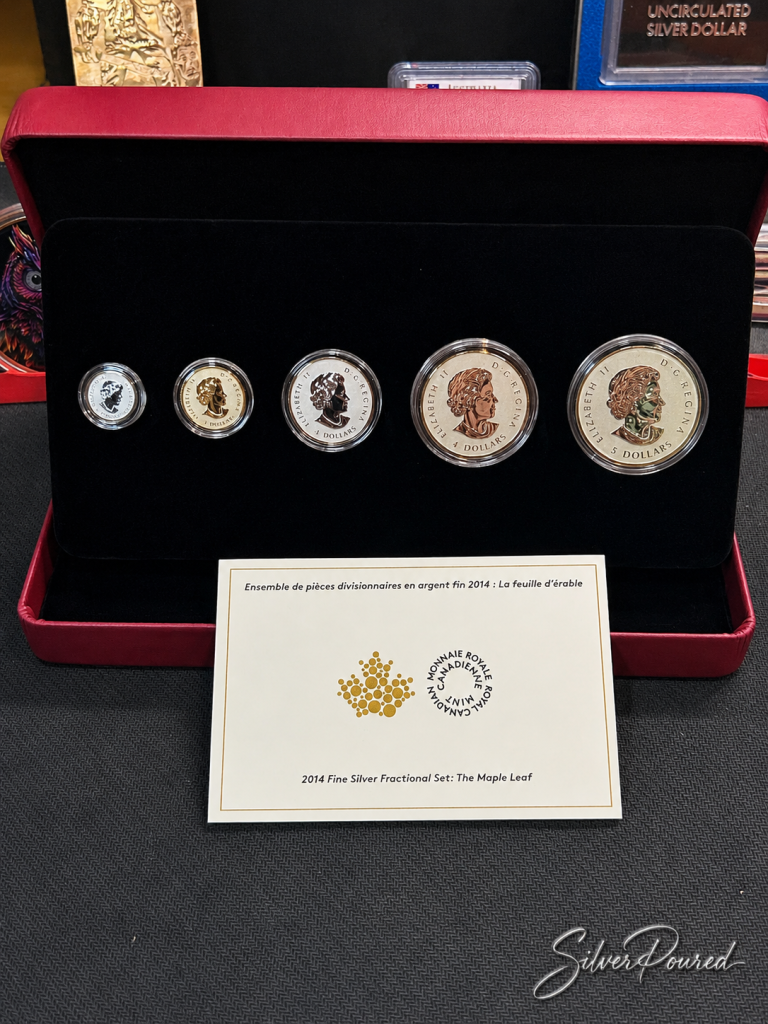
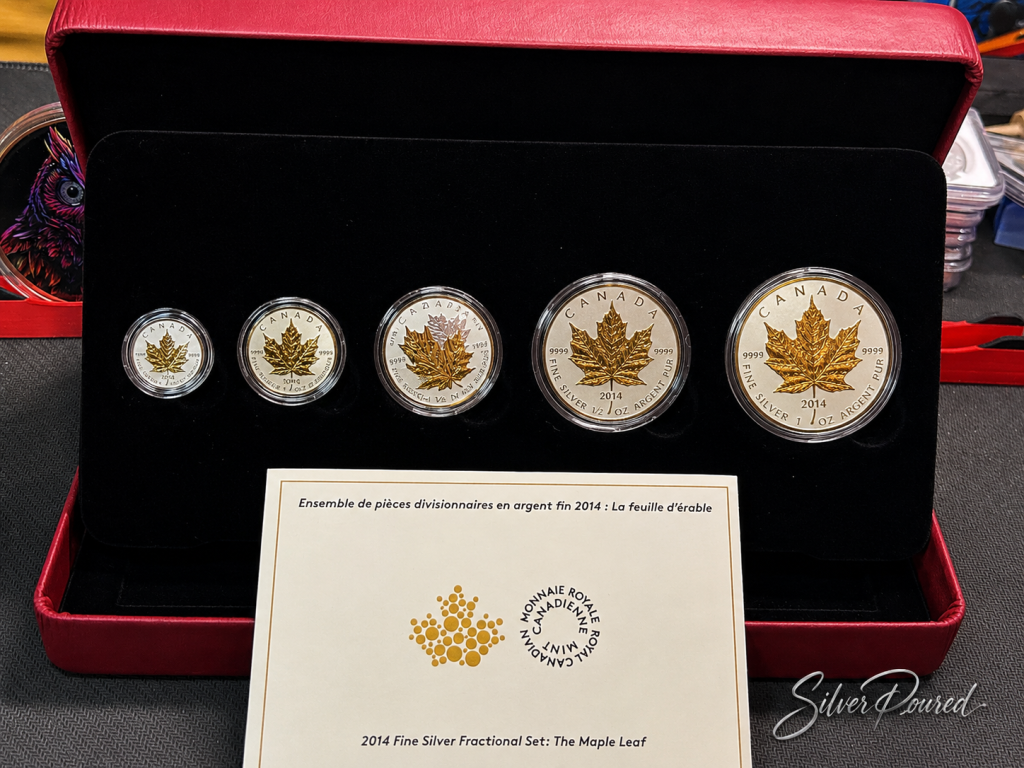
Pairing the presentation views also shows why photographs matter when researching specialty products. A collector can evaluate not only the individual coins but also how the complete set was issued and preserved. That information can become increasingly useful after the product is no longer available directly from the mint.
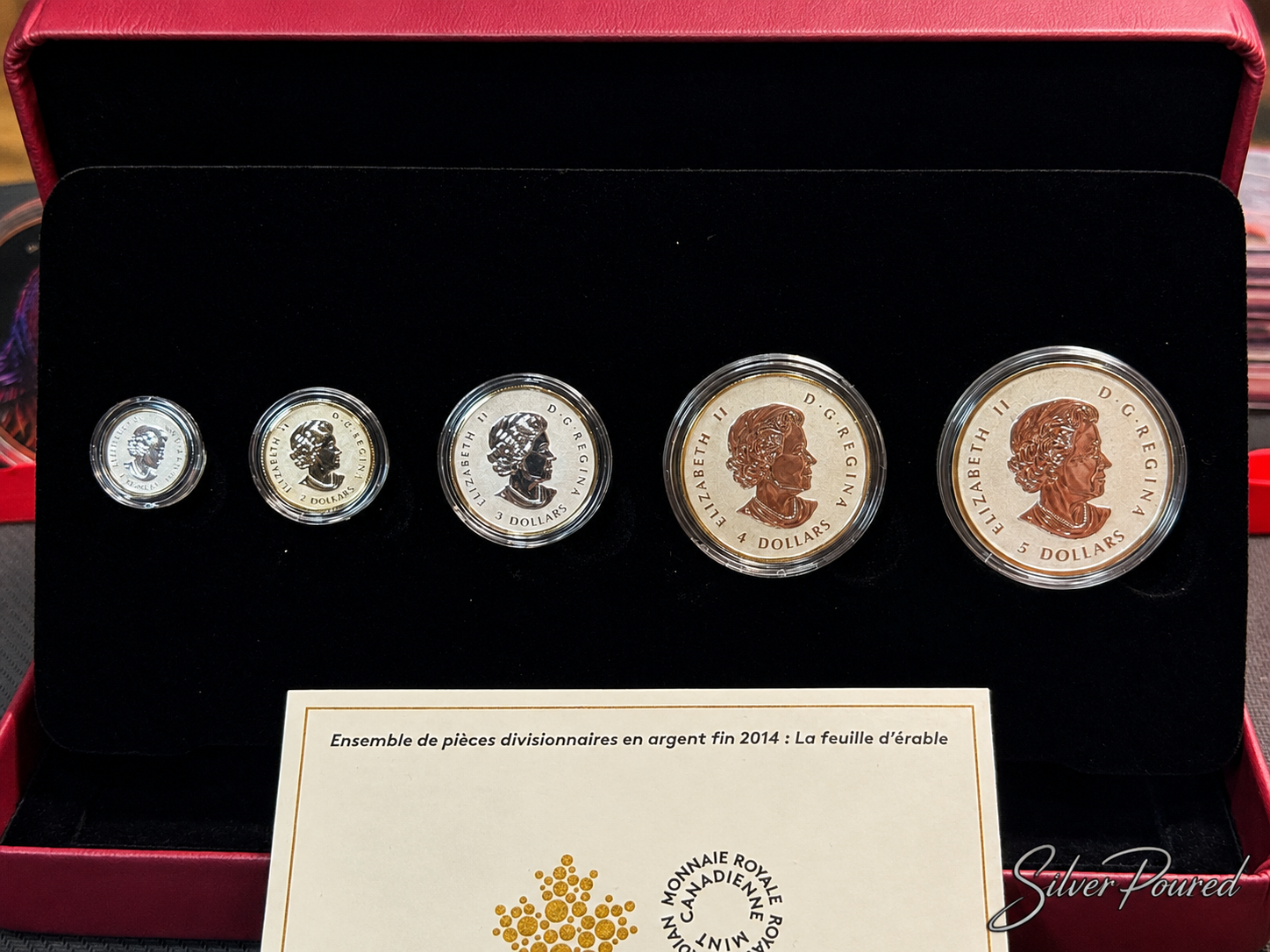
Collector sets illustrate why Maple Leaf value cannot always be reduced to ounces multiplied by spot price. When a release was created and sold as a complete presentation, its market can reflect silver content, production, condition, packaging, certificates, completeness, and collector demand together. Losing part of that original presentation can affect the collectible component even though the silver itself remains unchanged.
Building a Silver Maple Leaf Date Run
Date-run collecting gives the standard bullion series a structure that goes beyond accumulating interchangeable ounces. Maple Leaf value can vary substantially across a date run as collectors encounter differences in mintage, availability, condition, design details, security technology, and market demand.
The 1997 issue becomes particularly important in this approach because every complete regular bullion date run needs one. Its combination of low production and date-run demand can strengthen Maple Leaf value as collectors compete for a finite supply of available examples.
Collectors can define the boundaries of a Maple Leaf collection differently. Maple Leaf value research becomes more manageable when the collector first decides whether the goal is standard annual bullion, privy marks, reverse proofs, fractional products, commemorative releases, specialty finishes, or certified examples.
A clear collecting goal also helps control premiums. Maple Leaf value varies across standard bullion, key dates, privy marks, certified coins, fractional sets, and specialty releases, so deciding what belongs in the collection before buying can prevent scarcity marketing from dictating the strategy.
Maple Leaf Value vs. American Silver Eagle Value
Canadian Silver Maple Leafs and American Silver Eagles are frequently compared because both are globally recognized government bullion coins containing one troy ounce of silver. Yet their collector markets are not identical.
The Maple Leaf is notable for .9999 fine silver purity and modern security technology. The American Silver Eagle has exceptionally strong recognition in the United States and an extensive market for bullion, proofs, burnished issues, certified coins, labels, varieties, and date-based collecting.
For ordinary bullion examples, both coins derive much of their value from silver and prevailing physical-market premiums. For collectible issues, date, mintage, finish, condition, certification, variety, and demand can push either series well beyond melt value.
The useful question is therefore not which program is universally better. Collectors should compare the specific products being considered and determine how much of the purchase price represents silver exposure and how much represents a collectible premium.
Maple Leaf Value vs. Chinese Silver Panda Value
Chinese Silver Pandas provide a different comparison because annual design changes have historically been an important part of their collector appeal. Maple Leaf value develops through a different mix of dates, mintages, privies, finishes, security changes, condition, and specialty Royal Canadian Mint products.
That difference influences collecting behavior. A Panda collector may be strongly motivated by the changing annual artwork, while a Maple Leaf collector may focus more heavily on a difficult date, special privy, presentation set, condition rarity, or particular Royal Canadian Mint release.
Both demonstrate the same broader principle: equal silver weight does not require equal market value. Once collector demand develops around specific dates or products, the individual coin becomes more important than the ounce of silver it contains.
Maple Leaf Melt Value vs. Collector Value
Melt value is the value of the precious metal contained in a coin. For a standard one-ounce Silver Maple Leaf, that calculation begins with one troy ounce of .9999 fine silver and the current silver price.
Collector value begins where that calculation ends. Maple Leaf value can rise beyond the metal foundation when buyers pay additional premiums for a key date, low mintage, privy mark, specialty finish, attractive toning, original presentation, exceptional condition, certification, or another desirable characteristic.
That separation is essential when estimating Maple Leaf value. Maple Leaf value begins with intrinsic silver content, but the final market price can rise substantially when scarcity, condition, certification, specialty features, and collector demand create an additional premium.
| Value Factor | What It Measures | Potential Effect |
|---|---|---|
| Silver Content | Intrinsic precious-metal content | Establishes the basic melt-value foundation |
| Original Mintage | Number originally produced | Provides an initial measure of supply |
| Market Availability | How often examples can actually be purchased | Can reveal practical scarcity beyond mintage |
| Condition | Preservation and eye appeal | Can create significant differences among collector coins |
| Certified Population | Number graded at specific levels | Can create condition rarity within a larger mintage |
| Collector Demand | Competition among buyers | Determines whether scarcity supports a meaningful premium |
How to Evaluate a Maple Leaf Before Buying
Start by identifying exactly what the coin or set is. An accurate Maple Leaf value assessment requires confirming the year, weight, purity, finish, privy mark if applicable, packaging, certification, and whether the product belongs to the standard bullion series or a separate collector release.
Next, establish the silver-value baseline and compare the asking price with actual market evidence. Completed sales are generally more informative than ambitious unsold listings because they show prices at which buyers and sellers actually reached an agreement.
For a scarce date, research mintage and availability. For a certified coin, examine the grade and relevant population information. For a collector set, determine whether the original case, certificate, capsules, and all components remain together.
Condition deserves particular attention. Milk spots, scratches, fingerprints, cleaning, damaged packaging, or other impairments may affect collector demand even when silver content is unchanged. Conversely, exceptional preservation can strengthen the premium for a genuinely desirable issue.
Selling Canadian Silver Maple Leafs
Common bullion Maple Leafs are widely recognized and can generally be evaluated quickly from silver content and prevailing physical bullion premiums. Maple Leaf value becomes more complex for specialty releases because a buyer must also recognize the scarcity, condition, finish, packaging, certification, or other collectible characteristics responsible for the additional premium.
Before selling a potentially scarce issue, identify the exact product and research comparable completed transactions. Maple Leaf value can be understated by a generic melt-based offer when the coin is actually a key date, limited collector set, scarce privy, specialty release, or high-grade certified example.
Good photographs and accurate descriptions become especially useful for collectible material. Maple Leaf value can depend on characteristics that are difficult to communicate without clear images, so show both sides of the coin when practical and include packaging, certificates, labels, or other identifying information when those features are part of the product.
The strongest possible price and the fastest possible sale are not always the same goal. A specialist collector may pay more than a generic bullion buyer, but reaching that buyer can require additional time. Understanding the collectible component helps sellers decide whether that effort is justified.
Are Silver Maple Leafs a Good Investment?
Silver Maple Leafs combine precious-metal ownership with the recognition of a major government bullion program. Standard issues provide direct exposure to silver while carrying the liquidity and familiarity associated with Royal Canadian Mint bullion.
Collector releases add another variable. Maple Leaf value for these products may include premiums for scarcity, condition, packaging, grading, specialty formats, or collector demand that can rise or fall independently of silver. Buyers should understand whether they are purchasing primarily for metal exposure, collectibility, or a combination of both.
No collectible premium is guaranteed to appreciate. Maple Leaf value can change as collector preferences shift, certified populations increase, market availability changes, or previously difficult products return to the market. Documented scarcity and established demand provide stronger evidence than promotional claims alone.
The best way to evaluate Maple Leaf value is to separate the metal from the collectible premium. Silver content establishes an objective starting point. Mintage, condition, certified population, specialty features, market availability, and collector demand explain why a particular coin may trade above that foundation. Knowing which component you are paying for makes comparisons far more useful.
Frequently Asked Questions About Maple Leaf Value
How much silver is in a Canadian Silver Maple Leaf?
A standard Canadian Silver Maple Leaf contains one troy ounce of .9999 fine silver. Specialty Maple Leaf products can use different weights, so collectors should verify the specifications of the particular issue being evaluated.
What is the key date Silver Maple Leaf?
The 1997 Silver Maple Leaf is widely recognized as the key date of the standard bullion series among the years covered by the historical mintage table. Its reported production of 100,970 coins is substantially lower than the surrounding regular bullion issues, helping support stronger collector interest and Maple Leaf value.
Do milk spots reduce Maple Leaf value?
Milk spots do not change a coin’s silver weight or purity, but they can reduce Maple Leaf value when condition and eye appeal matter to collectors. The effect is generally more important on scarce, certified, or premium collector examples than on ordinary bullion purchased primarily for its silver content.
Are graded Silver Maple Leafs worth more?
They can be. Certification does not automatically create additional Maple Leaf value, but scarce dates and genuinely difficult high-grade examples may command stronger premiums. Collectors should compare the grade, certified population, original mintage, current availability, and completed sales before deciding whether the premium is justified.
Are privy mark Maple Leafs valuable?
Some privy mark issues command substantial collector premiums because they combine specialized designs with relatively limited production. Maple Leaf value for a privy issue depends on the specific release, mintage, condition, finish, packaging, availability, and the strength of collector demand rather than the presence of a privy mark alone.
Does a low mintage guarantee a valuable Maple Leaf?
No. Low production limits original supply, but Maple Leaf value also requires demand. An extremely scarce specialty issue with few interested buyers can trade for a smaller premium than a higher-mintage key date pursued by a much larger collector base.
How is Maple Leaf melt value calculated?
For a standard one-ounce Silver Maple Leaf, melt value follows the market value of one troy ounce of silver because the coin contains one troy ounce of .9999 fine silver. Dealer spreads and collectible premiums are separate from that intrinsic metal value.
Should I clean a spotted or toned Silver Maple Leaf?
Collectors generally should not clean collectible coins. Cleaning can alter original surfaces, create hairlines, and reduce collector appeal. When condition contributes to Maple Leaf value, preserving the coin as acquired is generally preferable to attempting to improve its appearance.
What should I check before buying a scarce Maple Leaf?
Confirm the exact year, issue type, weight, purity, finish, privy mark, condition, and packaging. Then compare official mintage information, certified populations when relevant, current market availability, and completed transactions. Maple Leaf value is most reliable when several independent measurements of scarcity and demand point in the same direction.
Final Thoughts on Maple Leaf Value
The Canadian Silver Maple Leaf combines one of the world’s best-known government bullion programs with a surprisingly broad collector market. Standard one-ounce issues provide highly recognizable .9999 fine silver, while key dates, privy marks, specialty finishes, fractional sets, graded coins, and limited collector releases create opportunities for value beyond ordinary bullion pricing.
The 1997 regular bullion issue demonstrates the importance of original mintage, but production totals should never be considered in isolation. Current availability, surviving condition, certified populations, market activity, and the number of collectors pursuing an issue determine whether scarcity translates into a meaningful premium.
Condition creates another layer of differentiation. Milk spots, cleaning, scratches, toning, original packaging, and certification can influence Maple Leaf value without changing the amount of silver in the coin. Specialty collector products add still more variables because completeness, presentation, finish, and production can become part of the market’s evaluation.
The most useful approach is to separate intrinsic silver value from collectible value. Establish what the metal is worth first, then determine what evidence supports the additional premium. Mintage, certified population, condition, market availability, specialty features, and completed sales provide a much stronger basis for evaluating Maple Leaf value than an asking price or scarcity claim by itself.
Whether the goal is building a standard date run, pursuing the 1997 key date, collecting privy marks, assembling Royal Canadian Mint presentation sets, or simply owning recognizable government bullion, understanding those separate value drivers makes it easier to compare coins intelligently and recognize where genuine Maple Leaf value exists.
Related SilverPoured Resources
Continue researching Maple Leaf value through SilverPoured resources covering comparable world bullion coins, silver prices, melt value, limited-mintage silver, collector premiums, and the market factors that can push collectible coins above their underlying precious-metal value.
World Bullion & Coin Values
American Silver Eagle Values
Chinese Silver Panda Value
Kookaburra Value
Libertad Value
Gold Britannia Value
Silver Prices & Value Tools
Silver Spot Price Today
Silver Melt Value Calculator
What Is Silver Melt Value?
Silver Spot vs Bid vs Ask Price
Silver Coin Values
Collector Premiums & Scarcity
Limited Mintage Silver
Premium Over Spot Explained
Why Collectible Silver Sells for More
Why Silver Premiums Change
Why Bullion Dealers Charge Premiums
Purchase Precious Metals from a Trusted Dealer
Collectors researching Maple Leaf value may also compare collectible Canadian coins with newly produced investment-grade bullion. Standard bullion generally places more emphasis on precious-metal content and current dealer premiums, while key dates, privy marks, specialty finishes, fractional sets, and certified Maple Leafs can include an additional collectible premium.
When purchasing physical precious metals, compare purity, weight, current silver value, total delivered cost, dealer premiums, reputation, shipping policies, and product availability. Separating the bullion component from the collectible component makes it easier to understand what you are paying for.
Collector Insight
Maple Leaf value is strongest as a research concept when metal value and collector value are measured separately. One troy ounce of .9999 fine silver establishes the bullion foundation, while mintage, surviving availability, condition, certified population, privy marks, specialty formats, original presentation, and collector demand explain why one Maple Leaf can trade for substantially more than another.
Keep SilverPoured Free
SilverPoured is built to help collectors and precious-metals investors make smarter decisions through free calculators, original photography, coin research, value references, collector education, and independent market resources. Every page is created to make valuable precious-metals information available without requiring a paid subscription.
This Maple Leaf value resource is designed to help collectors understand silver content, annual mintages, key dates, certified populations, privy marks, specialty releases, condition, collector premiums, and the difference between melt value and collectible value. Every contribution helps support continued research, original photography, calculator development, and expansion of SilverPoured’s precious-metals education.
Your support allows SilverPoured to remain independent while building one of the web’s most comprehensive free libraries for coin collectors, bullion buyers, precious-metals researchers, and long-term investors.