
🧮 Calculate Your Silver’s Melt Value Now →
⚡ Get Instant Junk Silver Value →
Understanding the Silver Price
The silver price is the current market value of silver quoted per troy ounce. It provides the pricing foundation for silver coins, bars, rounds, junk silver, sterling silver, scrap silver, and investment-grade bullion. Whether buying, selling, stacking, or collecting, understanding the silver price helps establish intrinsic value before premiums or collectible characteristics are considered.
Live pricing matters because the market value of physical silver changes throughout the trading day. A silver coin, bar, or round may contain exactly the same amount of metal from one day to the next while its intrinsic value rises or falls with the underlying market.
Collectors can use current pricing to separate silver content from numismatic value. Investors and stackers can compare premiums across different bullion products, while sellers can establish a current market baseline before evaluating dealer or private-party offers.
What Is the Silver Price?
The silver price represents the current market value of one troy ounce of silver. It is commonly quoted in U.S. dollars per troy ounce and changes as buyers and sellers respond to trading activity, economic developments, currency movements, industrial demand, investment demand, and changing expectations about supply.
This price acts as the common baseline for physical silver products. A one-ounce round, a 10-ounce bar, a bag of circulated U.S. silver coins, and a collectible bullion coin may have very different retail prices, but each contains silver whose intrinsic value begins with the same underlying market.
Physical products generally trade above raw metal value because refining, fabrication, distribution, insurance, inventory, dealer operations, product recognition, and demand can all contribute to the final price. The silver price therefore establishes the metal baseline rather than automatically determining what a finished product should cost.
Why Silver Price Matters
Silver price matters because it provides buyers and sellers with an objective starting point for evaluating physical metal. Without a current market baseline, it becomes difficult to determine whether a bullion product is trading at a reasonable premium or whether an offer accurately reflects the silver it contains.
Investors use current pricing to track the intrinsic value of physical holdings. Collectors use it to distinguish metal value from collectible premium. Dealers use it when adjusting buy and sell prices, while stackers compare it with retail pricing to evaluate acquisition costs across different products.
Knowing the current silver price does not guarantee that a buyer will obtain metal at that number or that a seller will receive it. Instead, it establishes the market reference from which premiums, dealer spreads, refining costs, product recognition, and collector demand can be evaluated.
The market quote and the price of a physical silver product answer different questions. Silver price establishes what the underlying metal is worth, while the final transaction price reflects the form in which that metal is being bought or sold. Separating those two values makes bullion premiums and dealer spreads much easier to understand.

How Silver Price Is Determined
Silver trades in a global market where prices respond continuously to buying and selling activity. Industrial users, refiners, miners, bullion dealers, institutional investors, financial-market participants, and private investors all contribute to demand and price discovery.
Important influences include industrial consumption, investment demand, mine production, recycled supply, currency strength, inflation expectations, interest rates, economic growth, and geopolitical developments. No single factor controls the market in isolation, and the relative importance of these forces can change over time.
Major futures and wholesale precious-metals markets contribute to global price discovery, while physical bullion markets respond to the same underlying conditions through changing inventory and premiums. This is why the quoted silver price and the retail cost of coins, bars, or rounds can move together without remaining identical.
Silver Price vs Physical Silver Price
The quoted silver price and the retail price of physical silver are related but not identical. Market pricing establishes the underlying metal value, while a finished bullion product also carries the costs and market characteristics associated with producing, distributing, stocking, and reselling it.
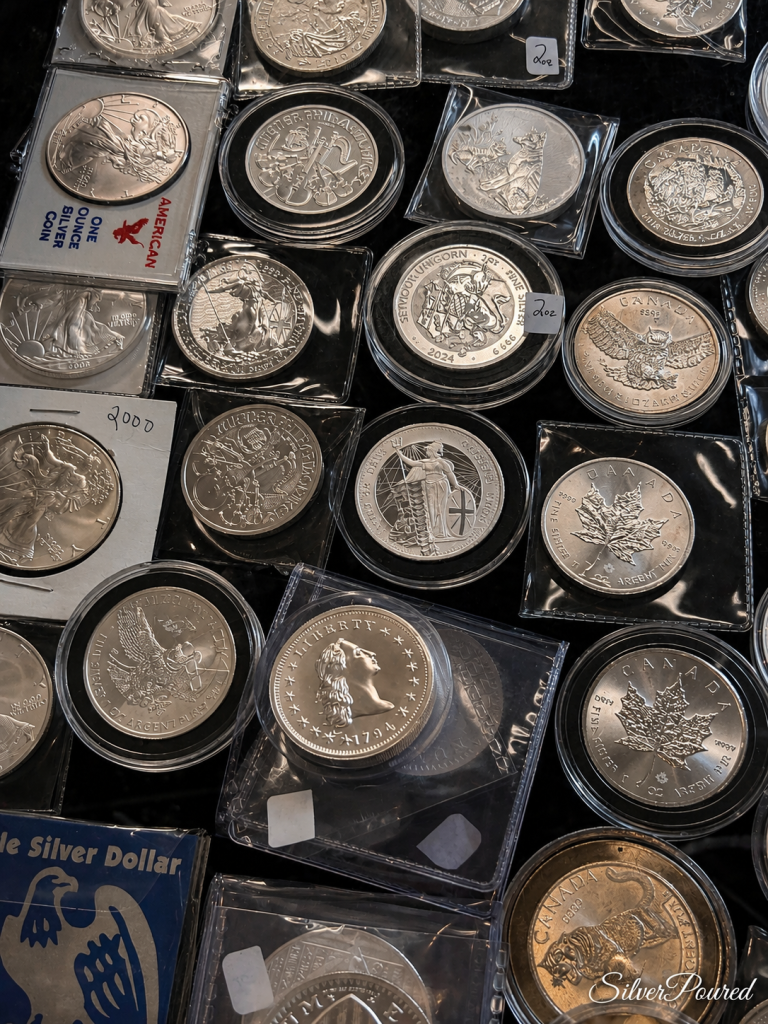
Silver bars, rounds, American Silver Eagles, Canadian Maple Leafs, junk silver, and collectible bullion can therefore sell at different percentages above the underlying market. The amount above intrinsic value is commonly described as the premium.
Premiums can expand when physical demand rises, dealer inventory becomes difficult to replace, mint production is constrained, or buyers compete for particular products. They can contract when inventory is plentiful or demand weakens. A stable silver price does not necessarily mean physical premiums will remain unchanged.
Silver Price Throughout the Trading Day
Silver trades across international markets, allowing its value to change throughout much of the global trading day. Economic reports, currency movements, interest-rate expectations, geopolitical developments, industrial news, and investor positioning can all contribute to short-term price movement.
Live pricing tools help collectors and investors establish a current reference before buying or selling. This is particularly useful during volatile periods when a price viewed earlier in the day may no longer accurately represent current market conditions.
Short-term movement should still be viewed in context. A rapidly changing silver price can affect immediate bullion value, but long-term ownership decisions may depend on broader objectives such as accumulation strategy, diversification, liquidity, or collecting goals.
Industrial Demand and Silver Price
Silver is both a precious metal and an industrial material. Its electrical conductivity, thermal conductivity, reflectivity, and other physical properties make it useful across electronics, solar-energy systems, automotive applications, medical technology, aerospace, telecommunications, and other industries.
Industrial consumption can influence the silver price because manufacturers compete for the same global metal supply that also serves investment and jewelry markets. Changes in manufacturing activity, technology, substitution, recycling, and new applications can therefore affect long-term demand.
This industrial role distinguishes silver from precious metals whose demand is more heavily concentrated in investment or jewelry. Strong industrial consumption can support demand even when investor interest changes, while weaker manufacturing conditions can affect the market in the opposite direction.
Investment Demand and Silver Price
Investment demand can also have a significant influence on silver price. Investors may increase exposure to silver during periods of inflation concern, economic uncertainty, currency weakness, financial-market volatility, or growing interest in tangible assets.
Investment exposure can take different forms, including physical bullion, exchange-traded products, futures, mining shares, and other financial instruments. Physical buyers create additional demand for fabricated products such as bars, rounds, and government bullion coins, which can also affect retail premiums when inventories tighten.
Because silver serves both industrial and investment markets, price movement can reflect several competing forces at once. Strong industrial demand may coincide with weak investment demand, or both can strengthen simultaneously. Understanding that dual role provides useful context for interpreting market movement.
Silver occupies an unusual position in the precious-metals market because the same ounce can be valued by an industrial user, a bullion investor, and a collector for different reasons. Watching both industrial and investment demand provides better context for silver price movement than relying on a single market narrative.
Inflation, Interest Rates, and Silver Price
Inflation expectations, central-bank policy, interest rates, currency strength, and investor confidence can influence precious-metals markets. These factors affect the relative attractiveness of holding non-yielding physical assets compared with cash, bonds, equities, and other investments.
Periods of inflation concern or currency weakness can increase interest in tangible assets, while higher real interest rates may create competition from yield-bearing investments. These relationships are not mechanical, however, and silver can respond differently depending on broader economic conditions and market expectations.
No single economic indicator reliably predicts the future silver price. Monitoring several market forces together provides stronger context than attempting to explain every movement through one variable.
Physical Bullion Pricing
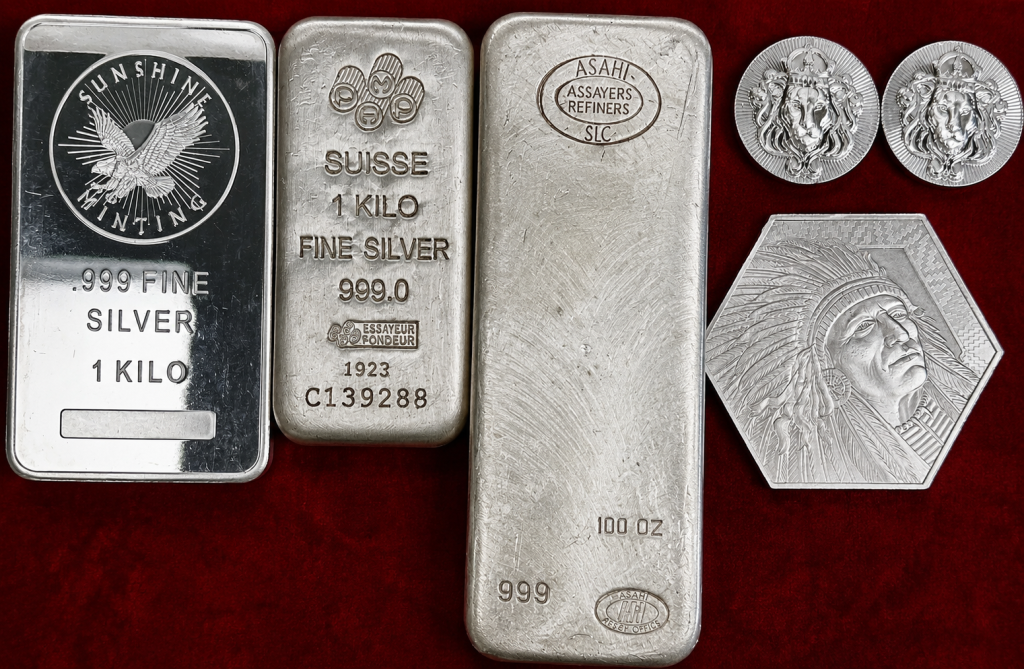
Every physical silver product begins with underlying metal value, but its final retail price depends on product type, manufacturing cost, availability, dealer margin, recognition, liquidity, and demand. Premiums therefore vary between products and can change independently of the underlying market.
Comparing a product’s asking price with the current silver price helps reveal the premium being charged. Buyers can then decide whether that additional cost is justified by the product’s size, mint, recognition, resale market, scarcity, or collector appeal.
This approach is more informative than comparing sticker prices alone. Two products containing the same amount of silver may represent very different acquisition costs once premiums are measured against the same underlying market value.
Gold vs Silver
Gold and silver often respond to some of the same economic forces, but the two metals occupy different positions in global markets. Gold is widely held as a monetary asset, reserve asset, investment, and store of wealth, while silver combines precious-metal demand with substantial industrial consumption.
That industrial exposure can contribute to greater percentage volatility in silver. Changes in manufacturing activity, technology demand, investment flows, currency markets, and economic expectations can affect silver differently than gold even when both metals move in the same general direction.
Investors sometimes monitor the gold-to-silver ratio to compare the market value of the two metals. The ratio does not predict future performance, but it provides historical and relative-value context for buyers deciding how to allocate precious-metals holdings.
Silver’s lower price per ounce also makes physical accumulation accessible at smaller dollar amounts. Some investors therefore use silver for incremental bullion purchases while holding gold for greater value concentration in less physical space.
Using Live Pricing to Calculate Melt Value
Live silver price provides the market input needed to calculate the intrinsic value of physical silver. Once weight and purity are known, the contained amount of pure silver can be multiplied by current market pricing to estimate melt value.
This process applies to bullion bars, rounds, qualifying U.S. silver coins, sterling silver, scrap, and other items with measurable silver content. The correct weight, unit, and purity must be used because an inaccurate input produces an inaccurate valuation.
Collectors can compare melt value with the market price of older coins to determine how much value may come from rarity, condition, certification, or collector demand. Bullion buyers can make a similar comparison between intrinsic value and the premium attached to bars, rounds, and government-issued coins.
The live tools at the top of this page provide immediate access to current pricing and silver-value calculations without requiring readers to rely on a static market quote.
A live market quote becomes more useful when it is connected to physical metal. Once current pricing is translated into the melt value of a coin, bar, round, or other silver item, buyers can compare intrinsic value with the actual transaction price and see the premium separately.
Buying Physical Silver
Buying physical silver involves more than watching the underlying market. Buyers should compare premiums, dealer reputation, product authenticity, availability, liquidity, storage requirements, and expected resale demand before deciding which product best fits their objectives.
Government bullion coins may command higher premiums because of recognition and established secondary markets. Generic rounds and larger bars may offer lower acquisition costs per ounce, while vintage bullion and collectible products can carry additional premiums unrelated to their raw silver content.
Comparing the asking price with the current market value of silver reveals how much of the purchase represents underlying metal value and how much represents premium. That comparison is more useful than assuming the cheapest product or the lowest premium is automatically the best choice for every buyer.
Selling Physical Silver
Current market pricing is equally important when selling physical silver. Dealers, refiners, coin shops, estate buyers, private purchasers, and other market participants generally begin with the underlying value of the silver and then account for the specific product being offered.
Recognized bullion may receive stronger bids because its weight, purity, authenticity, and resale market are easier to establish. Scrap silver or mixed material can require testing, sorting, or refining, while collectible coins and vintage bullion may deserve additional research before accepting a metal-based offer.
Comparing multiple offers against the live market helps sellers understand the spread between intrinsic value and an actual purchase bid. The highest percentage of melt is not always the only consideration, but knowing the market baseline makes competing offers easier to evaluate.
Common Silver Pricing Mistakes
One common mistake is treating the quoted market price as the expected retail price of every physical product. Bullion normally carries a premium, and collectible material can trade substantially above intrinsic value. The underlying quote is a baseline rather than a universal transaction price.
Another mistake is comparing products only by total purchase price without accounting for the amount of silver being acquired. Comparing premium per ounce or percentage above intrinsic value can provide a clearer picture when products differ in size or format.
Buyers can also overemphasize premium while ignoring liquidity and resale demand. A product purchased cheaply may not be the strongest value if it is difficult to authenticate or resell. Recognition, dealer acceptance, mint reputation, and secondary-market demand can matter alongside acquisition cost.
Short-term market movement can create another trap. Reacting emotionally to every rise or decline can encourage poorly timed decisions. A defined buying or selling strategy provides a more disciplined framework than attempting to predict every move.
Why Investors Monitor the Silver Market
Investors monitor live pricing because market movement changes the intrinsic value of existing holdings and the cost of future purchases. Regular observation also helps buyers recognize changing premiums, periods of increased volatility, and differences between the underlying market and physical bullion pricing.
Daily monitoring does not require daily trading. For long-term owners, following current market conditions can simply provide context for portfolio value and acquisition opportunities while helping distinguish meaningful changes from ordinary short-term volatility.
Understanding Today’s Silver Market
Today’s silver market combines industrial consumption, investment demand, mining supply, recycling, currency markets, interest-rate expectations, technological development, and global economic conditions. Manufacturers, refiners, bullion dealers, financial institutions, collectors, and individual investors all participate in different parts of that market.
Because those forces can change independently, the market may move for several reasons at once. A strong industrial outlook can support demand while changing monetary expectations affect investment flows, or physical bullion demand can increase even when the underlying market is relatively stable.
Understanding these interacting forces provides better context than attributing every market move to one headline or indicator. It also helps physical buyers separate changes in raw metal value from changes in retail premiums.
The Future of Silver Demand
No one can reliably predict the future silver price, but the forces influencing demand can be studied. Industrial applications, investment behavior, mine production, recycling, technological changes, substitution, economic growth, and monetary conditions will continue shaping the market.
Silver’s industrial role makes technological development particularly important. Electronics, solar-energy systems, automotive applications, medical technology, telecommunications, and other uses can affect long-term consumption, while innovation may also improve recycling efficiency or reduce silver use in individual applications.
Investment demand remains another major variable. Economic uncertainty, inflation expectations, currency conditions, market volatility, and changing investor preferences can increase or reduce demand for physical bullion and other forms of silver exposure.
Using Market Pricing in a Long-Term Strategy
Long-term precious-metals ownership generally benefits from a defined strategy rather than decisions based solely on a single day’s market movement. Some buyers accumulate gradually, while others maintain target allocations or add metal when market conditions and premiums fit their objectives.
Dollar-cost averaging is one approach in which an investor purchases at regular intervals rather than attempting to identify the perfect entry point. Other buyers remain more selective and increase purchases during periods of price weakness or unusually favorable premiums.
Neither method guarantees investment results. The important principle is that current market value should be considered alongside premiums, liquidity, storage, diversification, financial circumstances, and the buyer’s long-term goals.
Following the silver market does not require predicting tomorrow’s movement. For long-term physical owners, live pricing provides a consistent reference for measuring holdings, comparing premiums, and making disciplined decisions within a broader precious-metals strategy.
Why Silver Remains an Important Market Indicator
The silver price connects several parts of the precious-metals market. It provides the underlying reference for bullion valuation, melt-value calculations, dealer pricing, portfolio tracking, collectible-silver analysis, and industrial procurement.
For collectors, current pricing helps establish the metal component of junk silver, historic U.S. coinage, vintage bullion, and modern investment products. For investors, it provides a consistent benchmark for comparing physical products and tracking changes in intrinsic portfolio value.
Following the silver price also makes premiums easier to understand. When a physical product changes price, buyers can determine whether the movement came primarily from the underlying silver market, a changing premium, or a combination of both.
Silver and Long-Term Wealth Preservation
Physical silver has historically attracted buyers seeking tangible ownership outside conventional financial assets. Some hold it as a portfolio diversifier, some as a long-term store of physical value, and others simply prefer owning precious metal directly.
Owning physical silver eliminates issuer or counterparty exposure associated with certain financial claims on metal, but it introduces other considerations such as secure storage, insurance, transaction spreads, authentication, and liquidity. Those tradeoffs should be evaluated alongside the potential benefits of tangible ownership.
Market values can rise or fall substantially, so physical silver should not be treated as a guaranteed path to preserving purchasing power or generating investment returns. Understanding acquisition premiums, selling spreads, ownership costs, and the underlying market provides a more realistic framework for long-term decisions.
Whether the goal is accumulating bullion, collecting historic silver coins, diversifying a portfolio, or simply understanding the value of metal already owned, live pricing provides the common reference that connects physical silver to the broader precious-metals market.
Related SilverPoured Resources
Continue researching silver price through SilverPoured resources covering live market pricing, bid and ask spreads, melt value, physical-silver calculators, bullion premiums, and dealer pricing.
Live Silver Prices
Silver Spot Price Today
What Is the Silver Spot Price?
Silver Spot vs Bid vs Ask Price
Why Silver Bid Price Matters
What Is the Silver Ask Price?
Silver Value Calculators
Silver Melt Value Calculator
What Is Silver Melt Value?
Junk Silver Value Calculator
Silver Coin Values
Poured’s Cheat Sheet — Live Silver Values
Bullion Premiums and Buying
Premium Over Spot Explained
Why Silver Premiums Change
Why Bullion Dealers Charge Premiums
Best Place to Buy Silver Online
Best Silver Dealers
Purchase Precious Metals from a Trusted Dealer
Understanding the current silver price gives buyers a useful baseline before comparing physical precious-metal products. Silver bars, rounds, government bullion coins, and circulated silver coinage can all carry premiums above their underlying metal value because of fabrication, recognition, availability, liquidity, and market demand.
Golden State Mint offers investment-grade silver bars, silver rounds, gold bullion, copper bullion, and fractional precious metals. Comparing current product pricing with the silver price can help buyers separate underlying metal value from the additional premium attached to a finished bullion product.
Collector Insight
Silver price is the common reference connecting bullion, collectible coins, junk silver, bars, rounds, and other physical products to the broader precious-metals market. The metal quote establishes the baseline, while premiums, spreads, rarity, condition, certification, and collector demand explain why actual transaction prices can differ from that underlying value.
Keep SilverPoured Free
SilverPoured is built to help collectors and precious-metals investors make smarter decisions through free calculators, original photography, coin research, value references, collector education, and independent market resources. Every page is created to make valuable precious-metals information available without requiring a paid subscription.
This Silver Price resource combines live pricing tools, silver-value calculations, market education, bullion-premium research, and original SilverPoured photography to help readers understand how the silver price connects to physical metal. Every contribution helps fund continued precious-metals research, original photography, calculator development, and expansion of the free SilverPoured Authority Library.
Your support allows SilverPoured to remain independent while building one of the web’s most comprehensive free libraries for coin collectors, bullion buyers, precious-metals researchers, and long-term investors.