2026 Coins: Complete Guide to America’s 250th Anniversary Coin Program
America has only one 250th anniversary.
For two and a half centuries, the United States has preserved its story through documents, monuments, memorials, and the coins exchanged by ordinary Americans every day. Those coins have quietly recorded the nation’s growth, its triumphs, its hardships, and the enduring ideals that continue to define the Republic.
The Semiquincentennial transforms that tradition into something extraordinary. Rather than commemorating a single event or issuing one symbolic coin, the United States Mint created an interconnected program in which the 2026 coins carry America’s 250-year story across circulating coinage, annual collector sets, commemoratives, precious-metal issues, historic recreations, and specialty collector products. Together, the 2026 coins form a national collection whose meaning extends far beyond any single denomination or release.
Every coin introduced during 2026 becomes part of a larger historical documentary—one that begins with the nation’s earliest foundations and concludes by reminding future generations that liberty survives only when it is understood, protected, and passed forward.
For one remarkable year, the money passing through American hands becomes part of the anniversary itself. Collectors can encounter that history in pocket change, annual Mint sets, limited privy-mark releases, precious-metal coins, historic recreations, medals, and some of the most ambitious modern products ever issued by the United States Mint.
The scale of the program creates collecting opportunities at nearly every level. Each family contributes another chapter built around liberty, self-government, sacrifice, independence, constitutional government, equality, and the responsibility of carrying those ideals forward.
Collectors can find new designs in pocket change, search bank rolls for a scarce July 4 privy quarter, build complete Philadelphia and Denver sets, purchase proof and silver proof issues, follow West Point precious-metal releases, pursue certified high-grade examples, compare product limits, and watch for genuine errors as millions of newly designed coins move through production and circulation.
This SilverPoured Master Hub serves as the documentary centerpiece of the complete 2026 Semiquincentennial Authority Library. Rather than examining each coin as an isolated product, it follows the anniversary as a connected historical narrative before guiding collectors toward the specialized resources that explore every denomination, product family, Mint facility, precious-metal issue, value, variety, and collector market in greater depth.
In Honor of Those Who Have Served and Continue to Serve
To every active-duty service member, National Guard member, Reservist, veteran, military family, Gold Star family, and every family that has carried the weight of military service—thank you.
America’s 250-year story belongs not only to the leaders, documents, and events represented by these coins, but also to the Americans who have protected—and continue to protect—the nation those symbols represent.
Your service has helped preserve the freedoms these coins were created to commemorate. This Semiquincentennial Authority Library is dedicated with gratitude to all who have answered the call to serve.
Liberty is inherited only because it is protected.
We believe knowledge should remain free.
With gratitude from everyone at SilverPoured.
What Is the 2026 U.S. Semiquincentennial Coin Program?
The word Semiquincentennial means a 250th anniversary. In 2026, the United States commemorates 250 years since the adoption of the Declaration of Independence on July 4, 1776.
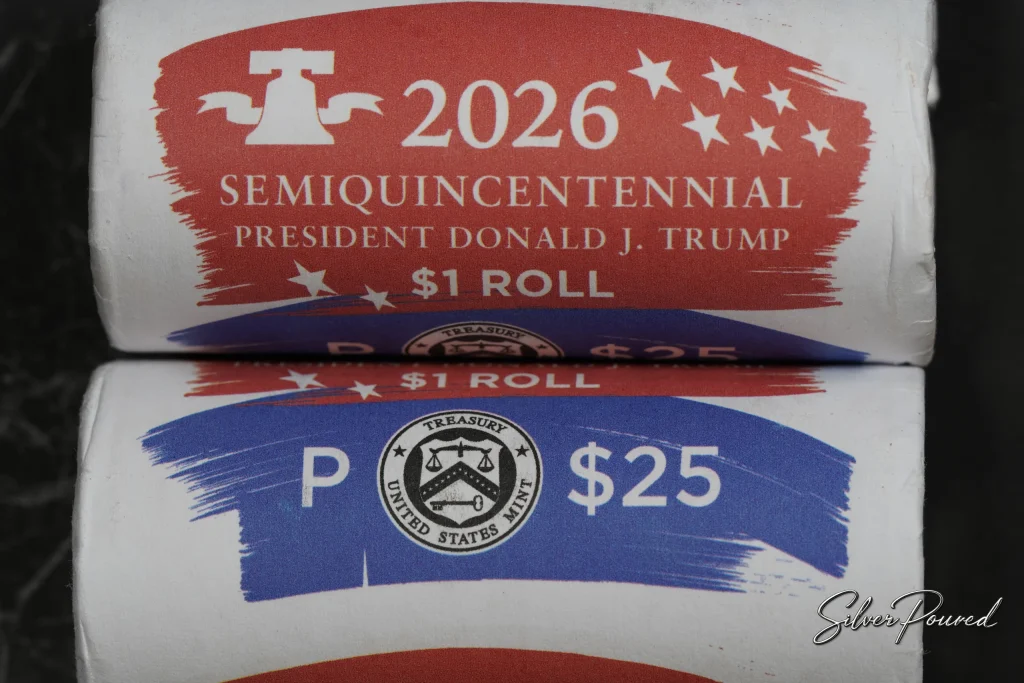
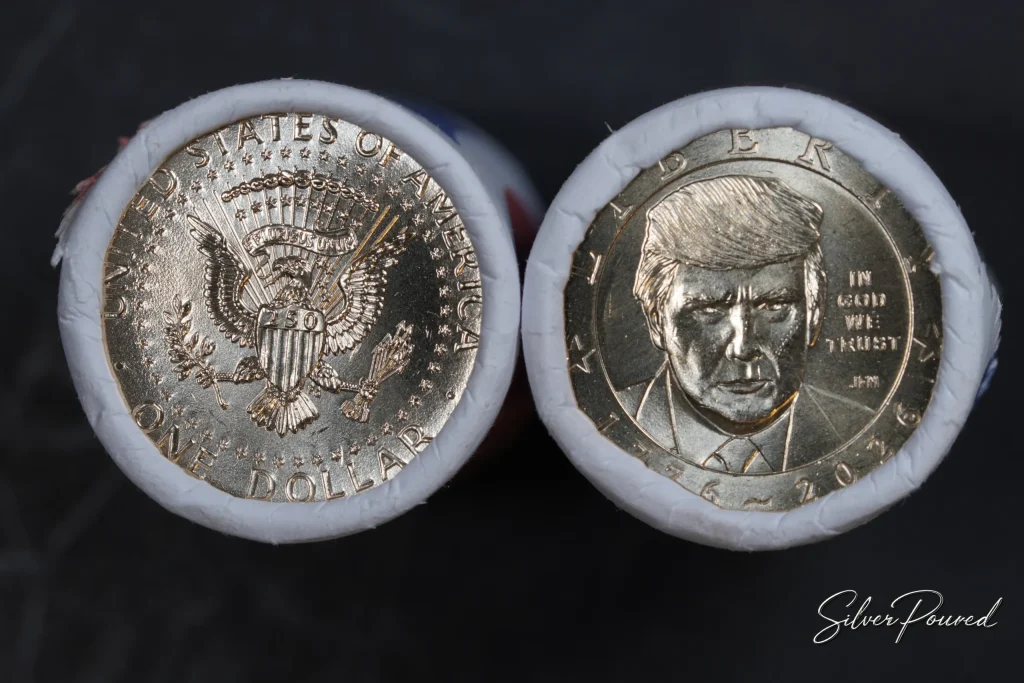
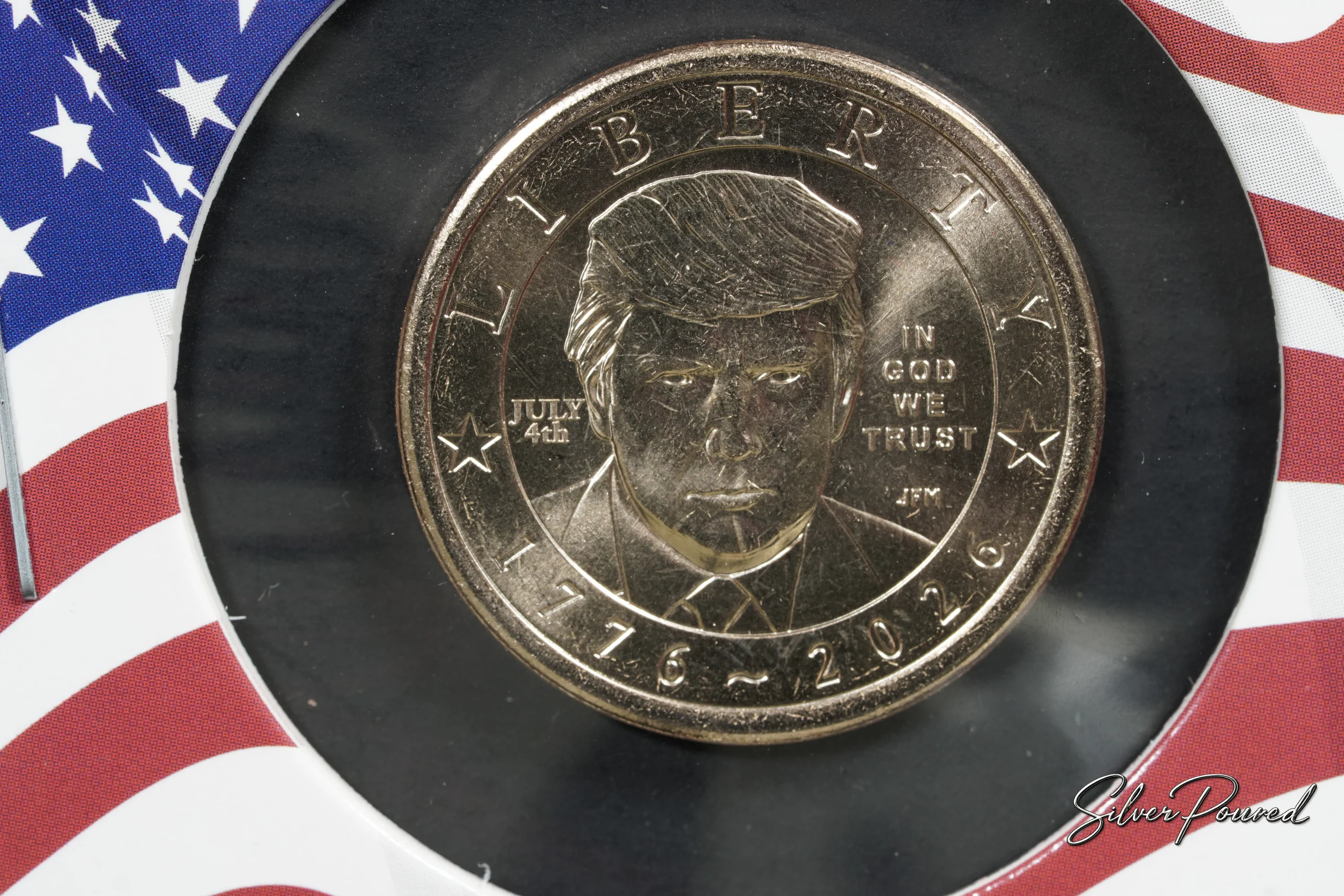
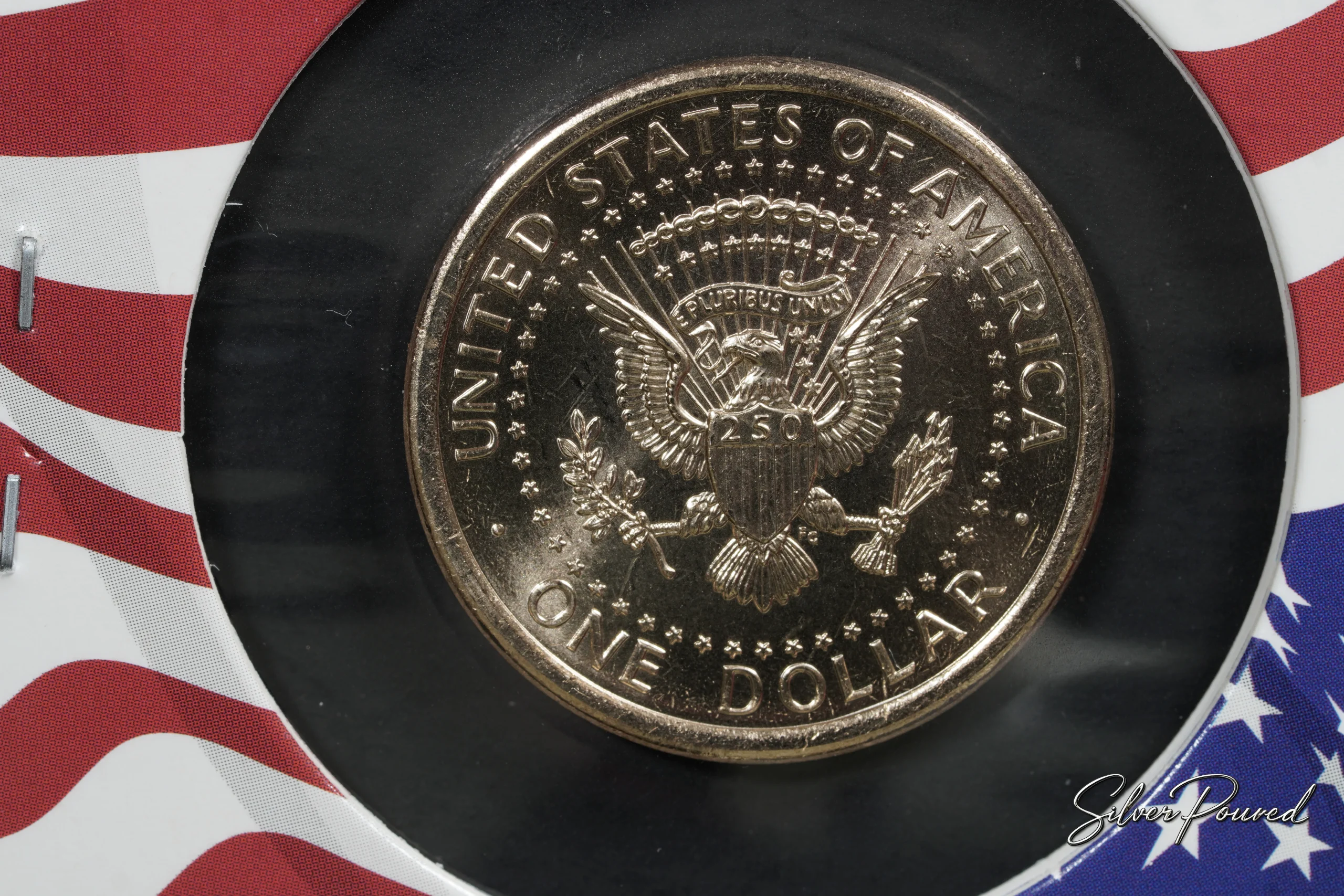
The circulating portion of the program was authorized through the Circulating Collectible Coin Redesign Act of 2020. For one year, the familiar circulating dime, five quarter-dollar designs, half dollar, and a special President Donald J. Trump $1 Coin carry designs connected to the nation’s history and 250th anniversary. The Jefferson nickel retains its familiar imagery but carries the anniversary dual date, while the Lincoln cent continues as a collectible annual-set issue with the same 1776 ~ 2026 date treatment after circulating penny production ended in 2025.
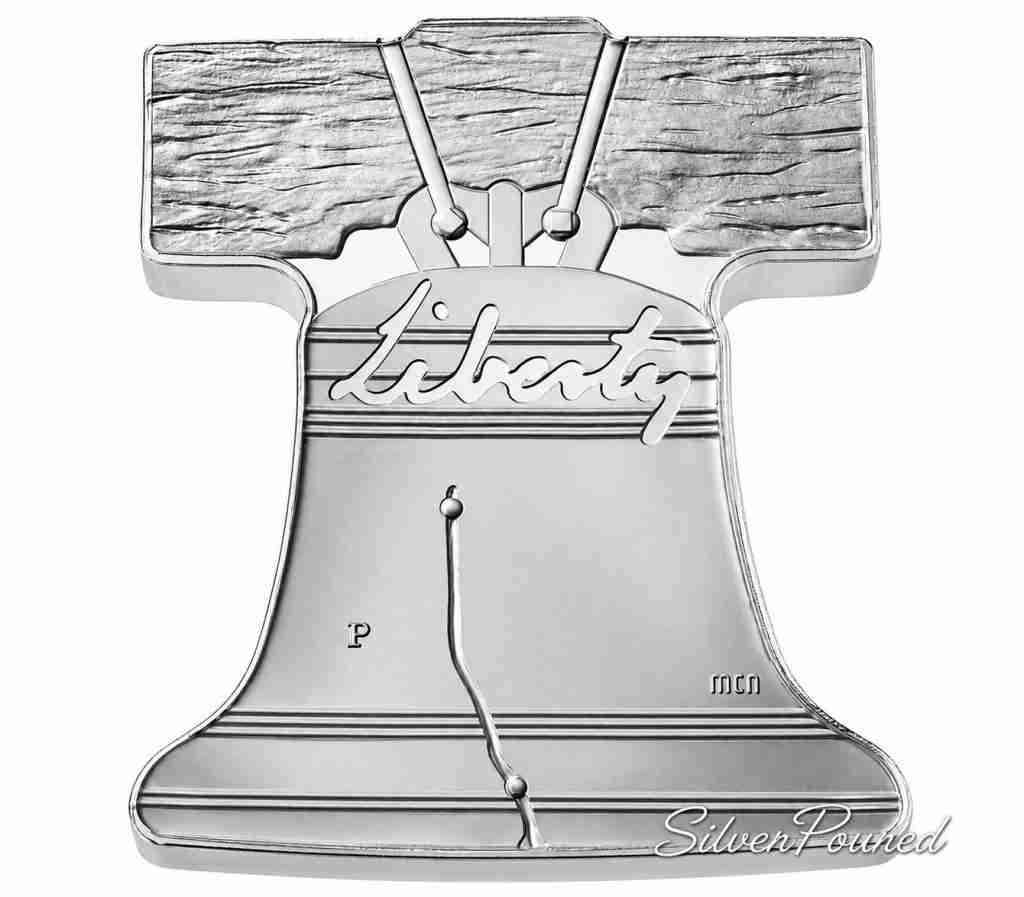
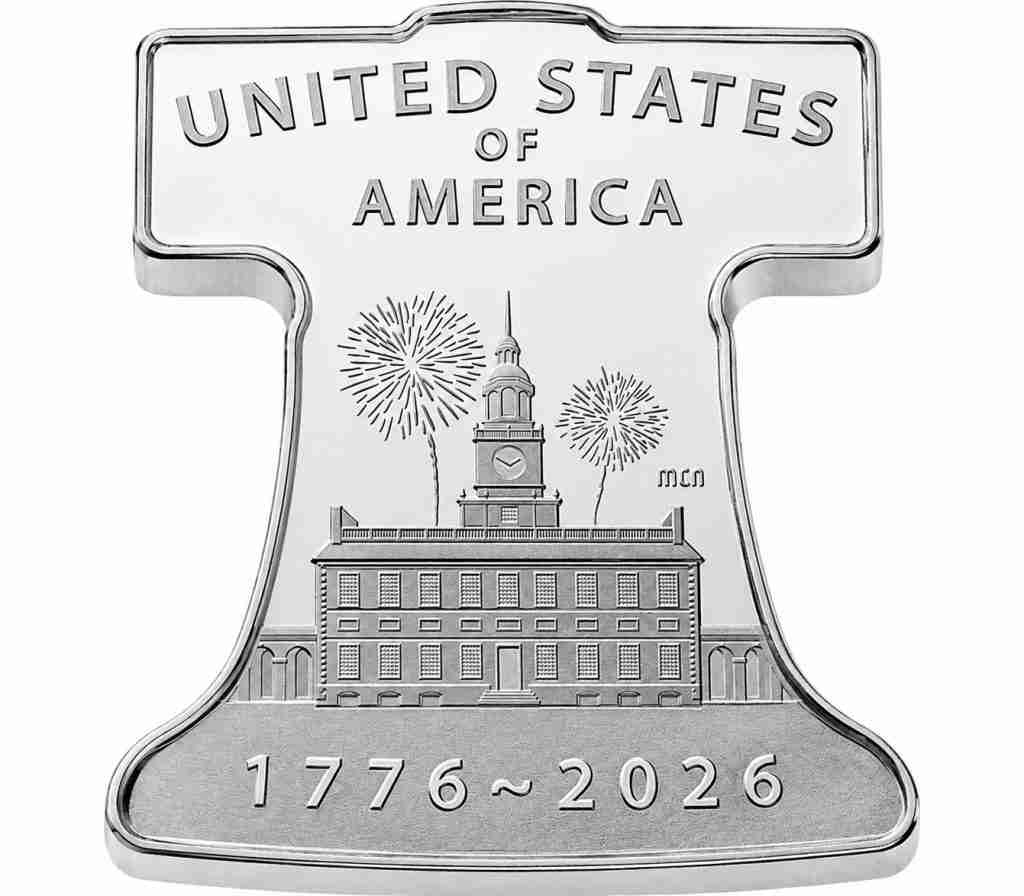
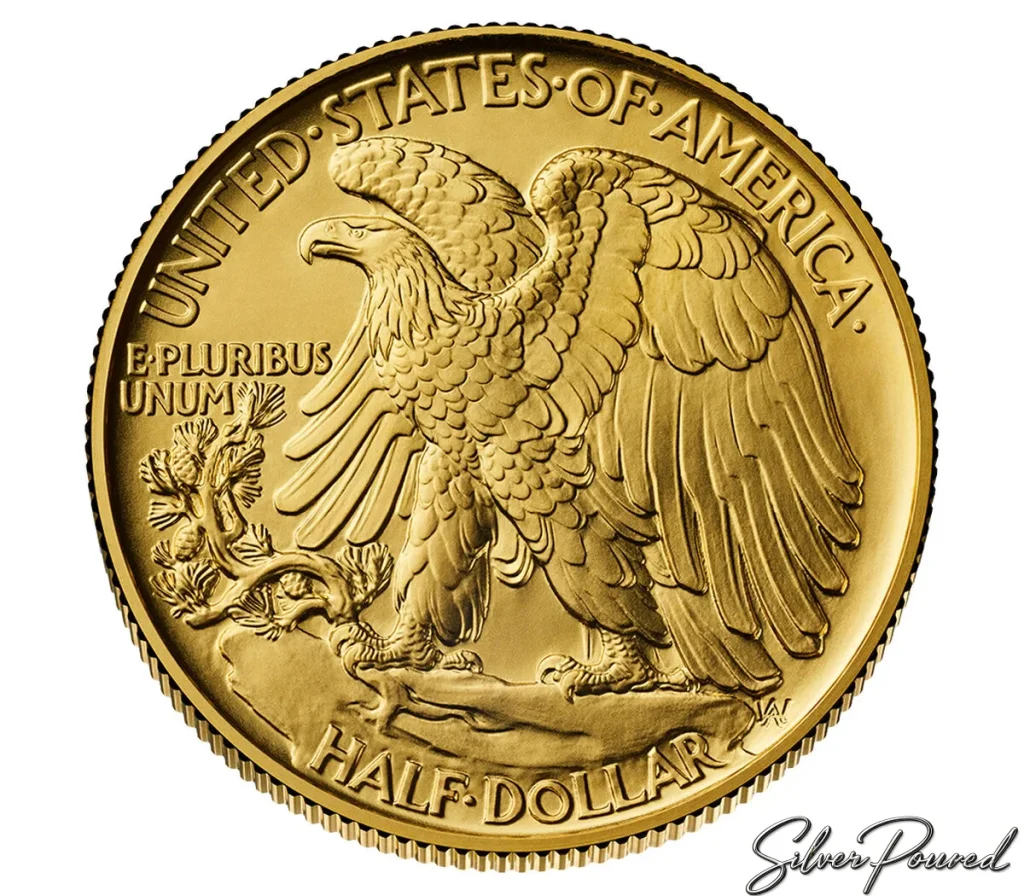
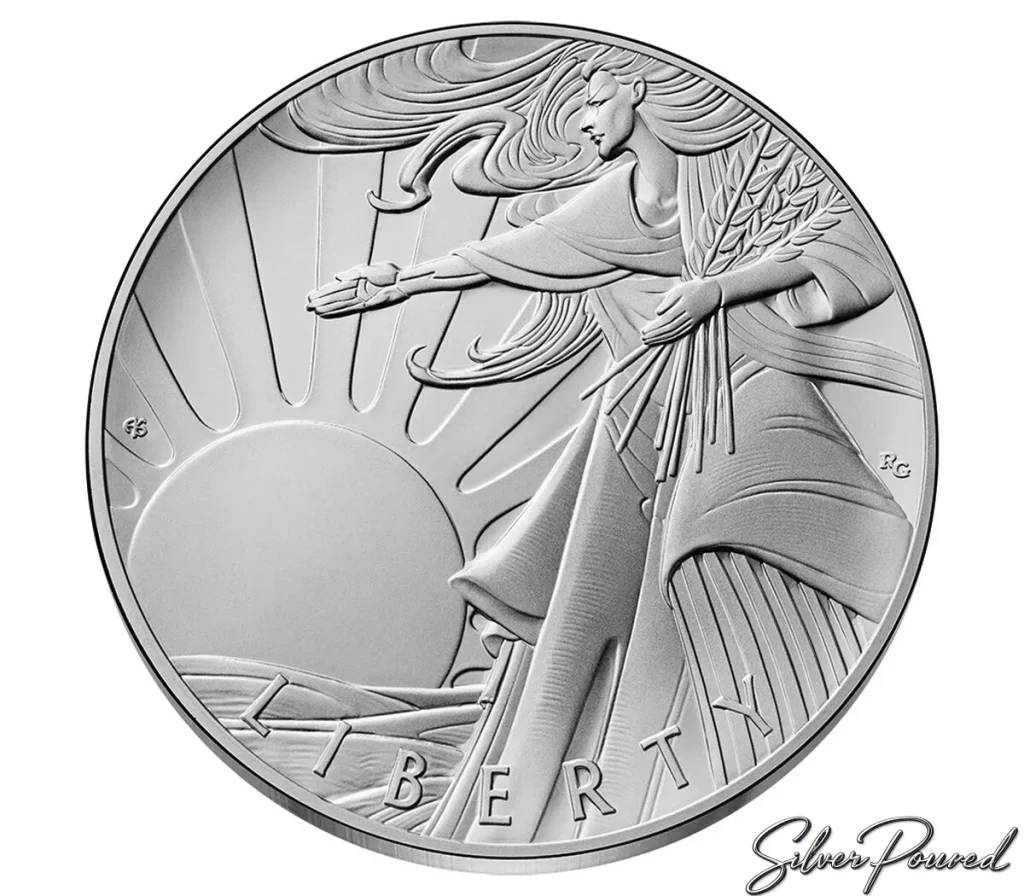
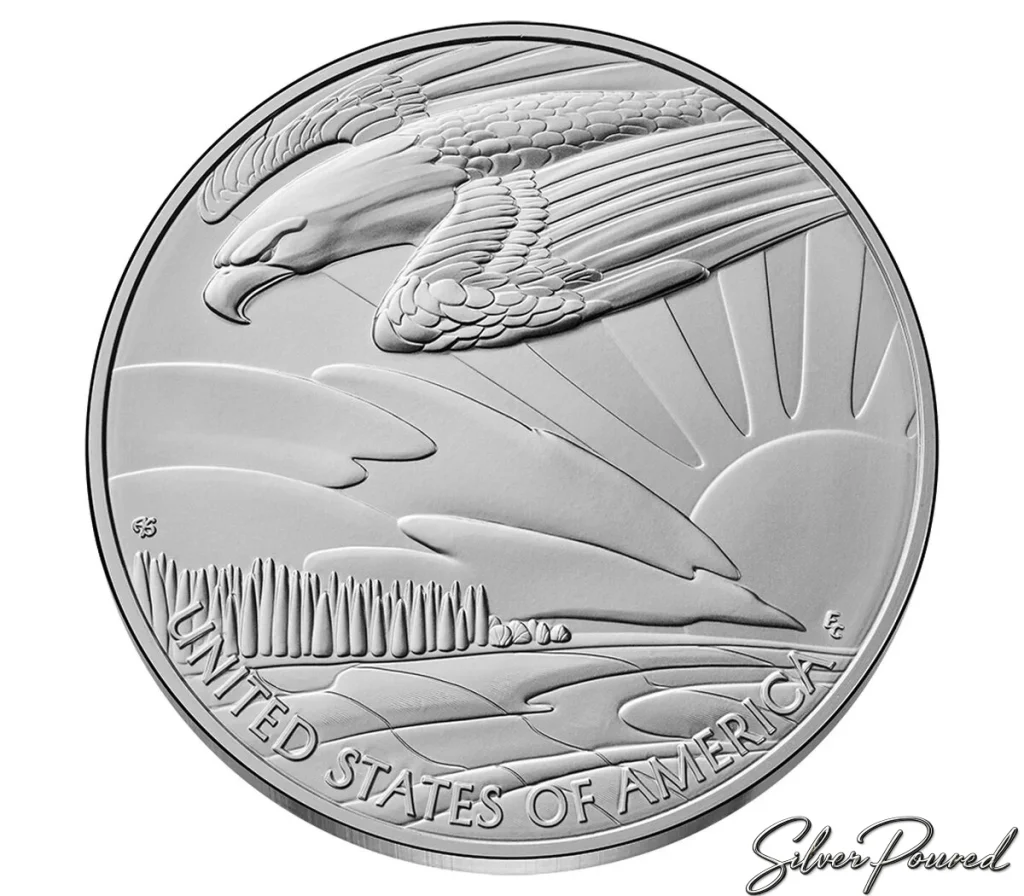
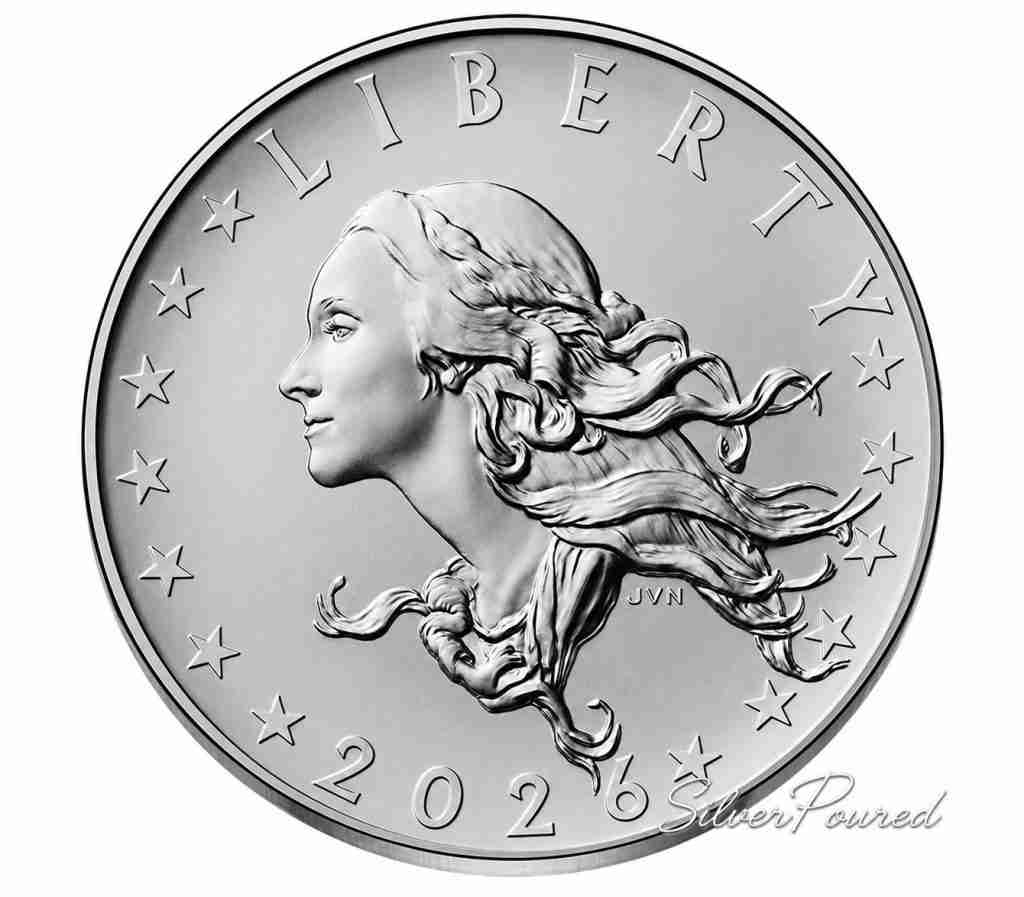
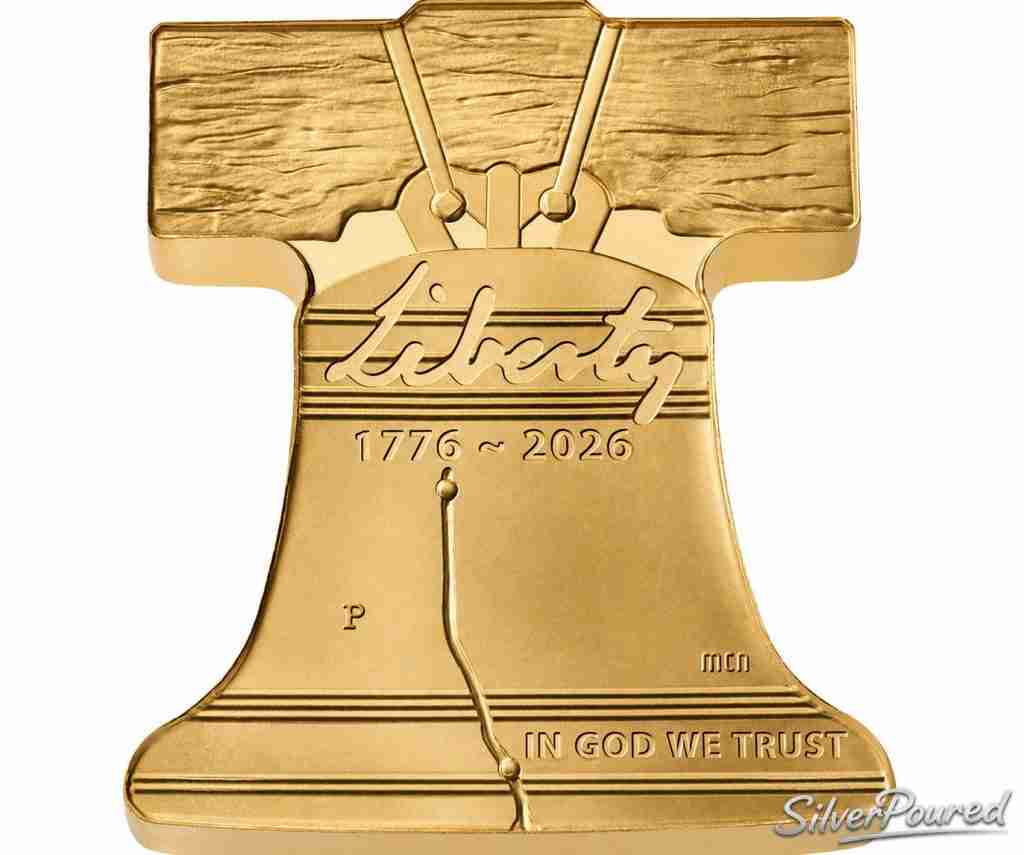
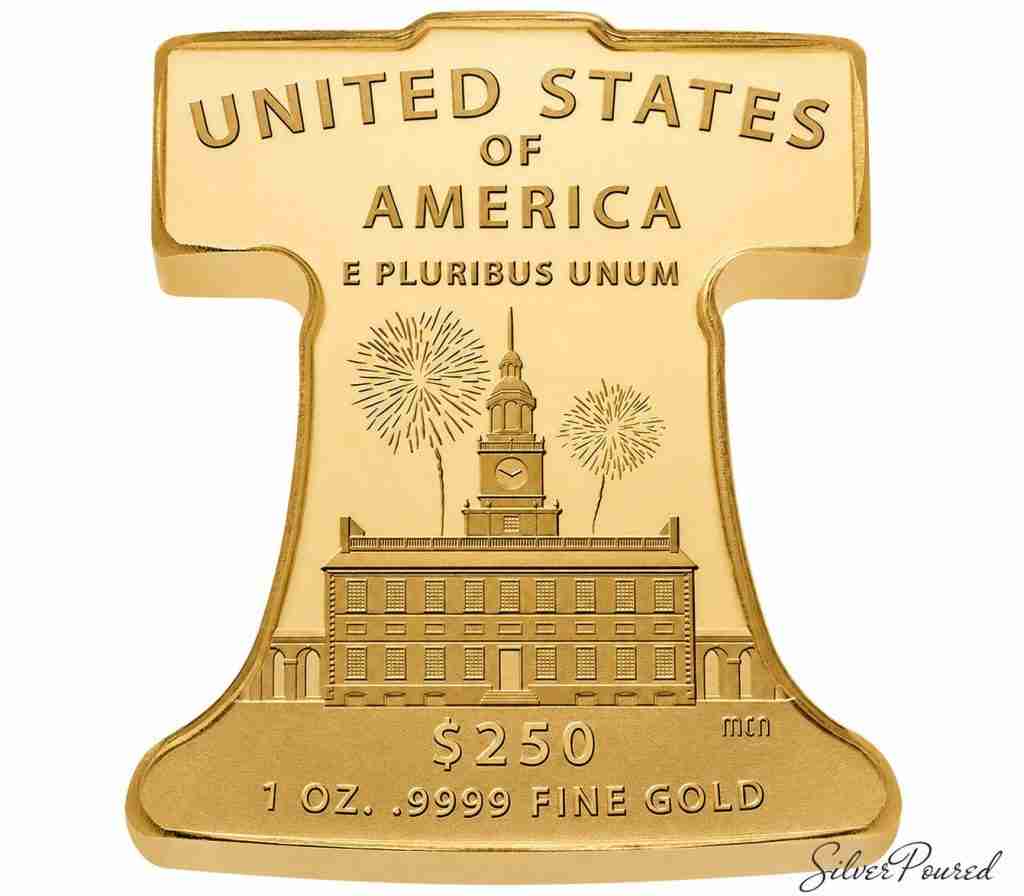
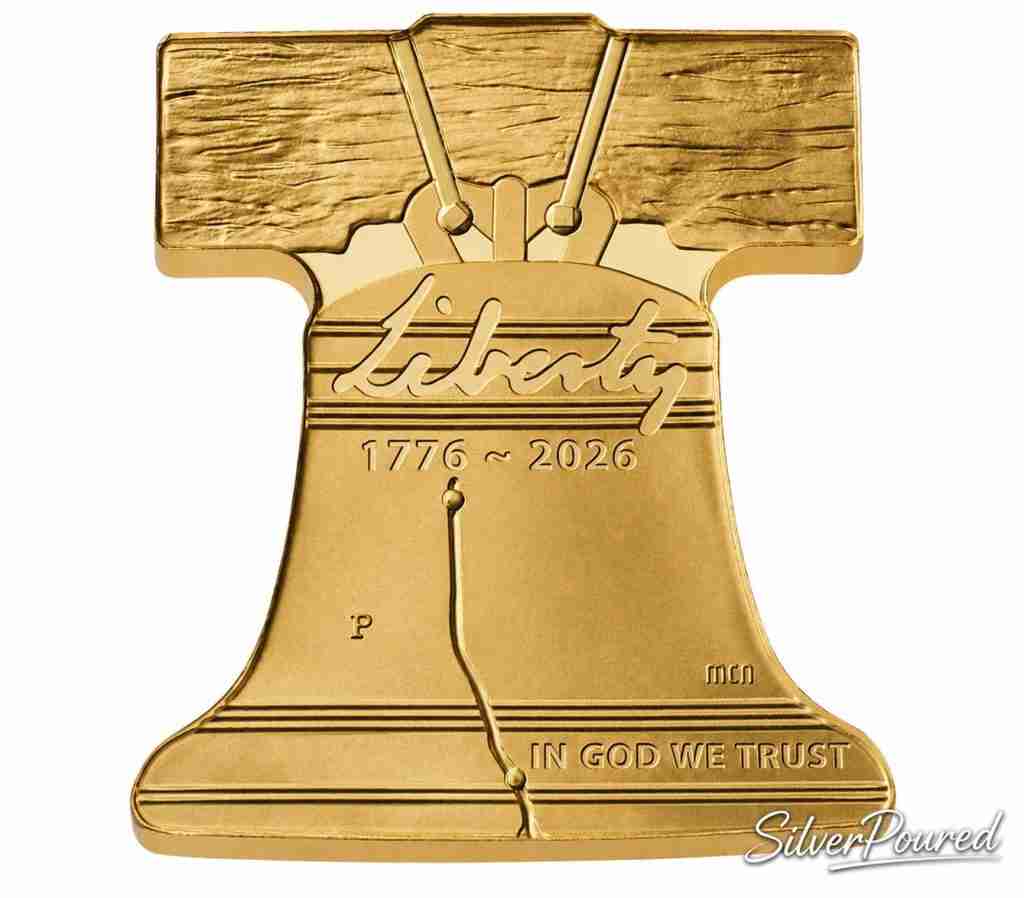
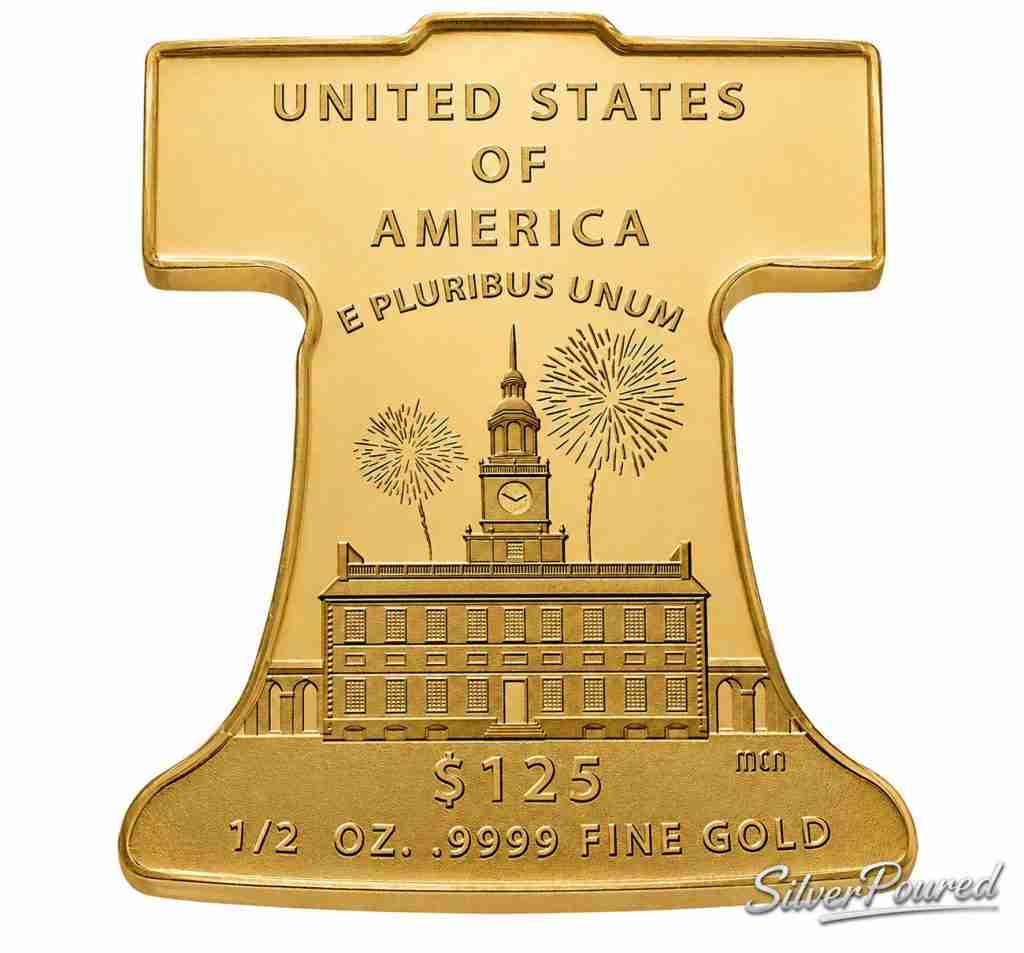
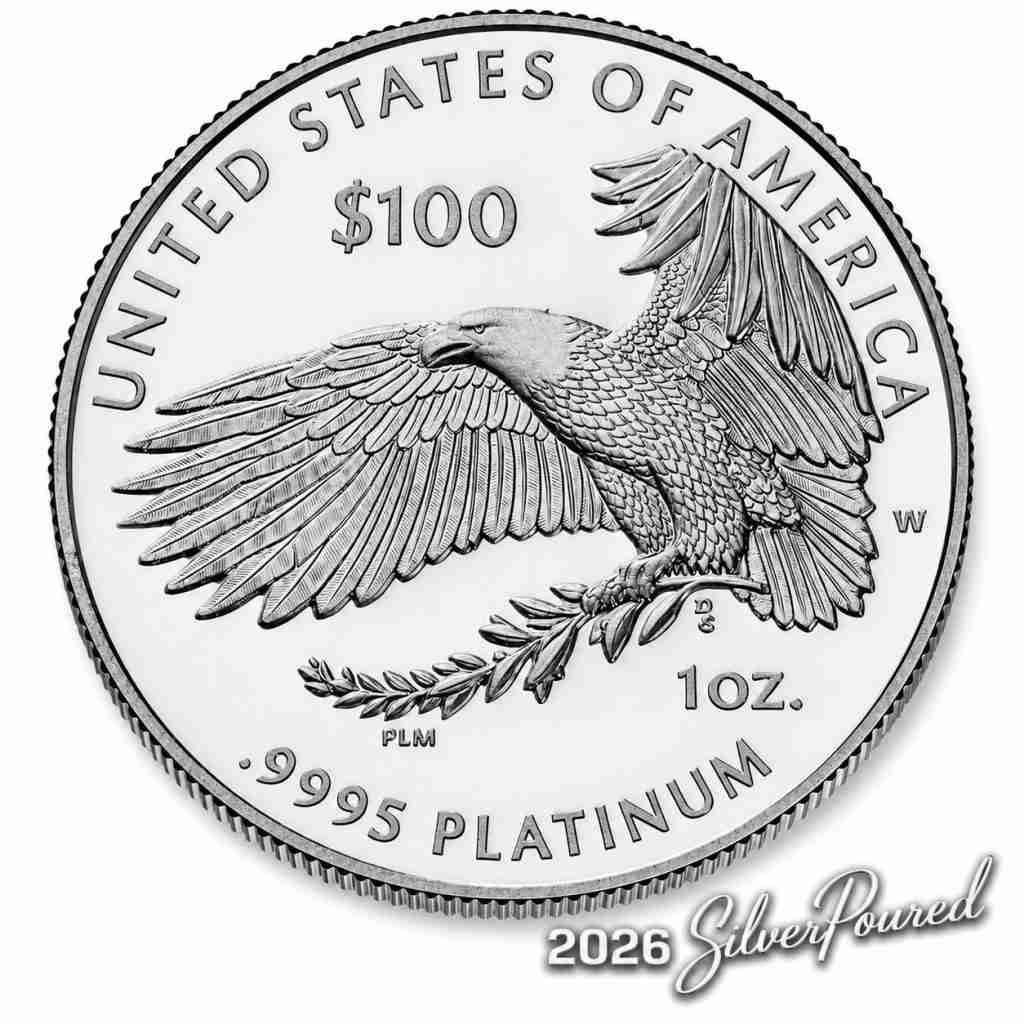
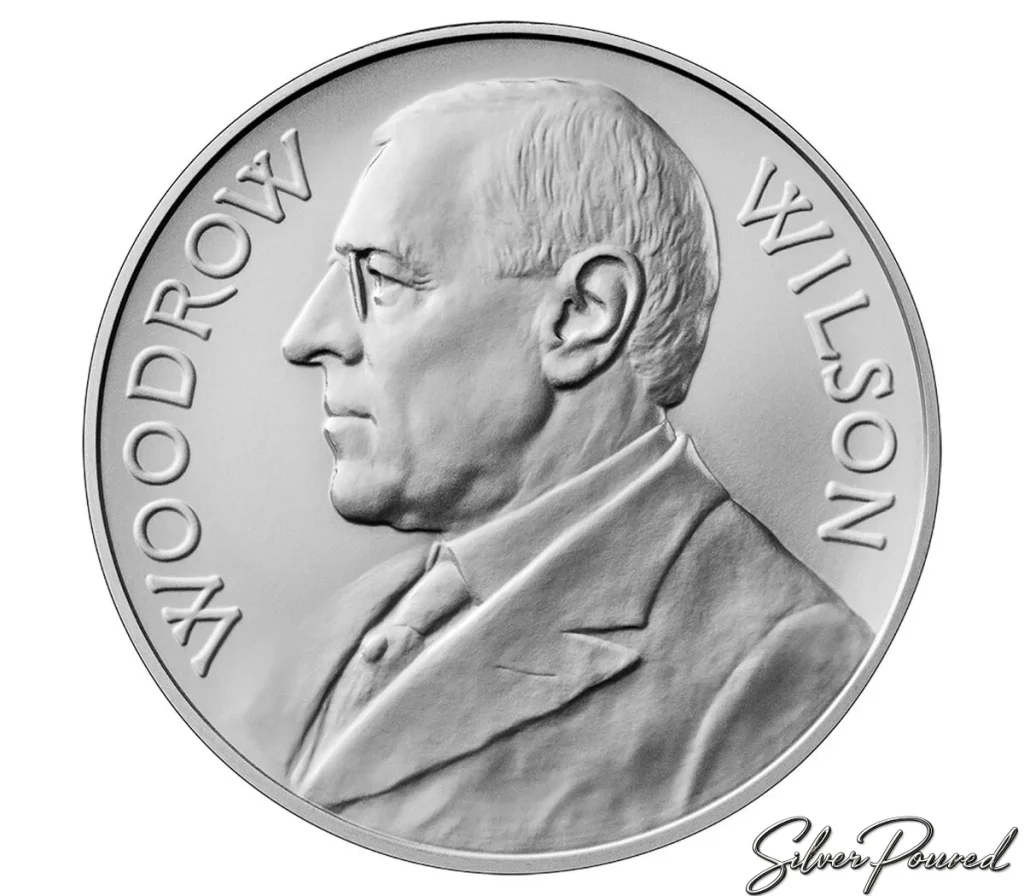
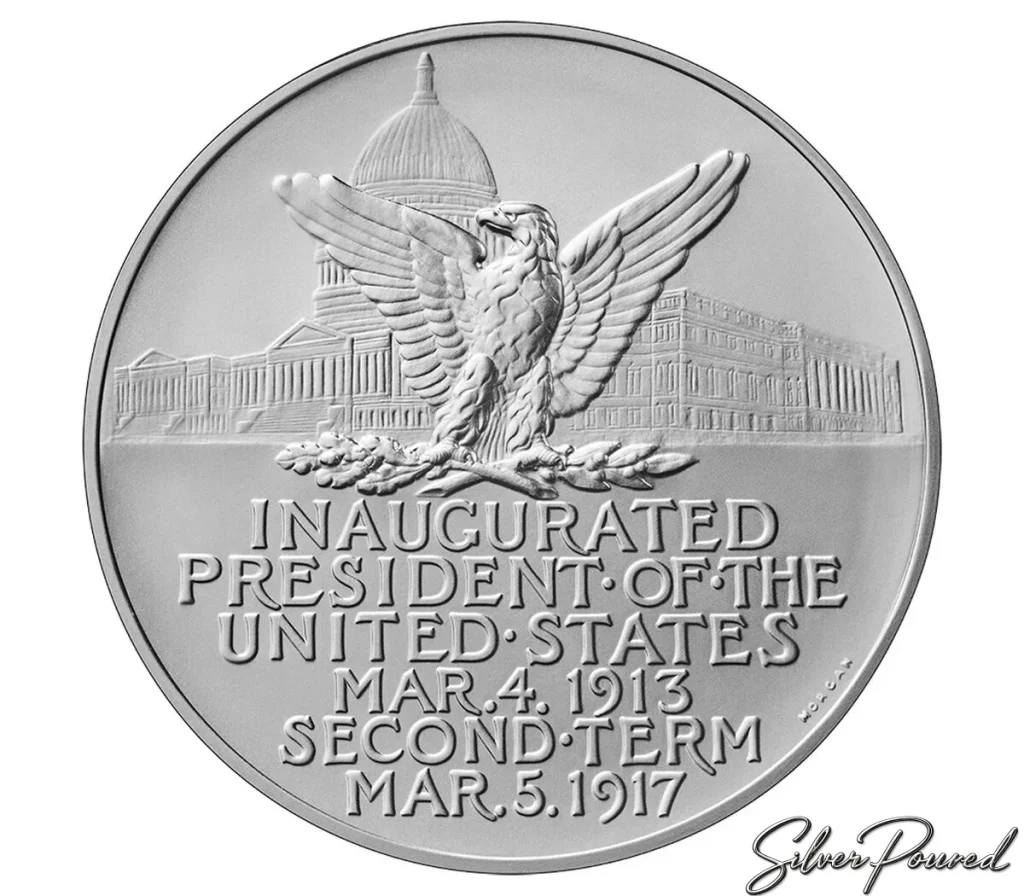
The 2026 coins extend well beyond circulating pocket change. The Mint is also issuing proof coins, 99.9% silver proof coins, uncirculated sets, rolls, bags, special privy-mark quarters, American Eagle products, Morgan and Peace dollars, American Buffalo coins, a platinum series, classic-design gold recreations, companion silver medals, and unusually shaped Liberty Bell products. Together, these 2026 coins and medals make the Semiquincentennial one of the broadest and most historically significant numismatic programs ever undertaken by the United States Mint.
That breadth makes the 2026 coins different from a traditional commemorative release. One collector may pursue ordinary circulation strikes while another builds a collection worth thousands of dollars in silver, gold, platinum, certified coins, and limited-production Mint products. Both are participating in the same historical program.
Why the 2026 Coin Program Is Unlike Previous Anniversary Coinage
The United States Mint has produced commemorative coins for more than a century, but the 2026 Semiquincentennial differs from nearly every previous anniversary program in both scope and purpose. Earlier commemorative programs typically centered on one event, one historical figure, one institution, or a small group of collector coins. The 2026 program instead transforms much of the Mint’s annual production into a coordinated national commemoration.
For the first time in modern history, redesigned circulating coinage, annual collector sets, precious-metal programs, commemorative coins, historic recreations, specialty medals, and limited-edition anniversary products all contribute to a single overarching historical narrative. The 2026 coins therefore cannot be understood as unrelated annual releases. Collectors assembling the 2026 coins are documenting one of the most ambitious years ever undertaken by the United States Mint.
Traditional Anniversary Programs
2026 Semiquincentennial Program
Limited commemorative coin program
Nationwide redesign of circulating coinage
Small number of collector products
Multiple interconnected Mint product families
Focused historical subject
250 years of American history, liberty, and self-government
Primarily commemorative collectors
Appeals to circulation, bullion, registry, and historical collectors alike
Short-term collecting focus
Long-term authority ecosystem spanning dozens of specialized subjects
That broader vision gives collectors something unusual: multiple collecting paths within the same anniversary. Circulation collectors, precious-metal buyers, registry competitors, historians, and traditional Mint-product collectors can pursue very different 2026 coins while still building within the same Semiquincentennial program.
The Largest Coordinated United States Mint Program in Modern History?
Looking back across more than two centuries of American coinage, only a handful of years fundamentally changed the way collectors viewed United States Mint products. The introduction of entirely new denominations, the beginning of iconic long-running series, and the nation’s Bicentennial each marked important turning points. The Semiquincentennial belongs in that same conversation—not because it introduces a single remarkable coin, but because it transforms nearly every corner of modern United States coinage into one coordinated historical program.
The program reaches across circulating coinage, annual collector sets, commemoratives, precious-metal issues, historic recreations, specialty medals, and anniversary collector products. Its significance comes from the way those different areas converge within a single year rather than from any one release standing alone.
Whether viewed through history, artistry, metallurgy, legislation, or modern collecting, the 2026 program stands apart from an ordinary annual release. It is an ambitious attempt to preserve one of the nation’s defining anniversaries through every level of American numismatics—from coins exchanged in everyday commerce to museum-quality precious-metal collector pieces.
Area of the Program
2026 Expansion
Circulating Coinage
Multiple one-year redesigns across everyday denominations
Collector Sets
Proof, Silver Proof, Uncirculated, and specialty presentations
Commemorative Programs
Major national and international commemorative releases
Precious Metals
Silver, gold, platinum, and historic anniversary products
Specialty Releases
Privy marks, shaped coins, medals, and premium collector products
Historical Preservation
America’s 250th anniversary documented through modern coinage
Whether future historians ultimately regard the Semiquincentennial as the largest coordinated United States Mint program ever undertaken—or simply one of its most ambitious—its breadth is already unmistakable. Never before have so many independent product families converged within a single calendar year to commemorate one defining moment in the nation’s history.
With the program’s scale established, the next step is to see how its major pieces fit together. The overview below serves as a field guide to the circulating coins, collector sets, precious-metal issues, historic recreations, specialty products, and research infrastructure that make up the larger 2026 collection.
The 2026 Coins Program at a Glance
The major families of 2026 coins span an unusually wide collecting spectrum, from circulating pocket change and annual Mint sets to precious-metal issues, historic recreations, privy marks, and specialty products. The overview below shows where each major program fits and what collectors are most likely to pursue within it.
Program Area
Confirmed Coverage
Primary Collector Interest
Circulating 2026 Coins
Dual-dated Jefferson nickel, Emerging Liberty dime, five historical quarters, Enduring Liberty half dollar, and President Donald J. Trump $1 Coin
Pocket change, bank rolls, mint marks, condition, special issues, and errors
Collectible Lincoln Cent
1776 ~ 2026 cent produced for annual numismatic sets rather than ordinary circulation
Proof, uncirculated, complete-set, and modern-cent collecting
Annual Coin Sets
Proof Set, Silver Proof Set, and Philadelphia-Denver Uncirculated Coin Set
Complete collections, original Mint packaging, silver content, and proof finishes
Privy-Mark Issues
July 4 Declaration quarter, 250,000 July 4th privy Trump $1 coins, and Liberty Bell “250” collector products
Identification, scarcity, values, and certification
Precious-Metal Products
American Eagles, American Buffalo coins, Morgan and Peace dollars, and platinum proofs
Metal content, mintage limits, finishes, premiums, and long-term demand
Historic Recreations
Classic American designs recreated in gold and paired with modern silver medals
Historic design, gold content, silver medals, and one-year packaging
Specialty Products
Oversized silver Declaration quarters and Liberty Bell-shaped gold coins and silver medals
Very low production, unusual formats, and advanced collections
Research Infrastructure
Production totals, product limits, values, errors, varieties, grading populations, and discovery tracking
Living data, authentication, and market analysis
Why the 2026 Coins Are Historically Important
The historical importance of the 2026 coins begins with their temporary transformation of familiar American denominations. Liberty replaces Franklin D. Roosevelt on the dime for one year. Five historical narratives replace the normal quarter program. The Statue of Liberty replaces John F. Kennedy on the half dollar. A special President Donald J. Trump $1 Coin adds a sitting-president portrait to the circulating Semiquincentennial program. Through these changes, the 2026 coins transform designs Americans have carried for decades into chapters of a larger anniversary story. Even the most familiar 2026 coins become immediately identifiable artifacts of the nation’s quarter-millennium.
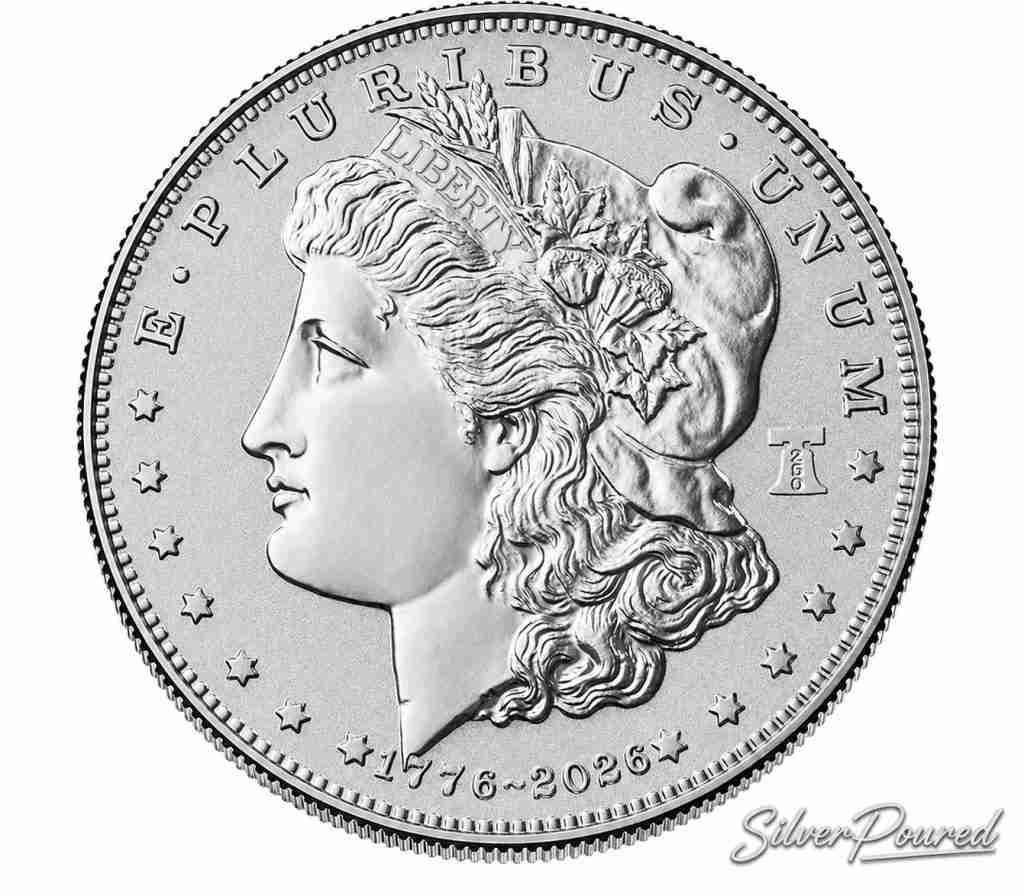
The dual date 1776 ~ 2026 immediately separates these coins from ordinary annual issues. It appears on the redesigned circulating coins and selected premium products, creating a visible connection between the founding era and the modern United States.
The program also links everyday circulation with advanced numismatics. A child may discover one of the new 2026 coins in change while an experienced collector pursues a low-mintage platinum proof or a sequentially numbered 2.5-ounce silver quarter. The same anniversary reaches both collectors through dramatically different forms of American coinage.
The lasting importance of the program may ultimately come from the collecting ecosystem it creates. Circulating designs establish the public story, annual sets preserve the complete coinage, precious-metal products expand the anniversary into silver, gold, and platinum, and privy marks, errors, grades, and production totals create entirely different paths for specialized collectors.
From Pocket Change to Museum Collections
The Semiquincentennial is unusual because participation does not require purchasing a premium Mint product. Historically significant 2026 coins can be discovered in everyday change while the same program extends upward into gold, platinum, limited-edition silver, and advanced certified collections.
This broad range of collecting opportunities helps unite every level of the hobby. A child searching a handful of 2026 coins, a family assembling annual Mint Sets, a silver investor purchasing American Eagles, and a registry collector pursuing perfect certified examples can all participate in the same national anniversary through different collecting paths.
That range gives collectors unusual freedom to define what participation means. Someone may build a circulation set for face value, preserve the anniversary through official Mint products, specialize in silver or gold, or pursue the most difficult certified and limited-production issues.
Collector
Typical Entry Point
Beginning Collector
Pocket change and circulation finds
Family Collector
Proof Sets and Uncirculated Coin Sets
Silver Investor
American Silver Eagles and silver proof products
Gold Collector
American Buffalo, Gold Eagles, and commemorative gold coins
Advanced Numismatist
Certified rarities, specialty products, and complete registry collections
Few anniversary programs create such a wide collecting range. The ability to participate through an inexpensive circulation find or an advanced precious-metal collection gives the Semiquincentennial relevance across generations, budgets, and collecting specialties.
A Year That Will Never Be Repeated
Every United States coin reflects the era in which it was produced, but the 2026 coin program captures a moment unlike any other in American numismatic history. The Semiquincentennial marks the nation’s 250th anniversary—a milestone that will occur only once. The redesigned circulating coins, commemorative programs, annual collector sets, and anniversary precious-metal releases together preserve that singular moment for future generations.
Unlike annual design changes that eventually blend into a long-running series, the 2026 releases remain permanently tied to America’s quarter-millennium celebration. Collectors fifty or one hundred years from now will immediately recognize these coins as products of the nation’s 250th birthday, much as today’s collectors instantly recognize the Bicentennial coinage of 1976.
Historic Anniversary
United States Coinage
100th Anniversary (1876)
Centennial-era coinage
200th Anniversary (1976)
Bicentennial circulating coin program
250th Anniversary (2026)
Semiquincentennial redesigns and expanded Mint programs
Their one-year identity gives the 2026 coins a permanent place in the historical record. Long after the anniversary has passed, the dual dates, redesigned denominations, special issues, and official collector products will identify them immediately with America’s quarter-millennium.
The designs become more meaningful when viewed as deliberate chapters rather than isolated commemorations. Before examining them individually, it is worth asking why these particular moments were selected to represent the nation’s first 250 years.
The Story America Chose to Preserve Through Coinage
No group of coins could summarize every event, person, achievement, and conflict of America’s first 250 years. Instead, the Semiquincentennial circulating designs focus on selected moments that trace how self-government emerged, independence was secured, constitutional government was established, the nation confronted division, and liberty was carried forward.
The circulating program therefore unfolds like a sequence of historical chapters. Each denomination advances the narrative from the development of self-government toward a final question of inheritance: what responsibility does each generation carry for the liberty it receives?
Chapter
2026 Coin
Meaning Within the Program
Consent
Mayflower Compact Quarter
Government begins through agreement and shared responsibility.
Sacrifice
Revolutionary War Quarter
Independence requires endurance, service, and the willingness to defend liberty.
Independence
Declaration of Independence Quarter
The colonies state their separation and the ideals upon which the new nation will rest.
Government
U.S. Constitution Quarter
Founding principles become an organized system grounded in consent of the governed.
Renewal
Gettysburg Address Quarter
The nation confronts division and recommits itself to liberty and representative government.
Emergence
Emerging Liberty Dime
Liberty faces tyranny with determination and purpose.
Inheritance
Enduring Liberty Half Dollar
Knowledge and liberty pass from one generation to the next.
The Artistic Legacy of the 2026 Coin Designs
Beyond their historical themes, the 2026 coins represent one of the most ambitious artistic undertakings by the United States Mint in generations. Every major circulating redesign was created to communicate an idea rather than simply portray a historical figure. Liberty, sacrifice, constitutional government, national renewal, and civic responsibility become visual narratives expressed through modern medallic art.
The artistic language reinforces that historical structure. Portraits, symbolic imagery, inscriptions, landmarks, and modern medallic design work together to communicate ideas that extend beyond the individual people or events depicted on each coin.
Design Element
Purpose Within the Program
Liberty
Represents the nation’s founding ideals and continued responsibility
Historic Figures
Connect pivotal leaders with defining moments in American history
National Landmarks
Anchor historical events to recognizable places and documents
Symbolic Imagery
Transforms historical concepts into memorable visual storytelling
Modern Sculptural Design
Bridges traditional United States coinage with contemporary artistry
Viewed together, the designs reveal connections that are less obvious when each coin is studied alone. Repeated themes of liberty, sacrifice, consent, constitutional government, renewal, and civic responsibility give the circulating program a visual and historical continuity that distinguishes it from an ordinary annual lineup.
The Emerging Liberty Dime
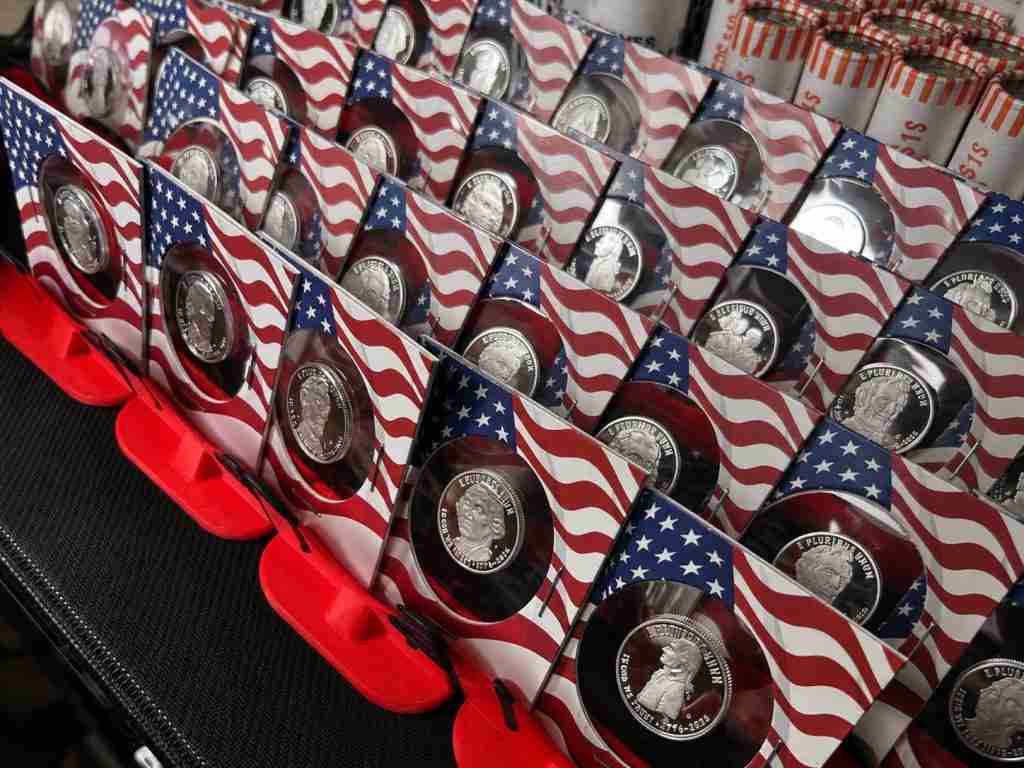
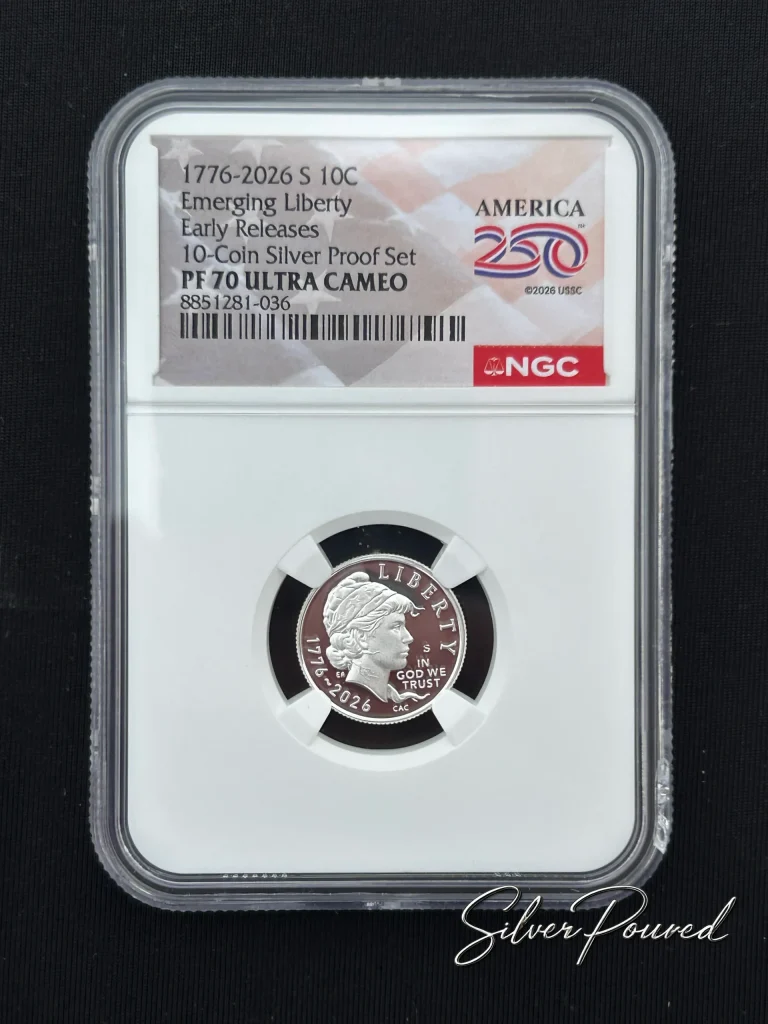
The Emerging Liberty dime is one of the most dramatic changes among the 2026 coins. For the first time since 1945, personified Liberty appears on the obverse of a circulating United States dime.
The obverse shows a determined Liberty facing the winds of revolution. Her hair and liberty cap create movement across the coin, while the cap’s stars and stripes connect the modern design with early American coinage. The inscriptions include LIBERTY, IN GOD WE TRUST, and the dual date 1776 ~ 2026.
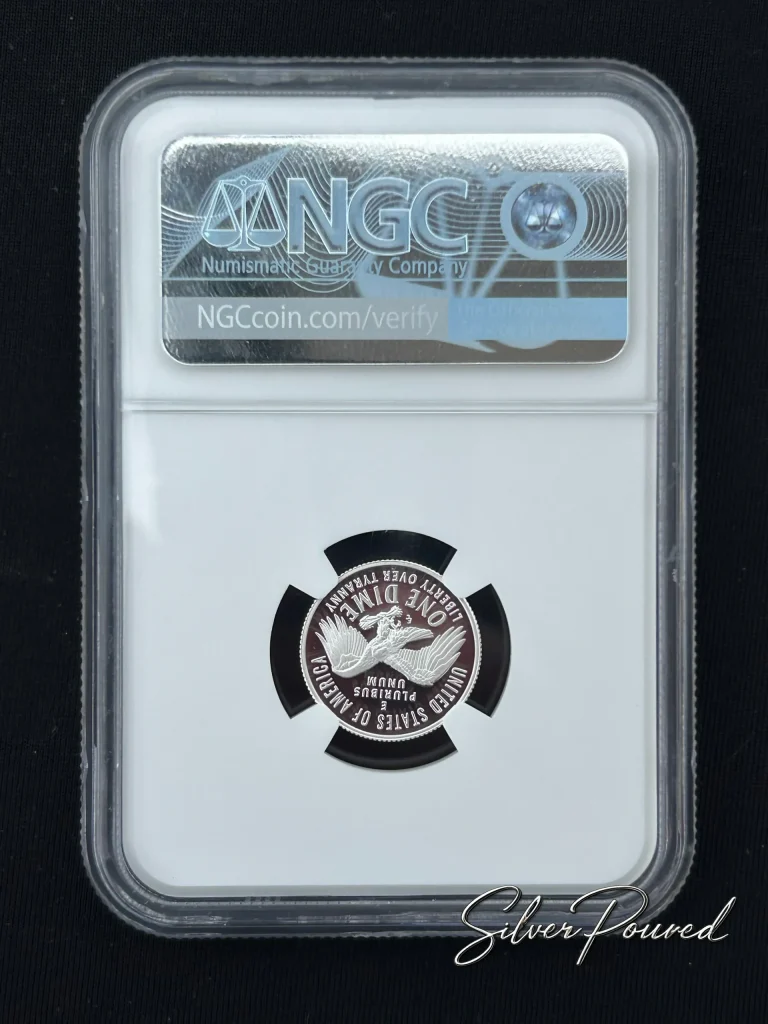
The reverse presents an eagle in flight carrying arrows in its talons. The phrase LIBERTY OVER TYRANNY gives the dime one of the clearest statements within the entire anniversary program. Rather than treating liberty as a passive symbol, the design presents it as something achieved through resolve and struggle.
Collectors can approach the dime through Philadelphia and Denver circulation strikes, official roll products, uncirculated-set coins, San Francisco proof strikes, 99.9% silver proof strikes, certified high-grade examples, and any genuine production varieties that emerge through careful study.
The one-year design gives every Emerging Liberty dime an immediately recognizable anniversary identity, but that alone does not make an individual coin rare or valuable. As with other 2026 coins, long-term collector interest will depend on factors such as mint, finish, condition, certified grade, varieties, errors, and the surviving populations of individual issues.
The dime introduces Liberty as an enduring ideal, but the broader historical narrative unfolds through the quarter-dollar series. Together, the five quarters transform ordinary circulation into a chronological journey through the defining milestones that shaped the American experiment.
The Quarter Program as the Heart of the Semiquincentennial
The five-quarter series forms the historical backbone of the circulating Semiquincentennial program. No other denomination carries the narrative across multiple defining events, allowing collectors to follow the development of American self-government, independence, constitutional government, and national renewal one coin at a time.
Rather than presenting five unrelated commemorative designs, the Mint organized the quarter program into a chronological documentary. The sequence begins with self-government aboard the Mayflower, progresses through revolution and independence, establishes constitutional government, and concludes with the nation’s renewal during the Civil War. Together, the five quarters form the central narrative connecting the entire Semiquincentennial.
Quarter Theme
Historical Role
Mayflower Compact
The beginning of self-government through mutual agreement
Revolutionary War
The struggle to secure American independence
Declaration of Independence
The birth of a sovereign nation
United States Constitution
The creation of constitutional government
Gettysburg Address
The preservation and renewal of the American experiment
Viewed in sequence, the five quarters trace an intentional historical progression: consent, revolution, independence, constitutional government, and national renewal. That progression makes the quarter series the clearest chronological expression of the larger narrative preserved throughout the 2026 coins.
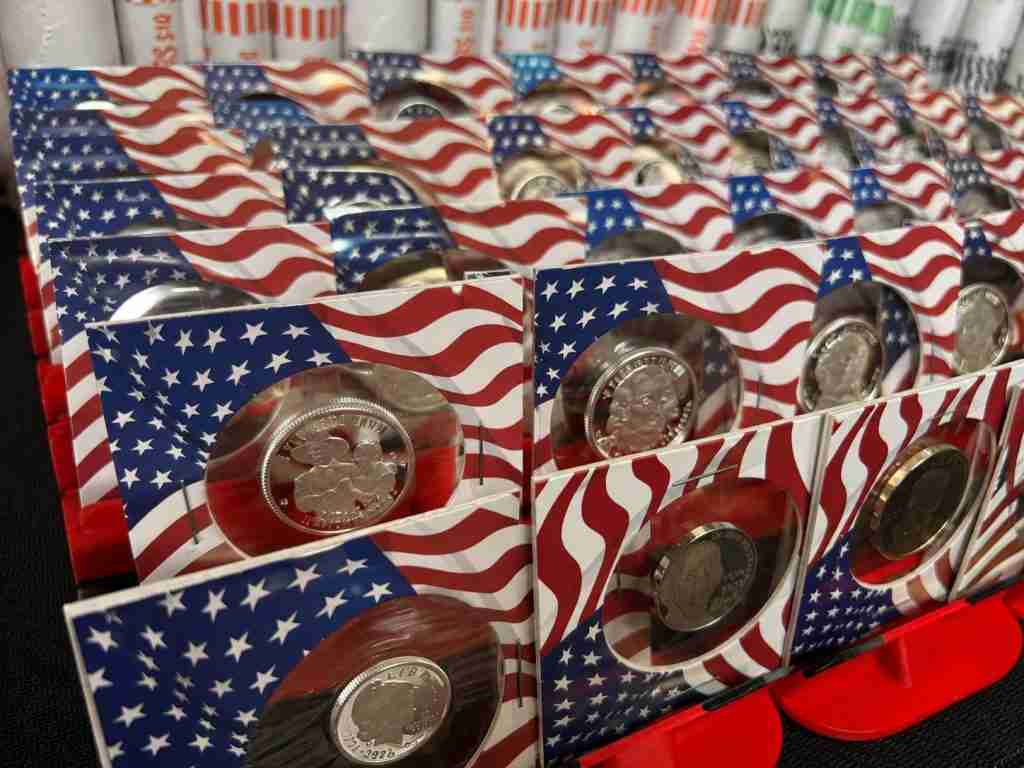
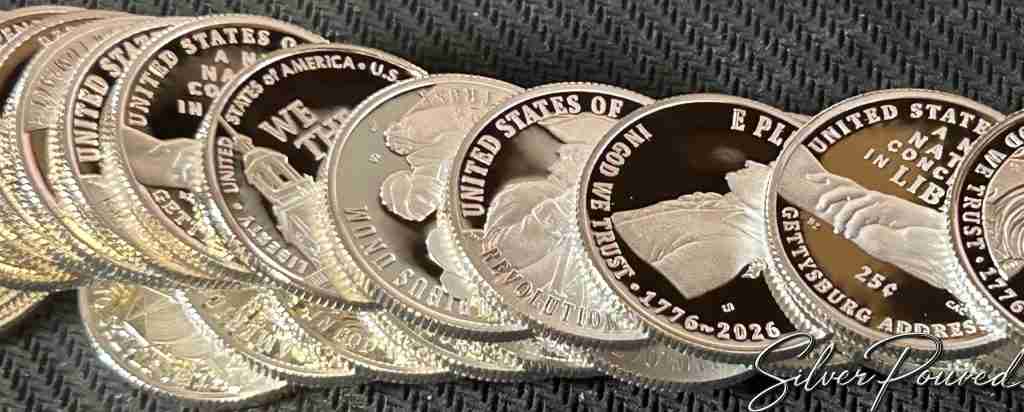
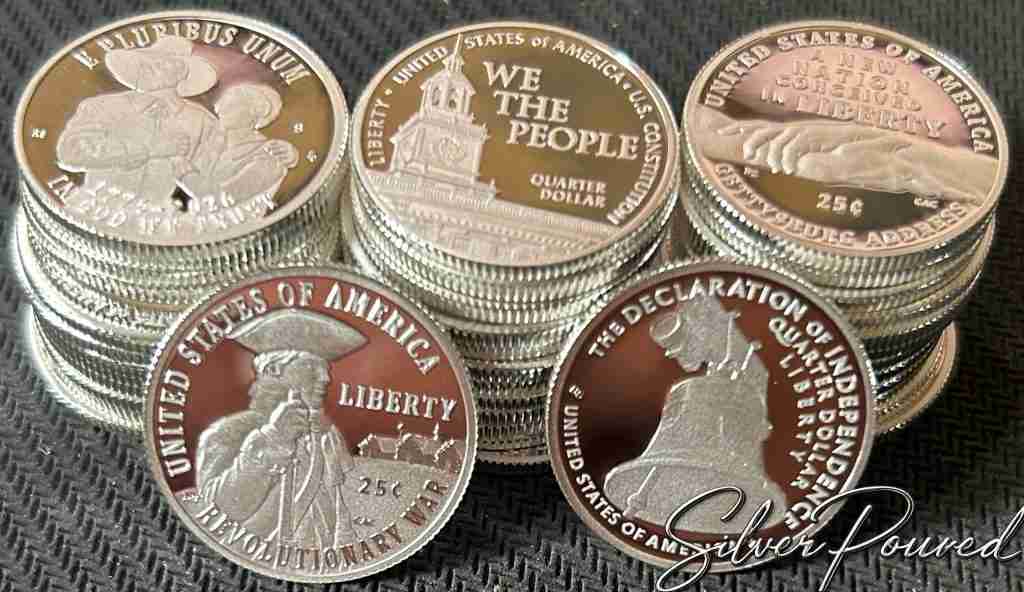
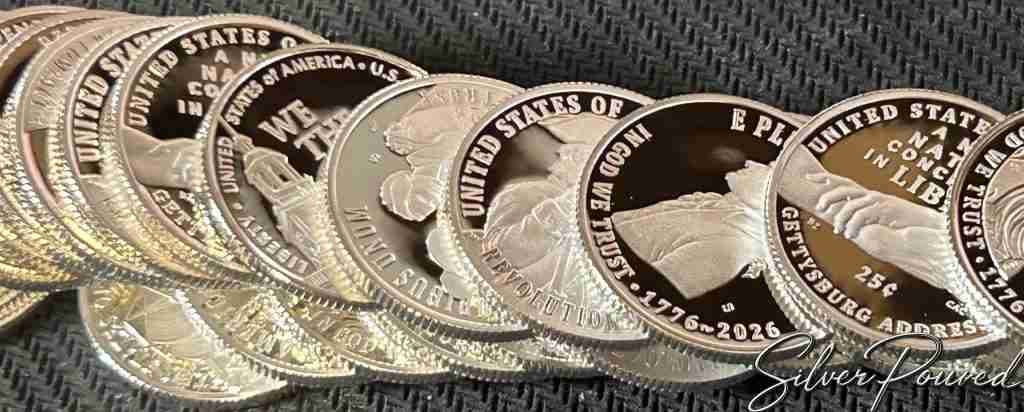
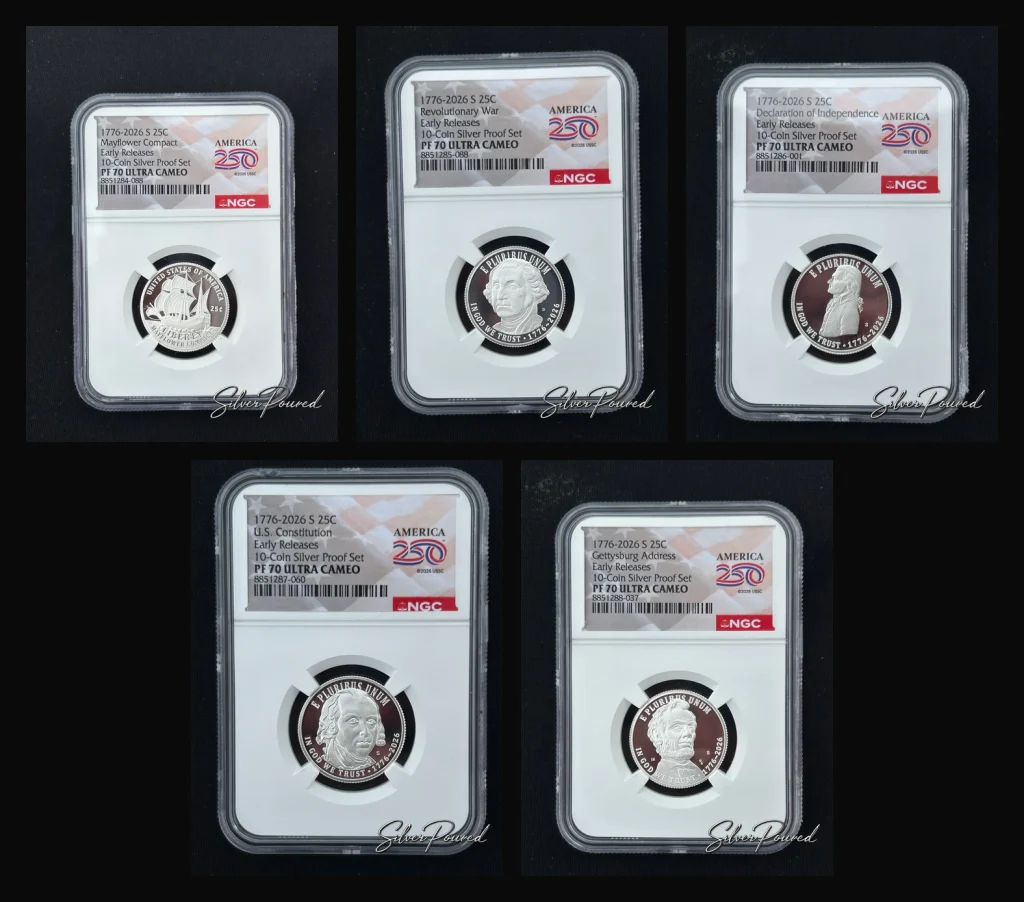
The complete 2026 Semiquincentennial quarter program brings together all five commemorative quarter designs celebrating the nation’s 250th anniversary.
The Five 2026 Semiquincentennial Quarters
Each of the five quarters functions as a complete historical composition, with its own obverse and reverse rather than a common portrait paired with five changing reverses. For collectors, that creates five distinct two-sided designs and gives the quarter program considerably more depth than a conventional rotating-reverse series.
Circulation collectors can pursue Philadelphia and Denver examples of all five designs. Proof collectors can obtain San Francisco versions. Silver collectors can acquire 99.9% silver proof examples. Advanced collectors can pursue certified grades, original Mint products, limited varieties, and the special July 4 Declaration quarter.
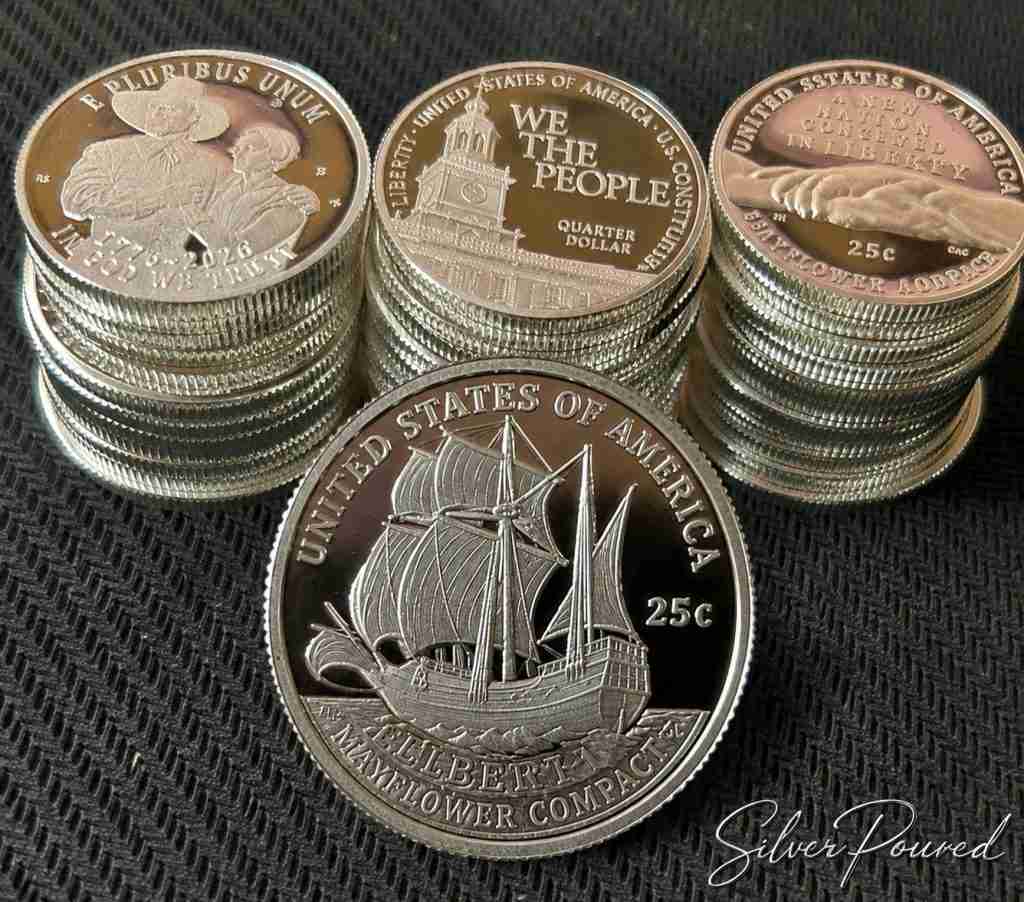
Mayflower Compact Quarter
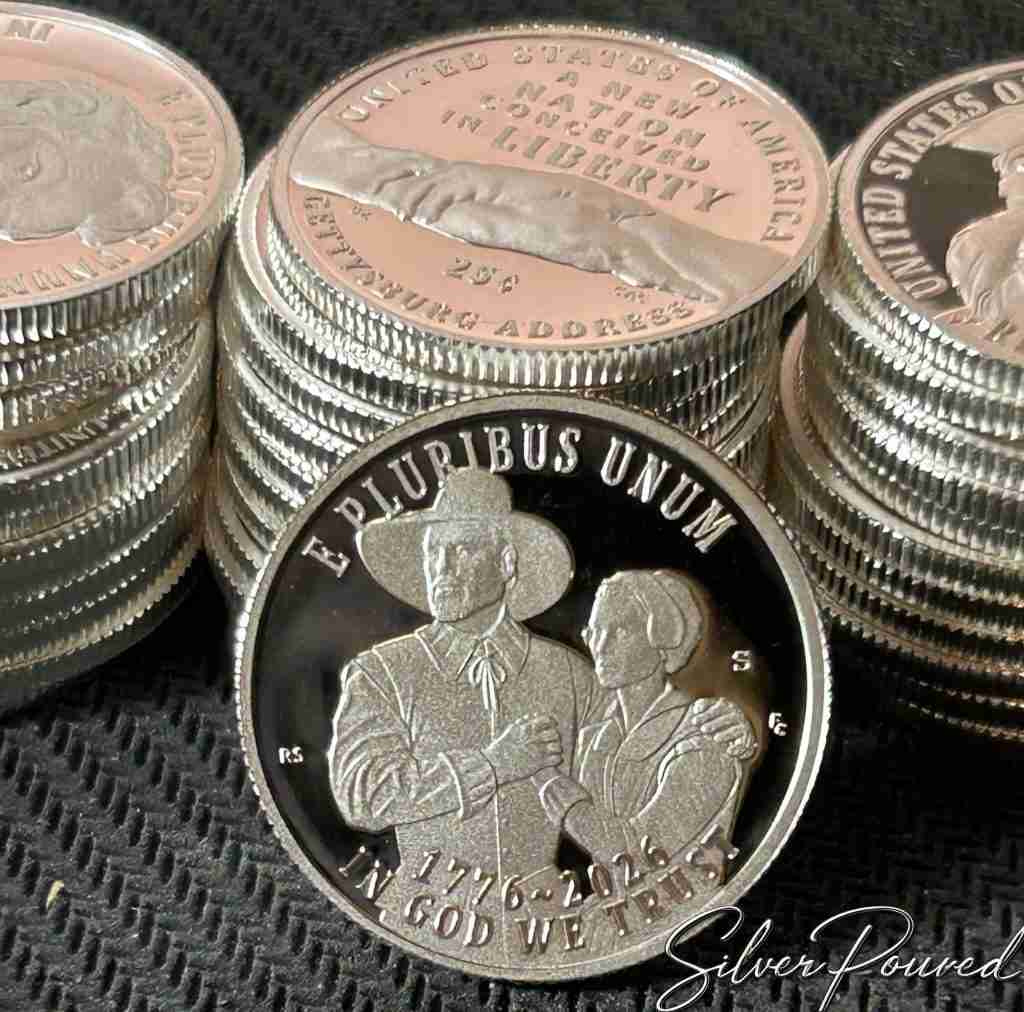
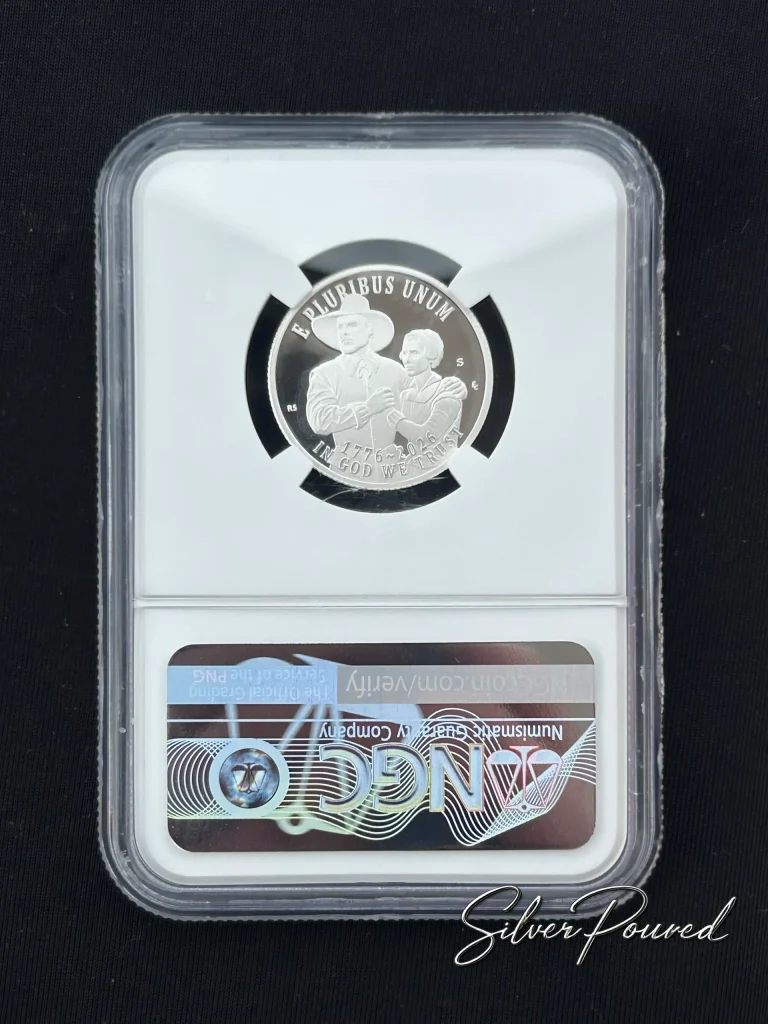
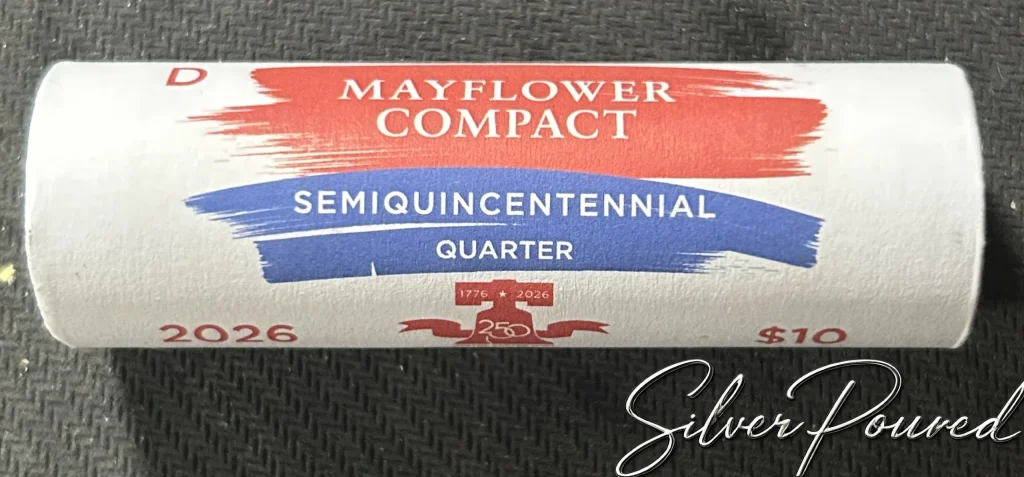
The Mayflower Compact quarter begins the historical story before the United States existed. Its obverse depicts two Pilgrims embracing as they behold the New World. The image reflects the uncertainty of arrival and the necessity of creating an agreement for government after the passengers reached a location outside the authority of their original charter.
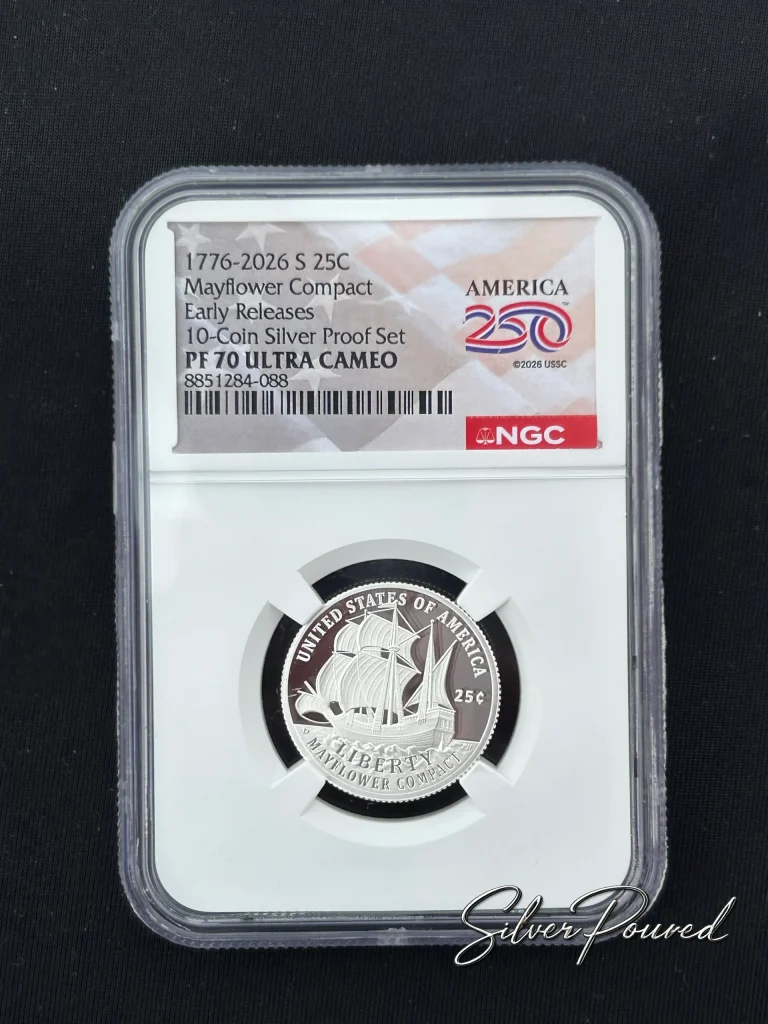
The reverse shows the Mayflower under full sail over rough seas, traveling west. Together, the designs connect the physical voyage with the political idea that a community could establish order through consent and mutual obligation.
The Mayflower Compact quarter establishes the starting point of the sequence: self-government through consent and mutual obligation. From there, the quarter narrative advances through revolution, independence, constitutional government, and national renewal before the broader program turns toward the continuing responsibility of preserving liberty.
Revolutionary War Quarter
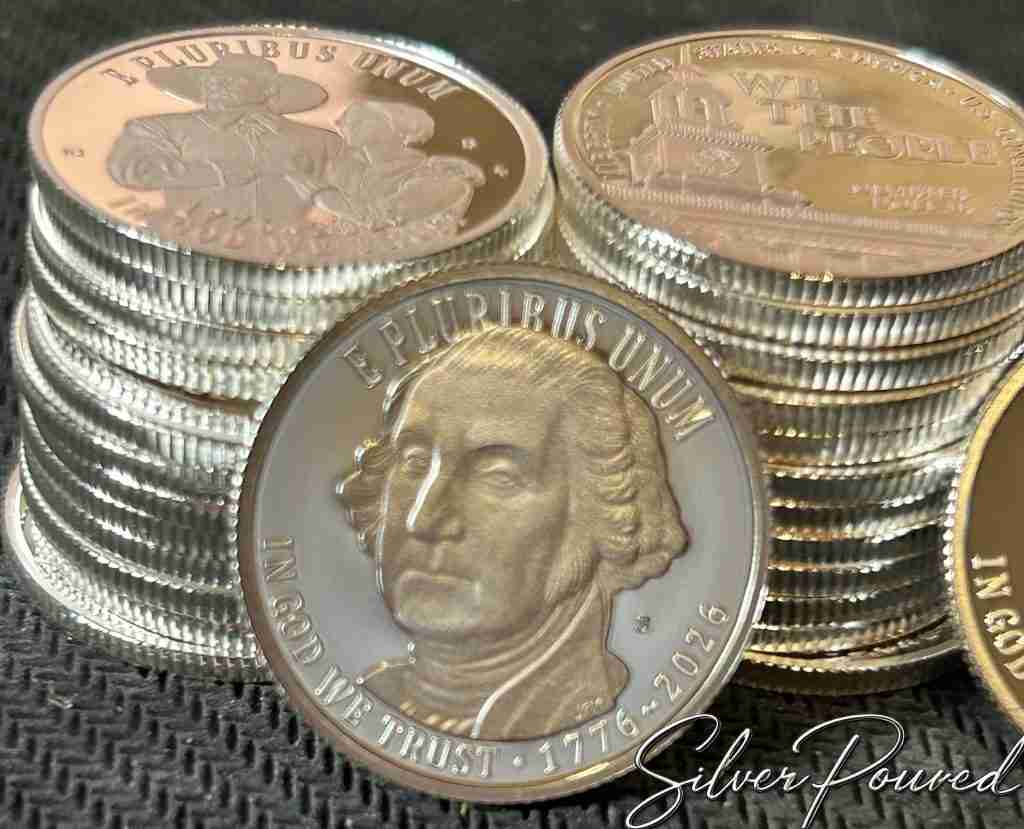
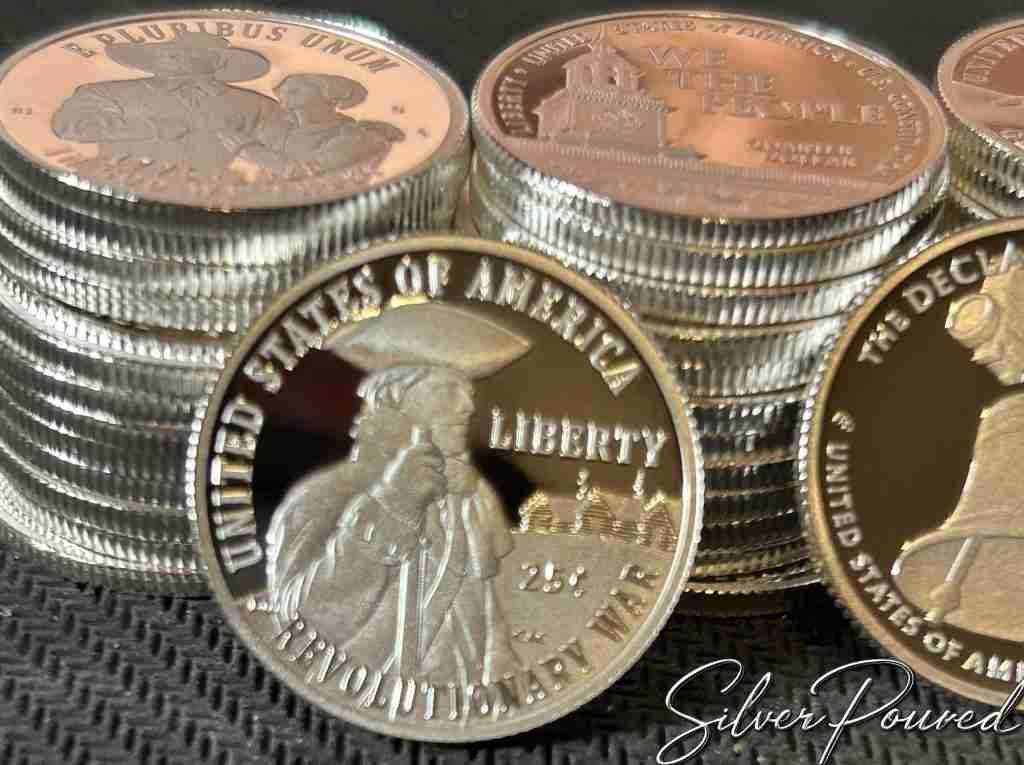
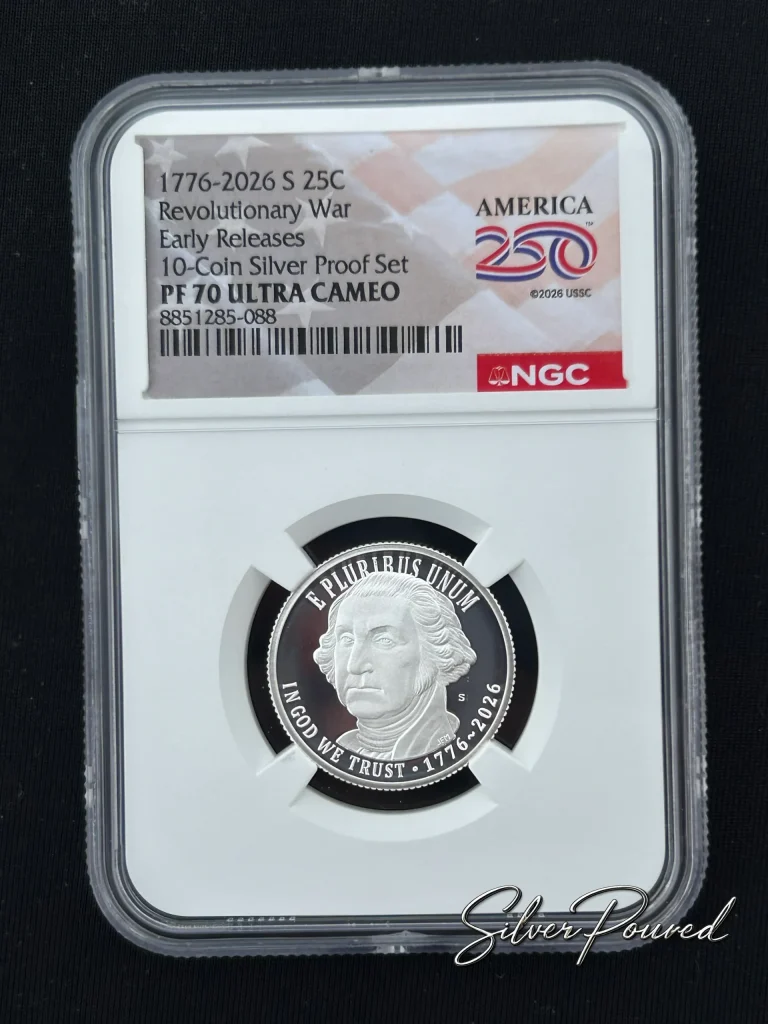
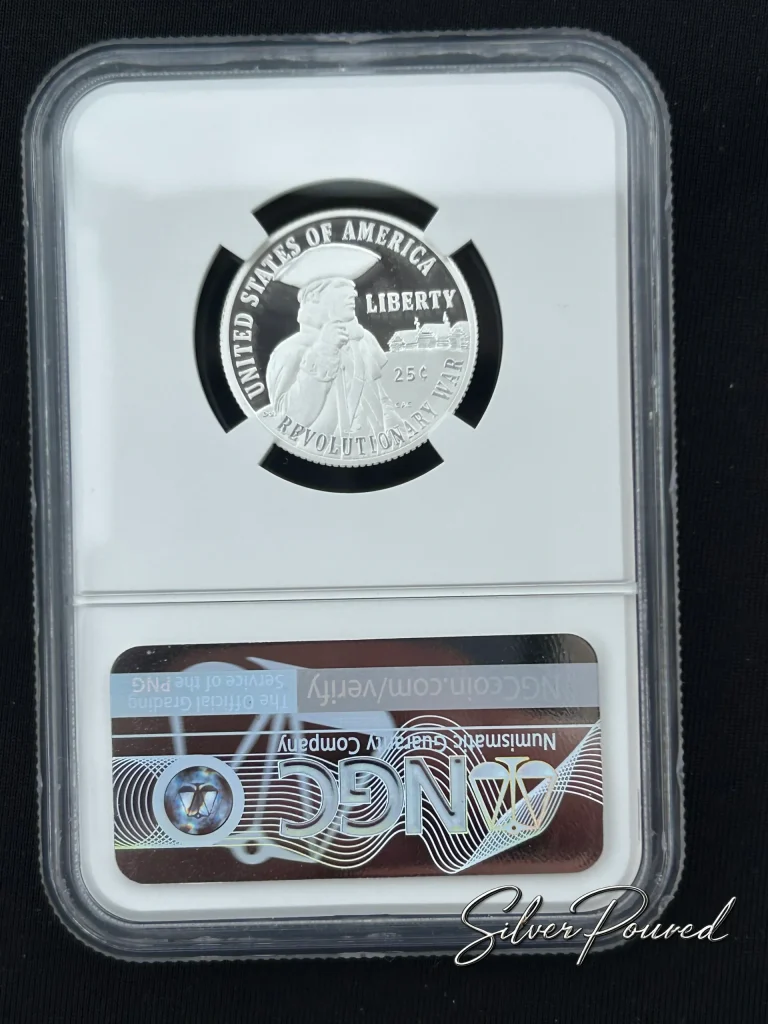
The Revolutionary War quarter moves the story from political agreement to armed struggle. Its obverse features George Washington as Commander-in-Chief of the Continental Army. The reverse shows a Continental soldier at Valley Forge, where the army endured severe cold, disease, shortages, and the possibility that the fight for independence could fail.
The soldier’s expression carries much of the design’s meaning. Independence had already been declared, but its survival was not guaranteed. The quarter recognizes that founding principles required people willing to endure extraordinary hardship in their defense.
The Revolutionary War quarter gives the program’s abstract ideals a human cost. By centering a Continental soldier enduring Valley Forge, the design connects independence with the service, sacrifice, and perseverance required to defend it—a theme that may carry particular meaning for military families, veterans, historians, and collectors.
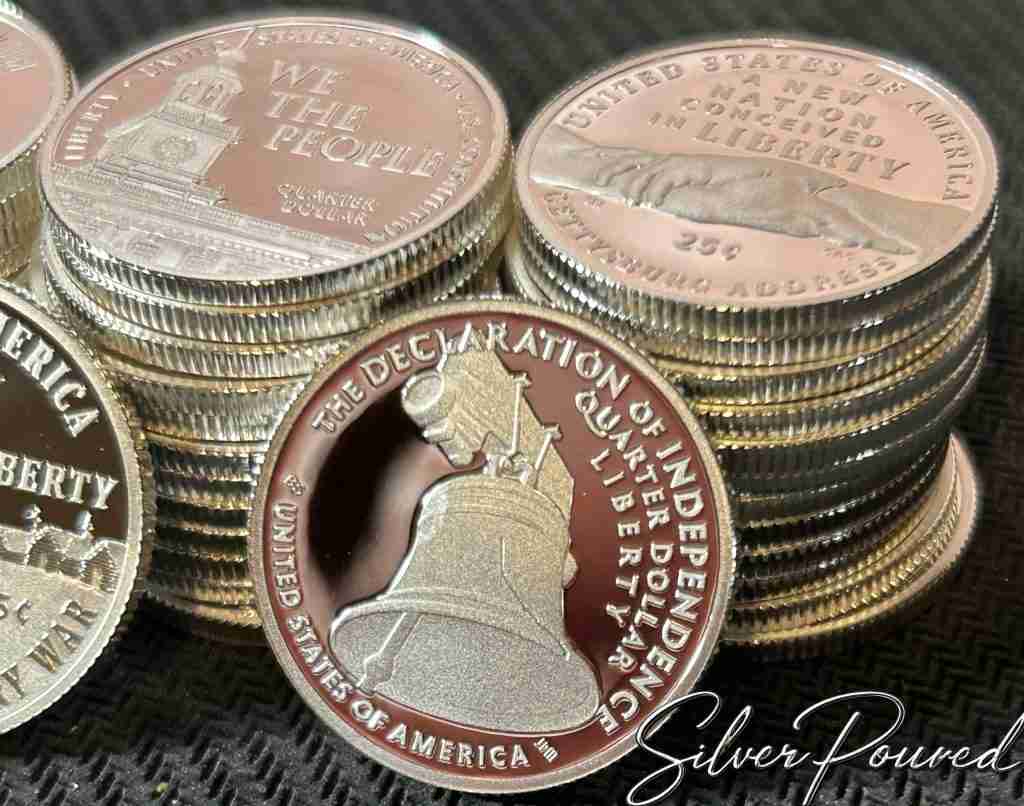
Declaration of Independence Quarter
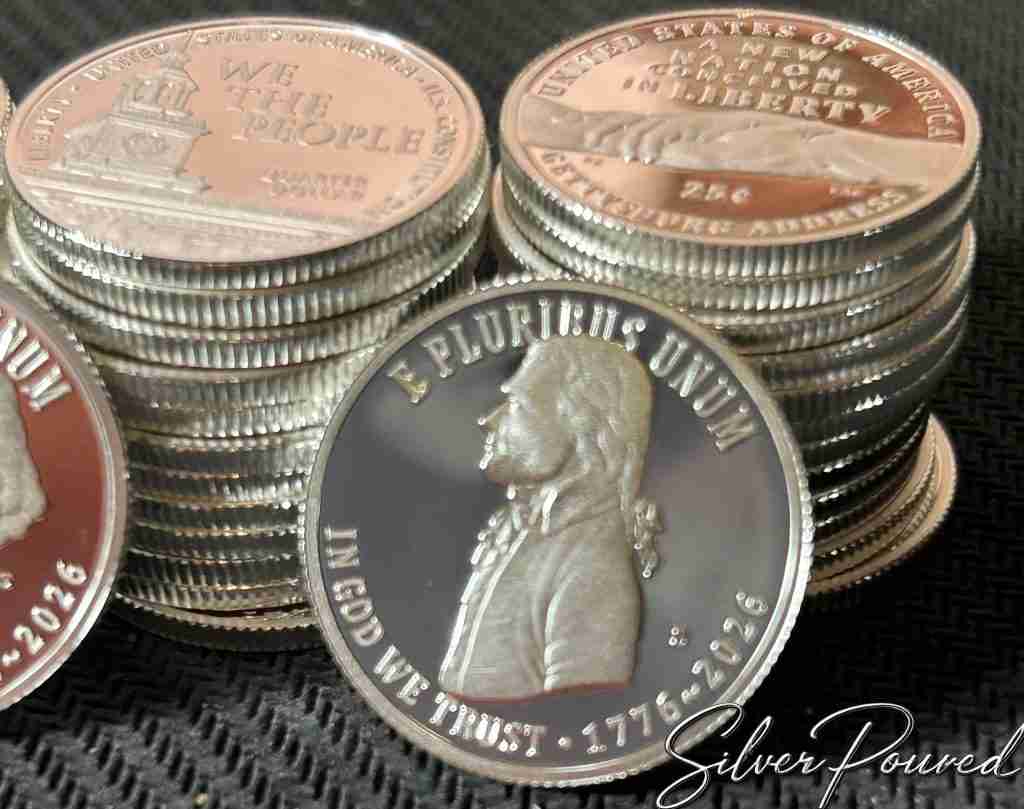
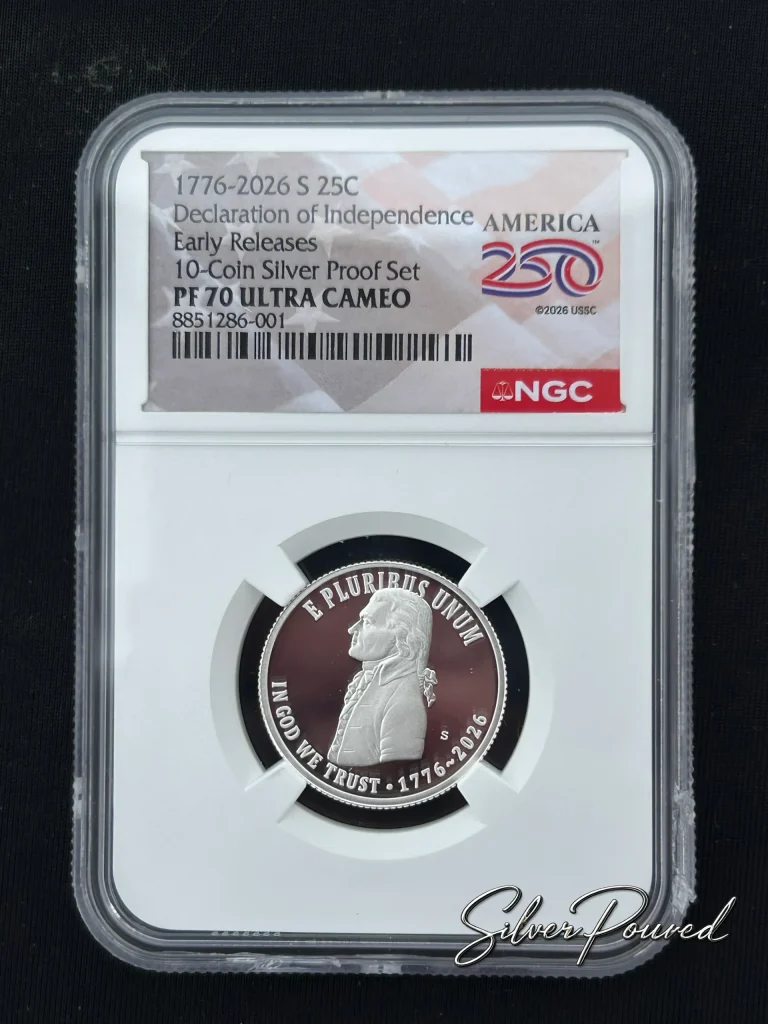
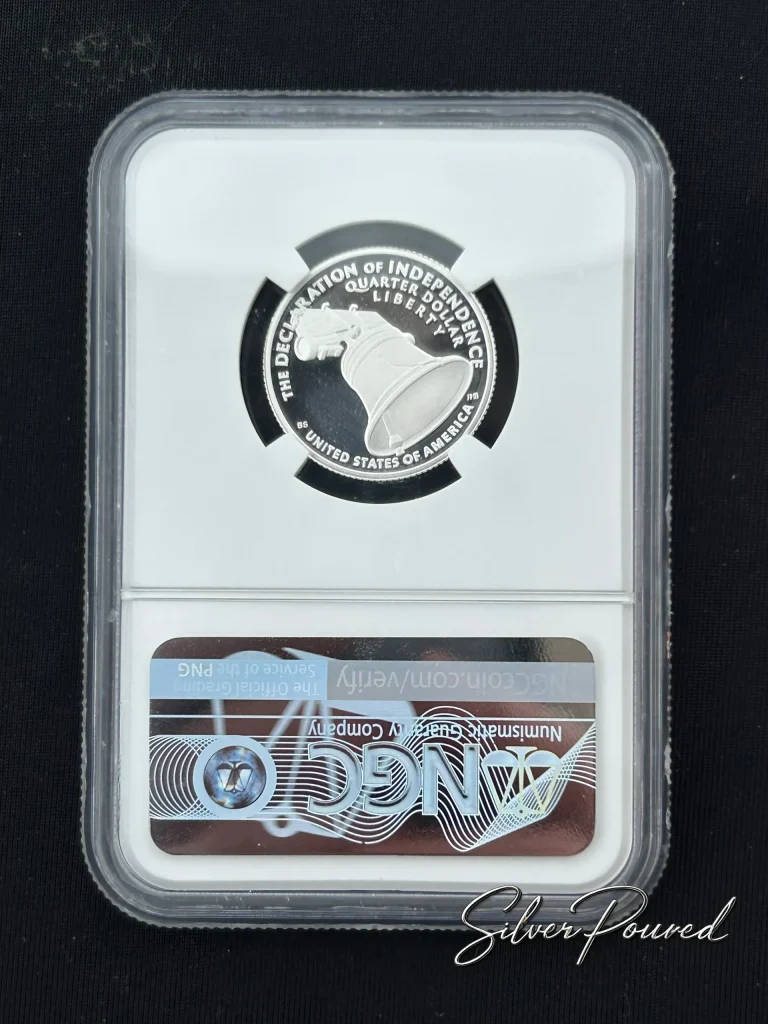
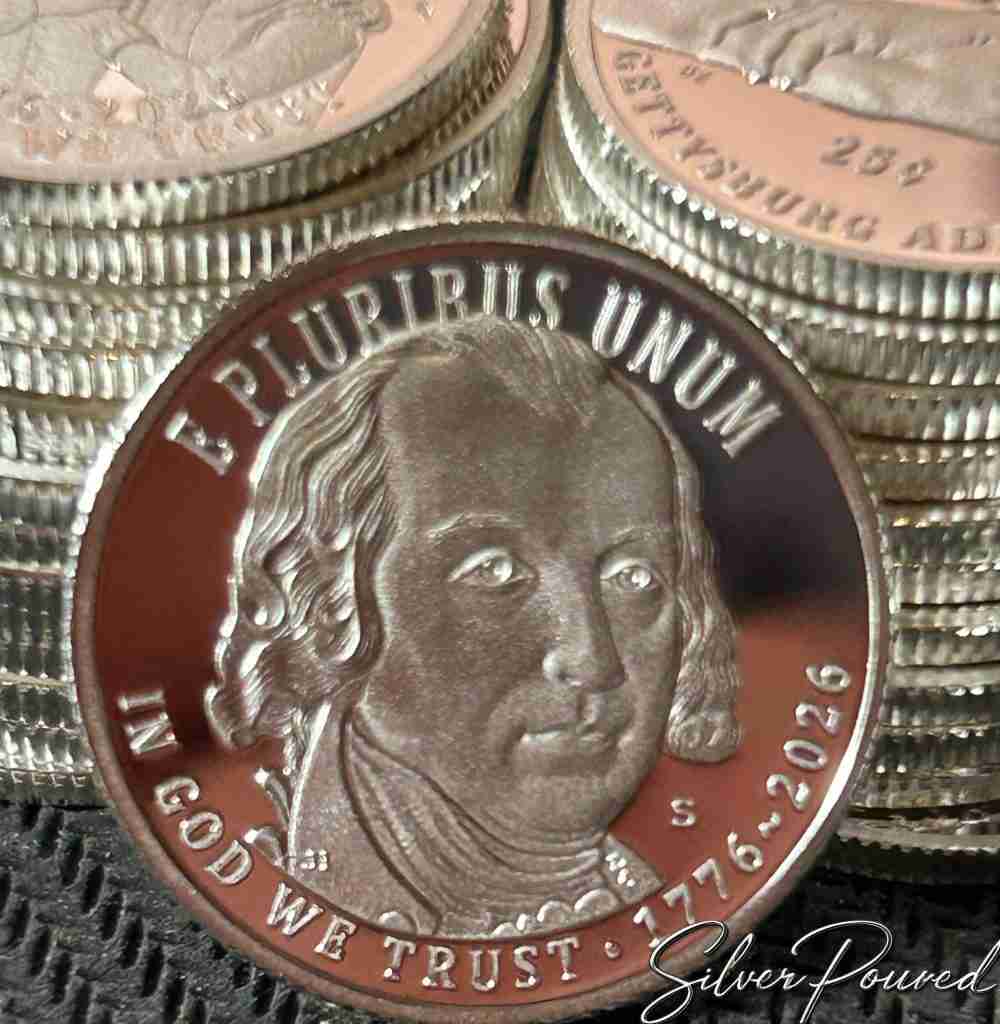
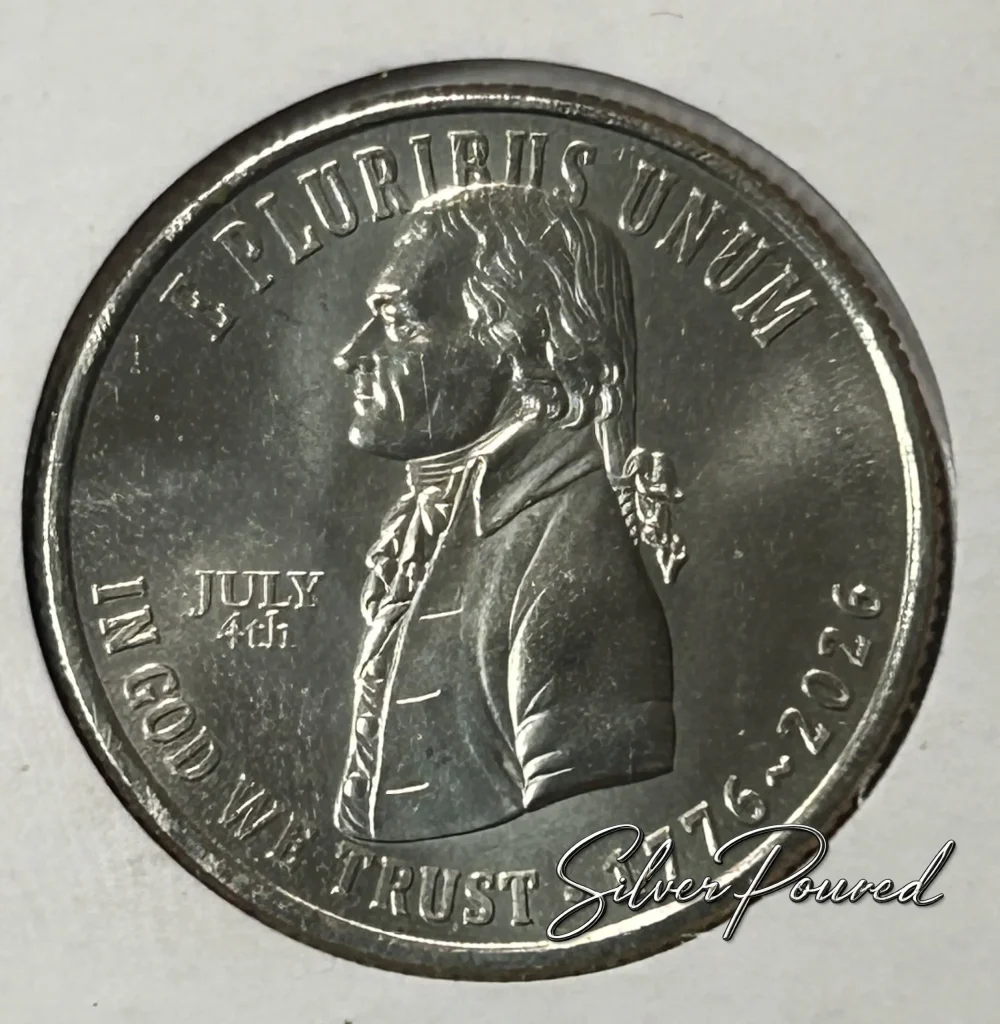
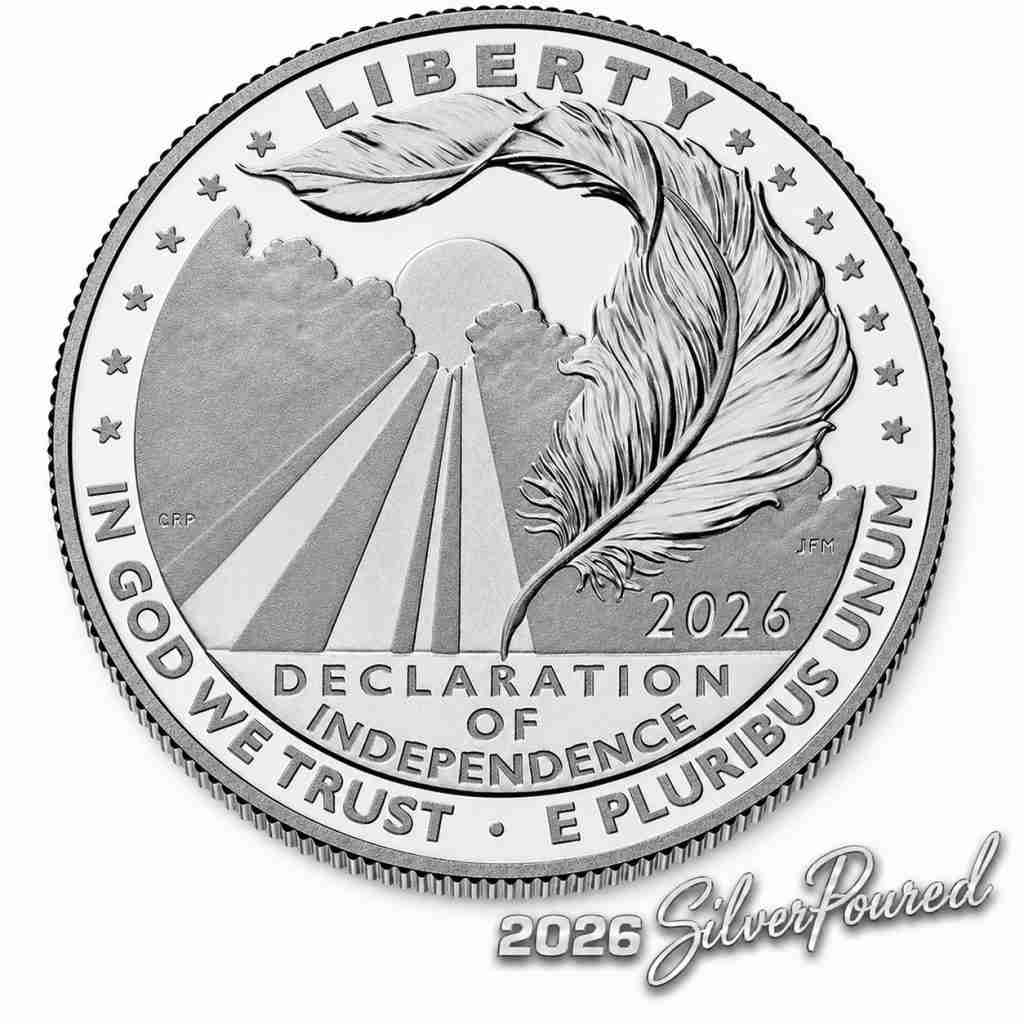
The Declaration of Independence quarter features Thomas Jefferson on the obverse. The reverse depicts the Liberty Bell ringing, with its famous crack clearly visible. The Mint connects that crack with the fragility of the young nation at its founding.
This design holds a uniquely important position among the 2026 coins because it exists in ordinary circulating form, proof form, silver proof form, a special no-mint-mark July 4 privy variety, and an extraordinarily limited 2.5-ounce silver version.
The Declaration design extends across dramatically different collecting levels. Philadelphia and Denver strikes carry the story into circulation, proof and silver proof versions preserve it in annual collector products, the July 4 privy issue creates a modern nationwide coin hunt, and the oversized silver version transforms the same design into an exceptionally limited specialty release.
U.S. Constitution Quarter
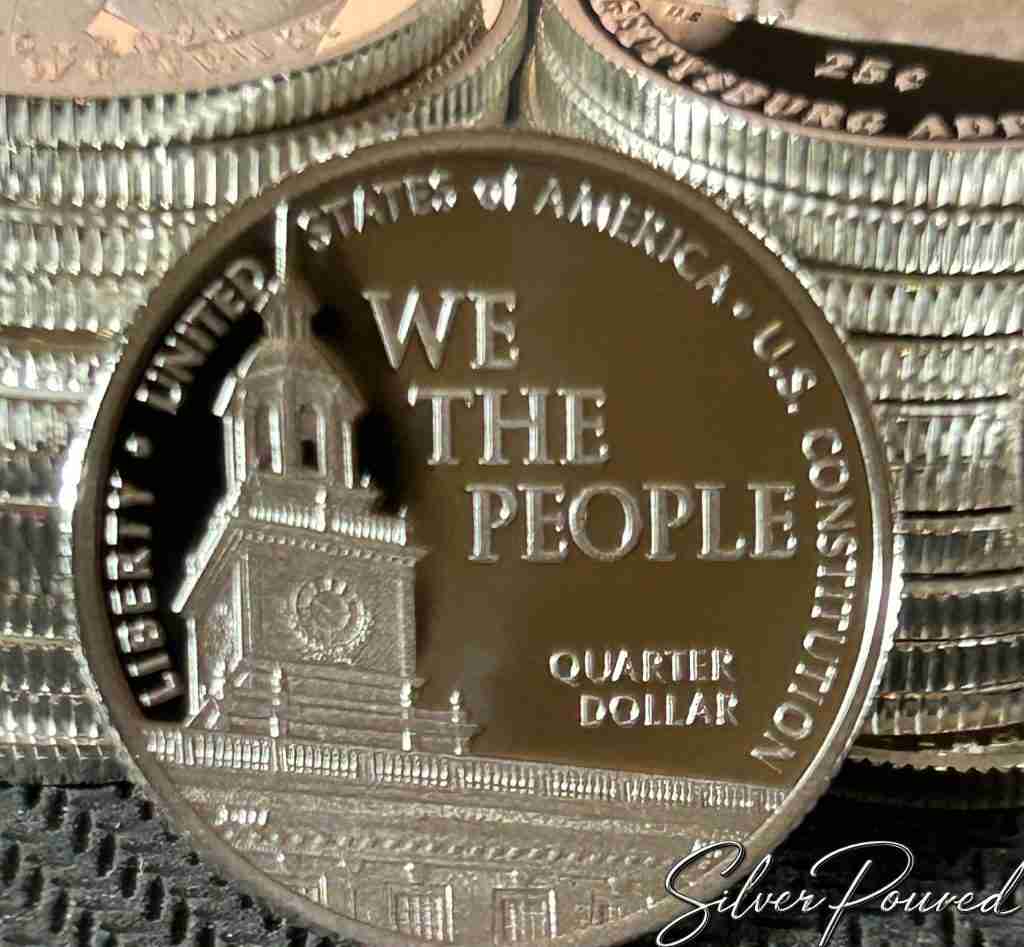
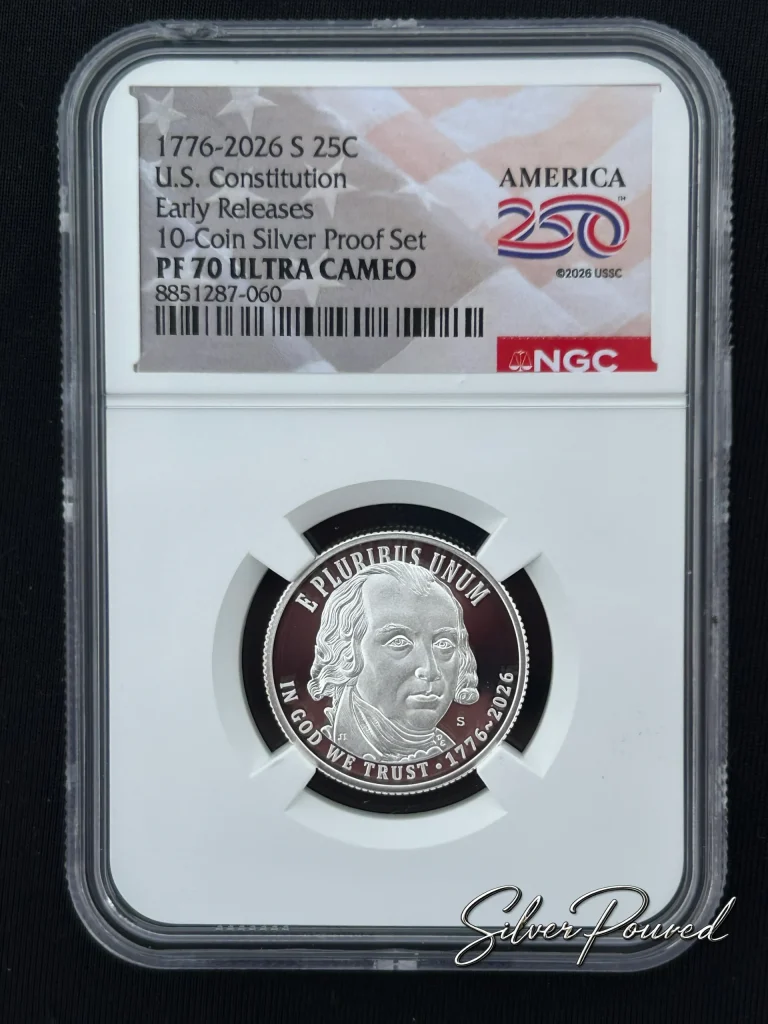
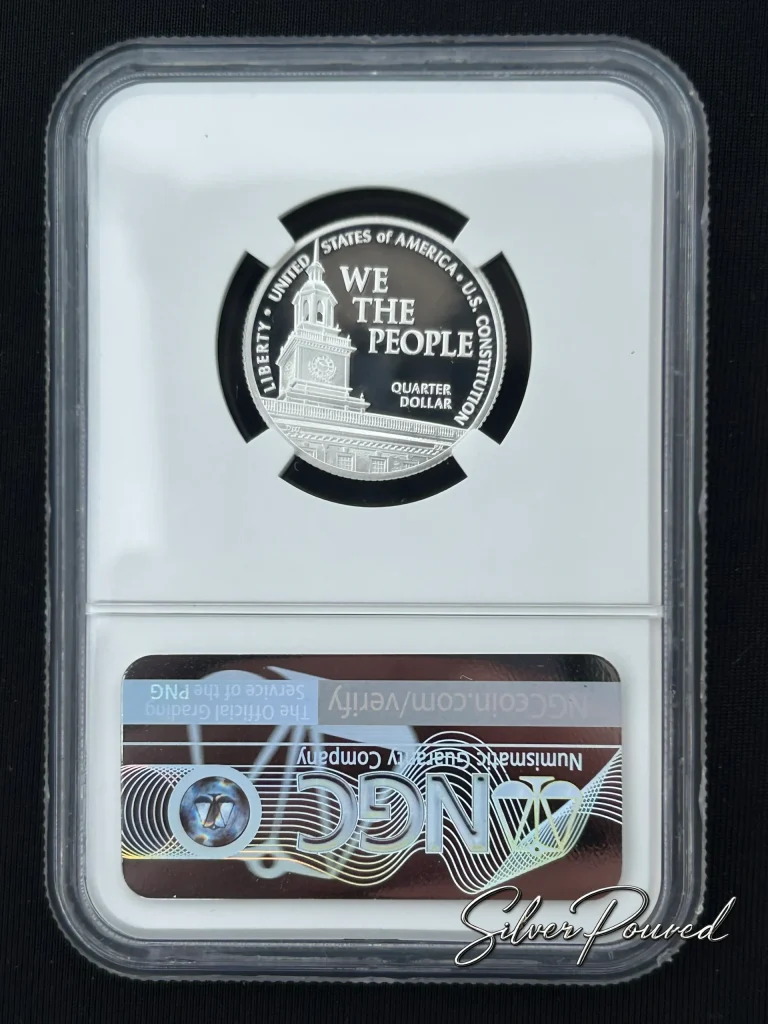
The U.S. Constitution quarter features James Madison on the obverse and Independence Hall on the reverse. The words WE THE PEOPLE connect the building to the principle that legitimate government receives its authority from the governed.
The Constitution quarter advances the sequence from independence to government. The Declaration asserted the colonies’ separation and articulated foundational ideals; the Constitution established the governing framework through which the new nation would attempt to preserve those principles while distributing and limiting political power.
Viewed together, the Declaration and Constitution quarters form natural companion chapters. One represents the assertion of independence and founding principles; the other represents the constitutional structure created to turn those principles into an enduring system of government.
Gettysburg Address Quarter
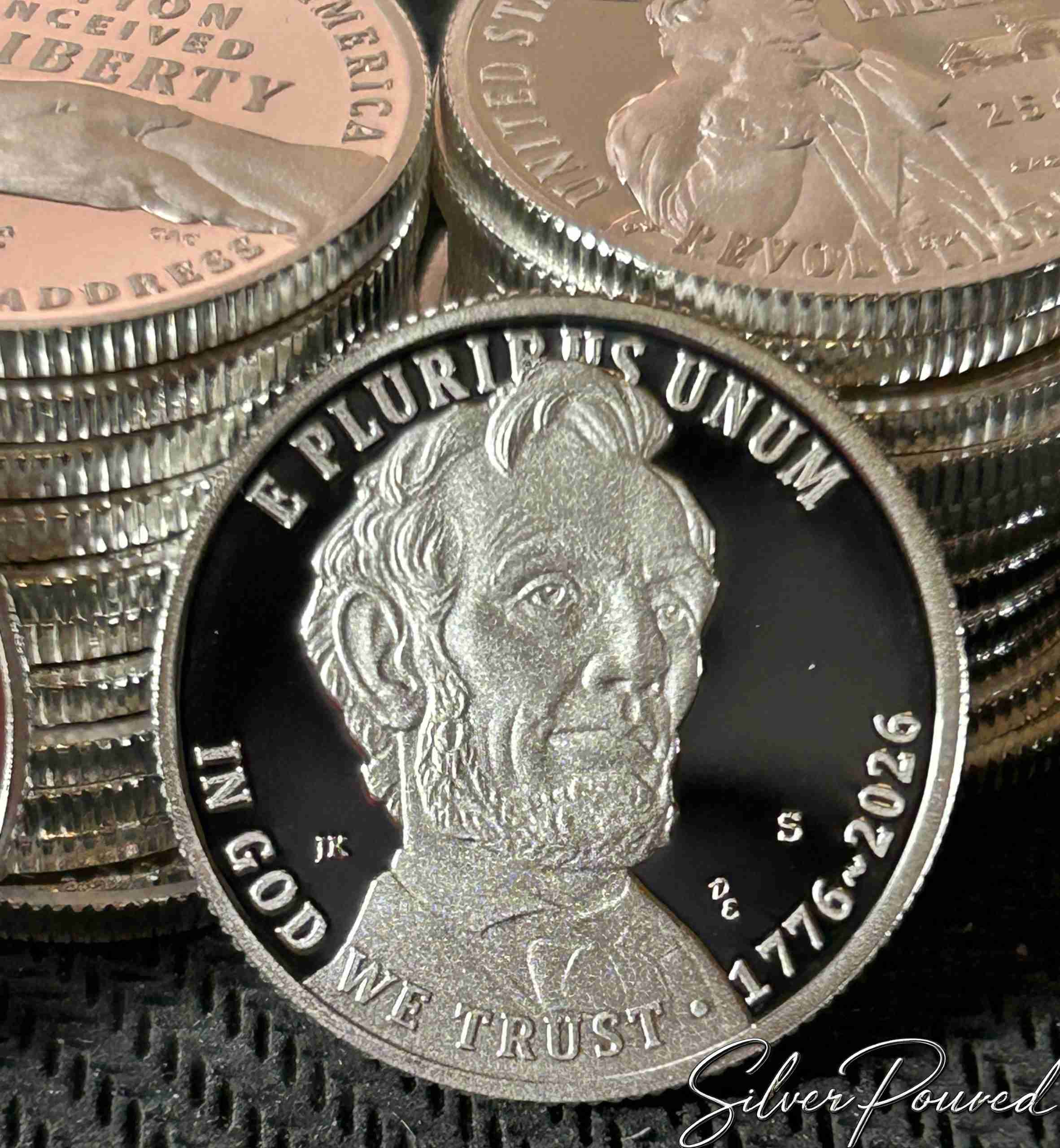
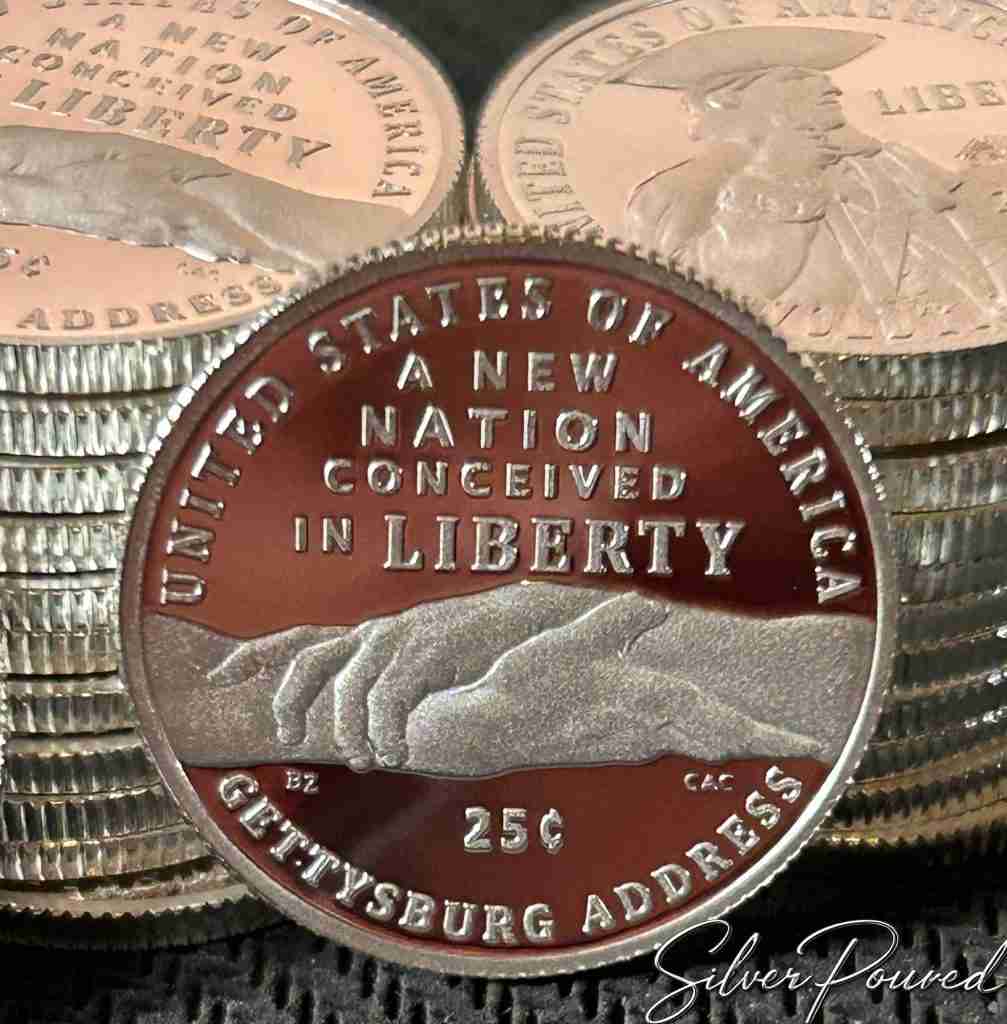
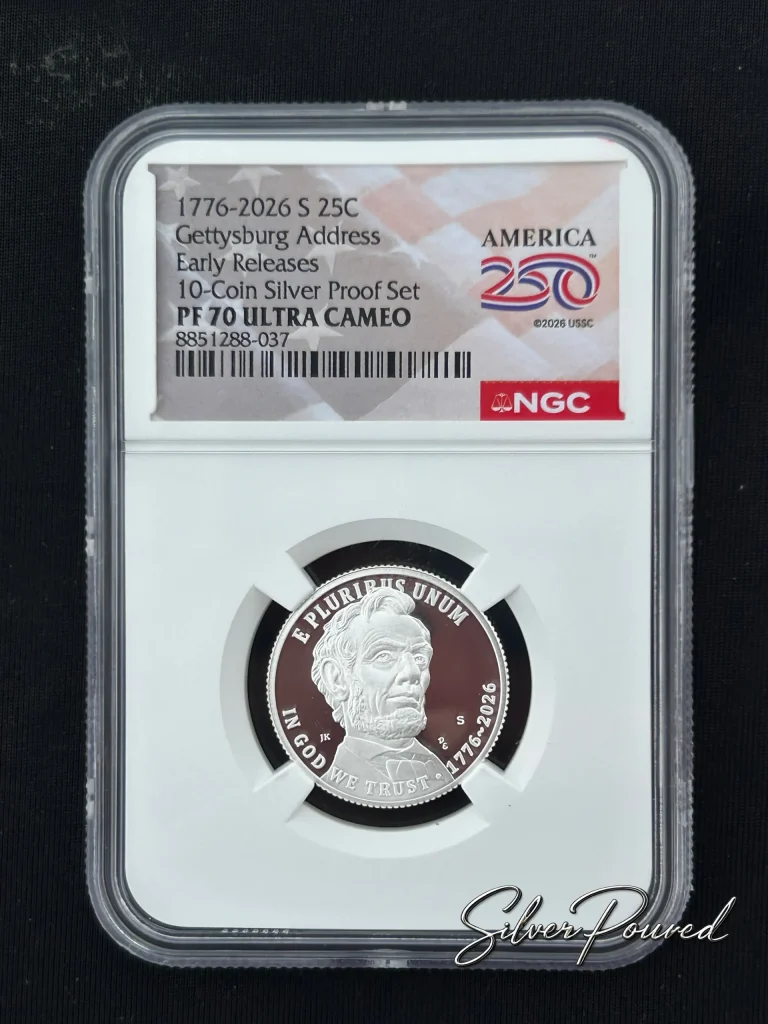
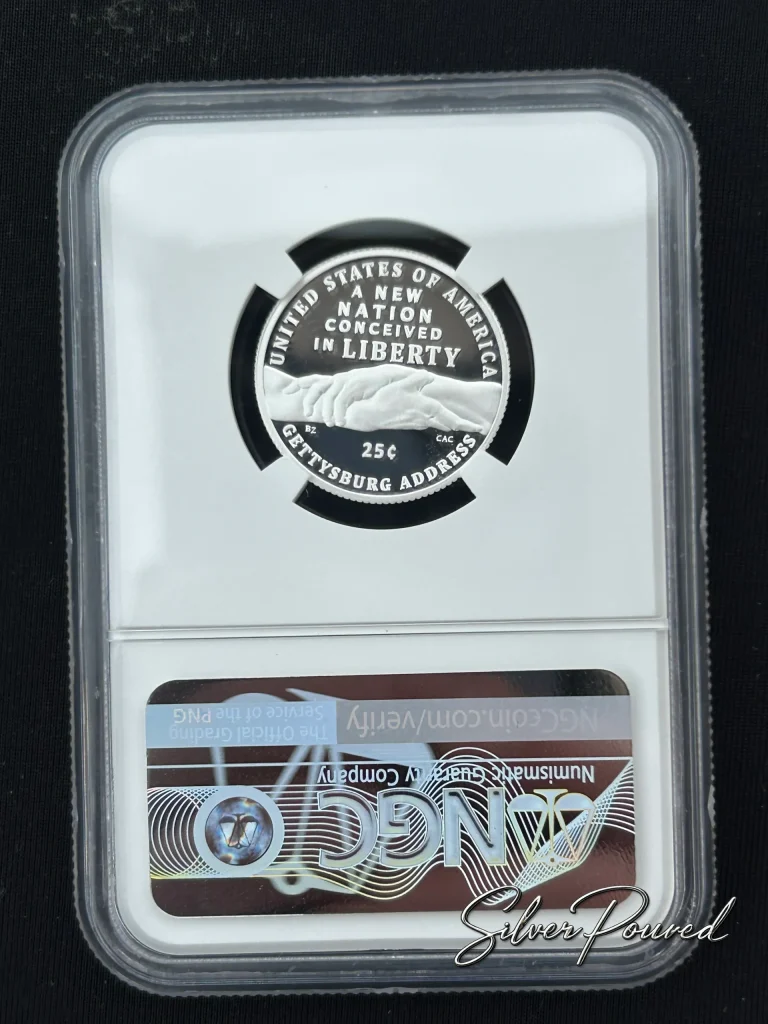
The Gettysburg Address quarter features Abraham Lincoln with the burden of war visible in his portrait. The reverse shows two hands clasping beneath the words A NEW NATION CONCEIVED IN LIBERTY.
The quarter brings the program’s historical narrative into the Civil War, when the nation confronted whether the government created by the founding generation could survive internal division. Lincoln’s address transformed the battlefield dedication into a renewed statement about equality, representative government, and unfinished national responsibility.
The Gettysburg quarter completes the historical sequence without suggesting that the American story itself is complete. Its theme of national renewal leads naturally into the Emerging and Enduring Liberty designs, where the program shifts from historical events toward the responsibility each generation inherits for preserving the principles passed down to it.
Why the 2026 Coin Program Tells a Story Instead of Marking an Event
The Semiquincentennial circulating program is structured around a historical progression rather than a single commemorative subject. Its designs move from early self-government through revolution, independence, constitutional government, national crisis, renewal, and ultimately the continuing responsibility to preserve liberty.
The story begins before the founding of the United States with the Mayflower Compact, follows the struggle for independence, establishes constitutional government, confronts the nation’s greatest internal crisis, and concludes by reminding modern Americans that liberty survives only when each generation accepts responsibility for preserving it.
Historical Chapter
Purpose Within the Narrative
Self-Government
Introduces government by consent
Independence
Demonstrates the cost of liberty
Constitutional Government
Establishes the framework of the Republic
National Renewal
Shows the preservation of the Union and its ideals
Future Generations
Passes liberty and responsibility forward
That structure gives the designs meaning beyond their individual subjects. A collector can study each coin independently, but viewing them in sequence reveals a larger narrative in which one historical chapter prepares the way for the next and the final message reaches beyond 2026 itself.
Every Generation Becomes the Guardian of Liberty
The story preserved throughout the 2026 Semiquincentennial Coin Program does not conclude with the final historical design.
Instead, it arrives at a timeless truth.
Every generation inherits the same responsibility—to understand liberty, protect it, and leave it stronger than it was received. The coins struck during America’s 250th anniversary commemorate the people and principles that built the nation, but their lasting purpose is to remind future generations that history is never finished. Every citizen becomes the next guardian of the ideals those coins represent.
Every generation of Americans has inherited the responsibility of protecting the liberties established by the one before it. Some generations were called to defend those freedoms on distant battlefields. Others served during times of uncertainty, preserving peace through their readiness and commitment. Each accepted the same responsibility—to protect the nation and the principles represented throughout this anniversary program.
As collectors study these coins, they are also becoming part of a continuing American story. The history struck into every design was preserved by generations of service, sacrifice, and dedication that carried those ideals from the nation’s founding to the present day.
After the quarter program traces the nation’s historical development, the narrative changes direction. The remaining redesigned denominations move away from specific historical events and toward enduring principles, asking not simply what earlier generations accomplished but what responsibility later generations inherit from them.
The Dime and Half Dollar as Companion Designs
The 2026 dime and half dollar are most revealing when studied together. The Emerging Liberty dime presents liberty as something confronted, defended, and achieved, while the Enduring Liberty half dollar explores how that inheritance survives through knowledge, education, and responsibility.
The Emerging Liberty dime introduces liberty as an active force confronting tyranny with determination and resolve. The Enduring Liberty half dollar continues that story by showing liberty passed forward through knowledge, education, and civic responsibility. Rather than repeating the same message, the two denominations illustrate different stages in America’s continuing constitutional journey.
2026 Denomination
Central Theme
Narrative Role
Emerging Liberty Dime
Liberty confronting tyranny
The defense and achievement of freedom
Enduring Liberty Half Dollar
Knowledge preserving liberty
Passing freedom to future generations
Together, the two denominations complete the transition from history to inheritance. The quarters explain pivotal chapters in the nation’s development; the dime and half dollar turn that history toward the present by emphasizing the continuing responsibility to understand and preserve liberty.
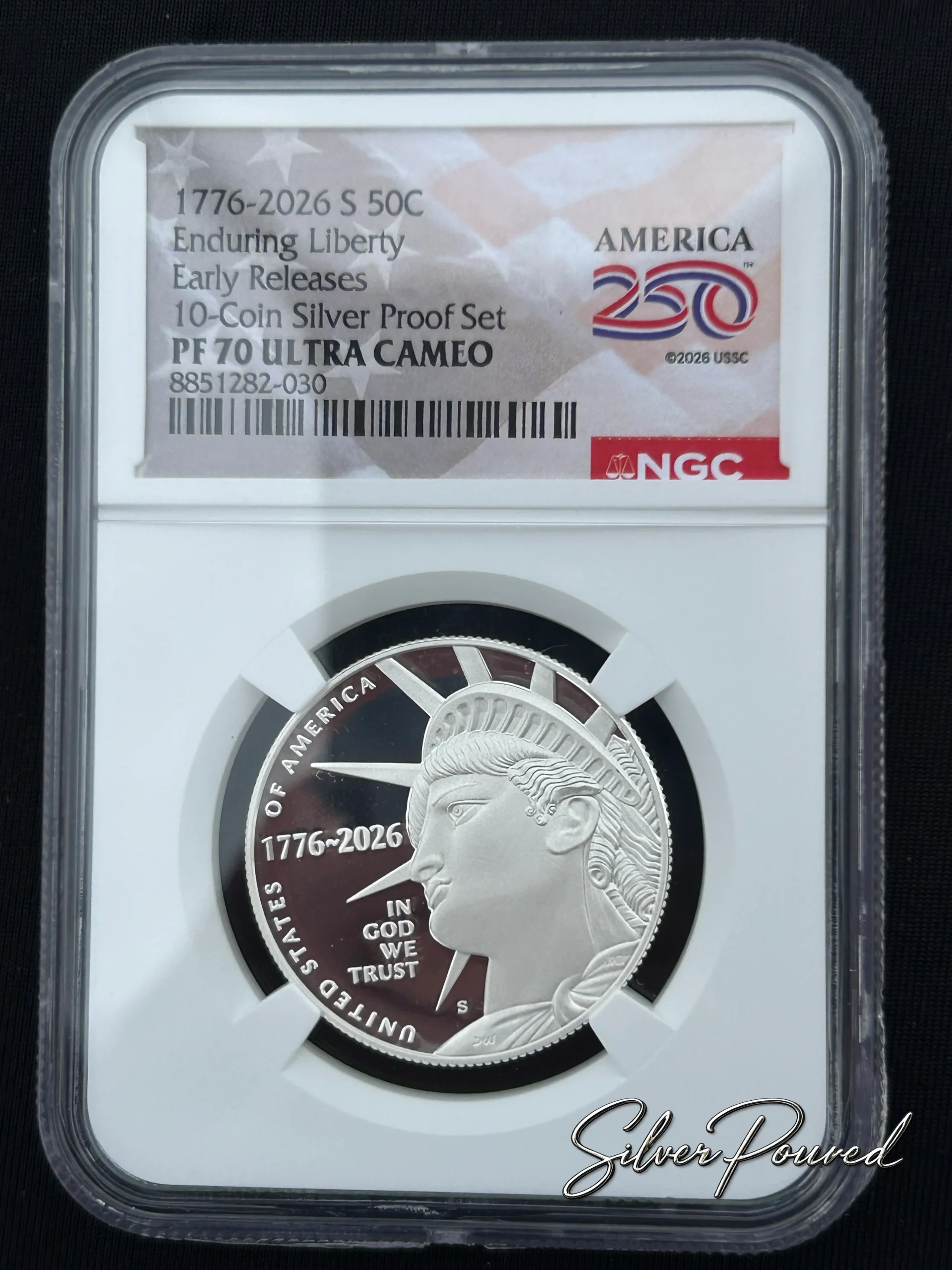
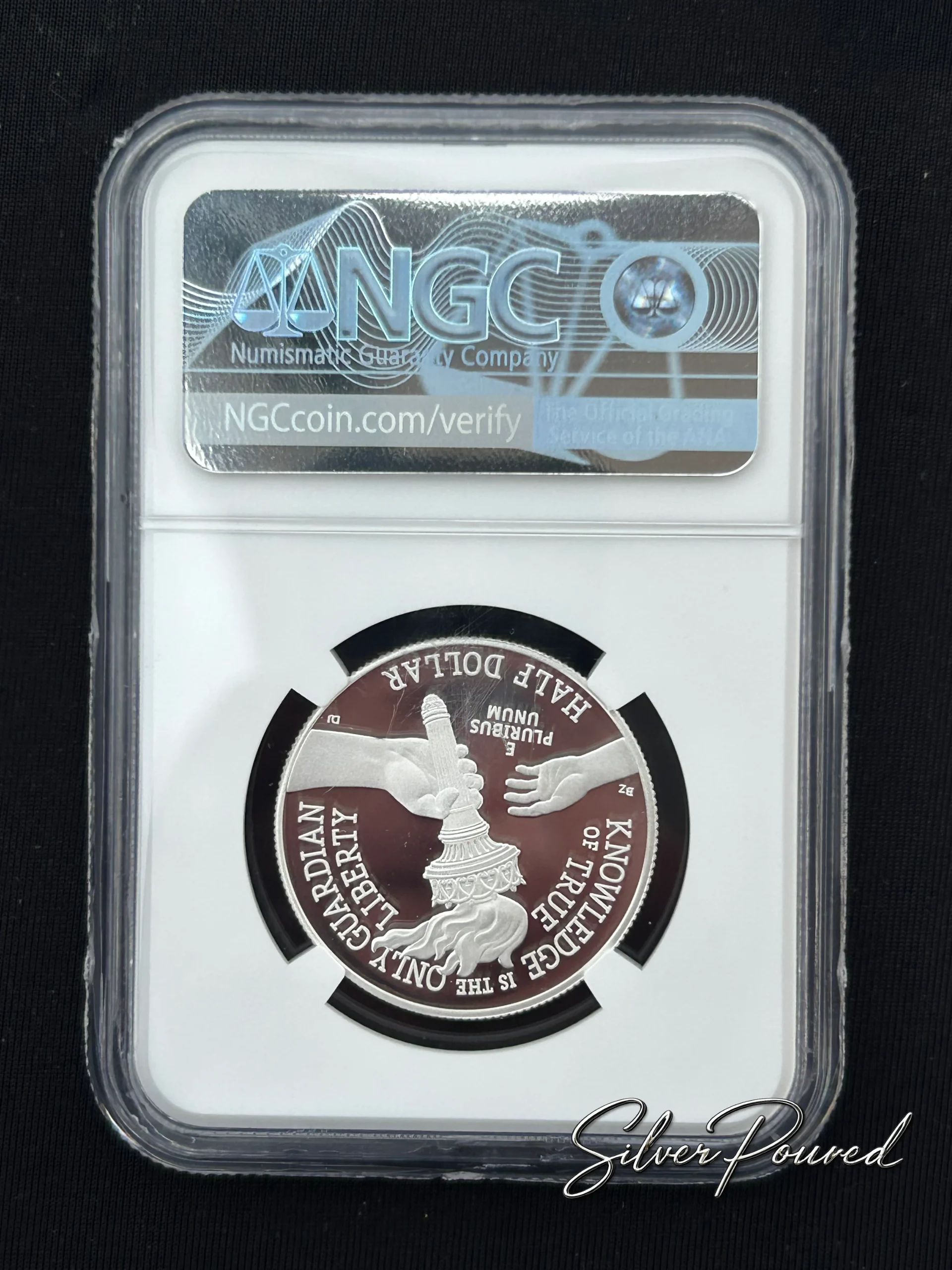
The Enduring Liberty Half Dollar
The Enduring Liberty half dollar serves as the forward-looking conclusion to the circulating redesign narrative. Instead of commemorating another historical event, it emphasizes the transmission of knowledge and the responsibility to preserve liberty for those who follow.
Replacing the long-familiar Kennedy design for one commemorative year gives the half dollar an unmistakable place within the Semiquincentennial. Its message carries the program beyond remembrance, connecting America’s historical inheritance with the choices and responsibilities of future citizens.
Why Certain Classic Designs Were Preserved
The Semiquincentennial does not depend entirely on new designs. The Jefferson nickel and collectible Lincoln cent retain familiar imagery while incorporating the dual date 1776 ~ 2026, creating a deliberate contrast between the program’s redesigned denominations and two of American coinage’s most recognizable designs.
The Jefferson nickel and Lincoln cent demonstrate this philosophy especially well. Both already represent foundational chapters of American history through Thomas Jefferson, Abraham Lincoln, Monticello, and the Union Shield. Rather than interrupting those enduring designs, the Mint connected them to the nation’s 250th anniversary with subtle but historically significant modifications.
Denomination
2026 Anniversary Approach
Historical Purpose
Jefferson Nickel
Dual date with established designs retained
Maintains continuity while recognizing the Semiquincentennial
Lincoln Cent
Dual date for annual collector sets
Connects America’s founding with one of its most influential Presidents
This combination of redesign and continuity gives the circulating and collector-set coinage additional historical texture. The dime, quarters, and half dollar communicate the anniversary through new imagery, while the nickel and cent connect 2026 to designs already familiar across generations of American coinage.
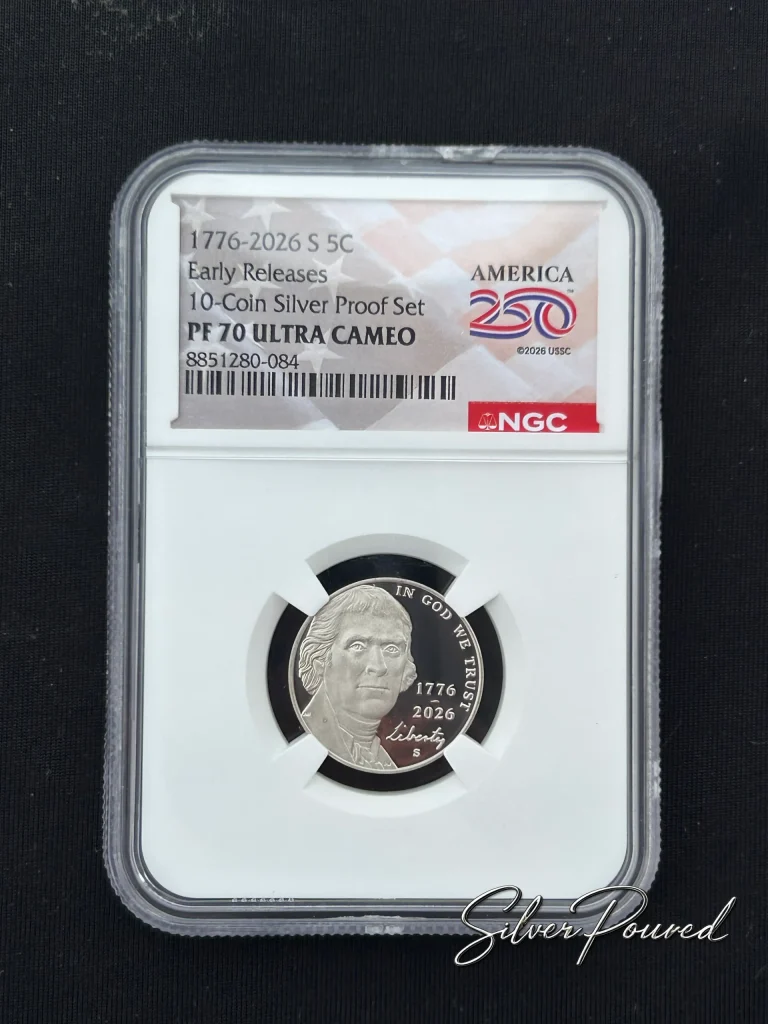
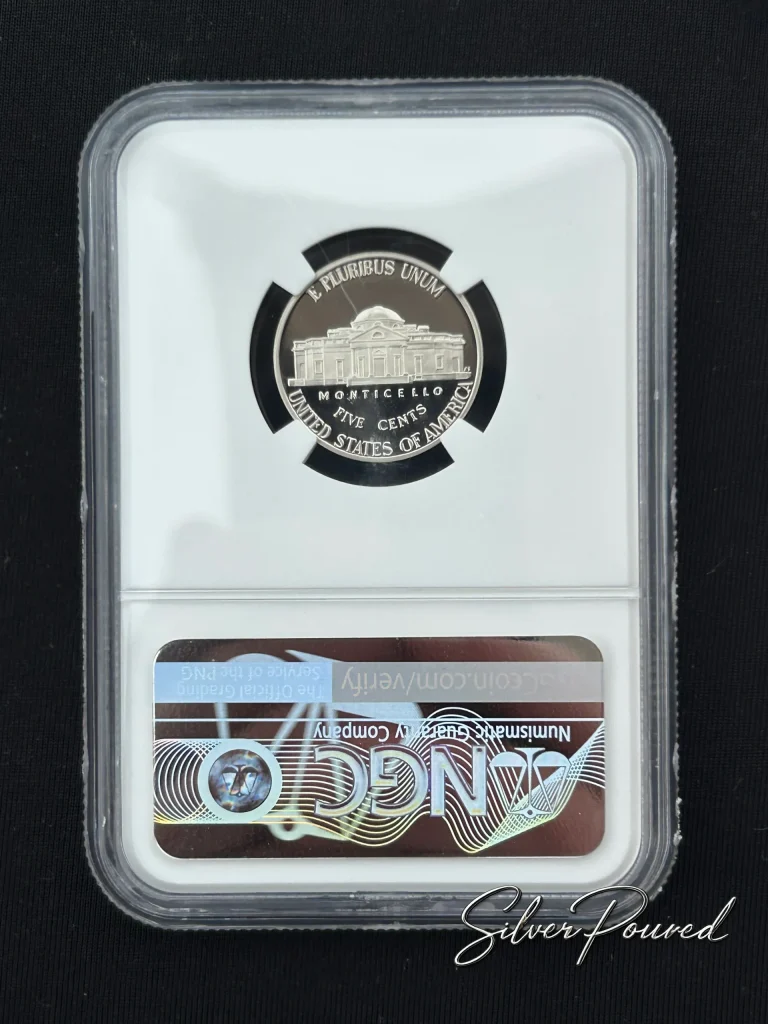
The Dual-Dated 2026 Jefferson Nickel
The Jefferson nickel demonstrates the quieter side of the Semiquincentennial program. Instead of introducing new imagery, the Mint retains the familiar Jefferson and Monticello designs while the dual date 1776 ~ 2026 permanently identifies the issue with America’s 250th anniversary.
That restraint creates a useful contrast with the dramatically redesigned dime, quarters, and half dollar. The nickel shows that an anniversary coin can acquire a distinct historical identity through a carefully chosen modification without abandoning the imagery collectors already recognize.
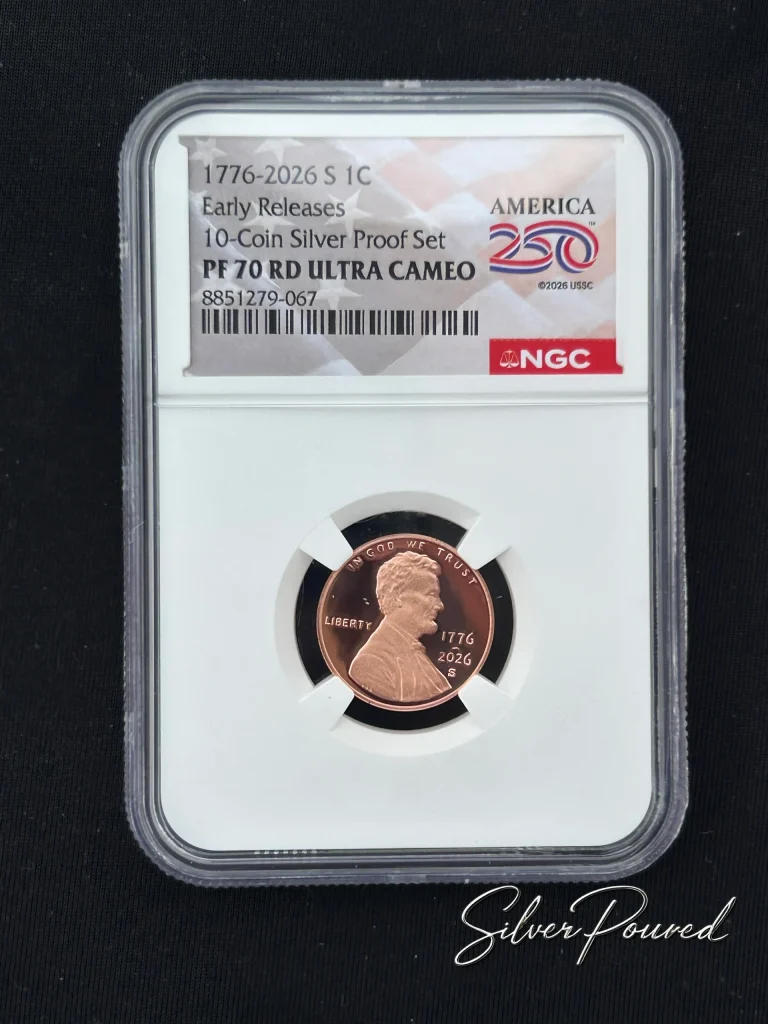
The 2026 Lincoln Cent After Circulating Penny Production Ended
The 2026 Lincoln cent occupies an unusual place within the Semiquincentennial. Its familiar Lincoln portrait and Union Shield remain, while the dual date 1776 ~ 2026 identifies the coin with America’s 250th anniversary. Its collector-set role also gives the issue a different path into collections than the circulating denominations surrounding it.
Unlike the redesigned dime, quarters, and half dollar, the Lincoln cent reminds collectors that not every important chapter of American coinage is defined by a new design. Sometimes history is preserved through the continued use of an enduring image that already carries deep national significance.
Lincoln Cent Feature
2026 Significance
Victor David Brenner Portrait
Continues one of America’s longest-running coin designs
1776 ~ 2026 Dual Date
Identifies the Semiquincentennial anniversary
Annual Collector Set Production
Available through official Mint numismatic products
Union Shield Reverse
Preserves the modern Lincoln cent design
For collectors building a complete 2026 collection, the Lincoln cent therefore carries significance beyond its familiar appearance. It preserves one of American coinage’s most enduring designs within the anniversary lineup while documenting the denomination’s distinctive collector-set role during the Semiquincentennial year.
Historical Themes Beyond the Redesign Program
The Semiquincentennial story extends beyond the redesigned circulating denominations. Existing United States Mint programs contribute additional historical perspectives, allowing the 2026 lineup to recognize people, communities, events, and contributions outside the central five-quarter narrative and companion Liberty designs.
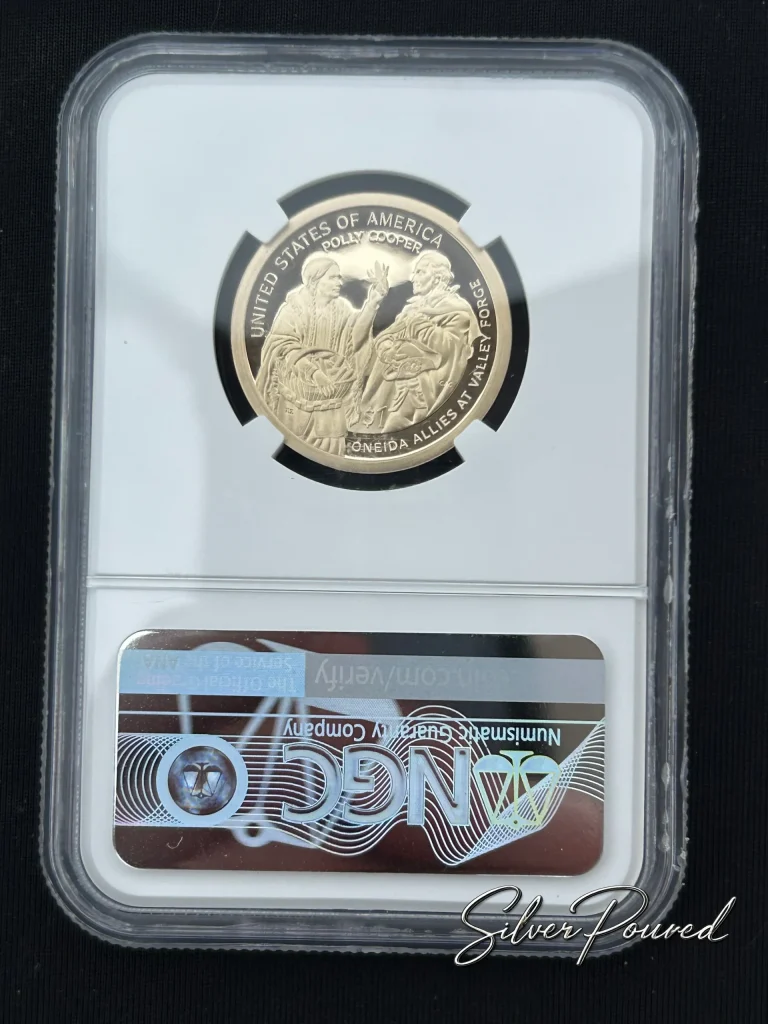
The Native American $1 Coin illustrates this broader approach. Rather than adopting the Semiquincentennial redesign format, the series continues its long-standing mission of recognizing Native American history and achievements. Its 2026 reverse honoring Polly Cooper and the Oneida people complements the Revolutionary War quarter by highlighting a chapter of American history that deserves equal recognition within the nation’s founding story.
Program
Historical Focus
Connection to the Semiquincentennial
Native American $1 Coin
Native American history and contributions
Expands the Revolutionary War narrative
Semiquincentennial Redesigns
Founding documents and national milestones
Forms the central documentary timeline
Annual Collector Programs
Preservation of yearly United States coinage
Documents the complete 2026 Mint program
These parallel programs broaden the historical record preserved by the 2026 Mint lineup. The central redesigns provide the primary narrative, while continuing series such as the Native American $1 Coin add perspectives that deepen the anniversary’s treatment of American history.
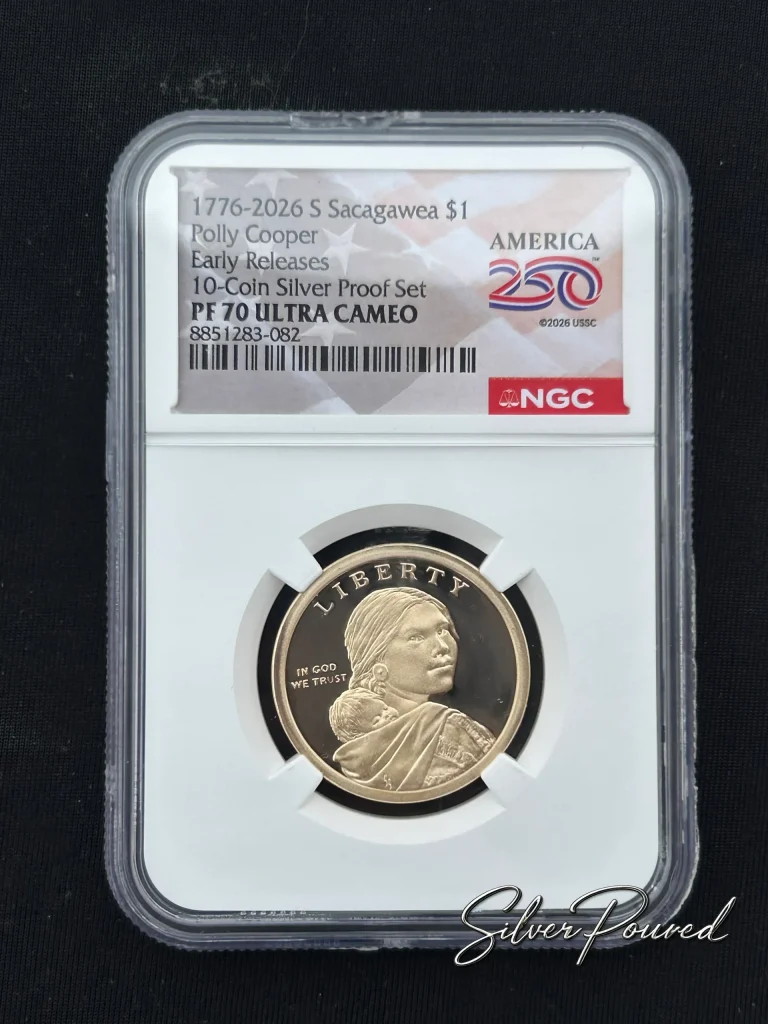
The Native American $1 Coin
The Native American $1 Coin broadens the historical perspective of the 2026 lineup. The series has long recognized Native American individuals, cultures, and communities whose contributions shaped the United States, giving the anniversary year another avenue for examining the nation’s history beyond the central circulating redesigns.
The 2026 issue does not participate directly in the Semiquincentennial circulating redesign program. Instead, its recognition of Polly Cooper and the Oneida people adds an important Revolutionary-era perspective centered on cooperation, sacrifice, and assistance during the struggle for independence.
Understanding the program is only the beginning. Because the Semiquincentennial spans circulation strikes, annual sets, precious metals, privy marks, certified coins, and specialty products, collectors must ultimately decide which parts of this enormous anniversary they want their own collections to preserve.
How to Collect the 2026 Coins
There is no single definition of a complete collection. The 2026 coins can support a simple pocket-change set, a full circulation-strike collection, an annual-set collection, a proof and silver proof collection, a certified registry set, a privy-mark collection, or an advanced master collection spanning multiple metals and Mint products.
The breadth of the program makes a collecting strategy especially valuable. Budget, historical interest, precious-metal preference, certification goals, and desired completeness can produce very different collections without making one approach inherently more legitimate than another.
Collection Level
Suggested Scope
Primary Challenge
Pocket-Change Collection
Nickel, dime, five quarters, half dollar, and President Donald J. Trump $1 Coin obtained through circulation
Finding every circulating design in acceptable condition
Philadelphia and Denver Collection
Both circulation mints for the dual-dated nickel, dime, five quarters, and half dollar
Locating all designs from both mints and preserving strong examples
Annual-Set Collection
Proof Set, Silver Proof Set, and Uncirculated Coin Set
Product availability, price, and original packaging
Quarter Specialist Collection
Every five-quarter design by mint, finish, metal, and special issue
July 4 privy quarter and advanced certified examples
Product premiums, metal value, and finish differences
Privy-Mark Collection
July 4 Declaration quarter, July 4th privy Trump $1 coin, and Liberty Bell “250” products
Random-distribution privy hunts across different denominations plus wide-ranging premium collector products
Registry Collection
Certified high-grade examples organized by grading-service rules
Population rarity, eye appeal, labels, and competitive grades
Master Semiquincentennial Collection
Circulating coins, annual sets, precious metals, medals, special products, and major varieties
Cost, product scope, documentation, and long-term tracking
Many collectors will ultimately combine several approaches rather than follow a single category. Someone might assemble circulating 2026 coins, preserve an official Silver Proof Set, and pursue one Liberty Bell privy Silver Eagle while deliberately leaving expensive gold, platinum, and specialty products outside the collection.
A practical strategy begins by defining the collection before making major purchases. Decide whether the goal is historical representation, mint-and-finish completeness, precious-metal ownership, certified grades, special varieties, or a comprehensive master collection. A defined objective makes the enormous program easier to navigate and helps prevent unnecessary purchases made simply because another 2026 product becomes available.
Moving beyond circulation finds introduces another collecting goal: preservation. Official annual Mint products capture the anniversary coinage in protected, purpose-built presentations, giving collectors a way to preserve the designs together rather than assembling them only from individual circulation discoveries.
Why Annual Mint Sets Matter to Future Collectors
Annual United States Mint sets preserve a different record of the Semiquincentennial than coins recovered from circulation. Proof finishes, uncirculated examples, official packaging, and certificates of authenticity document how the Mint presented the anniversary directly to collectors at the time of issue.
As the years pass, intact Mint sets can provide an important reference for studying the original presentation and condition of the 2026 designs before circulation wear, cleaning, environmental exposure, and mishandling affect many individual examples. They also preserve the denominations together in their original government packaging.
Annual Mint Product
Long-Term Importance
Proof Set
Documents every circulating design in proof finish
Silver Proof Set
Combines the anniversary designs with precious-metal content
Uncirculated Coin Set
Preserves official Philadelphia and Denver examples together
Specialty Annual Sets
Expand the historical record through limited presentations
For future collectors, intact annual Mint products may provide an especially useful record of how the 2026 coins were originally issued and presented. Their importance lies not only in the individual coins but also in preserving the official packaging, finishes, and relationships among the denominations as complete government-issued products from the Semiquincentennial year.
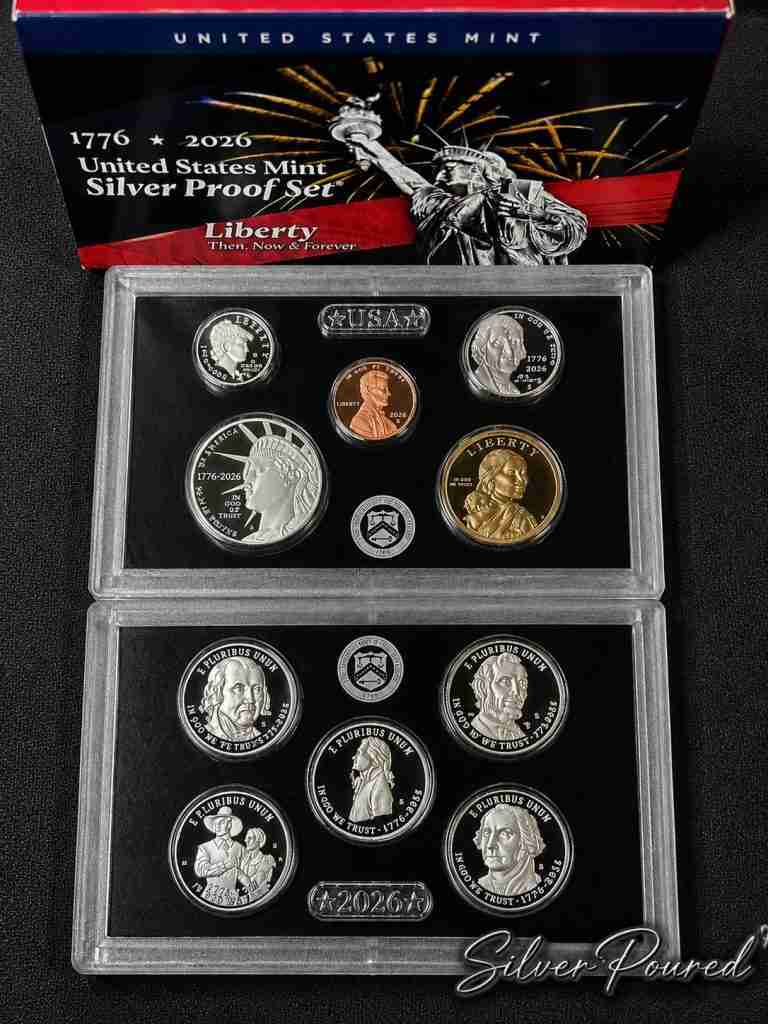
Why the Silver Proof Set May Become the Signature Collector Set of 2026
The 2026 Silver Proof Set occupies an unusual position among modern annual sets. It combines America’s 250th anniversary, one-year circulating designs, and modern 99.9% fine silver coinage within a single official Mint presentation, creating a direct connection between historical commemoration and precious-metal collecting.
Unlike standard annual proof sets, the Silver Proof Set appeals simultaneously to several collecting communities. Modern proof collectors value the exceptional finish, silver investors recognize the intrinsic metal content, registry collectors pursue high-certified grades, and historians appreciate the complete presentation of the Semiquincentennial redesigns in their finest annual format.
Collector Perspective
Why the Silver Proof Set Matters
Modern Proof Collector
Complete anniversary designs in premium proof finish
Silver Investor
99.9% fine silver content with collector premiums
Registry Collector
High-grade certification opportunities
Historical Collector
Preserves the complete Semiquincentennial redesign program
2026 Silver Proof Set Official Limits
The 2026 Semiquincentennial Silver Proof Set has a United States Mint product limit of 271,520 sets and a mintage limit of 271,520 for the set. These figures represent the maximum authorized quantity of the 2026 packaged product and should not be compared directly with the historical net-sales figures below, which measure reported sales rather than production limits.
Recent United States Mint Silver Proof Set Sales
Year
Last reported net sales
2025
124,178
2024
170,440
2023
201,518
2022
249,374
2021
308,531
2020
313,183
2019
415,382
2018
332,273
2017
approximately 358,085
2016
369,849
2015
387,310
2014
429,493
2013
419,720
2012
395,443
Recent sales history provides important context for evaluating the 2026 Silver Proof Set. United States Mint Silver Proof Set demand has generally declined over the past decade, although special coins, composition changes, anniversary themes, and unique packaging have occasionally interrupted the broader downward trend.
Source: United States Mint cumulative numismatic sales reports. Figures represent the last reported net sales for each packaged Silver Proof Set rather than the total mintage of every coin appearing in the set. United States Mint sales figures may be adjusted through returns, cancellations, reconciliation, and final auditing.
The historical trend gives the 2026 release an unusual position. Annual Silver Proof Set sales fell from more than 400,000 during several earlier years to approximately 124,000 for the 2025 set. The Semiquincentennial edition arrives against that declining-demand background while offering one-year circulating designs, the dual date 1776 ~ 2026, 99.9% fine silver coinage, and one of the limited opportunities to obtain a collectible 2026 Lincoln cent.
Higher sales would not automatically make the 2026 set less important, just as a low final total would not guarantee future appreciation. The strongest long-term demand will depend on the set’s complete historical identity, surviving supply, original packaging, condition, collector participation, and its role as the official silver proof presentation of America’s 250th anniversary.
The 2026 Silver Proof Set therefore has a historical identity independent of whatever its future market value becomes. It preserves the Semiquincentennial redesigns, proof production, precious-metal content, and official Mint presentation together in one product tied permanently to America’s quarter-millennium.
Why the Uncirculated Coin Set Is Different from Circulation Finds
The 2026 Uncirculated Coin Set provides a different collecting experience from assembling the same denominations through circulation. It preserves official Philadelphia and Denver examples together in Mint packaging before the wear, contact, and handling associated with everyday commerce can alter their surfaces.
Although many of its denominations can also be collected from circulation, the Uncirculated Coin Set is not simply a packaged substitute for pocket change. Its value as a historical product comes from preserving the Philadelphia and Denver annual lineup together in original government packaging and in the condition in which the Mint released it to collectors.
Circulation Find
Uncirculated Coin Set
May show wear from commerce
Preserved in Mint packaging from release
Individual discoveries over time
Complete Philadelphia and Denver collection
Condition varies widely
Carefully selected collector-quality examples
No official presentation
Official United States Mint packaging
General circulation history
Permanent record of the 2026 annual coinage
For collectors documenting the Semiquincentennial, the Uncirculated Coin Set provides an official snapshot of the Philadelphia and Denver lineup at the time of issue. That makes the complete set useful not only as a collection but also as a preserved record of one of the most distinctive years in modern United States coinage.
The Proof Set
The standard 2026 Semiquincentennial Proof Set brings ten San Francisco proof coins together in one official Mint presentation. Specially prepared dies and planchets produce the sharp details, reflective fields, and contrasting design elements associated with modern proof coinage, giving collectors a premium version of the anniversary lineup without requiring precious-metal compositions.
The ten-coin set includes all five Semiquincentennial quarters, the Emerging Liberty dime, Enduring Liberty half dollar, Jefferson nickel, collectible Lincoln cent, and Native American $1 Coin. Together they preserve the year’s major circulating and collector-set designs in San Francisco proof format.
For collectors who want the complete anniversary design story without paying the additional cost associated with the silver versions, the standard Proof Set offers one of the most direct collecting paths. Original Mint packaging and the certificate of authenticity also preserve the coins as a complete government-issued product rather than a group assembled individually.
The Silver Proof Set
The Semiquincentennial Silver Proof Set takes the same ten-coin annual presentation into precious-metal territory. The Emerging Liberty dime, all five quarters, and the Enduring Liberty half dollar are struck in 99.9% fine silver, while the remaining coins complete the anniversary-year set.
That combination gives the Silver Proof Set several identities at once: an official annual Mint product, a complete presentation of the major anniversary designs, and a collection containing seven modern 99.9% fine silver coins. Its precious-metal component also means part of the set’s intrinsic value changes as the market price of silver moves.
Collectors evaluating the Silver Proof Set should distinguish between three different sources of value: the silver melt value of its precious-metal coins, the collector value of the complete original Mint product, and the potential certified value of individual coins at high grades. Those markets overlap, but they are not interchangeable.
A 2026 Silver Proof Set can have three different value conversations at the same time. Its seven silver coins contribute intrinsic melt value; the intact Mint product can carry a collector premium based on demand, packaging, and availability; and individually certified coins may develop separate markets based on grade and population. None of those values should automatically be substituted for another. A rise in silver can increase intrinsic value without producing an equal increase in the set’s numismatic premium.
Those three values can move independently. Rising silver prices may increase intrinsic value while the set’s collector premium remains unchanged or contracts, while exceptional certified examples can develop premiums far beyond either melt value or the original Mint issue price. Understanding those differences helps collectors evaluate the set without treating silver content, original packaging, and certified rarity as the same market.
The Uncirculated Coin Set
The 2026 Uncirculated Coin Set contains 20 coins divided between two official Mint cards. One card preserves ten Philadelphia issues and the other ten Denver issues, allowing collectors to acquire both annual lineups together without assembling the coins individually from circulation, rolls, or bags.
Each card includes all five Semiquincentennial quarters, the Emerging Liberty dime, Enduring Liberty half dollar, Native American $1 Coin, Jefferson nickel, and collectible Lincoln cent. Together, the two cards provide one of the most direct ways to preserve the complete Philadelphia and Denver anniversary-year lineups without assembling the coins individually.
The United States Mint established a product limit of 300,000 Uncirculated Coin Sets. That figure represents the maximum authorized quantity of the complete packaged product and should not be interpreted as the total mintage of any individual coin included within the set.
Why Privy Marks Have Become One of the Most Popular Modern Collecting Themes
Mint marks, die varieties, and striking errors have long given collectors ways to distinguish one modern coin from another. Official United States Mint privy marks add a different collecting dimension: intentional design elements used to identify selected coins connected to a particular event, anniversary, or special program.
The 2026 Semiquincentennial makes privy marks a major part of the anniversary through the July 4 Declaration quarter, the limited July 4th privy President Donald J. Trump $1 Coin, and the Liberty Bell “250” collector products. Unlike a mint mark, these symbols do not primarily identify the producing facility. They distinguish special anniversary issues and create collecting paths that can cross denominations, metals, finishes, distribution methods, and traditional coin series.
Correctly distinguishing mint marks, privy marks, varieties, and errors is especially important when identifying 2026 coins because each can indicate something very different about a coin’s origin, purpose, distribution, and potential collector significance.
Coin Feature
Primary Purpose
Mint Mark
Identifies the producing Mint facility
Privy Mark
Recognizes a special anniversary or commemorative issue
Die Variety
Results from intentional or accidental die differences
Mint Error
Created during the manufacturing process
These distinctions prevent one of the easiest mistakes in modern coin collecting: assuming that every unusual mark or missing conventional mint mark is an error. Several important 2026 issues are intentionally different, and proper identification requires understanding what the Mint designed into the coin before looking for something that happened accidentally during production.
The July 4 Declaration of Independence Privy Quarter
Among all the 2026 coins released into everyday commerce, the July 4 Declaration of Independence privy quarter creates the program’s most distinctive circulation hunt. Its intentionally limited production gives collectors a chance to discover a special Semiquincentennial issue through pocket change, bank rolls, and ordinary financial-institution distribution.
The United States Mint produced 250,000 Declaration of Independence quarters carrying the special July 4 privy mark. Unlike ordinary Philadelphia and Denver circulation strikes, these limited quarters bear no conventional mint mark and were randomly mixed into normal distribution through banks and financial institutions nationwide, turning an intentionally scarce anniversary issue into a coin that can genuinely be discovered in circulation.
The July 4 Declaration quarter is intentionally different from an ordinary Philadelphia or Denver circulation strike. Its special privy mark, absence of a conventional mint mark, and limited 250,000-piece production are planned characteristics—not Mint errors. That distinction matters because a genuine example may look unusual to someone encountering it for the first time. Identify the official privy and other diagnostics before assuming that a missing mint mark or unfamiliar feature resulted from a production mistake.
The nationwide release gives collectors a genuine opportunity to discover a limited 2026 coin through an ordinary transaction or bank roll. It also creates an environment where altered coins, misunderstood marks, and false online claims may appear.
Identification Point
July 4 Privy Quarter
Ordinary Circulation Quarter
Design
Declaration of Independence
Declaration of Independence
Privy Mark
Special July 4 mark
None
Mint Mark
No mint mark
Philadelphia P or Denver D
Confirmed Production
250,000
Regular circulating production
Distribution
Randomly mixed into circulation
Normal Federal Reserve distribution
Classification
Intentional limited-production variety
Standard circulating issue
Strong identification should begin with clear magnified images and comparison with verified examples, followed when necessary by confirmation of the coin’s correct weight, dimensions, and other physical characteristics. Potentially important discoveries may also justify professional authentication before collectors make conclusions about rarity, grade, or market value.
When Modern Mint Products Become Instant Collector Rarities
Most modern United States Mint products are produced in quantities large enough to give collectors a reasonable opportunity to acquire them around the time of release. The Semiquincentennial also includes products at the opposite extreme: intentionally tiny production runs whose scarcity exists from the moment they are created rather than developing gradually through decades of attrition.
The oversized 2.5-ounce Declaration of Independence silver quarter represents the clearest example of this extreme. With only 250 pieces produced, individual edge numbering, and a direct connection to Independence Day, it occupies an entirely different collecting category from ordinary circulation coinage. Its scarcity was engineered into the issue from the beginning, making production limit, provenance, presentation, and historical context central to understanding the coin.
Characteristic
Collector Impact
Extremely Low Production
Creates immediate scarcity
Individual Edge Numbering
Makes every piece uniquely identifiable
Historic Anniversary Connection
Strengthens long-term collector appeal
Special Presentation
Adds importance beyond precious-metal content
Official United States Mint Issue
Provides confidence in authenticity and provenance
Collectors should distinguish this type of intentional scarcity from the rarity of older coins whose surviving populations declined through circulation, melting, loss, or attrition. For extremely limited Semiquincentennial products, scarcity can be known at issuance, while future market value remains a separate question determined by collector demand, surviving supply, condition, provenance, and long-term interest.
The 2.5-Ounce Silver Declaration of Independence Quarter
The United States Mint extended the July 4 quarter program far beyond circulation by striking only 250 oversized 2.5-ounce silver Declaration of Independence quarters on Independence Day 2026. Produced at the Philadelphia Mint as limited-edition companions to the circulating July 4 privy quarter, these pieces combine the anniversary design with precious-metal content, an extraordinary format, and one of the smallest confirmed production totals in the Semiquincentennial program.
Each 2.5-ounce silver quarter carries the special July 4 privy mark, bears no conventional mint mark, and is individually laser edge numbered from 1 through 250. The combination of Independence Day production, oversized precious-metal format, sequential numbering, and a fixed population of only 250 pieces separates these coins sharply from the circulating July 4 privy quarter.
The two July 4 quarters occupy opposite ends of the Semiquincentennial collecting spectrum. One sends collectors into pocket change and bank rolls searching for a 250,000-piece circulation issue; the other consists of only 250 oversized silver pieces created as premium collector products and announced for future United States Mint auction. Together they apply the same Independence Day concept to two radically different forms of collecting.
The two July 4 Declaration quarters illustrate the difference between limited circulation and extreme engineered scarcity. The circulation issue has a confirmed production of 250,000 pieces and was created to be discovered through ordinary distribution. The oversized silver version has a fixed population of only 250 pieces, with each individually edge numbered. Those numbers differ by a factor of 1,000. They share an anniversary concept, but their distribution, format, scarcity, and collector markets are fundamentally different.
Why Mint Marks Matter More During the Semiquincentennial
Mint marks become especially useful within the 2026 Semiquincentennial because visually related designs can exist across circulation strikes, proof issues, annual sets, precious-metal products, and specialty releases. Identifying the producing Mint—or establishing that an issue intentionally carries no conventional mint mark—often provides the first clue to a coin’s finish, distribution, and place within the larger anniversary program.
For collectors, a mint mark can therefore communicate far more than geographic origin. In context, it may help distinguish a circulation strike from a proof, identify an annual-set coin, separate products intended for different markets, or clarify whether a particular issue was ever meant to enter commerce. When combined with the year’s privy marks, these identifiers become essential tools for organizing the enormous 2026 lineup.
Mint Facility
Primary 2026 Role
Philadelphia
Circulating coinage, rolls, bags, and annual collector products
Denver
Circulating production, rolls, bags, and annual collector products
Reading mint marks together with privy marks, finishes, metals, and product types makes the 2026 coins considerably easier to navigate. What initially appears to be an overwhelming number of individual releases begins to resolve into identifiable families, each with its own production method, distribution path, and collecting purpose.
Mint Marks and Privy Marks on 2026 Coins
Mint marks and privy marks answer fundamentally different questions when identifying 2026 coins. A mint mark generally identifies the Mint facility associated with production, while a privy mark identifies a special issue, anniversary, or product distinction. A coin may therefore require collectors to interpret both systems before its exact identity becomes clear.
Mark
Meaning
Role Within the 2026 Program
P
Philadelphia Mint
Circulation strikes, uncirculated-set coins, rolls, bags, and selected numismatic products
D
Denver Mint
Circulation strikes, uncirculated-set coins, rolls, and bags
S
San Francisco Mint
Proof and silver proof coins
W
West Point Mint
Selected American Eagle and other precious-metal collector coins
No Mint Mark
Issue-specific production without a conventional mint mark
Collectible Lincoln cent from Philadelphia and confirmed special issues such as the July 4 quarter
July 4 Privy
Independence Day anniversary identifier
Limited Declaration quarters in circulating and oversized silver formats, plus the 250,000-coin July 4th privy subset of the President Donald J. Trump $1 Coin
Liberty Bell “250” Privy
Semiquincentennial collector-product identifier
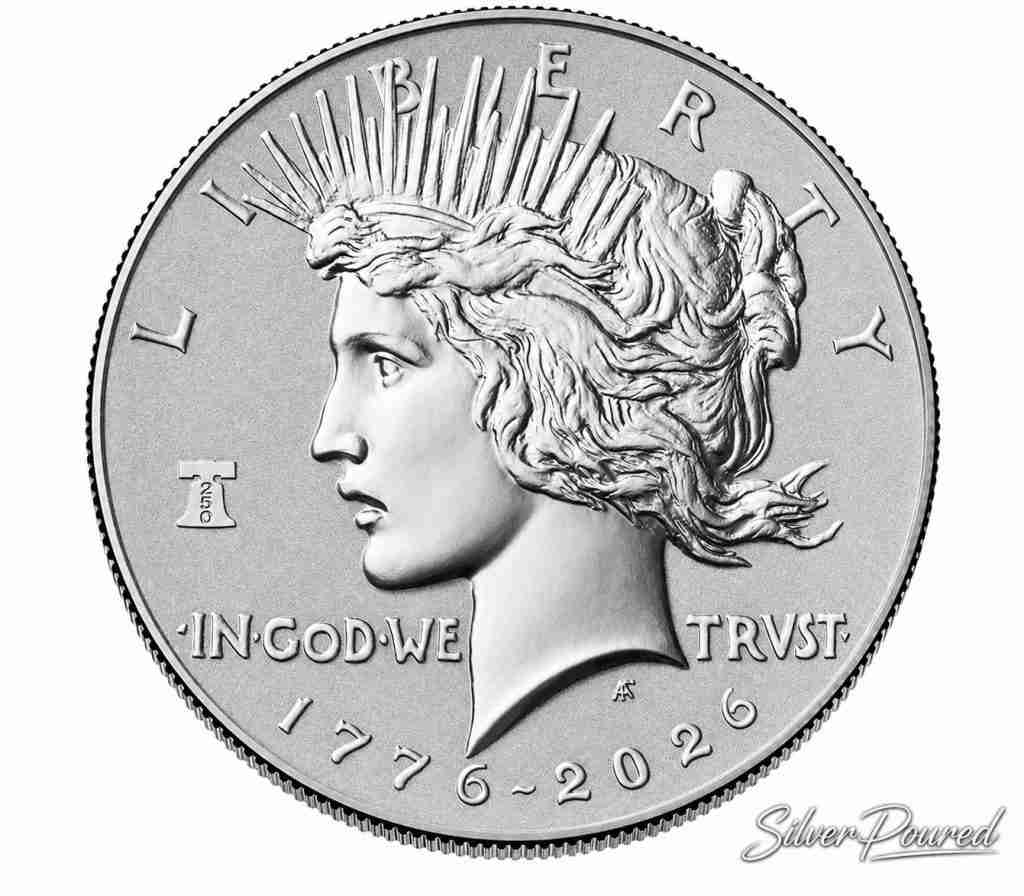
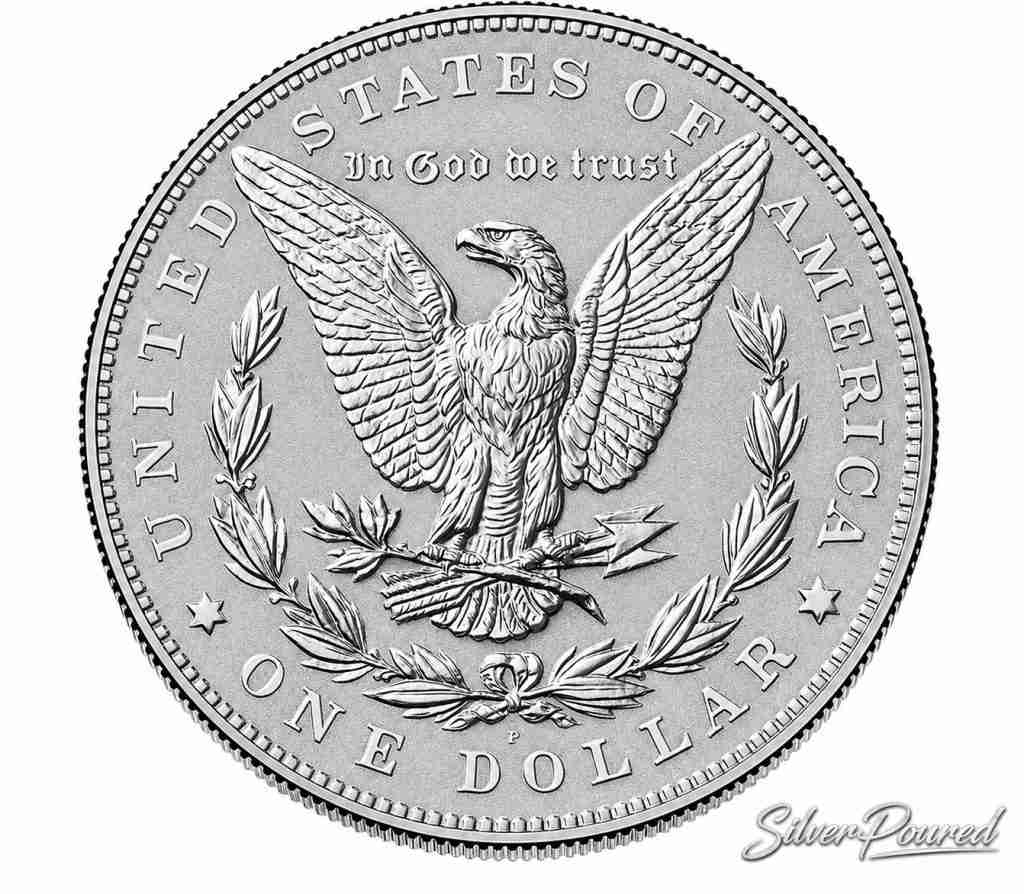
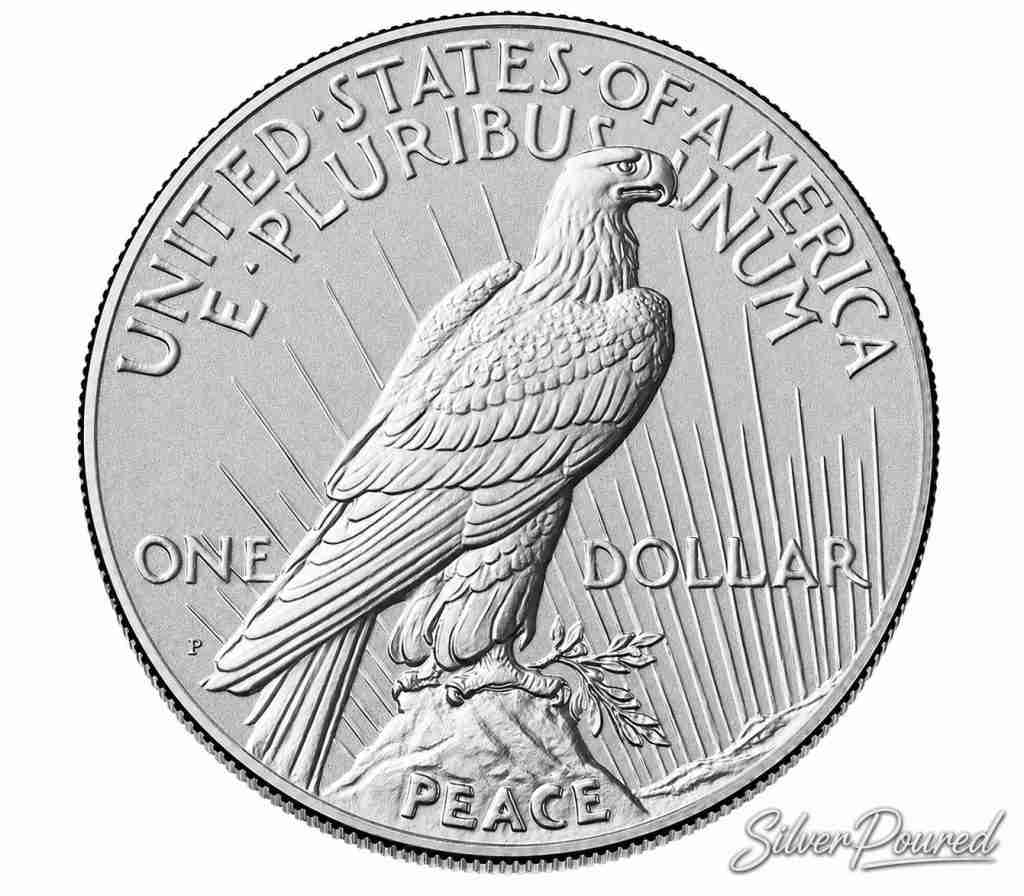
Selected American Eagles, American Buffalo coins, Morgan and Peace dollars, Innovation dollars, and historic reissues
The absence of a mint mark should never be treated as automatic evidence of an error or rarity. United States coinage includes legitimate no-mint-mark issues, and specific 2026 products were intentionally produced without a conventional mint mark. Collectors must first identify the denomination, design, finish, metal, privy mark, and product before deciding whether anything about the coin is unusual.
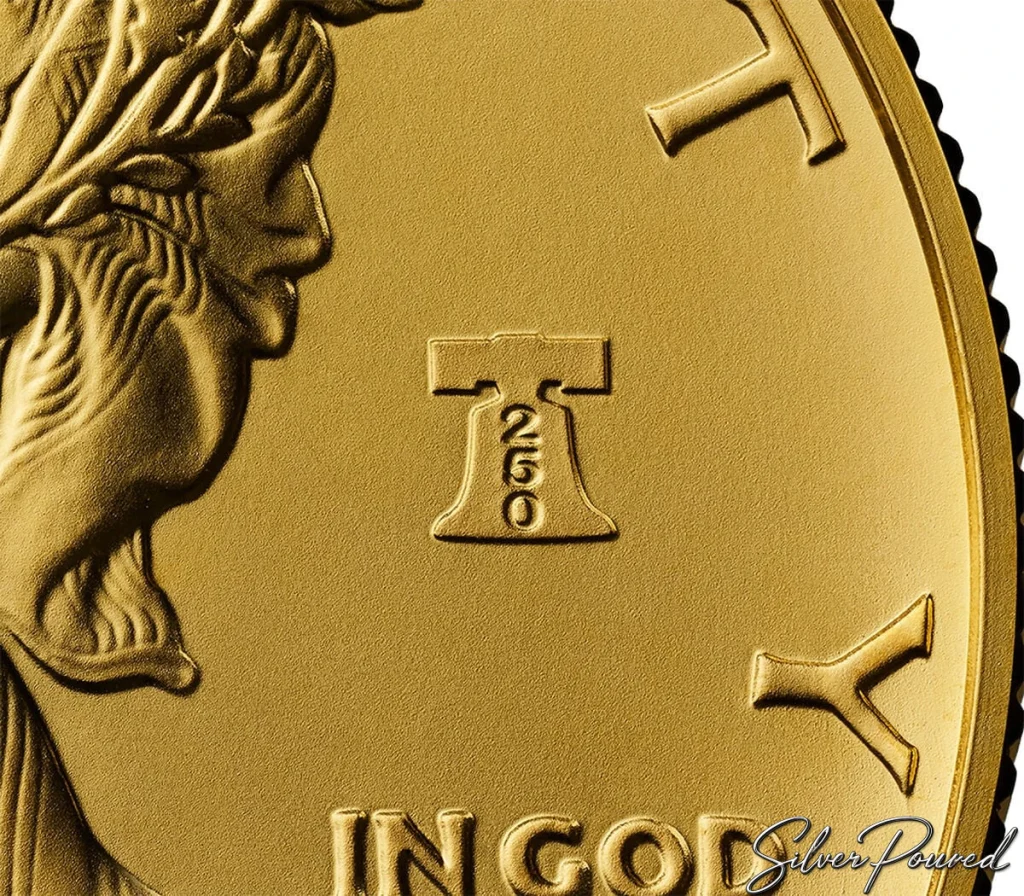
Beyond identifying individual issues, the Semiquincentennial also uses a recurring symbol to connect products that would otherwise belong to separate collecting families. The Liberty Bell “250” privy provides that visual link, carrying the anniversary identity across coins that differ dramatically in denomination, metal, finish, price, and historical inspiration.
The Liberty Bell “250” as the Unifying Symbol of the Semiquincentennial
While the redesigned circulating coins carry much of the Semiquincentennial’s historical narrative, the Liberty Bell “250” privy serves a different purpose. It acts as a recurring anniversary signature across many premium collector products, immediately connecting otherwise unrelated coins to America’s quarter-millennium celebration.
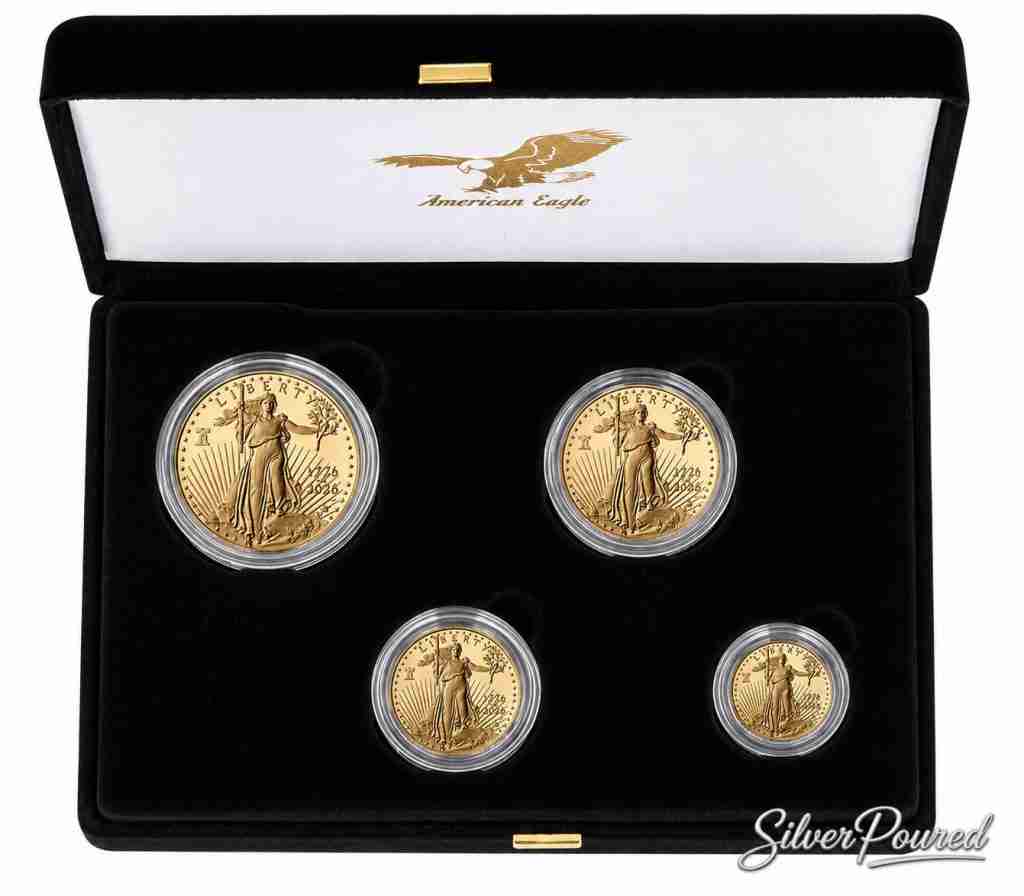
The Liberty Bell “250” appears across multiple United States Mint programs, including selected American Eagles, American Buffalo coins, Morgan and Peace dollars, American Innovation dollars, and Best of the Mint releases. That cross-program use creates an unusual collecting path in which one anniversary symbol can unite coins that otherwise differ in denomination, metal, finish, series, and historical inspiration.
Liberty Bell “250” Appears On
Collector Significance
American Silver Eagles
Modern bullion and proof anniversary collecting
American Gold Eagles
Premium gold collector products
American Buffalo Coins
24-karat gold anniversary issues
Morgan & Peace Dollars
Historic silver-dollar anniversary releases
Innovation Dollars & Best of the Mint
Cross-program Semiquincentennial collecting
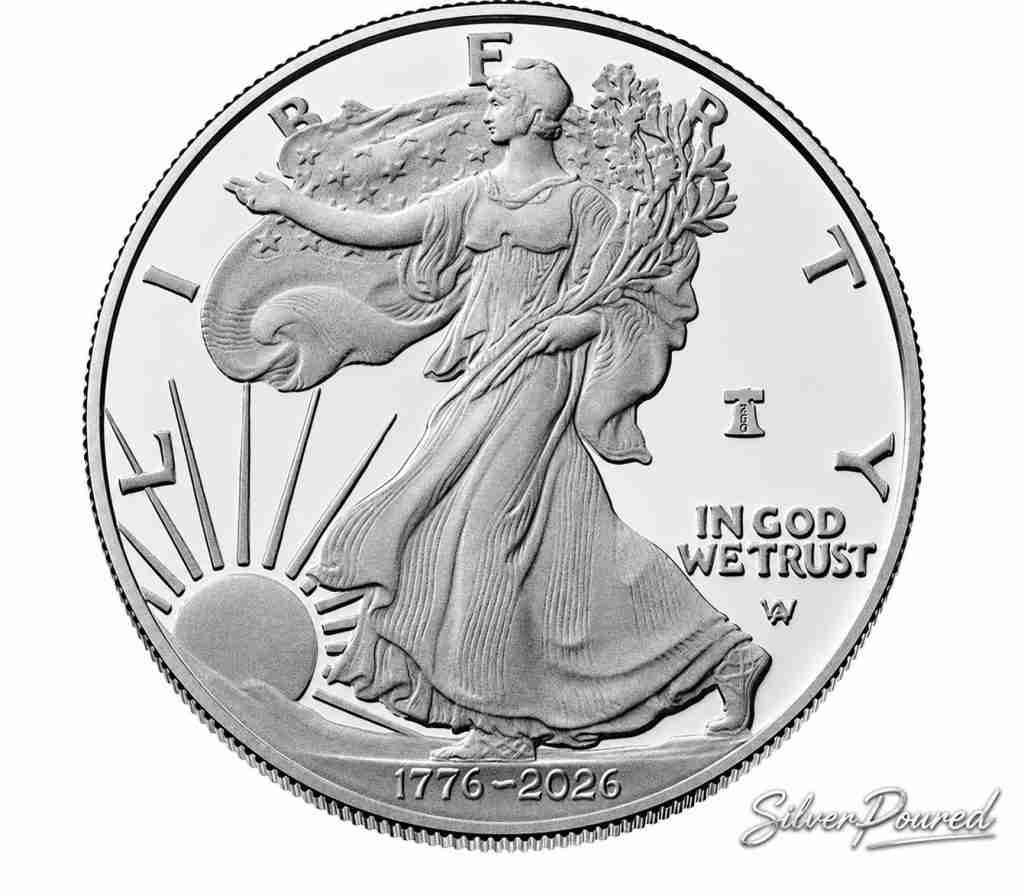
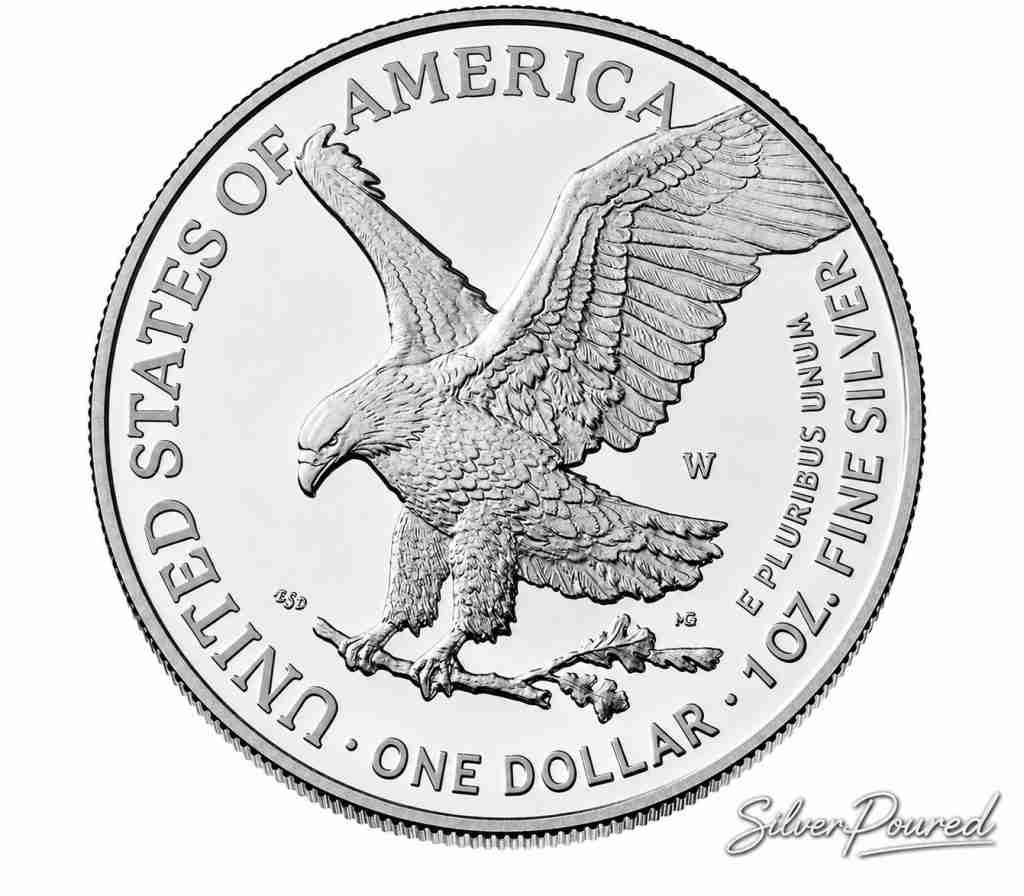
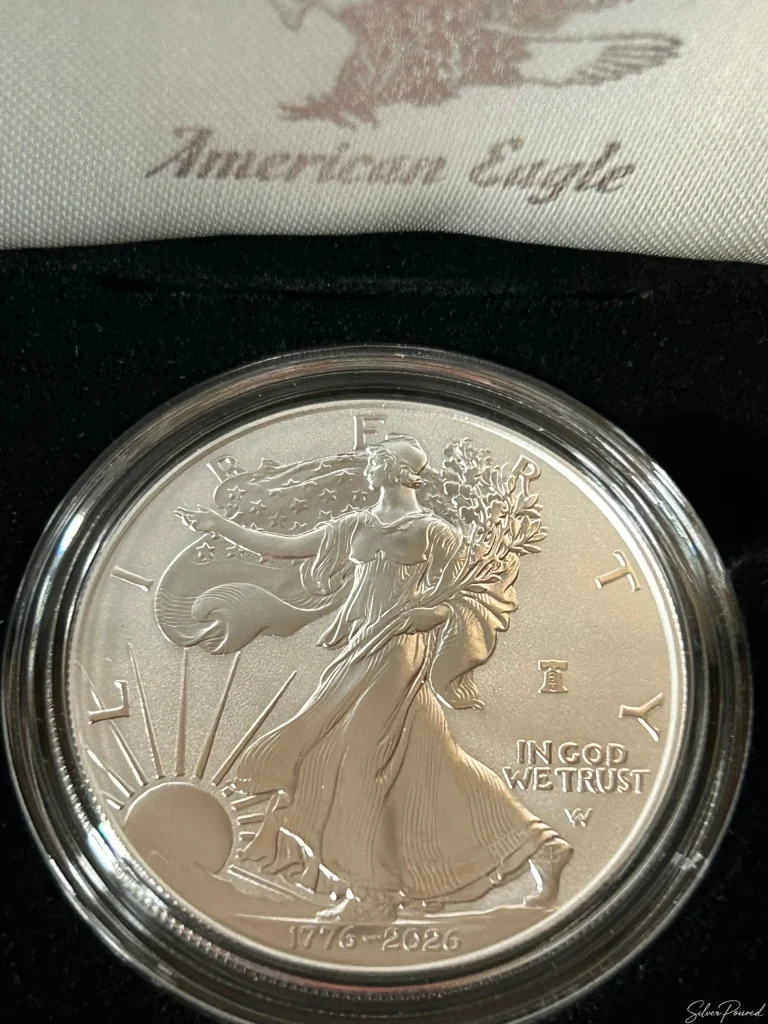
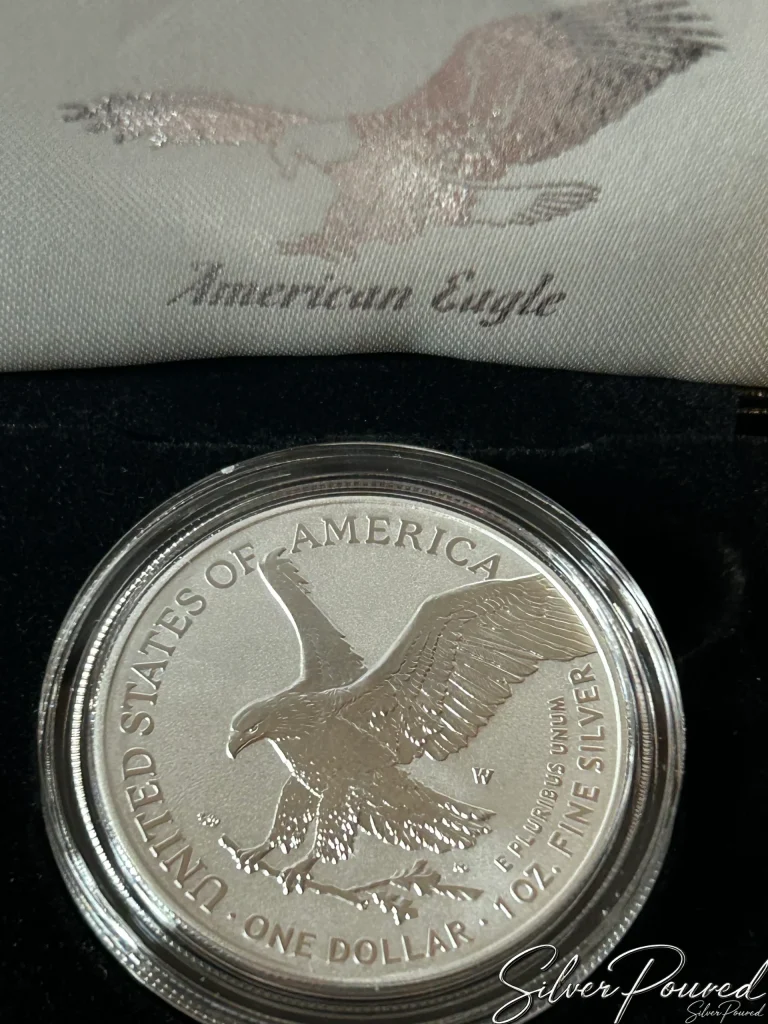
The 2026 American Eagle One Ounce Silver Proof Coin carries two unmistakable Semiquincentennial identifiers: the dual date 1776 ~ 2026 and the Liberty Bell “250” privy mark. Struck at West Point with the W mint mark, it contains one troy ounce of 99.9% fine silver and retains the series’ anti-counterfeit reeded-edge variation.
Its one-year anniversary treatment gives the Proof coin appeal across several collecting communities at once. American Silver Eagle specialists, West Point collectors, modern Proof collectors, privy-mark specialists, certified-coin collectors, and collectors building comprehensive America 250 sets may all pursue the same issue for different reasons.
2026 American Silver Eagle Family
The American Silver Eagle remains the flagship modern silver coin of the United States Mint, and the 2026 anniversary year gives the series an unusually broad role within the Semiquincentennial. Rather than representing a single issue, the 2026 American Silver Eagle family spans bullion and collector products with different finishes, mint marks, anniversary features, production limits, and collecting purposes.
Identifying a coin only as a “2026 Silver Eagle” is therefore not enough for accurate collecting or valuation. Proof, bullion, uncirculated, and Enhanced Uncirculated issues can differ in finish, mint mark, anniversary treatment, packaging, availability, and production limits. Those distinctions may influence collector demand and market value far more than the shared 2026 date.
2026 American Silver Eagle Product
Primary Characteristics
Collector Interest
Proof Silver Eagle
West Point proof with Liberty Bell “250” privy and dual date
Flagship anniversary collector issue
Uncirculated Silver Eagle
Collector finish with burnished surfaces
Modern series completion and registry collecting
Bullion Silver Eagle
Investment strike produced for the bullion market
Silver ownership and large-volume investing
Enhanced Uncirculated Silver Eagle
West Point enhanced uncirculated finish with Liberty Bell “250” privy, dual date, and 125,000 mintage limit
Limited one-year anniversary issue, finish specialists, and registry collectors
Each version occupies a different place within the larger collection of 2026 coins. Bullion strikes emphasize physical silver ownership, while collector issues introduce specialized finishes, West Point production, anniversary privy marks, dual dates, and limited mintages. Understanding those differences allows collectors to define what a complete 2026 American Silver Eagle collection means before comparing individual products.
2026 American Eagle One Ounce Silver Proof Coin
Few modern United States Mint symbols have been used to connect such a broad range of independent product families within a single year. The Liberty Bell “250” therefore has the potential to become the defining visual signature of the collector side of the Semiquincentennial, giving dozens of otherwise distinct products one immediately recognizable anniversary identity.
The shared privy mark does not make every Liberty Bell “250” issue equally scarce or valuable. These products can differ dramatically in metal, finish, mintage, product limit, distribution, and price, so collectors must identify the exact coin before interpreting what the mark means for rarity or market value. The symbol unites the products historically and visually; it does not make their collector markets interchangeable.
2026 American Eagle One Ounce Silver Enhanced Uncirculated Coin
The American Eagle One Ounce Silver Enhanced Uncirculated Coin stands apart as one of the most specialized members of the 2026 Silver Eagle family. Created for the Semiquincentennial, the one-year issue combines the familiar American Silver Eagle design with an Enhanced Uncirculated finish, the dual date 1776 ~ 2026, and the Liberty Bell “250” privy mark.
Struck at the West Point Mint with the W mint mark, the coin contains one troy ounce of 99.9% fine silver and carries a United States Mint mintage limit of 125,000 pieces. That fixed ceiling immediately separates the Enhanced Uncirculated issue from standard bullion production and gives collectors a defined maximum population when evaluating availability and long-term demand.
The Enhanced Uncirculated finish also gives the coin a visual identity distinct from traditional proof and standard uncirculated Silver Eagles. Laser-frosted areas contrast with an unpolished field to emphasize details within Adolph A. Weinman’s Walking Liberty obverse and the modern eagle reverse introduced in 2021. Instead of relying on deeply mirrored proof fields, the finish creates contrast through multiple carefully controlled surface textures.
2026 Enhanced Uncirculated Silver Eagle
Official Specification
Composition
99.9% fine silver
Silver Weight
1.000 troy ounce
Finish
Enhanced Uncirculated
Mint
West Point
Mint Mark
W
Anniversary Date
1776 ~ 2026
Privy Mark
Liberty Bell “250”
Mintage Limit
125,000
For collectors documenting the complete Semiquincentennial Silver Eagle family, the Enhanced Uncirculated coin is therefore a distinct issue rather than a packaging variation. Its specialized finish, West Point production, one-year dual date, Liberty Bell “250” privy mark, and 125,000-coin mintage limit give it an identity separate from the proof, bullion, and standard uncirculated members of the 2026 family.
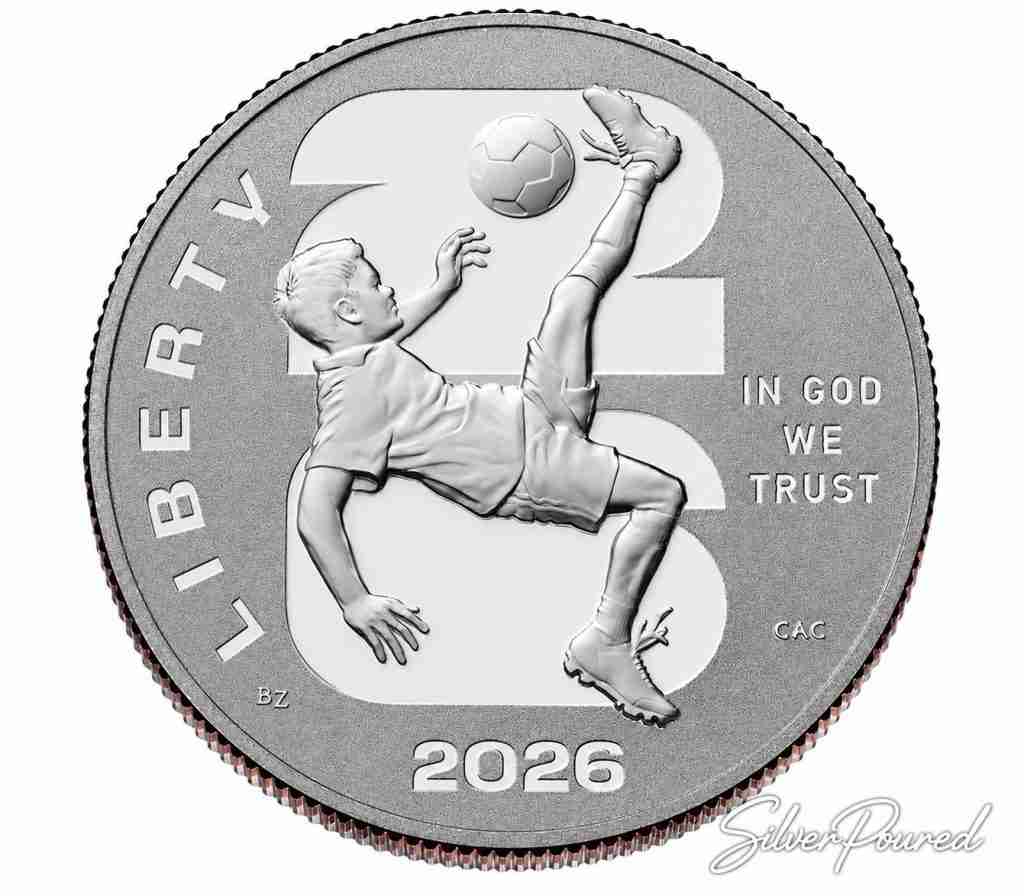
2026 FIFA World Cup Commemorative Coin Program
Building a 2026 FIFA World Cup Collection
The FIFA World Cup commemorative program supports several collecting strategies depending on budget, metal preference, and desired completeness. Some collectors may build the full three-denomination program, others may concentrate on the silver dollar, while gold specialists can focus on the $5 issue. Certified-coin collectors can expand the challenge further by pursuing Proof and Uncirculated versions in high grades.
Finish is an essential part of identifying the 2026 FIFA World Cup commemoratives. Proof and Uncirculated versions should be treated as distinct collector issues when comparing mintages, certified populations, availability, or market values. Denomination, mint mark, finish, packaging, production limits, and distribution can all affect how an individual FIFA coin is collected and valued.
Each FIFA commemorative should therefore be evaluated as a specific coin rather than simply as part of the 2026 World Cup program. Finish, mintage, certification, original Mint packaging, precious-metal content, and collector demand can create different markets for each issue. The program also crosses collecting communities, attracting modern U.S. coin collectors, sports memorabilia collectors, World Cup enthusiasts, precious-metal buyers, and collectors documenting the complete 2026 Mint year.
The 2026 FIFA commemoratives preserve an unusual intersection between United States coinage and international sport. With the tournament arriving in North America during America’s 250th anniversary year, the coins document a major global event occurring alongside the Semiquincentennial and give collectors another distinct chapter within the broader numismatic record of 2026.
The Semiquincentennial dominates the historical identity of 2026 United States coinage, but it is not the year’s only major commemorative story. The FIFA World Cup brings an international dimension to the Mint’s annual lineup, placing a globally recognized sporting event alongside America’s quarter-millennium within the same extraordinary production year.
Hosted jointly by the United States, Canada, and Mexico, the 2026 FIFA World Cup brings one of the world’s largest sporting events to North America during the same year the United States celebrates its 250th anniversary. The Mint’s commemorative program captures that convergence through official coinage, preserving a second major historical marker within the broader 2026 collecting landscape.
The FIFA coins are not part of the Semiquincentennial circulating redesign program. They form a separate congressionally authorized commemorative program honoring the tournament, allowing collectors to distinguish the World Cup issues from America 250 coinage while still recognizing both as important components of the complete 2026 United States Mint record.
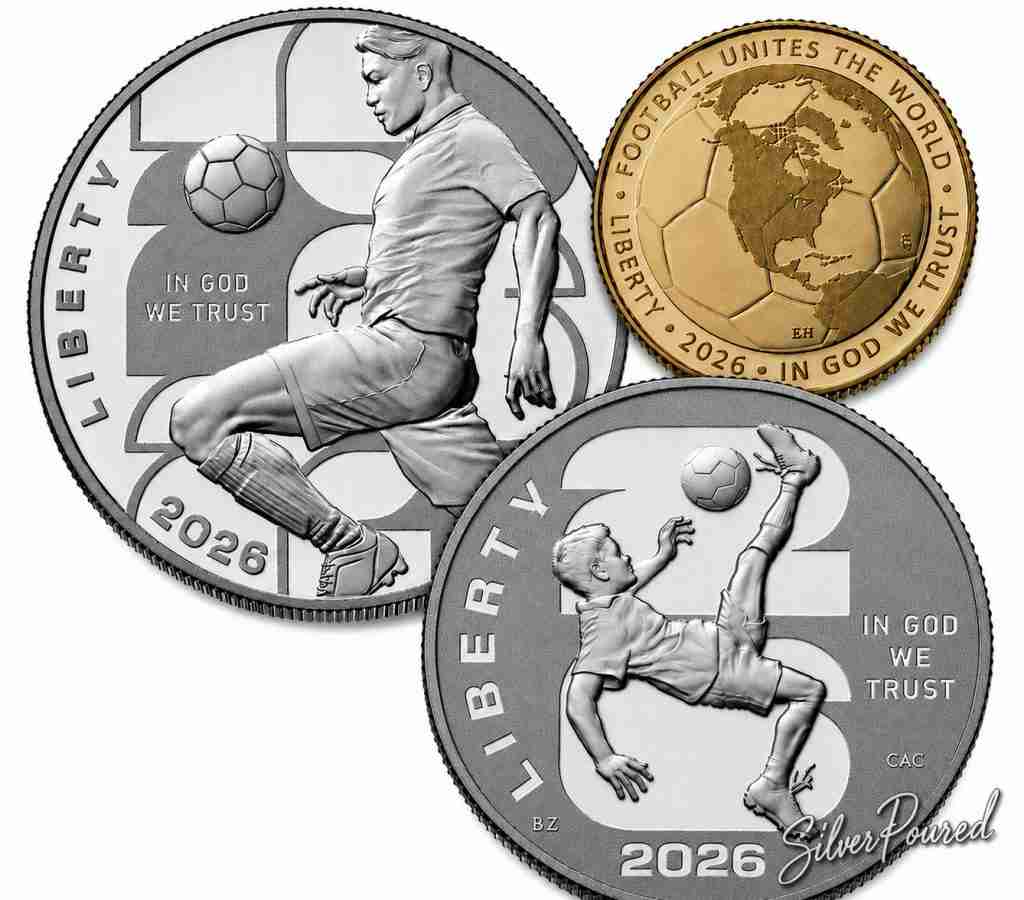
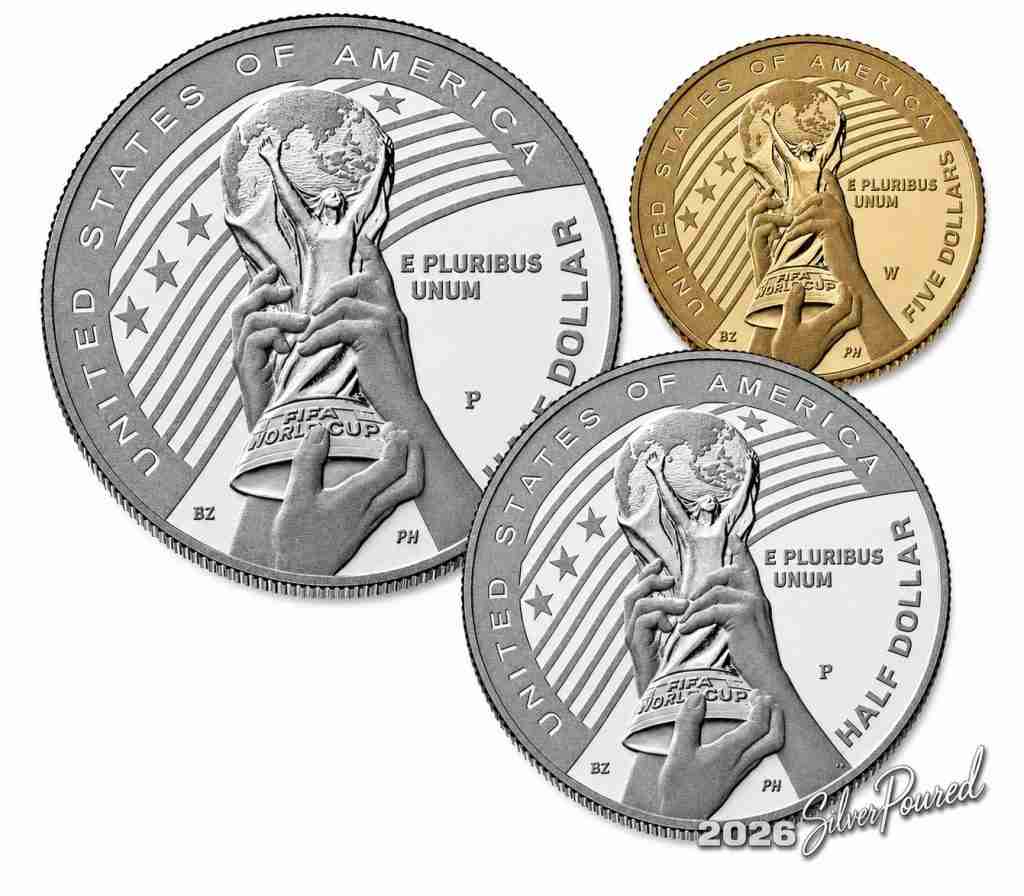
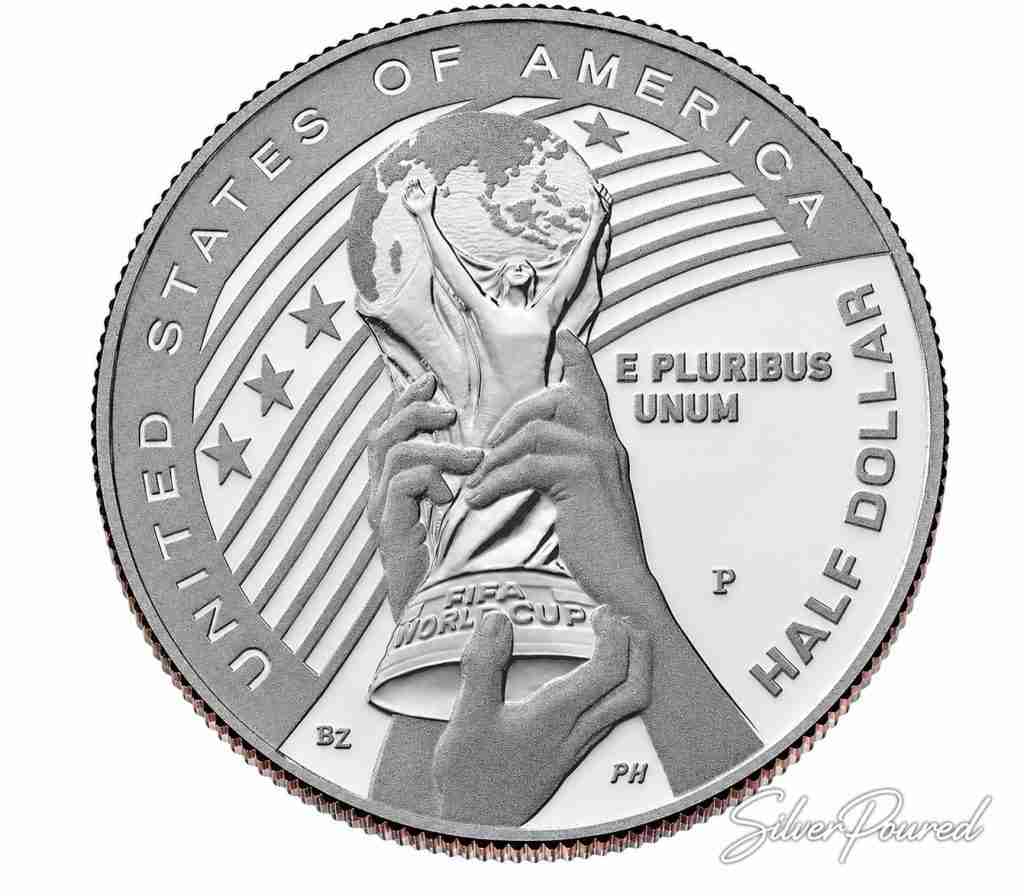
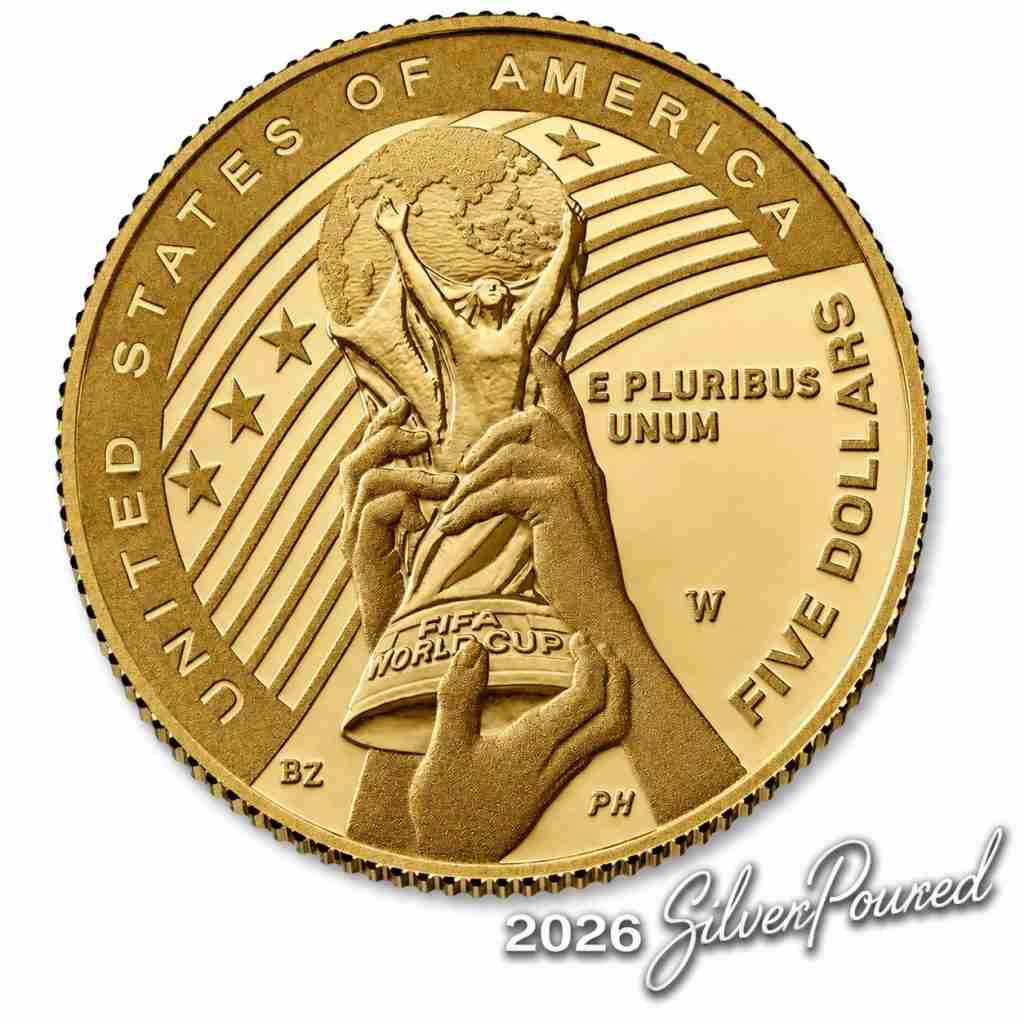
The commemorative program consists of three denominations: a clad half dollar, a silver dollar struck in 99.9% fine silver, and a $5 gold coin. The three-coin structure gives collectors entry points across different metals and price levels while preserving the traditional half dollar, silver dollar, and gold-coin hierarchy used by many modern United States commemorative programs.
Collectors attempting to document the entire 2026 Mint year may therefore include the FIFA commemoratives alongside the Semiquincentennial issues without treating them as the same program. Together they demonstrate how unusually broad the year’s production became, spanning American history, circulating redesigns, precious metals, traditional commemoratives, and an international sporting event.
2026 FIFA Coin
Composition
Collector Focus
Half Dollar
Copper-Nickel Clad
Affordable commemorative, proof and uncirculated collecting
Although their subject is international, the FIFA issues remain official United States commemorative coins and belong within a complete documentary of the Mint’s 2026 production. Their combination of traditional commemorative denominations, precious metals, collector finishes, and World Cup subject matter gives them an identity distinct from—but historically adjacent to—the Semiquincentennial program.
2026 FIFA World Cup Half Dollar
The clad half dollar provides the most accessible entry point into the FIFA commemorative program. Its lower precious-metal cost relative to the silver dollar and gold coin allows collectors to participate in the three-denomination program while still acquiring an official United States Mint coin commemorating the 2026 World Cup.
Its traditional commemorative format and comparatively accessible price point make the half dollar a logical foundation for many FIFA collections. Collectors can then expand into the silver dollar and $5 gold coin as budget, precious-metal preference, and desired completeness allow.
2026 FIFA World Cup Silver Dollar
The silver dollar occupies the traditional centerpiece position within the FIFA commemorative program. Struck in 99.9% fine silver, it combines a familiar modern commemorative denomination with precious-metal content and one of the world’s most recognized sporting events, giving the issue appeal beyond a single collecting category.
For collectors seeking one representative precious-metal coin from the program, the silver dollar provides a natural candidate. Its long-term market will ultimately reflect more than silver value alone, with finish, mintage, certification, original Mint packaging, condition, and collector demand all contributing to how individual examples are valued.
2026 FIFA World Cup $5 Gold Coin
The $5 gold coin occupies the premium precious-metal position within the FIFA commemorative program. Produced specifically for collectors, it combines gold content with an official United States Mint commemoration of the first FIFA World Cup jointly hosted by the United States, Canada, and Mexico.
Its collector market should not be reduced to intrinsic gold value. Finish, mintage, certification, original Mint presentation, condition, World Cup interest, and broader commemorative demand can all influence the premium attached to an individual coin, separating its numismatic market from the value of its gold content alone.
2026 Morgan and Peace Dollars
Few American silver-dollar designs are as immediately recognizable as the Morgan and Peace dollars. The Morgan reflects an era of rapid national expansion and industrial growth, while the Peace dollar emerged after the First World War as an expression of peace and renewed optimism. Their 2026 return brings two distinct chapters of American numismatic history into the nation’s 250th anniversary.
The 2026 releases also connect collecting generations that may otherwise approach the hobby very differently. Traditional Morgan and Peace specialists, modern silver buyers, certified registry collectors, and collectors entering through the Semiquincentennial can all encounter familiar historic designs within the same anniversary-year program.
Why the Morgan and Peace Dollars Continue to Captivate Collectors
The appeal of the 2026 Morgan and Peace dollars comes from the combination of familiar historic designs and unmistakably modern anniversary features. Collectors receive recognizable silver-dollar imagery while the 1776 ~ 2026 dual date, Liberty Bell “250” privy mark, modern silver composition, and specialized finishes permanently distinguish these issues from earlier originals and previous modern releases.
Although both 2026 dollars are struck in 99.9% fine silver and share the Liberty Bell “250” privy mark, their historical identities remain distinct. The Morgan dollar reflects the expansion and industrial development of the late nineteenth century, while the Peace dollar carries the symbolism of peace and optimism associated with the period following the First World War. The anniversary treatment brings those separate legacies together without erasing what makes each series historically different.
Silver Dollar
Historical Legacy
Morgan Dollar
Represents the growth and expansion of the United States during the late nineteenth century
Peace Dollar
Commemorates peace while symbolizing hope for future generations
2026 Morgan and Peace Dollar Finishes
The 2026 Morgan and Peace dollars expand into two distinct collector finishes: Reverse Proof and Enhanced Uncirculated. Both are struck in 99.9% fine silver and carry the 1776 ~ 2026 dual date and Liberty Bell “250” privy mark, creating four individual anniversary issues across the two historic silver-dollar designs.
2026 Morgan & Peace Issue
Finish
Production Facility
Mintage Limit
Morgan Silver Dollar
Reverse Proof
Philadelphia
250,000
Peace Silver Dollar
Reverse Proof
Philadelphia
250,000
Morgan Silver Dollar
Enhanced Uncirculated
West Point
250,000
Peace Silver Dollar
Enhanced Uncirculated
West Point
250,000
The Reverse Proof coins reinterpret the historic Morgan and Peace dollar designs through contrasting frosted fields and reflective design elements, while the Enhanced Uncirculated issues use a different combination of surface treatments to create their own visual character. Together, the two finishes give collectors four distinct 2026 Morgan and Peace dollar issues rather than a single anniversary version of each design.
The Morgan and Peace dollars also fit naturally within a broader Semiquincentennial collection. Their 99.9% fine silver composition, historic designs, specialized finishes, dual dates, and Liberty Bell “250” privy marks connect classic American silver-dollar collecting with the redesigned circulating coins and premium anniversary products issued throughout 2026.
2026 American Gold Eagle Family
The American Gold Eagle family remains the United States Mint’s flagship modern gold coin program while taking on an expanded collector role during the Semiquincentennial. The 2026 lineup spans multiple denominations, finishes, and intended markets, so collectors should distinguish individual Gold Eagle products rather than treating every anniversary-year coin as the same issue.
The family ranges from bullion coins produced primarily for precious-metals ownership to collector editions with proof, burnished, and specialized anniversary treatments. Selected 2026 releases add the 1776 ~ 2026 dual date and Liberty Bell “250” privy mark, creating distinct collecting paths based on denomination, gold weight, finish, mint mark, certification, and Semiquincentennial features.
2026 American Gold Eagle Product
Primary Characteristics
Collector Focus
Proof Gold Eagle
Collector finish with anniversary features
Modern proof collecting and certification
Burnished Gold Eagle
Special collector finish
Series completion and registry sets
Bullion Gold Eagle
Investment-strike issue
Gold ownership and bullion investing
Fractional Gold Eagles
Multiple denominations and sizes
Affordable entry into gold collecting
2026 American Gold Eagle Proof Four-Coin Set
The 2026 American Gold Eagle Proof Four-Coin Set brings all four proof denominations together in one official United States Mint presentation. The one-ounce, one-half-ounce, one-quarter-ounce, and one-tenth-ounce coins preserve the complete range of Gold Eagle sizes as a coordinated Semiquincentennial collector set.
Viewed together, the four denominations demonstrate how the same American Gold Eagle design translates across dramatically different coin sizes and gold weights. This range gives collectors multiple levels of participation while allowing the complete four-coin set to function as a unified anniversary presentation.
Individual 2026 Gold Eagles can serve very different collecting purposes. Some collectors pursue complete product families, while others concentrate on physical gold ownership, specific denominations, specialized finishes, certified grades, or Semiquincentennial issues. Identifying the exact denomination and finish is therefore essential before comparing availability, premiums, certification, or collector demand.
2026 American Eagle One Ounce Gold Enhanced Uncirculated Coin
The 2026 American Eagle One Ounce Gold Enhanced Uncirculated Coin adds another distinct collector issue to the Semiquincentennial Gold Eagle family. Struck at the West Point Mint with the W mint mark, the coin contains one troy ounce of fine gold within the traditional 22-karat American Gold Eagle composition and features a specialized enhanced uncirculated finish.
The anniversary treatment includes the dual date 1776 ~ 2026 and the Liberty Bell “250” privy mark, distinguishing the coin from standard annual Gold Eagle issues. Its enhanced uncirculated finish creates a separate collector format from both the traditional proof coin and bullion strike.
2026 Enhanced Uncirculated Gold Eagle
Official Specification
Precious-Metal Weight
1.000 troy ounce fine gold
Composition
91.67% gold, 3% silver, balance copper
Finish
Enhanced Uncirculated
Mint
West Point
Mint Mark
W
Denomination
$50
Anniversary Date
1776 ~ 2026
Privy Mark
Liberty Bell “250”
Mintage Limit
7,500
With a United States Mint mintage limit of 7,500 coins, the enhanced uncirculated release occupies a specialized position within the 2026 American Gold Eagle lineup. Collectors should distinguish it from the Proof Gold Eagle, the four-coin Proof Set, and bullion Gold Eagles when comparing availability, certification, and long-term collector demand.
A shared date and familiar American Gold Eagle design do not make two Gold Eagles equivalent collector issues. The 2026 Enhanced Uncirculated coin combines a specialized finish, West Point production, W mint mark, 1776 ~ 2026 dual date, Liberty Bell “250” privy mark, and a 7,500-coin mintage limit. Those identifiers should travel with the coin whenever its rarity or value is discussed; calling it simply a “2026 Gold Eagle” removes the characteristics that distinguish it from the year’s other Gold Eagle products.
2026 American Buffalo Family
Among modern United States gold coins, the American Buffalo holds a distinctive position. Struck in .9999 fine 24-karat gold and based on James Earle Fraser’s celebrated early twentieth-century designs, the series combines high-purity precious-metal coinage with imagery deeply rooted in American numismatic history. The 2026 Semiquincentennial brings that established identity into the anniversary through selected special features.
The Buffalo therefore appeals to collectors for reasons that extend beyond its one-ounce pure-gold content. Fraser’s historic designs, modern Mint production, collector finishes, certification, and Semiquincentennial features create separate layers of interest, allowing the 2026 issues to serve both precious-metal buyers and collectors documenting America’s 250th anniversary.
2026 American Buffalo Product
Primary Characteristics
Collector Interest
Proof Gold Buffalo
One ounce of .9999 fine 24-karat gold with 1776 ~ 2026 dual date and Liberty Bell “250” privy mark
Semiquincentennial collectors, modern gold proof collectors, and certified coin collectors
Bullion Gold Buffalo
One ounce of .9999 fine 24-karat gold produced for the bullion market
Physical gold ownership, bullion investing, and American Buffalo series collecting
Although American Buffalo issues may share the same one-ounce .9999 fine gold content, their collector markets can differ substantially. Finish, Mint presentation, production limits, certification, and Semiquincentennial features all help distinguish one product from another. The 2026 family therefore serves both buyers focused primarily on physical gold ownership and collectors pursuing specific anniversary issues or a more complete America 250 collection.
2026 American Eagle Palladium Uncirculated Coin
The 2026 American Eagle Palladium Uncirculated Coin occupies one of the most specialized positions within the United States Mint’s precious-metals lineup. Struck at the West Point Mint with the W mint mark, it contains one troy ounce of .9995 fine palladium and carries an Uncirculated finish, giving the issue a distinctly different composition and collector identity from the Mint’s silver, gold, and platinum precious-metal programs.
The obverse features Adolph A. Weinman’s Winged Liberty design, originally created for the 1916 dime commonly known as the Mercury dime. For this special one-year 2026 issue, the familiar portrait is joined by the dual date 1776 ~ 2026 and a Liberty Bell privy mark containing the numeral “250,” directly connecting Weinman’s classic design with the United States Semiquincentennial.
The reverse uses Weinman’s eagle design originally created for the 1907 American Institute of Architects Gold Medal. The composition depicts an eagle grasping a branch, preserving another important example of Weinman’s medallic art on a modern American precious-metal coin and linking the Palladium Eagle to the broader revival of historic American designs seen throughout the 2026 Mint program.
Unlike the American Silver Eagle and American Gold Eagle programs, the collector versions of the Palladium Eagle have appeared in different finishes across the series. The 2026 release uses an Uncirculated finish, so correctly identifying the year, finish, mint mark, anniversary privy, and packaging is essential when comparing it with Palladium Eagles issued in earlier years.
For collectors documenting the complete 2026 United States Mint lineup, the Palladium Eagle extends the year’s precious-metal coverage beyond silver, gold, and platinum. Its .9995 fine palladium composition, West Point production, historic Weinman artwork, 1776 ~ 2026 dual date, Liberty Bell “250” privy mark, Uncirculated finish, and 5,000-coin mintage limit combine to make it one of the most distinctive precious-metal issues of the Semiquincentennial.
Palladium gives the 2026 American Eagle lineup a scarcity profile very different from the much larger silver and gold programs. The Mint limits this Uncirculated issue to 5,000 coins, while also giving it the one-year 1776 ~ 2026 dual date and Liberty Bell “250” privy mark. For collectors comparing 2026 precious-metal releases, that combination matters: metal, finish, mintage, mint mark, and anniversary treatment should all be identified before rarity or value is compared.
2026 Comic Art Coin and Medal Collection
The 2026 Supergirl™ release expands the United States Mint lineup beyond traditional circulating coins, bullion programs, commemoratives, and historic designs. Issued through the Comic Art Coin and Medal Collection, the program brings the DC character into an official Mint series through a 24-karat gold proof coin and two silver medals created for collectors of precious metals, modern medallic art, and popular culture.
The centerpiece is the 2026 Supergirl™ 24-Karat Gold Proof Coin, struck at the West Point Mint with the W mint mark. The $50 coin contains one-half troy ounce of .9999 fine 24-karat gold and has a Mint mintage limit of 10,000. Unlike an American Gold Eagle or American Buffalo, it belongs to the specialty Comic Art Coin and Medal Collection rather than an established bullion-coin program.
Companion Supergirl™ products include one-ounce and 2.5-ounce silver medals struck in 99.9% fine silver. Together, the gold coin and silver medals allow collectors to approach the release through different metals, formats, sizes, and price levels while preserving a unified artistic theme.
2026 Supergirl™ Product
Metal and Format
Producing Mint
Supergirl™ Gold Proof Coin
½ troy ounce of .9999 fine 24-karat gold
West Point
Supergirl™ One-Ounce Silver Medal
1 troy ounce of 99.9% fine silver
Philadelphia
Supergirl™ 2.5-Ounce Silver Medal
2.5 troy ounces of 99.9% fine silver
Philadelphia
Although the Supergirl™ program is separate from the circulating Semiquincentennial redesigns, it remains part of the broader 2026 United States Mint product record. Its inclusion demonstrates the extraordinary range of the year’s catalog, which extends from circulating anniversary coinage and precious-metal Eagles to historic recreations, commemoratives, shaped products, medals, and licensed contemporary collector releases.
For collectors documenting the entire 2026 Mint year rather than only products carrying explicit America 250 imagery, the Supergirl™ gold coin and silver medals form a distinct specialty branch of the catalog. They also illustrate how modern United States numismatics now reaches audiences beyond traditional coin collecting by combining precious metals, limited production, licensed characters, contemporary artwork, and official Mint manufacture within a single collector program.
Best of the Mint Historic Designs
Why Historic Designs Continue to Inspire Modern Collectors
The Best of the Mint program demonstrates how strongly America’s classic coin designs continue to influence modern numismatics more than a century after many first entered circulation. For the Semiquincentennial, the United States Mint returns to five celebrated designs through modern precious-metal recreations that preserve their historical identity while connecting them directly to America’s 250th anniversary.
Collectors can approach these releases from several directions. Some are drawn to the historic designs themselves, while others focus on precious-metal content, limited Mint products, companion silver medals, certification, or the Liberty Bell “250” privy mark. The program therefore combines classic American numismatic art with distinctly modern collecting considerations rather than functioning simply as a reproduction series.
Historic Design
Enduring Legacy
Mercury Dime
One of America’s most admired twentieth-century coin designs
Standing Liberty Quarter
Classic representation of Liberty and national strength
Walking Liberty Half Dollar
Symbol of optimism, freedom, and enduring American ideals
1804 Silver Dollar
One of the most famous names in United States numismatics
Saint-Gaudens Double Eagle
Widely regarded as one of the world’s greatest coin designs
By bringing these historic masterpieces into the Semiquincentennial, the United States Mint reinforces one of the central themes of the 2026 program: American numismatic history is not static. Designs created generations ago can still carry recognizable national ideals while gaining new meaning when presented to modern collectors during the nation’s 250th anniversary.
The five selected designs are the 1916 Mercury dime, 1916 Standing Liberty quarter, 1916 Walking Liberty half dollar, 1804 silver dollar, and 1907 Saint-Gaudens double eagle. The gold recreations retain their historic dates rather than adopting a conventional 2026 date, while the Liberty Bell “250” privy identifies their Semiquincentennial connection. Companion silver medals provide contemporary artistic interpretations inspired by the legacy and symbolism of each classic design.
Collector Fact
Many of America’s most enduring coin designs were created during generations that experienced war, national sacrifice, and profound social change. Their recurring symbols of Liberty, peace, preparedness, strength, and national unity carried meaning far beyond decoration. As these designs return for America’s 250th anniversary, they also offer an opportunity to remember the generations of American service members whose sacrifices helped preserve the nation those symbols represent. To those who have served and those serving today: thank you.
Best of the Mint Gold Coin and Silver Medal Sets
The Best of the Mint sets celebrate more than individual historic coins. By pairing gold recreations of landmark American designs with contemporary silver medals, the program places two generations of Mint artistry side by side. One piece preserves a recognized numismatic design; the other gives modern artists an opportunity to interpret its themes for a new generation.
Each pairing also demonstrates why important coin designs can remain culturally relevant long after their original production ends. Their imagery continues influencing engraving, medallic sculpture, modern coin programs, and collector appreciation, allowing the Best of the Mint series to function as both a historical tribute and a study of how American numismatic art evolves.
Best of the Mint Set
Historic Design
Collector Interest
1916 Mercury Dime Set
Adolph A. Weinman’s Winged Liberty Head dime
Classic twentieth-century design, gold recreation, and companion silver medal
1916 Standing Liberty Quarter Set
Hermon A. MacNeil’s Standing Liberty quarter
Historic quarter design, anniversary privy, and coordinated two-piece presentation
1916 Walking Liberty Half Dollar Set
Adolph A. Weinman’s Walking Liberty half dollar
Connection with one of the most recognized designs in American coinage
1804 Silver Dollar Set
The celebrated Draped Bust silver dollar design
Historic rarity symbolism, gold recreation, and modern silver interpretation
1907 Saint-Gaudens Double Eagle Set
Augustus Saint-Gaudens’ double eagle design
High-relief artistic legacy, substantial gold format, and premium collector demand
1916 Mercury Dime Gold Coin and Silver Medal Set
The first release in the Best of the Mint Historic Designs program honors one of the most recognizable coins in American numismatics. Officially named the Winged Liberty Head dime but almost universally known as the Mercury dime, Adolph A. Weinman’s design debuted in 1916 during the extraordinary transformation of United States silver coinage that also introduced the Standing Liberty quarter and Walking Liberty half dollar.
The familiar Mercury nickname arose because Liberty’s winged cap reminded the public of Mercury, the messenger god of Roman mythology. Weinman’s figure actually represents Liberty, with the wings symbolizing freedom of thought. The unofficial name became so deeply established that “Mercury dime” remains the standard collector terminology used throughout the numismatic marketplace more than a century after the coin’s introduction.
For America’s 250th anniversary, the United States Mint selected Weinman’s dime as one of only five classic designs for the Best of the Mint program. The modern release pairs a precious-metal recreation of the historic coin with a companion silver medal, allowing collectors to compare the preservation of an established American design with a contemporary artistic response to its legacy.
The anniversary gold coin is struck in 24-karat gold while deliberately preserving the historic 1916 date. Rather than replacing that date with 2026, the Mint identifies the coin’s anniversary role through the Liberty Bell “250” privy mark. That distinction is important: the historic date preserves the identity of the design being honored, while the privy establishes the modern coin as a Semiquincentennial release.
On the obverse, Liberty wears a winged Phrygian cap symbolizing freedom of thought. Weinman’s treatment combines classical portraiture with a distinctly modern sense of movement and expression, helping distinguish the design from much of the nineteenth-century coinage that preceded it and contributing to the Mercury dime’s enduring reputation among collectors.
The reverse combines a fasces—a bundle of rods surrounding an axe—with an olive branch. Within Weinman’s design, the imagery joins strength and unity with the pursuit of peace. That balance between preparedness and peace became one of the Mercury dime’s defining symbolic features and helps explain why the design remains especially appropriate for a program revisiting American ideals during the Semiquincentennial.
Accompanying the gold coin is a one-ounce 99.9% fine silver medal inspired by the Mercury dime’s legacy. The medal is not intended as another reproduction of the historic coin. Instead, it provides a contemporary artistic interpretation, allowing the set to place Weinman’s preserved design beside modern United States Mint medallic art.
The two-piece format gives collectors different ways to interpret the same numismatic legacy. The gold coin emphasizes historical preservation through its recreation of the classic design, while the silver medal demonstrates how its themes can be reconsidered through contemporary art. Displayed together, the pieces illustrate the central concept behind the entire Best of the Mint program.
The Mercury dime’s influence extends far beyond its original 1916–1945 production run. Weinman’s Winged Liberty remains one of the most recognizable images in twentieth-century American coinage, and the design is routinely discussed alongside the Standing Liberty quarter, Walking Liberty half dollar, and Saint-Gaudens double eagle when collectors examine the artistic renaissance of United States coinage.
Its selection for the Best of the Mint Historic Designs program therefore connects two important anniversaries: the design’s 1916 debut and America’s 250th anniversary in 2026. By preserving Weinman’s historic artwork in gold while pairing it with a contemporary silver medal, the Mint demonstrates how a circulating design created more than a century ago can remain relevant to collectors, artists, and students of American history.
1916 Standing Liberty Quarter Gold Coin and Silver Medal Set
The 1916 Standing Liberty quarter represents one of the most dramatic artistic departures in American circulating coinage. Created by sculptor Hermon A. MacNeil to replace the Barber quarter, the design presents Liberty as a full-length figure rather than a traditional portrait. Its debut alongside the Mercury dime and Walking Liberty half dollar made 1916 one of the defining years in the artistic transformation of United States silver coinage.
For the Best of the Mint program, the United States Mint returns to MacNeil’s historic quarter through a gold recreation paired with a contemporary one-ounce silver medal. The pairing preserves the identity of the original design while allowing modern Mint artists to reinterpret its themes of liberty, preparedness, peace, and national purpose for America’s 250th anniversary.
The Standing Liberty design presents Liberty as an active guardian rather than a passive portrait. She holds a shield associated with protection while extending an olive branch associated with peace. Together, those elements create a deliberate balance: the nation stands prepared to defend liberty while continuing to seek peace.
The companion silver medal expands that symbolism rather than simply reproducing the historic quarter. Its obverse presents a contemporary allegorical Liberty with a shield and olive branch, using modern composition and movement to revisit the same ideas MacNeil explored in 1916. The result allows collectors to compare how similar national themes can be expressed by artists working more than a century apart.
The medal’s reverse continues the contemporary interpretation with an American eagle descending toward an olive branch beneath UNITED STATES OF AMERICA. Stars frame the composition, while the eagle’s movement creates a dynamic contrast with the more formal structure of MacNeil’s historic quarter. Together, the two sides carry the original themes of liberty, strength, and peace into a distinctly modern medallic design.
Displayed together, the gold coin and silver medal demonstrate the central idea behind Best of the Mint. The gold piece preserves a landmark American coin design from 1916, while the silver medal shows how the same themes can be interpreted by a new generation of Mint artists. The pairing turns the set into a direct comparison between historical preservation and contemporary numismatic art.
1916 Walking Liberty Half Dollar Gold Coin and Silver Medal Set
The third release in the Best of the Mint series honors Adolph A. Weinman’s 1916 Walking Liberty half dollar, one of the most celebrated designs in American coinage. Introduced alongside Weinman’s Mercury dime and Hermon A. MacNeil’s Standing Liberty quarter, the half dollar helped make 1916 a landmark year in the artistic transformation of United States circulating coinage.
For the Semiquincentennial, the United States Mint recreates the historic half dollar as a 24-karat gold coin containing one-half troy ounce of .9999 fine gold. Produced at the West Point Mint, the coin retains the historic 1916 date while the Liberty Bell “250” privy mark identifies the recreation as part of America’s 250th anniversary program.
The obverse depicts Liberty striding toward the rising sun with the American flag flowing behind her. She carries branches of laurel and oak, traditionally associated with civil and military achievement. Weinman’s composition combines movement, optimism, patriotism, and national purpose in an image that has remained recognizable to generations of American collectors.
The reverse preserves Weinman’s powerful eagle standing on a rocky mountaintop perch with its wings raised. A mountain pine grows from the rock, reinforcing themes of endurance and resilience. Combined with the advancing Liberty on the obverse, the imagery gives the design an unusually strong sense of national optimism and perseverance.
Weinman’s Walking Liberty carries a subtle military connection directly in its symbolism. The oak branch carried by Liberty represents military achievement, while the laurel represents civil accomplishment, placing both forms of national service within the same design. More than a century later, that symbolism remains especially meaningful during America’s 250th anniversary. The nation’s history was built not only through laws and institutions, but through generations willing to defend them. To every American who has worn the uniform—and every family that served alongside them—thank you.
Best of the Mint Walking Liberty Set
Gold Coin
Silver Medal
Composition
99.99% fine gold
99.9% fine silver
Precious-Metal Weight
0.500 troy ounce gold
1.000 troy ounce silver
Finish
Uncirculated
Uncirculated
Producing Mint
West Point
Philadelphia
Historic Date
1916
Modern companion design
Anniversary Feature
Liberty Bell “250” privy mark
Modern interpretation inspired by the historic coin
The one-ounce 99.9% fine silver companion medal does not reproduce the historic half dollar. Instead, contemporary Mint artists reinterpret elements of Weinman’s imagery through a modern Art Deco treatment. Liberty appears on the obverse, while the sun and landscape visually continue onto the reverse, where a soaring eagle carries the theme of freedom into the companion design.
With a United States Mint mintage limit of 30,000 sets, the Walking Liberty release combines one of America’s most recognized historic coin designs with substantial precious-metal content in a coordinated anniversary presentation. The half-ounce gold recreation and one-ounce silver medal also demonstrate the defining structure of Best of the Mint: preserve the classic coin faithfully while giving contemporary artists room to respond to its legacy.
1804 Silver Dollar Gold Coin and Silver Medal Set
The fourth release in the Best of the Mint series honors the legendary 1804 Silver Dollar, one of the most famous rarities in American numismatic history. Its story is unusual because the dollars bearing the 1804 date were not actually struck for circulation in 1804. The known examples were produced decades later, beginning with diplomatic presentation pieces made during the 1830s, helping create the extraordinary history that eventually earned the coin its celebrated “King of American Coins” reputation.
For the Semiquincentennial, the United States Mint recreates the historic design as a high-relief coin containing one troy ounce of .9999 fine 24-karat gold. Produced at the West Point Mint, the recreation retains the famous 1804 date rather than adopting 2026. The Liberty Bell “250” privy mark provides the modern anniversary identifier while allowing the historic appearance of the celebrated dollar to remain central to the design.
The obverse features a draped bust of Liberty facing right, her hair bound by a ribbon, with 13 stars representing the original states surrounding the portrait. LIBERTY appears above and the historic 1804 date below, preserving the visual identity of the celebrated dollar while the Liberty Bell “250” privy identifies the modern gold recreation as a Semiquincentennial issue.
The reverse presents a heraldic eagle with a United States shield across its breast. The eagle holds 13 arrows and an olive branch, combining preparedness for defense with the pursuit of peace, while a scroll inscribed E PLURIBUS UNUM appears above. Clouds and 13 stars complete the national symbolism within the surrounding UNITED STATES OF AMERICA inscription.
An especially important historic detail appears on the edge. In keeping with the historic dollar, the gold recreation carries the raised-letter inscription HUNDRED CENTS ONE DOLLAR OR UNIT. That feature is more than decorative: it preserves an identifying characteristic of early United States dollar coinage and helps distinguish the 1804 recreation from the other gold coins in the Best of the Mint series.
Best of the Mint 1804 Silver Dollar Set
Gold Coin
Silver Medal
Composition
99.99% fine gold
99.9% fine silver
Precious-Metal Weight
1.000 troy ounce gold
1.000 troy ounce silver
Finish
Uncirculated
Uncirculated
Producing Mint
West Point
Philadelphia
Denomination
$1
Medal
Edge
Raised lettering
Plain
Historic Date
1804
Modern companion design
Anniversary Feature
Liberty Bell “250” privy mark
Modern interpretation inspired by the historic coin
The companion medal contains one troy ounce of 99.9% fine silver and is produced at the Philadelphia Mint. Rather than duplicating the famous dollar, the medal provides a contemporary artistic response to its legacy. The pairing therefore separates two purposes clearly: the gold coin preserves a historic numismatic design, while the silver medal gives modern Mint artists freedom to interpret the themes surrounding it.
With a United States Mint mintage limit of 15,000 sets, the 1804 Silver Dollar Gold Coin and Silver Medal Set is substantially more limited than several earlier Best of the Mint releases. Its combination of a legendary numismatic subject, one full troy ounce of .9999 fine gold, high-relief execution, historic 1804 date, raised edge lettering, Liberty Bell “250” privy, and companion silver medal gives the fourth release a distinctive identity within the Semiquincentennial program.
1907 Saint-Gaudens High Relief $20 Gold Coin and Silver Medal Set
The fifth and final release in the Best of the Mint series honors Augustus Saint-Gaudens’ legendary 1907 High Relief $20 gold coin. Developed during President Theodore Roosevelt’s campaign to elevate the artistic quality of American coinage, the Saint-Gaudens double eagle became one of the defining achievements of the nation’s early twentieth-century coinage renaissance and provides a fitting conclusion to the Mint’s five-design Semiquincentennial tribute.
The historic obverse presents Liberty striding forward holding a torch in her right hand and an olive branch in her left, with rays rising behind her and the United States Capitol visible in the background. Saint-Gaudens combined movement, classical sculpture, peace, and national confidence in a composition that dramatically expanded the artistic possibilities of American coinage.
The reverse depicts a young eagle flying above the rising sun, using radiating light and open space to create a powerful sense of movement. Saint-Gaudens’ soaring eagle became one of the most celebrated images in American numismatic art and helped establish the 1907 double eagle as a benchmark against which later United States coin designs continue to be judged.
The original High Relief version was produced only briefly in 1907 because the extraordinary sculptural depth Saint-Gaudens envisioned proved difficult to manufacture efficiently with the Mint’s production methods of the period. The combination of ambitious artistry, unusual relief, production challenges, and limited original output helped transform the 1907 High Relief double eagle into one of the most celebrated issues in American numismatics.
For the 2026 Best of the Mint program, the United States Mint returns to Saint-Gaudens’ celebrated design through a precious-metal recreation paired with a one-ounce silver companion medal. The set connects the artistic ambitions of the Roosevelt-era coinage renaissance with America’s 250th anniversary while completing the five-part progression of historic designs selected for the Best of the Mint program.
The companion silver medal does not duplicate the historic double eagle. Instead, it provides a contemporary response to Saint-Gaudens’ artistic legacy. Liberty again strides forward with a torch, while the medal’s eagle imagery transitions into a flowing American flag, allowing modern Mint artists to reinterpret familiar themes of liberty, strength, movement, and national identity.
Together, the gold coin and silver medal complete a Best of the Mint journey that begins with the 1916 Mercury dime and continues through the Standing Liberty quarter, Walking Liberty half dollar, and 1804 Silver Dollar. Closing with Saint-Gaudens places one of America’s most influential coin designs at the end of a series spanning more than a century of numismatic history and artistic development.
2026 American Innovation Dollar Anniversary Releases
The American Innovation $1 Coin Program continues in 2026 with four designs recognizing achievements in agriculture, computing, technology, and transportation. The series retains its established state-based structure while receiving a direct Semiquincentennial connection through the gear-shaped privy mark, which incorporates the Liberty Bell and numeral “250” on the 2026 issues.
2026 American Innovation $1 Coin
Innovation Honored
Iowa
Dr. Norman Borlaug and his agricultural achievements
Wisconsin
Cray-1 supercomputer
California
Steve Jobs
Minnesota
Mobile refrigeration
The anniversary privy makes the 2026 Innovation dollars identifiable participants in America’s 250th anniversary without replacing the individual subjects honored by each state design. Iowa recognizes Norman Borlaug’s agricultural achievements, Wisconsin features the Cray-1 supercomputer, California honors Steve Jobs, and Minnesota celebrates mobile refrigeration—four very different examples of American innovation preserved within the same annual series.
Within the complete 2026 Mint record, the Innovation dollars extend the anniversary story beyond the nation’s founding era. The redesigned circulating coins look primarily toward the people, documents, and events that shaped the United States, while the Innovation series demonstrates how American ingenuity continued transforming agriculture, computing, technology, transportation, and everyday life during the generations that followed.
The 2026 American Innovation dollars demonstrate why an anniversary collection can document more than political history. Norman Borlaug, the Cray-1 supercomputer, Steve Jobs, and mobile refrigeration represent advances in food production, computing, personal technology, and transportation. Collected alongside the founding-era Semiquincentennial designs, they help tell a broader story: American history includes not only the creation of the nation, but also the ideas and inventions that changed how its people—and eventually much of the world—lived and worked.
Freedom Ringing Liberty Bell Coins and Medals
The Liberty Bell has represented American independence and liberty for generations, making it a natural centerpiece for the nation’s 250th anniversary. The Freedom Ringing series takes that symbolism beyond an image struck onto a conventional round coin: the United States Mint uses the recognizable silhouette of the Liberty Bell as the physical shape of the coins and medal themselves.
The unconventional format makes Freedom Ringing fundamentally different from most other products in the 2026 lineup. Rather than relying only on inscriptions, dates, or privy marks to establish an anniversary identity, the physical form of each piece becomes part of the design. Precious-metal content, Proof surfaces, extremely limited production, and Liberty Bell imagery then reinforce that identity.
The Freedom Ringing series consists of three exceptionally limited products: a one-ounce .9999 fine gold coin with a $250 denomination, a one-half-ounce .9999 fine gold coin with a $125 denomination, and a one-half-ounce 99.9% fine silver medal. Produced at the Philadelphia Mint in Proof finish, each individual product carries a mintage limit of only 2,026 pieces—a production figure deliberately tied to the anniversary year.
Freedom Ringing Product
Metal & Weight
Denomination
Mintage Limit
One Ounce Gold Coin
1 oz .9999 fine gold
$250
2,026
One-Half Ounce Gold Coin
½ oz .9999 fine gold
$125
2,026
One-Half Ounce Silver Medal
½ oz 99.9% fine silver
Medal
2,026
Each Freedom Ringing product uses the Liberty Bell itself as its physical shape. The designs incorporate the bell and its famous crack on one side and Independence Hall with celebratory fireworks on the other, connecting two of Philadelphia’s most recognizable symbols of American independence within the same piece. Producing that unusual shape required a manufacturing process outside ordinary high-volume coinage: the coins and medal were handloaded and pressed in the Research and Development Lab at the Philadelphia Mint, making the method of manufacture part of their collector story.
2026 Annual Mint Rolls and Bags
Before coins accumulate the wear, contact marks, and handling associated with circulation, official United States Mint rolls and bags preserve quantities of freshly struck 2026 coins in their original Mint-issued format. For Semiquincentennial collectors, these products provide an opportunity to examine anniversary designs near the beginning of their physical life rather than after months or years of everyday commerce.
2026 Roll & Bag Product
Typical Format
Collector Purpose
Quarter Rolls
Individual historical designs by mint
High-grade searching and complete mint collections
Dime Rolls
Emerging Liberty design
Registry-quality examples and roll hunting
Half Dollar Rolls
Enduring Liberty design
Original Mint packaging and condition rarity
Nickel Rolls
Dual-dated Jefferson nickels
Date and mint collecting
President Donald J. Trump $1 Coin Rolls & Bags
Semiquincentennial circulating $1 Coin
Original Mint quantities, condition searching, and anniversary collecting
Mint Bags
Large-quantity Mint-issued circulating coins
Error searches, grading candidates, and bulk collecting
Philadelphia Mint $25 rolls of 2026 Semiquincentennial President Donald J. Trump dollars.
For many collectors, rolls and bags represent more than bulk quantities of the same coin. They provide material for searching high-grade examples, comparing strikes, assembling mint-specific collections, and studying potential varieties or production anomalies across multiple coins from the same issue. Original packaging can also become part of the product’s provenance and collector appeal.
Original Mint rolls and bags should not be confused with ordinary bank-wrapped or customer-wrapped rolls. The coins may share the same denomination and circulating design, but official Mint packaging documents a different distribution path and preserves the product as originally offered by the United States Mint. That distinction can matter to collectors who value provenance, intact packaging, and unsearched original material.
As the Semiquincentennial market matures, unopened Mint rolls and bags may develop collector interest independent of the individual coins inside them. One-year designs, original packaging, mint-specific contents, and discoveries made from previously unopened material can all influence future demand. That possibility should not be confused with guaranteed appreciation: long-term premiums will ultimately depend on surviving supply and collector demand.
The Semiquincentennial story ultimately reaches beyond the coins themselves to the founding principles they commemorate. Through the Charters of Freedom platinum series, the United States Mint turns from individual anniversary events and designs toward the documents that established and defined the constitutional framework of the nation.
Charters of Freedom Platinum Proof Coins
The Charters of Freedom series focuses the Semiquincentennial directly on the documents that shaped the United States. Beginning with the Declaration of Independence, the program uses one-ounce .9995 fine platinum Proof coins to interpret the principles embodied in the nation’s founding documents through one of the Mint’s most specialized modern precious-metal formats.
The 2026 Declaration of Independence issue begins a three-year Charters of Freedom sequence planned to continue with the Constitution and the Bill of Rights. That structure turns the series into a connected historical narrative rather than an isolated anniversary release, following the progression from independence to constitutional government and the protection of individual liberties.
The founding documents honored by the Charters of Freedom series are more than historical artifacts. Generations of American service members have sworn an oath to support and defend the Constitution of the United States, connecting the principles preserved on paper with an enduring commitment carried by real people. During America’s 250th anniversary, that connection deserves recognition. To every service member and veteran who has taken that oath—and to the families who have supported them while they fulfilled it—thank you for your service to the nation.
Why Platinum Occupies a Unique Place in the 2026 Program
While gold and silver occupy much larger roles in American numismatics, platinum remains a specialized part of the United States Mint’s precious-metal catalog. The Charters of Freedom series uses that premium format for a subject equally specialized in scope: a multiyear examination of the documents and principles underlying American government.
Unlike precious-metal issues centered primarily on bullion ownership or an annually repeated design, the Charters of Freedom coins place constitutional history at the center of the collecting experience. The 2026 Declaration of Independence coin establishes the opening chapter, while the planned Constitution and Bill of Rights issues allow collectors to follow the historical narrative across multiple years.
Platinum Series Feature
Collector Importance
Declaration of Independence
Launches the Charters of Freedom series
Three-Year Program
Builds a connected constitutional narrative
Proof Platinum Format
Premier collector finish
Limited Production
Appeals to advanced collectors and registry participants
Founding Documents Theme
Extends the historical mission of the Semiquincentennial
The Charters of Freedom series extends the historical reach of the Semiquincentennial beyond 2026 itself. By beginning a multiyear platinum program with the Declaration of Independence and continuing through other foundational documents, the Mint creates a collecting sequence in which America’s 250th anniversary serves as the starting point for a broader examination of the nation’s constitutional heritage.
2026 Presidential Silver Medal Series
The history of the United States extends beyond its founding documents into the generations of leadership that followed. The Presidential Silver Medal Series preserves that continuing record through medallic portraits of American presidents, giving collectors a chronological connection to the nation’s political history outside the boundaries of circulating coinage.
Its continuation during the Semiquincentennial reinforces an important distinction within the 2026 Mint catalog: not every product issued during America’s 250th anniversary was created specifically for the anniversary. Established programs continued alongside the special Semiquincentennial releases, making the complete 2026 record considerably broader than America 250-branded coinage alone.
2026 Presidential Silver Medal
President
Format
28th Presidential Silver Medal
Woodrow Wilson
One troy ounce, 99.9% fine silver
29th Presidential Silver Medal
Warren G. Harding
One troy ounce, 99.9% fine silver
30th Presidential Silver Medal
Calvin Coolidge
One troy ounce, 99.9% fine silver
31st Presidential Silver Medal
Herbert Hoover
One troy ounce, 99.9% fine silver
For collectors documenting the complete 2026 United States Mint catalog, the Presidential Silver Medals preserve another branch of the year’s production. The Woodrow Wilson, Warren G. Harding, Calvin Coolidge, and Herbert Hoover releases continue an established historical series while the Mint simultaneously produces the extraordinary range of circulating, commemorative, precious-metal, and specialty products associated with America’s 250th anniversary.
Calvin Coolidge creates an extraordinary historical bridge within the 2026 Mint catalog. His Presidential Silver Medal appears exactly 100 years after the 1926 Sesquicentennial half dollar placed Coolidge alongside George Washington while Coolidge was serving as president. In 2026, another sitting president—Donald J. Trump—appears on a new Semiquincentennial $1 coin. The two anniversary years, separated by a century, give collectors a remarkable numismatic connection between America’s 150th and 250th anniversaries.
2026 United States Mint Medals
Official United States Mint medals allow subjects, people, and ideas to be commemorated outside the requirements of legal-tender coinage. During 2026, that flexibility produces an unusually diverse medal catalog spanning historic coin designs, presidential history, the Liberty Bell, contemporary comic art, and companion pieces created for major collector programs.
These medals complement rather than duplicate the year’s circulating and collector coins. Some provide modern artistic responses to historic designs, others continue established presidential series, and specialty medals explore formats and subjects that would not fit naturally within ordinary circulating coinage. Together they preserve another dimension of the United States Mint’s artistic and historical record.
2026 Medal Program
Primary Theme
Collector Appeal
Best of the Mint Silver Medals
Modern interpretations of historic American coin designs
Companion pieces to the five Best of the Mint gold recreations
Freedom Ringing Silver Medal
Liberty Bell-shaped Semiquincentennial medal
Unusual format, silver content, low mintage, and America 250 collecting
Presidential Silver Medals
Woodrow Wilson, Warren G. Harding, Calvin Coolidge, and Herbert Hoover
Presidential history and one-ounce silver medal collecting
Presidential Bronze Medals
Presidential portrait medal series, including Donald J. Trump
Presidential history and traditional U.S. Mint medal collecting
Comic Art Silver Medals
Licensed comic-art subjects including Supergirl™
Pop-culture collecting, silver ownership, and specialty Mint products
Donald J. Trump Presidential Bronze Medal
The 2026 United States Mint medal catalog also includes the Donald J. Trump Presidential Bronze Medal, continuing the Mint’s longstanding tradition of preserving presidential history through medallic portraiture. This bronze medal should not be confused with the separate 2026 President Donald J. Trump $1 Coin or with the one-ounce Presidential Silver Medals issued for Woodrow Wilson, Warren G. Harding, Calvin Coolidge, and Herbert Hoover.
Official Mint medals occupy a different market from legal-tender coins and should be evaluated accordingly. Collector demand, artistic execution, production limits, historical subject matter, original Mint packaging, and precious-metal content where applicable can all influence their secondary-market value. A medal’s official Mint origin does not by itself guarantee a premium, just as the absence of a denomination does not prevent a scarce or desirable medal from becoming collectible.
2026 Congratulations Set
The 2026 United States Mint Congratulations Set combines a personal commemorative purpose with a distinct American Silver Eagle issue. Intended for occasions such as graduations, promotions, retirements, anniversaries, and other achievements, the product packages an official Proof Silver Eagle as a presentation piece tied to a personal milestone during America’s 250th anniversary year.
The centerpiece is a 2026 American Eagle One Ounce Silver Proof Coin struck at the Philadelphia Mint with the P mint mark. It contains one troy ounce of 99.9% fine silver and uses a Proof finish. Importantly, this coin does not carry the Liberty Bell “250” privy mark found on selected other 2026 American Eagle products, making exact product identification essential.
2026 Congratulations Set Feature
Official Detail
Coin
American Eagle One Ounce Silver Proof Coin
Composition
99.9% fine silver
Silver Weight
1.000 troy ounce
Finish
Proof
Mint
Philadelphia
Mint Mark
P
Privy Mark
None
Mintage Limit
60,000
The coin is presented in official United States Mint packaging with a certificate of authenticity and presentation materials designed for gift giving. That packaging is part of the product’s identity: collectors evaluating an intact Congratulations Set should distinguish the complete Mint-issued presentation from an individual 2026-P Proof Silver Eagle that has been removed from its original set.
The Philadelphia mint mark further distinguishes the Congratulations Set coin from the West Point Proof Silver Eagles more commonly associated with the collector series. For collectors documenting the complete 2026 American Silver Eagle family, the Congratulations Set therefore represents a separately identifiable product defined by its P mint mark, Proof finish, original presentation, and absence of the Liberty Bell “250” privy mark.
2026 Mint Product Release Strategy
The 2026 United States Mint calendar unfolds as a sequence of releases rather than a single anniversary launch. Circulating coins, annual sets, commemoratives, American Eagles, historic recreations, medals, and limited precious-metal products reach collectors at different points throughout the year, allowing individual product families to develop their own release cycles within the larger Semiquincentennial program.
For collectors, that staggered schedule makes release timing part of the collecting process. Some products can be found gradually through circulation, while limited Mint offerings may require attention to a specific release date, sales opening, household order limit, or product availability. The complete 2026 catalog therefore continues developing as the year progresses rather than becoming fixed at one moment.
Release Category
Typical Timing
Collector Activity
Circulating Coinage
Throughout the year
Searching pocket change and bank rolls
Annual Mint Sets
Scheduled Mint releases
Completing yearly collections
Commemorative Programs
Product launch schedule
Proof and uncirculated collecting
Bullion & Precious Metals
Market-driven release calendar
Bullion ownership and premium collecting
Limited Specialty Products
Individual release dates
Launch-day ordering and registry collecting
Because some 2026 products have mintage limits, product limits, household order limits, or tightly defined release windows, collectors should distinguish those restrictions carefully. A household order limit controls initial purchasing access; it does not establish mintage. Likewise, a product limit describes a particular Mint offering and should not automatically be treated as the total production of every coin contained within it.
Release-day scarcity and long-term rarity are not the same thing. A product can sell quickly because demand temporarily exceeds the quantity available at launch, yet later trade below its initial premium. Another issue may attract little attention when released but become difficult to locate years later. Collectors should therefore record the mintage limit, product limit, household order limit, final sales, and eventual final mintage separately. Those figures answer different questions and should never be substituted for one another when evaluating a 2026 coin.
What Makes One 2026 Coin More Valuable Than Another?
Not every 2026 coin will follow the same path in the collector market. Ordinary circulating examples may remain near face value while other issues develop premiums because of precious-metal content, limited production, exceptional condition, certified rarity, special finishes, original Mint packaging, historical importance, or sustained collector demand. No single factor determines value across a program this diverse.
Experienced collectors therefore identify the exact coin before attempting to value it. Denomination, design, mint or mint mark, finish, composition, privy mark, original Mint product, condition, and certification can separate two apparently similar 2026 coins into completely different markets. The date alone is not enough when so many versions and product families exist within the same year.
Value Driver
Why It Matters
Collector Demand
Higher demand can increase premiums regardless of mintage.
Condition
Superior preservation often creates substantial value differences.
Precious-Metal Content
Silver, gold, and platinum establish intrinsic value.
Limited Production
Lower availability may increase long-term collector interest.
Complete Mint presentation often commands stronger premiums.
Strong value research considers these characteristics together and then tests them against actual market evidence. Completed sales, reputable auction results, dealer activity, current product availability, precious-metal prices, and certified populations can all provide useful information, but each measures something different. Collector demand ultimately determines how those characteristics translate into a market premium.
Understanding why one 2026 coin commands a premium while another remains near face value is more useful than memorizing a temporary price. Value can reflect scarcity, condition, demand, precious-metal content, historical importance, certification, packaging, and competition among collectors. Those factors can also change over time, which is why a responsible value guide must distinguish current market evidence from permanent characteristics of the coin.
What Are the 2026 Coins Worth Today?
Most ordinary circulated 2026 coins begin with their legal face value as the baseline. A new design, dual date, or Semiquincentennial theme does not automatically make a normal circulation strike rare or valuable when large quantities exist. Premiums require additional evidence beyond the fact that a coin was issued during America’s 250th anniversary.
Additional value can develop through exceptional condition, low certified populations at particular grades, precious-metal content, limited production, special privy marks, genuine Mint errors, original packaging, desirable finishes, or sustained collector demand. The relevant factor depends on the exact coin: what creates value for a circulated quarter may be completely different from what drives the market for a Proof Silver Eagle or limited gold issue.
Value Layer
What It Measures
Primary Evidence
Face Value
Legal denomination of ordinary circulating coins
Denomination and authenticity
Intrinsic Value
Market value of silver, gold, or platinum content
Metal weight, purity, and current spot price
Condition Value
Premium for preservation and grade
Surface quality, strike, luster, eye appeal, and certification
Variety Value
Premium for an intentional scarce issue or recognized die variety
Correct diagnostics, population, and market demand
Error Value
Premium for a genuine production mistake
Authentication, severity, visual appeal, and comparable sales
Product Value
Value of an intact Mint package or set
Completeness, condition, certificate, box, and availability
Registry Value
Premium associated with competitive certified grades
Population reports, set requirements, and collector competition
Historical Value
Demand connected to one-year designs and anniversary importance
Long-term recognition and collector participation
Asking prices are not proof of market value. Sellers can list a 2026 coin at virtually any price, but an unsold listing does not demonstrate that collectors are actually paying that amount. Stronger evidence comes from completed transactions, reputable auction results, active dealer bids, current product availability, grading populations, and sales involving the exact coin, finish, grade, packaging, and certification being researched.
The values of 2026 coins will continue changing as the Mint completes the year’s releases, final production figures become available, grading populations develop, genuine errors and varieties are authenticated, and the secondary market establishes deeper sales histories. Early prices should therefore be treated as snapshots of a developing market rather than permanent valuations.
Why Final Mintages Matter More Than Early Sales Numbers
One of the most common mistakes in modern coin research is treating every number published by the United States Mint as a final mintage. Circulating production figures, mintage limits, product limits, household order limits, reported sales, and final mintages measure different things. During an active program such as the 2026 Semiquincentennial, returns, cancellations, additional production, multiple product configurations, and later Mint reconciliation can materially affect how those figures should be interpreted.
Published Figure
What It Actually Measures
Collector Use
Circulating Production Figure
Quantity produced for circulation by a Mint facility
Compares relative availability of circulation issues, including P and D production
Mintage Limit
Maximum number of a specific coin or medal that may be manufactured across applicable products
Establishes the highest possible production for that issue
Product Limit
Maximum number of units offered in a particular package or product configuration
Measures availability of the packaged Mint product, not necessarily total mintage of every coin inside it
Household Order Limit
Maximum quantity an individual household may purchase during a restricted sales period
Affects initial access and distribution but does not establish rarity
Reported Sales
Number of product units recorded as sold at a particular point in time
Tracks demand but may change through cancellations, returns, and reconciliation
Final Mintage
Total number of a specific coin or medal ultimately produced
Provides the strongest official production figure for evaluating absolute scarcity
Certified Population
Coins recorded by grading services at individual grades
Helps evaluate condition rarity but does not measure total surviving population
A product limit should never automatically be presented as the final mintage of every coin contained within that product. The same coin or closely related issue may appear in another authorized Mint product or distribution channel. Before using a published number as evidence of scarcity, collectors should identify the exact coin, Mint facility, finish, privy or mint mark, packaging, and method of distribution to determine what the figure actually measures.
Final mintages generally provide stronger evidence of absolute production than early sales snapshots, but even a confirmed final mintage does not determine collector value by itself. Demand, surviving supply, condition rarity, precious-metal content, certification, historical importance, and competition among collectors can all change how scarcity translates into price. SilverPoured will continue updating the 2026 record as stronger official and market evidence becomes available.
A low published number is meaningful only when collectors know what that number represents. A 25,000-unit product limit, 25,000 reported sales, and a 25,000 final mintage may look identical in a headline, but they describe three different measurements. Before calling any 2026 issue “rare,” identify the source and category of the number first. That simple habit prevents one of the most common errors in modern coin research: turning preliminary or product-level data into a rarity claim the evidence does not actually support.
By this stage, the scale of the Semiquincentennial extends far beyond a traditional annual Mint program. The easiest way to understand the year is not to memorize every individual release, but to recognize the connected families of circulating coins, annual sets, precious-metal issues, historic recreations, commemoratives, medals, and specialty products that together document America’s 250th anniversary.
2026 President Donald J. Trump $1 Coin
The 2026 President Donald J. Trump $1 Coin is one of the most historically unusual releases in the United States Mint’s Semiquincentennial circulating coin program. Its obverse features President Donald J. Trump with LIBERTY, IN GOD WE TRUST, and the dual date 1776 ~ 2026. The Mint released rolls and bags on September 2, 2026, while also identifying the coin as a circulating issue intended for broader distribution.
The reverse uses imagery based on the Presidential Seal, with an eagle and shield incorporating the numeral 250 and the surrounding inscriptions UNITED STATES OF AMERICA and ONE DOLLAR. The coin is a circulating-finish Philadelphia issue with no mint mark and uses the familiar golden-colored dollar composition rather than precious metal, so its appearance should not be mistaken for a gold coin. Standard examples have no privy mark, while a limited 250,000-coin subset carries the special JULY 4TH privy on the obverse.
Physical 2026 Trump Dollars showing the Trump obverse and Presidential Seal reverse at the ends of Mint rolls.
2026 Trump Dollar July 4th Privy Hunt
The United States Mint disclosed that 250,000 President Donald J. Trump $1 coins were struck at the Philadelphia Mint on July 4, 2026 with a special JULY 4TH privy mark. Rather than offering the privy coins as a separate Mint product, the Mint randomly inserted them into the same 25-coin rolls and 100-coin bags sold to collectors.
The privy appears on the obverse in the open field to the left of President Trump’s portrait, above the five-pointed star, and reads JULY over 4TH. Standard Trump dollars do not carry this mark. The reverse remains the Presidential Seal design with the numeral 250 incorporated into the shield, so collectors should not confuse the reverse 250 with the separate July 4th privy.
2026 Trump Dollar with the JULY 4TH privy mark. Coin courtesy of morganhntr420 on Whatnot.
Reverse of the 2026 Trump Dollar July 4th privy example. Coin courtesy of morganhntr420 on Whatnot.
The confirmed 250,000-coin figure applies specifically to the July 4th privy subset and should not be presented as the total mintage of the 2026 Trump Dollar. The broader issue and the special privy population are separate measurements.
Because the Mint mixed the privy coins randomly into ordinary Trump Dollar rolls and bags, collectors cannot simply order a separate privy product. Finding one requires searching individual coins, turning the release into a second major July 4 privy hunt within the Semiquincentennial program.
The Trump dollar also occupies a different position from the two established dollar programs continuing in 2026. The Native American $1 Coin remains part of its long-running series honoring Native American contributions, while the American Innovation $1 Coin Program continues its state-based recognition of American achievements. The President Donald J. Trump $1 Coin instead belongs specifically to the Semiquincentennial circulating program, making it a distinct anniversary issue rather than another entry in either continuing dollar series.
For collectors documenting the complete 2026 circulating program, the Trump dollar therefore requires its own place alongside the year’s redesigned denominations and continuing dollar series. Its sitting-president portrait, one-year Semiquincentennial role, Philadelphia production, circulating finish, dual anniversary date, and separate rolls-and-bags release give collectors several identifying characteristics beyond the portrait alone.
Exactly 100 years separate two extraordinary appearances of sitting presidents on United States coinage. In 1926, President Calvin Coolidge appeared with George Washington on the Sesquicentennial of American Independence half dollar—the first U.S. coin to portray a president during his lifetime. In 2026, President Donald J. Trump appears on a Semiquincentennial $1 coin planned for circulation. The parallel is remarkable: America’s 150th and 250th anniversaries, separated by exactly one century, each produced a U.S. coin depicting the president serving at the time.
2026 Official United States Mint Product Categories
The breadth of the 2026 Semiquincentennial program can make the complete Mint catalog difficult to navigate. A more useful approach is to organize the releases into product families—circulating coinage, annual sets, commemoratives, precious-metal issues, historic recreations, medals, and specialty products—before comparing individual coins within those groups.
Some product families introduce anniversary designs through everyday circulation, while others preserve or reinterpret those designs through Proof finishes, precious metals, limited collector products, or specialized packaging. Additional programs document historic American coinage, presidential history, international events, innovation, and the nation’s founding documents, giving collectors multiple ways to approach the same extraordinary Mint year.
Viewed together, these product families show why the 2026 Mint catalog should not be treated as dozens of unrelated releases. Each branch serves a different collecting purpose, but together they document a single historic year through circulation, numismatic art, precious metals, American history, and modern Mint production.
Product Family
Primary Focus
Typical Collector
Circulating Coinage
One-year anniversary designs
General collectors and roll hunters
Annual Mint Sets
Proof, Silver Proof, and Uncirculated Sets
Complete-year collectors
Commemorative Coins
FIFA World Cup program
Modern commemorative specialists
Bullion & Precious Metals
American Eagles, Buffalo, Morgan, Peace, Palladium, and Platinum
Bullion investors and registry collectors
Historic Recreations
Best of the Mint collections
Classic U.S. coin enthusiasts
Specialty Products
Liberty Bell, oversized silver, medals, and privy issues
Advanced collectors and specialty markets
Organizing the Semiquincentennial by product family also makes collecting decisions easier. A circulation collector can concentrate on denominations, designs, and mints; a precious-metal collector can follow silver, gold, palladium, and platinum issues; and a complete-year collector can use the broader structure to identify releases that might otherwise be overlooked.
Separating Facts from Speculation During a Major Coin Release
Major United States Mint releases generate excitement quickly, and that excitement can produce misinformation just as quickly. The scale and public visibility of the 2026 Semiquincentennial create ideal conditions for dramatic claims about rare errors, secret varieties, tiny mintages, unusual values, and supposedly undiscovered coins. Some claims may eventually prove legitimate; others will disappear once stronger evidence becomes available.
Responsible collectors approach extraordinary claims with evidence rather than urgency. Official Mint information, clear photographs, known normal examples, repeatable diagnostics, professional authentication, recognized references, and documented market records should be examined before a new rarity is accepted. The more extraordinary the claim, the stronger the supporting evidence should be.
A dramatic name does not make a 2026 coin a recognized variety or Mint error. New releases routinely generate seller-created nicknames, viral photographs, speculative videos, and listings that repeat one another until an unsupported claim begins to look established. Trace the claim backward. If every source ultimately leads to the same unverified photograph, seller, or social-media post, repetition has not created independent evidence. Genuine discoveries become stronger as repeatable diagnostics, additional examples, expert examination, and professional authentication accumulate.
Information Source
Reliability
Official United States Mint publications
Authoritative production information
Professional grading services
Authentication and certification
Verified auction records
Documented market performance
Independent numismatic research
Supports attribution and historical study
Unverified online claims
Require independent confirmation
The size of the Semiquincentennial program means research will continue long after the initial releases. New die varieties and genuine Mint errors may be documented, grading populations will develop, and previously unknown production information may emerge. Preserving a clear distinction between confirmed evidence and developing claims will make that future research more useful rather than allowing early speculation to become permanent misinformation.
2026 Coin Errors, Varieties, and Privy Marks
New designs, new dies, multiple Mint facilities, different finishes, and extensive 2026 production create substantial opportunities for collectors studying errors and varieties. Those same conditions also make accurate classification essential because intentional anniversary features can easily be mistaken for manufacturing mistakes by collectors encountering the designs for the first time.
An intentional design feature is not a Mint error. The 1776 ~ 2026 dual date is intentional. A designated privy mark is intentional. A Proof or Reverse Proof finish is intentional. A coin produced without a mint mark is not automatically an error. Genuine Mint errors require evidence that something unintended occurred during planchet preparation, die production, striking, or another stage of the manufacturing process.
Classification
Examples
Correct Treatment
Intentional Design Type
Five quarter designs, Emerging Liberty dime, Enduring Liberty half dollar
Collect by denomination, design, mint, and finish
Intentional Anniversary Feature
1776 ~ 2026 dual date
Normal feature on designated issues
July 4 Declaration quarter, July 4th privy Trump $1 coin, and Liberty Bell “250” products
July 4 quarter and Liberty Bell “250” products
Verify against official diagnostics
Potential Die Variety
Doubled die, repunched feature, die crack, or cud
Require repeatable die diagnostics and expert review
Potential Striking Error
Off-center strike, broadstrike, multiple strike, or wrong planchet
Evaluate manufacturing evidence and authenticate
Post-Mint Damage
Scratches, heat damage, tool marks, plating, or altered edges
Not a Mint error and generally no error premium
Unverified Online Claim
Unsupported videos, blurry photographs, or seller-created names
Treat as unconfirmed until independently verified
Established error categories on modern United States coins include off-center strikes, clipped planchets, broadstrikes, struck-through errors, missing clad layers, wrong-planchet strikes, multiple strikes, rotated dies, collar errors, major die breaks, and authenticated doubled dies. Knowing that an error type exists, however, does not establish that it has been confirmed on a particular 2026 denomination or design.
That does not mean every established error category has already been confirmed on 2026 coins. SilverPoured will distinguish authenticated discoveries from plausible error types, developing reports, and unsupported claims. No 2026 error or variety should be presented as confirmed merely because a seller, social-media post, video, or automated research summary assigns it a dramatic name.
Authentication Will Become Increasingly Important
As collector interest in the 2026 Semiquincentennial grows, authentication will become increasingly important. Major anniversary programs attract legitimate discoveries and valuable condition rarities, but they can also attract altered coins, counterfeits, exaggerated rarity claims, misidentified damage, and incorrectly attributed varieties. Careful verification protects collectors while preserving the accuracy of the developing historical record.
Professional authentication does more than assign a numerical grade. A reputable grading service can confirm authenticity, document important varieties, attribute significant Mint errors, and encapsulate a coin in a tamper-evident holder with an identifying certification record. For scarce, valuable, or unusual 2026 issues, those functions may matter as much as the numerical grade itself.
Authentication Confirms
Collector Benefit
Authenticity
Reduces counterfeit risk
Grade
Establishes condition using recognized standards
Variety Attribution
Confirms recognized die varieties and privy issues
Error Attribution
Separates genuine Mint errors from post-mint damage
Market Confidence
Supports buying, selling, and long-term preservation
Not every 2026 coin requires professional certification. Common circulation finds may be better enjoyed raw, while certification becomes more useful as value, condition rarity, precious-metal content, authenticity concerns, or the significance of a suspected error increases. The cost of grading should always be weighed against what authentication or certification is expected to accomplish for that specific coin.
Certification is most valuable when it answers a question that matters. A grading fee may be worthwhile when authentication is uncertain, a potential Mint error needs expert attribution, a high grade could materially affect value, or a scarce issue benefits from permanent documentation. Submitting every ordinary 2026 coin simply because it is new can quickly cost more than the coins themselves. Research first, identify the reason for submission, and let certification solve a specific collecting problem rather than become an automatic step.
How to Examine an Unusual 2026 Coin
Begin by identifying the exact denomination, design, Mint facility or mint mark, finish, expected composition, and known intentional anniversary features. Compare the suspected coin with a verified normal example of the same issue under consistent lighting before deciding that an unusual appearance represents an error or variety.
Record the coin’s weight with a calibrated scale and measure its diameter and thickness when the suspected anomaly could involve the planchet or striking process. Photograph the obverse, reverse, and edge clearly before further handling, and preserve the coin in a clean, inert, non-PVC holder so its current condition and diagnostic features remain documented.
Do not clean the coin, scrape or polish a suspected feature, bend the edge, apply chemicals, or perform destructive metal tests. Those actions can permanently alter the surfaces, remove evidence needed for authentication, and reduce collector value. When something appears genuinely unusual, preserving the coin exactly as found is usually more valuable than attempting to prove the discovery yourself.
When the physical evidence suggests a significant Mint error or scarce recognized variety, professional authentication may be appropriate. Certification should follow careful identification and research rather than replace them. The strongest submission begins with a clearly defined question about the coin and supporting observations that can be evaluated independently.
The Nationwide Search for America’s 250th Anniversary Begins
Unlike collector programs available primarily through Mint orders or specialty dealers, the Semiquincentennial places redesigned United States coins directly into everyday commerce. Cash purchases, bank rolls, coin-counting machines, cash drawers, and ordinary pocket change can introduce millions of Americans to the nation’s 250th anniversary through genuine circulating coinage.
That nationwide distribution transforms the anniversary into an ongoing public collecting event rather than a single product launch. Children, families, beginning collectors, experienced numismatists, roll hunters, and people who have never intentionally collected a coin can encounter the same anniversary designs, creating an unusually broad point of entry into American history and numismatics.
The 2026 circulating coins may travel farther than almost any premium anniversary product. They will pass through communities, businesses, homes, and hands across the nation—including those of active-duty service members, veterans, military families, and Americans serving far from where they grew up. That makes the Semiquincentennial unusually personal: the history being commemorated can literally become part of everyday life. To the men and women who have served this country across generations, thank you for helping preserve the nation these coins commemorate.
Where Collectors Search
Potential Discoveries
Pocket Change
New circulating anniversary designs
Bank Rolls
Fresh Mint-state examples and complete design runs
Mint Rolls & Bags
High-grade coins and potential varieties
Dealer Inventory
Premium collector products and certified examples
Coin Shows
Specialty releases, historical research, and expert guidance
That combination of everyday discovery and advanced collecting is one of the defining strengths of the 2026 program. The same anniversary can be experienced through a quarter found in change, an original Mint roll, a certified high-grade coin, or a limited precious-metal release. Few modern Mint programs have created such a broad range of entry points within a single year.
For many collectors, the most memorable Semiquincentennial discovery may never involve a Mint order or expensive purchase. It may begin with an ordinary transaction—a newly redesigned coin received in change that prompts someone to examine the design, learn the history behind it, and preserve the first piece of what eventually becomes a collection.
Searching for 2026 Coins in Circulation
The circulating program gives the public a direct way to participate in the Semiquincentennial without purchasing premium collector products. Cash transactions, bank rolls, customer-wrapped rolls, and other circulation sources can produce the anniversary nickel, dime, five quarters, half dollar, and President Donald J. Trump $1 Coin, allowing collectors to build much of the basic circulating collection through searching rather than purchasing individual coins.
Quarter hunters face the broadest design challenge because five Semiquincentennial quarter types must be located across Philadelphia and Denver production for a complete circulation-mint collection. The special July 4 Declaration of Independence quarter adds another objective because its distinctive privy-marked version was created as a limited random-distribution issue. Trump Dollar collectors now have a separate hunt: 250,000 JULY 4TH privy examples were randomly inserted into Mint rolls and bags, requiring collectors to inspect individual dollars rather than purchase a separately packaged privy product.
The Enduring Liberty half dollar may require more deliberate searching because half dollars appear less frequently in everyday commerce than dimes or quarters. Bank orders, roll searching, Mint-issued products, and dealer inventory may therefore provide more practical opportunities than simply waiting for an example to appear in ordinary change.
Collectors should consider preserving strong early examples before extensive circulation wear develops. Original luster, minimal contact marks, clean rims, attractive strikes, and strong overall eye appeal can separate an ordinary circulation find from a particularly desirable example. Early preservation also creates a useful record of how these one-year anniversary designs appeared before years of commerce changed their surfaces.
The best coin in a roll is not necessarily the rarest one. During the first year of a new circulating design, collectors can also search for unusually clean surfaces, strong strikes, original luster, attractive toning, and minimal contact marks. A common 2026 coin preserved in exceptional condition may ultimately be more challenging to replace than an ordinary example of the same issue. Examine promising coins before tossing them together in a container where fresh contact marks can permanently reduce their quality.
Preserving a Historic Collection for Future Generations
Collectors who preserve the 2026 coins are also preserving physical records of America’s 250th anniversary. How those coins are handled, documented, stored, and protected during their earliest years will influence what future collectors are able to study decades from now. Preservation therefore protects more than potential market value; it helps retain original evidence of an extraordinary year in United States coinage.
A well-documented collection can become more than a group of coins assembled during an anniversary year. Original packaging, certificates, purchase records, provenance, photographs, and notes about where unusual circulation finds were discovered can preserve information that the coins alone may not reveal to a future owner.
Preservation Practice
Purpose
Handle by the Edges
Reduces fingerprints and surface contamination
Use Inert Holders
Protects surfaces from long-term environmental damage
Retain Original Packaging
Preserves collector completeness and provenance
Store in Stable Conditions
Minimizes humidity, corrosion, and discoloration
Document Important Purchases
Creates a permanent collecting record
As decades pass, carefully preserved 2026 collections may become historical resources as well as personal collections. Future researchers will evaluate mintages, surviving populations, condition rarity, varieties, packaging, and market history with information unavailable during the year of issue. Preserving both the coins and their documentation gives those future collectors a stronger record to study.
How a coin is handled during its first few years can determine how future collectors experience it decades later. Fingerprints, improper holders, humidity, surface contact, cleaning, and careless storage can permanently alter a coin long before age itself becomes a concern. This is especially important for high-grade circulation finds and premium collector issues where small differences in preservation can produce substantial differences in desirability and value.
Proof coins require especially careful handling because fingerprints, haze, spots, and hairlines can permanently reduce their eye appeal. Original Mint lenses and capsules should generally remain closed, while Uncirculated coins should be handled only by their edges and protected in inert holders. For premium products, original boxes, certificates, sleeves, assay cards, and other Mint packaging should also be retained whenever practical because completeness can become part of the product’s collector value and provenance.
Cleaning is never recommended as a method of improving a collectible coin. Polishing, wiping, dipping without proper expertise, or otherwise altering original surfaces can create hairlines, unnatural color, residue, or permanent surface changes. A coin that appears brighter after cleaning may actually become less desirable because the original characteristics collectors and grading services evaluate have been disturbed or destroyed.
How Every 2026 Mint Program Connects Together
Viewed individually, the 2026 United States Mint catalog can appear to be an overwhelming collection of unrelated products. Viewed as a whole, however, the structure becomes clearer: circulating coinage brings the anniversary into everyday life, annual sets preserve the year’s denominations, precious-metal programs expand the collector market, commemoratives document major events, and historic recreations and medals connect modern Mint production with earlier American art and history.
That broader perspective helps distinguish the Semiquincentennial from a conventional annual Mint catalog. The significance of 2026 does not depend on any single quarter, Eagle, commemorative, medal, or collector set. Its historical importance comes from the way dozens of different releases document the same anniversary through multiple denominations, metals, artistic styles, price levels, and collecting traditions.
Viewing the 2026 releases as an interconnected ecosystem makes the program easier to understand without diminishing its scale. Collectors can enter through pocket change, annual sets, precious metals, historic designs, commemoratives, medals, or specialty products and still be participating in the same larger documentary record of America’s 250th anniversary.
Program
Role Within the Ecosystem
Circulating Coins
Introduce the anniversary through everyday commerce
Annual Mint Sets
Preserve the complete yearly coinage in collector finishes
Commemorative Programs
Celebrate nationally significant events during 2026
Bullion & Precious Metals
Expand the anniversary into silver, gold, palladium, and platinum
Historic Recreations & Medals
Connect America’s numismatic heritage with modern collectors
Specialty Collector Products
Create limited-edition opportunities beyond standard coinage
Understanding the coins themselves is only the beginning. Values, final mintages, precious-metal content, errors, varieties, grading populations, Mint facilities, historical research, and individual product records each create deeper questions that cannot be answered responsibly within a single master reference.
The SilverPoured Semiquincentennial Authority Ecosystem
This Master Hub serves as the central reference point for SilverPoured’s expanding authority network covering the 2026 coins and the United States Semiquincentennial Mint program.
Individual SilverPoured guides are designed to answer narrower collector questions without becoming disconnected from the larger historical record. Coin guides, value resources, error research, calculators, Mint pages, set guides, and privy-mark references can each serve a specific search intent while connecting readers back to the broader 2026 program documented here.
Authority Branch
Future Coverage
Master Hub Function
Collector Branch
Individual designs, complete sets, roll hunting, proof products, and collecting strategies
Introduces the program and routes collectors by goal
Value Branch
Current prices, melt values, certified values, sales records, and market tracking
Establishes the value framework before detailed pricing
Error Branch
Confirmed errors, die varieties, diagnostics, authentication, and false-error education
Separates intentional features from genuine mistakes
Mint Branch
Philadelphia, Denver, San Francisco, West Point, and no-mint-mark identification
Explains production facilities and marks across the program
Shows how packaged products fit within the whole ecosystem
Precious-Metal Branch
Silver, gold, palladium, platinum, American Eagles, Morgan and Peace dollars, and medals
Connects numismatic premiums with intrinsic metal value
History Branch
Legislation, artists, design development, documents, people, and national events
Preserves the meaning behind the coins rather than listing products alone
What SilverPoured Will Continue Researching
SilverPoured will continue researching official circulating production figures, final mintages, product limits, reported sales, release dates, mint marks, privy marks, metal specifications, grading populations, completed market sales, melt values, authenticated errors, recognized varieties, and significant collector discoveries as stronger evidence becomes available.
Information will be separated by evidentiary status rather than presented with equal certainty. Official Mint facts will be identified as confirmed, preliminary production totals will remain preliminary, market values will reflect current evidence rather than permanent promises, and reported errors or varieties will remain unverified until supported by repeatable diagnostics, authoritative attribution, or professional authentication.
A trustworthy coin reference should be willing to say “not yet known.” During an active Mint year, final mintages may be unavailable, grading populations may still be developing, market prices may change rapidly, and reported errors may remain unconfirmed. Separating confirmed facts from preliminary data and open questions is not a weakness in research—it is what prevents today’s uncertainty from becoming tomorrow’s false history. As better evidence appears, the record should change with it.
This evidence-first approach becomes especially important during a historic release year. Intense interest in the 2026 coins will inevitably produce exaggerated listings, misidentified damage, altered coins, incorrect mintage claims, unsupported error names, and automated content that repeats information without verifying its original source. SilverPoured’s goal is to preserve the distinction between documented evidence and claims that still require proof.
The objective is not to publish every rumor first. It is to build a reference collectors can continue using after launch-day excitement, marketplace speculation, and viral social-media claims have disappeared. When new evidence changes the record, the responsible response is to update the research rather than defend an outdated conclusion.
Most annual Mint programs eventually settle into a historical record after the final products are released. The Semiquincentennial will continue developing long afterward. Final mintages, condition rarities, authenticated errors and varieties, grading populations, secondary-market behavior, and historical scholarship may take years or even decades to mature.
The Semiquincentennial Legacy Beyond 2026
History rarely assigns lasting numismatic importance immediately. The significance of major United States Mint programs often becomes clearer over decades as collectors preserve the coins, researchers document production, grading populations mature, and later generations evaluate which designs and products became enduring parts of the hobby. The 2026 Semiquincentennial is only beginning that process.
As market information matures, grading populations expand, and new discoveries emerge, future collectors will be able to evaluate the 2026 program with evidence unavailable during its release year. Some products that receive enormous attention today may eventually become commonplace, while overlooked issues, exceptional grades, authenticated varieties, or unusual surviving populations may gain importance only after years of study.
Collector Fact
Collectors living through 2026 have something future researchers never will: the opportunity to document the Semiquincentennial while it is happening. Original packaging, release information, photographs, purchase records, circulation discoveries, contemporary prices, and firsthand observations can become historical evidence decades later. A carefully documented collection therefore preserves more than coins. It preserves context—the information future collectors will need to understand how America’s 250th-anniversary coinage was actually released, collected, and experienced by the generation that received it.
Long-Term Development
What Collectors Will Watch
Final Mintages
Confirmed production totals and product sellouts
Certified Populations
High-grade rarity and registry competition
Market Performance
Collector premiums and precious-metal trends
New Discoveries
Authenticated errors, varieties, and research
Historical Recognition
The program’s place in United States numismatic history
The long-term significance of the Semiquincentennial will ultimately be measured by far more than the number of coins struck during 2026. Final mintages, surviving populations, certified grades, market performance, authenticated discoveries, historical scholarship, and continued collector participation will determine how future generations understand the program and where it ultimately stands within United States numismatic history.
The Story Continues…
The final coin released during the Semiquincentennial will not conclude the history preserved throughout this Authority Library. It will simply mark the point when the program changes from an active United States Mint release into a developing field of numismatic research.
Research will continue. New discoveries will emerge. Additional varieties and Mint errors may be authenticated. Final production records will replace preliminary figures. Certified populations will evolve, collector preferences will change, and market values will rise and fall. Each new piece of reliable evidence will add another chapter to the historical record created during America’s 250th anniversary.
That is precisely why this Master Hub exists. It is designed not merely to describe the United States Mint’s 2026 products at the moment of release, but to provide a foundation that can evolve as collectors, researchers, grading services, markets, and the Mint itself add new information to the record. The Semiquincentennial happened in 2026; understanding its complete numismatic legacy will take much longer.
In Honor of Those Who Have Served and Continue to Serve
To every active-duty service member, National Guard member, Reservist, veteran, military family, Gold Star family, and every family who has carried the weight of military service—
Thank you.
America’s 250-year story belongs not only to the leaders, documents, ideals, and events commemorated throughout the 2026 Semiquincentennial Coin Program. It also belongs to generations of Americans who accepted the responsibility of defending the nation those symbols represent. From the earliest days of the Republic through the present, military service has carried sacrifice far beyond the individual wearing the uniform—into homes, families, communities, and generations that shared the burden of service.
This Semiquincentennial Authority Library is dedicated to every American who has served, to those who continue to serve, and to the families who have stood beside them.
Related SilverPoured Resources
Continue exploring SilverPoured’s United States Mint research, coin-value resources, precious-metal tools, and collector education while building your understanding of the 2026 coins, their value, their precious-metal content, and America’s 250th anniversary program.
Whether you are building a collection of 2026 coins, comparing precious-metal Mint products, or expanding a diversified bullion portfolio, understanding the difference between intrinsic metal value and collector premium is essential. Established dealers provide another market reference for comparing metal content, premiums, availability, and widely recognized bullion products.
SilverPoured recommends Golden State Mint for investment-grade silver bars, silver rounds, fractional silver, gold bullion, copper bullion, and other precious metals. Comparing modern bullion with collectible United States Mint products can help buyers understand how spot price, metal weight, production limits, craftsmanship, scarcity, and collector demand create very different pricing structures even when products contain similar amounts of precious metal.
Ready to grow your precious-metals collection with confidence?
The 2026 coins should never be valued as one uniform series. Circulating strikes, Proof and Silver Proof coins, annual sets, privy-mark issues, precious-metal products, historic recreations, medals, and extremely limited specialty releases can share the same year while belonging to completely different collector markets. Before comparing rarity or value, identify the exact denomination, design, Mint or mint mark, finish, metal, privy, packaging, product type, condition, and certification. The more precisely the coin is identified, the more meaningful the comparison becomes.
Keep SilverPoured Free
SilverPoured is built to help collectors and precious-metals investors make smarter decisions through free calculators, original photography, coin research, value references, collector education, and independent market resources. Every page is created to make valuable precious-metals information available without requiring a paid subscription.
If this Master Hub helped you understand the 2026 coins, identify the circulating designs, compare Mint products, distinguish intentional anniversary features from genuine errors, evaluate precious-metal issues, or begin building an America 250 collection, consider supporting the continued growth of SilverPoured. Every contribution helps fund original research, new calculators, additional photography, updated value resources, and continued expansion of the Semiquincentennial Authority Library.
Your support allows SilverPoured to remain independent while building one of the web’s most comprehensive free libraries for coin collectors, bullion buyers, precious-metals researchers, and long-term investors.