
The 2026 Revolutionary War Quarter is the second of five special quarters issued by the United States Mint for America’s Semiquincentennial. Following the Mayflower Compact quarter’s theme of government through consent, the Revolutionary War design moves the historical story into a far more dangerous stage: the struggle to secure American independence after it had been declared.
Both sides of the 2026 Revolutionary War Quarter are devoted to that struggle. The obverse features George Washington as Commander-in-Chief of the Continental Army. The reverse depicts a Continental Army soldier at Valley Forge, where Washington’s forces endured disease, shortages, severe winter conditions, and uncertainty during the 1777–1778 encampment.
For collectors, the issue exists across several markets. Philadelphia and Denver examples were produced for circulation and Mint rolls and bags. San Francisco Proof versions serve the collector market, while the 99.9% fine silver Proof Revolutionary War quarter adds precious-metal value to the design. Certified high-grade examples create another collecting level for anyone building a complete 2026 Semiquincentennial set.
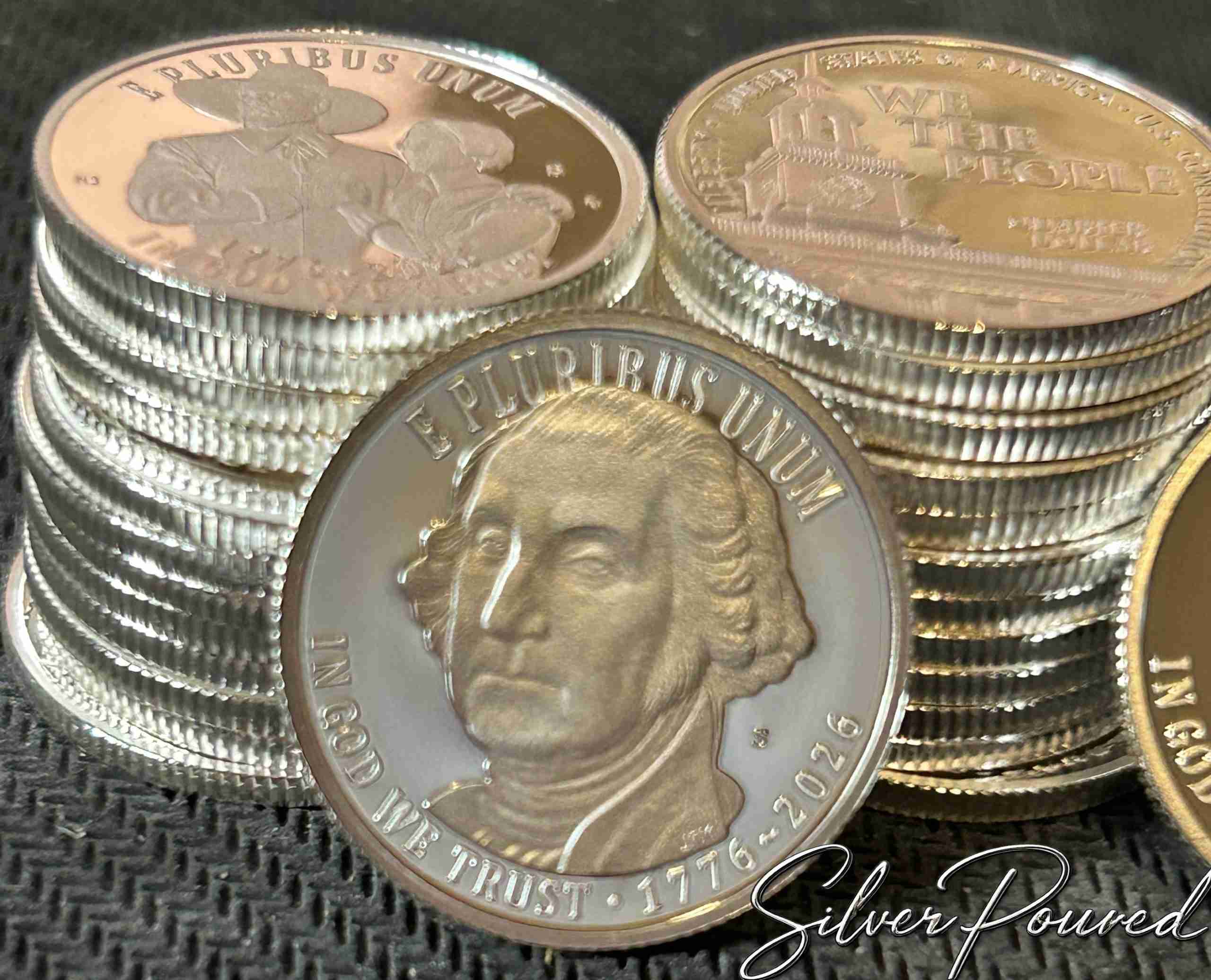
2026 Revolutionary War Quarter Quick Facts
| Program | 2026 United States Semiquincentennial Coin Program |
| Denomination | Quarter Dollar — 25¢ |
| Historical Theme | Revolutionary War |
| Circulating Mints | Philadelphia (P) and Denver (D) |
| Circulating Composition | 8.33% nickel, balance copper |
| Circulating Weight | 5.670 grams |
| Diameter | 24.26 mm / 0.955 inch |
| Edge | Reeded |
| Silver Proof Mint | San Francisco (S) |
| Silver Proof Composition | 99.9% fine silver |
| Silver Fine Weight | 0.199 troy ounce |
| Anniversary Date | 1776 ~ 2026 |
| Regular-Issue Privy | None |
The 2026 Revolutionary War Quarter occupies a deliberate position in the five-quarter Semiquincentennial story. The Mayflower Compact introduces government through consent; the Revolutionary War quarter asks what happens when the political principles that follow must be defended. Independence was not secured simply because it had been declared. It survived because people continued the struggle when success remained uncertain.

Why the Revolutionary War Is the Second 2026 Quarter
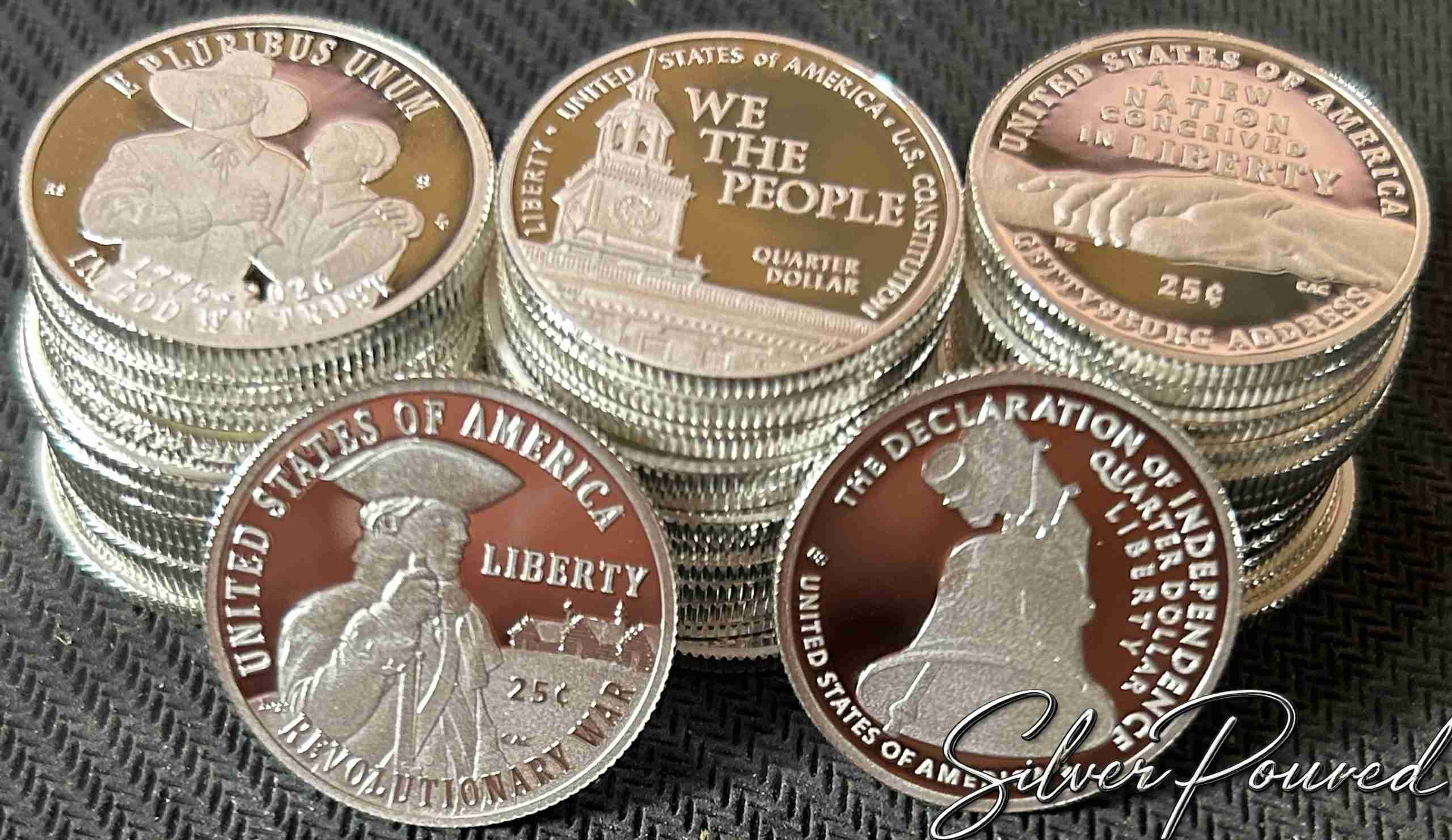
The five Semiquincentennial quarters function as historical chapters rather than unrelated commemorative designs. The Mayflower Compact begins with agreement and self-government. The 2026 Revolutionary War Quarter follows with the military struggle necessary to make independence possible. The Declaration of Independence quarter addresses the ideals and formal separation of the colonies, the Constitution quarter moves into organized national government, and the Gettysburg Address quarter examines preservation and renewal during national division.
That structure gives the 2026 Revolutionary War Quarter a distinct role. It represents the point where political principles encounter physical resistance. Declaring independence and achieving independence were not the same event, and the years separating those ideas were filled with military reversals, sacrifice, logistical problems, political uncertainty, and the possibility that the new nation might never survive.
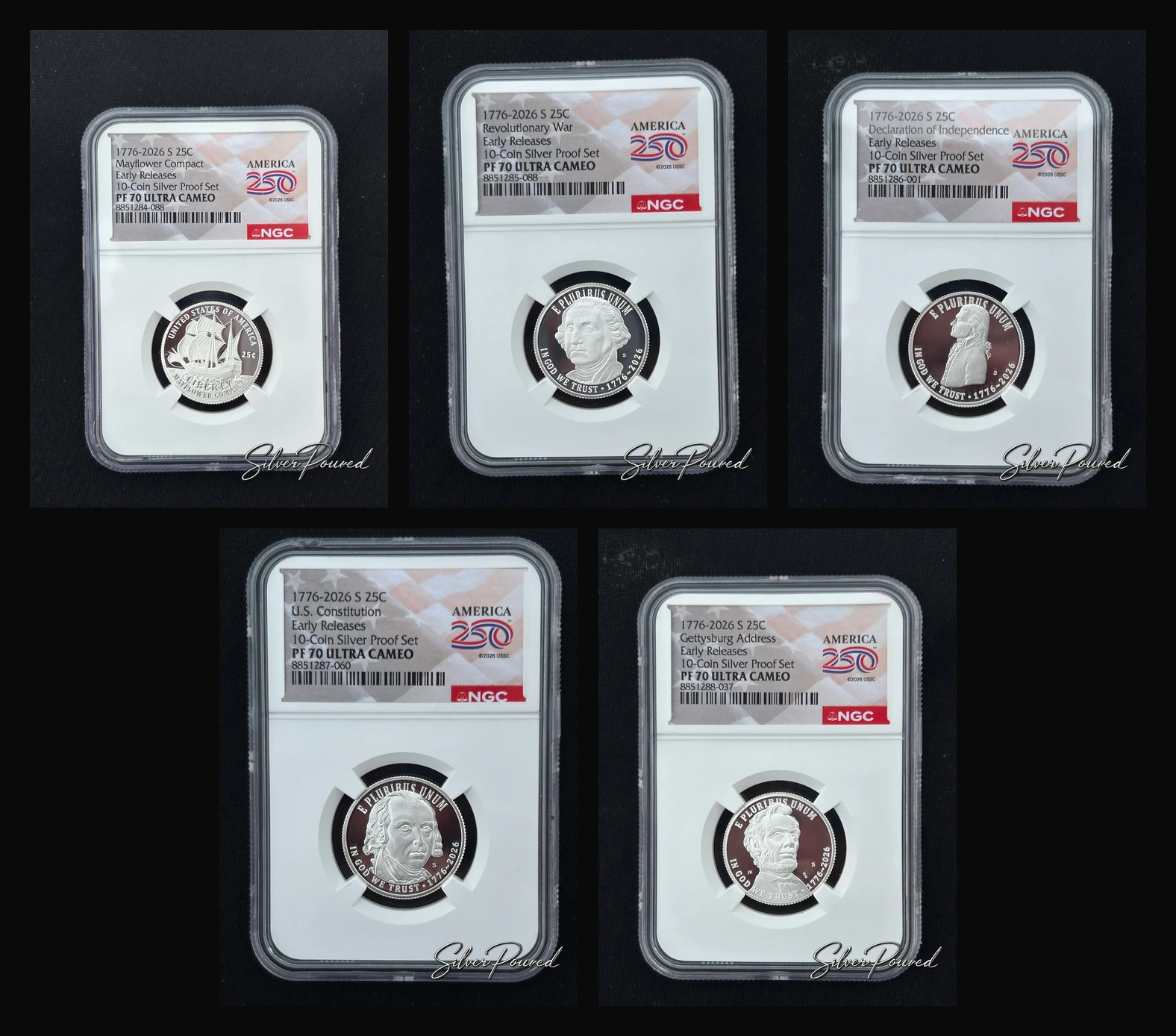
Viewed as part of the complete 2026 Coins Semiquincentennial Master Hub, the Revolutionary War issue becomes the second movement in a larger historical narrative. Consent establishes an idea. Revolution tests it. Independence defines it. Constitutional government organizes it. National renewal preserves it.
Historical Background of the 2026 Revolutionary War Quarter
The American Revolution did not become inevitable at a single moment. Political conflict between Great Britain and its North American colonies intensified over taxation, representation, imperial authority, trade, and colonial self-government before armed fighting began at Lexington and Concord in April 1775. The conflict transformed resistance into open warfare.
George Washington was appointed Commander-in-Chief of the Continental Army by the Second Continental Congress in 1775. His task extended far beyond battlefield command. Washington had to hold together an army whose enlistments, supplies, training, pay, equipment, transportation, and political support were often uncertain.
Independence was formally declared in July 1776, but military victory remained years away. The 2026 Revolutionary War Quarter concentrates on that difference between declaring a political principle and sustaining the struggle necessary to defend it.
2026 Revolutionary War Quarter Obverse: George Washington
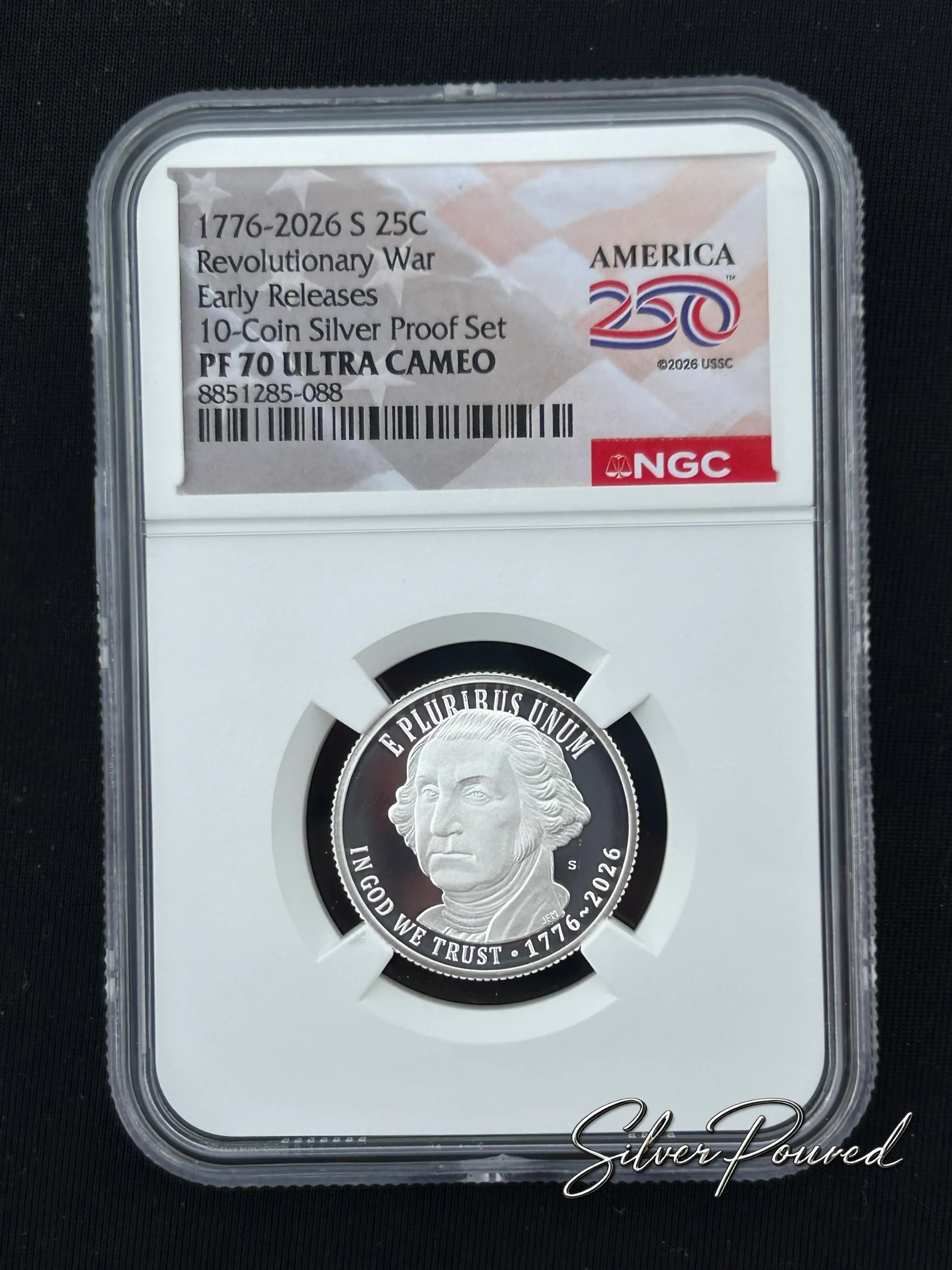
The obverse of the 2026 Revolutionary War Quarter features George Washington as Commander-in-Chief of the Continental Army. That role is critical to understanding the design. Washington appears not simply as the first President remembered by later generations, but as the military leader responsible for guiding the Continental Army through the struggle for independence.
The inscriptions are E PLURIBUS UNUM, IN GOD WE TRUST, and the anniversary date 1776 ~ 2026. Unlike traditional Washington quarters that identify the denomination and country on the obverse, the 2026 design uses the dual anniversary date to connect Washington’s Revolutionary-era role directly with America’s 250th anniversary.
The portrait also adds another chapter to Washington’s long history on the quarter. The United States Mint notes that the 2026 portrait is the third Washington portrait to appear on the denomination and that the design had previously appeared on the 2007 George Washington Presidential $1 Coin. For the Semiquincentennial, the portrait returns in a different context: Washington the commander rather than Washington primarily as President.
2026 Revolutionary War Quarter Reverse: The Soldier at Valley Forge
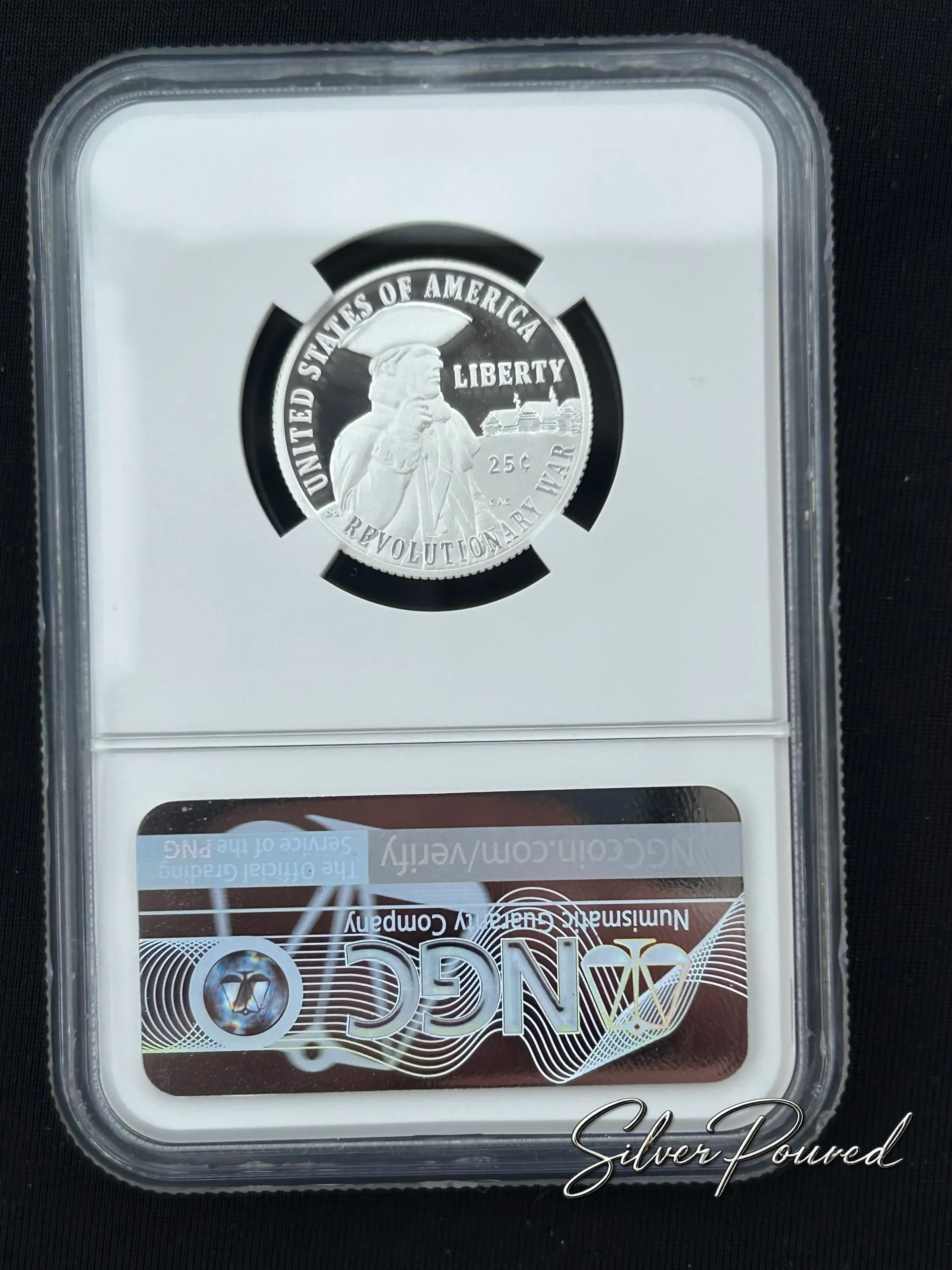
The reverse of the 2026 Revolutionary War Quarter shifts attention away from famous leadership and toward the ordinary soldier. A Continental Army soldier appears at Valley Forge, Pennsylvania, where Washington’s army spent the winter encampment of 1777–1778 after suffering defeat at the Battle of Brandywine.
The Mint emphasizes the soldier’s resolute gaze. That expression gives the reverse much of its emotional force. Independence had already been declared, but the army still faced disease, extreme cold, supply shortages, military uncertainty, and a British force powerful enough to drive the Second Continental Congress from Philadelphia.
Reverse inscriptions include UNITED STATES OF AMERICA, LIBERTY, 25¢, and REVOLUTIONARY WAR. The result is a design in which liberty is not presented only as an abstract political principle. It is connected directly to the endurance required to preserve it.
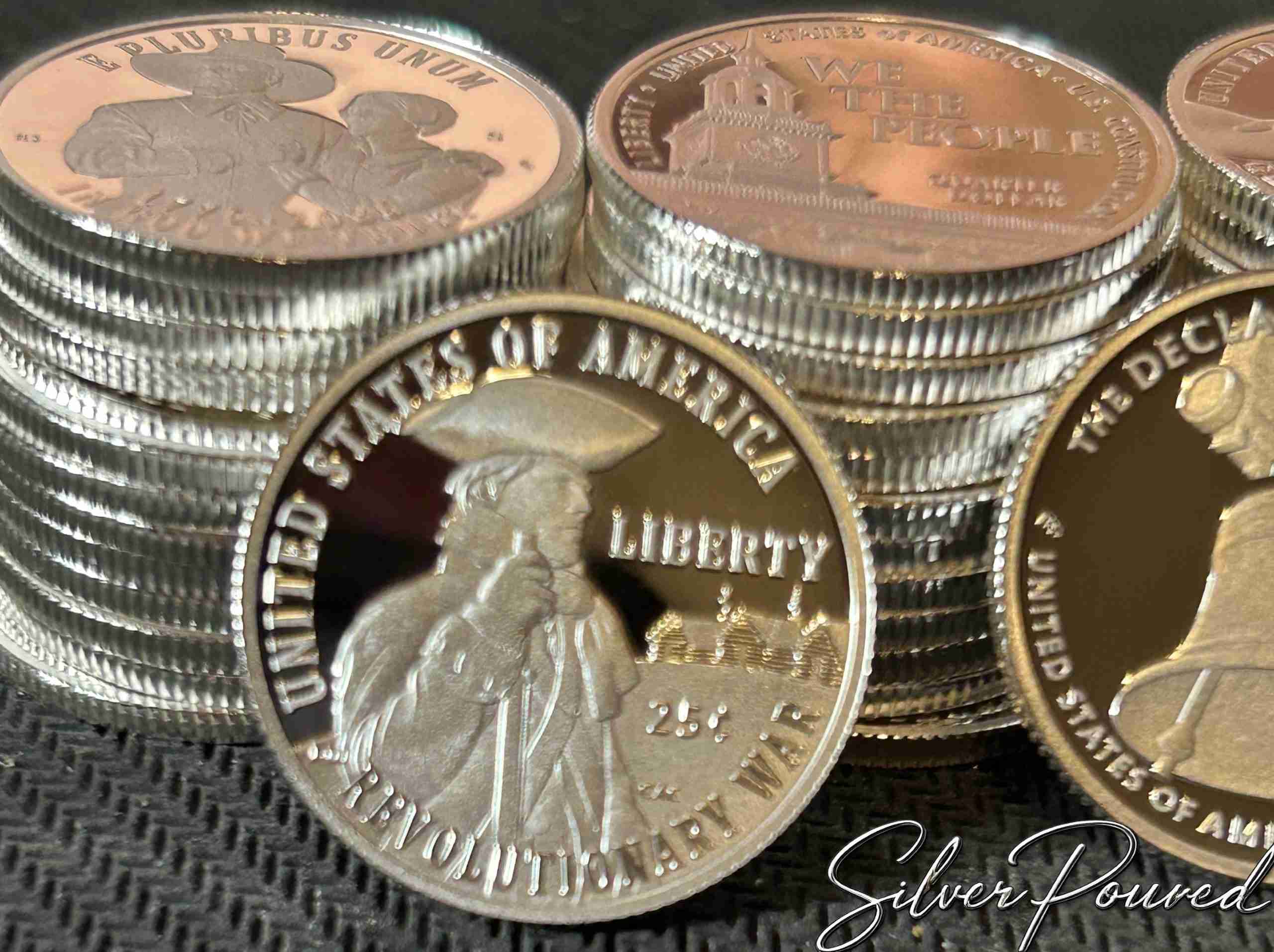
Valley Forge was not a battlefield victory. Its importance came from endurance. The Continental Army remained together through severe winter conditions, shortages, disease, and uncertainty while continuing the fight for independence. That makes the 2026 Revolutionary War Quarter especially powerful within the Semiquincentennial: liberty is shown not simply as an ideal declared on paper, but as something people were willing to suffer to defend. To every generation of Americans who has answered that same call to military service: thank you.
Why Valley Forge Matters to the Revolutionary War Quarter
Valley Forge has become one of the most recognizable symbols of endurance during the American Revolution. Washington’s army entered winter quarters there in December 1777 after British forces had captured Philadelphia. The location allowed the Continental Army to remain close enough to observe British activity while occupying defensible terrain.
The hardship represented on the 2026 Revolutionary War Quarter was real, although popular retellings can sometimes flatten Valley Forge into a single story of freezing soldiers. The army confronted shortages of clothing and supplies, inadequate shelter early in the encampment, disease, poor sanitation, transportation problems, and administrative weaknesses. Disease ultimately caused enormous suffering and death.
Valley Forge also became a period of military development. Training and organizational reforms helped improve the Continental Army’s discipline and effectiveness. For the 2026 Revolutionary War Quarter, that combination of suffering, persistence, and development makes Valley Forge a powerful representation of an army that endured rather than dissolved.
Washington and the Soldier Tell Two Sides of the Same Story
The artistic structure of the 2026 Revolutionary War Quarter is particularly effective because the obverse and reverse operate together. Washington represents leadership, command, strategy, and responsibility. The unnamed Continental soldier represents the thousands of individuals whose service transformed those decisions into action.
Neither side is sufficient by itself. Leadership without an army cannot sustain a revolution, while individual sacrifice without organization and command cannot easily produce coordinated military success. The two-sided composition therefore turns the quarter into a compact study of how military institutions function: commanders make decisions, but people carry them out.
That balance also keeps the Revolutionary War design from becoming another portrait-centered commemorative. Washington is essential, but the reverse ensures that the broader human cost of independence remains visible.
Philadelphia and Denver 2026 Revolutionary War Quarters
Circulating-quality versions of the 2026 Revolutionary War Quarter were produced at the Philadelphia Mint and Denver Mint. The P and D mint marks give circulation collectors a straightforward two-Mint set before expanding into Proof, Silver Proof, original Mint product, or certified versions.
The circulating quarter weighs 5.670 grams, measures 24.26 millimeters in diameter, has a reeded edge, and uses the modern quarter composition of 8.33% nickel with the balance copper. The regular Philadelphia and Denver issues carry no special privy mark.
| 2026 Revolutionary War Quarter | Philadelphia | Denver |
|---|---|---|
| Mint Mark | P | D |
| Finish | Circulating quality | Circulating quality |
| Composition | 8.33% nickel, balance copper | 8.33% nickel, balance copper |
| Weight | 5.670 grams | 5.670 grams |
| Diameter | 24.26 mm | 24.26 mm |
| Edge | Reeded | Reeded |
| Privy Mark | None | None |
When Was the 2026 Revolutionary War Quarter Released?
The 2026 Revolutionary War Quarter entered the national anniversary year with a release celebration on March 23, 2026, at George Washington’s Mount Vernon. The location created a direct connection between the new quarter and the commander depicted on its obverse. Rather than introducing the coin at a location unrelated to its subject, the release tied the circulating quarter to Washington’s life and Revolutionary War leadership.
Following its release, circulating quarters entered the normal distribution system through Federal Reserve Banks and designated coin terminals, ultimately reaching financial institutions and the public. That makes the Philadelphia and Denver Revolutionary War quarters fundamentally different collecting objects from products sold directly by the United States Mint. A quarter discovered in circulation is part of the nation’s working coinage, even though its design commemorates the 250th anniversary of the United States.
For collectors, that creates one of the most accessible ways to participate in the Semiquincentennial coin program. A complete basic set can begin with nothing more complicated than finding both a P-mint and D-mint example, then progress into original Mint rolls, bags, Proof coins, Silver Proofs, and certified pieces.
2026 Revolutionary War Quarter Rolls and Bags
The United States Mint began accepting orders for 2026 Revolutionary War Quarter rolls and bags on March 27, 2026. The product lineup gave collectors a way to acquire larger quantities of uncirculated coins associated with the Philadelphia and Denver facilities rather than searching individual pieces from circulation.
The offering included a 100-coin Philadelphia bag, a 100-coin Denver bag, and a two-roll set containing 80 quarters in total—one roll associated with Philadelphia and one with Denver. At the time of the Mint offering, the individual 100-coin bags were priced at $63 each, while the P/D two-roll set was priced at $56.
Original Mint packaging can matter to collectors because it preserves the product in the form in which it was sold. Rolls also provide an opportunity to examine multiple coins for strong strikes, surface quality, unusual characteristics, and potential high-grade candidates without relying exclusively on coins that have already circulated.
However, an important distinction applies to these products. A sales limit or the number of rolls and bags offered by the Mint is not automatically the same thing as the total mintage of the underlying quarter. The Mint information researched for the Revolutionary War rolls and bags did not publish a mintage limit, product limit, or household order limit for these products. Collectors should therefore avoid treating packaging availability as proof that the Philadelphia or Denver coin itself is scarce.
A United States Mint roll or bag can be collectible without making every coin inside it rare. Product availability, original packaging, surviving population, condition, certified grade, and total coin mintage are different measurements. When evaluating a 2026 Revolutionary War Quarter, identify which form of scarcity is actually being discussed before paying a premium.
2026 Revolutionary War Silver Proof Quarter
The precious-metal version of the design is the 2026 Revolutionary War Silver Proof Quarter struck at the San Francisco Mint. Unlike the copper-nickel Philadelphia and Denver circulation issues, the Silver Proof is composed of 99.9% fine silver and contains approximately 0.199 troy ounce of silver.
That composition gives the coin two distinct sources of value. It is a collectible anniversary quarter with a specialized Proof finish, but it also contains measurable precious-metal value. The silver content does not determine the entire market value of the coin, because condition, certification, demand, packaging, and collector interest can create premiums above its intrinsic metal value.
Proof production also changes the visual presentation of the Revolutionary War design. The carefully prepared surfaces and stronger contrast can emphasize Washington’s portrait on the obverse and the details of the Continental soldier on the reverse. For collectors assembling a premium-quality 2026 quarter set, the Silver Proof provides a materially different version of the same historical design rather than simply another mint mark.
2026 Revolutionary War Silver Quarter Melt Value
Because the Silver Proof contains 0.199 troy ounce of silver, its intrinsic silver value changes with the market price of the metal. The calculation is straightforward: multiply the current silver spot price per troy ounce by 0.199. For example, the coin’s silver value rises or falls as spot silver moves, while its collectible value may behave differently.
This distinction is especially important with a modern Silver Proof. Melt value establishes the value of the contained silver, not an appraisal of the complete coin. A certified PF70 example, an intact original Proof set, or a particularly desirable anniversary issue may trade well above its metal value. Conversely, a temporary increase in silver spot price can raise the intrinsic floor without necessarily producing an identical increase in collector premium.
PF70 Revolutionary War Quarter and Certified Examples
Third-party certification creates another collecting category for the 2026 Revolutionary War Quarter. Proof and Silver Proof coins can be submitted to grading services, where their condition, surface preservation, strike, and overall quality are evaluated. A PF70 grade represents a Proof coin judged to be at the top numerical grade of the standard 70-point grading scale.
Ultra Cameo designations can further describe the visual contrast between frosted design elements and mirrored fields. On the Revolutionary War quarter, that contrast is particularly effective because the design relies on two strong human subjects: Washington in military command on the obverse and the resolute Continental soldier at Valley Forge on the reverse.
A PF70 label does not make every certified coin automatically rare or guarantee future appreciation. Population, demand, issue availability, label variety, grading-service preference, and the number of coins ultimately certified at the same grade can all influence the secondary market. Collectors should separate grade rarity from coin mintage when comparing certified examples.
Valley Forge Appears on Two Different 2026 U.S. Coins
The Revolutionary War quarter is not the only 2026 United States coin connected to Valley Forge. The 2026 Native American $1 Coin also reaches into the history of the encampment through the story of Polly Cooper and the assistance provided by the Oneida people to Washington’s army.
The two coins approach the same historical crisis from different directions. The 2026 Revolutionary War Quarter focuses on the Continental Army soldier and the endurance required to keep the army together. The Native American $1 Coin adds another dimension by recognizing assistance from the Oneida during a period when food, supplies, and survival were serious concerns.
Collected together, the coins demonstrate how the Semiquincentennial program can tell overlapping stories rather than isolated episodes. One design shows the people enduring the encampment; another helps explain the network of relationships and assistance surrounding them. For collectors interested in historical connections rather than denomination alone, the pair creates a particularly meaningful 2026 combination.
How to Collect the 2026 Revolutionary War Quarter
There is no single correct way to build a Revolutionary War quarter collection. A circulation-focused collector can begin with Philadelphia and Denver examples and search for attractive coins directly from change or bank rolls. Another collector might preserve P and D coins from original Mint products, while Proof collectors can add the San Francisco issues and the 99.9% Silver Proof.
A more advanced set can include certified examples, high-grade circulation strikes, PF70 Silver Proof coins, original Mint packaging, and eventually notable errors or varieties if legitimate examples become established. The important point is to define the collection before paying premiums. A complete date-and-mint set, a silver-focused set, and a registry-quality certified set are different collecting goals with very different costs.
2026 Revolutionary War Quarter Value
The value of a 2026 Revolutionary War Quarter depends first on which version is being evaluated. A Philadelphia or Denver circulation strike, an example preserved from original Mint packaging, a San Francisco Proof, a 99.9% fine Silver Proof, and a certified PF70 coin occupy different collector markets. There is no single value that accurately describes every Revolutionary War quarter.
For ordinary P and D quarters, condition is especially important. Coins that circulate extensively should not automatically be assumed to carry large premiums simply because they commemorate America’s 250th anniversary. Uncirculated examples with strong surfaces and attractive strikes may be more desirable, while exceptional coins that eventually prove difficult to locate at the highest certified grades can develop a different market from ordinary circulation pieces.
The Silver Proof has another component: intrinsic silver value. Its 0.199 troy ounce of fine silver establishes a metal-value component that changes with the silver market, but melt value should not be confused with complete collector value. Proof quality, certification, original packaging, demand for the Semiquincentennial program, and the market for complete 2026 sets can all affect what collectors are willing to pay.
2026 Revolutionary War Quarter Errors and Varieties
Collectors searching new 2026 quarters will naturally watch for errors and varieties, but unusual appearance alone does not establish a Mint error. Damage after a coin enters circulation, staining, scratches, flattened details, surface changes, and other forms of post-Mint alteration can sometimes resemble production mistakes.
Legitimate errors originate during the minting process. Depending on how a coin was produced, collectible errors can involve the planchet, die, strike, or other production stages. Examples collectors commonly investigate across modern U.S. coinage include off-center strikes, clips, wrong-planchet errors, striking abnormalities, and genuine die varieties. Any claimed 2026 Revolutionary War Quarter error should be evaluated according to the physical evidence on that specific coin rather than assumptions based on photographs of unrelated examples.
Newly released coins also create an environment in which unverified error claims can spread quickly. A dramatic asking price online is not proof that an error has been authenticated or that another collector actually paid that amount. For potentially significant pieces, attribution or authentication from a respected numismatic authority or grading service can provide much stronger evidence than an unsupported marketplace listing.
What Makes a Revolutionary War Quarter Worth Collecting?
The Revolutionary War issue works on several levels at once. It is circulating United States coinage, part of a one-year 250th-anniversary program, a Washington quarter with a historically specific Commander-in-Chief portrait, and a coin whose reverse focuses on the endurance of an ordinary Continental soldier rather than a battlefield victory.
Collectors can therefore approach the coin through history, condition, precious metals, original Mint products, certification, or completion of the five-quarter Semiquincentennial set. That range gives the issue broader collecting possibilities than a coin whose appeal depends on a single rare variety or low-mintage version.
Frequently Asked Questions About the 2026 Revolutionary War Quarter
Who is on the 2026 Revolutionary War Quarter?
George Washington appears on the obverse as Commander-in-Chief of the Continental Army. The reverse depicts an unnamed Continental Army soldier at Valley Forge, allowing the two sides to represent both military leadership and individual service.
Is the 2026 Revolutionary War Quarter silver?
The Philadelphia and Denver circulation strikes are not silver. The San Francisco Silver Proof version is composed of 99.9% fine silver and contains approximately 0.199 troy ounce of silver.
Does the Revolutionary War quarter have a 250 privy mark?
The regular Philadelphia and Denver Revolutionary War quarters do not carry a special 250th-anniversary privy mark. Collectors should not assume that every coin issued for the Semiquincentennial uses the same privy treatment found on certain other 2026 United States Mint issues.
Where was the 2026 Revolutionary War Quarter released?
The circulation release was celebrated on March 23, 2026, at George Washington’s Mount Vernon, connecting the new quarter directly with the Revolutionary War commander depicted on its obverse.
How much silver is in the Silver Proof Revolutionary War quarter?
The Silver Proof contains approximately 0.199 troy ounce of fine silver. Its melt value can therefore be estimated by multiplying the current silver spot price per troy ounce by 0.199.
Is a PF70 Revolutionary War quarter rare?
PF70 describes the assigned grade of a Proof coin; it does not by itself establish rarity. Collector demand, the number of coins certified at that grade, total issue availability, label or holder preferences, and broader market conditions can all affect premiums for certified examples.
The Revolutionary War Quarter in the Five-Coin 2026 Story
The complete 2026 quarter program gains meaning from its sequence. The Mayflower Compact represents consent and early self-government. The Revolutionary War represents sacrifice and the defense of liberty. The Declaration of Independence represents independence. The Constitution represents the creation of an organized system of government. The Gettysburg Address represents national renewal and the preservation of those principles during profound division.
Within that progression, the 2026 Revolutionary War Quarter is the bridge between political consent and independence. Its design does not celebrate victory through a battlefield triumph. Instead, Washington and the soldier at Valley Forge represent the leadership, service, hardship, and persistence required to keep the revolutionary project alive long enough for independence to become a lasting national reality.
Official United States Mint Sources
Primary information for this guide was verified against United States Mint materials covering the 2026 Revolutionary War Quarter, its designs, circulation release, and Mint rolls and bags.
United States Mint — Revolutionary War Quarter Release at George Washington’s Mount Vernon
United States Mint — 2026 Revolutionary War Quarter Rolls and Bags
United States Mint — Semiquincentennial Revolutionary War Quarter Product Information
United States Mint — 2026 Semiquincentennial Silver Proof Set and Revolutionary War Quarter Designs
Related SilverPoured Resources
Continue researching the 2026 Revolutionary War Quarter, America’s Semiquincentennial coinage, silver values, and the factors that influence collector premiums with these SilverPoured resources.
2026 Semiquincentennial Coin Guides
2026 Coins: Complete Guide to America’s 250th Anniversary Coin Program
2026 Declaration of Independence Quarter
2026 Mayflower Compact Quarter: Complete Collector Guide
2026 U.S. Constitution Quarter: Complete Collector Guide
2026 Gettysburg Address Quarter
More 2026 Collector Guides
2026 Privy Quarter: July 4 Privy Mark, Value, Mintage & Rarity
2026 Emerging Liberty Dime
2026 Enduring Liberty Half Dollar
2026 Lincoln Cent
Silver Coin Values
Quarter Values & Collector Research
Washington Quarter Value
Standing Liberty Quarter Silver Value
Coin Mint Marks
Silver Proof Set Mintages
Philadelphia Mint
Purchase Precious Metals from a Trusted Dealer
Collectors who enjoy the 99.9% fine Silver Proof Revolutionary War quarter may also want to explore physical silver bullion. Understanding the difference between silver’s intrinsic metal value and the premium charged for a finished bullion product is an important part of making informed precious-metals purchases.
SilverPoured works with Golden State Mint as an affiliate partner. Golden State Mint offers privately minted silver, gold, copper, and other precious-metal products for collectors and investors. Compare current pricing, premiums, weights, and product specifications before making a purchase.
Collector Insight
The 2026 Revolutionary War Quarter is a useful reminder that collector value and metal value answer different questions. A circulated P or D quarter, an original Mint roll, a Silver Proof containing 0.199 troy ounce of fine silver, and a PF70 certified example can all carry the same Revolutionary War design while participating in very different markets. Identify the exact version first; evaluate its value second.
Keep SilverPoured Free
SilverPoured is built to help collectors and precious-metals investors make smarter decisions through free calculators, original photography, coin research, value references, collector education, and independent market resources. Every page is created to make valuable precious-metals information available without requiring a paid subscription.
If this 2026 Revolutionary War Quarter guide helped you understand the coin, its Philadelphia and Denver issues, Valley Forge history, Silver Proof version, melt value, certification, or place in America’s Semiquincentennial program, consider supporting the continued growth of SilverPoured. Every contribution helps fund original research, new calculators, expanded educational resources, additional photography, and future tools for the precious-metals community.
Your support allows SilverPoured to remain independent while building one of the web’s most comprehensive free libraries for coin collectors, bullion buyers, precious-metals researchers, and long-term investors.