
The 2026 Privy Quarter is one of the most unusual circulating United States quarters of the modern era. Only 250,000 examples of the 2026 Declaration of Independence Quarter were produced with a special “July 4” privy mark and intentionally released without a mint mark. Instead of selling the coins as a separate United States Mint product, the Mint randomly mixed them with ordinary Declaration of Independence quarters and sent them into the banking system for Americans to discover in circulation.
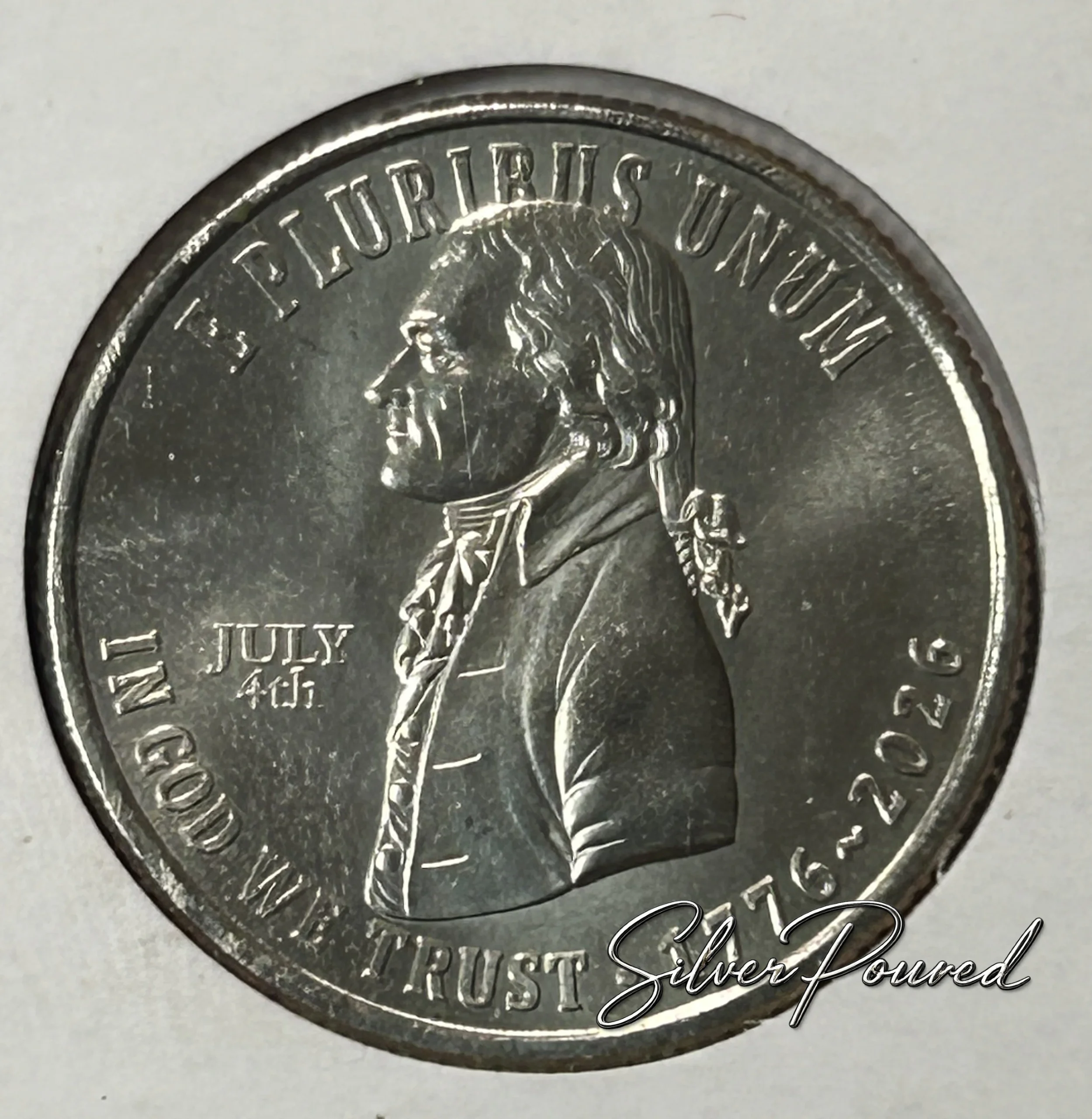
That makes the 2026 Privy Quarter fundamentally different from most limited-edition modern coins. You did not need to place a Mint order to obtain one. A genuine example could appear in a bank roll, cash register, vending-machine change, or ordinary handful of quarters. The challenge is knowing exactly what to look for.
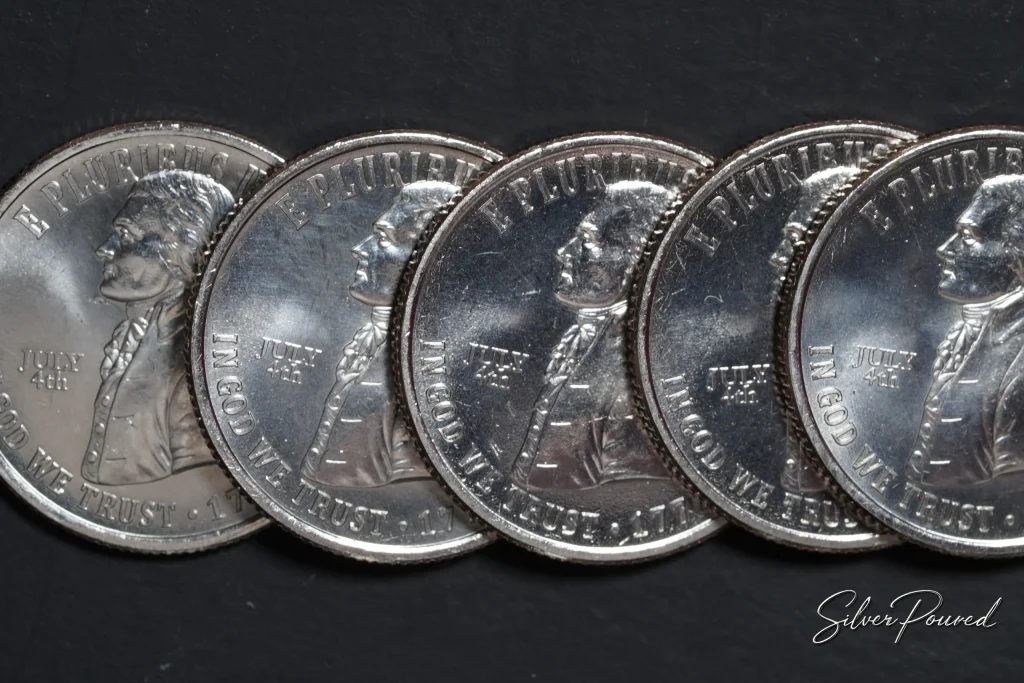
The two primary identifiers are simple: a genuine circulating July 4 privy quarter carries the official “JULY 4th” privy mark on the obverse and has no P or D mint mark. A normal 2026 Declaration of Independence Quarter does not have the July 4 privy.
What Is the 2026 Privy Quarter?
The 2026 Privy Quarter is a special limited-mintage version of the circulating 2026 Declaration of Independence Quarter, the third design in the United States Mint’s five-quarter Semiquincentennial program celebrating America’s 250th anniversary.
On June 23, 2026, the United States Mint announced that it would produce only 250,000 Declaration of Independence quarters carrying a special July 4 privy mark. The Mint stated that the coins would bear no mint mark and would be randomly placed into circulation rather than offered as a conventional collector product.
The underlying Declaration Quarter design remains recognizable. Thomas Jefferson appears on the obverse, while the reverse depicts the Liberty Bell. The special issue adds the July 4 privy beside Jefferson and removes the mint mark that collectors expect to see on ordinary Philadelphia or Denver circulation strikes.
| Feature | 2026 July 4 Privy Quarter |
|---|---|
| Denomination | Quarter Dollar |
| Program | 2026 Semiquincentennial Coin Program |
| Design | Declaration of Independence Quarter |
| Special Mark | “JULY 4th” privy |
| Mint Mark | None |
| Official Mintage | 250,000 |
| Distribution | Randomly released into circulation nationwide |
| Face Value | 25 cents |
How to Identify a Genuine 2026 Privy Quarter
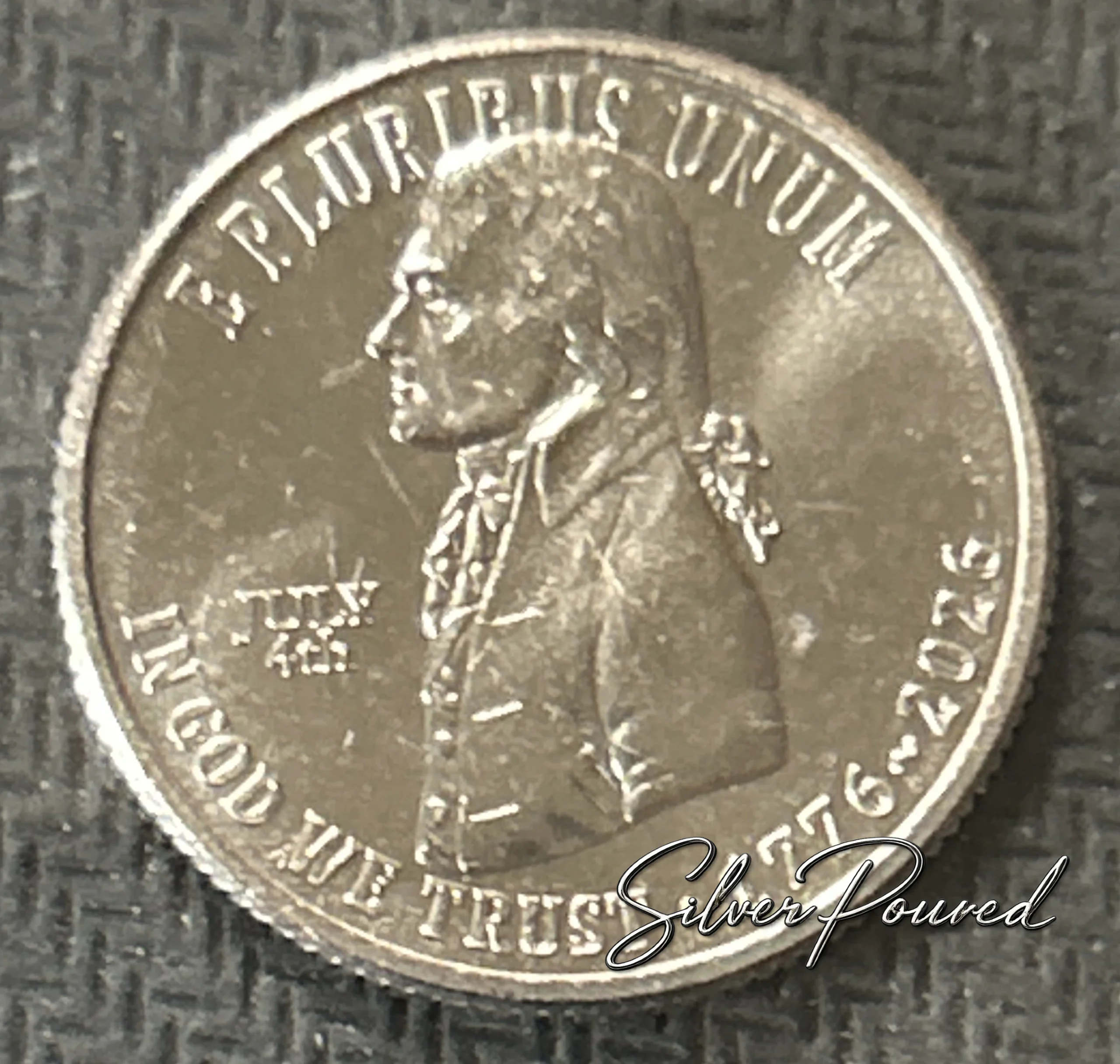
Identification begins on the obverse. The 2026 Privy Quarter uses the same Thomas Jefferson portrait associated with the Declaration of Independence Quarter, but the special coin carries the words “JULY 4th” in the field beside Jefferson.
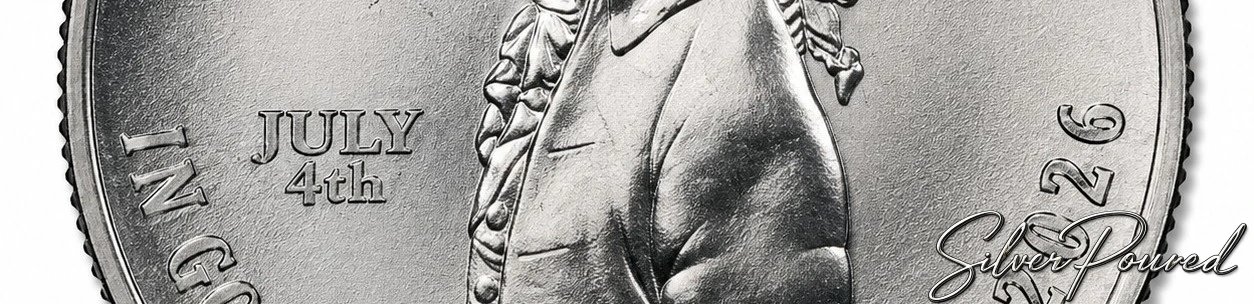
That privy mark is not an aftermarket counterstamp, hand engraving, dealer addition, or mint error. It is an intentional feature authorized and produced by the United States Mint.
The second identifying characteristic is equally important: the genuine circulating 2026 Privy Quarter has no mint mark. Ordinary Declaration of Independence circulation quarters were produced with P and D mint marks. The special July 4 issue was intentionally released without either one.
A missing mint mark by itself does not make an ordinary 2026 quarter a July 4 privy quarter. The genuine coin must show the official July 4 privy. Likewise, someone removing or damaging a mint mark on a regular quarter does not create a rare variety. Collectors should evaluate the entire coin rather than relying on one missing letter.
Where Is the July 4 Privy Mark?
The July 4 privy mark appears on the obverse of the coin near Thomas Jefferson. It reads “JULY” above “4th,” creating an immediately recognizable identification point once you know where to look.
This is why a close-up image of the privy is one of the most useful tools for collectors. If you are searching rolls, you do not need to memorize every detail of the Declaration Quarter. First identify the Jefferson obverse, then inspect the appropriate field for the distinctive July 4 inscription.
Because these coins entered general circulation, genuine examples may acquire contact marks, scratches, discoloration, fingerprints, or ordinary wear. Circulation wear does not erase the coin’s identity, although severe damage could make the privy more difficult to evaluate and can affect collector value.
2026 Privy Quarter Mintage: Only 250,000
The official mintage of the circulating 2026 Privy Quarter is 250,000 coins. That figure comes directly from the United States Mint’s June 23 announcement.
For modern United States circulating coinage, 250,000 is an intentionally limited production. More important than the number alone, however, is how those coins were distributed. The Mint did not package the entire mintage into a conventional limited-edition product that collectors could order directly. Instead, the special quarters were mixed into ordinary channels of commerce.
The result is a modern coin with a fixed limited mintage but no simple retail distribution path. A collector searching for one is competing not only with other collectors but also with millions of ordinary transactions in which a 2026 Privy Quarter could change hands without anyone recognizing it.
How the July 4 Privy Quarters Entered Circulation
The distribution story is one of the most important parts of the 2026 Privy Quarter.
The United States Mint explained that the special coins were randomly mixed into bulk bags with other 2026 Declaration of Independence quarters. Those bags were wrapped and shipped to the Federal Reserve system for nationwide distribution to financial institutions.
That method was deliberate. Instead of giving major dealers or high-volume Mint customers a direct route to the entire limited issue, the Mint created a nationwide treasure hunt. Banks received coin through normal distribution channels, and the privy quarters began appearing among ordinary quarters.
The Mint amplified that treasure-hunt concept on Independence Day. The first 250 customers at the Philadelphia Mint Gift Shop on July 4 received one July 4 privy quarter. The broader 250,000-piece mintage, however, remained a circulation issue intended to be discovered across the country.
Can You Find a 2026 Privy Quarter in Pocket Change?
Yes. That is precisely how the United States Mint intended many examples to be found.
A 2026 Privy Quarter can theoretically appear anywhere quarters move through normal commerce: bank rolls, cash drawers, coin-counting machines, laundromats, grocery stores, restaurants, vending machines, and everyday change.
Bank roll hunting has naturally become one of the most popular ways to search. Because the Mint distributed the coins through the Federal Reserve and financial institutions, collectors have purchased boxes and rolls of quarters hoping to encounter the limited issue.
Distribution is not necessarily uniform. Random mixing means one bank box might contain none while another shipment could contain several. NGC documented an early collector who discovered multiple examples concentrated in a single $500 box of quarters. That does not establish normal odds of discovery; it demonstrates why individual results can vary dramatically under a randomized distribution system.
Why Does the 2026 Privy Quarter Have No Mint Mark?
The absence of a mint mark is intentional. The United States Mint specifically announced that the 250,000 July 4 privy quarters would bear no mint mark.
This matters because normal circulating-quality Declaration of Independence quarters are identified as Philadelphia P or Denver D issues. On the special coin, the lack of a mint mark works together with the July 4 privy to distinguish the limited version.
| Identification Feature | Regular Declaration Quarter | July 4 Privy Quarter |
|---|---|---|
| Thomas Jefferson obverse | Yes | Yes |
| Liberty Bell reverse | Yes | Yes |
| 1776 ~ 2026 dual date | Yes | Yes |
| P or D mint mark | Yes | No |
| JULY 4th privy | No | Yes |
| Limited to 250,000 | No | Yes |
2026 Privy Quarter Value
The 2026 Privy Quarter is legal-tender United States coinage with a face value of 25 cents, but collector demand immediately pushed genuine examples far above face value after the Mint announced the limited release.
There is an important distinction between face value and numismatic market value. Face value is fixed. Collector value is not.
The market for the 2026 Privy Quarter developed extremely quickly and demonstrated substantial volatility during the first weeks of discovery. Early examples brought dramatic premiums while collectors were still learning how many coins had reached the market and where they were appearing.
That does not mean every 2026 Privy Quarter is permanently worth a specific dollar amount. The coin is new, discoveries are continuing, certified populations are developing, and buyers are still determining how much premium to assign to different grades and eye appeal.
| Value Factor | Why It Matters |
|---|---|
| Authentication | Buyers must be confident the privy and missing mint mark are genuine Mint features. |
| Condition | Uncirculated examples generally attract more collector interest than damaged or heavily worn coins. |
| Certified Grade | High third-party grades may command additional premiums as population data develops. |
| Eye Appeal | Luster, strike quality, marks, spotting, and overall appearance can separate coins of similar technical grade. |
| Market Timing | Prices for a newly released rarity can move rapidly as supply reaches the market. |
Collectors researching current value should compare recent completed sales rather than relying only on asking prices. A seller can ask any amount. An actual completed transaction provides stronger evidence of what a buyer was willing to pay at that moment.
Early Discoveries and the Developing Market
The first weeks of the 2026 Privy Quarter produced the kind of attention often seen when a newly announced circulation rarity reaches collectors before the market has established a stable supply.
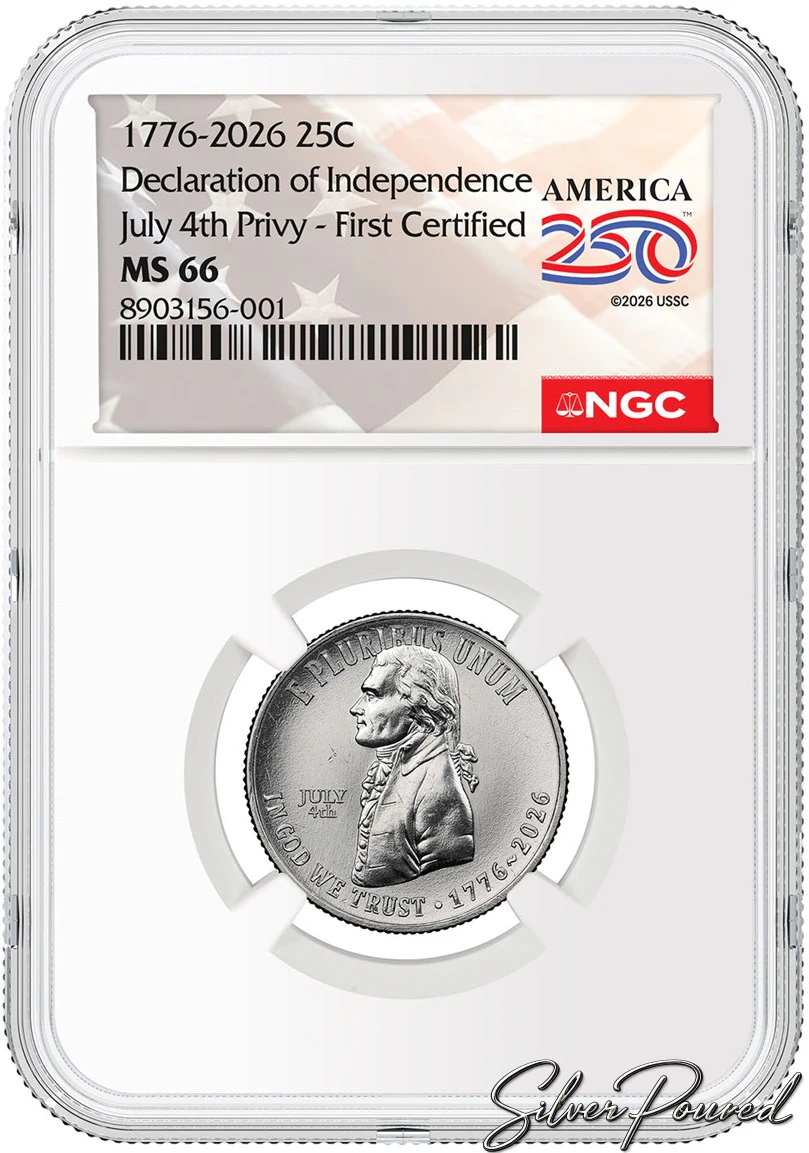
NGC offered a $2,500 bounty for the first circulating July 4 privy quarter submitted to the grading service. Collector Mike Trout of South Carolina claimed the bounty after submitting an authentic example that NGC graded MS 66, making it the first example recorded in the NGC Census.
The episode is historically important because it confirmed that genuine examples had reached ordinary banking channels exactly as the Mint intended.
As more of the 250,000 coins are discovered, graded, sold, and permanently placed into collections, the market will have more evidence from which to establish condition-based values. The long-term premium will ultimately depend on collector demand relative to the surviving supply in desirable grades.
How Rare Is the 2026 Privy Quarter?
With an official mintage of 250,000, the 2026 Privy Quarter is unquestionably limited relative to ordinary modern circulating quarter production. But “rare” requires context.
All 250,000 coins were intentionally created, so this is not a unique error or one-of-a-kind discovery. At the same time, the distribution method makes the issue unusually difficult to obtain on demand. Collectors cannot simply assume that a new roll of 2026 quarters will contain one.
Another important factor is attrition. Because these coins were released into circulation rather than protected in Mint packaging, some examples will be spent unknowingly, scratched, stained, lost, damaged, or heavily worn. The original mintage will always be 250,000, but the number surviving in high Mint State grades may prove much smaller.
That distinction between total mintage and high-grade survival is one reason certified population reports will become increasingly important as the market matures.
Condition and Grading
A circulated 2026 Privy Quarter and a pristine Mint State example are the same limited issue, but they may not carry the same collector value.
Collectors seeking premium examples should pay close attention to the open fields, Jefferson portrait, privy lettering, rims, and the Liberty Bell reverse. Contact marks can develop during normal bulk handling before a coin ever reaches the public, so even an apparently new coin from a bank roll is not automatically a high-grade specimen.
Do not clean a 2026 Privy Quarter. Polishing, rubbing, dipping, abrasive cleaning, or attempting to improve the appearance can permanently alter the surfaces and reduce numismatic value. If you find a particularly clean example, handle it by the edges and place it in an inert coin holder.
Third-party grading may make sense for especially attractive examples or when authentication is important to a buyer. Certification does not automatically make a coin valuable, but an independently assigned grade can provide a common condition standard for the marketplace.
The Reverse of the 2026 Privy Quarter
The special July 4 treatment is on the obverse, but the reverse remains an important part of identifying the underlying Declaration of Independence Quarter design.
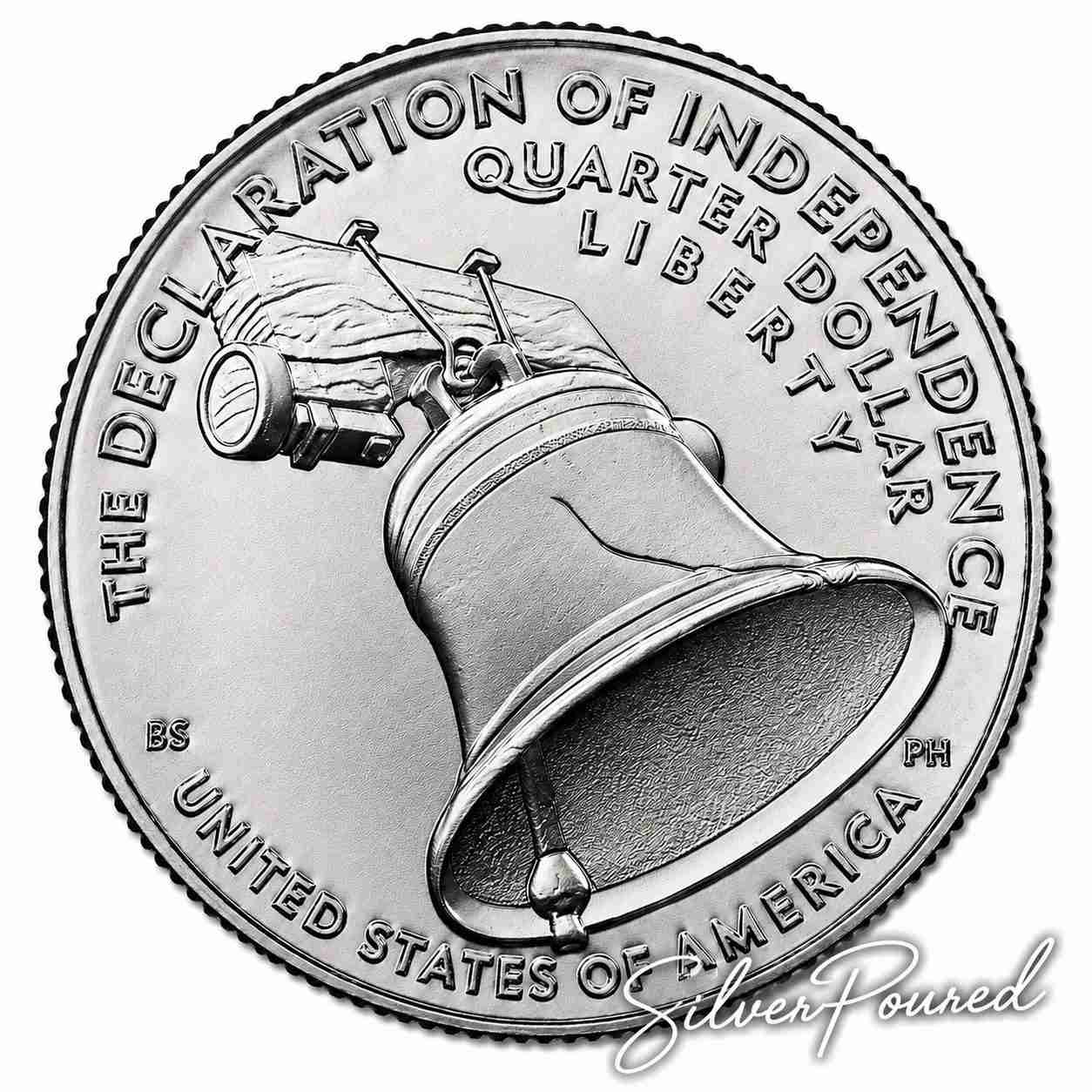
The reverse depicts the Liberty Bell ringing. The design connects the coin directly to the Declaration of Independence theme and America’s founding era. The inscriptions include “THE DECLARATION OF INDEPENDENCE,” “QUARTER DOLLAR,” “LIBERTY,” and “UNITED STATES OF AMERICA.”
Regular Declaration Quarter vs. 2026 Privy Quarter
The regular and privy versions share the same historical theme.
The obverse features Thomas Jefferson, principal author of the Declaration of Independence and third President of the United States. The inscriptions include “E PLURIBUS UNUM,” “IN GOD WE TRUST,” and the special 1776 ~ 2026 dual date used for America’s Semiquincentennial.
The reverse depicts the Liberty Bell ringing. According to the United States Mint, the design uses the Bell as a symbol of announcement and declaration while its famous crack also reflects the fragility of the young nation at its founding.
What turns an ordinary Declaration Quarter into the 2026 Privy Quarter is not a completely different reverse. It is the special July 4 obverse treatment combined with the intentional absence of a mint mark.
Is the July 4 Privy Quarter an Error Coin?
No. The July 4 privy is an intentional United States Mint issue, not an error.
The Mint publicly announced the 250,000-coin production, deliberately added the privy mark, deliberately omitted the mint mark, and deliberately distributed the coins through ordinary circulation. Those characteristics are part of the authorized issue.
A genuine mint error could theoretically occur on a 2026 Privy Quarter during production, just as errors can occur on other coins. Such an error would need to involve a separate manufacturing abnormality. The presence of the July 4 privy itself is not the error.
Watch for Altered or Fake Privy Quarters
Strong premiums inevitably create an incentive for altered coins. Collectors should be cautious about ordinary Declaration quarters that have been engraved, stamped, scratched, or otherwise modified to imitate the special release.
A genuine 2026 Privy Quarter should show the official July 4 design as part of the struck coin. The lettering should not look crudely carved into the surface or added with a hand punch.
The no-mint-mark characteristic also deserves attention. Removing a P or D from an ordinary quarter does not transform it into the limited issue. A genuine coin needs the correct official privy and the correct no-mint-mark configuration.
When significant money is involved, third-party certification can reduce uncertainty.
The 2.5-Ounce Silver July 4 Quarter Is a Different Coin
One of the easiest sources of confusion is another extraordinary 2026 Declaration of Independence Quarter carrying the July 4 privy.
On July 4, 2026, the United States Mint at Philadelphia struck only 250 oversized 2.5-ounce silver Declaration of Independence quarters. Those coins also carry no mint mark and feature the special July 4 privy, but they are completely separate from the 250,000 circulating privy quarters.
| Feature | Circulating July 4 Privy Quarter | 2.5 oz Silver July 4 Quarter |
|---|---|---|
| Mintage | 250,000 | 250 |
| Purpose | Circulation treasure hunt | Special collector issue |
| Distribution | Banking system nationwide | Collector distribution announced separately by the Mint |
| Mint Mark | None | None |
| July 4 Privy | Yes | Yes |
| Edge Numbering | No | Yes, numbered 1 through 250 |
| Silver Weight | Not the 2.5 oz silver issue | 2.5 ounces |
The United States Mint described the oversized silver coins as a collectible version of the Declaration of Independence privy quarter. Each was struck sequentially and laser-numbered on the edge from 1 through 250.
So if you are searching pocket change for a 2026 Privy Quarter, you are looking for the 250,000-piece circulating issue—not one of the enormous 250-piece silver collectibles.
The shared July 4 privy can make the two Declaration Quarter releases sound more similar than they are. The circulation issue has a 250,000-coin mintage and was released through the banking system. The oversized silver issue consists of only 250 individually edge-numbered 2.5-ounce pieces. Correct identification requires knowing which issue is being discussed before comparing mintage, rarity, value, or sales information.

Why the July 4 Privy Quarter Matters
The importance of the 2026 Privy Quarter goes beyond its 250,000-piece mintage.
The coin combines several characteristics rarely seen together in modern circulating U.S. coinage: a one-year anniversary design, an official privy mark, an intentionally absent mint mark, limited production, and randomized nationwide circulation.
It also revived an experience that has historically drawn people into coin collecting: the possibility that something genuinely scarce could be found at face value in ordinary change.
The Mint openly encouraged Americans to search their quarters and share discoveries through its #CoinHunt250 campaign. In that respect, the 2026 Privy Quarter functions not only as a collectible but as an intentional public treasure hunt tied directly to the 250th anniversary of American independence.
2026 Privy Quarter FAQ
How many 2026 Privy Quarters were made?
The United States Mint announced a mintage of 250,000 circulating Declaration of Independence quarters bearing the special July 4 privy mark.
What does the 2026 Privy Quarter look like?
It uses the 2026 Declaration of Independence Quarter design with Thomas Jefferson on the obverse and the Liberty Bell on the reverse. The distinguishing feature is the “JULY 4th” privy mark on the obverse. The special circulating coin also has no mint mark.
Where is the mint mark on a 2026 July 4 privy quarter?
There is no mint mark. The United States Mint intentionally produced the special 250,000-coin issue without a P or D mint mark.
Where can I find a 2026 Privy Quarter?
The Mint randomly distributed the coins through the Federal Reserve and financial institutions nationwide. Genuine examples can therefore be found in bank rolls and ordinary circulation.
Is every 2026 Declaration of Independence Quarter rare?
No. Normal Philadelphia and Denver Declaration quarters are regular circulating issues. The limited version is specifically identified by the official July 4 privy mark and absence of a mint mark.
Is the July 4 privy quarter an error?
No. It is an intentional limited-edition United States Mint issue. A separate manufacturing error could occur on one, but the privy mark and no-mint-mark configuration are deliberate features.
How much is a 2026 Privy Quarter worth?
There is no permanent fixed collector value yet. The market is still developing, and value depends on condition, certification, eye appeal, market supply, and current collector demand.
Should I clean a July 4 privy quarter?
No. Cleaning can permanently alter the surfaces and reduce collector value. Handle a potentially valuable example by the edges and store it in an appropriate inert holder.
Is the 250-piece silver July 4 quarter the same coin?
No. The United States Mint separately struck 250 oversized 2.5-ounce silver Declaration of Independence quarters at Philadelphia on July 4. Those pieces share the July 4 privy but are individually edge-numbered and are entirely separate from the 250,000 circulation coins.
Will more July 4 privy quarters be made?
The United States Mint announced the circulating issue as a limited production of 250,000 coins for the 2026 Semiquincentennial. Unless the Mint issues a later official revision, 250,000 is the authoritative announced mintage for this special circulating release.
Finding a Piece of the Semiquincentennial in Your Change
The 2026 Privy Quarter turns an ordinary 25-cent coin into a genuine national treasure hunt. Its appeal comes from more than scarcity. The Mint intentionally placed a limited anniversary issue into everyday commerce so that collectors and non-collectors could discover one without buying a special product.
If you find a 2026 Declaration of Independence Quarter, check the obverse carefully. Look for the official July 4 privy beside Thomas Jefferson and confirm that the coin has no P or D mint mark. If both features are present, you may be holding one of only 250,000 circulating July 4 privy quarters produced for America’s 250th anniversary.
That combination of limited production, nationwide circulation, historical symbolism, and the possibility of finding one at face value makes the 2026 Privy Quarter one of the defining collector stories of the Semiquincentennial coin program.
Related SilverPoured Resources
Continue exploring the 2026 Privy Quarter through SilverPoured’s complete Semiquincentennial coverage, quarter guides, coin-value resources, and collector research.
2026 Semiquincentennial Coin Guides
2026 Coins: Complete Guide to America’s 250th Anniversary Coin Program
2026 Declaration of Independence Quarter
2026 Mayflower Compact Quarter: Complete Collector Guide
2026 Revolutionary War Quarter: Complete Collector Guide
2026 U.S. Constitution Quarter: Complete Collector Guide
More 2026 Collector Guides
2026 Gettysburg Address Quarter
2026 Emerging Liberty Dime
2026 Enduring Liberty Half Dollar
2026 Lincoln Cent
Silver Coin Values
Quarter Values & Collector Research
Washington Quarter Value
Standing Liberty Quarter Silver Value
Coin Mint Marks
Silver Proof Set Mintages
Philadelphia Mint
Purchase Precious Metals from a Trusted Dealer
The 2026 Privy Quarter is a circulating collectible rather than a bullion investment, but collectors researching scarce U.S. coinage often also compare physical silver and gold. Understanding metal content, premiums, dealer pricing, and product formats can help separate numismatic value from underlying precious-metal value.
Golden State Mint offers a broad selection of physical silver and gold products for collectors and precious-metals buyers who want to compare bullion options alongside numismatic holdings. SilverPoured may receive a commission when purchases are made through the link below, at no additional cost to you.
Collector Insight
The 2026 Privy Quarter is unusual because its scarcity was intentionally placed into ordinary commerce. The United States Mint did not require collectors to win an online product launch or purchase an expensive collector set to participate. One of the 250,000 coins can still be encountered at its 25-cent face value simply because someone checked their change. That combination of an official limited mintage and genuine circulation discovery gives the July 4 privy issue a character very different from most modern limited releases.
Keep SilverPoured Free
SilverPoured is built to help collectors and precious-metals investors make smarter decisions through free calculators, original photography, coin research, value references, collector education, and independent market resources. Every page is created to make valuable precious-metals information available without requiring a paid subscription.
If this 2026 Privy Quarter guide helped you identify the July 4 privy mark, understand the 250,000-coin mintage, or make a better-informed collecting decision, Every contribution helps fund additional coin research, original photography, collector tools, and future SilverPoured authority guides.
Your support allows SilverPoured to remain independent while building one of the web’s most comprehensive free libraries for coin collectors, bullion buyers, precious-metals researchers, and long-term investors.