
West Point Quarter value begins with a story unlike almost any other modern United States quarter. In 2019, the United States Mint placed the first circulating coins carrying the W mint mark directly into commerce, turning ordinary pocket change into a nationwide coin hunt. In 2020, the Mint repeated the experiment and added a V75 privy mark honoring the 75th anniversary of the end of World War II.
For collectors, West Point Quarter value is not determined by face value or mintage alone. Every 2019-W and 2020-W America the Beautiful quarter had a deliberately small West Point production run compared with ordinary Philadelphia and Denver circulation issues, but condition, design popularity, grading population, provenance, eye appeal, and market demand can create large differences between two coins with the same two-million-coin mintage.
This guide separates the facts that are fixed from the market variables that change. It covers all ten W-mint quarter designs, the 2019 circulation release, the 2020 V75 program, identification, mintages, grading, errors, preservation, coin-roll hunting, and the practical factors that influence West Point Quarter value today.
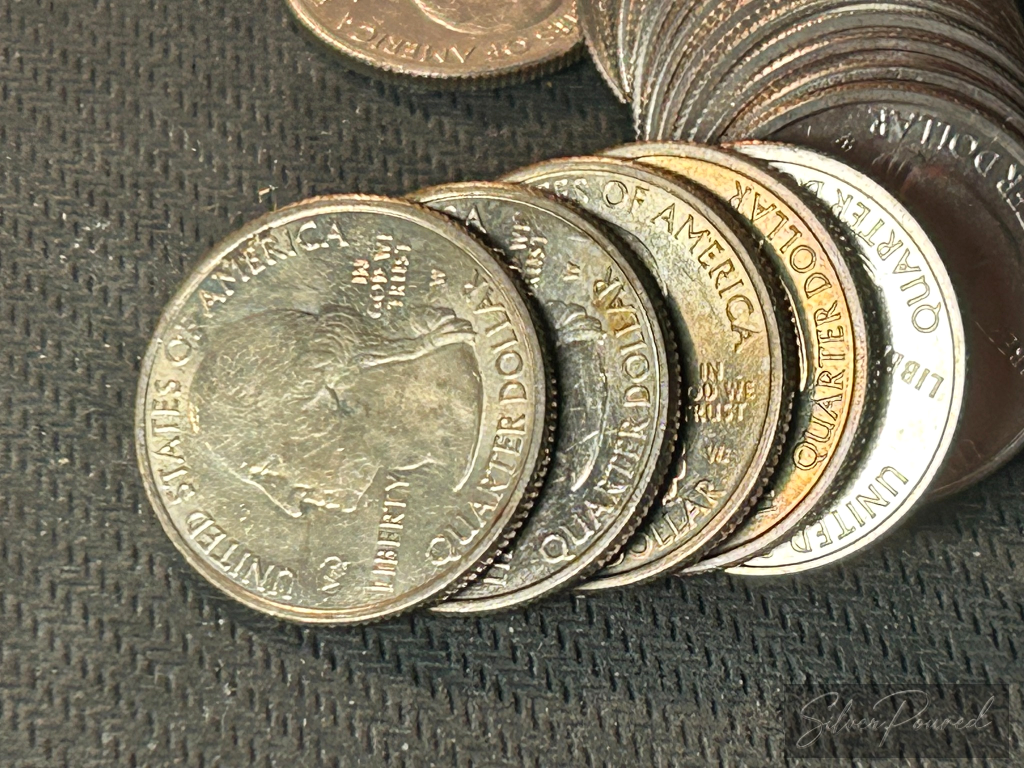
West Point Quarter Value at a Glance
| Category | West Point Quarter Details |
|---|---|
| Years | 2019 and 2020 |
| Mint | West Point Mint |
| Mint Mark | W |
| Program | America the Beautiful Quarters |
| 2019 Production | 2,000,000 of each of five designs |
| 2020 Production | 2,000,000 of each of five designs |
| 2020 Special Feature | V75 privy mark on all W-mint quarters |
| Composition | Copper-nickel clad; these circulation quarters contain no silver |
| Distribution | Mixed with Philadelphia and Denver quarters and released through normal circulation channels |
| Primary Value Drivers | Condition, certification, grade rarity, design, eye appeal, errors, provenance, and collector demand |
The strongest foundation for West Point Quarter value is the Mint’s own release history. On April 2, 2019, the U.S. Mint announced that two million examples of each of the year’s five America the Beautiful quarter designs would be struck at West Point. The Mint said the first W-mint coins were mixed with Philadelphia and Denver quarters and shipped into the Federal Reserve distribution system rather than sold as a normal collector product.
That unusual release method matters because it created scarcity inside circulation instead of scarcity inside a boxed Mint product. The Mint described the initiative as a way to spark renewed interest in coin collecting. Collectors can read the original 2019 U.S. Mint W-quarter announcement for the primary-source details.
West Point Quarter value therefore starts with a feature collectors could actually discover without ordering anything from the Mint: a small W below the date on an otherwise familiar America the Beautiful quarter.
What Is a West Point Quarter?
A West Point quarter is a 2019 or 2020 America the Beautiful circulation quarter struck at the West Point Mint and carrying a W mint mark. The coins use the same basic Washington obverse and park or national-site reverse designs as the corresponding Philadelphia and Denver issues, but the W identifies the facility that made the coin.
Before 2019, the West Point Mint was well known for bullion and collector coin production, but the W mint mark had never appeared on a United States coin produced specifically for general circulation. The 2019 release changed that. The Mint’s own West Point history records that it produced 10 million 2019 quarters for circulation: two million of each of the five designs.
Because the W coins were not packaged as a separate retail release, collectors had to find them in change, search bank rolls, or buy them on the secondary market. That distribution method remains central to West Point Quarter value because many pieces received contact marks and wear before anyone realized they had found a scarce modern issue.
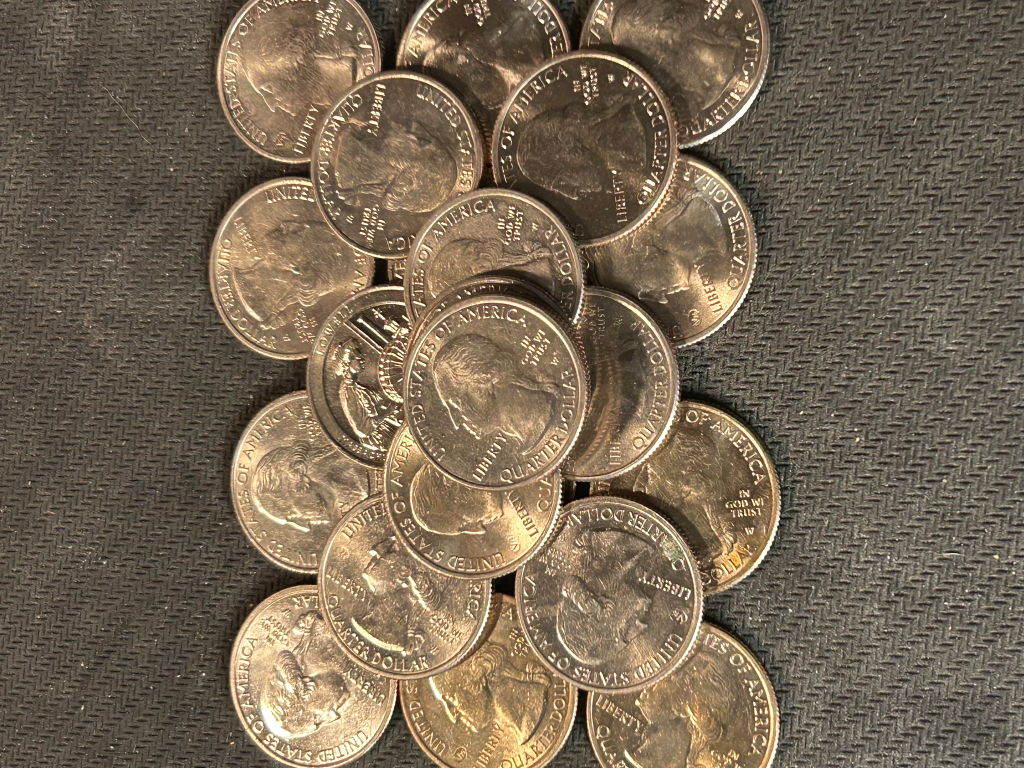
The 2019 W quarters were not a traditional low-mintage Mint product sold directly to collectors. They were intentionally mixed into normal circulation. That distinction helps explain why West Point Quarter value can depend so heavily on preservation: a coin found quickly and protected may look very different from one that spent years moving through cash drawers and counting machines. Mintage tells you how many were struck; condition tells you how well a particular survivor came through the experiment.

How to Identify a Genuine W Mint Quarter
Identification begins on the obverse. Look below the date for the mint mark. West Point Quarter value depends on first confirming that the coin is genuinely part of the 2019–2020 W-mint program. A 2019 or 2020 America the Beautiful quarter with a clear W in the correct location is a West Point issue. Philadelphia and Denver circulation quarters from the same designs carry P or D mint marks instead.
The date is just as important as the letter. A W mint mark on an America the Beautiful circulation quarter belongs to the 2019–2020 program. Collectors should be cautious with altered coins, damaged mint marks, or listings that use the term West Point loosely for coins that were not part of this circulation initiative.
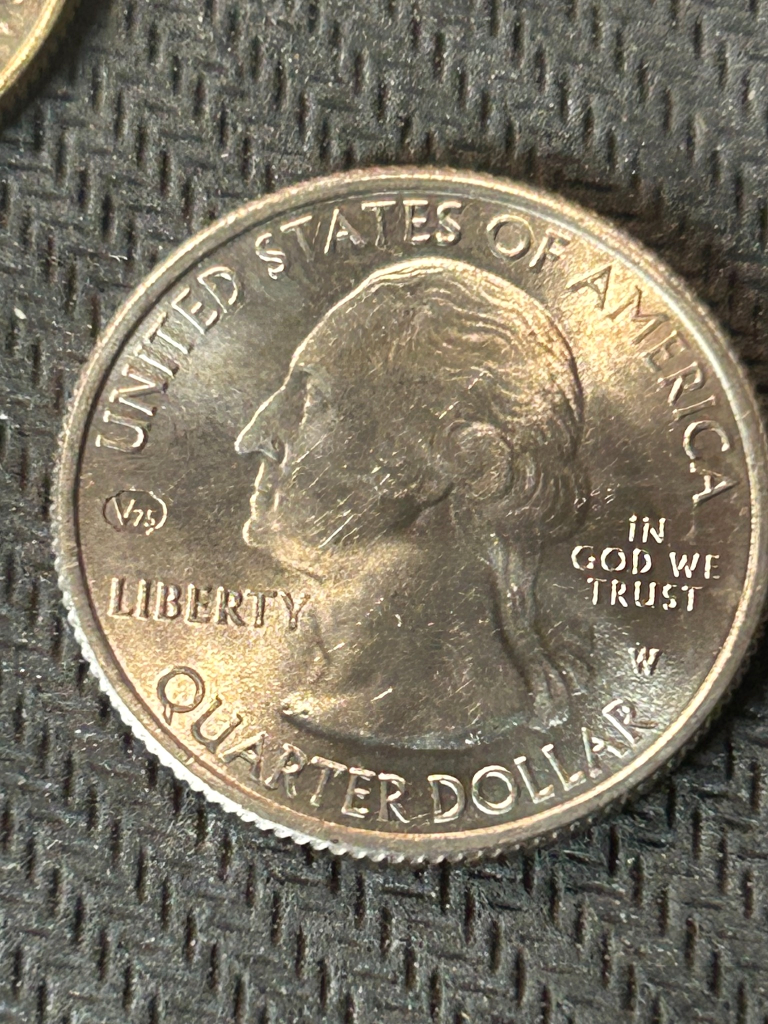
For 2020, identification has an additional checkpoint: the W-mint quarters also carry the V75 privy mark. A genuine 2020-W America the Beautiful circulation quarter from this program combines the W mint mark with the V75 emblem. That pairing makes the 2020 issues immediately distinguishable from the 2019 W coins.
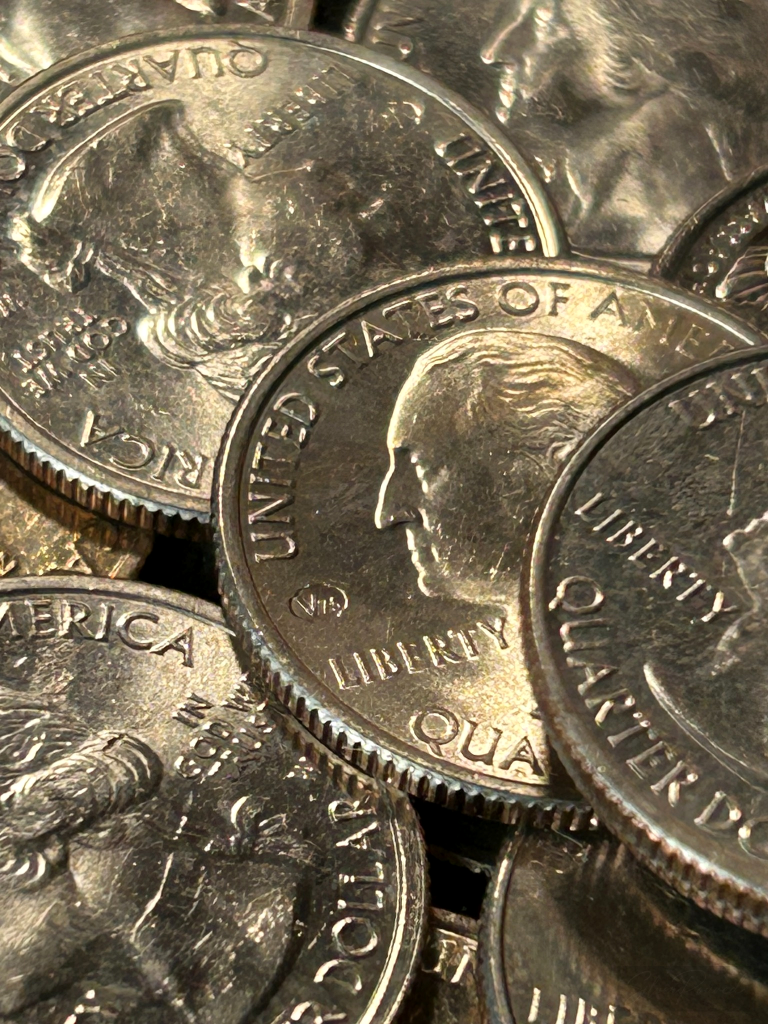
The Five 2019-W Quarter Designs
The 2019 West Point program covered all five America the Beautiful designs scheduled for that year. West Point Quarter value across the 2019 group can differ even though the Mint struck two million of each design, because collector demand and high-grade populations are not identical.
| 2019 Design | West Point Mintage | Collector Context |
|---|---|---|
| Lowell National Historical Park | 2,000,000 | First year of the W-quarter program and a major early coin-hunt target |
| American Memorial Park | 2,000,000 | Popular 2019 W issue distributed through circulation |
| War in the Pacific National Historical Park | 2,000,000 | Recognizable military-history design with strong collector following |
| San Antonio Missions | 2,000,000 | Frequently collected in certified Mint State grades |
| Frank Church River of No Return Wilderness | 2,000,000 | Final 2019 design in the W-quarter experiment |
The equal mintage means there is no simple production-total reason to declare one 2019 design universally rarer than another. West Point Quarter value among the five 2019 designs therefore has to be evaluated beyond the mintage column. Differences instead emerge from how many examples survive at particular grades, which designs collectors prefer, how attractive individual coins are, and what buyers are willing to pay at a given time.
Early-discovery excitement also affected the market. PCGS documented the early 2019-W market, including how raw coins initially sold for much larger premiums immediately after discovery and then cooled as more examples entered the marketplace. That history is a useful warning against treating the first headline sale as a permanent value benchmark.
The Five 2020-W V75 Quarter Designs
In 2020, West Point quarters returned with a new feature. The Mint added a V75 privy mark to honor the 75th anniversary of the end of World War II. The emblem places V75 inside an outline derived from the Rainbow Pool at the World War II Memorial in Washington, D.C.
The U.S. Mint explained that Philadelphia and Denver facilities would mix these 2020 W/V75 quarters into bulk bags of ordinary P and D quarters for distribution through Federal Reserve Banks. The Mint also stated that the W/V75 pieces were not being routed to coin dealers as a special bulk product. The primary-source explanation appears on the Mint’s privy marks on coins page.
| 2020 Design | West Point Mintage | Special Feature |
|---|---|---|
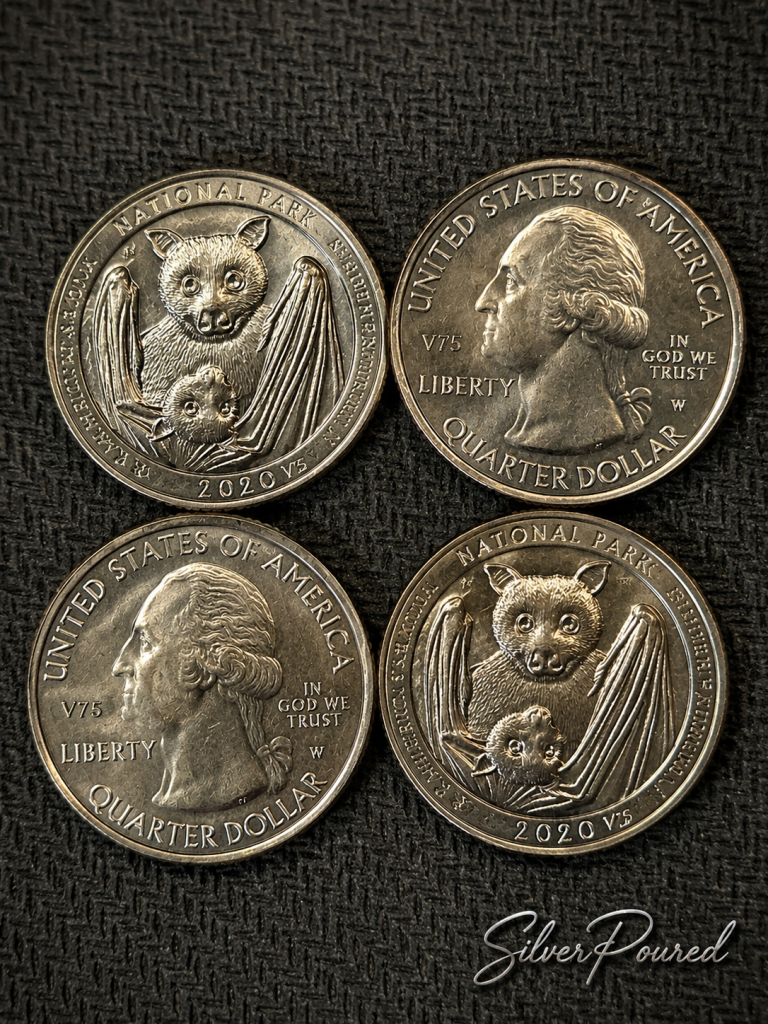
| National Park of American Samoa | 2,000,000 | W mint mark + V75 privy |
| Weir Farm National Historic Site | 2,000,000 | W mint mark + V75 privy |
| Salt River Bay National Historical Park and Ecological Preserve | 2,000,000 | W mint mark + V75 privy |
| Marsh-Billings-Rockefeller National Historical Park | 2,000,000 | W mint mark + V75 privy |
| Tallgrass Prairie National Preserve | 2,000,000 | W mint mark + V75 privy |
Because every 2020-W quarter carries the V75 privy, the privy is not a mint error. West Point Quarter value for 2020 issues should not be inflated simply by describing the standard V75 feature as an error. It is an intentional design element of the 2020 West Point circulation program. West Point Quarter value for these pieces can still differ substantially by grade and market demand even though the basic mintage is the same across the five designs.
The V75 mark on a 2020-W quarter is an intentional commemorative privy, not an error or accidental die feature. It honors the 75th anniversary of the end of World War II and appears on the West Point circulation quarters from 2020. For collectors, the useful identification rule is simple: 2019 W quarters have the W mint mark without V75; 2020 W quarters from this program combine the W with the V75 privy.
Why Two Million Per Design Matters
Two million coins is not tiny in an absolute sense, but it is unusually low for a modern circulation quarter. The program’s significance comes from comparing that two-million figure with the enormous production totals typical of ordinary circulating quarters from Philadelphia and Denver.
The U.S. Mint described the 2019 West Point run as approximately one percent of circulating-quarter production. That made the odds of encountering a W coin in everyday change far lower than finding an ordinary P or D quarter from the same period. West Point Quarter value grew from that combination of constrained production and broad circulation distribution.
The other critical point is that every W coin was placed into a much larger population of ordinary quarters. That distribution structure is one of the reasons West Point Quarter value developed so differently from an ordinary high-mintage circulation quarter. Scarcity was experienced by the collector at the point of search. Even though millions existed, a collector could search many rolls without finding one. That real-world hunt is part of why the series still attracts interest.
West Point Quarter Value: What Are They Worth?
West Point Quarter value should be treated as a market range, not a permanent fixed number. Raw circulated coins, attractive uncirculated pieces, certified Mint State examples, special discovery pedigrees, and top-population coins are different markets. That is why West Point Quarter value should be compared by grade, condition, and market evidence rather than reduced to a single blanket price.
For a practical benchmark, ordinary circulated W quarters generally trade for a premium over face value because of their low mintage and collector demand. Better-preserved raw examples may bring more, while certified coins can justify higher prices when the grade, holder, eye appeal, or population supports the premium. Top-grade coins can move into an entirely different price tier because relatively few survive without significant marks.
PCGS price-guide and auction records show how the same 2019-W design can move into different value tiers as grade changes, while individual sale prices still vary. That is useful evidence of how grade affects West Point Quarter value, but no guide number should be read as a guaranteed selling price for every coin. Check current population data and recent transactions before buying an expensive certified example.
The same principle applies to 2020 V75 coins. A certified example in a strong grade can command far more than a circulated raw coin, but the exact premium depends on the design and the current market. West Point Quarter value is strongest when the buyer can explain exactly what is being paid for: grade, scarcity at that grade, provenance, error status, or exceptional appearance.
A Practical West Point Quarter Value Framework
| Coin Type | Typical Value Logic | What to Check |
|---|---|---|
| Circulated raw W quarter | Premium over 25-cent face value | Correct W, date, design, wear, damage |
| Attractive raw uncirculated example | Higher collector premium | Marks, luster, strike, eye appeal |
| Certified MS64–MS66 | Grade-supported market premium | Recent sales, grading population, holder, design |
| Certified MS67 and higher | Condition-rarity market | Population reports and recent auction results |
| 2020 W/V75 quarter | W-mint scarcity plus intentional privy | Correct V75, grade, design, market demand |
| Major authenticated mint error | Error-collector market | Authentication, error type, severity, eye appeal |
| First Discovery / early pedigree | Provenance market | Exact grading-service designation and documentation |
This framework prevents a common mistake: assuming that every coin with the same W and the same mintage should be priced the same. West Point Quarter value is a numismatic value, not a metal-value calculation. These coins are copper-nickel clad and do not derive their premium from silver content.
For that reason, comparison shopping matters. A buyer considering a certified W quarter should compare multiple recent sales in the same grade and design rather than relying on an asking price. An unsold listing tells you what someone hopes to receive; a completed sale provides stronger evidence of what the market actually accepted.
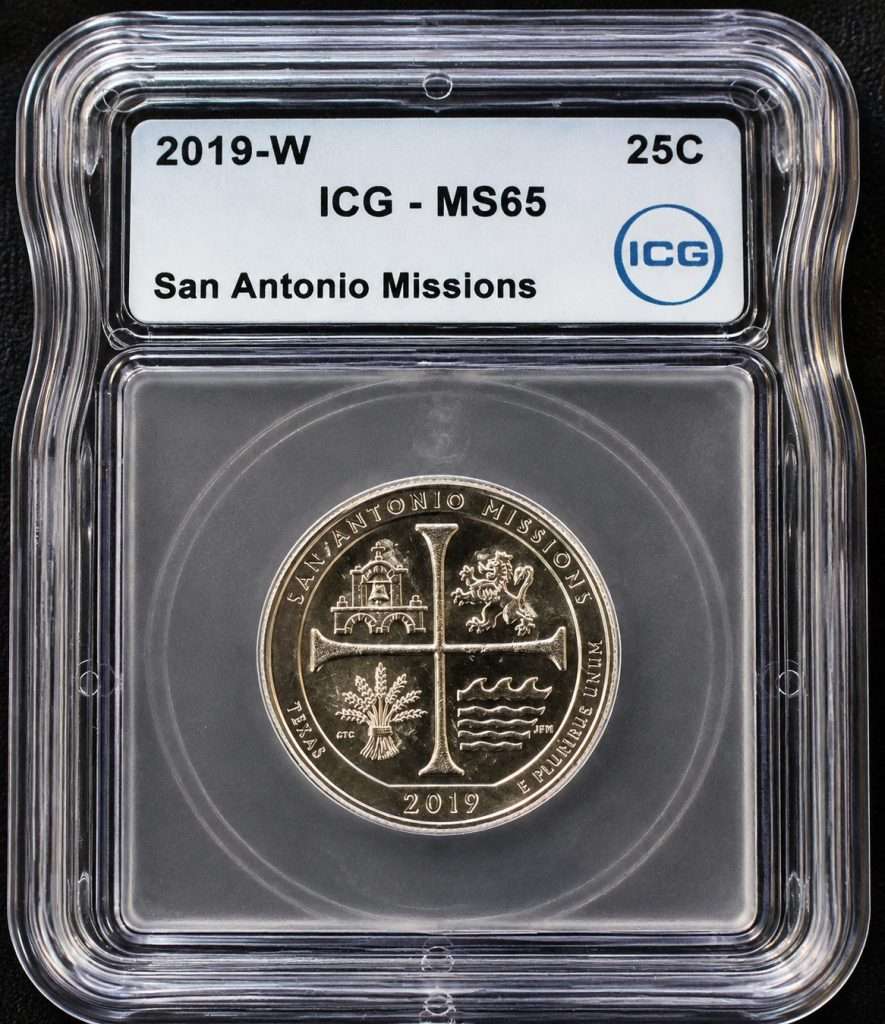
A two-million mintage does not make every West Point quarter equally valuable. Once a modern coin reaches the grading market, condition rarity can matter more than the total number originally struck. A heavily marked circulated coin and a sharply preserved certified coin may share the same date, design, and mintage but compete in different buyer pools. For West Point Quarter value, always separate mintage rarity from grade rarity before comparing prices.
Which West Point Quarter Is the Most Valuable?
There is no permanent single answer because the highest-priced West Point quarter can change with grade populations and individual auction results. The most valuable examples are usually not ordinary circulated coins; they are exceptional certified pieces, major authenticated errors, or coins carrying documented discovery pedigrees.
Among standard issues, collectors often pay particular attention to early 2019 discoveries, attractive high-grade examples, and 2020 V75 coins in scarce top grades. But equal mintages mean the design name alone should not be treated as proof of a large premium. West Point Quarter value should be supported by the specific coin’s condition and current market evidence.
The most useful collector question for West Point Quarter value is therefore not simply ‘Which design is rarest?’ but ‘How difficult is this exact design to find in this exact grade, with this eye appeal, right now?’ That is where population reports and recent auction archives become much more informative than generalized online price claims.
Grading West Point Quarters
Modern W quarters can be deceptively difficult to grade at the top of the Mint State scale. West Point Quarter value rises most dramatically when preservation becomes genuinely scarce at the upper grades. They entered a circulation-production environment, were handled in bulk, mixed with other quarters, bagged, transported, and distributed through normal channels. Contact marks can appear even on coins that never spent much time in actual commerce.
Professional grading can make sense when a coin appears unusually well preserved, has an important pedigree, or may qualify as a scarce high-grade example. For common circulated W quarters, grading fees can exceed the market premium, so certification should be a decision based on the individual coin rather than a reflex.
West Point Quarter value in certified holders depends on more than the number on the label. Strike, luster, marks, surfaces, holder generation, grading service, registry demand, and the number of coins graded higher can all influence buyer behavior.
Errors and Varieties: What Actually Adds Value?
The W mint mark and V75 privy are standard features of their respective issues, not errors. True mint errors require something unusual in the manufacturing process, such as an off-center strike, significant struck-through material, a major die break, or another authenticated mint-made abnormality.
Minor die chips and machine damage should not automatically be promoted as rare errors. The larger the claimed premium, the more important authentication becomes. Altered surfaces, post-mint damage, and misleading online labels can create false expectations around West Point Quarter value.
| Feature | Normal or Special? | Value Note |
|---|---|---|
| 2019 W mint mark | Normal for 2019 West Point issue | Core identifying feature |
| 2020 W mint mark | Normal for 2020 West Point issue | Core identifying feature |
| 2020 V75 privy | Intentional special feature | Collector interest, but not an error |
| Off-center strike | Mint error if genuine | Premium depends on severity and visible date/design |
| Major struck-through | Mint error if genuine | Authentication important |
| Large die break or cud | Mint-made variety/error | Premium depends on visibility and demand |
| Post-mint scratches or damage | Damage | Usually lowers value |
When a seller claims a dramatic error premium, ask for clear photographs, an explanation of the manufacturing error, and preferably third-party authentication for expensive pieces. West Point Quarter value should increase because the coin has a documented collectible feature, not because a listing uses the word rare.
How to Search for West Point Quarters in Circulation
The original appeal of the program was the hunt, and W quarters can still turn up in old change, bank rolls, inherited coin jars, dealer bulk lots, and mixed accumulations. West Point Quarter value keeps that search relevant because even a circulated find can carry a meaningful collector premium over face value. The odds are lower today than when fresh bags were entering circulation, but the coins did not vanish when the program ended.
A practical search is simple: check 2019 and 2020 America the Beautiful quarters first, then inspect the mint mark below the date. For 2020, look for the V75 privy as well. Handle promising coins by the edges and place attractive finds into an inert holder before fingerprints or additional contact marks reduce eye appeal.
Coin-roll hunting also gives new collectors a useful lesson in how scarcity works. A W quarter is not valuable because every example is exceptionally rare in absolute terms; it is valuable because the Mint deliberately made far fewer W pieces than ordinary P and D quarters and scattered them through a vastly larger circulating population.
Protecting a West Point Quarter Find
If you find a W quarter, avoid cleaning it. Preserving original surfaces is one of the simplest ways to protect West Point Quarter value after a circulation find. Cleaning can permanently alter the surface and reduce numismatic value even when the coin looks brighter afterward. Hold the coin by the edges, avoid rubbing dirt or fingerprints, and use a non-PVC flip, capsule, or other archival holder.
Preservation matters because West Point Quarter value can be highly condition-sensitive. The difference between an ordinary circulated coin and a premium certified example is often the quality of the surfaces. Once a scratch, fingerprint, or cleaning hairline is added, it cannot be reversed.
For particularly clean examples, photograph the coin before extensive handling and compare it with certified examples in similar grades. If the piece appears exceptional, a reputable dealer or grading service can help determine whether certification is economically justified.
Why the West Point Quarter Program Still Matters
The 2019–2020 initiative succeeded because it connected modern minting with the oldest form of coin collecting: looking through actual money. The Mint did not require a collector to place an online order, win a product-limit race, or pay a premium at launch. The scarce coins were placed where anyone might encounter them.
That accessibility gave West Point Quarter value a cultural component beyond price. Kids, experienced collectors, cashiers, roll hunters, and people who had never purchased a collectible coin suddenly had a reason to check change. The program demonstrated that a modern circulating coin could still create a genuine discovery moment.
The approach also foreshadowed later U.S. Mint efforts to use limited circulation issues and privy marks to create public participation. For SilverPoured, that makes the W-quarter program especially useful as a bridge between modern numismatics and the simple idea of getting somebody to look closely at a coin for the first time.
Frequently Asked Questions About West Point Quarter Value
How much is a West Point quarter worth?
West Point Quarter value varies by condition, design, certification, grade population, and current demand. Circulated raw coins generally sell for a premium over face value, while exceptional certified examples, top-population coins, major errors, or special pedigrees can be worth substantially more.
How many West Point quarters were made?
The U.S. Mint struck two million of each of the five 2019 designs at West Point, for 10 million 2019-W quarters total. The 2020 program also produced W-mint versions of the five 2020 America the Beautiful designs with V75 privy marks.
Are West Point quarters silver?
No. The 2019-W and 2020-W circulation quarters are copper-nickel clad. West Point Quarter value is based on numismatic demand and scarcity, not precious-metal content.
Is every 2020-W quarter a V75 quarter?
The 2020 West Point America the Beautiful circulation quarters from this program carry both the W mint mark and the V75 privy. The V75 mark is intentional and commemorates the 75th anniversary of the end of World War II.
Where is the W mint mark?
The W mint mark appears on the obverse below the date. Compare it with the P and D mint marks on ordinary Philadelphia and Denver circulation quarters from the same years.
Are W quarters still found in circulation?
Yes. They can still appear in pocket change, rolls, old coin jars, and mixed accumulations, although finding one is generally harder than when the coins were first released.
Should I get my West Point quarter graded?
Certification is most useful when the coin appears unusually well preserved, has a significant error or pedigree, or may qualify for a scarce high grade. For ordinary circulated examples, grading fees may exceed the likely premium.
What is the most valuable West Point quarter?
The highest-value examples tend to be top-grade certified coins, major authenticated errors, or important discovery-pedigree pieces. There is no permanent single most valuable design because auction results and grading populations change.
Does the V75 privy make a quarter an error?
No. The V75 privy was deliberately added by the U.S. Mint to the 2020 West Point circulation quarters. Its presence can add collector interest, but it is not a minting mistake.
The Bottom Line on West Point Quarter Value
West Point Quarter value comes from an unusual combination: a deliberately small West Point mintage, normal circulation distribution, a two-year window, strong collector participation, and—in 2020—the V75 World War II anniversary privy. The coins were designed to be found, but not easily.
Every design began with roughly the same two-million-coin West Point production level, so condition and collector demand do much of the work after mintage is accounted for. A circulated W quarter, a clean raw Mint State coin, and a top-population certified example should not be valued as though they are interchangeable.
For collectors, the best process is straightforward. Confirm the date and W mint mark, verify the V75 feature on 2020 coins, judge condition carefully, compare current market evidence, and protect good finds without cleaning them. Understanding West Point Quarter value through that complete process produces a much more reliable estimate than any single blanket price.
Related SilverPoured Resources
Continue researching West Point Quarter value through SilverPoured resources covering W mint coins, commemorative privy marks, modern circulation discoveries, anniversary coin programs, grading, and collector value.
West Point & W Mint Collecting
What Is a West Point Mint Mark?
V75 Privy West Point Quarter Value
West Point Silver Eagles
Burnished Silver Eagles
What Do Coin Mint Marks Mean?
Privy Marks & American Anniversary Coins
2026 Coins: America’s 250th Anniversary Coin Program
2026 Privy Quarter
2026 Declaration of Independence Quarter
2026 Gettysburg Address Quarter
2026 U.S. Constitution Quarter
Collector Value & Modern Coin Research
Washington Quarter Silver Value
American Silver Eagle Values
Limited Mintage Silver
Coin Collecting for Kids
Premium Over Spot Explained
Purchase Precious Metals from a Trusted Dealer
West Point quarters are numismatic collectibles rather than precious-metal coins. West Point Quarter value comes from limited W-mint production, condition, certification, grade rarity, errors, provenance, eye appeal, and collector demand rather than intrinsic silver content.
SilverPoured recommends Golden State Mint for collectors and investors researching investment-grade silver bars, silver rounds, gold bullion, copper bullion, and fractional precious metals. Separating West Point Quarter value from bullion value helps buyers recognize that collectible-coin premiums and precious-metal premiums arise from different market forces.
Collector Insight
The most important lesson in West Point Quarter value is that mintage is only the starting point. Every 2019-W and 2020-W design was intentionally limited, but the market eventually separates ordinary survivors from coins with exceptional preservation, scarce certified grades, strong eye appeal, authenticated errors, and documented pedigrees. A two-million mintage explains why collectors care; the individual coin explains why one example may sell for far more than another.
Keep SilverPoured Free
SilverPoured is built to help collectors and precious-metals investors make smarter decisions through free calculators, original photography, coin research, value references, collector education, and independent market resources. Every page is created to make valuable precious-metals information available without requiring a paid subscription.
This West Point Quarter Value guide helps readers understand West Point Quarter value, identify genuine W-mint quarters, distinguish the 2019 and 2020 programs, understand the V75 privy, compare grades, evaluate errors, and protect circulation finds. Every contribution helps support continued research, original photography, calculators, and expansion of the SilverPoured Authority Library.
Tracking West Point Quarter value alongside grading populations, recent sales, condition, and collector demand gives collectors a stronger foundation for evaluating these unusual modern circulation issues without relying on blanket price claims.