
Morgan Dollar value begins with a combination of precious-metal content and collector demand. Standard Morgan Dollars contain 90% silver, weigh 26.73 grams, and contain approximately 0.7734 troy ounces of pure silver. That silver establishes an intrinsic foundation, while date, mint mark, rarity, condition, originality, strike quality, toning, certification, varieties, and market demand can push individual coins far beyond melt value.
First struck in 1878, the Morgan Dollar became one of the defining silver coins of the United States. Regular production continued through 1904 before the design returned for one final historic year in 1921. Today, the series supports an enormous collector market ranging from affordable circulated coins to Carson City issues, major key dates, Proofs, VAM varieties, Prooflike and Deep Mirror Prooflike coins, vividly toned examples, and elite certified condition rarities.
This guide explains how to evaluate Morgan Dollar value from both sides of the market. It covers silver content, key dates, mint marks, surviving populations, Treasury hoards, grading, toning, VAM varieties, authentication, Proof coins, auction records, inherited collections, preservation, premiums over spot, and the factors that separate ordinary examples from exceptional collector coins.
Why Morgan Dollars Remain So Popular
Morgan Dollars occupy a distinctive position between bullion and numismatics. Every standard coin contains a substantial amount of silver, but collectors rarely view the series as interchangeable precious metal. Individual dates, mint marks, varieties, grades, and surface characteristics can create dramatically different markets even though the underlying silver content remains the same.
History contributes heavily to that appeal. Morgan Dollars are connected to western silver mining, the expansion of the United States Mint, Treasury storage, Carson City, nineteenth-century commerce, government hoard releases, and more than a century of organized coin collecting. Those stories give the series an identity that modern bullion cannot reproduce.
The series also offers collecting paths at nearly every level. Beginning collectors can study common circulated pieces, while advanced numismatists can pursue major rarities, recognized VAMs, exceptional toning, Prooflike surfaces, Deep Mirror Prooflike designations, historic holders, and registry-quality certified coins.
This breadth helps explain why Morgan Dollar value remains one of the most extensively researched subjects in United States numismatics. The same series can attract silver buyers, history enthusiasts, traditional date-and-mint collectors, variety specialists, grading experts, and advanced registry competitors.
Morgan Dollar Silver Content
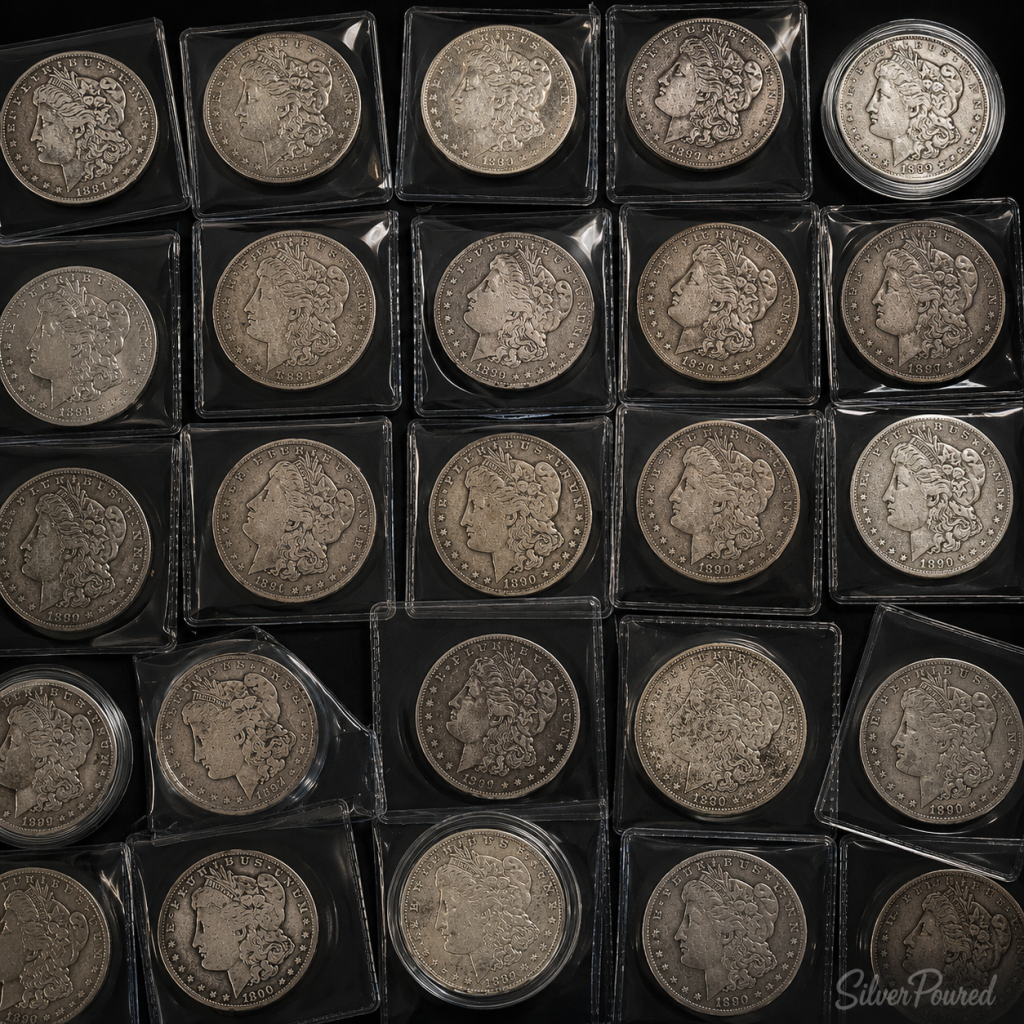
A standard Morgan Dollar was struck from an alloy containing 90% silver and 10% copper. The coin weighs 26.73 grams and contains approximately 0.7734 troy ounces of pure silver. That fixed precious-metal content establishes an intrinsic value that changes with the market price of silver.
The basic melt calculation is straightforward: approximately 0.7734 troy ounces multiplied by the current silver price provides an estimate of the coin’s underlying silver value. For common circulated examples, that metal value can represent an important portion of the market price.
Collector coins require another layer of analysis. Morgan Dollar value can rise substantially beyond melt when buyers compete for a scarce date, desirable mint mark, exceptional grade, attractive original toning, recognized variety, Prooflike surface, historic provenance, or another characteristic that makes the exact coin difficult to replace.
This distinction explains why two Morgan Dollars containing identical amounts of silver can sell for dramatically different prices. One may be an ordinary circulated example available throughout the market, while another may represent a rarity or condition that advanced collectors pursue for years.
| Specification | Standard Morgan Dollar |
|---|---|
| Original Series | 1878–1904 and 1921 |
| Composition | 90% silver, 10% copper |
| Total Weight | 26.73 grams |
| Approximate Silver Content | 0.7734 troy ounces |
| Face Value | One U.S. dollar |
Morgan Dollar Melt Value vs. Collector Value
Melt value measures the precious metal contained in a Morgan Dollar. Collector value measures what the market will pay for the individual coin beyond that silver foundation. Separating those two components is essential because numismatic premiums can range from modest to extraordinary.
A common circulated Morgan may remain relatively close to its silver foundation plus a physical-coin premium. Morgan Dollar value for a scarce or exceptional example can behave very differently because the buyer is competing for a specific collectible rather than simply 0.7734 troy ounces of silver.
Date and mint mark provide an initial identity, but they are only the beginning. Condition, surviving population, originality, strike quality, certification, eye appeal, varieties, market availability, and collector demand determine how strongly an individual coin separates from ordinary bullion value.
| Value Factor | What It Measures | Potential Effect |
|---|---|---|
| Silver Content | Intrinsic precious-metal content | Establishes the melt-value foundation |
| Date and Mint Mark | Exact issue | Identifies common, better, and key dates |
| Surviving Population | Estimated number remaining | Can reveal scarcity not obvious from mintage |
| Condition | Preservation and wear | Can create major differences in collector price |
| Originality and Eye Appeal | Surface quality and appearance | Can strengthen or weaken collector demand |
| Variety and Designation | VAM, PL, DMPL, Proof, and other characteristics | Can create specialized collector premiums |
| Market Demand | Competition among buyers | Determines how scarcity translates into price |
Morgan Dollar Key Dates
Key dates occupy the upper levels of the Morgan Dollar market because collectors building traditional sets need specific issues that can be difficult to acquire. Silver content remains unchanged, but Morgan Dollar value can increase dramatically when surviving supply is small relative to collector demand.
Important issues include the 1889-CC, 1893-S, 1892-S, 1893-CC, and other dates whose scarcity or condition rarity has made them long-standing collector targets. The 1895 Proof belongs to a separate Proof market and is one of the most famous coins associated with the series.
The 1893-S is especially important because its original production of 100,000 coins makes it the lowest-mintage regular circulation issue in the classic series. Surviving examples are pursued across grades, and problem-free coins can carry substantial premiums because every traditional complete set requires one.
Original mintage should never be treated as a complete rarity ranking. Treasury storage, circulation, melting, losses, collector saving, and historical hoard discoveries all changed the number and condition of coins available today. Morgan Dollar value therefore depends on surviving supply and present demand rather than production totals alone.
Original mintage tells collectors how many Morgan Dollars were struck, not how many remain available today. Treasury storage preserved enormous quantities of some issues, while circulation, melting, loss, and sustained collector demand reduced others. Morgan Dollar value becomes much easier to understand when production totals are compared with surviving populations, condition, market availability, and the number of collectors competing for each issue.

Toned Morgan Dollars
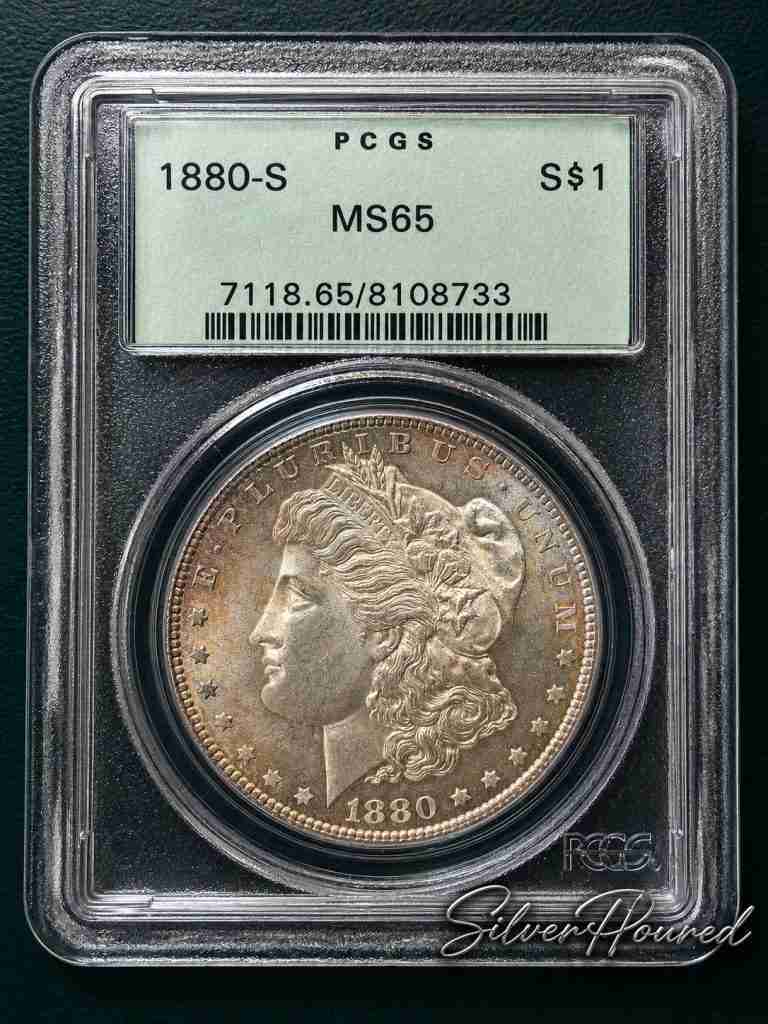
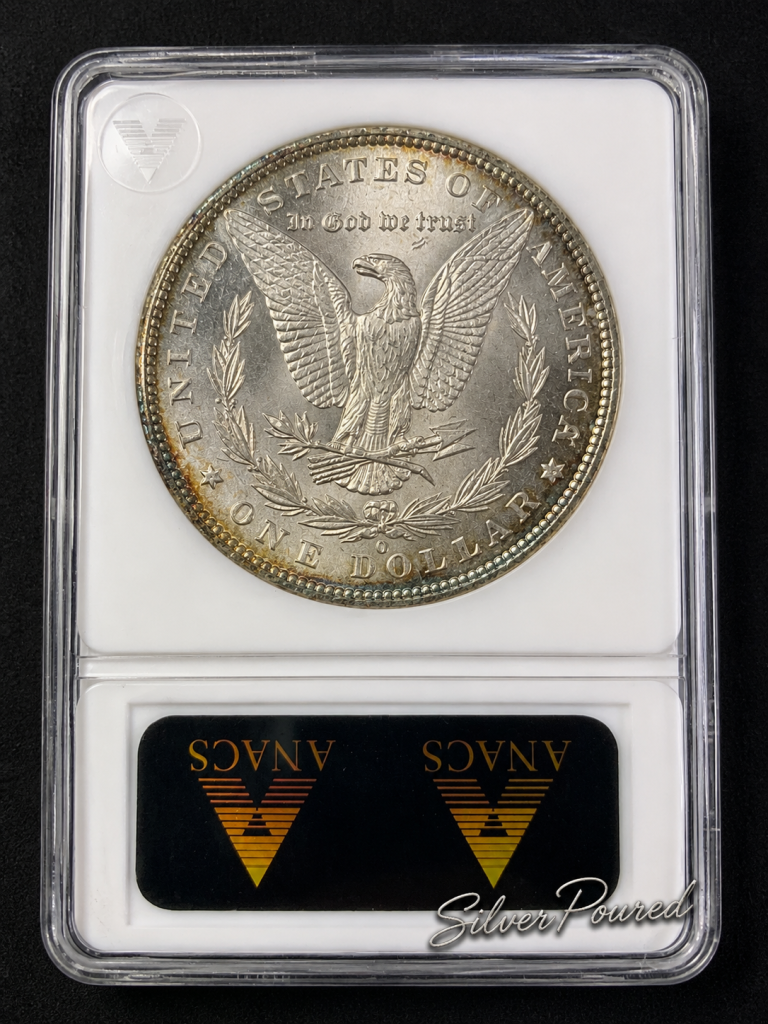
Natural toning has developed into one of the most specialized areas of Morgan Dollar collecting. Silver surfaces can change gradually as they interact with sulfur compounds, storage materials, humidity, air, and other environmental influences. Depending on that history, a Morgan Dollar may develop gold, champagne, blue, violet, magenta, gray, or multicolor toning across part or all of its surface.
Collectors generally distinguish attractive natural toning from environmental damage or deliberate alteration. Album toning, crescent patterns, textile toning, peripheral color, and vividly multicolored examples can attract substantial demand when the surfaces remain original and strong mint luster is visible beneath the color.
Eye appeal remains subjective. Morgan Dollar value can increase when multiple collectors consider the toning attractive, original, and difficult to replace, while dark, uneven, damaged, or questionable color may reduce demand. Color alone therefore does not guarantee a premium.
Artificial toning creates an additional concern because silver surfaces can be intentionally altered. Experienced collectors study color progression, remaining luster, surface texture, and the overall appearance of a coin rather than assuming that every vividly colored Morgan developed naturally.
Morgan Dollar Mint Marks
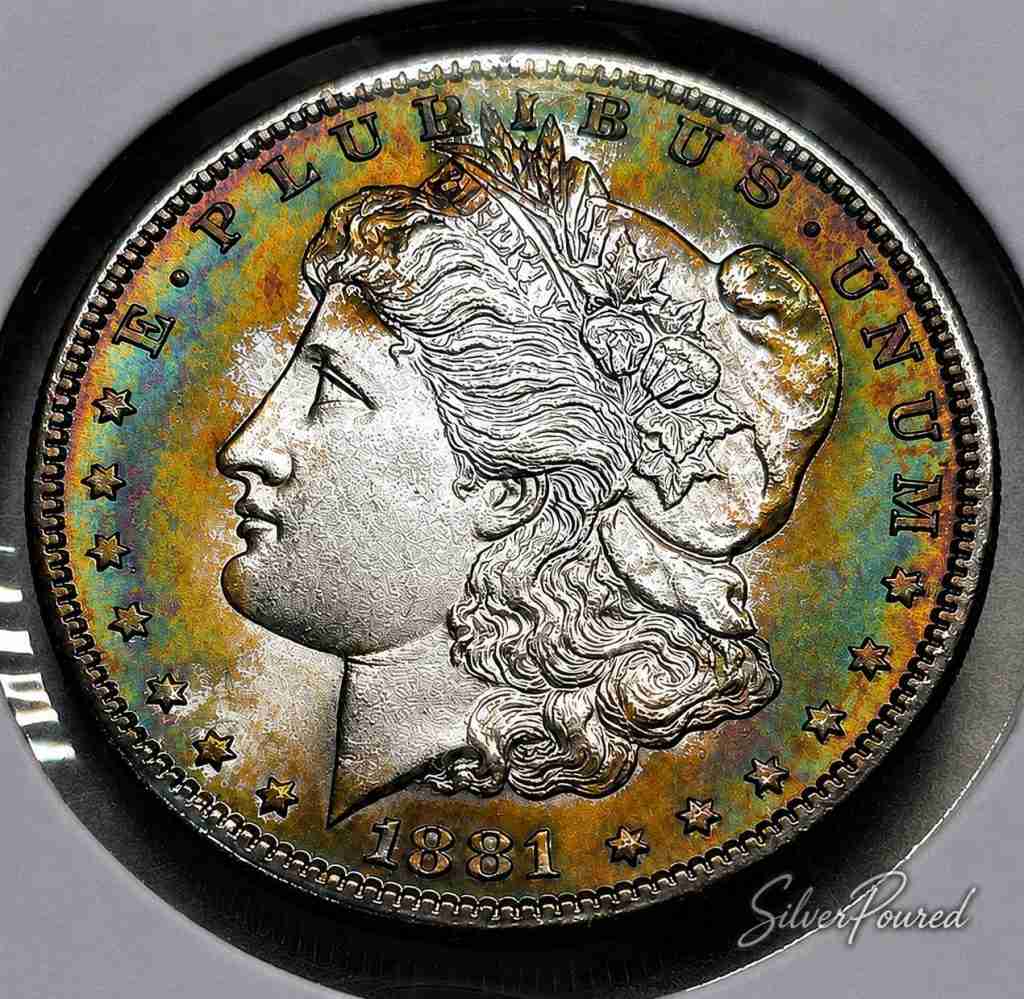
Mint marks identify where a Morgan Dollar was struck and are among the first characteristics collectors examine. Classic Morgan Dollars were produced at Philadelphia, Carson City, New Orleans, and San Francisco, with Denver joining the series for the 1921 issue.
Philadelphia coins generally carry no mint mark. Carson City issues display “CC,” New Orleans coins display “O,” San Francisco coins display “S,” and 1921 Denver coins display “D.” On classic Morgan Dollars, the mint mark appears on the reverse beneath the wreath.
The mint can have a major effect on Morgan Dollar value because production, survival, strike characteristics, and collector demand differed substantially among facilities and years. Carson City issues are particularly famous, but a mint mark should never be interpreted without the date and condition of the individual coin.
Two Morgan Dollars from different mints can contain identical amounts of silver yet occupy completely different collector markets. Accurate identification therefore begins with the date-and-mint combination before moving to grade, originality, variety, and other value factors.
Morgan Dollar Mintage vs. Surviving Population
Original mintage records how many coins the United States Mint produced. It does not reveal how many survive today, how many remain collectible, or how many are currently available to buyers. Those distinctions are particularly important when researching Morgan Dollar value.
Millions of Morgan Dollars remained in government vaults instead of circulating immediately. That unusual storage history allowed large numbers of certain dates to survive with little or no circulation wear. Other issues experienced much greater attrition through commerce, melting, loss, damage, and long-term collector absorption.
Certified population reports provide another measurement by showing how many submitted coins have been graded at particular levels. These reports can help identify condition rarity, but they do not represent every surviving coin and can change as additional examples are submitted.
Current market availability provides still another perspective. A coin may have a respectable estimated surviving population but remain difficult to purchase because collectors hold most examples in long-term collections. Morgan Dollar value is therefore influenced by the supply actually competing for buyers at a particular time.
Experienced collectors compare original mintage, estimated survival, certified populations, condition, and market availability rather than relying on one measurement. Together, these factors provide a much stronger picture of practical scarcity.
Morgan Dollar Key-Date Mintage Graph
The following Morgan Dollar mintage graph compares selected low-production and key-date issues by original United States Mint production totals. These figures measure how many coins were struck, not how many survive today. Collector demand, condition, certification, and market availability still determine how strongly those production totals influence Morgan Dollar value.
The graph immediately demonstrates why the 1893-S receives so much attention: its reported mintage of 100,000 makes it the lowest-production regular circulation issue shown. The 1895 Proof, with 880 pieces reported, belongs to the separate Proof market rather than the regular business-strike comparison.
Carson City dates including the 1879-CC, 1880-CC, 1881-CC, 1889-CC, and 1893-CC combine relatively low production with the historic appeal of the western mint. Their actual premiums, however, still depend on surviving availability, grade, originality, and demand rather than the “CC” mint mark alone.
Treasury Hoards and Morgan Dollar Survival
Treasury storage is one of the defining events in Morgan Dollar history. Millions of silver dollars remained sealed in canvas bags inside government vaults for decades instead of entering normal circulation. That unusual history preserved large numbers of coins that otherwise might have experienced substantial wear, damage, or loss.
When stored coins eventually returned to the market, collectors learned that original mintage did not always predict scarcity. Some dates once considered difficult suddenly appeared in quantity, while other issues remained elusive despite extensive searches through government holdings.
The result is one of the most important lessons in Morgan Dollar value research: surviving availability can matter more than the number originally struck. A large mintage can produce a scarce condition rarity, while a smaller mintage can remain surprisingly obtainable when substantial quantities survived in Treasury storage.
Treasury releases also helped create the unusually deep Mint State market that exists today. Because many stored coins never circulated, collectors can still encounter nineteenth-century Morgan Dollars with original mint luster and little or no wear more than a century after production.
GSA Carson City Morgan Dollars
The General Services Administration sales of Carson City Morgan Dollars during the 1970s became one of the most famous government coin distributions in American collecting history. Large numbers of previously stored Carson City dollars were sold directly to the public in distinctive government holders.
Original GSA packaging has become collectible in its own right because it documents the government distribution and provides provenance tied directly to the Treasury-hoard story. Collectors may therefore evaluate not only the coin but also whether the original holder, box, and accompanying materials remain intact.
GSA releases changed perceptions of Carson City scarcity while simultaneously expanding collector interest in the mint. Morgan Dollar value for these pieces can reflect date, grade, surfaces, certification, original government packaging, and the enduring popularity of Carson City history.
Treasury hoards permanently changed the Morgan Dollar market because they exposed the difference between original production and surviving availability. Some issues emerged from government storage in enormous quantities, while others remained genuinely scarce. Morgan Dollar value therefore depends not simply on how many coins were struck, but on how many survived, their condition, how many remain available, and how strongly collectors compete for them today.
Building a Morgan Dollar Collection
Few classic United States coin series offer as many collecting paths as the Morgan Dollar. Some collectors assemble complete date-and-mint sets, while others specialize in Carson City issues, toned coins, Proofs, VAM varieties, Prooflike surfaces, Deep Mirror Prooflike examples, historic holders, or premium certified coins.
Beginning collectors often start with attractive circulated examples or common Mint State coins. These provide an opportunity to study Liberty’s portrait, the eagle reverse, mint marks, luster, strike quality, toning, contact marks, and other characteristics without immediately pursuing the most expensive dates.
A traditional date-and-mint collection becomes considerably more challenging as key issues enter the set. Carson City coins introduce another popular specialty, while collectors interested in condition can pursue progressively finer certified examples rather than attempting complete date coverage.
Other collectors build collections around appearance. Naturally toned coins, exceptionally lustrous examples, Prooflike surfaces, Deep Mirror Prooflike pieces, and coins with unusually strong eye appeal can create a collection in which visual quality matters more than completing every date.
Whatever the strategy, a clearly defined collecting goal helps control premiums. Understanding which dates, grades, designations, and specialties belong in the collection makes it easier to compare appropriate coins rather than allowing rarity claims or attractive marketing to determine every purchase.
Counterfeit Morgan Dollars and Authentication
The popularity and value of classic United States silver dollars make authentication especially important. Counterfeits range from crude replicas with obvious errors to sophisticated pieces designed to imitate genuine coins closely enough to deceive inexperienced buyers.
Basic evaluation can include weight, diameter, edge reeding, lettering, mint-mark style, design details, and overall workmanship. Genuine coins should correspond with the specifications and characteristics expected for the exact date and mint being examined.
Surfaces provide additional evidence. Experienced collectors study mint luster, metal flow, texture, strike characteristics, and other details created during genuine production. These characteristics can be difficult to reproduce convincingly, particularly when the counterfeit is compared directly with authenticated examples.
Online purchases require particular care because the buyer cannot physically examine the coin before purchase. Clear photographs, accurate descriptions, seller history, return policies, certification information, and documented provenance can all reduce risk.
Professional authentication becomes increasingly valuable as the potential purchase price rises. Major key dates, Carson City issues, important varieties, and expensive high-grade examples may justify third-party certification because a mistake in authenticity can be far more costly than the grading fee.
Factors That Influence Morgan Dollar Value
No single characteristic determines what a Morgan Dollar is worth. The market evaluates the complete coin, including its identity, scarcity, preservation, surfaces, strike, certification, special characteristics, historical importance, and current collector demand.
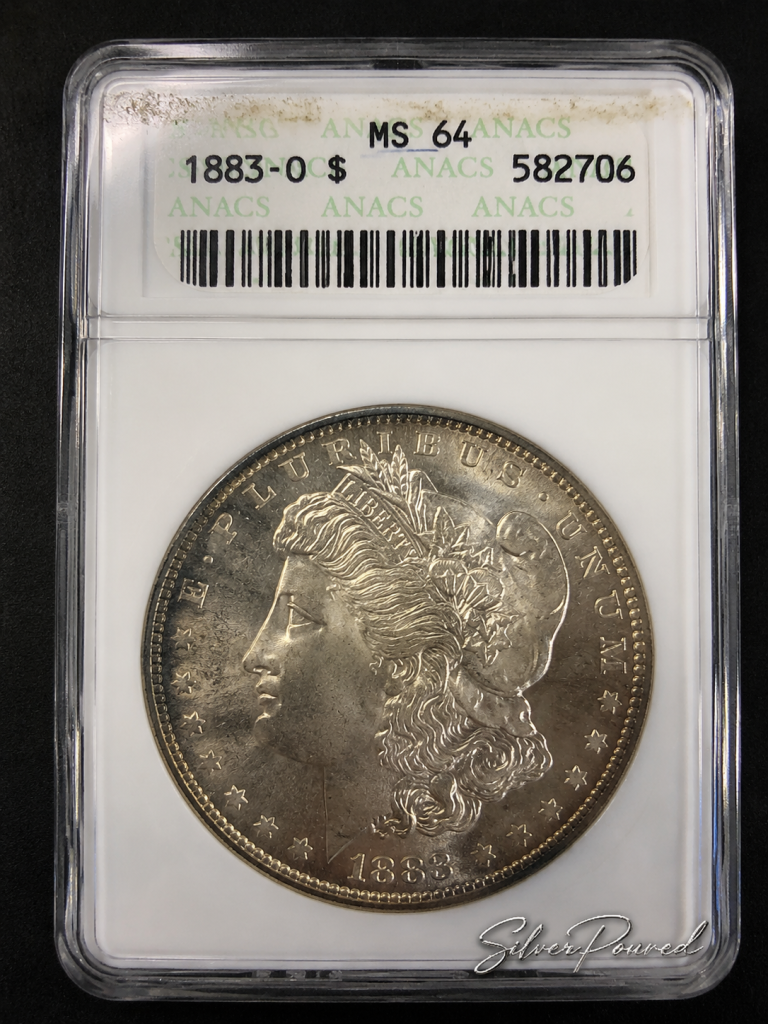
Condition is often one of the largest price drivers. A heavily circulated common coin occupies a very different market from a sharply struck Mint State example with strong luster and minimal distracting marks. On certain issues, even a one-point grading difference can correspond with a substantial change in scarcity.
Rarity must also be evaluated carefully. Original production provides useful information, but survival estimates, certified populations, Treasury-hoard history, and current availability can reveal forms of scarcity that mintage alone cannot explain.
Originality and eye appeal can further separate otherwise similar coins. Natural toning, strong luster, attractive surfaces, and balanced appearance can increase competition, while cleaning, damage, questionable color, or distracting marks may reduce demand.
Specialized characteristics create additional markets. Prooflike and Deep Mirror Prooflike surfaces, recognized VAM varieties, historic holders, CAC approval where applicable, Carson City provenance, and other distinctions can attract buyers pursuing much narrower categories than ordinary date collecting.
Ultimately, market demand determines how strongly each characteristic translates into price. Scarcity matters most when enough collectors want the exact issue, grade, variety, designation, or appearance being offered.
A Morgan Dollar should be evaluated as a complete collectible rather than reduced to a single mintage, grade, or price-guide number. Rarity, preservation, originality, strike, eye appeal, certification, special designations, historical importance, market availability, and collector demand interact with one another. The strongest coins are often those in which several desirable characteristics appear together.
Inherited Morgan Dollar Collections
Inherited collections often contain a mixture of common silver dollars and coins that deserve individual evaluation. Family estates, safe-deposit boxes, old albums, and long-stored groups may include Carson City issues, better dates, certified coins, naturally toned examples, VAM varieties, or older holders whose significance is not immediately obvious.
The first step should be organization rather than sale. Sort coins by date and mint mark while keeping any existing holders, labels, boxes, certificates, auction tags, or written records with the corresponding pieces. These materials can preserve provenance and provide useful clues about why a previous collector acquired a particular coin.
Certified coins should generally remain in their holders. Removing a coin from a professional grading holder eliminates the existing certification and may make the piece more difficult for a future buyer to evaluate confidently.
Raw coins should also be left uncleaned. Polishing or attempting to improve an inherited silver dollar can permanently alter original surfaces and reduce collector desirability even when the coin initially appears brighter afterward.
Once the collection is organized, key dates, Carson City pieces, unusual varieties, high-grade coins, and attractive original examples can be researched individually. This approach reduces the risk of an important collectible being grouped with common silver and priced only from its precious-metal content.
Auction Records and Morgan Dollar Prices
Auction records provide useful evidence because they document completed transactions rather than prices sellers merely hoped to receive. For collectible coins, realized sales can help establish how buyers have recently valued comparable examples under actual market conditions.
The strongest comparison uses multiple sales involving the same date and mint mark at similar grades and with comparable characteristics. Certification, toning, strike, holder type, Prooflike or DMPL status, CAC approval, provenance, and overall eye appeal can all make one transaction a poor comparison for another superficially similar coin.
A single exceptional auction should not automatically redefine the market. Two determined bidders, unusual provenance, extraordinary color, or unusually strong eye appeal can produce a result that is difficult to repeat. Multiple transactions provide a better view of the range in which comparable coins actually trade.
Auction archives are especially valuable when combined with grading information, population reports, and current availability. Together, these sources help collectors distinguish a genuinely established premium from a single unusual result.
Completed sales are most useful when the coins being compared are genuinely comparable. Date, mint, grade, certification, surfaces, toning, special designations, provenance, and eye appeal can all affect the result. Reviewing several similar transactions provides a stronger market benchmark than relying on one auction record or an unsold asking price.
Long-Term Coin Preservation
Preservation matters because collectors evaluate the surfaces that have survived since a coin was struck. A classic silver dollar may have existed for more than a century, yet careless handling, cleaning, unsuitable storage, moisture, chemicals, or physical damage can permanently alter characteristics that remained intact through generations of ownership.
Raw coins should generally be handled only by their edges. Fingers can deposit oils and contaminants on silver surfaces, while sliding a coin across a hard surface can create fresh marks. Dropping a heavy silver dollar can also damage the rim or fields even when the fall appears minor.
Cleaning should be avoided. Polishing, abrasive cloths, rubbing, and other attempts to make an old silver dollar appear brighter can remove original surface characteristics or leave hairlines that collectors and grading services recognize.
Raw coins are commonly stored in inert capsules, archival-quality holders, or appropriate albums. Storage materials containing PVC or other potentially harmful compounds should be avoided because long-term chemical interaction can leave residue or damage silver surfaces.
Environmental stability provides another layer of protection. Moderate temperatures, controlled humidity, and reduced exposure to airborne contaminants can help limit unnecessary surface changes. Valuable collections may also require secure storage and appropriate insurance based on replacement cost.
Good records preserve information as well as coins. Certification numbers, purchase dates, photographs, invoices, auction records, provenance, insurance information, and notes about individual pieces can make a collection easier to research, inherit, appraise, and eventually sell.
VAM Die Varieties
VAM collecting takes the series beyond dates and mint marks by identifying individual die varieties. The term comes from researchers Leroy Van Allen and A. George Mallis, whose work cataloged differences created during die preparation, use, polishing, repair, and deterioration.
Collectors may encounter doubled dies, repunched mint marks, clashed dies, misplaced digits, overdates, unusual tail-feather configurations, die gouges, cracks, and other diagnostics that distinguish one die pairing from another.
Some varieties require magnification and careful comparison, while others are visually dramatic. Famous areas of study include the 1878 Eight Tail Feathers issue, Seven Over Eight Tail Feathers varieties, the Hot Lips variety, major doubled dies, and strongly clashed dies.
Specialists often pursue established groups such as the Top 100 VAMs, Hot 50, and Hit List 40. These programs create collecting goals that can take years to complete and encourage detailed research into the dies used by individual United States Mint facilities.
Accurate attribution is important because two coins sharing the same date and mint mark may represent different die varieties with different levels of scarcity and demand. Professional attribution and specialized references can become useful when diagnostics are subtle or a claimed variety carries a significant premium.
Professional Grading and Certification
Third-party certification is deeply established in this classic silver-dollar market. Professional grading services examine submitted coins for authenticity, assign standardized grades, and encapsulate accepted pieces in tamper-evident holders containing identifying information.
Certification can be especially useful for key dates, Carson City issues, important varieties, Proof coins, high-grade Mint State examples, and other pieces carrying substantial collector premiums. Independent authentication reduces uncertainty when buyers and sellers cannot evaluate a coin together in person.
The numerical grade measures preservation, but collectors should still examine the actual coin. Luster, strike, contact marks, toning, originality, and overall eye appeal can vary noticeably between two pieces carrying the same grade.
Condition rarity also matters. A date that is common in circulated grades or lower Mint State levels can become dramatically more difficult at the upper end of the grading scale. For some issues, a single grading point corresponds with a substantial decrease in certified population.
Older certification holders can develop additional collector interest. Certain generations of PCGS, NGC, ANACS, and other established holders document earlier periods of professional grading and may appeal to specialists who collect the holder as part of the coin’s history.
Prooflike and Deep Mirror Prooflike Coins
Some business strikes display unusually reflective fields created when highly polished or fresh dies transferred mirror-like surfaces to newly struck coins. Qualifying examples may receive Prooflike or Deep Mirror Prooflike designations from professional grading services.
Prooflike coins exhibit stronger field reflectivity than ordinary Mint State pieces. Deep Mirror Prooflike examples display still greater mirror depth and often stronger visual contrast between the fields and raised design elements.
PL and DMPL coins remain business strikes. They should not be confused with genuine Proofs, which were intentionally produced for collectors using specialized planchet preparation, dies, and striking procedures.
Reflective-surface premiums vary according to date, grade, mirror depth, contrast, preservation, and availability. Some dates are considerably more difficult with strong mirrors, creating another specialized area for advanced collectors.
Proof Issues
Proof issues occupy a separate category from ordinary circulation strikes. The United States Mint produced these coins primarily for collectors using specially prepared dies and planchets, resulting in sharper details and highly reflective surfaces.
Proof production was extremely limited compared with regular business strikes. That combination of low production, specialized manufacture, and collector-oriented distribution makes surviving examples an advanced specialty within the series.
The 1895 Proof is the most famous example. With no regular circulation-strike production officially reported for that year, surviving Proof examples became essential for collectors pursuing complete traditional sets and earned the issue its famous position within the series.
Collectors evaluating Proofs examine authenticity, grade, originality, surface preservation, contrast, eye appeal, certification, and comparable completed sales. Because the market is specialized and production was so limited, careful comparison is particularly important.
Premiums Over Silver Spot Price
The silver inside every standard coin establishes an intrinsic foundation, but numismatic premiums frequently account for much more of the final selling price. A single percentage above spot cannot accurately describe the entire series because collectors are purchasing individual coins rather than interchangeable units of bullion.
Common circulated pieces can remain more closely connected to precious-metal prices. Key dates, Carson City issues, exceptional grades, attractive toning, important VAMs, Proofs, PL and DMPL pieces, historic holders, and other specialized coins can trade much more independently from the silver market.
Premiums also change over time. Collector participation, auction activity, registry competition, estate releases, grading populations, discoveries, and shifting preferences can strengthen or weaken demand even when the spot price of silver remains relatively stable.
For collectible material, comparable transactions are therefore more useful than applying a generic bullion premium. The closer the comparison is in date, mint, grade, certification, surfaces, designation, and eye appeal, the more useful the sale becomes as market evidence.
Classic American silver dollars demonstrate why precious-metal content and numismatic demand must be evaluated separately. Each standard coin begins with the same basic silver specification, yet surviving population, grade, originality, mint, variety, surface characteristics, provenance, and collector competition can create entirely different markets. The strongest evaluation starts with the metal foundation and then identifies what makes the individual coin difficult—or easy—to replace.
Why the Series Continues to Attract Collectors
Few United States coin series combine precious-metal content, history, artistic recognition, variety research, grading depth, and collector liquidity as successfully as these classic silver dollars. A single series can support inexpensive circulated collecting, advanced date-and-mint sets, Carson City specialties, VAM attribution, toned coins, Proofs, reflective surfaces, historic holders, and registry competition.
The historical connections are equally broad. These coins reflect nineteenth-century silver mining, western expansion, monetary policy, multiple United States Mint facilities, Treasury storage, government hoard releases, and generations of organized numismatic research.
Strong market infrastructure also supports the series. Dealers, major auction houses, grading services, population reports, specialist references, registry programs, and decades of documented transactions give collectors substantial information for researching individual coins.
This combination of accessibility and complexity allows the series to grow with the collector. A beginner can appreciate a historic 90% silver dollar without mastering every specialty, while an advanced numismatist can spend decades studying individual dies, condition populations, surfaces, provenance, and rarity.
Frequently Asked Questions
How much silver does a standard coin contain?
A standard issue contains approximately 0.7734 troy ounces of pure silver. Its composition is 90% silver and 10% copper, and the coin has a total weight of 26.73 grams.
What is the lowest-mintage regular issue?
The 1893-S has a reported mintage of 100,000 coins, making it the lowest-mintage regular circulation issue of the classic series. The 1895 Proof had a much smaller production but belongs to the separate Proof market.
Why are Carson City issues so collectible?
Carson City issues combine western Mint history, generally lower production, Treasury-hoard history, GSA government sales, and strong collector recognition. Individual prices still depend heavily on date, condition, originality, certification, and availability.
What is a VAM?
A VAM is a cataloged die variety identified through characteristics of the dies used to strike Morgan or Peace Dollars. Diagnostics can include doubled dies, repunched mint marks, clashes, overdates, die gouges, and other production characteristics.
What does DMPL mean?
DMPL means Deep Mirror Prooflike. It describes qualifying business-strike coins with strongly reflective fields and does not mean the coin was produced as a Proof.
Should these silver dollars be cleaned?
Collectors generally should not clean classic silver dollars. Abrasive cleaning, polishing, rubbing, and other surface alteration can leave permanent evidence and reduce collector desirability even though the underlying silver content remains.
When does professional grading make sense?
Professional grading can be useful for key dates, scarce mint marks, valuable varieties, Proofs, high-grade Mint State coins, PL or DMPL examples, and other pieces valuable enough to justify authentication and grading costs.
Related SilverPoured Resources
Continue researching Morgan Dollars through SilverPoured resources covering Carson City coinage, silver-dollar values, silver content, melt value, grading, collector premiums, and the market factors that separate common examples from important numismatic coins.
Morgan Dollar Research
Carson City Morgan Dollar
Morgan Silver Dollar Value
Carson City Mint
What Do Coin Mint Marks Mean?
Limited Mintage Silver
Silver Dollar & U.S. Coin Values
Peace Dollar Silver Value
Silver Coin Values
How Much Silver Is in U.S. Coins?
Junk Silver Value
Silver Melt Value Calculator
Silver Prices & Collector Premiums
Silver Spot Price Today
Silver Spot vs Bid vs Ask Price
Premium Over Spot Explained
Why Silver Premiums Change
Why Collectible Silver Sells for More
Purchase Precious Metals from a Trusted Dealer
Collectors researching classic Morgan Dollars may also compare historic United States coinage with newly produced investment-grade bullion. A nineteenth-century silver dollar can carry premiums for rarity, mint mark, grade, originality, toning, certification, varieties, provenance, and collector demand, while modern bullion generally provides a more direct way to acquire precious-metal weight.
When purchasing physical precious metals, compare purity, weight, current metal value, total delivered cost, dealer premiums, reputation, shipping policies, and product availability. Separating bullion value from numismatic value makes it easier to understand what portion of a purchase price represents precious metal and what portion reflects collectible characteristics.
Collector Insight
Morgan Dollar value cannot be explained by silver content or mintage alone. Surviving population, date, mint, grade, originality, toning, strike quality, VAM attribution, Prooflike or DMPL surfaces, certification, provenance, market availability, and collector demand can all separate one coin from another. The strongest evaluation begins with the individual coin rather than assuming every historic silver dollar belongs in the same market.
Keep SilverPoured Free
SilverPoured is built to help collectors and precious-metals investors make smarter decisions through free calculators, original photography, coin research, value references, collector education, and independent market resources. Every page is created to make valuable precious-metals information available without requiring a paid subscription.
This Morgan Dollar resource is designed to help collectors understand silver content, key dates, mint marks, Treasury hoards, grading, VAM varieties, Proofs, PL and DMPL coins, original surfaces, collector premiums, and long-term preservation. Every contribution helps support continued research, original photography, calculator development, and expansion of SilverPoured’s precious-metals education.
Your support allows SilverPoured to remain independent while building one of the web’s most comprehensive free libraries for coin collectors, bullion buyers, precious-metals researchers, and long-term investors.