
Key Date Kookaburras are the dates and special issues that collectors pursue most aggressively because availability, mintage, condition, historical importance, or specialty status makes them harder to acquire than ordinary releases. The Australian Kookaburra series has been issued by The Perth Mint since 1990, and its changing annual designs have turned what began as a silver bullion program into one of the world’s most recognizable modern collector series.
For collectors, identifying Key Date Kookaburras requires more than finding the smallest number in a mintage table. Some low-mintage coins remain surprisingly obtainable, while other dates develop strong premiums because collectors need them for complete runs, high-grade registry sets, proof collections, privy-mark sets, or anniversary groups. The best way to evaluate the series is to combine official mintages with actual market availability and collector demand.
This guide focuses on the one-ounce silver bullion series first, then expands into proofs, privy marks, anniversary coins, larger formats, grading, and market strategy. That distinction matters because bullion, proof, and specialty Kookaburras can have completely different mintage structures even when they share the same year.
Key Date Kookaburras: What Actually Makes a Date Key?
A true key date is more than an older coin or a coin with a modest production figure. Within the Kookaburra series, collectors usually look for a combination of measurable scarcity and sustained demand. Official declared mintage is one part of that equation, but so are the number of coins that remain available, the number preserved in high grades, the strength of complete-set collecting, and the historical importance of a particular release.
That is why Key Date Kookaburras should be evaluated in categories. A one-ounce bullion date can be important because relatively few were struck. A proof can be important because its maximum mintage was only a few thousand pieces. A privy-mark release can be desirable because it was created for a specific event or collector market. A perfectly graded example can also become conditionally scarce even when the underlying date is not especially rare.
Collectors should also separate maximum mintage from declared mintage. A maximum mintage is the upper production limit. A declared mintage is the number The Perth Mint ultimately reports as issued. When the Mint records a release as sold out at its maximum, the full authorized quantity may be the useful reference point. When a declared figure is lower, that final figure gives collectors a much better picture of original supply.
Mintage is a starting point, not a price guide. The strongest Key Date Kookaburras usually combine limited original supply with persistent collector demand. A low number can attract attention, but a coin becomes genuinely difficult when collectors absorb the available inventory and desirable examples stop appearing regularly.

History of the Australian Kookaburra Series
The Perth Mint introduced the Australian Kookaburra silver bullion coin in 1990. Unlike bullion programs that repeat one reverse design year after year, the Kookaburra became known for a new artistic interpretation of Australia’s famous laughing bird for each annual release. That annual design change gave collectors a natural reason to build date runs rather than treat every coin as interchangeable bullion.
The first two one-ounce bullion coins, dated 1990 and 1991, carried a five-dollar Australian denomination. Beginning in 1992, the one-ounce denomination became one dollar while larger bullion sizes expanded the series. Over time, The Perth Mint also issued proofs, privy-mark coins, high-relief pieces, colored releases, anniversary coins, and other collector products that created additional layers of scarcity beyond the standard bullion date run.
Modern Kookaburra bullion coins are struck in 99.99% pure silver, while the series has evolved in specifications and presentation over its long history. Collectors comparing older and newer issues should therefore research the exact product rather than assume every Kookaburra of every era has identical specifications.
Official One-Ounce Kookaburra Mintages
Official Perth Mint records are the best foundation for identifying Key Date Kookaburras in the standard one-ounce bullion series. The table below uses The Perth Mint’s declared bullion mintage records for 1990 through 2010. These figures are especially important because older secondary references sometimes repeat outdated or incorrect production numbers.
| Year | Maximum Mintage | Declared Mintage |
|---|---|---|
| 1990 | 300,000 | Sold out |
| 1991 | 300,000 | Sold out |
| 1992 | 300,000 | 219,694 |
| 1993 | 300,000 | 190,581 |
| 1994 | 300,000 | 174,561 |
| 1995 | 300,000 | 154,247 |
| 1996 | 300,000 | 170,105 |
| 1997 | 300,000 | 159,497 |
| 1998 | 300,000 | 103,119 |
| 1999 | 300,000 | 109,364 |
| 2000 | 300,000 | 104,169 |
| 2001 | 300,000 | 169,265 |
| 2002 | 300,000 | 91,604 |
| 2003 | 300,000 | 109,439 |
| 2004 | 300,000 | 84,455 |
| 2005 | 300,000 | 95,145 |
| 2006 | 300,000 | 87,044 |
| 2007 | 300,000 | 213,436 |
| 2008 | 300,000 | Sold out |
| 2009 | 300,000 | Sold out |
| 2010 | 300,000 | Sold out |
Source: The Perth Mint bullion coin mintage records. The Mint’s published 1990–2022 Kookaburra file lists declared production by year and size.
The table immediately changes the way collectors should think about Key Date Kookaburras. Among the one-ounce bullion coins with a specific declared figure in this period, 2004 is the lowest at 84,455 pieces. The 2006 issue follows at 87,044, then 2002 at 91,604 and 2005 at 95,145. The 1998, 2000, 1999, and 2003 issues also fall close to or just above the 100,000 level.
Lowest-Mintage One-Ounce Key Date Kookaburras
The lowest declared-mintage standard one-ounce issues deserve special attention because they provide an objective starting point for rarity research. The 2004 Kookaburra, with a declared mintage of 84,455, is the standout among the dated one-ounce bullion coins shown in the table. The 2006 issue at 87,044 and the 2002 issue at 91,604 are close behind.
The 2005 Kookaburra, at 95,145, completes a group of four early-2000s dates below 100,000 pieces. These figures make those years natural targets for collectors assembling a complete bullion date run. They also demonstrate why using official records matters: an inaccurate mintage list can cause collectors to chase the wrong dates or misunderstand where genuine production scarcity exists.
Among late-1990s issues, the 1998 Kookaburra at 103,119 and the 1999 at 109,364 remain notable. The 2000 issue is similarly low at 104,169. These dates may not always be the most expensive coins in every market cycle, but they form an important scarcity cluster within the standard bullion series.
Key Date Kookaburras should therefore be ranked with both numbers and availability in mind. A coin with a 90,000-piece mintage may be easier to locate than a 150,000-piece date if more of the latter have disappeared into long-term collections. Mintage provides the supply ceiling; the market determines how much of that supply is actually available to today’s collector.
The official one-ounce records show why collectors should verify old mintage charts before buying. The lowest declared figures in the formative period are concentrated in 2002, 2004, 2005, and 2006—not in every date that older secondary tables may label as a key. Primary-source mintage research can materially change a collecting strategy.
The 1990 and 1991 Kookaburras
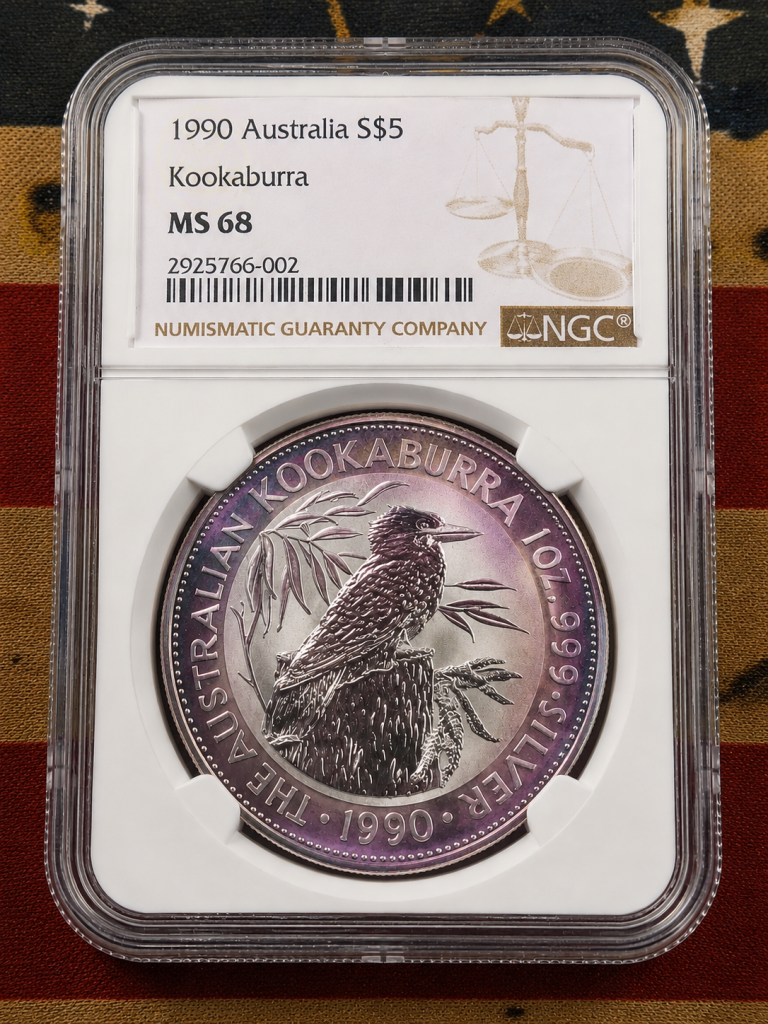
The 1990 Kookaburra is one of the most historically important Key Date Kookaburras even though it was produced to a 300,000-coin maximum and sold out. It is the inaugural issue—the coin that established the series. First-year status gives it a type of demand that cannot be measured by mintage alone, especially among collectors who want the beginning of the complete Kookaburra story.
The 1991 Kookaburra is also a 300,000-maximum sold-out one-ounce issue. It does not have the inaugural distinction of 1990, but it remains one of the earliest coins in the program and is necessary for every complete bullion date run. Decades of collector ownership can make attractive original examples feel less common than the original production limit suggests.
For both years, condition changes the equation. Coins with clean surfaces, strong luster, attractive natural toning, and high third-party grades can trade very differently from ordinary examples. This is where Key Date Kookaburras overlap with condition rarity: the date itself may be obtainable while premium-quality examples are much more competitive.
Why the Early 2000s Matter So Much
The early 2000s contain several of the most important production lows in the one-ounce series. The 2002, 2004, 2005, and 2006 coins all have declared mintages below 100,000. For collectors who define Key Date Kookaburras primarily through bullion scarcity, this cluster deserves more attention than a simple “early years are rare” narrative.
The 2004 issue is particularly significant because its 84,455 declared mintage is the lowest specific one-ounce figure in the 1990–2010 table. The 2006 at 87,044 is only modestly higher. These two dates offer an excellent example of why exact official figures should be separated from market price: low production can create the foundation for scarcity, but demand determines whether that scarcity translates into a large premium.
The 2001 issue also illustrates the danger of relying on old secondary tables. Official Perth Mint records list 169,265 one-ounce bullion coins for 2001, not a figure in the low-70,000 range. That means 2001 may still be desirable as part of a complete run, but it should not be promoted as the lowest-mintage one-ounce bullion Kookaburra on the basis of incorrect data.
Proof Kookaburras Are a Different Rarity Market
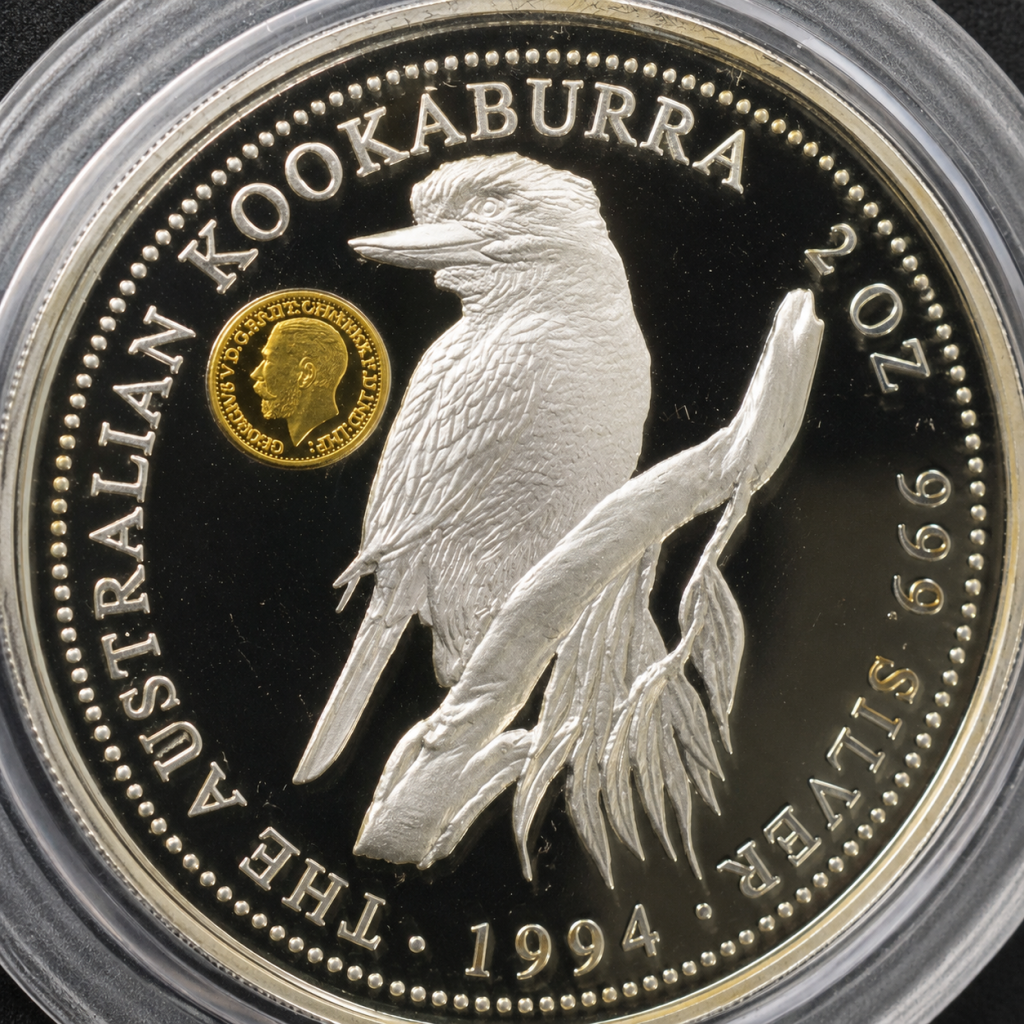
Proof Kookaburras should be researched separately from bullion dates because The Perth Mint often used much smaller maximum mintages for collector proofs. A proof coin is made for presentation and collecting, typically with specially prepared dies and surfaces that create stronger contrast and a more refined finish than ordinary bullion production.
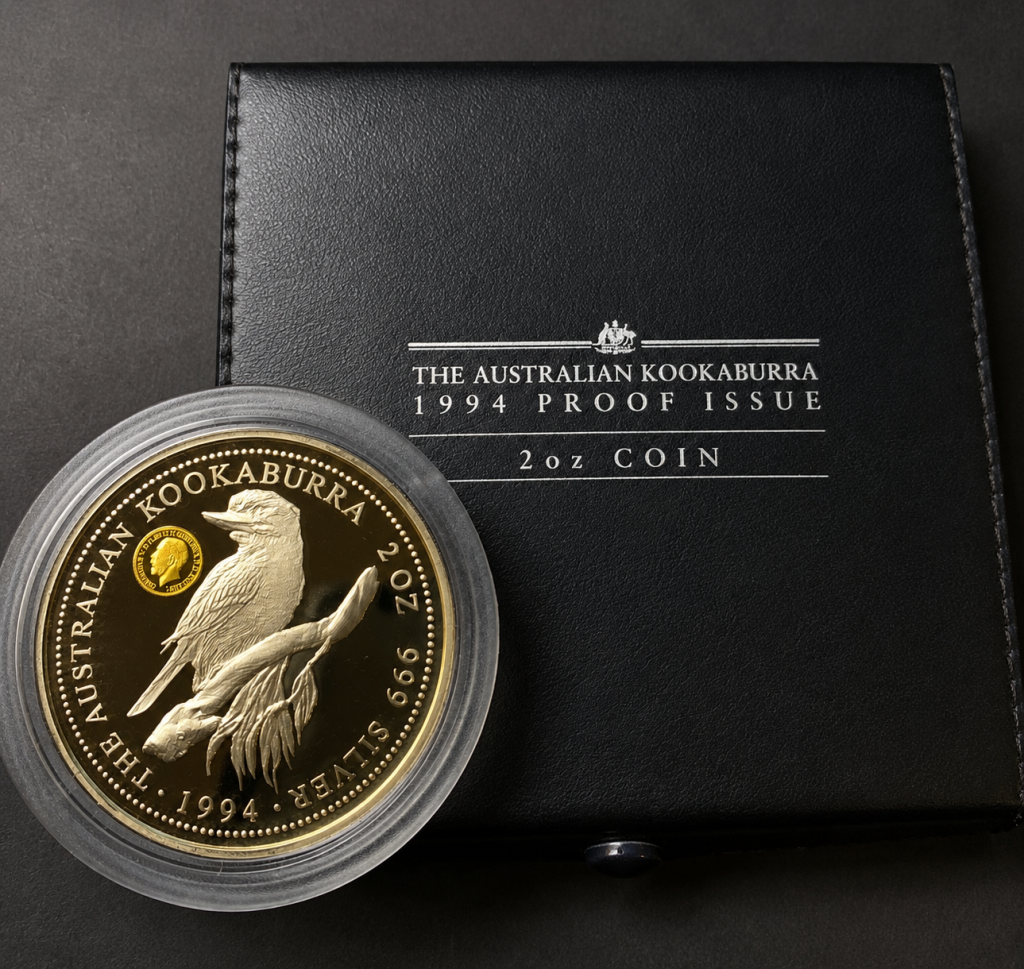
For example, The Perth Mint’s official 1994 numismatic records list a maximum mintage of 500 for the standard 2 oz Proof Kookaburra and 2,500 for the 1 oz Proof Kookaburra, with both recorded as sold out. Those figures are not interchangeable with the bullion mintages for 1994. A collector researching Key Date Kookaburras must therefore identify the exact size, finish, packaging, and special designation before comparing rarity.
Proof Key Date Kookaburras also tend to be more sensitive to completeness. Original capsules, boxes, certificates, and undisturbed surfaces may matter to specialist buyers. For some issues, the market premium reflects not only the number of coins made but also how many complete original presentations survive.
Privy Marks, Specialty Issues, and Collector Scarcity
Privy-mark Kookaburras add another layer to the series. A privy mark is a small additional symbol or design element that distinguishes a special issue from the regular annual coin. These releases may commemorate anniversaries, historic themes, coin shows, or specific programs, and their production limits can differ sharply from the standard bullion coin of the same year.
That distinction is important when collectors use the phrase Key Date Kookaburras. A scarce privy coin may be a major specialty collectible without being the key bullion date for its year. Conversely, a low-mintage bullion date can be highly important to date-run collectors even if it has no privy mark at all.
When evaluating a privy issue, research the exact product name, declared or maximum mintage, size, finish, packaging, and whether the coin was released individually or within a set. Small differences can identify entirely different products. This discipline prevents collectors from accidentally applying the mintage of one Kookaburra issue to another coin with a similar date and design.
Never compare a proof, privy, high-relief, colored, or anniversary Kookaburra directly with the standard one-ounce bullion mintage unless the product definitions match. The same year can contain multiple distinct releases, each with its own production limit and collector base. Correct identification comes before rarity analysis.
Anniversary Kookaburras and the P125 Mintmark
Anniversary releases can become important Key Date Kookaburras because they connect the annual series with a milestone that collectors immediately recognize. The 2020 program marked the Kookaburra’s 30th anniversary, and The Perth Mint used special anniversary design elements that referenced the original 1990 artwork.
In 2024, The Perth Mint used a P125 mintmark to signify its 125th anniversary. The mark appeared on the 2024 Kookaburra bullion design as well as other Perth Mint products. The official 2024 one-ounce silver bullion Kookaburra carried a maximum mintage of 500,000 and 99.99% silver purity.
The P125 mark is historically interesting, but collectors should avoid assuming that every P125 Kookaburra is rare simply because the mark is special. The one-ounce bullion coin, larger bullion formats, proof pieces, and high-relief collector coins can all have different mintage structures. The correct question is always: which exact P125 product is being evaluated?
Condition Rarity and Certified Key Date Kookaburras
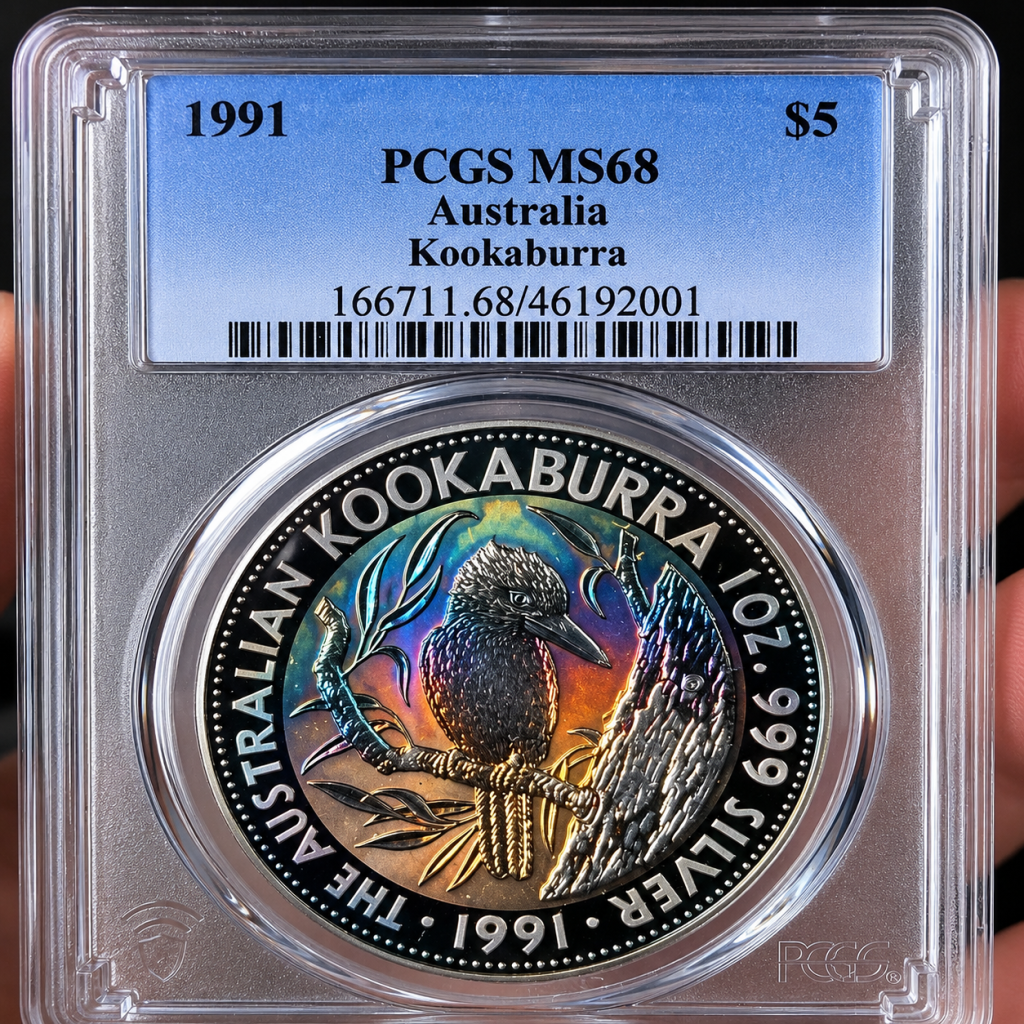
Third-party grading adds another dimension to Key Date Kookaburras. PCGS and NGC authenticate coins and assign standardized numerical grades, which can make condition comparisons easier in the certified market. A date that is readily available raw may become much more competitive at MS70, PF70, or another top grade if few examples reach that level.
Registry-set collecting can amplify this effect because participants compete for high-grade examples across a complete series. The resulting premium is not necessarily a statement about the scarcity of every coin from that date. It may instead reflect the scarcity of that date in a particular grade, label, finish, or certification category.
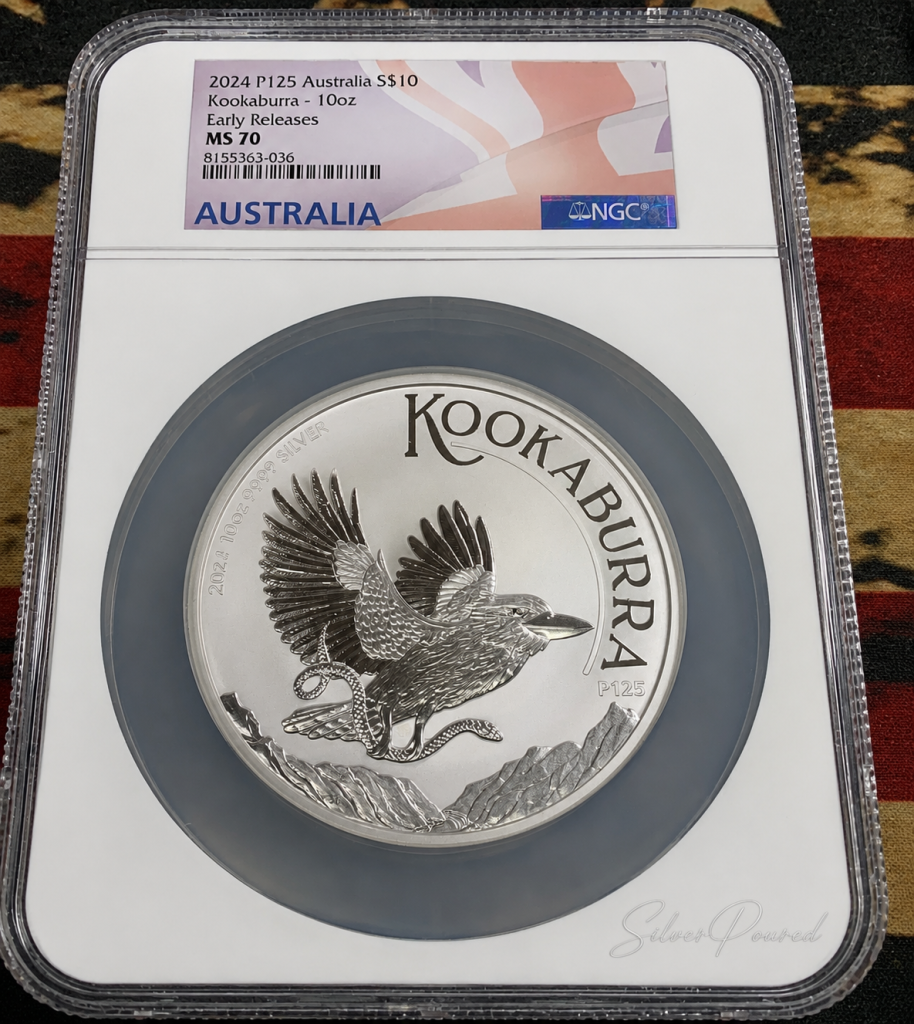
Eye appeal matters as well. Attractive toning, clean fields, strong strike quality, and undisturbed original surfaces can make one certified coin more desirable than another with the same numeric grade. Buyers of premium Key Date Kookaburras should evaluate the coin itself rather than purchasing only the number printed on the holder.
Why Market Availability Can Matter More Than Mintage
Official mintages describe original production, but they do not tell collectors how many coins are currently for sale. Over decades, coins move into long-term collections, become part of complete sets, are lost, damaged, toned, mishandled, or simply stop circulating through dealer inventories. That shrinking visible supply can make certain Key Date Kookaburras feel much scarcer than their original mintage suggests.
This is particularly important for earlier dates. A coin does not need an ultra-low mintage to become difficult if a large percentage of surviving pieces are tightly held. Conversely, a lower-mintage coin may remain easy to purchase if many examples return to market regularly. Serious collectors therefore track dealer stock, major auction appearances, marketplace listings, and certified populations alongside official mintage data.
Market availability also explains why price rankings can change. A particular issue may be temporarily expensive because only a few examples are offered, then soften when a collection enters the market. Key Date Kookaburras should be judged over time rather than from a single asking price.
Scarcity has two layers: how many coins were made and how many desirable examples are actually available. Collectors who watch both layers are less likely to overpay for a temporarily scarce listing or overlook a genuinely difficult date that rarely returns to market.
How to Buy Key Date Kookaburras
Buying Key Date Kookaburras starts with exact identification. Confirm the year, weight, finish, denomination, privy mark, packaging, and certification details before comparing prices. A one-ounce bullion Kookaburra, a two-ounce proof, and a two-ounce privy proof from the same year should not be treated as interchangeable products.
Next, compare recent completed transactions rather than relying only on dealer asking prices. Auction archives, sold marketplace listings, dealer inventory, and certified population reports can reveal whether a premium reflects actual market demand. For expensive Key Date Kookaburras, a pattern of repeated sales is more informative than one unusually high listing.
Condition should be priced separately from date scarcity. A common-grade example may be the most efficient choice for a collector building a date run, while registry competitors may willingly pay much more for a top-certified coin. Neither approach is wrong; they simply target different forms of scarcity.
Patience is especially valuable. Key Date Kookaburras can appear in complete collections, estate groups, mixed bullion lots, and specialist auctions where sellers value them differently. Knowing the official mintage and typical market range before buying helps prevent an emotional purchase from becoming an expensive mistake.
How to Sell Key Date Kookaburras
Sellers should avoid treating every Kookaburra as generic silver. Before selling, separate lower-mintage bullion dates, proofs, privy marks, anniversary pieces, certified coins, and complete date runs. Important Key Date Kookaburras can lose much of their collector premium when they are offered in a bulk lot to a buyer who is pricing only the silver content.
Original packaging and certificates should remain with the correct coin whenever possible. For collector proofs and specialty products, completeness can influence buyer confidence and price. Certified coins should be listed with the exact grading service, grade, label information, and certification number rather than described only as “graded.”
Good photographs also matter. Clear images of both sides, the holder or capsule, privy marks, toning, packaging, and any visible defects reduce uncertainty for buyers. A well-documented Key Date Kookaburra is easier to compare with previous sales and less likely to be mistaken for a different issue.
Authentication and Counterfeit Risk
Higher premiums create stronger reasons to authenticate Key Date Kookaburras carefully. Collectors should compare weight, diameter, thickness, design details, lettering, edge characteristics, and known specifications for the exact release. Modern Perth Mint bullion coins may also incorporate security features that vary by year and product.
Certification from PCGS or NGC can provide an additional layer of authentication for expensive pieces, although buyers should still verify the holder and certification information. Raw coins are not automatically suspect, but the larger the premium above silver value, the more important disciplined authentication becomes.
Buying from established dealers, recognized auction companies, and experienced specialist sellers can reduce risk. When an unusual proof, privy, or claimed low-mintage coin cannot be matched confidently to official records, delay the purchase until the exact product is verified.
Are Key Date Kookaburras a Good Investment?
Key Date Kookaburras combine precious-metal value with numismatic demand, but that does not make future appreciation guaranteed. Silver establishes an intrinsic-value component, while premiums depend on collector behavior, rarity, condition, design popularity, and the number of competing examples available at any given time.
Collectors who buy primarily for enjoyment can treat premium appreciation as a secondary benefit. Buyers focused on financial return should be more demanding about entry price, liquidity, transaction costs, and the depth of the collector market. A scarce coin purchased at an excessive premium can still be a poor investment.
The most defensible approach is to understand why each coin commands its premium. Key Date Kookaburras backed by verified scarcity, strong series demand, historical importance, and broad collector recognition generally have a clearer value story than coins marketed as “rare” without supporting data.
Building a Complete Kookaburra Date Run
A complete one-ounce bullion date run is one of the clearest ways to collect the series. The changing annual designs create visual variety, while the lower-mintage years provide natural challenges. Many collectors begin with common modern dates, then gradually add Key Date Kookaburras as suitable examples appear.
One practical strategy is to secure the genuinely lower-mintage dates when fairly priced rather than leaving every difficult coin until the end. Another is to choose a consistent condition standard—raw original coins, certified examples, or a specific grade range—so the collection feels coherent without requiring registry-level spending.
Specialists can expand beyond the bullion run into proofs, privies, high-relief issues, anniversary coins, larger sizes, and presentation sets. At that point, the project becomes less about filling one date per year and more about defining a personal Kookaburra collecting system.
Frequently Asked Questions About Key Date Kookaburras
What is the lowest-mintage one-ounce bullion Kookaburra from 1990 through 2010?
Among the years in The Perth Mint’s official table that report a specific declared one-ounce mintage, the 2004 Kookaburra is lowest at 84,455 coins. The 2006 issue follows at 87,044, the 2002 at 91,604, and the 2005 at 95,145. Sold-out years recorded only against their maximum limit should be interpreted separately.
Is the 1990 Kookaburra a key date?
The 1990 issue is historically important because it launched the Australian Kookaburra series. Its one-ounce maximum mintage was 300,000 and The Perth Mint records it as sold out. It is not the lowest-production one-ounce date, but first-year status and complete-set demand make it one of the most recognized Key Date Kookaburras.
Are proof Kookaburras rarer than bullion Kookaburras?
Many proofs were produced with much smaller limits than standard bullion coins, but each release must be checked individually. Proof size, finish, set inclusion, privy mark, and declared mintage can all differ. A proof should never be assigned the bullion mintage from the same year.
Do low mintages always mean higher prices?
No. Mintage measures original supply, while market price also reflects collector demand, condition, current availability, and liquidity. Some Key Date Kookaburras with modest mintages can remain affordable, while historically important or conditionally scarce coins can command much stronger premiums.
Should Key Date Kookaburras be graded?
Grading can make sense for coins whose authenticity, condition, or registry value justifies the cost. It is not automatically necessary for every date. Collectors should compare the likely certified premium with grading fees, shipping, insurance, and the probability that the coin will receive a grade that adds meaningful value.
Final Thoughts on Key Date Kookaburras
The strongest way to collect Key Date Kookaburras is to begin with official records and then study the real market. For the standard one-ounce series, the official mintage data identifies a clear early-2000s scarcity cluster led by 2004, 2006, 2002, and 2005. The inaugural 1990 coin adds historical importance, while proofs, privies, anniversaries, and top-grade certified examples create separate forms of rarity.
That layered structure is what makes the Kookaburra series so rewarding. There is no single number that identifies every important coin. Collectors who distinguish bullion from proofs, verify exact products, study declared mintages, watch market availability, and buy condition carefully will have a much stronger framework for recognizing genuine Key Date Kookaburras.
Related SilverPoured Resources
Continue your research with SilverPoured guides covering world silver coins, live silver values, and the collector-premium factors that influence Key Date Kookaburras.
World Silver Coin Guides
Kookaburra Value
American Silver Eagle Values
Maple Leaf Value
Libertad Value
Chinese Silver Panda Value
Silver Prices & Value Tools
Silver Spot Price Today
Silver Melt Value Calculator
Silver Coin Values
Premium Over Spot
BullionEngine
Collector & Premium Education
Limited Mintage Silver
Why Collectible Silver Sells For More
Why Silver Premiums Change
Why Bullion Dealers Charge Premiums
Best Silver Dealers
Purchase Precious Metals from a Trusted Dealer
Collectors researching Key Date Kookaburras often compare numismatic premiums with the cost of current bullion before making a purchase. Understanding the difference between silver value and collector value makes it easier to decide whether a scarce Kookaburra or lower-premium bullion better fits the goal.
For new bullion purchases, compare purity, weight, premium, availability, shipping, and dealer reputation before ordering. Golden State Mint offers a broad selection of investment-grade silver products for buyers who want to add physical silver alongside collectible coins.
Collector Insight
The best Key Date Kookaburras are not necessarily the coins with the loudest rarity claims. Start with an official mintage, confirm the exact product, then look for sustained collector demand and limited real-world availability. That process separates documented scarcity from marketing language and gives every premium a reason.
Keep SilverPoured Free
SilverPoured is built to help collectors and precious-metals investors make smarter decisions through free calculators, original photography, coin research, value references, collector education, and independent market resources. Every page is created to make valuable precious-metals information available without requiring a paid subscription.
Research-intensive pages such as this Key Date Kookaburras guide require primary-source mintage checking, factual verification, original collector analysis, and ongoing maintenance. Every contribution helps support that work and keeps SilverPoured’s collector resources freely available.
Your support allows SilverPoured to remain independent while building one of the web’s most comprehensive free libraries for coin collectors, bullion buyers, precious-metals researchers, and long-term investors.