
Key Date Peace Dollars are often introduced as a short list of scarce dates, but the series becomes much more interesting once rarity is separated into different categories. The Peace Dollar has a traditional mintage key, a historically important first-year type coin, major Mint State rarities, and several issues whose real difficulty does not become obvious until collectors reach Gem grades.
Understanding Key Date Peace Dollars therefore requires more than comparing annual production totals. The 1928 Philadelphia issue is the lowest-mintage regular Peace Dollar and the classic mintage key. The 1921 High Relief is the historically important first-year design and a one-year type. The 1934-S is a major series key whose scarcity becomes especially important through much of the Mint State range. Coins such as the 1924-S, 1927-S, and 1928-S reveal a different story because their greatest difficulty appears in premium grades.
That distinction matters whether you are filling a circulated album, assembling certified Mint State coins, evaluating an inherited collection, or deciding whether a particular Peace Dollar deserves a substantial premium. The better question is not simply, “Is this coin rare?” When evaluating Key Date Peace Dollars, the more useful question is often: rare in what grade?
What Makes Key Date Peace Dollars Different?
There is no single rarity test that identifies every important issue in the series. Peace Dollars can become desirable for different reasons, and those reasons should not be treated as interchangeable. A low mintage tells collectors how many coins were originally produced, but it does not reveal how many survived, how many remain in Mint State, how well the issue was normally struck, or how many attractive examples exist at a particular certified grade.
The clearest approach is to recognize three overlapping forms of scarcity. A mintage key begins with unusually low original production. A historical or type key is important because of design, first-year status, production method, or its place in the development of the series. A condition key may have a respectable original mintage but become dramatically scarcer when collectors demand high Mint State grades, strong strikes, clean surfaces, and superior eye appeal.
The same coin can belong to more than one category. That is why rankings of Key Date Peace Dollars change as grade changes. A collector building a circulated set encounters a different scarcity landscape than a registry-set collector pursuing MS65 examples. Understanding that moving hierarchy is the foundation for evaluating the series intelligently.
Peace Dollar History and the Key-Date Story
The Peace Dollar was introduced in 1921 in the aftermath of World War I and was designed by sculptor Anthony de Francisci. The classic series was produced from 1921 through 1928 and then returned for two final years in 1934 and 1935. Across the original circulation series are 24 regular date-and-mint issues, enough to create a meaningful collecting challenge without making a complete set impossibly large.
The first Peace Dollars were unlike the coins that followed. The 1921 issue used de Francisci’s original High Relief presentation, producing deeply modeled design elements but also creating practical striking problems. Relief was reduced for regular production beginning in 1922. That change makes the first-year coin both historically distinctive and physically different from the standard low-relief Peace Dollars most collectors encounter.
The series also presents unusual condition challenges. Peace Dollars are large, heavy silver coins with broad open fields. Storage and movement in bags allowed coins to strike one another, producing contact marks even on pieces that never circulated. Many issues also display inconsistent central definition. Those characteristics help explain why Key Date Peace Dollars can become far more difficult once collectors move into premium Mint State grades.
1928 Peace Dollar: The Classic Mintage Key
Among regular classic issues, the 1928 Philadelphia Peace Dollar is the unmistakable mintage key. Only 360,649 were struck, the lowest production figure among the regular 1921–1935 Peace Dollar issues. That small original output has made the 1928 one of the most recognizable Key Date Peace Dollars for generations of collectors.
Its importance is straightforward. Every collector attempting a complete date-and-mint set needs a 1928 Philadelphia coin, yet substantially fewer were made than the multimillion-piece issues of the early 1920s. Demand is therefore not confined to advanced Mint State collectors. The 1928 attracts attention in circulated grades as well because it fills an essential position in the regular series.
Low mintage does not mean every surviving 1928 is equally rare. Mint State examples exist, and premium-quality pieces still need to be judged by their actual grade, strike, surfaces, and eye appeal. Even so, the combination of the lowest regular mintage and persistent set-building demand gives the 1928 a status no other standard issue duplicates.
Collectors should also be particularly careful when authentication matters. A valuable low-mintage date creates an incentive for altered or counterfeit pieces. A genuine 1928 Philadelphia coin has no mintmark. When meaningful money is involved, authentication by an established grading service can provide additional protection, particularly for Key Date Peace Dollars whose date, surfaces, or mintmark area raise questions.
A low mintage becomes especially important when strong collector demand follows it. The 1928 Peace Dollar has both. Its 360,649-piece production establishes the scarcity foundation, while generations of collectors building complete sets continue to create demand across the grading spectrum. That combination is why the 1928 remains the clearest traditional mintage key among Key Date Peace Dollars.

1921 High Relief Peace Dollar: The Historical Key
The 1921 Peace Dollar tells a different rarity story. Its mintage of 1,006,473 is nearly three times the output of the 1928 Philadelphia issue, so it is not the series mintage key. Yet it remains one of the most important Key Date Peace Dollars because it represents the first year of the design and the original High Relief form of de Francisci’s work.
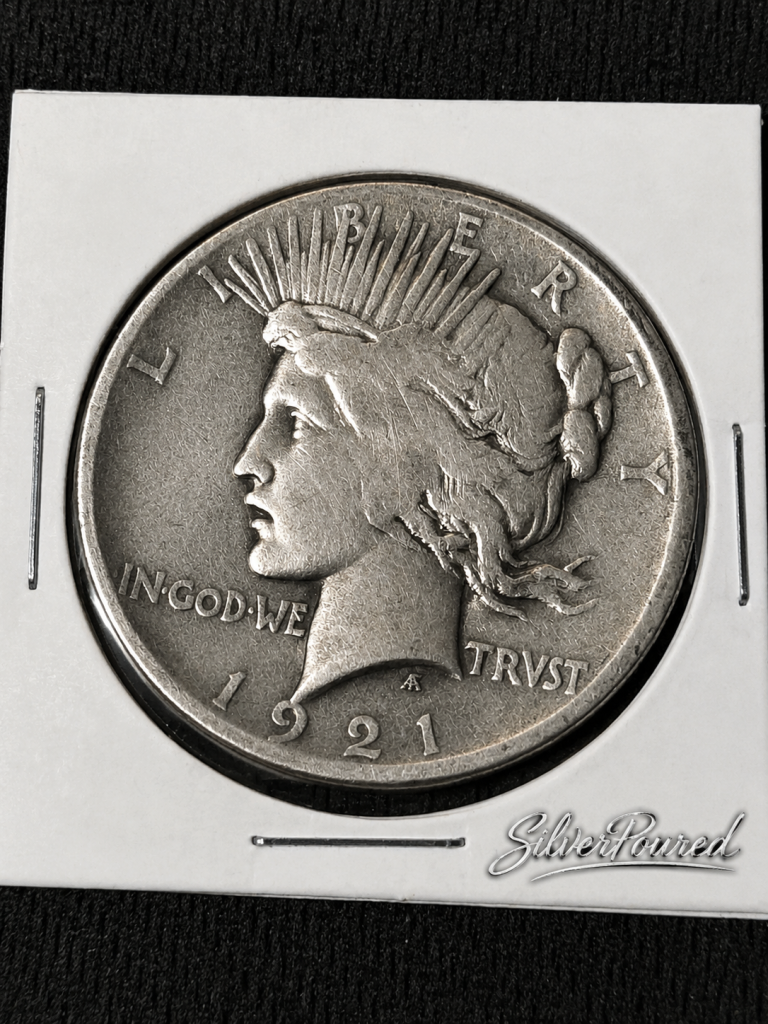
Production took place during the closing days of December 1921, and the High Relief design was difficult to bring up completely during striking. That creates an important grading lesson. Weakly defined central hair detail on Liberty does not automatically mean a 1921 Peace Dollar is worn. A coin can retain Mint State surfaces and luster while showing incomplete design definition caused by strike.
Experienced collectors therefore evaluate the 1921 differently from an ordinary low-relief issue. They look beyond the numerical grade and study how completely the design was struck, the quality of the luster, preservation of the broad fields, the number and placement of contact marks, and the coin’s overall eye appeal. These characteristics help separate average 1921 pieces from premium examples.
The 1921 also has a role that cannot be reduced to rarity statistics. It represents the design in its original elevated form and preserves the first chapter of a series created around the idea of peace following World War I. Collectors approaching Key Date Peace Dollars from a historical perspective therefore have a reason to prioritize the 1921 even when they are not building a complete date-and-mint set.
1934-S Peace Dollar: A Major Series Key
The 1934-S is where simple key-date lists begin to break down. With a mintage of 1,011,000, the San Francisco issue does not look dramatically rare when judged only by original production. Yet it is one of the major Key Date Peace Dollars because surviving availability becomes much tighter through important portions of the Mint State grading range.
Rarity research has long placed the 1934-S among the most difficult Peace Dollars in lower and middle Mint State grades. The issue is especially challenging through grades such as MS60, MS61, MS62, MS63, and MS64. That makes the 1934-S a major Mint State key and a coin that cannot be understood by looking at mintage alone.
One of the most important lessons appears when the grade rises again. At MS65, the hierarchy changes. Issues such as the 1923-S, 1924-S, and 1928-S can become tougher at the Gem level. This is one reason Peace Dollar rarity should never be ranked without specifying the condition being discussed.
That does not diminish the importance of the 1934-S. It makes its story more accurate. The 1934-S is a recognized major series key and a formidable Mint State rarity, but the identity of the toughest coin changes with grade. That distinction is central to understanding Key Date Peace Dollars.
The 1934-S is a reminder that a rarity ranking should always include a grade. An issue can dominate the scarcity hierarchy through MS64 and then be overtaken at MS65 by coins with larger original mintages. When comparing Key Date Peace Dollars, survival and availability at the desired grade can matter far more than the number originally struck.
Hidden Gem-Condition Key Date Peace Dollars
Some of the most revealing Key Date Peace Dollars are not the dates a beginner would select from a mintage chart. The 1924-S, 1927-S, and 1928-S illustrate condition rarity especially well. Each was produced in greater quantity than the 1928 Philadelphia key, yet premium Gem examples can be dramatically more difficult to locate.
1924-S Peace Dollar
The 1924-S had a mintage of 1,728,000. In circulated grades and the lower Mint State range, examples can be found. The problem emerges when collectors demand Gem quality. The 1924-S is recognized as one of the great condition rarities of the series, with typical examples frequently showing strike and surface limitations that make premium coins much harder to locate.
Many 1924-S Peace Dollars show weak strikes, subdued surfaces, abrasions, or bagmarks. A collector searching for a high-grade piece is therefore not merely looking for a coin that escaped circulation. The challenge is finding an uncirculated survivor that also escaped serious contact damage and possesses the strike, luster, and eye appeal expected at a premium grade.
This distinction matters because “uncirculated” and “premium quality” are not synonyms. A Peace Dollar can show no actual wear yet still have weak definition, numerous marks, or unattractive surfaces that limit its grade and desirability. That is why the 1924-S deserves serious attention from advanced Peace Dollar collectors.
1927-S Peace Dollar
The 1927-S combines a low mintage of 866,000 with a dramatic high-grade story. It is one of the relatively few regular Peace Dollar issues with original production below one million pieces. Yet even that comparatively low number does not explain the full premium structure.
The 1927-S is a classic conditional rarity. Circulated pieces and lower-end Mint State coins are obtainable, but availability declines severely as quality rises. Current survival research estimates roughly 150 examples at MS65 or better. That figure should be treated as an estimate rather than an immutable census because grading populations and survival estimates can change over time.
The broader lesson is more durable than any single population number. A collector who sees an 866,000-piece mintage may assume the entire date is uniformly scarce. In reality, lower-grade collectors and Gem Mint State collectors are competing in very different supply environments. Peace Dollar rarity can change dramatically as the target grade rises.
1928-S Peace Dollar
The 1928-S may be the strongest demonstration that mintage and high-grade rarity are different concepts. San Francisco produced 1,632,000 coins, more than four times the mintage of the 1928 Philadelphia issue. If original production were the only measurement that mattered, the 1928-S should be much easier.
Across all grades, that expectation has some truth. Survival research places a substantial number of 1928-S Peace Dollars in existence, including thousands in Mint State. But the estimated population collapses at the Gem level, with only about 80 examples currently estimated at MS65 or better.
This is exactly why collectors need more than a mintage table. Lower Mint State examples can be available while sharply struck, attractive MS65 coins are exceptionally elusive. For a collector pursuing a top-quality Peace Dollar set, the 1928-S can present a more serious obstacle than a date with dramatically smaller original production.
The 1928-P and 1928-S provide one of the best side-by-side lessons among Key Date Peace Dollars. The Philadelphia coin is the classic low-mintage key at 360,649 pieces. The San Francisco coin had a much larger mintage of 1,632,000, yet only a tiny number are estimated to survive at MS65 or better. One is a mintage key; the other becomes an extreme Gem-condition rarity.
Important Key Date Peace Dollars and Semi-Keys
A focused table is more useful than a complete 24-coin mintage dump because it concentrates on issues that matter most when discussing Key Date Peace Dollars. Mintage provides the starting point, while the final column explains why collectors continue to pay special attention to each issue.
| Issue | Mintage | Why Collectors Care |
|---|---|---|
| 1921 | 1,006,473 | First-year High Relief design and one-year type |
| 1924-S | 1,728,000 | Major Gem-condition rarity with frequent strike and surface challenges |
| 1927 | 848,000 | Low-mintage Philadelphia issue |
| 1927-D | 1,268,900 | Increasingly difficult in higher Mint State grades |
| 1927-S | 866,000 | Low mintage combined with severe Gem-grade scarcity |
| 1928 | 360,649 | Lowest-mintage regular classic issue and traditional series key |
| 1928-S | 1,632,000 | Extreme Gem-condition rarity despite much larger original mintage |
| 1934 | 954,057 | Low-mintage Philadelphia issue from the resumed series |
| 1934-D | 1,569,500 | Advanced variety and higher-grade collector interest |
| 1934-S | 1,011,000 | Major series key and important condition-sensitive Mint State rarity |
| 1935 | 1,576,000 | Final-year Philadelphia issue |
| 1935-S | 1,964,000 | Final San Francisco Peace Dollar with recognized variety interest |
The table exposes why ranking Key Date Peace Dollars strictly from lowest to highest mintage is inadequate. The 1924-S had nearly 1.73 million pieces struck, yet its Gem-quality scarcity makes it extremely important to advanced collectors. Conversely, a lower-mintage issue may be manageable in the grade a particular collector is targeting. The intended grade has to be part of the conversation.
Why Mint State Key Date Peace Dollars Can Still Differ
One of the easiest mistakes to make with Peace Dollars is assuming that an uncirculated coin must be an exceptional coin. Mint State means the piece shows no actual circulation wear. It does not promise a full strike, clean surfaces, attractive luster, minimal bagmarks, original color, or superior eye appeal.
This distinction has an outsized effect on the series because so many issues have broad fields that readily reveal contact. The coins were heavy enough to mark one another during bag storage and transportation. A coin that remained in Treasury or bank storage could therefore accumulate abrasions without ever passing from hand to hand in normal commerce.
Strike presents a separate problem. The 1921 High Relief is famous for incomplete central definition, while several San Francisco issues are difficult to find with the sharpness expected by demanding collectors. Weak detail that originated at the Mint should not be confused with friction from circulation, although weak striking can still affect the desirability and market appeal of Mint State Key Date Peace Dollars.
Luster matters as well. Strong cartwheel luster can make a Peace Dollar come alive under light, while dull or lifeless surfaces can reduce eye appeal. Originality is another consideration because cleaning, polishing, artificial toning, or other surface alterations can affect certification and market acceptance even when the underlying date is desirable.
Two certified coins carrying the same numerical grade can therefore look noticeably different. One may have a stronger strike and cleaner focal areas; the other may technically meet the grade while being less appealing. Buyers of expensive Key Date Peace Dollars should evaluate the actual coin rather than assuming every holder with the same number represents identical quality.
How to Evaluate Condition Rarity
Condition rarity begins with the number of coins believed to survive at the grade being targeted, but population data needs context. Certification-company population reports are valuable research tools, yet they do not represent a perfect census of unique surviving coins. Coins can be resubmitted in pursuit of a higher grade, crossed between grading services, or remain uncertified in long-held collections.
Survival estimates are similarly best understood as informed estimates. They can change when researchers incorporate new information or when previously unknown coins enter the market. That is why figures for Gem examples of the 1927-S or 1928-S should be treated as current research estimates rather than permanent mathematical totals.
Collectors should combine those statistics with real-world availability. How frequently does an attractive example appear? Are most certified pieces weakly struck? Does a grade contain many technically acceptable coins but only a small number with exceptional eye appeal? How large is the jump in availability between MS64 and MS65? Those questions reveal far more about the actual scarcity of an issue than raw mintage alone.
Population numbers answer a different question than mintage figures. Mintage tells you how many coins were originally struck. Population and survival research helps estimate what may still exist at a particular quality level. Neither number should be used alone when evaluating Peace Dollar rarity, especially when a single grading point can dramatically change availability.
Other Key Date Peace Dollars Worth Watching
A key-date discussion should not imply that every coin outside the headline group is common or interchangeable. Several additional Key Date Peace Dollars deserve attention because of lower production, grade sensitivity, varieties, or their place at the end of the series. Their importance may be more specialized, but they can still become challenging targets depending on how a collection is being assembled.
1927 Philadelphia
The 1927 Philadelphia issue had a mintage of 848,000, making it one of the relatively few regular issues below the one-million mark. It does not displace the 1928 as the classic mintage key, but its low production earns it a place in any serious discussion of Key Date Peace Dollars. Collectors should compare grade, originality, strike, and market availability rather than relying only on its position in a mintage ranking.
1927-D Peace Dollar
Denver struck 1,268,900 Peace Dollars in 1927. The issue becomes more challenging as collectors move into higher Mint State grades, illustrating again how a Peace Dollar can become significantly more difficult as condition improves. It is not the first coin most beginners identify as a headline key, but advanced sets cannot treat the 1927-D as an afterthought.
1934 Philadelphia
Peace Dollar production resumed in 1934 after the series had been absent since 1928. Philadelphia struck 954,057 coins that year, giving the issue a sub-million mintage and historical importance as part of the returning series. It deserves recognition among Key Date Peace Dollars even though the 1934-S receives greater attention as a major Mint State series key.
1934-D Peace Dollar
The 1934-D, with a mintage of 1,569,500, offers additional interest to advanced collectors through varieties and quality considerations. Its importance is more nuanced than the straightforward low-mintage appeal of the 1928, which makes it better viewed as a specialist issue than promoted as a universal key in every grade.
1935 and 1935-S Peace Dollars
The 1935 Philadelphia and 1935-S issues close the classic Peace Dollar series. Their respective mintages of 1,576,000 and 1,964,000 do not make either coin a primary mintage key. Their final-year status nevertheless gives them historical appeal, and the 1935-S offers recognized variety interest for specialists researching advanced date-and-mint collections.
Key Date Peace Dollars and VAM Collecting
Key Date Peace Dollars and Peace Dollar varieties are related collecting subjects, but they are not the same thing. The regular date-and-mint series provides the foundation of a conventional set. VAM collecting goes deeper by identifying specific die marriages and die characteristics cataloged for Morgan and Peace Dollars.
A common-date Peace Dollar can become highly desirable when it represents a scarce or popular variety, while one of the major Key Date Peace Dollars remains a key regardless of whether its individual die marriage is special. That distinction prevents collectors from confusing series rarity with variety rarity.
Advanced collectors may examine doubled features, die breaks, polishing characteristics, mintmark placement, die rotation, or other diagnostics. Attribution should be based on specific documented characteristics rather than assuming every unusual mark is a valuable variety. Damage, machine doubling, contact marks, and ordinary die deterioration can all be mistaken for something more significant.
For collectors building the regular circulation set, VAM attribution is optional. For specialists, it can become an entirely separate collecting discipline layered on top of traditional Peace Dollar collecting.
Building a Collection Around Key Date Peace Dollars
The best strategy depends on the intended set. A circulated collection can be an approachable way to own every regular issue while still experiencing the historical progression of the series. A Mint State collection creates a very different challenge because Key Date Peace Dollars with branch-mint condition rarity become increasingly important as the target grade rises.
Collectors working within a fixed budget can benefit from deciding on quality standards before buying the difficult coins. If the goal is an attractive circulated set, chasing an expensive Mint State 1928 may consume money that could complete several other dates. If the goal is an MS64 or MS65 certified set, Key Date Peace Dollars should be studied early because their availability may determine the practical ceiling of the entire project.
It is also reasonable to build a shorter type-oriented collection. A 1921 High Relief can represent the original design, a well-preserved common low-relief issue can represent standard production, and selected Key Date Peace Dollars can add scarcity and historical depth without requiring all regular issues.
Whichever approach is used, buying the holder instead of the coin is a mistake. Certification is valuable, especially for authenticity and standardized grading, but collectors should still evaluate strike, marks, color, luster, and eye appeal. Premium-quality Key Date Peace Dollars often separate themselves visually from average coins carrying the same numerical grade.
Raw vs. Certified Key Date Peace Dollars
Certification becomes increasingly useful as value and counterfeit risk rise. A raw coin can be perfectly genuine and accurately graded, but the buyer assumes more responsibility for authentication, surface evaluation, and the distinction between normal Mint characteristics and post-mint alteration.
That is particularly relevant for expensive Key Date Peace Dollars such as the 1928. Altered dates, removed mintmarks, counterfeits, cleaning, and other problems can turn what appears to be a bargain into an expensive mistake. A reputable third-party grading holder does not eliminate the need to inspect the coin, but it gives the buyer an established opinion on authenticity and grade.
Certified population reports also become useful when evaluating Key Date Peace Dollars as condition rarities. If a collector is considering a major premium for an MS65 branch-mint coin, the important comparison is not simply how many were struck. It is how many quality examples are believed to survive, how frequently they trade, and how many coins exist at the same or higher grade.
Cleaning, Originality, and Key Date Peace Dollars
Original surfaces are especially important when substantial collector premiums are involved. Cleaning a Peace Dollar can remove or disturb the natural surface and may leave hairlines, unnatural brightness, residue, or other evidence that affects grading and marketability. Polishing is even more destructive because it can permanently alter the texture of the fields and devices.
Toning alone should not be treated as a defect. Silver naturally reacts with its environment, and genuine original toning can range from light gold to deeper multicolor shades. Attractive toning can add eye appeal, while dark, uneven, questionable, or artificially produced color may have the opposite effect. The important issue is the quality and originality of the surfaces rather than whether Key Date Peace Dollars are bright white.
A problem-free lower-grade key can sometimes be more desirable than a sharper-looking coin that has been aggressively cleaned. Collectors comparing Key Date Peace Dollars should therefore consider market acceptability alongside numerical detail. A coin’s history remains visible on its surfaces.
How Mintage, Survival, and Demand Work Together
Mintage is the number struck. Survival is an estimate of how many remain. Condition rarity measures how difficult survivors become at a particular quality level. Demand determines how strongly collectors compete for that available supply. These concepts work together when evaluating Key Date Peace Dollars, but none is a substitute for the others.
The 1928 Philadelphia issue illustrates powerful mintage-driven scarcity. The 1928-S demonstrates severe Gem-condition scarcity despite much greater original production. The 1921 combines historical importance, one-year High Relief type status, and strike sensitivity. The 1934-S demonstrates how Key Date Peace Dollars can dominate certain Mint State grade ranges without remaining the rarest issue once the grade changes.
Those examples explain why a static “top five rarest Peace Dollars” list is usually less useful than it appears. A list without a grade mixes fundamentally different scarcity questions. For someone assembling circulated coins, the ranking may look one way. For someone building an MS64 set, it changes. For a collector insisting on MS65 or better, it changes again. This is the central lesson behind Key Date Peace Dollars.
Frequently Asked Questions About Key Date Peace Dollars
What is the key date Peace Dollar?
The 1928 Philadelphia Peace Dollar is the traditional mintage key because only 360,649 were struck, the lowest mintage among the regular classic issues. Other Key Date Peace Dollars can become rarer at specific Mint State grades, so the answer changes when the question is about condition rarity rather than original production.
Is the 1921 Peace Dollar a key date?
Yes. The 1921 is one of the most important Key Date Peace Dollars because it is the first-year issue and uses the original High Relief design. Its 1,006,473 mintage is not the lowest in the series, but its historical importance, one-year type status, strike characteristics, and collector demand make it a major coin.
Why is the 1934-S Peace Dollar important?
The 1934-S is one of the major Key Date Peace Dollars and an important Mint State rarity. It is especially challenging through several lower and middle Mint State grades. At MS65, however, several other Peace Dollars become scarcer, demonstrating why the toughest issue depends on the grade being discussed.
Why is the 1928-S Peace Dollar rare in high grade?
The 1928-S had a mintage of 1,632,000, but premium Gem survivors are exceptionally scarce. Current research estimates only about 80 examples at MS65 or better. Among Key Date Peace Dollars, it is an excellent example of condition rarity: reasonably available at lower levels but dramatically more difficult when collectors require Gem quality.
Does a lower Peace Dollar mintage always mean a higher value?
No. Mintage is only one factor. Surviving population, condition rarity, strike quality, certified grade, originality, eye appeal, variety interest, and collector demand can all affect Key Date Peace Dollars. A higher-mintage issue can be much more difficult than a lower-mintage issue at a specific Mint State grade.
Are all uncirculated Peace Dollars valuable?
No. Uncirculated means a coin does not show wear from circulation, but Mint State Peace Dollars can still have heavy bagmarks, weak strikes, poor luster, unattractive toning, or other characteristics that limit grade and demand. This is especially important with Key Date Peace Dollars, where quality at grade can create major differences in price.
Should key date Peace Dollars be professionally graded?
Professional certification can be especially useful for expensive Key Date Peace Dollars because authentication and a recognized grading opinion reduce some of the uncertainty involved in buying raw coins. Collectors should still judge the coin itself, particularly strike, surfaces, luster, and eye appeal.
What does “rare in what grade?” mean?
It means rarity should be tied to a specific condition level. Key Date Peace Dollars can be readily available in circulated grades, scarce in MS63, and genuinely rare in MS65. Asking which grade is being discussed prevents mintage rarity and condition rarity from being confused.
Final Thoughts on Key Date Peace Dollars
Key Date Peace Dollars are best understood as a hierarchy that changes with the question being asked. The 1928 Philadelphia issue remains the traditional mintage key because its 360,649-piece production is the lowest among the regular classic issues. The 1921 High Relief stands apart as the historically important first-year type. The 1934-S is a major series key whose scarcity becomes especially important through much of the Mint State range.
The condition rarities change the picture again. The 1924-S, 1927-S, and 1928-S demonstrate that a larger mintage can conceal severe Gem-grade scarcity. At the upper end of the market, Key Date Peace Dollars are often defined more by surviving quality than by a simple ranking of how many coins left the Mint.
For collectors, that leads to a better way of approaching Key Date Peace Dollars. Start with mintage, but do not stop there. Examine survival estimates, grade populations, strike characteristics, surfaces, originality, luster, eye appeal, and actual market availability. Most importantly, whenever someone describes a Peace Dollar as rare, ask the question that reveals what the number alone cannot: rare in what grade?
Related SilverPoured Resources
Continue researching Key Date Peace Dollars through SilverPoured’s Peace Dollar value resources, classic U.S. coin guides, Mint histories, silver-value tools, and collector education.
Peace Dollars & Historic U.S. Coins
Peace Silver Dollar Value
Morgan Dollar Value Guide & Collector Hub
Morgan Silver Dollar Value
Carson City Morgan Dollar Guide
Seated Liberty Coins
U.S. Mints & Coin Research
What Do Coin Mint Marks Mean?
Philadelphia Mint
Denver Mint
San Francisco Mint
Silver Coin Values
Silver Value & Collector Education
What Is My Silver Worth?
Silver Spot Price Today
Silver Melt Value Calculator
What Is Silver Melt Value?
Why Collectible Silver Sells For More
Purchase Precious Metals from a Trusted Dealer
Collectors researching Key Date Peace Dollars often compare numismatic premiums with the underlying value of the silver each coin contains. A scarce date, strong Mint State grade, superior strike, original surfaces, attractive toning, or unusual condition rarity can move a collectible Peace Dollar far beyond its intrinsic silver value.
For buyers who also want physical precious metals without the same numismatic variables, investment-grade bullion provides a different way to own silver. Compare purity, weight, premium, availability, shipping, and dealer reputation before purchasing, and remember that bullion pricing and collectible-coin pricing answer different questions even when both products contain silver.
Collector Insight
The most useful question about Key Date Peace Dollars is rarely just, “How many were minted?” The 1928 Philadelphia issue demonstrates traditional mintage rarity, while branch-mint coins such as the 1924-S, 1927-S, and 1928-S show how dramatically scarcity can change as grade rises. Before paying a major premium, identify whether the coin is scarce because of mintage, historical importance, survival, strike quality, or condition rarity. In this series, the better question is often: rare in what grade?
Keep SilverPoured Free
SilverPoured is built to help collectors and precious-metals investors make smarter decisions through free calculators, original photography, coin research, value references, collector education, and independent market resources. Every page is created to make valuable precious-metals information available without requiring a paid subscription.
This guide to Key Date Peace Dollars is designed to help collectors distinguish mintage rarity from condition rarity, understand why grade can completely change the scarcity hierarchy, and evaluate classic Peace Dollars with better context. Every contribution helps support continued coin research, original photography, calculator development, and expansion of the SilverPoured Authority Library.
Your support allows SilverPoured to remain independent while building one of the web’s most comprehensive free libraries for coin collectors, bullion buyers, precious-metals researchers, and long-term investors.