
Limited mintage silver occupies the space between ordinary bullion and collectible silver. Every piece still derives intrinsic value from its precious-metal content, but restricted production can create a second layer of value when collectors compete for a supply that cannot simply be replenished with another identical production run.
That distinction matters because a low production number does not automatically make a silver product rare, desirable, or valuable. The strongest limited mintage silver markets usually develop when documented scarcity combines with an established producer, an appealing design, identifiable production, strong condition, and sustained secondary-market demand.
This guide explains how those factors work together. It covers maximum and final mintages, serialized bullion, government and private production, fractional and hand-poured silver, sold-out releases, surviving supply, condition, packaging, market cycles, and the research collectors can use before paying a premium above melt value.
What Is Limited Mintage Silver?
Limited mintage silver is a silver coin, bar, round, or other bullion product whose production is intentionally restricted or whose final documented production total is relatively small. The limitation may be announced before release as a maximum mintage, established through a fixed production run, documented through individual serial numbers, or determined when production permanently ends.
The category can include government-issued coins, private-mint rounds, serialized bars, fractional silver, hand-poured pieces, commemorative releases, specialty finishes, and other collectible bullion. What connects these products is not one particular manufacturing method. It is the existence of a finite, identifiable supply that collectors can evaluate.
That is different from generic bullion. A standard one-ounce silver round may disappear from dealer inventory, but another comparable generic round can usually replace it. Once a specific limited release closes, another silver product may contain the same amount of metal, but it cannot become another example from that original production run.
Why Limited Mintage Silver Can Carry Higher Premiums
Limited mintage silver can trade above ordinary bullion because collectors are paying for both metal and access to a restricted supply. The silver establishes an intrinsic floor. The premium reflects what the market assigns to scarcity, design, producer reputation, condition, serial number, presentation, and demand.
Scarcity becomes economically meaningful only when buyers care about the product. A release of 500 pieces may sound impressive, but if very few collectors want one, the market may remain weak. A larger production run can command a stronger premium when thousands of collectors are competing to complete a popular series.
This supply-and-demand relationship is the central principle behind collectible bullion. Production tells collectors how many pieces could exist. Market availability tells them how many they can actually buy. Demand determines how aggressively buyers compete for those available pieces.
That is why limited mintage silver should never be valued from a production number alone. A documented mintage becomes useful only when it is considered alongside the number of pieces appearing for sale, the reputation of the producer, the depth of the collector base, and the prices buyers have actually been willing to pay.
A low production number is evidence of limited supply, not proof of future value. Limited mintage silver develops its strongest premiums when restricted production is paired with persistent collector demand. Before paying substantially above melt, identify both sides of that equation: how many were made and how many buyers still want them.

1985 Halley’s Comet Silver Bar: A Limited-Edition Example
The 1985 Halley’s Comet silver bar provides a useful physical example of how collectible bullion can communicate scarcity directly through the product. The one-troy-ounce .999 fine silver bar commemorates the return of Halley’s Comet and combines a themed design with a reverse identifying Coast Productions, the silver specification, limited-edition status, and an individual serial number.
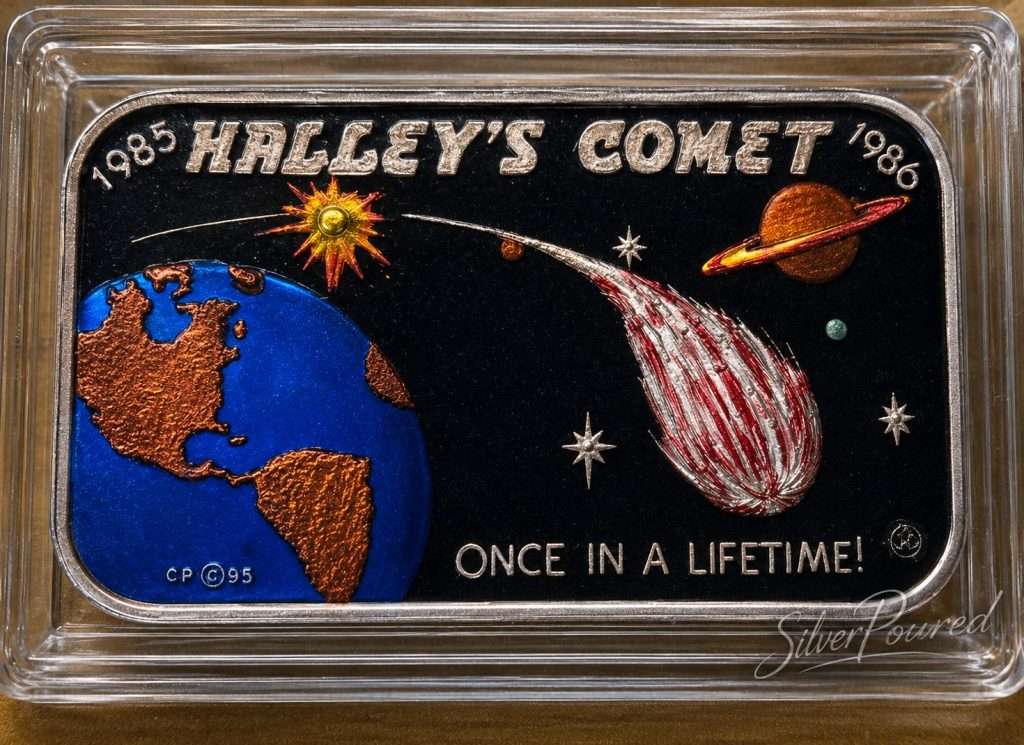
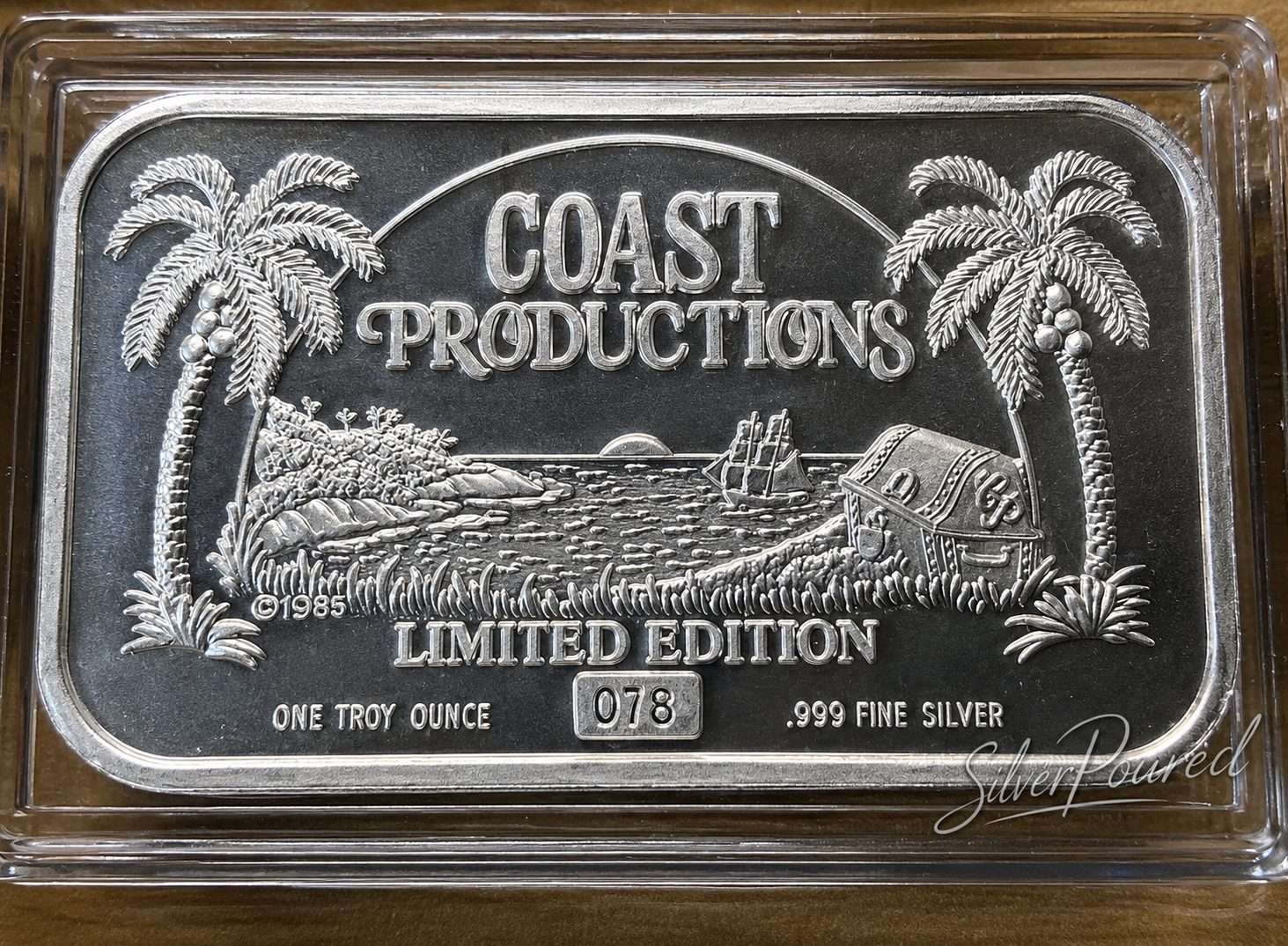
The serial number is particularly useful because it connects the individual bar to the production concept. Numbering does not guarantee that a product will appreciate, but it gives collectors another way to identify and document an example. Matching packaging or certificates can strengthen that documentation further when they originally accompanied the release.
Older themed bullion also demonstrates how limited mintage silver can acquire a market identity beyond metal content. Collectors may pursue a piece because of its subject, period, producer, serial number, visual design, or nostalgia. Those characteristics can continue influencing demand long after the original retail release has disappeared.
The Halley’s Comet bar also illustrates why original photographs of both sides can matter when researching collectible bullion. The design side explains the theme, while the opposite side documents characteristics such as producer, purity, weight, limited-edition language, and serialization. Together they provide more information than either side could communicate alone.
Maximum Mintage vs. Final Mintage
One of the most important distinctions in limited mintage silver is the difference between a maximum mintage and a final production total. A maximum establishes the greatest number a producer is authorized or intends to make. It does not necessarily prove that every authorized piece was actually produced.
Suppose a mint announces a maximum of 5,000 pieces. Demand may support production of all 5,000, or sales may stop after 2,800. If production permanently closes at 2,800, that final number can become more relevant to scarcity than the original advertised ceiling.
Collectors should therefore look carefully at the terminology used by the producer. “Limited to,” “maximum mintage,” “production limit,” “declared mintage,” “final sales,” and “sold out” can describe different facts. A marketing statement is not a substitute for a documented final production number.
| Production Term | What It Tells the Collector |
|---|---|
| Maximum Mintage | The highest number authorized or planned for production. |
| Final or Declared Mintage | The documented number ultimately produced or officially declared. |
| Serialized Run | Individual pieces are numbered within an identified production sequence. |
| Sold Out | Original inventory is no longer available through the issuing source; this does not by itself establish final mintage or future value. |
| Surviving Supply | The portion of the original production that remains collectible and potentially available in the market. |
These distinctions become especially important when comparing products advertised as limited editions. Two releases may both claim a maximum of 5,000 pieces, yet one may have sold the full authorization while the other ended production much earlier. Without knowing the final production history, collectors may be comparing very different levels of actual supply.
Published Mintage vs. Surviving Population
Published mintage records how many pieces were originally produced. For limited mintage silver, that number establishes the original supply but does not reveal how many desirable examples remain available to collectors today.
Effective supply can decline over time. Pieces may be melted when silver prices rise, damaged through improper storage, separated from original packaging, lost, or absorbed into collections that remain off the market for decades. The published production figure never changes, but the number of attractive examples available for purchase can become substantially smaller.
This is one reason older limited mintage silver can become difficult to evaluate from the original production number alone. A run of 2,000 pieces may sound larger than a modern 1,000-piece release, but the older product could be much harder to locate if decades of attrition and long-term collecting have reduced its effective market supply.
Collectors should therefore distinguish original scarcity from market scarcity. Original scarcity comes from the production total. Market scarcity describes how frequently examples can actually be purchased. The strongest collectible premiums often appear when both are working in the same direction.
Scarcity, Demand, and Market Availability
Scarcity is only one half of the collectible equation. Demand determines whether that scarcity matters. A limited mintage silver product can have a very small production total and still trade weakly if few collectors recognize or pursue it.
Conversely, a larger issue can become difficult to acquire when a strong collector base absorbs most of the supply. Popular series benefit from repeat buyers who need specific dates or designs to complete sets. Respected private producers may develop similar followings when collectors pursue every release or seek particular themes and serial-number combinations.
Market availability provides another useful signal. Collectors should ask how many examples are currently offered, how long they remain available, whether completed sales occur consistently, and whether asking prices are supported by actual transactions. A piece that is supposedly rare but continuously available from many sellers may not be as scarce in practice as its marketing suggests.
The reverse can also occur. A product may receive little attention until collectors realize that examples rarely appear. Once a series develops broader recognition, competition for a genuinely thin supply can increase rapidly. That is why historical market behavior can be more informative than a single current listing.
Government Mintages vs. Private Mintages
Government and private producers can both create limited mintage silver, but collectors may evaluate the documentation differently. Government mints frequently publish annual production or sales records, giving buyers a standardized source for researching coins by year, size, and finish.
Private producers can operate on a much smaller scale. A respected refiner, artist, or bullion company may produce hundreds rather than tens of thousands of pieces. Some private releases use serial numbers or certificates, while others rely on producer records, archived announcements, packaging, or published batch totals.
Neither category is automatically more collectible. Government issues may benefit from broad recognition, established series demand, and easier mintage verification. Private releases can offer much smaller production, distinctive artwork, hand-finishing, unusual formats, and strong collector followings around individual producers.
Documentation and reputation matter in both markets. A government mintage is useful because collectors can verify the original production, but demand still determines the premium. A private run can be extremely small, but collectors need confidence that the stated production is credible and that the producer has enough recognition to support a secondary market.
For limited mintage silver, the best comparison is therefore not simply government versus private. It is documented supply, collector demand, product quality, producer reputation, and real market availability. Those factors provide a more useful measure of collectibility than the name of the issuing organization alone.
1987 Silver Panda: Government-Mint Scarcity
The 1987 one-ounce Silver Panda illustrates how limited mintage silver can develop inside an established government coin program. Early Chinese Silver Pandas became internationally collected because buyers pursue individual dates, changing designs, condition, and complete series rather than treating every one-ounce coin as interchangeable bullion.
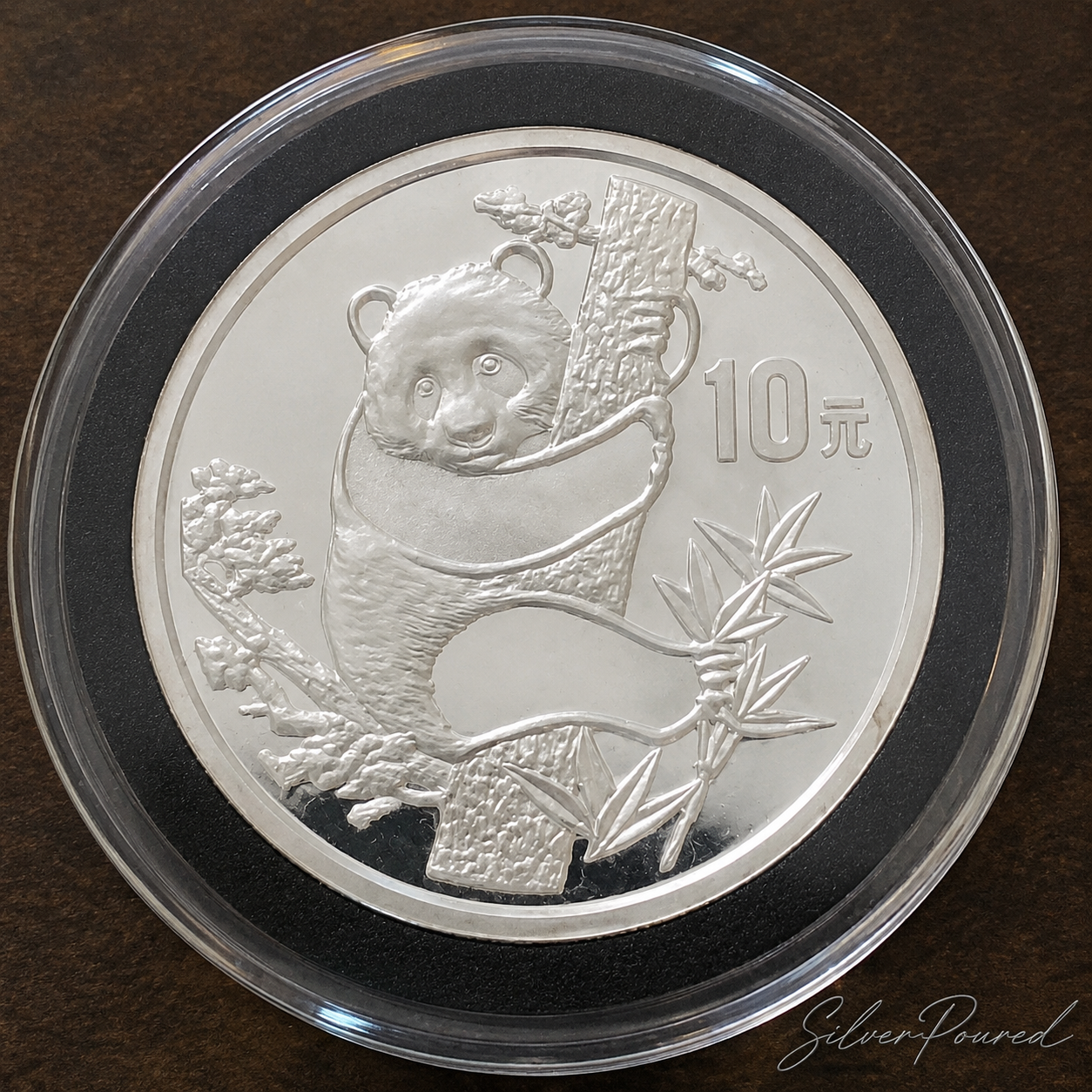
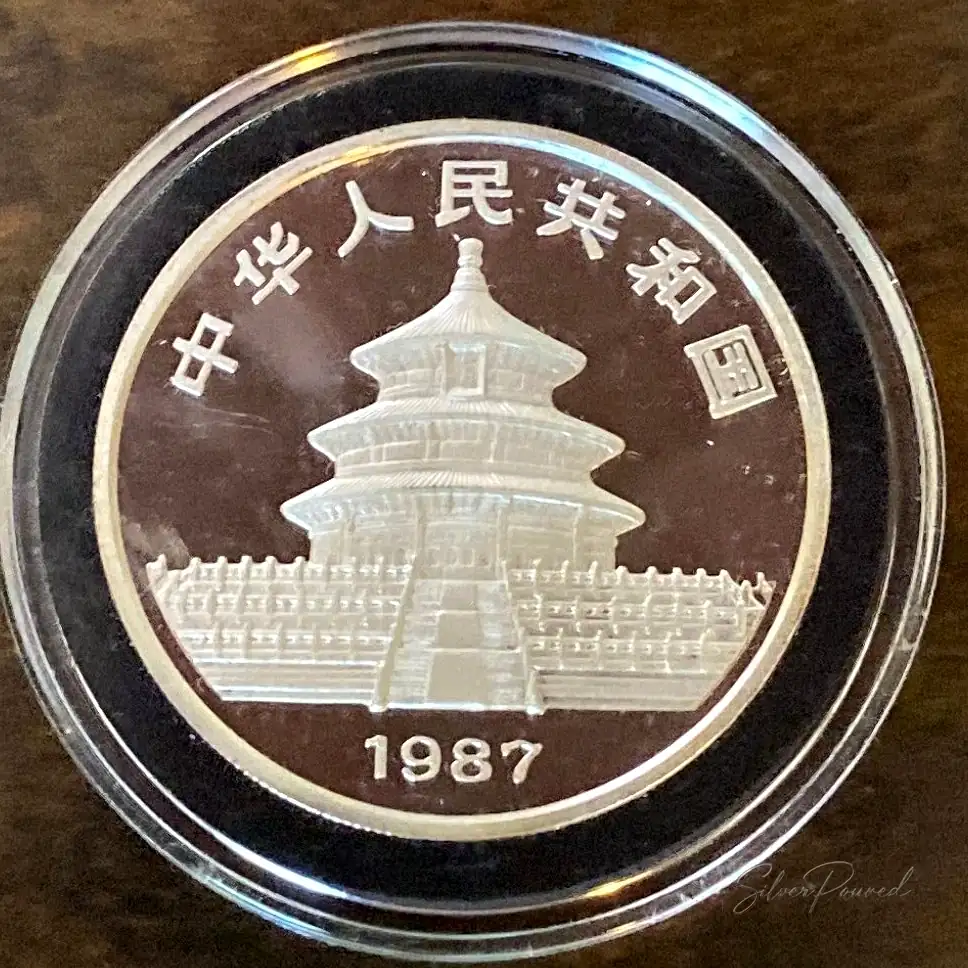
This example also demonstrates why series context matters. A collector trying to complete an early Panda date run needs the correct year rather than simply another ounce of silver. Once buyers begin pursuing specific issues, the market starts responding to the available supply of those particular coins.
The same principle appears across many government bullion programs. A coin can begin with intrinsic metal value and later develop a substantial collector component because production, survival, condition, or series demand makes that exact issue more difficult to replace.
Government documentation can make a mintage easier to verify, but an official production figure still needs market context. A scarce date in a heavily collected series may behave very differently from an equally scarce issue with little following. Documentation establishes supply; collector behavior determines what that supply means in the marketplace.
Serialized Limited Mintage Silver
Serial numbers identify individual pieces within a production run. With limited mintage silver, serialization can strengthen traceability by connecting an individual bar or round to a defined release and documented production sequence.
Some numbers also attract additional demand. Very low numbers, the final number in a run, repeating digits, round numbers, or matching numbers across a set may appeal to collectors. That interest is subjective, however. Number 001 may command a premium to one buyer while another collector cares only about owning any example from the release.
Collectors should distinguish a serial number from proof of total mintage. A piece marked 250 does not necessarily establish that only 250 were produced. The producer’s documentation must explain the size of the run. Serialization is strongest when the numbering system and final production total can both be verified.
Original packaging and certificates can add context to serialized limited mintage silver. When a certificate identifies the product, production total, purity, weight, and serial number, keeping that documentation with the bullion can make future authentication and resale easier.
Hand-Poured Limited Mintage Silver
Hand-poured silver is naturally suited to small production because the manufacturing process can involve melting, pouring, cooling, stamping, finishing, and handling individual pieces or small batches. Independent producers may create runs dramatically smaller than mainstream machine-produced bullion.
Collectors may value pour lines, cooling patterns, hand stamps, irregular shapes, toning, and other characteristics that make one piece visibly different from another. In this market, craftsmanship and producer identity can matter alongside the published quantity.
Small production alone does not guarantee a strong resale market. A recognized pourer with an established collector following may support significant premiums, while an unknown producer can struggle to attract buyers even with a tiny output. Provenance and reputation become particularly important when limited mintage silver comes from private or artisanal production.
Collectors should also determine whether the producer documents individual releases. Stamped weights, purity marks, serial numbers, certificates, archived release information, and recognizable maker marks can all make an older hand-poured piece easier to research when it eventually reaches the secondary market.
Fractional Limited Mintage Silver
Fractional silver combines small precious-metal weight with manufacturing costs that are spread across less silver. For that reason, fractional bullion often carries a higher premium per ounce even before scarcity is considered.
When fractional products also have restricted production, collectors may be paying for two separate premium drivers: the economics of manufacturing a small piece and the collectible premium attached to the limited run. Mini bars, fractional rounds, fractional government coins, and small poured pieces can therefore sell at prices that appear very high when measured only against melt value.
That does not make every fractional release a good purchase. Buyers should compare the premium with the actual production number, producer reputation, packaging, condition, and resale demand. The smaller silver weight makes disciplined premium analysis especially important.
Fractional limited mintage silver can nevertheless attract dedicated buyers because small pieces make complete sets visually interesting and may allow collectors to pursue scarce products without buying a much larger quantity of metal. The collectible proposition should still be evaluated separately from the bullion proposition.
What Happens After a Limited Release Sells Out?
A limited release enters a different market once original inventory disappears. During launch, collectors may be able to purchase directly from a mint, refiner, artist, or bullion dealer. After the product sells out or production permanently closes, buyers must locate existing pieces through dealers, auctions, shows, private transactions, or secondary marketplaces.
That transition can matter because the producer can no longer satisfy new demand with additional pieces from the same completed run. If 1,000 examples constitute the final production, the original supply cannot rise to 1,500 merely because more collectors become interested later.
Effective market supply can actually move in the opposite direction. Pieces enter long-term collections, original buyers stop selling, packaging is lost, surfaces become damaged, or examples disappear from public circulation. As fewer desirable pieces remain available, competition can increase if demand survives.
But “sold out” should never be confused with “valuable.” Products can sell out because the run was tiny, because launch marketing was successful, or because initial buyers speculated on future demand. Long-term limited mintage silver premiums require continued interest after that launch excitement has passed.
Why Future Supply Cannot Increase
Fixed production is one of the most important differences between a completed collectible release and replaceable generic bullion. A generic silver bar can be substituted with another newly manufactured bar of the same weight and purity. A completed collectible run cannot be recreated as additional originals.
This does not mean another producer cannot make a similar design or that a mint cannot release a later anniversary product. It means those new pieces belong to different production runs. They do not increase the number of originals from the earlier release.
For limited mintage silver, fixed supply becomes most powerful when the collector base expands after production has ended. More buyers competing for the same finite group can push premiums upward. If demand contracts instead, fixed supply alone may do little to support price.
A sold-out release has fixed original supply, but that is only the beginning of the analysis. The important question is what happens to demand afterward. Limited mintage silver becomes genuinely scarce in the marketplace when collectors continue seeking a completed release while available examples steadily disappear into long-term holdings.
Limited Mintage vs. Traditional Numismatic Scarcity
Not every scarce silver coin began life as a deliberately limited collectible. Traditional numismatic scarcity can develop for very different reasons. A circulating coin may have had a relatively small original mintage, experienced heavy use, been melted, suffered attrition, or simply survived poorly in desirable condition.
This distinction is useful because intentional limited mintage silver starts with restricted production as part of the product. A traditional key-date coin may become scarce through a combination of original mintage and decades of survival history.
1932-S Washington Quarter: A Different Kind of Low Mintage
The 1932-S Washington Quarter provides a strong contrast. With an original mintage of 408,000 pieces, it is recognized as one of the key dates of the Washington Quarter series. Its scarcity comes from traditional coin production and numismatic demand rather than from being marketed as a modern limited-edition bullion release.
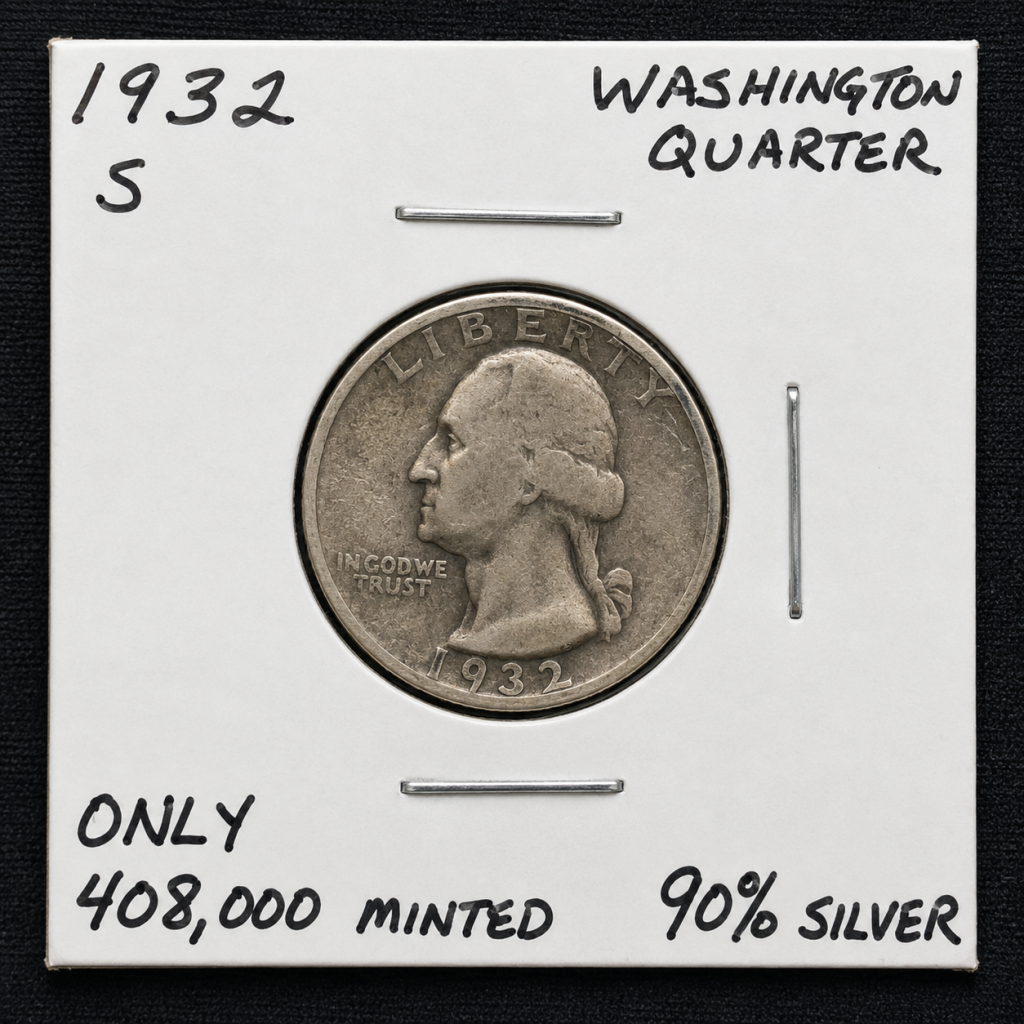
1932-S Washington Quarter obverse — a traditional numismatic key date with a 408,000-piece mintage.
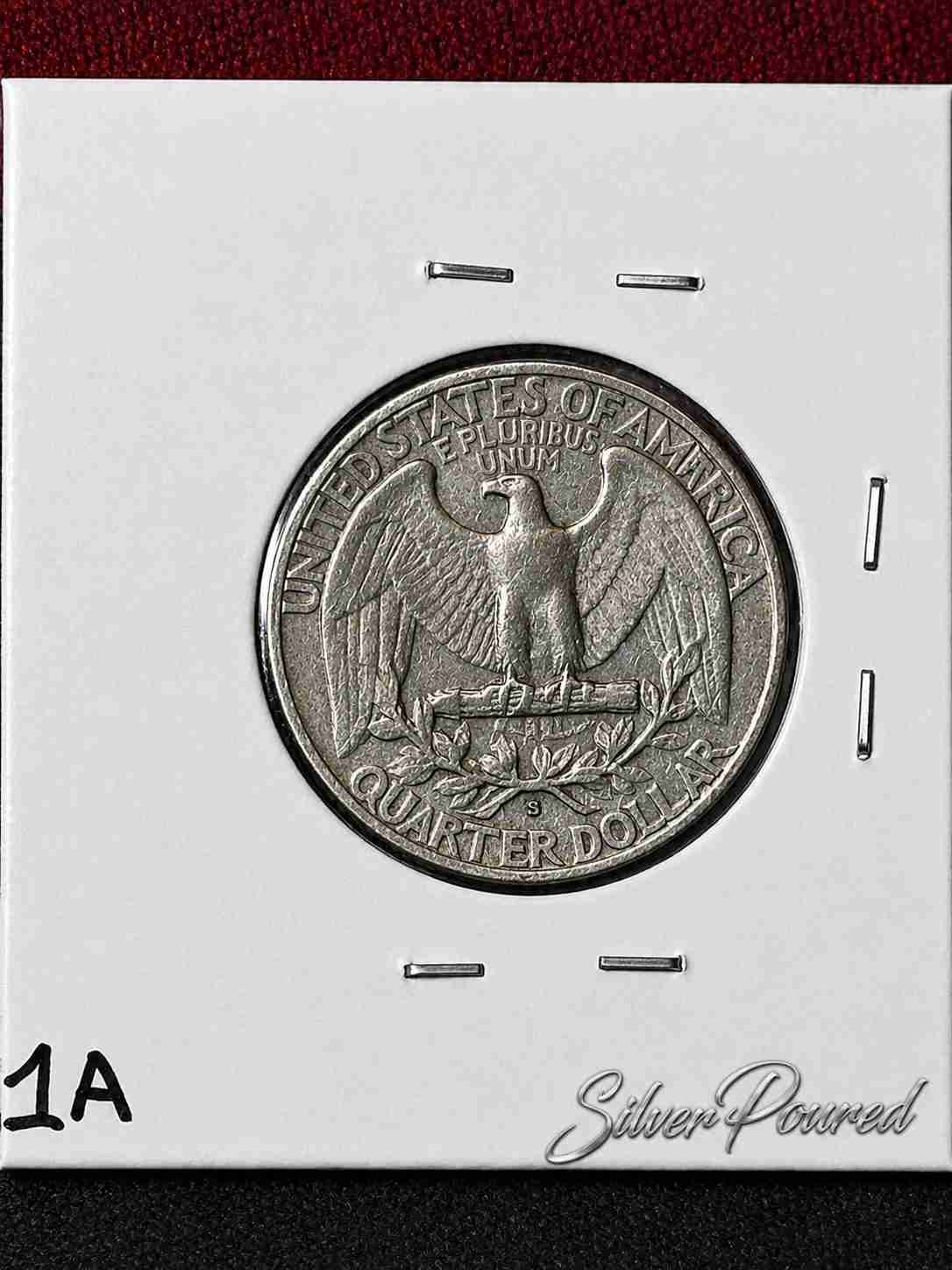
1932-S Washington Quarter reverse showing the San Francisco mintmark.
Both categories can produce strong collector premiums, but the mechanisms are different. The Washington Quarter belongs to a circulating coin series where date-and-mint collecting, condition, survival, and historical demand shape value. A modern limited bullion release begins with intentionally restricted production and usually enters the market as a collectible from day one.
Understanding that difference prevents collectors from treating every low number as equivalent. A mintage of 408,000 can represent a major key in one traditional coin series, while 10,000 pieces might be considered plentiful in a niche modern product with only a small collector base.
Limited Mintage Silver vs. Vintage Silver
Vintage silver can also become scarce without having been intentionally limited at release. Older bars and rounds may disappear through melting, industrial use, damage, estate holdings, or decades of private ownership. The surviving population can become much smaller than the original production.
Modern limited mintage silver offers a different form of scarcity because collectors may know the production ceiling from the beginning. That documentation can make the initial supply easier to understand, but vintage products have the advantage of time: decades of market history may reveal which producers and designs developed lasting collector recognition.
Neither category is inherently superior. Some collectors prefer documented modern production and complete original packaging. Others prefer discontinued refiners, older pour styles, historical provenance, and the uncertainty surrounding surviving vintage populations.
Condition, Packaging, and Documentation
Condition can have a larger effect on collectible bullion than on generic stacking silver. Limited mintage silver often depends on collector presentation as well as metal content, so scratches, fingerprints, damaged holders, missing packaging, or cleaning can materially weaken the premium.
Original presentation can matter as well. Boxes, assay cards, certificates of authenticity, serial-number cards, capsules, and sleeves help establish how the product was originally sold. Complete examples may be easier to authenticate and can appeal to collectors who want the release in its original form.
Documentation is particularly important for obscure private issues. Years after a producer disappears or a product leaves the market, a certificate or original package may preserve information that is difficult to reconstruct from the silver piece alone.
Collectors should avoid unnecessary handling. Proof-like fields, colorized surfaces, antiqued finishes, and hand-poured pieces can all react differently to contact. Preserving the product as acquired generally provides more options than attempting to clean or improve it later.
How to Protect Limited Mintage Silver
Storage should protect both the silver and the collectible components surrounding it. Capsules, original boxes, sealed packaging, slabs, or appropriate holders can reduce direct handling and environmental exposure. Storage conditions should be clean, stable, and dry.
Keep certificates, serial-number records, receipts, and original packaging with the corresponding piece. If a collection contains multiple serialized products, maintaining an inventory can prevent documentation from becoming separated from the correct item.
A basic inventory can record producer, product name, silver weight, purity, mintage, serial number, purchase date, price paid, packaging, condition, and storage location. Those records become increasingly useful as a collection grows or eventually passes to another owner.
Good storage preserves more than appearance. It preserves information. For limited mintage silver, keeping the original holder, documentation, serial-number record, and product history together can make a future buyer more confident about exactly what is being offered. That becomes especially valuable years after a release has disappeared from the original producer’s inventory.
What to Evaluate Before Buying Limited Mintage Silver
Before buying limited mintage silver, begin with the product rather than the advertised scarcity. Confirm the producer, silver weight, purity, format, finish, stated production limit, final mintage if available, serial number if applicable, and the packaging or documentation originally supplied with the release.
Next, determine whether the production figure can actually be verified. Government-mint records, producer announcements, certificates, archived product pages, assay cards, and other primary documentation are stronger evidence than a seller repeating an unsupported number. The lower the claimed mintage and the higher the premium, the more important verification becomes.
Then examine demand. Look at completed sales rather than relying only on active listings. Determine whether examples sell consistently, whether collectors actively pursue the producer or series, and whether the product remains difficult to locate. A small production run with little secondary-market activity may be scarce without being especially liquid or valuable.
| Factor | What to Evaluate | Why It Matters |
|---|---|---|
| Production | Maximum and final mintage | Establishes the original potential supply. |
| Documentation | Producer records, certificates, serial numbers | Helps verify scarcity and product identity. |
| Demand | Completed sales and collector activity | Shows whether buyers actually compete for the product. |
| Availability | Number and frequency of examples offered | Reveals practical secondary-market scarcity. |
| Condition | Surfaces, holder, packaging, completeness | Can materially influence collectible premiums. |
| Premium | Price above underlying silver value | Shows how much of the purchase depends on collectibility. |
Finally, calculate how much of the asking price represents silver and how much represents collectible premium. A buyer paying a modest amount above melt is taking a different risk than someone paying several times the metal value. As the collectible component increases, research becomes more important.
Common Mistakes When Buying Limited Mintage Silver
One common mistake is assuming that “limited edition” automatically means low production. Marketing language can describe a product as limited without clearly identifying how many pieces were ultimately made. Collectors should look for a documented production figure rather than relying on the phrase alone.
Another mistake is assuming the smallest mintage must produce the highest value. Demand can overwhelm that logic. A 500-piece release from an unknown producer may attract less competition than a 10,000-piece issue from a series with thousands of dedicated collectors.
Collectors can also overpay during launch excitement. Countdown timers, rapidly changing inventory, social-media attention, and claims that a product is almost sold out can create urgency. None of those signals establishes what the secondary market will pay after the initial release period ends.
Ignoring condition is another risk. Paying a strong collectible premium for a scratched, cleaned, incomplete, or poorly stored example may make resale more difficult. When multiple examples are available, buyers should compare the actual quality of the pieces rather than focusing exclusively on mintage.
The words “limited edition” are not a valuation method. Strong limited mintage silver should have evidence behind the premium: documented production, identifiable scarcity, credible provenance, desirable condition, and a market of buyers who continue seeking the product after its original release. When those pieces are missing, a small number printed on a package may mean far less than it appears.
How Collectors Research Limited Mintage Silver
Research should begin as close to the original source as possible. When evaluating limited mintage silver, government-mint records, producer announcements, certificates, packaging, archived product information, and official sales data can help establish what was actually produced.
Secondary-market research answers a different question. Completed auctions, dealer sales, coin shows, collector marketplaces, and other actual transactions help reveal what buyers are paying now. Asking prices can provide context, but an unsold listing only establishes what a seller hopes to receive.
Collectors should compare more than one transaction whenever possible. An unusually high auction result may reflect two aggressive bidders, exceptional condition, a desirable serial number, complete packaging, or some other characteristic that does not apply to an ordinary example.
Time matters too. Looking across several months or years can reveal whether premiums are strengthening, weakening, or remaining stable. That longer view is particularly useful for limited mintage silver because thin markets can produce large price differences between individual transactions.
How Market Cycles Affect Collectible Premiums
Collectible silver does not operate independently of the broader precious-metals market. When silver attracts intense attention, new buyers may enter the market and established collectors may become more active. Popular limited releases can experience stronger competition during those periods.
During quieter markets, buyers may become more selective. Some shift toward low-premium bullion, while others use weaker demand to search for collectible pieces at prices below previous highs. Premiums can therefore expand or contract even when the underlying production number never changes.
The strongest limited mintage silver tends to maintain collector recognition across more than one market cycle. Respected producers, established series, attractive designs, documented production, and genuine scarcity can help a product retain attention after temporary launch excitement disappears.
Collectors should still avoid assuming historical premiums guarantee future results. Preferences change, new series compete for attention, and economic conditions affect discretionary collecting. Scarcity is permanent once production closes, but demand is not.
Selling Limited Mintage Silver
Selling collectible bullion requires identifying the market that recognizes the product. A generic bullion buyer may evaluate a piece primarily from its silver content, while a specialist collector may understand the producer, series, mintage, serial number, or historical significance and assign a much larger premium.
Presentation can improve that process. Clear photographs of both sides, accurate weight and purity information, serial-number documentation, original packaging, certificates, and an exact product description help potential buyers understand what they are evaluating.
Liquidity varies. Generic bullion can often be converted to cash quickly because buyers understand the metal value immediately. Limited mintage silver may require more time because the seller must locate someone willing to pay for the collectible component as well as the silver.
That does not necessarily make collectible bullion illiquid. Popular sold-out releases can have active markets. The important distinction is that achieving the strongest premium may require reaching the correct collector rather than accepting the first melt-based offer available.
How to Estimate Resale Value
Begin with intrinsic silver value. Knowing the approximate melt value establishes a baseline and shows how much of the market price represents premium. Then identify completed sales for the same product rather than merely similar silver items.
Match the comparison as closely as possible. Producer, design, weight, finish, serial number characteristics, condition, packaging, and certification can all affect price. A complete boxed example should not automatically be valued from the sale of a damaged loose piece.
Dealer offers and auction results may differ because each selling method has different costs, audiences, and timelines. A dealer needs room for resale, while an auction can expose the piece directly to competing collectors but may involve fees and uncertain final pricing.
A reasonable estimate of limited mintage silver value therefore uses a range rather than one perfect number. Melt value establishes the floor, comparable transactions establish market evidence, and the specific quality of the piece determines where it may fall within that range.
Building a Limited Mintage Silver Collection
A focused collection can be easier to understand than an assortment of unrelated low-production products. Collectors building around limited mintage silver may choose a particular producer, mint, series, theme, weight, finish, era, or manufacturing style and use that focus to make buying decisions more disciplined.
Some collectors specialize in serialized bars. Others pursue government bullion with low annual mintages, hand-poured pieces from specific makers, fractional releases, commemorative themes, or matching serial-number sets. A clear direction can make purchasing decisions more disciplined.
Budget matters because collectible premiums can consume money that could otherwise purchase additional silver weight. A collector primarily interested in accumulating ounces may prefer generic bullion, while someone interested in rarity and design may intentionally devote more of the budget to premiums.
Those approaches can coexist. A collection can contain low-premium silver for metal exposure and selected limited mintage silver for collectibility. The important part is knowing which role each purchase is intended to serve.
Limited Mintage Silver Compared With Other Silver
| Silver Category | Primary Value Driver | Scarcity Mechanism |
|---|---|---|
| Generic Bullion | Silver content and ordinary dealer premium | Usually replaceable with comparable newly produced bullion |
| Limited Mintage Silver | Silver content plus collectible premium | Restricted or permanently completed production |
| Serialized Bullion | Silver, production scarcity, and identifiable numbering | Numbered pieces within a defined release |
| Hand-Poured Silver | Silver, craftsmanship, producer reputation, and scarcity | Small-batch or artisanal production |
| Vintage Silver | Silver, producer history, age, and surviving availability | Natural attrition after production ends |
| Traditional Numismatic Silver | Date, mint, grade, survival, and collector demand | Original mintage combined with long-term survival |
The categories can overlap. Limited mintage silver may also be serialized, hand-poured, government-issued, vintage, or otherwise collectible depending on how the product was made and how the market later treats it. The labels are most useful when they explain why buyers may be paying above the value of the metal.
Frequently Asked Questions About Limited Mintage Silver
Does limited mintage silver always increase in value?
No. Restricted production can create scarcity, but long-term value also depends on collector demand, producer reputation, design, condition, documentation, and secondary-market activity. A low mintage without sustained demand does not guarantee a rising premium.
What is considered a low silver mintage?
There is no universal number. A mintage considered extremely low for a major government bullion series may be relatively large for an independent hand-poured producer. Production should be compared with similar products and with the size of the collector market pursuing them.
Is a maximum mintage the same as the number actually produced?
Not necessarily. A maximum mintage establishes a ceiling. Final production may be lower if the producer stops before reaching that limit. When available, a final or declared mintage provides stronger evidence of the number actually produced.
Does sold out mean a silver product is rare?
No. Sold out means the original inventory is no longer available from that source. The product may still be common on the secondary market. Collectors should examine final production, current availability, and continuing demand before treating a sold-out release as scarce.
Are serialized silver bars worth more?
They can be. Serialization can improve traceability and collector interest, while certain numbers may attract additional demand. The premium still depends on the producer, total production, product popularity, condition, documentation, and market demand.
Does original packaging matter?
It can. Boxes, certificates, assay cards, capsules, and serial-number documentation can make a collectible release more complete and easier to authenticate. The effect varies by product, but collectors often prefer examples retaining their original presentation.
Is limited mintage silver good for stacking?
It depends on the goal. Stackers focused on maximizing silver weight usually favor lower-premium bullion. Collectors may intentionally accept a higher premium for limited mintage silver because they value scarcity, design, producer reputation, or long-term collectible potential in addition to metal content.
What is more important: mintage or demand?
Neither should be evaluated alone. Mintage describes original supply, while demand determines how strongly buyers compete for that supply. The most powerful scarcity usually occurs when documented low production is paired with sustained collector interest and limited market availability.
Final Thoughts on Limited Mintage Silver
Limited mintage silver is most useful as a collecting concept when scarcity can be documented and explained. A restricted production run creates finite original supply, but the premium above silver value depends on what happens after those pieces enter the market.
Strong collectible releases tend to combine several characteristics: credible production records, respected producers, appealing designs, good condition, original documentation, limited secondary-market availability, and buyers who continue pursuing the product after its initial release.
Related SilverPoured Resources
Continue researching limited mintage silver through SilverPoured resources covering collectible bullion, serialized products, scarce silver bars, fractional premiums, live silver prices, melt value, and the market forces that influence premiums above ordinary bullion value.
Collectible Silver & Scarcity
Best Hand Poured Silver Bars
Why Rare Silver Bars Cost More
Why Serialized Bullion Costs More
Why Vintage Silver Bars Cost More
Why Collectible Silver Sells For More
Silver Premiums & Fractional Bullion
Premium Over Spot Explained
Why Silver Bars Sell Above Spot
Why Silver Premiums Change
Fractional Silver Premiums
Small Silver Bars
Silver Prices & Value Tools
Silver Spot Price Today
Silver Melt Value Calculator
What Is Silver Melt Value?
Silver Spot vs Bid vs Ask Price
Best Silver Dealers
Purchase Precious Metals from a Trusted Dealer
Collectors researching limited mintage silver may also choose to own newly produced bullion where pricing is tied more directly to precious-metal content. Collectible releases can carry substantial premiums for restricted production, design, serialization, condition, or demand, while standard investment-grade bullion may offer a more direct way to accumulate physical silver.
When purchasing physical precious metals, compare purity, silver weight, dealer premiums, total delivered cost, reputation, shipping policies, and product availability. Understanding how ordinary bullion premiums differ from collectible premiums helps buyers decide whether they are primarily paying for metal or for the scarcity attached to a specific release.
Collector Insight
Limited mintage silver becomes most compelling when a production number can be connected to real market scarcity. A documented run establishes original supply, but collector demand, surviving availability, condition, producer reputation, serialization, and original packaging determine whether that restricted production develops into a meaningful premium. The strongest collectible releases usually have both sides of the equation: a supply that cannot increase and buyers who continue competing for it.
Keep SilverPoured Free
SilverPoured is built to help collectors and precious-metals investors make smarter decisions through free calculators, original photography, coin research, value references, collector education, and independent market resources. Every page is created to make valuable precious-metals information available without requiring a paid subscription.
This limited mintage silver resource is designed to help collectors understand production limits, documented scarcity, serialization, surviving supply, bullion premiums, market demand, condition, and the difference between collectible silver and ordinary bullion. Every contribution helps support continued research, original photography, calculator development, and expansion of SilverPoured’s precious-metals education.
Your support allows SilverPoured to remain independent while building one of the web’s most comprehensive free libraries for coin collectors, bullion buyers, precious-metals researchers, and long-term investors.