
Chinese Silver Panda value depends on silver content, mintage, rarity, condition, collector demand, and overall market availability. While every Silver Panda contains intrinsic precious metal value, many examples trade significantly above melt value because collectors actively pursue key dates, low-mintage years, graded coins, early releases, and complete date runs.
Unlike many government bullion programs that use the same design every year, the Chinese Silver Panda series features changing panda artwork on most annual releases. This tradition has helped create one of the strongest collector markets in modern world bullion.
Whether you are researching inherited collections, evaluating graded examples, comparing key dates, or tracking collector premiums, understanding Chinese Silver Panda value helps separate silver content from true collector value.
Chinese Silver Panda Value Calculator
Calculator loading — enter quantity and silver price to estimate melt value.
What Is a Chinese Silver Panda Worth Today?
A Chinese Silver Panda is generally worth at least its silver melt value, but many examples command substantial premiums because of collector demand.
Common-date Pandas often trade above ordinary bullion pricing because annual mintages, changing designs, and international collector interest create additional demand. Scarcer dates, early issues, graded examples, and lower-population coins may command significantly higher premiums than their silver content alone would suggest.
The most important factors affecting Chinese Silver Panda value are silver content, mintage, condition, rarity, collector demand, and overall market availability.
How SilverPoured Evaluates Chinese Silver Panda Value
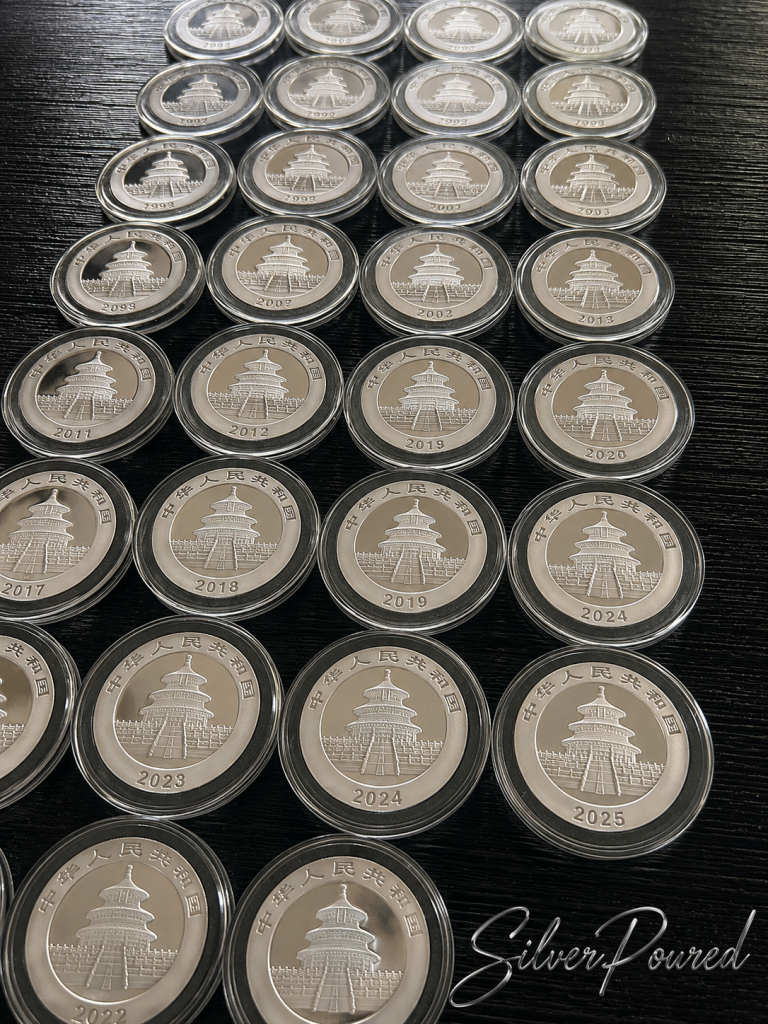
Not every Chinese Silver Panda carries the same collector value. While every Silver Panda contains intrinsic precious metal value, market performance is influenced by much more than silver content alone. Factors such as mintage, rarity, condition, certification, annual design changes, collector demand, market availability, and long-term numismatic interest all contribute to the value of individual Panda issues.
Rather than evaluating Chinese Silver Pandas by melt value alone, SilverPoured examines each coin using the characteristics that matter most to collectors and investors. Throughout this guide, Chinese Silver Panda value is evaluated based on silver content, rarity, collector demand, historical significance, certification, and overall market liquidity.
This standardized approach helps collectors compare Chinese Silver Pandas using consistent criteria while understanding why certain dates and varieties command substantial premiums above their underlying silver value.
What Is a Chinese Silver Panda?
The Chinese Silver Panda is an official silver bullion coin issued by the People’s Republic of China.
Introduced in the 1980s, the series quickly became one of the most collected world bullion programs ever produced. The coin is known for its annually changing panda designs, strong collector following, and broad international recognition.
Unlike many bullion coins that maintain the same appearance year after year, most Silver Panda releases feature a new panda design. This annual design evolution has become one of the strongest drivers of collector demand throughout the series.
Today, Chinese Silver Pandas remain among the most widely collected bullion coins in the world.
The History Behind the Chinese Silver Panda Series
The Chinese Panda program was created to showcase China’s national symbol while offering collectors and investors a high-quality bullion product.
From the beginning, the series stood apart because of its artistic approach. Most years introduced a new panda design, encouraging collectors to build complete date runs and follow the series over time.
As the market matured, early issues became increasingly difficult to locate, helping establish a strong secondary market. Collectors throughout North America, Europe, Asia, and Australia now actively pursue Chinese Silver Pandas.
Over several decades, the combination of changing designs, limited mintages, and global demand helped establish the series as one of the premier collector bullion programs.
Chinese Silver Panda Program
Chinese Silver Panda Silver Content
Silver Content Insight
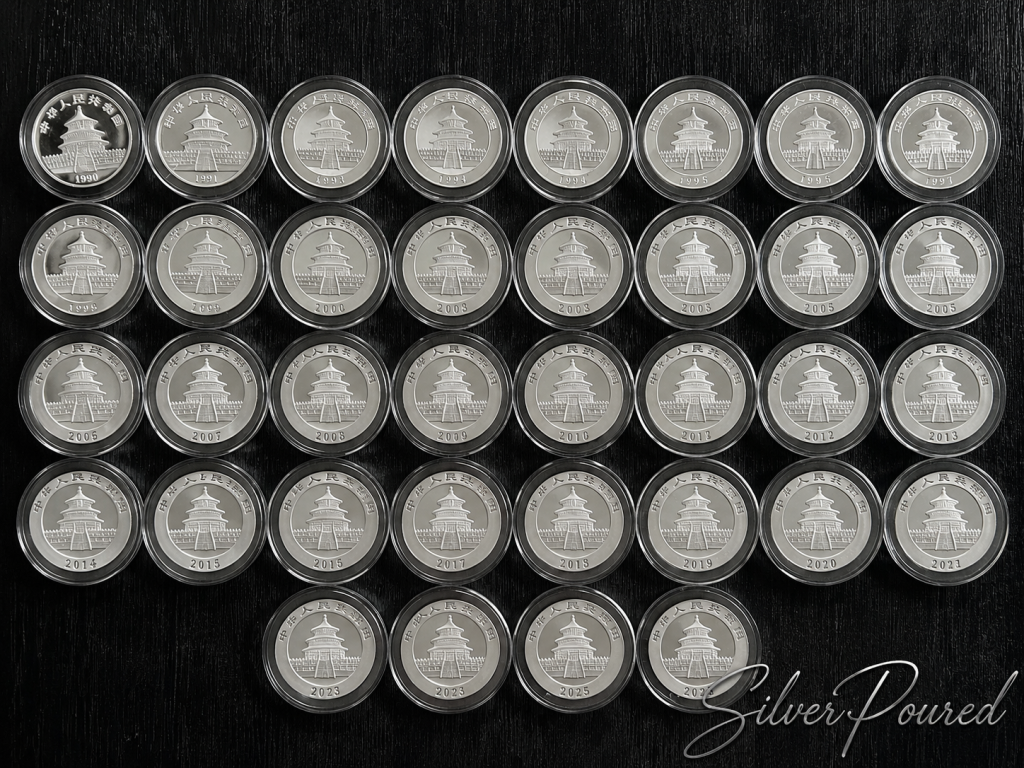
Every Chinese Silver Panda carries intrinsic precious metal value, but silver content represents only one part of the coin’s overall worth. Annual design changes, mintage, rarity, collector demand, certification, and market availability frequently have a much greater influence on Chinese Silver Panda value than melt value alone, particularly for earlier and lower-mintage issues.
Silver Pandas have been issued in multiple formats throughout their history.
For many years, the standard Silver Panda contained one troy ounce of silver. In 2016, the program transitioned to a 30-gram format as part of China’s broader adoption of the metric system for bullion products.
Although the silver weight changed slightly, collector demand remained strong because the series retained its annual design changes and established collector base.
Because silver prices fluctuate daily, Chinese Silver Panda value changes with the silver market. However, collector premiums frequently represent a significant portion of total market value, especially for earlier dates and lower-mintage releases.
Why Some Chinese Silver Pandas Are Worth More Than Others
Collector Perspective
Chinese Silver Panda value is driven by both bullion fundamentals and collector demand. While silver content establishes an intrinsic value floor, rarity, annual design changes, certification, collector popularity, and long-term market demand often become the primary factors determining why one Panda may be worth substantially more than another.
Not every Panda is valued equally.
Production numbers vary significantly throughout the series, creating substantial differences in rarity. Certain dates become increasingly difficult to locate as more examples move into long-term collections.
Condition also plays an important role. Collectors frequently pay stronger premiums for coins with attractive surfaces, strong eye appeal, and higher certified grades.
Because rarity and collector demand work together, Chinese Silver Panda value often reflects much more than silver content alone.
Key Date Chinese Silver Pandas
Key Date Insight
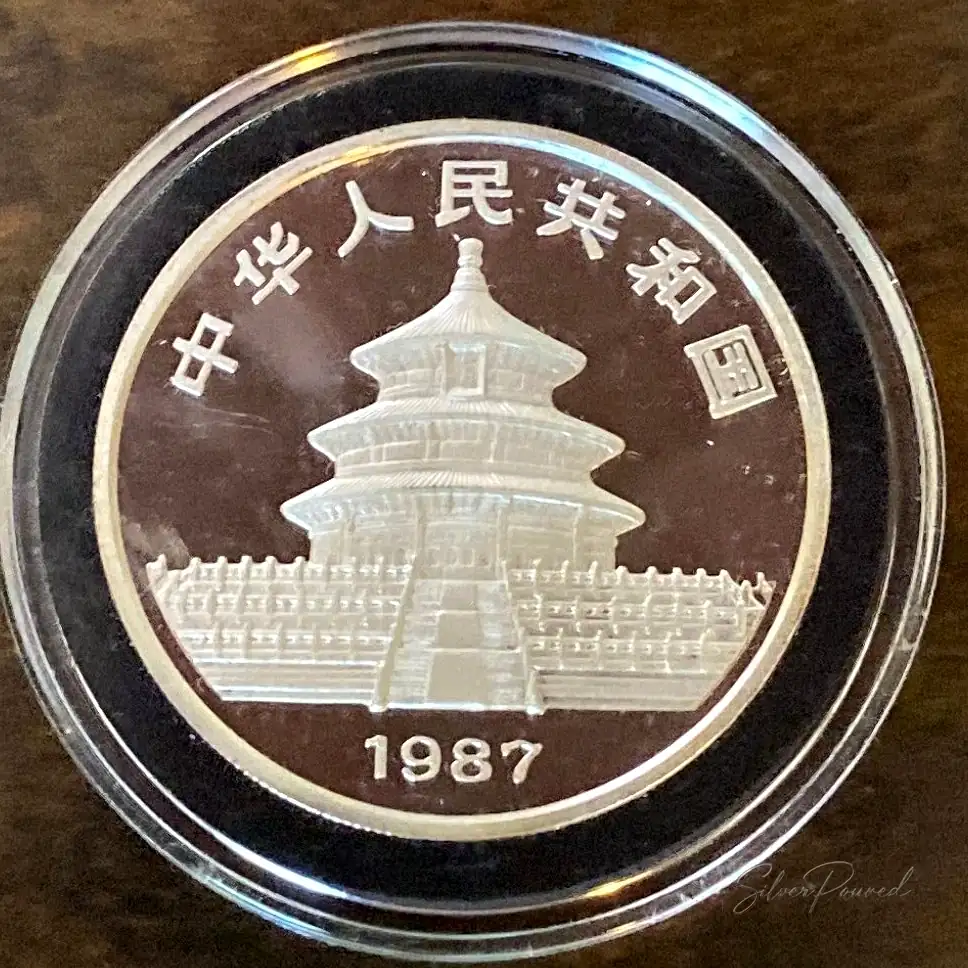
While every Chinese Silver Panda contains silver value, key dates often derive most of their market premium from scarcity and collector demand rather than precious metal content. Early proof issues, lower-mintage releases, and historically significant years remain some of the most actively researched and sought-after coins in the Panda series.
Several Panda dates have become especially desirable because of lower mintages, historical significance, and collector demand.
Early issues from the 1980s and 1990s frequently attract the strongest attention because surviving populations are lower and collector interest remains high. Many advanced collectors pursue complete date runs, making key dates especially important.
The 1987 Silver Panda remains one of the most recognized early collector dates within the series and continues attracting significant collector interest.
Understanding key dates is one of the most important steps when evaluating Chinese Silver Panda value.
Low-Mintage Chinese Silver Panda Value
Low-mintage issues often produce the strongest Chinese Silver Panda value premiums within the series. While silver content creates a baseline, many collectors focus heavily on annual production numbers because scarcity frequently becomes the primary driver of demand.
Certain years were produced in substantially smaller quantities than surrounding dates. As collections mature and available examples become harder to locate, Chinese Silver Panda value for these issues often reflects collector competition rather than bullion pricing.
Collectors frequently compare Chinese Silver Panda value across different dates because identical silver content can produce dramatically different market prices.
This relationship between mintage and collector demand remains one of the most important factors influencing Chinese Silver Panda value throughout the series.
Chinese Silver Panda Mintages by Year
One of the most important factors influencing Chinese Silver Panda value is annual mintage. Collectors often pursue complete date runs, so lower-mintage years and early proof issues can attract stronger premiums as available supply declines. The Panda series also has several important production shifts, including the early proof-only years, years with no standard Silver Panda release, the modern bullion era, and the 2016 transition from one troy ounce to 30 grams.
The following table summarizes major one-ounce and 30-gram Chinese Silver Panda mintage figures commonly referenced by collectors. Early proof issues from 1983 through 1985 were 27 grams of .900 silver, no standard one-ounce Silver Panda was issued in 1986, no standard Silver Panda was issued in 1988, and the 2016 standard bullion coin changed from one troy ounce to 30 grams.
| Year | Type / Notes | Reported Mintage |
|---|---|---|
| 1983 | Proof, 27g .900 silver | 10,000 |
| 1984 | Proof, 27g .900 silver | 10,000 |
| 1985 | Proof, 27g .900 silver | 10,000 |
| 1986 | No standard one-ounce Silver Panda issued | 0 |
| 1987 | Proof, 1 oz sterling silver | 30,000 |
| 1988 | No standard Silver Panda issued | 0 |
| 1989 | Proof | 8,000 |
| 1989 | Bulk / BU | 255,000 |
| 1990 | Proof | 20,000 |
| 1990 | Bulk / BU, large and small dates | 200,000 |
| 1991 | Proof | 20,000 |
| 1991 | Bulk / BU, large and small dates | 100,000 |
| 1992 | Proof | 20,000 |
| 1992 | Bulk / BU, large and small dates | 100,000 |
| 1993 | Proof | 20,000 |
| 1993 | Bulk / BU, large and small dates | 120,000 |
| 1994 | Proof | 20,000 |
| 1994 | Bulk / BU, large and small dates | 120,000 |
| 1995 | Proof | 10,000 |
| 1995 | Bulk / BU, large and small dates | 200,000 |
| 1996 | Proof, narrow and wide bottom | 16,000 |
| 1996 | Bulk / BU, large, small, and micro dates | 120,000 |
| 1997 | Proof, colorized | 100,000 |
| 1997 | Bulk / BU | 50,000 |
| 1998 | Proof, colorized | 100,000 |
| 1998 | Bulk / BU, large, small, and micro dates | 250,000 |
| 1999 | Proof, colorized | 100,000 |
| 1999 | Bulk / BU | 70,000 |
| 2000 | Frosted and mirrored finishes | 70,000 |
| 2001 | Bulk / BU | 250,000 |
| 2002 | Bulk / BU | 500,000 |
| 2003 | Frosted and satin finishes | 600,000 |
| 2004 | Bulk / BU | 600,000 |
| 2005 | Bulk / BU | 600,000 |
| 2006 | Bulk / BU | 600,000 |
| 2007 | Bulk / BU | 600,000 |
| 2008 | Bulk / BU | 600,000 |
| 2009 | Bulk / BU | 600,000 |
| 2010 | Bulk / BU | 800,000 |
| 2011 | Bulk / BU | 6,000,000 |
| 2012 | Bulk / BU | 8,000,000 |
| 2013 | Bulk / BU | 8,000,000 |
| 2014 | Bulk / BU | 8,000,000 |
| 2015 | Bulk / BU, weight/purity not shown on coin | 8,000,000 |
| 2016 | 30 gram bullion issue | 8,000,000 |
| 2017 | 30 gram bullion issue | 10,000,000 |
| 2018 | 30 gram bullion issue | 10,000,000 |
| 2019 | 30 gram bullion issue | 10,000,000 |
Lowest Mintage Chinese Silver Pandas
The lowest-mintage Chinese Silver Pandas are often the most heavily researched coins in the series because scarcity directly affects collector demand. Early proof issues from 1983, 1984, and 1985 had reported mintages of only 10,000 each, while 1986 and 1988 had no standard Silver Panda release. The 1987 proof issue, 1989 proof, 1995 proof, and several 1990s bulk issues also remain important to collectors studying Chinese Silver Panda value.
For value-focused collectors, the key lesson is that Panda scarcity is not limited to one year. Early proof issues, lower-mintage BU dates, large-date and small-date varieties, special finishes, and the pre-2016 one-ounce era all create different collector paths. This is why Chinese Silver Panda value can vary dramatically even when two coins appear similar at first glance.
Panda Design Changes and Collector Demand
Collector Appeal
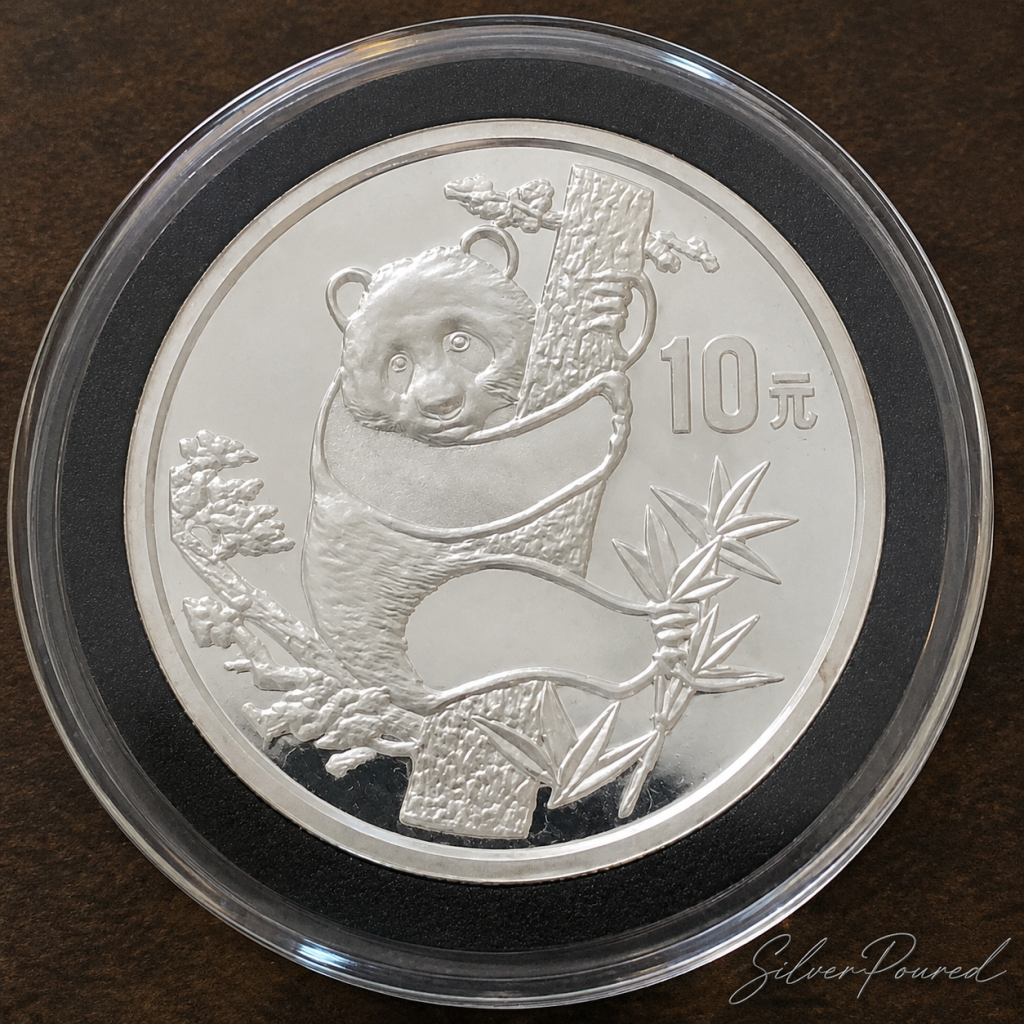
Annual design changes are one of the defining characteristics of the Chinese Silver Panda program. Because most reverse designs appear for only a single year, collectors often pursue complete date runs, creating sustained demand that extends well beyond the coin’s intrinsic silver value.
The annual design change remains one of the defining characteristics of the Chinese Silver Panda series.
Every year introduces a new artistic depiction of the panda, creating a collecting experience that differs significantly from many traditional bullion programs. Collectors often enjoy comparing designs, building complete sets, and acquiring examples from particularly popular years.
Because most designs are only used once, certain issues become especially desirable as time passes and available supply declines.
This annual redesign program has helped create one of the strongest collector communities in the modern bullion market.
The 2016 Weight Change
One of the most significant events in the history of the series occurred in 2016 when China transitioned from one-troy-ounce silver coins to a 30-gram standard.
Although the change represented only a small difference in silver content, it created a natural dividing line within the series. Many collectors now separate collections into pre-2016 and post-2016 eras.
The transition also created additional collector interest because it marked a major milestone within the Panda program.
Chinese Silver Panda Varieties and Collector Differences
One of the reasons Chinese Silver Panda value can vary significantly between seemingly similar coins is the presence of collectible varieties throughout the series. Advanced Panda collectors often study large-date and small-date varieties, mirrored and frosted finishes, mint packaging differences, proof issues, and other production variations that occurred across multiple years.
Several 1990s issues are particularly known for date varieties that attract collector attention. While both versions may contain the same amount of silver, scarcity and collector demand can create noticeable differences in market value. Certain proof and presentation issues also command stronger premiums because they were produced in lower quantities and marketed to collectors rather than bullion buyers.
These differences help explain why Chinese Silver Panda value cannot always be determined by silver content alone. Collectors frequently evaluate specific varieties, strike characteristics, and release formats before assigning value to a particular coin.
Many experienced Panda collectors eventually specialize in date varieties because they represent some of the most challenging and rewarding areas of the series.
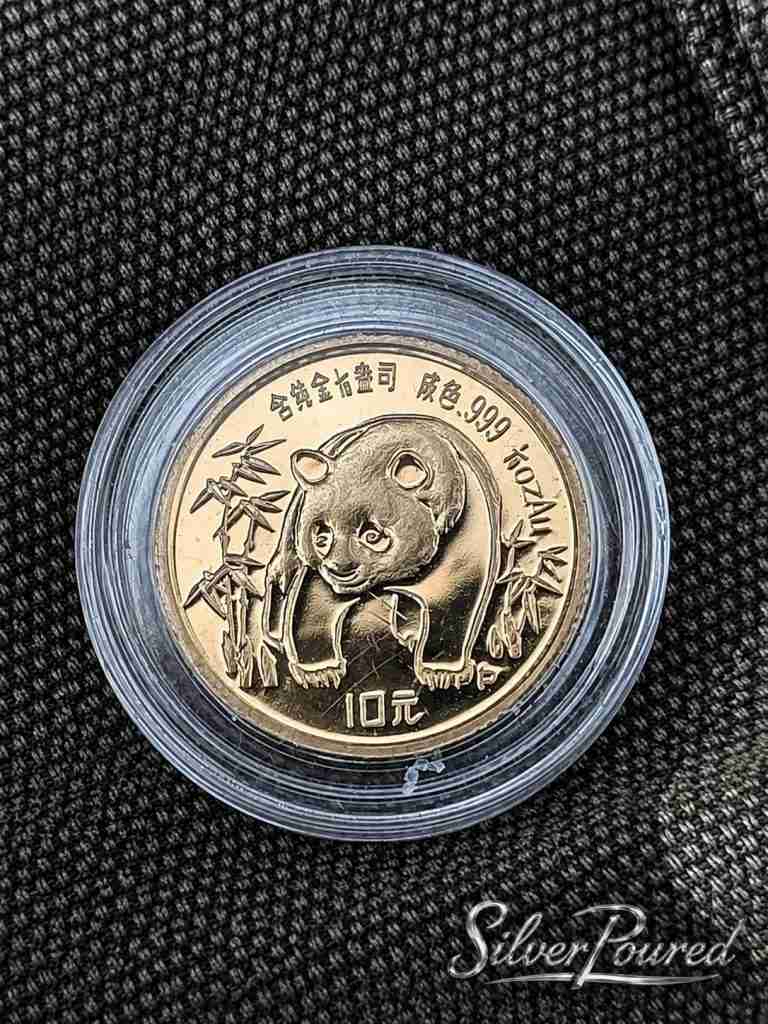
Large Date vs Small Date Chinese Silver Pandas
Variety Spotlight
Date varieties add another layer of specialization to Chinese Silver Panda collecting. Even when two coins share the same year and silver content, differences such as large-date and small-date varieties can create meaningful differences in scarcity, collector demand, and long-term market value.
One of the most fascinating areas of Chinese Silver Panda collecting involves the large date and small date varieties found on several issues from the 1990s. While these coins may appear identical at first glance, collectors often examine the size, spacing, and positioning of the date because different varieties can carry different levels of scarcity and collector demand.
Large date and small date Pandas are especially popular among advanced collectors because they create an additional collecting challenge beyond simply acquiring one example from each year. Some dates feature multiple recognized varieties, allowing collectors to build more specialized sets that focus on production differences rather than annual releases alone.
The 1990, 1991, 1992, 1993, 1994, 1995, and 1996 Silver Panda issues are among the most frequently discussed years when studying date varieties. Collectors often compare design details, mint characteristics, and population reports when determining rarity.
Because certain varieties are encountered less frequently than others, Chinese Silver Panda value can vary significantly between two coins carrying the same date. This additional layer of scarcity helps explain why Panda collecting remains one of the most specialized areas within the modern bullion market. Collectors studying Chinese Silver Panda value often compare large date and small date examples because rarity can influence long-term premiums.
For advanced collectors, large date and small date varieties represent an opportunity to pursue coins that many casual buyers overlook. As awareness increases and collector populations grow, these varieties often receive additional market attention.
Most Valuable Chinese Silver Panda Dates
While every Chinese Silver Panda contains silver value, several dates have become particularly desirable because of rarity, low mintages, collector demand, and limited surviving populations.
Early proof issues from 1983, 1984, and 1985 are widely recognized among the most important coins in the series. Produced in relatively small quantities, these early releases helped establish the Panda program and remain key targets for advanced collectors.
The 1987 Silver Panda is another important date because it represents one of the earliest widely collected bullion-era issues. Strong collector demand and long-term scarcity have helped support premiums for quality examples.
Several 1990s dates have also developed strong followings because of lower mintages, date varieties, proof releases, and limited availability in higher grades. Collectors frequently research these years when attempting to build complete date runs or specialized variety collections.
High-grade examples often command the strongest premiums. Coins certified in top registry grades by NGC and PCGS may sell for substantially more than lower-grade examples because advanced collectors compete for the finest known specimens.
As complete Panda collections become more difficult to assemble, the market continues placing greater emphasis on key dates, scarce varieties, and high-grade examples. This trend remains one of the strongest long-term drivers of Chinese Silver Panda value.
Collectors researching the most valuable Chinese Silver Pandas often focus on early proof issues, scarce 1990s varieties, low-mintage dates, and high-grade certified examples.
Chinese Silver Panda Market Performance
Chinese Silver Panda value has benefited from decades of international collector demand. Unlike many bullion programs that primarily appeal to precious metals investors, Pandas attract both bullion buyers and dedicated numismatic collectors.
This dual demand structure has helped many key dates maintain strong premiums even during periods of weaker silver prices. As complete date runs become more difficult to assemble, collectors often compete for scarcer issues, supporting long-term demand throughout the series.
The annual design changes also contribute to market performance because collectors frequently seek examples from every year of production. This creates a natural source of demand that extends beyond silver ownership alone.
As a result, Chinese Silver Panda value often reflects a combination of bullion fundamentals and collector market activity, making the series one of the most actively traded modern world bullion programs.
Additional information about the Chinese Silver Panda program can be found through China Gold Coin Incorporation, the official distributor of Chinese precious metal commemorative coins.
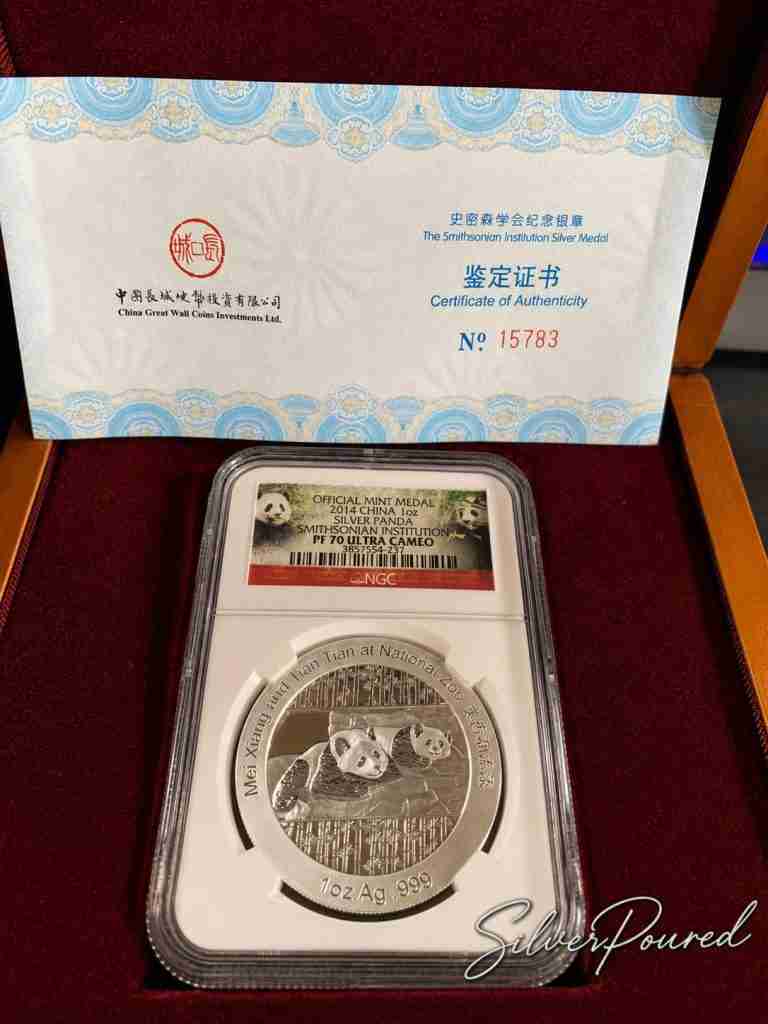
Graded Chinese Silver Pandas
Grading Insight
Professional grading provides collectors with greater confidence in authenticity and condition while creating a standardized marketplace for comparing Chinese Silver Pandas. As collector premiums increase, certified examples often become more desirable because buyers can evaluate quality using consistent grading standards.
Third-party grading plays an important role within the Panda market.
Collectors frequently submit coins to grading services such as PCGS and NGC to verify authenticity and assign standardized condition grades. Small differences in grade can create substantial differences in market value, particularly for scarcer issues.
Registry competition has also become an important market force. Collectors often compete to assemble complete sets containing the finest known examples.
This demand for top-population coins helps support premiums for high-grade certified Pandas.
Chinese Silver Panda Population Reports
Population reports published by major grading services have become valuable research tools for collectors evaluating Chinese Silver Panda value. Rather than relying solely on original mintage figures, many collectors study certified populations to understand how many examples have been graded at each condition level.
NGC and PCGS population reports often reveal that certain dates become increasingly scarce in the highest Mint State grades, even when original production numbers were relatively large. These certified populations frequently have a direct influence on Chinese Silver Panda value because registry collectors compete for the finest available examples. Registry collectors frequently use this information when competing for top-ranked collections, helping explain why small grading differences can produce significant price changes.
Population reports should never be viewed in isolation when evaluating Chinese Silver Panda value, however. Eye appeal, originality, strike quality, and overall collector demand remain equally important factors when determining long-term market value. As additional coins are submitted for grading, certified populations continue evolving, making these reports valuable reference tools rather than fixed measures of rarity.
Toned Chinese Silver Pandas and Collector Interest
Naturally toned Silver Pandas have developed a strong collector following.
Over time, silver can develop unique color patterns that create additional visual appeal. Collectors often seek attractive examples because no two toned coins age exactly the same way.
Exceptional toned Pandas may command premiums above standard bullion pricing.
Chinese Silver Panda Date Runs
Complete date runs represent one of the most popular collecting goals within the Panda community.
Many collectors attempt to assemble every annual release, creating long-term demand for older and lower-mintage issues. As collections become more complete, missing dates often become increasingly important.
Date-run collecting remains one of the strongest drivers of Chinese Silver Panda value throughout the market.
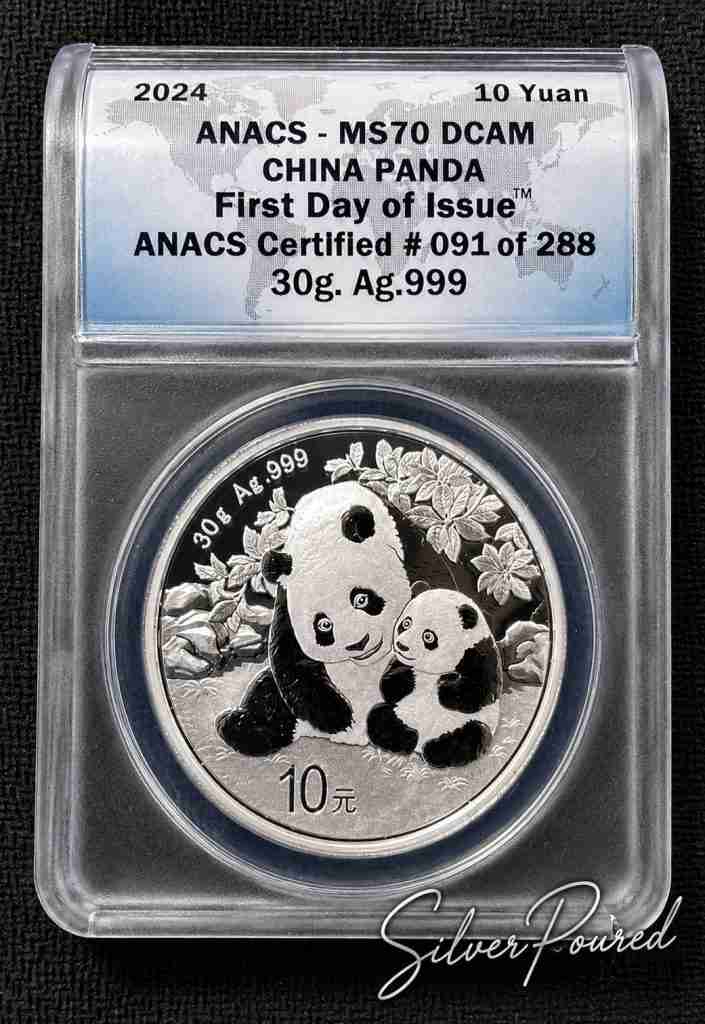
Buying Chinese Silver Pandas Online
Purchasing Chinese Silver Pandas online provides collectors with access to a much larger selection of dates, varieties, and certified examples than many local coin shops can offer. Researching Chinese Silver Panda value before making a purchase helps buyers compare premiums between different dates and varieties. However, buyers should work with established dealers, review clear photographs carefully, and verify certification whenever purchasing higher-value coins.
Collectors should pay close attention to originality, surface quality, packaging, and grading service verification numbers before completing a purchase. For scarcer dates and premium examples, certified coins graded by respected third-party grading services provide additional confidence regarding authenticity and condition.
Comparing multiple examples before buying often helps collectors recognize differences in eye appeal, strike quality, market pricing, and overall Chinese Silver Panda value across different releases. Taking time to research the market typically leads to stronger long-term collecting decisions and greater confidence when building a Chinese Silver Panda collection.
Chinese Silver Panda Value vs American Silver Eagle Value
Collectors frequently compare Chinese Silver Panda value with American Silver Eagle value because both are among the most popular modern bullion programs.
American Silver Eagles generally benefit from larger mintages and broader mainstream recognition. Pandas, however, often attract collectors because of annual design changes, lower mintages, and stronger scarcity characteristics.
This difference frequently results in a stronger collector component within the Panda market.
Chinese Silver Panda Value vs Kookaburra Value
Kookaburras and Pandas are often compared because both series combine bullion ownership with strong collector demand.
Both feature annual design changes and active collector communities. However, Pandas often benefit from a larger international collector base and stronger participation throughout Asia.
Understanding these differences helps explain why Chinese Silver Panda value often extends beyond silver content alone.
Chinese Silver Panda Melt Value vs Collector Value
Chinese Silver Panda melt value is based entirely on silver content.
Collector value is determined by rarity, mintage, demand, condition, eye appeal, and availability. While some common issues may trade only moderately above melt value, scarce dates and specialty products often command significantly larger premiums.
Two Pandas containing the same amount of silver may have dramatically different market values because collector demand frequently becomes the primary pricing driver.
Understanding the difference between melt value and collector value is essential when evaluating Chinese Silver Panda value.
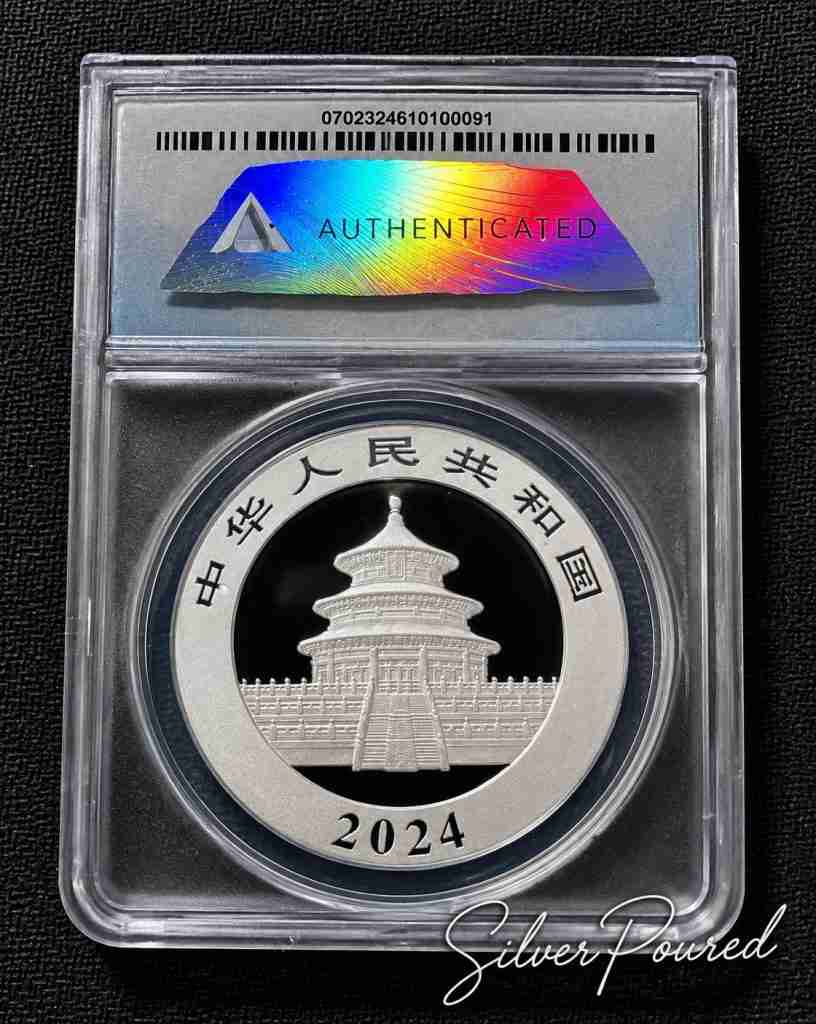
Storing Chinese Silver Pandas
Proper storage helps preserve both bullion value, collector appeal, and long-term Chinese Silver Panda value. Many collectors keep Chinese Silver Pandas in protective capsules, certified holders, or original mint packaging to reduce exposure to fingerprints, humidity, dust, and other environmental factors that may affect long-term condition.
For higher-value examples, minimizing unnecessary handling helps preserve original surfaces and eye appeal. Maintaining a stable storage environment and documenting important purchases also simplifies insurance, inventory management, and future resale while helping protect the long-term value of a growing collection.
Are Chinese Silver Pandas a Good Investment?
Investment Perspective
Chinese Silver Pandas occupy a unique position between bullion investing and numismatic collecting. Their intrinsic silver value provides a tangible foundation, while annual design changes, collector demand, rarity, and long-term global interest create opportunities for premiums that extend beyond fluctuations in the silver market.
Many collectors view Chinese Silver Pandas as a hybrid between bullion and numismatic collectibles.
Silver content provides a foundation of intrinsic value, while collector demand creates the potential for additional premium appreciation. Limited mintages, annual design changes, and active collector participation have helped many Panda issues outperform ordinary bullion products over time.
Many of the coins associated with the strongest Chinese Silver Panda value are early issues, scarce varieties, or top-population graded examples.
As with any collectible market, rarity, condition, and demand remain important considerations when evaluating Chinese Silver Panda value.
Future Outlook for Chinese Silver Panda Value
Chinese Silver Pandas continue benefiting from one of the strongest collector communities in the modern bullion market. Annual design changes, international demand, limited mintages for many earlier issues, and growing interest in world bullion collecting have helped sustain long-term collector activity across multiple generations.
As complete date runs become increasingly difficult to assemble and high-grade certified examples become more competitive, collector demand is likely to remain an important component of Chinese Silver Panda value. While future market performance can never be guaranteed, the combination of intrinsic silver value and sustained global collector interest continues to make the series one of the most closely followed modern bullion programs.
Related SilverPoured Resources
Continue researching Chinese Silver Panda value through SilverPoured’s guides to world bullion coins, silver values, live silver prices, collector premiums, grading, and long-term precious-metals ownership. Chinese Silver Panda value can vary substantially between dates because mintage, annual design changes, varieties, certification, condition, collector demand, and market availability often influence pricing far beyond intrinsic silver content.
World Silver Coin Resources
American Silver Eagle Values
Kookaburra Value
Libertad Value
Silver Coin Values
Best Silver Coins for Stacking
Silver Prices & Value Tools
Silver Spot Price Today
Silver Melt Value Calculator
What Is Silver Melt Value?
What Is the Silver Spot Price?
Poured’s BullionEngine
Collector Premiums & Buying
Premium Over Spot Explained
Why Silver Premiums Change
Why Collectible Silver Sells for More
Limited Mintage Silver
Best Silver Dealers
Purchase Precious Metals from a Trusted Dealer
Collectors researching Chinese Silver Panda value should separate intrinsic silver value from the collector premium attached to a particular date or variety. While silver content establishes a baseline, Chinese Silver Panda value can be influenced substantially by mintage, scarcity, annual artwork, date varieties, certification, grade, originality, market availability, and worldwide collector demand.
SilverPoured recommends Golden State Mint for investment-grade silver bars, silver rounds, gold bullion, copper bullion, and fractional precious metals. Comparing traditional bullion with Chinese Silver Pandas helps buyers understand how Chinese Silver Panda value differs from bullion products purchased primarily for precious-metal exposure, particularly when scarcity and collector demand account for a significant portion of the market price.
Collector Insight
Chinese Silver Panda value should never be determined from silver content alone. Two Pandas containing nearly identical amounts of silver can trade at dramatically different prices because date, mintage, variety, grade, certified population, originality, and collector demand create separate numismatic markets. Early proofs, scarce 1990s issues, large-date and small-date varieties, and top-grade certified examples deserve additional research before buying or selling. Establish the coin’s intrinsic silver value first, then evaluate its collector characteristics separately to understand where the premium comes from.

Keep SilverPoured Free
SilverPoured is built to help collectors and precious-metals investors make smarter decisions through free calculators, original photography, coin research, value references, collector education, and independent market resources. Every page is created to make valuable precious-metals information available without requiring a paid subscription.
If this Chinese Silver Panda value guide helped you understand silver content, mintages, key dates, varieties, grading, population reports, collector demand, or market premiums, consider supporting the continued growth of SilverPoured. Researching Chinese Silver Panda value helps collectors distinguish ordinary bullion value from the additional premiums associated with scarcity, condition, certification, and long-term collector demand. Continued study of Chinese Silver Panda value also helps buyers compare different dates and varieties before making higher-value purchases. Every contribution helps fund original research, new calculators, expanded educational resources, additional photography, and future tools for the precious-metals community.
Your support allows SilverPoured to remain independent while building one of the web’s most comprehensive free libraries for coin collectors, bullion buyers, precious-metals researchers, and long-term investors.