
Mercury dime silver value begins with the coin’s silver content. Every standard Mercury dime was struck from a 90% silver alloy and contains approximately 0.07234 troy ounces of pure silver. That fixed amount of precious metal creates a melt-value foundation that rises and falls with the silver market, while date, mint mark, condition, strike quality, rarity, and collector demand can push individual coins far beyond their intrinsic silver value.
Produced from 1916 through 1945, the Mercury dime is one of the most recognizable classic United States silver coins. Collectors know it for Adolph A. Weinman’s Winged Liberty Head design, important key dates such as the 1916-D, famous varieties including the 1942/41 overdate, and the Full Bands designation sought on sharply struck examples.
This guide explains how to calculate Mercury dime silver value and how to determine when a coin may be worth substantially more than melt. It also covers identification, mint marks, key dates, grading, certified populations, Full Bands, original surfaces, toning, cleaning, errors and varieties, storage, buying, selling, and the difference between bullion value and collector value.
Mercury Dime Silver Value Melt Calculator
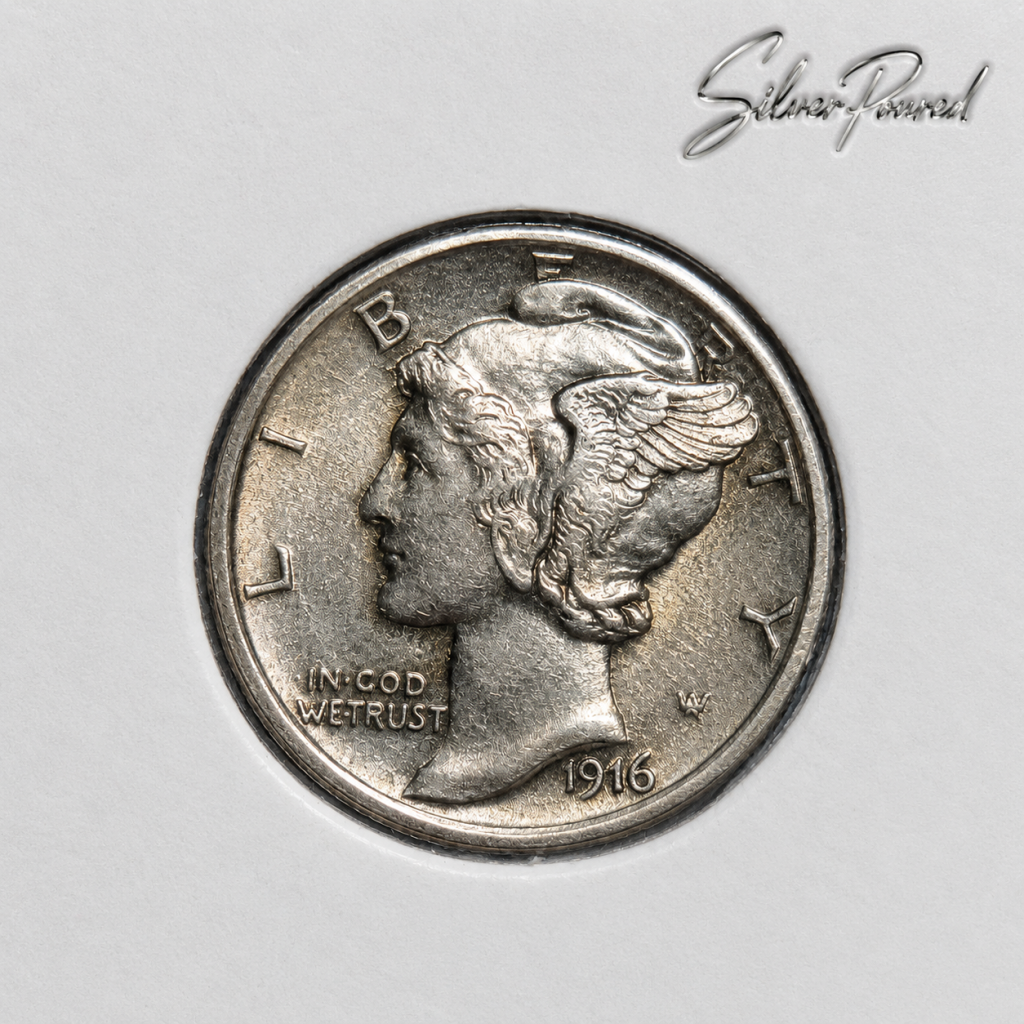
A standard Mercury dime contains approximately 0.07234 troy ounces of pure silver. The calculator on this page uses current silver pricing to estimate the intrinsic metal value represented by that silver content.
The basic calculation is straightforward: multiply 0.07234 troy ounces by the current silver spot price. The result establishes a melt-value baseline before any numismatic premium is considered.
| Silver Price per Troy Ounce | Approximate Mercury Dime Melt Value |
|---|---|
| $100 | $7.23 |
| $125 | $9.04 |
| $150 | $10.85 |
| $200 | $14.47 |
| $300 | $21.70 |
| $500 | $36.17 |
These examples illustrate why Mercury dime silver value changes directly with the silver market. The coin’s silver content remains fixed, but the dollar value of that metal changes whenever silver prices move. A live calculator is therefore more useful than a static price chart for determining current melt value.
Every standard Mercury dime contains the same fundamental amount of silver, but equal silver content does not create equal market value. Melt value establishes the precious-metal floor. Date, mint mark, rarity, preservation, strike quality, originality, certification, and collector demand determine whether a particular coin remains near that floor or develops a substantial numismatic premium.

How Much Silver Is in a Mercury Dime?
Each Mercury dime contains approximately 0.07234 troy ounces of pure silver. The circulating coin was produced from an alloy containing 90% silver and 10% copper, a composition shared by many United States dimes, quarters, and half dollars of the era.
The silver content does not change according to date, mint mark, grade, or rarity. A heavily circulated common-date Mercury dime and an exceptional key-date example began with the same basic silver composition. Mercury dime silver value separates only when the collector market assigns additional premiums for characteristics beyond that metal content.
That distinction is essential when evaluating Mercury dime silver value. Melt value measures the precious metal. Collector value measures what buyers are willing to pay for characteristics such as scarcity, preservation, strike, originality, variety, historical importance, and eye appeal.
Why Mercury Dimes Are Valuable
Mercury dimes occupy two markets at the same time. Silver buyers recognize them as fractional 90% United States silver, while coin collectors pursue them as a historic series with important dates, mint marks, varieties, grades, and strike characteristics. That overlap helps maintain demand for both common circulated coins and premium numismatic examples.
For common circulated dates, Mercury dime silver value may remain relatively close to the underlying metal value plus a physical-coin premium. Better dates and unusually attractive examples require a different analysis because their scarcity or condition can represent a much larger portion of the selling price.
Age alone does not make a Mercury dime rare. Millions were struck in many years, and substantial numbers survive. Mercury dime silver value therefore requires collectors to examine the exact date, mint mark, condition, originality, strike quality, and variety before deciding whether a coin belongs primarily in the bullion market or the collector market.
Mercury Dime Melt Value vs. Collector Value
Melt value is the intrinsic value of the silver contained in the coin. Because a Mercury dime contains approximately 0.07234 troy ounces of pure silver, its theoretical melt value can be estimated by multiplying that amount by the current silver price.
Collector value begins where the metal calculation ends. A scarce date, desirable mint mark, recognized variety, exceptional grade, Full Bands designation, attractive original toning, or unusually strong eye appeal can cause Mercury dime silver value in the marketplace to exceed melt by a wide margin.
This explains why two Mercury dimes containing exactly the same amount of silver can sell for dramatically different prices. One may be an ordinary circulated coin available in large quantities, while the other may represent a difficult date or condition that collectors actively compete to acquire.
| Value Factor | What It Measures | Potential Effect |
|---|---|---|
| Silver Content | Intrinsic precious-metal content | Establishes the melt-value foundation |
| Date and Mint Mark | Original issue and production source | Can identify common, semi-key, and key dates |
| Condition | Amount of wear and preservation | Higher grades can command larger premiums |
| Originality | Whether surfaces remain naturally preserved | Original surfaces generally attract stronger collector demand |
| Strike Quality | Sharpness of design details | Can become especially important for Full Bands coins |
| Collector Demand | Competition among buyers | Determines how strongly scarcity translates into price |
How to Identify a Mercury Dime
The Mercury dime is officially the Winged Liberty Head dime. Its obverse depicts Liberty wearing a winged Phrygian cap. The wings symbolize freedom of thought, but the portrait was widely mistaken for the Roman god Mercury, creating the nickname that collectors still use today.
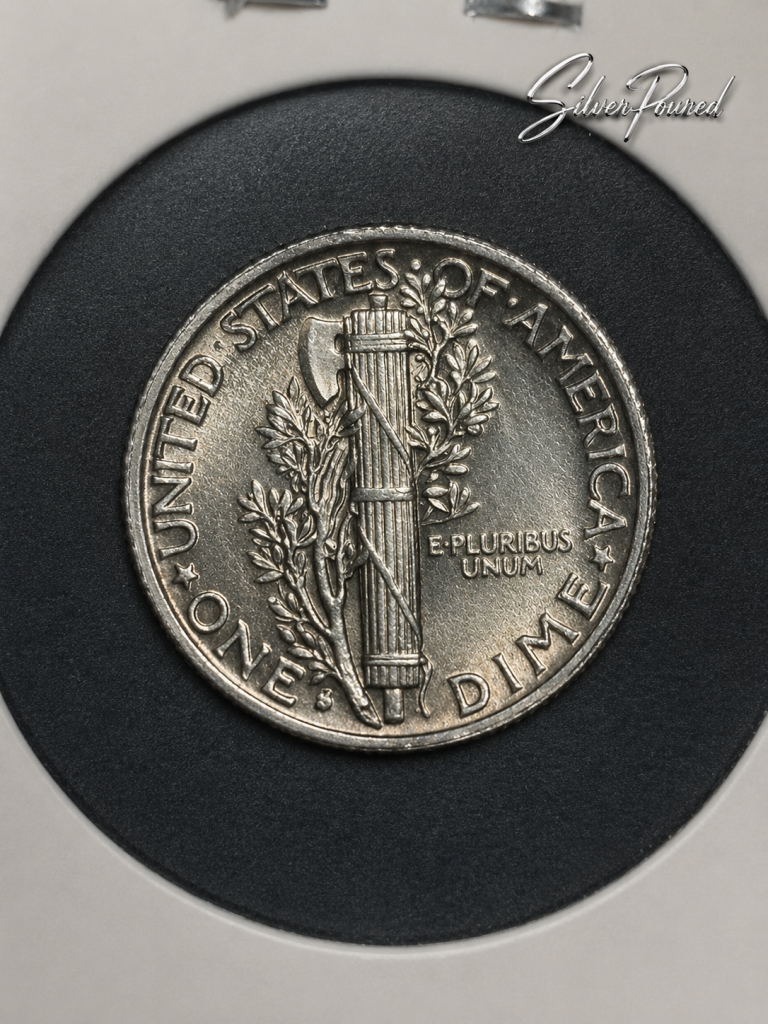
The reverse displays a fasces surrounded by an olive branch. The fasces represents strength and unity, while the olive branch represents peace. Together, the elements reflect the broader symbolism Adolph A. Weinman incorporated into the design.
Mercury dimes were struck at Philadelphia, Denver, and San Francisco. Philadelphia issues generally have no mint mark. Denver coins carry a “D,” and San Francisco coins carry an “S.” The mint mark appears on the reverse near the lower-left side of the fasces.
Identification matters because Mercury dime silver value can change dramatically once a collector moves beyond common bullion examples. Checking the date and mint mark before selling a group of Mercury dimes is one of the simplest ways to avoid accidentally treating a scarce coin as ordinary 90% silver.
Why Is It Called the Mercury Dime?
The familiar nickname comes from a misunderstanding of Weinman’s obverse design. Liberty wears a winged Phrygian cap intended to symbolize freedom of thought. Viewers associated the wings with Mercury, the messenger god of Roman mythology, and the unofficial name quickly became established.
The official name, Winged Liberty Head dime, better describes the intended subject. The distinction is more than trivia because it reveals the symbolism behind one of the most celebrated United States coin designs of the twentieth century.
Who Designed the Mercury Dime?
American sculptor Adolph A. Weinman designed the Mercury dime, which debuted in 1916. Weinman was also responsible for the Walking Liberty half dollar introduced during the same era, giving him an extraordinary legacy within United States numismatics.
His dime replaced the Barber dime and introduced a more expressive sculptural style. Liberty’s winged cap communicates freedom of thought, while the reverse combines symbols of national strength and peace. The design’s artistic reputation contributes to collector interest even though Mercury dime silver value begins with the coin’s measurable precious-metal content.
Mercury Dime Design Symbolism
The obverse and reverse were designed as more than decorative surfaces. Liberty’s winged cap represents intellectual freedom and independent thought. On the reverse, the fasces—a bundle of rods surrounding an axe—symbolizes unity and strength, while the olive branch represents peace.
That combination gives the Mercury dime a historical and artistic identity separate from its bullion value. Collectors can therefore appreciate the same coin simultaneously as 90% silver, an artifact of early twentieth-century American commerce, and a work of numismatic art.
Mercury Dime Key Dates and Important Varieties
The Mercury dime series contains several issues that should never be evaluated from silver content alone. The 1916-D is the defining regular-issue key date, while the 1921 and 1921-D are important lower-production issues. Collectors also pursue the famous 1942/41 and 1942/41-D overdate varieties.
| Date | Mint | Collector Importance |
|---|---|---|
| 1916-D | Denver | Major regular-issue key date |
| 1921 | Philadelphia | Important low-production issue |
| 1921-D | Denver | Important low-production Denver issue |
| 1942/41 | Philadelphia | Famous overdate variety |
| 1942/41-D | Denver | Scarce Denver overdate variety |
These issues demonstrate why every Mercury dime should receive at least a basic date-and-mint inspection before being sold as constitutional silver. A key date or recognized variety can carry a collector premium that overwhelms the underlying melt value.
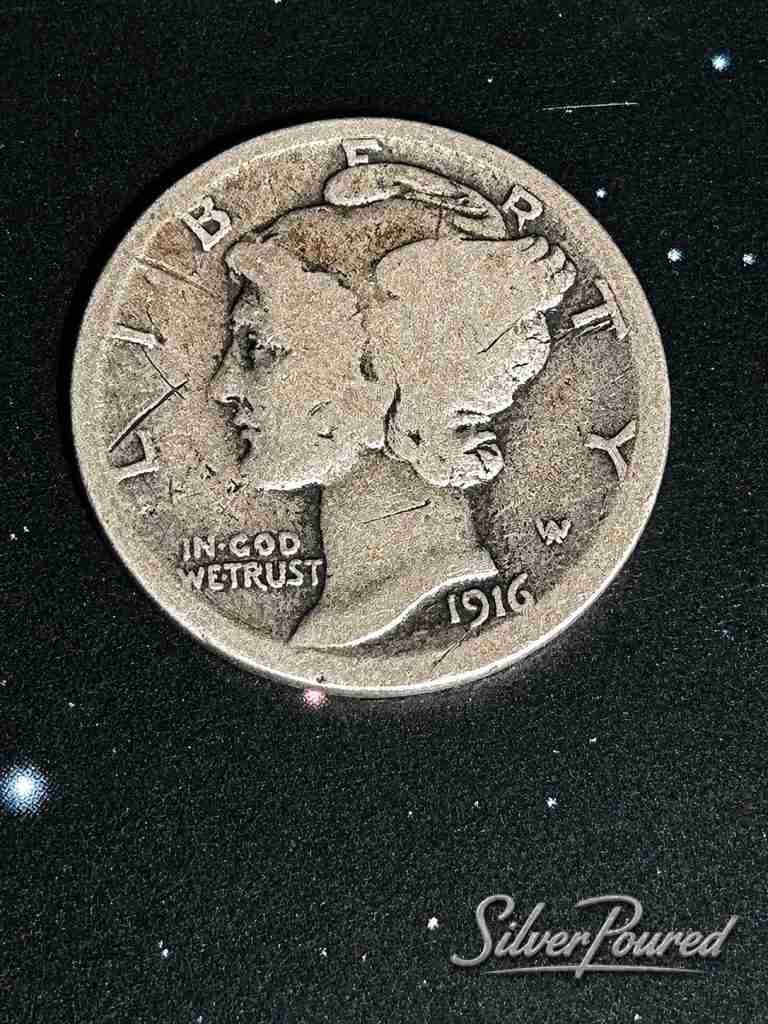
A bag of circulated Mercury dimes should never be valued from silver weight alone until the dates and mint marks have been checked. Most may be common issues, but a single key date, better date, recognized overdate, or unusually well-preserved coin can represent substantially more collector value than the rest of the group combined.
1916-D Mercury Dime: The Major Key Date
The 1916-D Mercury dime occupies a special position in the series because it combines first-year status with exceptionally limited Denver production and enduring collector demand. Unlike a common circulated Mercury dime whose price may remain relatively close to its precious-metal value, the 1916-D belongs firmly in the numismatic market.
Condition becomes increasingly important as the value of the issue rises. Heavy circulation, cleaning, scratches, damage, and other impairments can substantially affect price, while problem-free examples with attractive original surfaces generally receive stronger collector attention.
Authentication matters as well. The premium attached to a genuine 1916-D creates an incentive for altered mint marks and counterfeit coins. Collectors considering an expensive example should therefore examine authenticity as carefully as grade.
Mercury Dime Mint Marks
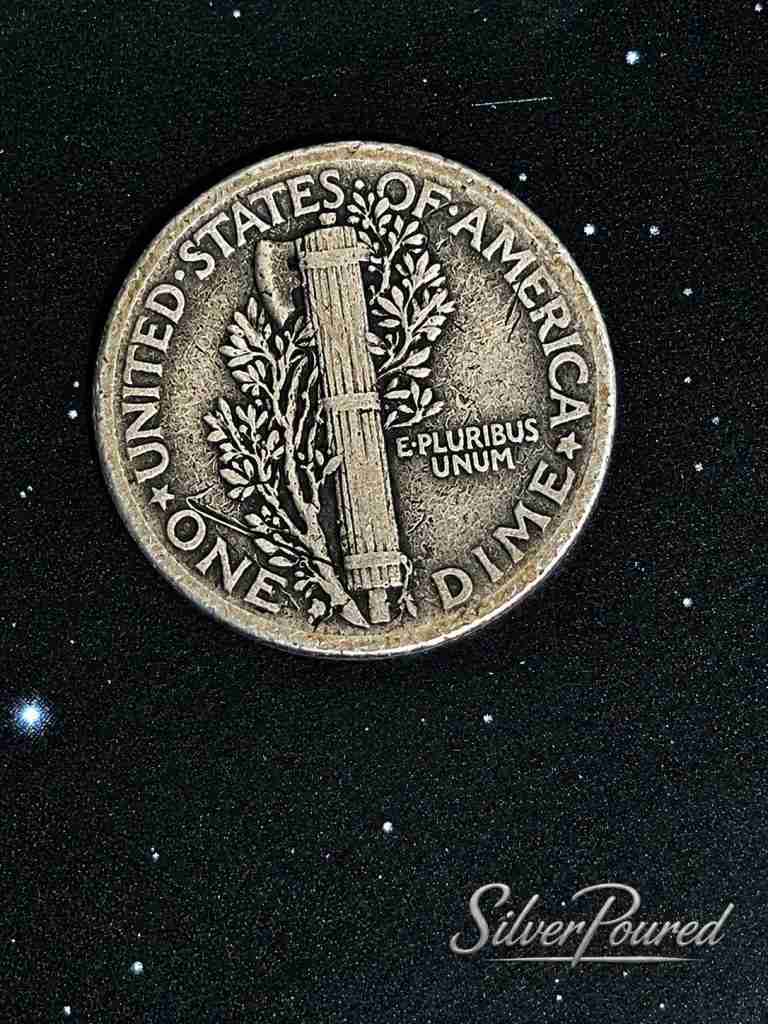
Mercury dimes were produced at Philadelphia, Denver, and San Francisco, and identifying the mint can be critical when determining collector value. Philadelphia issues generally carry no mint mark, while Denver coins display a “D” and San Francisco coins display an “S.”
The mint mark appears on the reverse near the lower-left side of the fasces. Because production differed by mint and year, two Mercury dimes bearing the same date can have very different levels of scarcity.
Mint mark alone does not determine Mercury dime silver value. Condition, originality, strike quality, variety, surviving availability, and collector demand still matter. The date-and-mint combination simply establishes the identity of the issue being evaluated.
Mercury Dime Errors and Varieties
Recognized varieties can create substantial premiums beyond ordinary Mercury dime silver value. The most famous examples are the 1942/41 overdates, where evidence of the earlier date remains visible beneath the final date. Both Philadelphia and Denver versions are collected as important varieties.
Collectors may also encounter doubled dies, repunched mint marks, clipped planchets, off-center strikes, broadstrikes, die cracks, strike-through errors, and other production anomalies. Not every unusual-looking coin is a valuable mint error, so accurate identification is essential before assigning a premium.
Certification can become particularly useful for expensive varieties because authentication and attribution help buyers understand exactly what they are purchasing. The more valuable the claimed variety, the more important reliable verification becomes.
Counterfeit Mercury Dimes and Altered Mint Marks
Key dates and valuable varieties attract alteration and counterfeiting because a small identifying feature can create a large difference in price. A genuine silver composition does not by itself prove that a rare Mercury dime is authentic.
Added or altered mint marks are an important concern. Collectors should compare mint-mark style, position, surrounding surfaces, date characteristics, and overall appearance with authenticated examples when examining a potentially valuable coin.
Professional authentication can provide additional protection when the potential premium is substantial. Mercury dime silver value may establish the metal floor, but paying a major numismatic premium requires confidence that the coin and its identifying characteristics are genuine.
Mercury Dime Population Reports vs. Mintage
Mintage and certified population describe different forms of scarcity. Original mintage records how many coins were produced, while a grading-service population report records how many submitted coins have been certified at particular grades and designations.
A large original mintage does not guarantee that large numbers survive in exceptional condition. Millions of coins may have entered circulation, leaving relatively few examples with the preservation, luster, strike, and surface quality demanded by advanced collectors. Mercury dime silver value can therefore reflect condition rarity even when the original production figure appears large.
The opposite can occur as well. A lower-production issue may remain obtainable if collectors saved significant numbers when it was released. Survival, preservation, and present market availability therefore matter alongside original production.
Population reports also require careful interpretation. They represent coins submitted to a particular grading service, not every surviving Mercury dime. Populations can change as additional coins are certified, and the same coin may sometimes be represented in historical submission data more than once.
For that reason, Mercury dime silver value and collector rarity are best evaluated using mintage, certified population, market availability, condition, and collector demand together rather than relying on a single number.
Professional Grading and Mercury Dime Value
Professional grading can help establish authenticity and condition for Mercury dimes with meaningful collector value. Major grading services evaluate preservation and encapsulate certified coins in tamper-evident holders, giving buyers and sellers a standardized framework for comparison.
Certification does not automatically make a common coin valuable. For inexpensive circulated Mercury dimes, grading fees may represent a substantial portion of the coin’s market value. Certification becomes more compelling for key dates, important varieties, exceptional Mint State examples, and coins that may qualify for premium designations.
Collectors should also look beyond the number printed on a holder. Two coins with the same numerical grade can differ in luster, toning, strike, marks, and overall eye appeal. Those differences can influence actual market demand even when the certified grades match.
Mercury Dime Silver Value by Grade
Grade measures preservation, and preservation can have a major effect on Mercury dime silver value once collector demand becomes important. Heavily circulated common dates may remain primarily bullion-oriented, while better-preserved coins increasingly attract buyers assembling traditional date-and-mint collections.
Lower circulated grades show substantial wear across Liberty and the reverse design. Mid-grade examples retain more detail while still displaying clear evidence of circulation. These coins can provide an affordable way to assemble a historic set without paying Mint State premiums.
About Uncirculated examples retain much of their original detail and luster but show slight friction on the highest points. Mint State coins show no circulation wear and are evaluated according to luster, strike, contact marks, surface preservation, and eye appeal.
The relationship between grade and price is not perfectly linear. Mercury dime silver value can increase rapidly at grades where surviving examples become genuinely difficult to locate, particularly for scarce dates or coins with exceptional strike characteristics.
Mercury Dime Full Bands Designation Explained
Full Bands is one of the most important strike designations associated with Mercury dimes. The designation focuses on the horizontal bands wrapped around the fasces on the reverse. Sharply struck examples showing the required separation can qualify for the designation when certified by a grading service under its applicable standards.
Full Bands should not be confused with the basic numerical grade. Grade measures the overall state of preservation, while the bands provide information about strike detail in a specific part of the reverse design. Two Mint State Mercury dimes with the same numerical grade can therefore have different market values if only one qualifies for the premium strike designation.
The premium depends on the particular date, grade, scarcity, and collector demand. On dates where sharply struck examples are difficult to locate, Full Bands can become a significant component of collector value.
A numerical grade and a Full Bands designation measure different qualities. Preservation tells collectors how well a Mercury dime survived after striking, while Full Bands can identify exceptional reverse strike detail. Understanding that distinction prevents collectors from treating every coin of the same numerical grade as interchangeable when evaluating Mercury dime silver value.
Original Surfaces vs. Cleaned Mercury Dimes
Originality is one of the most important qualities collectors evaluate. A Mercury dime that has aged naturally can retain mint luster, circulation texture, toning, and other characteristics consistent with its history. Those surfaces provide evidence that the coin has not been deliberately altered to improve its appearance.
Cleaned coins can display hairlines, unnatural brightness, impaired luster, polishing marks, or surface texture inconsistent with normal aging. Some cleaning is immediately obvious, while subtler alteration may require magnification and experience to recognize.
Cleaning does not remove the silver content of the coin, but it can reduce the collectible component of Mercury dime silver value. A scarce coin remains scarce after cleaning, yet buyers may discount it substantially compared with an original problem-free example.
Should You Clean a Mercury Dime?
Collectors generally should not clean Mercury dimes. Polishing, abrasive cloths, chemical cleaners, rubbing, and other attempts to brighten a coin can permanently alter its surfaces and reduce collector appeal. Mercury dime silver value can suffer when cleaning destroys the originality buyers expect from collectible examples.
Even a well-intentioned cleaning can create fine hairlines or remove original toning and luster. Once those original surfaces have been altered, they cannot simply be restored by reversing the cleaning process.
For collectible material, preservation is normally preferable to cosmetic improvement. Leaving a coin as acquired protects the historical surface that experienced collectors and grading services use when evaluating originality.
Why Mercury Dimes Tone So Beautifully
Silver reacts gradually with its environment, allowing Mercury dimes to develop a wide range of natural colors over decades. Depending on storage history and environmental exposure, coins may show champagne, gold, amber, violet, blue, magenta, gray, or combinations of several colors.
Old paper envelopes, albums, cabinets, bags, holders, humidity, and airborne compounds can all influence the way a silver surface changes. Because each storage environment differs, naturally toned Mercury dimes can develop highly individual appearances.
Attractive toning can strengthen collector demand when buyers consider the color natural and visually appealing, particularly when strong underlying luster remains. Dark, uneven, environmentally damaged, or artificially altered surfaces can have the opposite effect.
Toning therefore does not create a predictable premium. Eye appeal is subjective, and Mercury dime silver value still depends on the complete coin: date, mint mark, grade, originality, strike, scarcity, and demand.
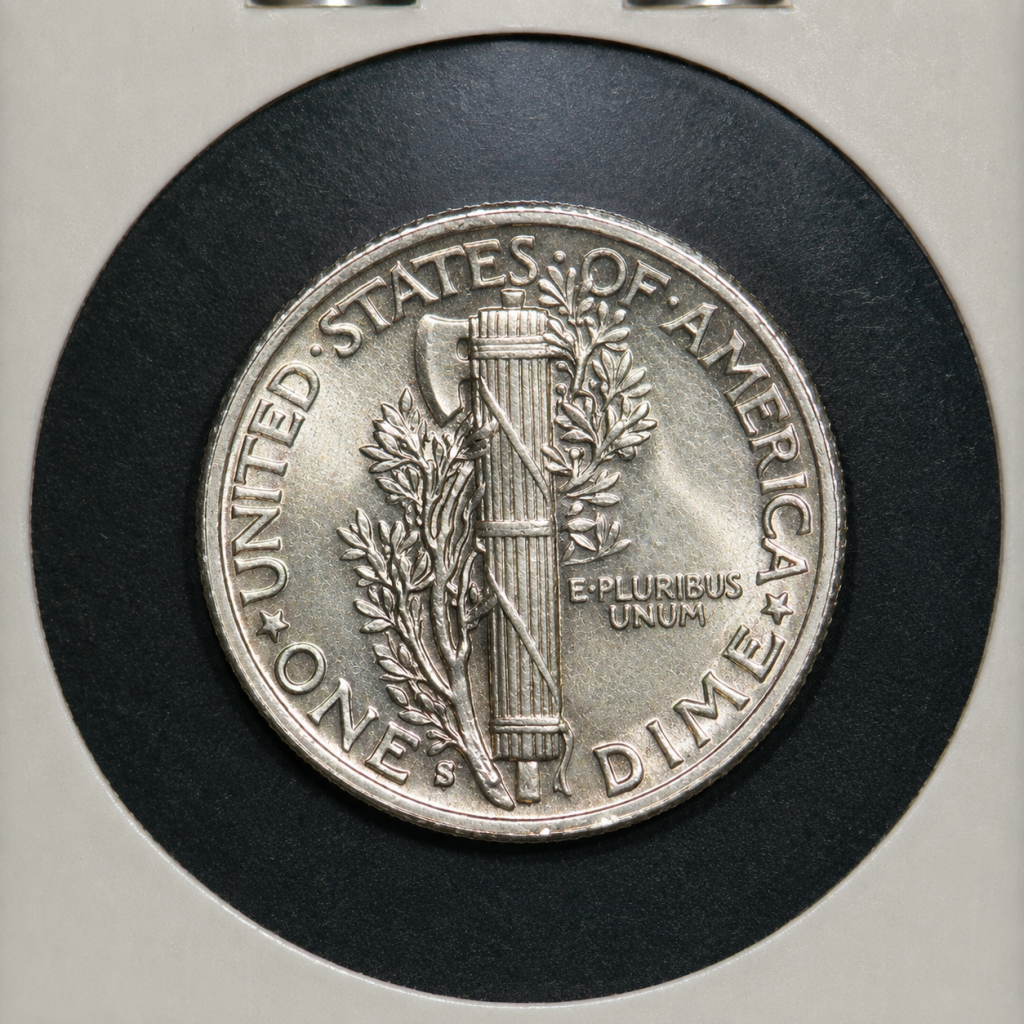
How Mercury Dimes Age Over Time
No two Mercury dimes age in exactly the same way. Circulation, storage, handling, humidity, environmental exposure, and the materials surrounding a coin can all influence its appearance decades later.
Natural aging should not automatically be confused with damage. A toned Mercury dime may retain strong luster and original surfaces beneath its color, while another coin may show corrosion, residue, pitting, or other environmental problems that genuinely impair the surface.
Storage history also helps explain why two coins of the same date, mint mark, and numerical grade can look dramatically different. One may remain brilliant while another develops peripheral color or deeper toning. Collectors ultimately decide whether those differences strengthen or weaken eye appeal.
What Damages Mercury Dime Silver Value?
Improper cleaning is one of the most common forms of avoidable damage, but it is not the only problem collectors encounter. Deep scratches, rim dents, bends, holes, harsh contact marks, corrosion, pitting, repairs, and other alterations can all reduce collector demand.
Environmental damage deserves separate attention from natural toning. Long exposure to moisture, corrosive materials, or unsuitable holders can permanently attack the coin’s surfaces rather than simply changing their color.
Handling can cause damage as well. Touching coin surfaces with bare fingers can deposit oils and contaminants, while dropping or sliding coins across hard surfaces can create fresh marks. These problems do not change the amount of silver in the coin, but they can materially affect the collector premium.
How to Store Mercury Dimes
Proper storage helps preserve the originality that supports collector value. Individual Mercury dimes can be kept in inert coin holders designed to protect surfaces from unnecessary handling, dust, and environmental exposure while still allowing both sides to be examined.
The surrounding environment matters just as much as the holder. A cool, dry, stable location is generally preferable to areas with high humidity, extreme heat, direct sunlight, rapid temperature changes, or exposure to household chemicals. Protecting that environment helps preserve the original surfaces that can contribute to Mercury dime silver value over time.
Coins should be handled by their edges whenever practical. For valuable certified examples, the grading holder provides additional physical protection while preserving the certification information used by collectors in the marketplace.
Good storage cannot make a common coin rare or increase its silver content. Its purpose is prevention: protecting Mercury dime silver value from avoidable losses caused by fingerprints, scratches, chemical exposure, and other forms of damage.
How Collectors Evaluate Mercury Dime Silver Value
Evaluating Mercury dime silver value begins with identification rather than price. Determine the date and mint mark first, then examine condition, originality, strike quality, varieties, and overall eye appeal. These characteristics establish whether the coin is primarily a common silver issue or an example that deserves additional numismatic research.
Condition is particularly important to Mercury dime silver value because wear removes design detail while circulation marks and surface problems affect collector appeal. On Mint State coins, collectors also examine luster, contact marks, strike sharpness, and whether the reverse bands are sufficiently defined for a premium designation.
Original surfaces deserve equal attention. Natural toning and honest circulation are different from polishing, harsh cleaning, repairs, or environmental damage. Mercury dime silver value can therefore differ between two technically similar coins when one retains more desirable original surfaces.
Finally, compare the coin with actual market evidence. Mercury dime silver value is most useful when silver content, rarity, condition, certification, availability, and completed transactions are considered together rather than relying on a single asking price.
Why Two Mercury Dimes Can Have Different Values
Two Mercury dimes can contain exactly the same amount of silver yet sell for dramatically different prices. Mercury dime silver value begins with the same intrinsic metal foundation, but collector markets differentiate individual coins according to characteristics that are not measured by silver weight.
Date and mint mark can create the first major difference. A common issue may be readily replaceable, while a key date can attract competition from collectors who need that exact coin to complete a set. Mercury dime silver value can then increase further as better-preserved examples become progressively more difficult to locate.
Originality and strike quality create additional separation. One coin may retain natural surfaces and strong luster while another has been cleaned or damaged. On Mint State examples, sharply defined reverse bands can further distinguish a premium coin from another example carrying the same numerical grade.
This is why Mercury dime silver value cannot be determined accurately from age or silver content alone. The individual coin must be evaluated as a combination of metal content, scarcity, preservation, strike, originality, eye appeal, and collector demand.
Collectors do not buy a numerical grade, mintage figure, or silver weight in isolation—they buy the complete coin. Mercury dime silver value can differ substantially between examples that appear equivalent on paper because originality, strike, toning, luster, marks, and overall eye appeal affect how difficult each coin is to replace. The strongest value research therefore compares actual coins, not just specifications.
How Mercury Dime Silver Value Changes Over Time
Mercury dime silver value is not fixed because both components of the market can move. Silver prices alter the intrinsic value of every coin, while collector premiums can rise or fall independently according to demand, availability, grade, rarity, and broader numismatic trends.
When silver prices rise, common circulated Mercury dimes receive a higher melt-value foundation. That movement does not mean a scarce 1916-D or high-grade Full Bands coin will change by exactly the same percentage. Mercury dime silver value for numismatic coins includes a collectible component that can behave differently from bullion.
Collector participation also changes over time. Interest in complete date-and-mint sets, registry competition, key dates, varieties, and beautifully toned examples can strengthen demand for particular parts of the series even when silver prices remain relatively stable.
Availability matters as well. Desirable coins can disappear into long-term collections for years or decades, reducing the number available to new buyers. Conversely, estate collections and old holdings can return previously unavailable coins to the market and temporarily increase supply.
For these reasons, historical prices should be treated as evidence of what the market paid at a particular time rather than permanent values. Current comparable transactions provide stronger evidence when researching present Mercury dime silver value.
Common Mercury Dime Buying Mistakes
One common mistake is assuming that every old Mercury dime is rare. Many dates were produced in substantial quantities, and age by itself does not establish scarcity. Accurate Mercury dime silver value research starts by checking the exact date, mint mark, condition, and variety before paying a collector premium.
Another mistake is focusing only on the numerical grade. Eye appeal, originality, strike, luster, toning, and surface quality can make one coin more desirable than another carrying the same grade. Those differences can affect Mercury dime silver value even when the information printed on two grading labels appears similar.
Buyers should also be cautious with coins that appear unusually bright for their age. Cleaning or polishing can create an initially attractive appearance while permanently altering the surfaces. A cleaned coin retains its silver content, but its collector premium may be substantially reduced.
Finally, do not confuse an asking price with market value. Compare completed transactions for similar dates, grades, designations, and conditions whenever possible. Mercury dime silver value becomes much easier to evaluate when actual sales support the premium being requested.
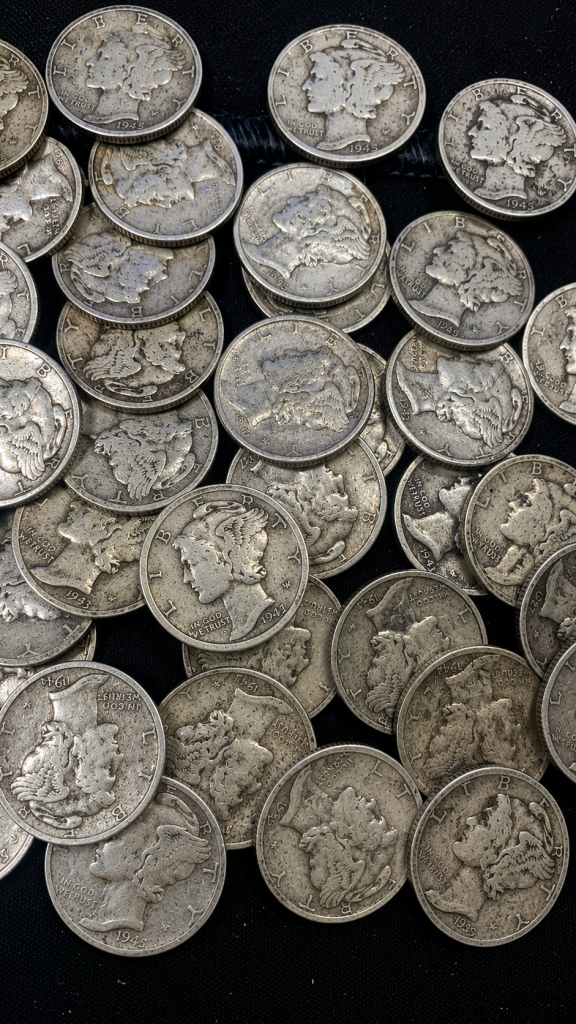
Mercury Dimes Found in Junk Silver
Mercury dimes frequently appear in bags, rolls, and groups of constitutional or “junk” silver. Most coins in these holdings are common circulated issues whose Mercury dime silver value remains closely connected to precious-metal content, but that does not mean every coin should automatically be sold by weight.
Older accumulations can contain better dates, mint marks, varieties, attractive original coins, or examples preserved well enough to deserve individual attention. A quick date-and-mint inspection can therefore be worthwhile before treating an entire group as interchangeable bullion.
The same principle applies to inherited collections. A family accumulation assembled over decades may mix ordinary circulated silver with coins that were deliberately saved because an earlier collector recognized something unusual about them.
Mercury dime silver value provides the baseline for common material found in junk silver. Identification determines whether an individual coin deserves to be removed from the bullion group and researched separately for numismatic value.
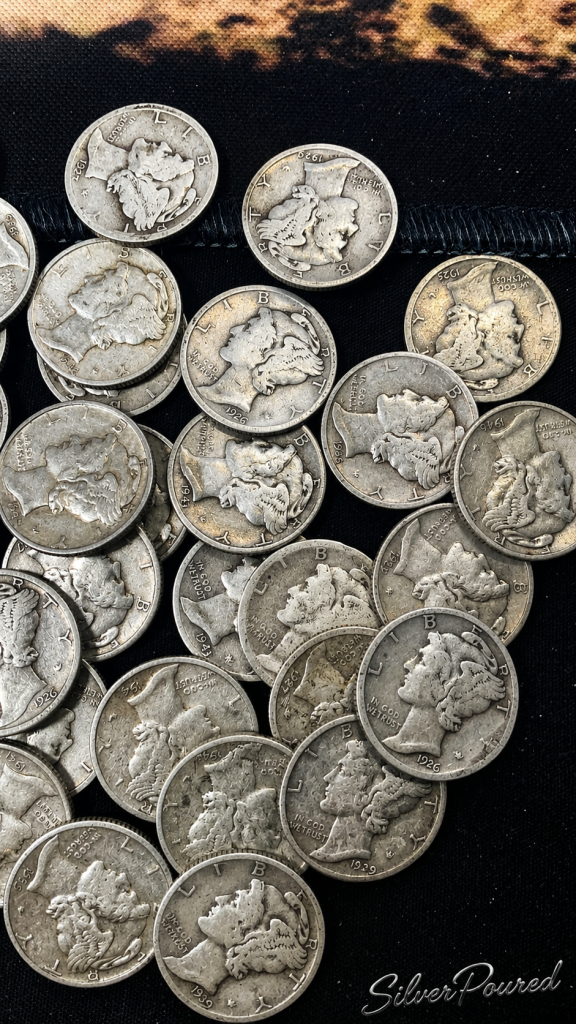
Should You Buy Raw or Certified Mercury Dimes?
Raw and certified Mercury dimes can both belong in strong collections. The better choice depends on the value of the coin, the collector’s experience, the need for independent authentication, and whether professional grading adds useful market information.
Raw Mercury dimes allow collectors to evaluate the coin directly without paying a premium associated with certification. Common circulated examples are frequently traded raw because their modest Mercury dime silver value may not justify professional grading costs.
Certification becomes more useful as rarity and value increase. Key dates, important varieties, high-grade Mint State coins, and potential Full Bands examples can benefit from independent authentication and grading because buyers are being asked to pay for characteristics far beyond silver content.
A certified holder should still be viewed as information rather than a substitute for judgment. Collectors should examine the coin’s eye appeal, originality, strike, and surfaces in addition to reading the label because those characteristics continue to influence Mercury dime silver value.
Whether raw or certified, the strongest purchases are coins whose quality and scarcity justify their premiums. Mercury dime silver value provides a measurable metal foundation, while rarity, preservation, authentication, strike quality, and collector demand determine how much additional value the individual coin deserves.
Buying Mercury Dimes
Buying Mercury dimes begins with deciding whether the goal is silver ownership, traditional coin collecting, or a combination of both. A buyer seeking common circulated 90% silver may focus heavily on Mercury dime silver value and the premium over melt, while a collector pursuing key dates or premium grades must evaluate a much broader set of characteristics.
Identify the exact date and mint mark before comparing prices. For a common circulated coin, compare the asking price with current silver value and prevailing premiums for physical 90% silver. For a collectible issue, compare coins of similar grade, originality, strike quality, certification, and overall eye appeal.
Completed transactions can provide stronger market evidence than unsold asking prices. When researching Mercury dime silver value for a scarce coin, make sure the comparison involves the same date, mint, approximate grade, designation, and problem-free or impaired status. Small differences can represent substantial changes in price.
Authentication becomes increasingly important as the premium rises. A common circulated Mercury dime may require little more than basic identification, while a 1916-D, important overdate, or expensive high-grade coin deserves much greater scrutiny before purchase.
Selling Mercury Dimes
Before selling, separate common circulated Mercury dimes from coins that may deserve individual research. Check dates, mint marks, recognized varieties, condition, certification, and unusual strike characteristics before accepting an offer based only on silver content.
For common material, Mercury dime silver value provides a useful starting point because the underlying 0.07234 troy ounces of silver establishes a measurable metal value. Dealer spreads and physical-market premiums can then affect the actual amount a buyer is willing to pay.
Collector coins require appropriate buyers. A specialist may recognize value in a scarce date, attractive original toning, Full Bands example, or certified high-grade coin that a bullion-oriented buyer evaluates primarily from its silver content. The highest potential price and the fastest possible sale are therefore not always the same objective.
Clear photographs can become particularly important when selling collectible material. Show the obverse and reverse, preserve accurate color, and document certification or packaging when relevant. Mercury dime silver value can depend on characteristics that cannot be communicated adequately through date and grade alone.
Before selling a group of Mercury dimes as 90% silver, inspect every date and mint mark. Mercury dime silver value establishes a useful floor for ordinary circulated coins, but key dates, recognized varieties, original high-grade examples, and desirable strike characteristics belong to a different market. A few minutes of identification can prevent a collectible coin from disappearing into an ordinary bullion lot.
Building a Mercury Dime Collection
The Mercury dime series supports several collecting strategies, and Mercury dime silver value provides a useful foundation for each one. A traditional collector may assemble one coin for every date and mint, while another may focus on a shorter type collection, key dates, important varieties, beautifully toned examples, or certified Mint State coins.
A complete date-and-mint collection introduces collectors to differences in production, scarcity, condition, and availability across the series. The 1916-D creates the largest challenge, while issues such as the 1921 and 1921-D provide additional scarcity within an otherwise approachable classic United States coin series.
Other collectors concentrate on quality rather than completeness. They may pursue exceptionally original examples, strong eye appeal, Full Bands coins, or individual pieces representing the best combination of design and preservation they can afford.
Silver buyers sometimes enter the series from another direction. Mercury dimes acquired in constitutional-silver lots can lead to date searching, mint-mark identification, and eventually a more specialized collection. Understanding Mercury dime silver value helps separate the bullion component from the additional premium attached to collectible examples.
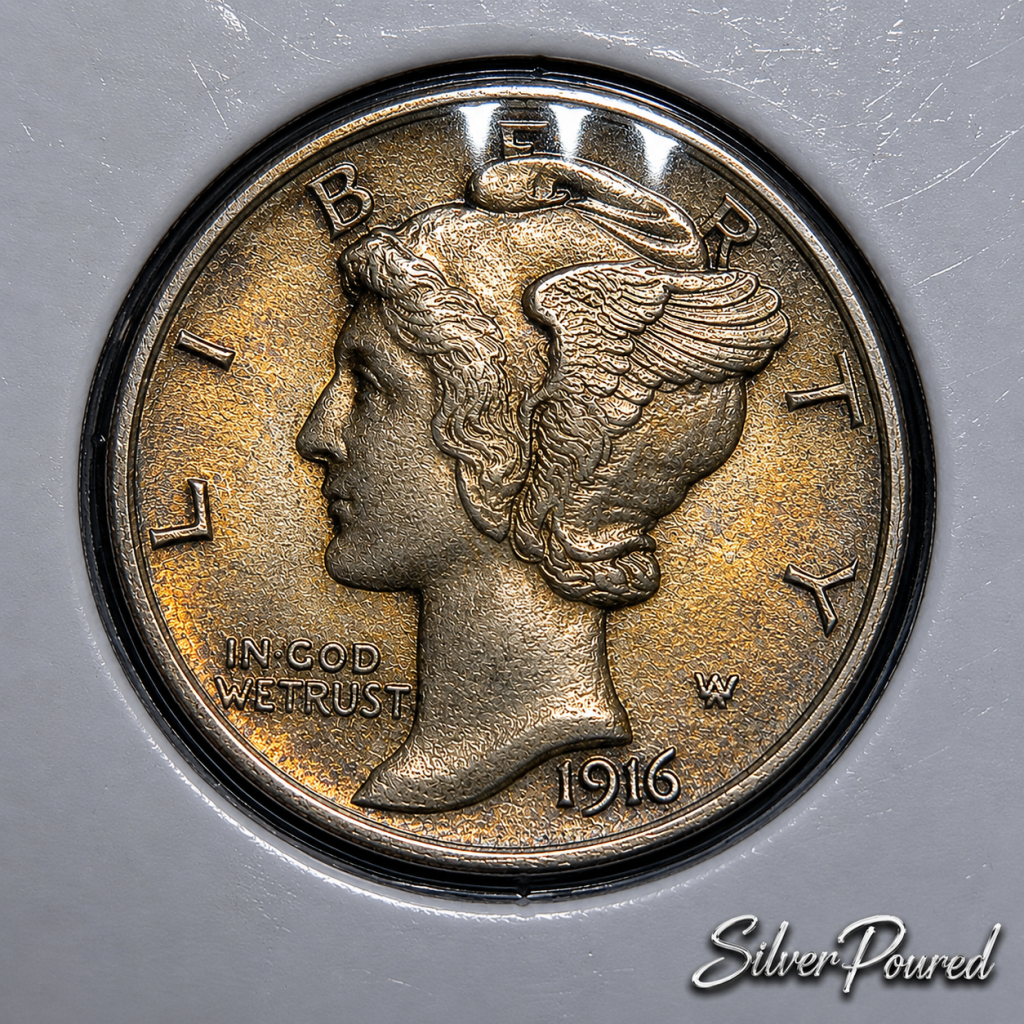
Why Mercury Dimes Remain Popular
Mercury dimes remain popular because they combine several characteristics that rarely exist together so successfully. They are historic United States coins, contain a fixed amount of silver, feature one of the country’s most admired circulating designs, and offer collecting challenges ranging from inexpensive circulated examples to major key dates and elite certified coins.
The series is approachable without being simple. Mercury dime silver value gives beginning collectors an understandable foundation through the coin’s fixed silver content, while advanced numismatists can pursue scarce dates, overdates, Full Bands examples, exceptional toning, and condition rarities.
That broad appeal creates multiple sources of demand. Bullion buyers recognize the silver content, traditional collectors build date-and-mint sets, variety specialists pursue unusual issues, and registry collectors compete for exceptional certified examples. Mercury dime silver value therefore operates within a market supported by both precious-metal and numismatic interest.
Frequently Asked Questions About Mercury Dime Silver Value
How much silver is in a Mercury dime?
A standard Mercury dime contains approximately 0.07234 troy ounces of pure silver and was struck from an alloy containing 90% silver and 10% copper. The coin’s melt value changes with the current silver price.
How do I calculate Mercury dime silver value?
Multiply approximately 0.07234 troy ounces by the current silver price to estimate the intrinsic melt value of one Mercury dime. Collector premiums for rarity, condition, mint mark, varieties, certification, and demand are separate from that metal calculation.
What is the key date Mercury dime?
The 1916-D is the defining regular-issue key date of the Mercury dime series. Collectors should also pay attention to the 1921 and 1921-D issues and important varieties such as the 1942/41 overdates.
Where is the mint mark on a Mercury dime?
The mint mark appears on the reverse near the lower-left side of the fasces. Denver coins carry a “D,” San Francisco coins carry an “S,” and Philadelphia issues generally have no mint mark.
Are all Mercury dimes worth more than melt value?
Not necessarily by the same amount. Common circulated coins may trade relatively close to their silver foundation plus normal physical-coin premiums, while key dates, varieties, attractive original coins, and high-grade examples can command much larger collector premiums.
What does Full Bands mean on a Mercury dime?
Full Bands is a strike designation associated with separation and definition in the horizontal bands of the fasces on the reverse. It is distinct from the numerical grade and can add substantial collector interest on dates and grades where sharply struck examples are scarce.
Should I clean a Mercury dime?
Collectors generally should not clean Mercury dimes. Polishing, rubbing, chemical cleaning, and other surface alteration can damage originality and reduce the collectible portion of Mercury dime silver value even though the underlying silver content remains unchanged.
Should a valuable Mercury dime be professionally graded?
Professional grading can be useful for key dates, important varieties, high-grade Mint State examples, potential Full Bands coins, and other Mercury dimes valuable enough to justify authentication and grading costs. Common circulated coins may not benefit enough to offset those costs.
Can valuable Mercury dimes be found in junk silver?
Yes. Most Mercury dimes found in constitutional-silver groups are common circulated issues, but older accumulations can contain better dates, varieties, attractive original coins, and overlooked collector material. Checking every date and mint mark before selling is worthwhile.
Final Thoughts on Mercury Dime Silver Value
Mercury dime silver value begins with a simple measurable fact: each standard coin contains approximately 0.07234 troy ounces of pure silver. That intrinsic value creates a foundation shared across the series, but it does not explain the enormous differences that can exist between individual coins.
Date, mint mark, rarity, condition, originality, strike quality, Full Bands designation, recognized varieties, certification, market availability, and collector demand can all create value beyond melt. The 1916-D demonstrates the power of key-date scarcity, while common circulated issues demonstrate the continuing connection between the series and the physical silver market.
The most useful approach is therefore to separate metal value from collector value. Establish the silver foundation first, identify the exact coin, then determine what evidence supports any additional premium. This prevents ordinary bullion from being mistaken for a rarity and helps prevent genuine collector coins from being sold merely for their silver content.
Whether the goal is accumulating constitutional silver, building a complete date-and-mint set, pursuing Full Bands examples, or researching a potential key date, understanding Mercury dime silver value provides the foundation for making more informed collecting, buying, selling, and preservation decisions.
Related SilverPoured Resources
Continue researching Mercury dime silver value through SilverPoured resources covering silver prices, melt value, constitutional silver coins, mint marks, collector premiums, and the market factors that can move collectible United States coins beyond their underlying precious-metal value.
Silver Prices & Melt Value
Silver Spot Price Today
Silver Melt Value Calculator
What Is Silver Melt Value?
Silver Spot vs Bid vs Ask Price
Silver Coin Values
U.S. Silver Coin Values
Junk Silver Value
Roosevelt Dime Silver Value
Washington Quarter Silver Value
Standing Liberty Quarter Silver Value
How Much Silver Is in US Coins?
Collector Premiums & Coin Research
What Do Coin Mint Marks Mean?
Premium Over Spot Explained
Why Silver Premiums Change
Why Collectible Silver Sells for More
Limited Mintage Silver
Purchase Precious Metals from a Trusted Dealer
Collectors researching Mercury dime silver value may also compare historic 90% silver coins with newly produced investment-grade bullion. Common circulated Mercury dimes derive much of their baseline value from silver content, while key dates, varieties, Full Bands examples, and high-grade certified coins can include substantial collector premiums.
When purchasing physical precious metals, compare purity, weight, current silver value, total delivered cost, dealer premiums, reputation, shipping policies, and product availability. Separating bullion value from collectible value makes it easier to understand what portion of a purchase price represents precious metal and what portion represents a numismatic premium.
Collector Insight
Mercury dime silver value is easiest to understand when metal value and collector value are measured separately. Approximately 0.07234 troy ounces of pure silver establishes the intrinsic foundation, while date, mint mark, rarity, condition, originality, strike quality, Full Bands designation, varieties, certification, and collector demand explain why one Mercury dime can trade for substantially more than another.
Keep SilverPoured Free
SilverPoured is built to help collectors and precious-metals investors make smarter decisions through free calculators, original photography, coin research, value references, collector education, and independent market resources. Every page is created to make valuable precious-metals information available without requiring a paid subscription.
This Mercury dime silver value resource is designed to help collectors understand silver content, melt value, key dates, mint marks, Full Bands, varieties, grading, originality, condition, collector premiums, and the difference between bullion value and numismatic value. Every contribution helps support continued research, original photography, calculator development, and expansion of SilverPoured’s precious-metals education.
Your support allows SilverPoured to remain independent while building one of the web’s most comprehensive free libraries for coin collectors, bullion buyers, precious-metals researchers, and long-term investors.