
Kennedy Half Dollar silver value has become one of the most researched modern coin topics because 1964 halves contain 90% silver, 1965–1970 halves contain 40% silver, and later clad examples do not carry the same melt value. This page is part of our Kennedy authority series covering silver composition, live melt value, rare varieties, and collector research.
Kennedy Half Dollar value depends on silver content, date, condition, mint mark, and collector demand. Common circulated examples can trade near face value, while silver issues, rare varieties, and high-grade certified examples can sell for substantially more. A 1964 Kennedy Half Dollar contains 90% silver and often attracts stronger collector interest than later issues.
Kennedy Half Dollar silver value changes depending on whether the coin contains 90% silver, 40% silver, or modern clad composition. Silver prices, collector demand, and rarity can all influence Kennedy Half Dollar silver value over time.
Explore the complete Kennedy Half Dollar authority series for additional research covering silver composition, melt value, key dates, major varieties, and collector guidance.
The Kennedy Half Dollar debuted in 1964 shortly after the assassination of President John F. Kennedy. Public demand immediately exploded, and the United States Mint rushed production to satisfy collectors and the general public. That first-year release became one of the most recognized modern US coins and remains a favorite among both collectors and silver stackers today.
Unlike many circulating coins, Kennedy Half Dollars exist in several compositions that can dramatically change value.
What Is a Kennedy Half Dollar?
Kennedy Half Dollars were introduced in 1964 and continue today. While billions were produced, not all examples carry the same value.
Collectors frequently research 1964 Kennedy Half Dollars, 1965–1970 silver issues, the scarce 1970-D Kennedy Half Dollar, Accented Hair varieties, Special Mint Set examples, proof issues, major errors, key dates, and high-grade certified coins. These categories often attract the strongest collector demand within the Kennedy Half Dollar series.
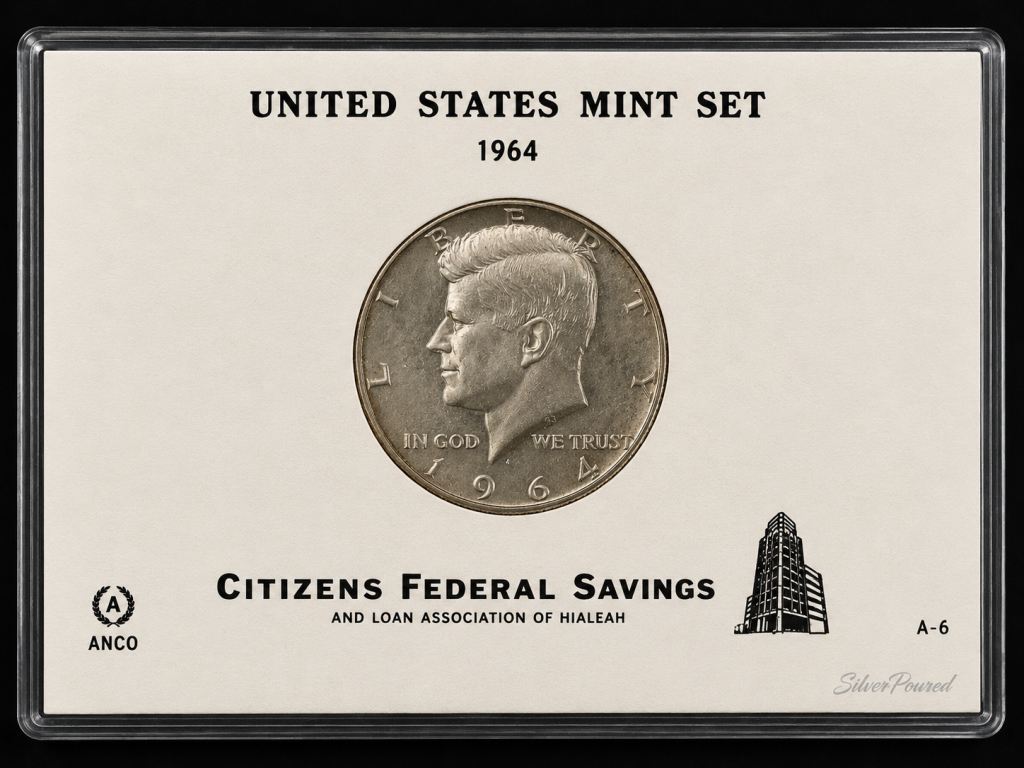
Understanding silver composition is one of the most important steps in determining Kennedy Half Dollar silver value.
Kennedy Half Dollar Silver Value Drivers
Many collectors research Kennedy Half Dollar silver value before calculating melt value or checking live silver prices.
Kennedy Half Dollar silver value is influenced by silver content, date, mint mark, condition, certification grade, rarity, proof designation, eye appeal, and overall collector demand. While many common examples trade primarily based on silver content, scarcer dates and higher-grade coins can command substantial premiums beyond melt value.
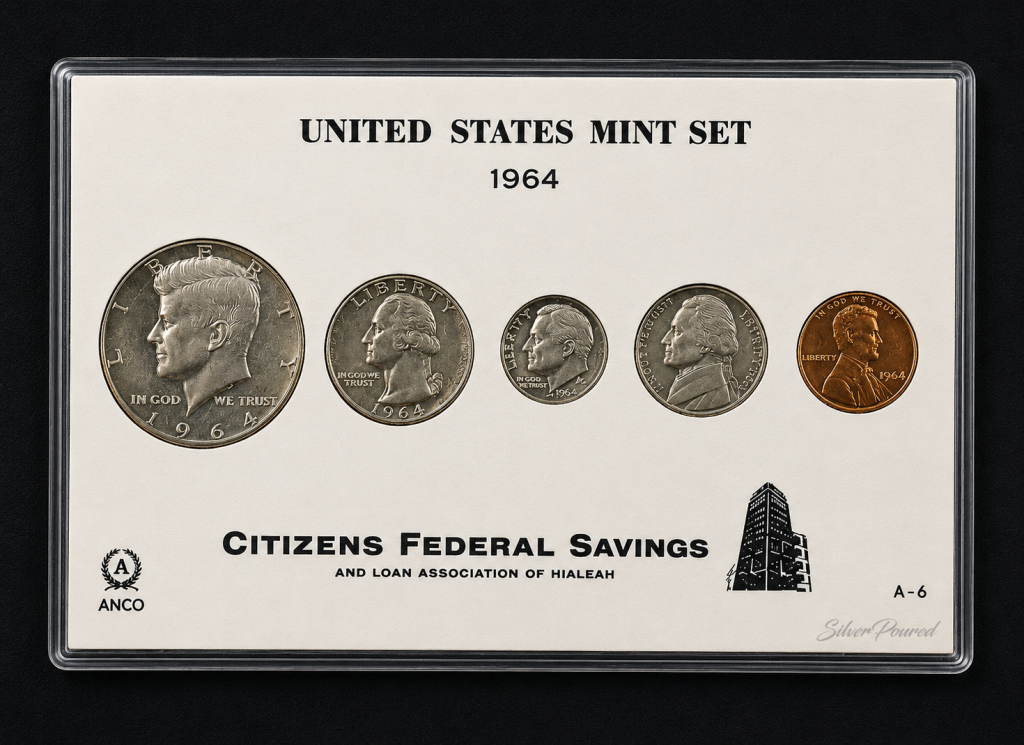
As silver prices change, Kennedy Half Dollar silver value may fluctuate significantly between common circulation strikes and premium collector issues. The biggest dividing line for many Kennedy Half Dollars is silver content.
Kennedy Half Dollar Silver Composition Breakdown
Checking both the date and the edge allows collectors to identify a Kennedy Half Dollar’s composition quickly before calculating melt value. The 1964 issue contains 90% silver, 1965 through 1970 issues contain 40% silver, and most regular circulation examples dated 1971 and later use a copper-nickel clad composition.

| Date Range | Composition | Silver Content |
|---|---|---|
| 1964 | 90% Silver | 0.3617 Troy Oz |
| 1965–1970 | 40% Silver | 0.1479 Troy Oz |
| 1971–Present | Copper-Nickel Clad | No Regular Silver Content |
Many collectors searching Kennedy Half Dollar silver value first need to determine whether their coin contains 90% silver, 40% silver, or no silver at all.
Kennedy Half Dollars can be identified by composition and edge appearance. A 1964 Kennedy Half Dollar contains 90% silver and approximately 0.3617 troy ounces of silver, with a bright silver edge and no visible copper stripe. Kennedy Half Dollars dated 1965 through 1970 contain 40% silver and approximately 0.1479 troy ounces of silver, often showing a silver-gray edge appearance. Most Kennedy Half Dollars dated 1971 and later use a copper-nickel clad composition and display a visible copper-colored edge stripe.
Checking the coin edge remains one of the fastest ways to identify Kennedy Half Dollar silver value before using a melt calculator.
1964 Kennedy Half Dollar — 90% Silver
The 1964 Kennedy Half Dollar was the only regular circulation issue struck with a 90% silver composition. These coins contain approximately 0.3617 troy ounces of silver and remain among the most collected Kennedy halves because of both silver content and first-year demand.
1965–1970 Kennedy Half Dollar — 40% Silver
Although 40% silver Kennedy Half Dollars contain less silver than the 1964 issue, they remain an important part of the series because they represent the final circulating U.S. half dollars struck with any silver content. Many collectors build complete silver-era Kennedy sets that include both the 90% and 40% compositions.
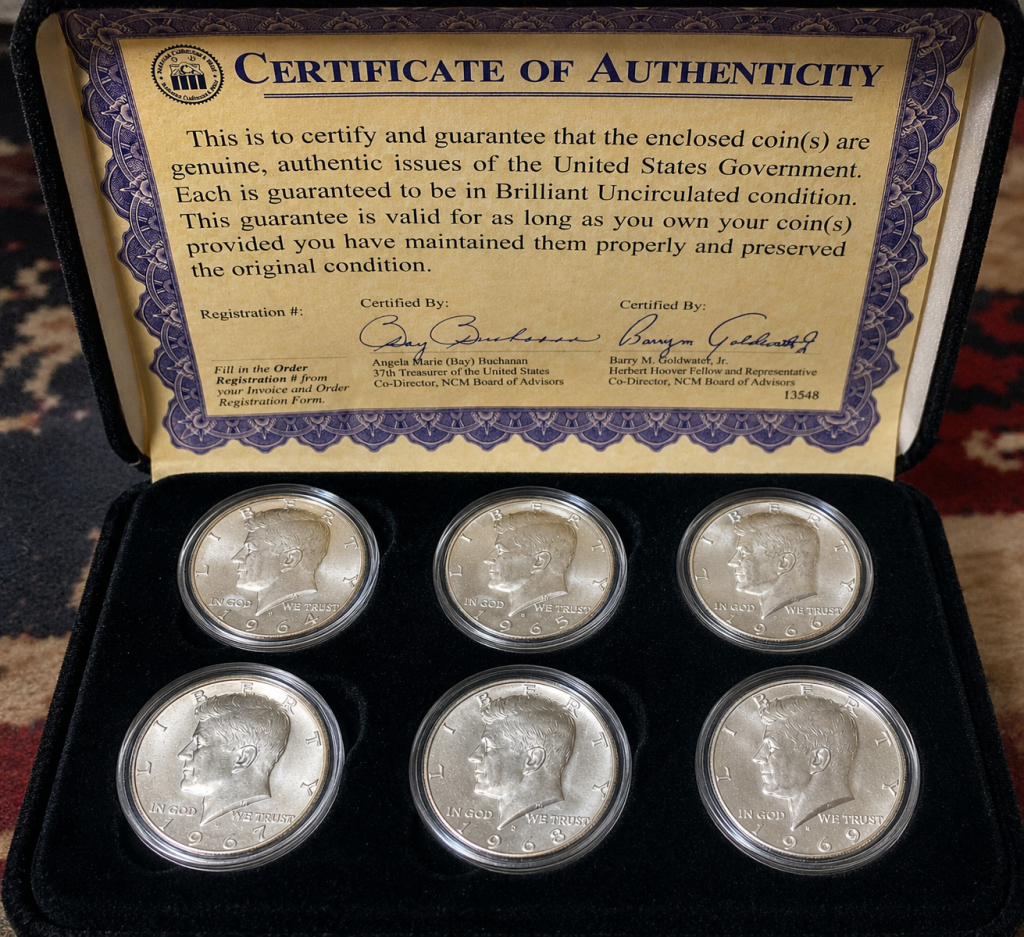
From 1965 through 1970, silver content was reduced to 40% as rising silver prices forced composition changes. These coins contain approximately 0.1479 troy ounces of silver and continue attracting both collectors and silver stackers.
1971–Present Kennedy Half Dollar — Clad Composition
Beginning in 1971, regular circulation Kennedy Half Dollars no longer contained silver and switched to a copper-nickel clad composition. While most modern examples carry little melt value, rare dates, proofs, and specialty issues may still command collector premiums.
Because silver prices move constantly, melt value often becomes a major component of pricing.
Collectors frequently compare Kennedy Half Dollar silver value against live precious metals markets and official mint information.
Popular Kennedy Half Dollar Examples
Collectors actively research 1964 Kennedy Half Dollars, 1965–1970 silver issues, the scarce 1970-D Kennedy Half Dollar, Accented Hair varieties, Special Mint Set examples, and proof Kennedy Half Dollars. These categories remain among the most popular areas of the series because they combine silver content, rarity, and collector demand.
The 1970-D Kennedy Half Dollar remains one of the better-known modern key dates because it was issued only in mint sets and saw limited distribution.
The Accented Hair variety also attracts significant attention. Minor design differences in Kennedy’s hair created one of the most recognizable modern varieties and remain heavily collected today.
Popular collector discoveries include inherited collections, proof sets, Special Mint Set examples, bank roll finds, and silver-era Kennedy Half Dollars removed from circulation decades ago. These discoveries often lead collectors to research Kennedy Half Dollar silver value before deciding whether a coin should be valued for melt, rarity, condition, or collector demand.
Kennedy Half Dollar Mintages and Key Dates
Mintage plays an important role in understanding Kennedy Half Dollar silver value because not every silver-era issue was produced in the same quantity or released the same way. While silver content creates the melt value baseline, mintages help explain why certain Kennedy Half Dollars attract more collector attention than others.
| Date | Silver | Mintage | Collector Significance |
|---|---|---|---|
| 1964 | 90% | 273,304,004 | First year of issue; only regular 90% silver Kennedy Half Dollar |
| 1964-D | 90% | 156,205,446 | First Denver issue; popular with silver stackers |
| 1965 | 40% | 65,879,366 | First reduced-silver composition |
| 1966 | 40% | 108,984,932 | Special Mint Set era |
| 1967 | 40% | 295,046,978 | Highest mintage 40% silver issue |
| 1968-D | 40% | 246,951,930 | Denver-only circulation issue |
| 1969-D | 40% | 129,881,800 | Final high-volume 40% issue |
| 1970-D | 40% | 2,150,000 | Key date; issued only in Mint Sets |
Collectors often use mintages together with survival estimates, certified populations, and market demand when evaluating Kennedy Half Dollar silver value.
The 1970-D Kennedy Half Dollar is one of the most important silver-era dates because it was not released for regular circulation. It was issued only in United States Mint Sets, which makes it far scarcer than most 1965 through 1969 40% silver examples. Because of this limited distribution, the 1970-D often carries a collector premium beyond its melt value.
The 1964 Kennedy Half Dollar also remains important because it was the first year of the series and the only regular circulation Kennedy Half Dollar struck in 90% silver. Even though mintages were high, strong public demand, silver content, and historical significance continue supporting long-term collector interest.
Understanding these mintages gives collectors a better foundation for evaluating Kennedy Half Dollar silver value. A common circulated 1967 example may trade close to melt value, while a 1970-D, Accented Hair proof, Special Mint Set coin, or high-grade certified example may command a premium because of scarcity, preservation, or collector demand.
While mintage alone does not determine Kennedy Half Dollar silver value, lower production totals often increase collector demand when combined with strong preservation, certification, and silver content.
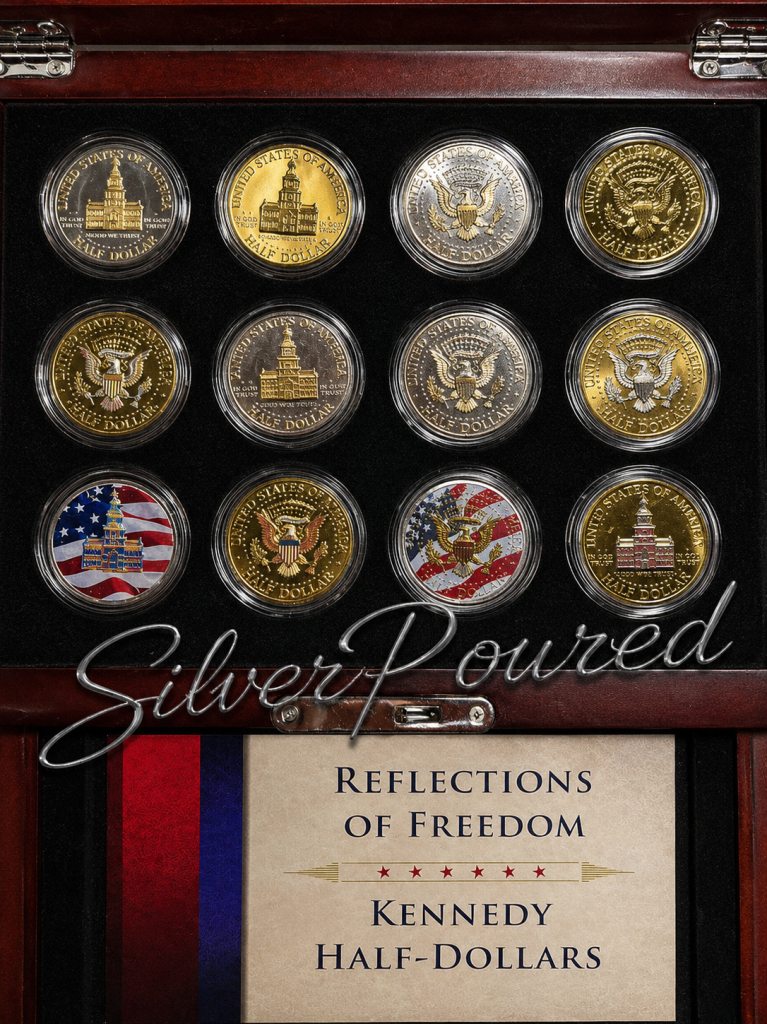
How to Tell if a Kennedy Half Dollar Contains Silver
Identifying silver content is the first step in determining Kennedy Half Dollar silver value. The date is the easiest starting point. A 1964 Kennedy Half Dollar contains 90% silver. Kennedy Half Dollars dated 1965 through 1970 contain 40% silver. Most regular circulation Kennedy Half Dollars dated 1971 and later contain no silver.
The edge of the coin can also help. A 1964 silver Kennedy Half Dollar usually shows a mostly silver-colored edge without a copper stripe. A 40% silver Kennedy Half Dollar from 1965 through 1970 may still appear mostly gray or silver along the edge, although the color can vary with wear and toning. Modern clad Kennedy Half Dollars usually show a clear copper-colored stripe along the edge.
Collectors should use both the date and edge appearance together before calculating melt value. Date identification is usually more reliable than color alone because toning, dirt, wear, lighting, and storage conditions can affect how the edge appears. Once the composition is confirmed, Kennedy Half Dollar silver value can be calculated using the correct silver content.
Buying and Selling Silver Kennedy Half Dollars
Silver Kennedy Half Dollars appeal to two different markets at the same time. Silver stackers usually focus on melt value, while collectors focus on dates, varieties, proof quality, certification, and condition. Understanding which market applies to a specific coin is essential before buying or selling.
A circulated 1965 through 1969 Kennedy Half Dollar is often valued primarily for its 40% silver content. A 1964 Kennedy Half Dollar usually carries stronger silver value because it contains 90% silver. A 1970-D Kennedy Half Dollar, Accented Hair proof, Deep Cameo proof, or certified high-grade example may trade more like a collectible coin than a simple silver item.
When buying, collectors should compare melt value against the asking price. If the coin is common and circulated, the premium should make sense relative to silver content. If the coin is scarce, certified, toned, or part of a recognized variety, the premium may be based more on collector demand than silver weight. Many buyers also compare recent auction results with dealer asking prices before determining fair Kennedy Half Dollar silver value, especially for certified coins and recognized varieties.
When selling, it is important not to treat every Kennedy Half Dollar the same. Separating 1964 coins, 1965 through 1970 coins, proof examples, 1970-D coins, and possible varieties can prevent valuable coins from being sold only for melt value. This is especially important for inherited collections, old proof sets, and long-forgotten coin groups where silver and collector value may be mixed together.
Kennedy Half Dollar silver value begins with composition, but the final market value depends on the complete picture. Silver content, date, mintage, condition, variety, certification, and demand all work together to determine whether a coin is priced as bullion, collected as a modern variety, or valued as a premium Kennedy Half Dollar.
Kennedy Half Dollar vs Franklin Half Dollar Silver Value
Collectors often compare Kennedy Half Dollar silver value with Franklin Half Dollar silver value because both series contain popular 90% silver issues and remain widely traded throughout the precious metals market. While the two half dollar series share the same denomination, their silver composition, production history, and collector appeal differ in important ways.
The 1964 Kennedy Half Dollar and every Franklin Half Dollar struck from 1948 through 1963 contain 90% silver and approximately 0.3617 troy ounces of pure silver. Because both series contain the same amount of silver, their melt value is identical whenever the silver spot price is the same. The difference in market value usually comes from collector demand, rarity, condition, certification, and specific dates rather than silver content alone.
One major difference is that the Kennedy series includes three distinct composition periods. The 1964 issue contains 90% silver, Kennedy Half Dollars dated 1965 through 1970 contain 40% silver, and most regular circulation examples dated 1971 and later contain no silver. Franklin Half Dollars never experienced this transition because every regular circulation Franklin Half Dollar was struck in 90% silver.
Collectors also approach the two series differently. Franklin Half Dollars often appeal to specialists searching for Full Bell Lines, better dates, attractive toning, and high-grade certified examples. Kennedy collectors frequently focus on silver composition, first-year issues, Accented Hair proofs, Special Mint Set coins, No FG varieties, and modern registry-quality examples. These collecting goals influence premiums well beyond melt value.
Investors often compare Kennedy Half Dollar silver value with Franklin Half Dollar silver value before purchasing constitutional silver because both series offer recognizable United States coinage backed by established collector demand. Some silver stackers prefer Franklin Half Dollars because every regular issue contains 90% silver, while others appreciate the broader collecting opportunities found throughout the Kennedy series.
For buyers building a diversified constitutional silver collection, owning both Franklin and Kennedy Half Dollars provides exposure to two of the most recognized silver half dollar series ever produced by the United States Mint. Although silver content establishes the melt value baseline, collector demand, condition, rarity, certification, and historical significance ultimately determine long-term market performance for both series.
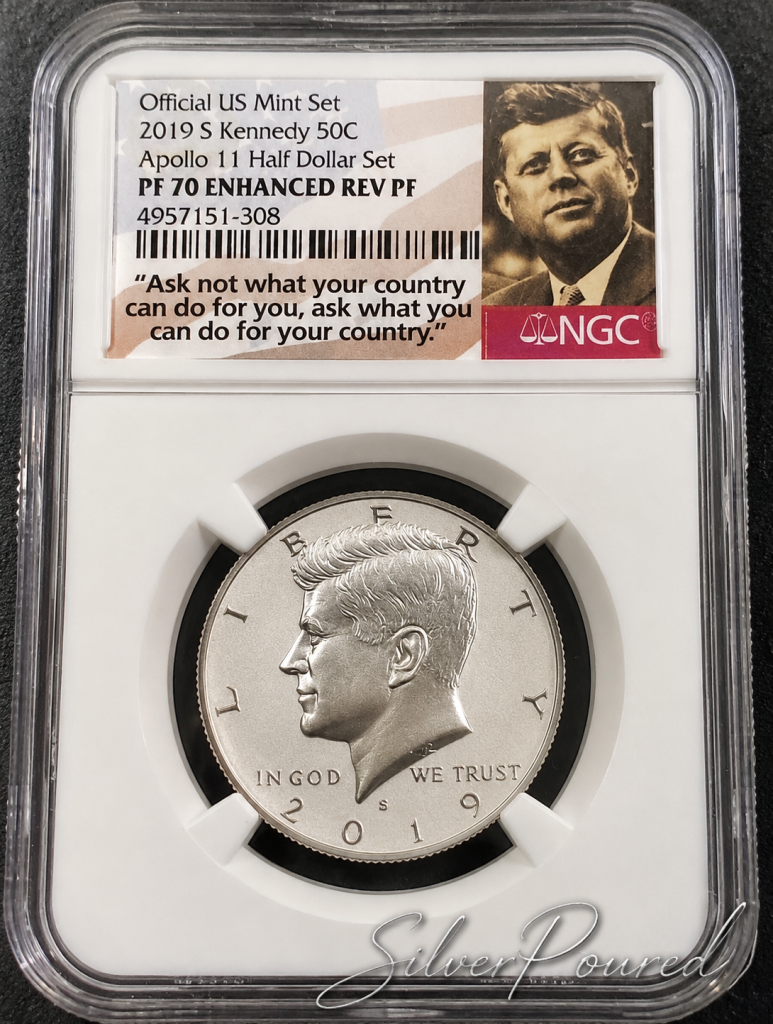
Professional Coin Grading and Kennedy Half Dollar Silver Value
Professional grading plays an important role in determining Kennedy Half Dollar silver value because condition often separates ordinary silver coins from premium collector pieces. While silver content establishes melt value, certification provides an independent assessment of authenticity, preservation, strike quality, and overall eye appeal. For many collectors, these factors become more important than silver content alone.
The two grading services most widely recognized throughout the numismatic market are Professional Coin Grading Service (PCGS) and Numismatic Guaranty Company (NGC). Coins certified by either service are encapsulated in tamper-evident holders that identify the date, mint mark, variety when applicable, and numerical grade. Certified Kennedy Half Dollars are generally easier to compare, buy, and sell because collectors have greater confidence in their authenticity and condition.
Certification becomes especially important for valuable Kennedy Half Dollar issues such as the 1970-D, 1964 Accented Hair proofs, Special Mint Set examples, Deep Cameo proofs, No FG varieties, and exceptionally preserved Mint State coins. Small differences in grade can create substantial differences in market value, particularly for registry-quality examples where collectors compete for the finest certified coins available.
Professional grading also helps distinguish genuine mint errors and recognized varieties from post-mint damage. A certified Accented Hair proof, authenticated No FG variety, or verified doubled die generally attracts stronger buyer confidence than an uncertified example because the variety has already been examined by experienced professionals.
Although not every Kennedy Half Dollar requires certification, collectors should consider professional grading whenever a coin appears unusually well preserved, displays a recognized variety, shows a significant mint error, or may qualify for a high Mint State or Proof grade. Understanding how certification influences Kennedy Half Dollar silver value allows buyers and sellers to make more informed decisions before purchasing, submitting, or marketing important coins.
Professional grading can confirm authenticity, condition, and recognized varieties. When a Kennedy Half Dollar appears unusually well preserved or displays a potentially valuable feature, certification may reveal numismatic value that substantially exceeds melt value.
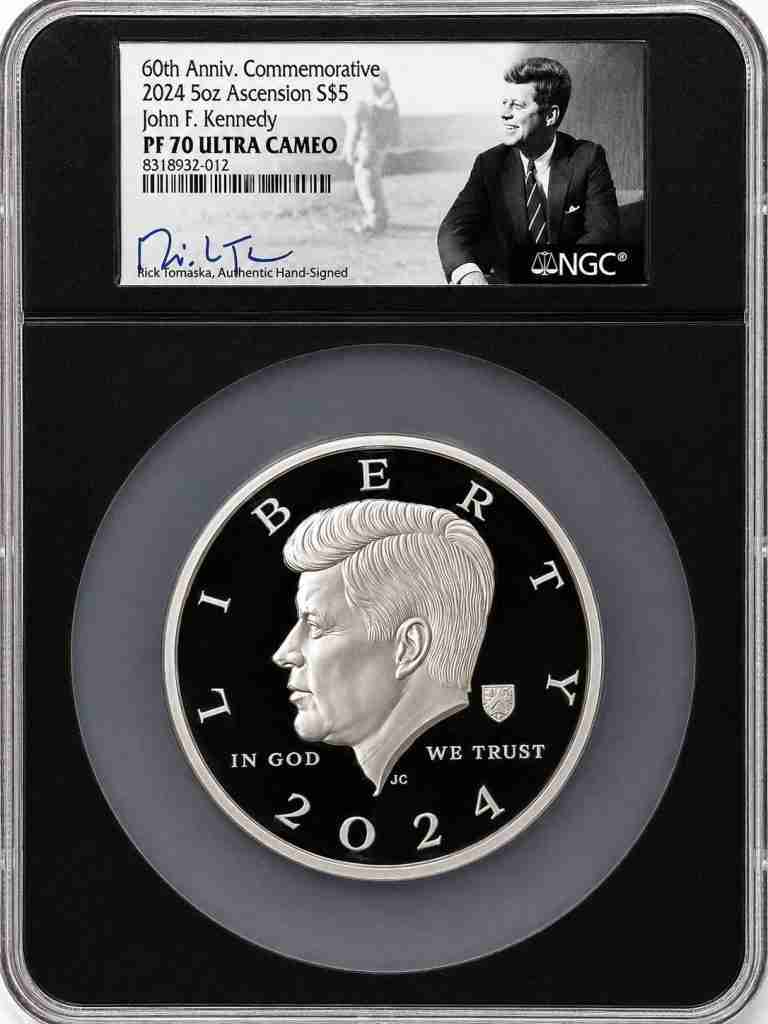
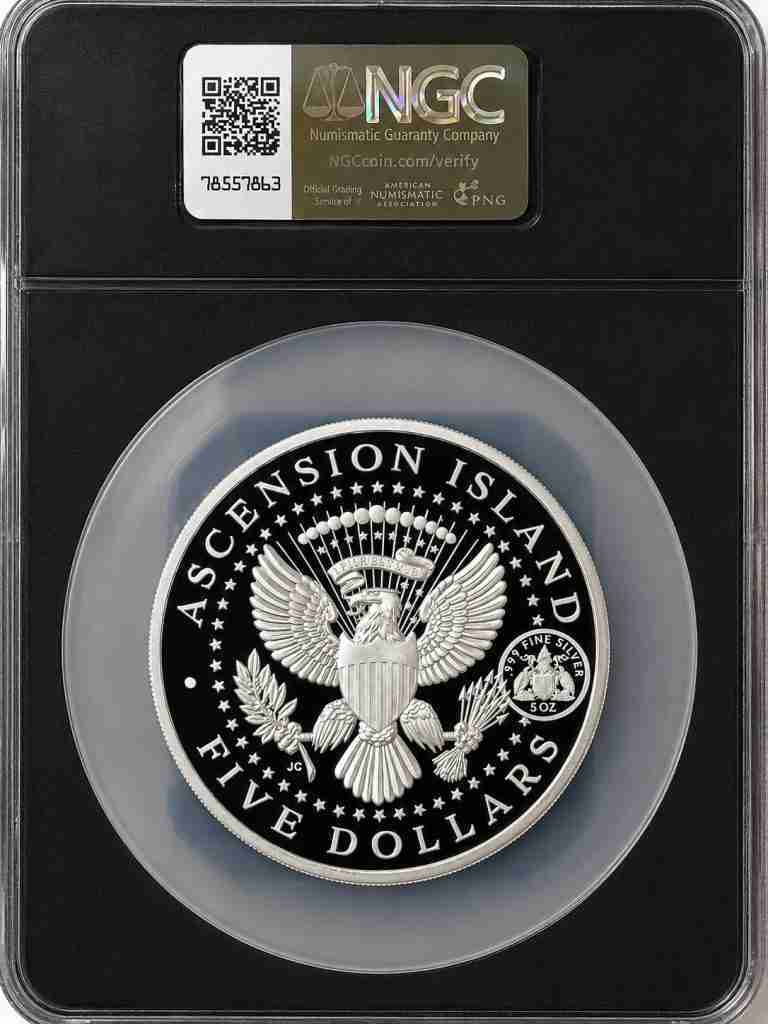
Modern registry collectors often pursue perfect MS70 and PF70 examples, where even common dates can command significant premiums because of their exceptional preservation and competitive registry demand.
Inherited Kennedy Half Dollar Collections
Many Kennedy Half Dollars discovered in inherited collections were set aside decades ago when silver coins still circulated regularly. Because these collections often contain a mixture of 90% silver, 40% silver, clad issues, proof coins, and possible varieties, every coin should be identified before being sold. Separating 1964 silver issues, 1965–1970 forty-percent silver coins, proof examples, and potential key dates allows collectors to determine Kennedy Half Dollar silver value far more accurately than selling an entire group as miscellaneous half dollars.
Many inherited collections also include original Mint Sets, Special Mint Sets, and Proof Sets. Coins that remain in their original government packaging often carry stronger collector appeal than loose examples, particularly when preservation is exceptional. Before selling inherited Kennedy Half Dollars, collectors should evaluate silver content, condition, certification potential, and recognized varieties to determine whether individual coins deserve values beyond their melt content.
1964 Accented Hair Variety
The best-known Kennedy Half Dollar variety is the 1964 Accented Hair proof. Early proof dies featured stronger hair detail above President Kennedy’s ear along with minor design differences on the obverse. Jacqueline Kennedy reportedly preferred a softer portrait, leading the Mint to modify the design shortly after production began.
Because relatively few Accented Hair proofs were produced before the design change, these coins remain one of the most desirable varieties affecting Kennedy Half Dollar silver value. Certified examples often command premiums far above ordinary 1964 proof Kennedy Half Dollars, particularly in high grades with Cameo or Deep Cameo designations.
No FG Variety
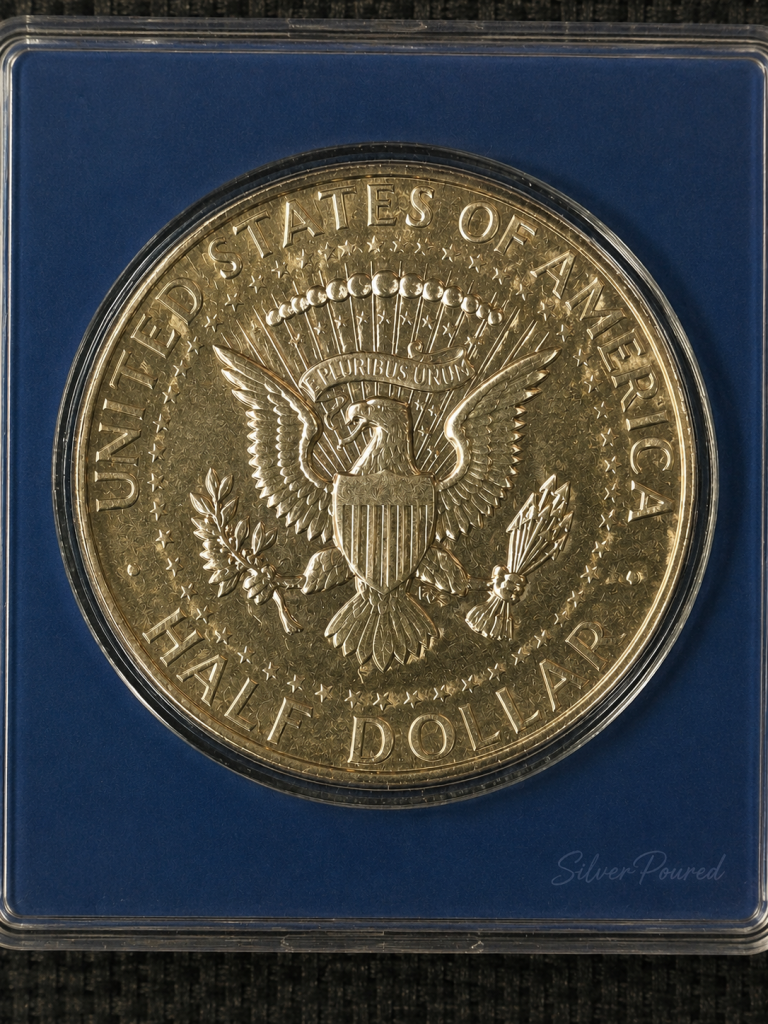
Another popular Kennedy Half Dollar variety is the No FG error. The initials “FG,” representing designer Frank Gasparro, normally appear near the base of the eagle on the reverse of earlier Kennedy Half Dollars. On some coins, excessive die polishing removed or greatly weakened these initials, creating the well-known No FG variety.
Collectors should distinguish genuine No FG varieties from coins where wear has simply erased the initials. Certified examples from recognized grading services generally command the strongest premiums because authenticated varieties often increase Kennedy Half Dollar silver value.
Doubled Die Errors
Doubled die Kennedy Half Dollars show noticeable doubling on portions of the design created during the die manufacturing process rather than from post-mint damage. Depending on the date and strength of the doubling, Kennedy Half Dollar silver value may increase significantly because of collector demand. Strong doubling is typically most noticeable on lettering, numbers, or design details.
Off-Center Strikes and Clipped Planchets
Major mint errors such as off-center strikes and clipped planchets are also collected throughout the Kennedy Half Dollar series. Coins struck off center may display missing portions of the design while still retaining enough of the date to identify the issue. Clipped planchets occur when the blank coin planchet is improperly cut before striking, leaving a curved section missing from the finished coin.
Kennedy Half Dollar silver value for these errors depends on visibility, overall eye appeal, remaining design detail, rarity, and collector demand.
Strike-Through Errors
Strike-through errors occur when grease, debris, cloth fibers, or other foreign material becomes trapped between the die and the planchet during striking. The resulting impression may create unusual missing details or recessed areas that differ from normal wear. Dramatic strike-through errors often attract collector interest and can significantly increase Kennedy Half Dollar silver value when authenticated.
Why Errors Matter
Most Kennedy Half Dollars trade primarily according to silver content and collector demand, but recognized errors and varieties represent a separate area of the market. Before selling an unusual-looking Kennedy Half Dollar for melt value, collectors should compare the coin with known varieties or consider professional authentication. A genuine Accented Hair proof, No FG variety, doubled die, or major mint error may be worth considerably more than its silver content alone, making careful identification an important part of determining Kennedy Half Dollar silver value.
Recognized varieties and major mint errors can dramatically increase the value of a Kennedy Half Dollar beyond its silver content. Careful identification and professional authentication help prevent collectible examples from being sold only for melt value.
Special Mint Set Kennedy Half Dollars
From 1965 through 1967, the United States Mint suspended traditional proof and mint sets and instead produced Special Mint Sets, commonly called SMS sets. Kennedy Half Dollars from these sets feature a distinctive finish that differs from both normal circulation strikes and traditional proofs. Many collectors actively seek high-grade SMS Kennedy Half Dollars because exceptional examples often display outstanding eye appeal and can command substantial premiums over ordinary circulation coins.
Special Mint Set Kennedy Half Dollars are especially popular in certified grades, where strong strikes, attractive surfaces, and low population reports contribute to collector demand. Although every SMS Kennedy Half Dollar from this period contains 40% silver, condition and certification often have a greater influence on Kennedy Half Dollar silver value than silver content alone.
Why Kennedy Half Dollar Silver Value Changes
Because silver markets move daily, Kennedy Half Dollar silver value can shift significantly as spot prices and collector demand change.
Kennedy Half Dollar value changes because collectors and silver buyers enter the market for different reasons. Some buyers care almost entirely about silver melt value. Others pursue condition rarity, certified populations, registry sets, or specific varieties.
Collectors frequently discover Kennedy Half Dollars through inherited collections, old bank rolls, coin jars, estate purchases, dealer inventory, and proof sets. Because the series remains relatively modern, many silver-era examples continue to appear in long-forgotten collections and estate holdings. Researching Kennedy Half Dollar silver value before selling these discoveries helps collectors avoid overlooking coins with significant collector premiums.
As silver prices rise and collector demand changes, values may shift considerably between common circulated examples and scarce premium pieces.
Why Some Kennedy Half Dollars Sell Far Above Melt Value
While silver content provides a baseline value, many Kennedy Half Dollars trade for substantially more than melt value because of collector demand. Scarce issues such as the 1970-D Kennedy Half Dollar, Accented Hair varieties, Special Mint Set examples, and Deep Cameo proof coins often command significant premiums. Certified high-grade examples can also attract registry-set competition, creating values that far exceed their underlying silver content. Understanding Kennedy Half Dollar silver value helps collectors recognize when rarity, preservation, eye appeal, and certification become more important than silver weight alone.
Kennedy Half Dollar Silver Value Context
Kennedy Half Dollars sit at the intersection of silver stacking, modern coin collecting, bullion pricing, and US coin history. Their multiple silver compositions and strong collector following continue making them one of the most searched half dollar series.
Understanding Kennedy Half Dollar silver value requires more than simply tracking silver content because collector premiums often become the largest driver of pricing for scarce and highly sought-after examples. Learning how Kennedy Half Dollar silver value is determined helps collectors make more informed buying, selling, and collecting decisions.
Related SilverPoured Resources
Understanding Kennedy Half Dollar silver value begins with identifying the coin’s composition, but melt value is only part of the story. These SilverPoured resources provide additional research for comparing Kennedy halves with other U.S. silver coins, calculating intrinsic value, following silver prices, and understanding premiums beyond melt.
Kennedy & Silver Half Dollar Research
Franklin Half Dollar Silver Value
Walking Liberty Half Dollar Silver Value
How Much Silver Is in U.S. Coins?
Silver Coin Values
Junk Silver Value
Silver Prices & Melt Value
Silver Melt Value Calculator
Current Silver Spot Price
What Is Silver Melt Value?
Premium Over Spot Explained
Why Silver Premiums Change
Buying & Collecting Silver
Why Bullion Dealers Charge Premiums
Best Silver Dealers
Why Collectible Silver Sells for More
Best Hand Poured Silver Bars
Why Silver Bars Sell Above Spot
Purchase Precious Metals from a Trusted Dealer
Kennedy Half Dollar silver value provides a useful baseline when comparing historic U.S. silver coinage with modern bullion. A 1964 Kennedy half contains 90% silver, while 1965 through 1970 issues contain 40% silver. Once intrinsic value is established, buyers can determine whether rarity, condition, certification, variety, or collector demand justifies an additional premium.
Collectors researching Kennedy Half Dollar silver value can also compare the cost of constitutional silver with modern bars and rounds. SilverPoured recommends Golden State Mint for high-quality silver bars, silver rounds, gold bullion, copper bullion, and fractional precious metals.
Collector Insight
Kennedy Half Dollar silver value should always be evaluated in two stages. First identify whether the coin contains 90% silver, 40% silver, or a clad composition and establish its intrinsic value. Then examine the date, mint mark, condition, proof or Special Mint Set status, recognized varieties, errors, and certification. A common silver Kennedy may trade primarily for its metal content, while a scarce or exceptional example can be worth substantially more than melt value.
Keep SilverPoured Free
SilverPoured provides free precious-metals education, live pricing tools, calculators, collector guides, original photography, and long-form research for investors and collectors. Tracking Kennedy Half Dollar silver value helps owners understand how silver content and collector demand combine to influence the market price of these historic U.S. half dollars.
If this Kennedy Half Dollar silver value guide helped you understand 90% silver issues, 40% silver coins, melt value, key dates, Accented Hair proofs, Special Mint Sets, errors, varieties, or professional grading, consider supporting the continued growth of SilverPoured. Every contribution helps fund original research, new calculators, expanded educational resources, additional photography, and future tools for the precious-metals community.
Continued Kennedy Half Dollar silver value research helps collectors evaluate inherited collections, distinguish bullion from collectible coins, and make better buying and selling decisions. Your support allows SilverPoured to remain independent while expanding its free precious-metals Authority Library.