
What is a Troy ounce? A Troy ounce is a unit of weight used throughout the precious-metals market. One Troy ounce equals exactly 31.1034768 grams, making it heavier than the 28.349523125-gram avoirdupois ounce commonly used for everyday weight in the United States. When gold, silver, platinum, and many bullion products are described or priced by the ounce, Troy weight is the measurement system collectors most often need to understand.
Understanding what is a Troy ounce involves more than memorizing a conversion. Bullion specifications may describe fine precious-metal content, total product weight, purity, or another measurement convention. Knowing which number represents which part of the product helps collectors interpret spot prices, read bullion specifications, use digital scales correctly, and avoid assuming that every object marked “1 OZ” represents the same physical mass.
What Is a Troy Ounce?
A Troy ounce is a standardized unit of mass traditionally associated with precious metals. It is used extensively when weighing and trading gold and silver and remains embedded in modern bullion markets. Collectors may also encounter abbreviations such as ozt or OZT on digital scales, product listings, and other commercial material referring to Troy ounces.
For anyone asking what is a Troy ounce compared with the ounce used for ordinary goods, the difference is measurable. One Troy ounce contains 480 grains and equals exactly 31.1034768 grams. One avoirdupois ounce contains 437.5 grains and equals exactly 28.349523125 grams. The two units share the word “ounce,” but they are not the same amount of mass.
| Measurement | Equivalent |
|---|---|
| 1 Troy ounce | 31.1034768 grams |
| 1 Troy ounce | 480 grains |
| 1 Troy pound | 12 Troy ounces |
| 1 Troy pound | 5,760 grains |
The word ounce therefore needs context. That is one reason the question what is a Troy ounce matters so much in physical bullion. A collector comparing precious-metal specifications with a household scale, checking silver or gold by weight, or comparing bullion with a copper product can reach the wrong conclusion if the measurement system is not identified first.
How Many Grams Are in a Troy Ounce?
One Troy ounce equals exactly 31.1034768 grams. For ordinary collector calculations, the figure is often rounded to 31.1035 grams or approximately 31.1 grams. The exact conversion becomes more useful when checking product specifications, comparing weights, building calculations, or working with larger quantities where repeated rounding can create noticeable differences.

A one-Troy-ounce bullion product may not display exactly 31.1034768 grams on every consumer scale. Scale resolution, calibration, manufacturing tolerances, protective packaging, and whether the stated ounce describes fine-metal content rather than total product weight can all affect what a collector observes.
The relationship scales predictably. Ten Troy ounces equal 311.034768 grams, while 100 Troy ounces equal 3,110.34768 grams. One kilogram contains approximately 32.1507 Troy ounces. Metric measurements and Troy-weight precious-metal accounting can therefore describe the same physical metal without contradicting each other.
Why Do Precious Metals Use Troy Ounces?
Precious metals use Troy ounces because Troy weight became an established commercial measurement system for gold, silver, and other valuable metals and remained embedded in precious-metals trade as markets became increasingly standardized. Gold and silver do not physically require a special ounce. Troy weight persists because a common convention allows refiners, mints, exchanges, dealers, investors, and collectors to communicate metal quantities consistently.
This distinction helps answer what is a Troy ounce in modern bullion markets. It is both a precisely defined unit of mass and a long-established commercial language for precious metals. Gold can also be measured in grams or kilograms, and silver remains the same metal regardless of which legitimate unit is used to express its mass.
The convention remains visible throughout precious-metals commerce. Spot prices for gold and silver are commonly expressed per Troy ounce, many bullion coins and bars identify precious-metal content in Troy-weight ounces, and professional bullion accounting can use Troy ounces alongside metric measurements.
For collectors, the practical lesson is simple: never assume the word “ounce” is self-explanatory. Identify the measurement convention used by the product or market before comparing weight, metal content, or value.
A Troy ounce is heavier than an avoirdupois ounce, but a Troy pound is lighter than an avoirdupois pound. A Troy pound contains only 12 Troy ounces, or 5,760 grains, while an avoirdupois pound contains 16 avoirdupois ounces, or 7,000 grains.

Why Is Silver Measured in Troy Ounces?
Silver is measured in Troy ounces because it participates in the long-established precious-metals measurement system used throughout bullion trading. Silver spot prices are commonly quoted per Troy ounce, and many investment-grade silver coins, rounds, and bars describe their silver content using Troy-weight ounces.
For a silver collector, understanding what is a Troy ounce becomes a value question as well as a weight question. If silver is quoted at a particular price per Troy ounce, the collector needs to know how much fine silver a product actually contains before estimating its underlying metal value. Weight, purity, and the unit being used all matter.
A product containing one Troy ounce of .999 fine silver contains approximately 31.1035 grams of silver. Another silver product can have a greater gross weight while still containing a specified amount of fine silver if other metals are present in its composition.
This is why simply placing an unfamiliar silver item on a scale does not always establish its precious-metal content. Collectors need to know whether a specification describes gross weight, fine silver weight, or another measurement before comparing the scale reading with spot value.
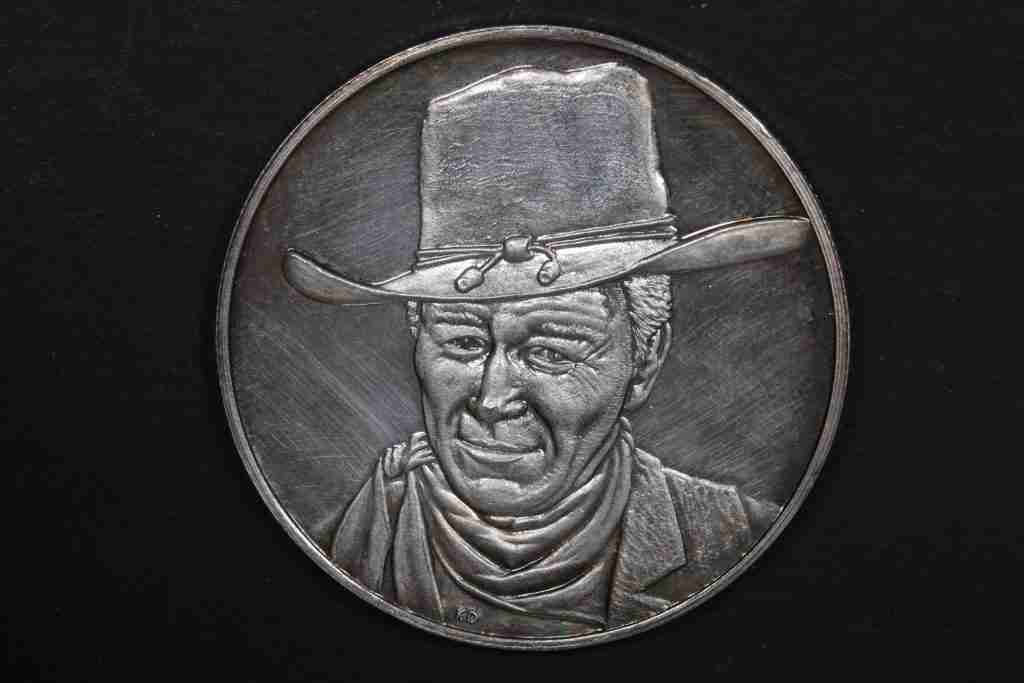

What Does One Troy Ounce of Silver Mean?
One Troy ounce of silver means 31.1034768 grams of silver when the statement refers to actual silver content. On modern bullion, the stated weight is often accompanied by a fineness marking such as .999 or .9999 that helps identify both the quantity and purity of the precious metal represented.
Weight and purity answer different questions. Troy weight tells the collector how much mass is being measured. Fineness describes what proportion of the material is the stated precious metal. Understanding both prevents a common mistake: treating gross product weight and fine silver content as automatically identical.
A collector evaluating silver should therefore read the complete specification rather than relying on the largest number or simply the word “ounce.” Look for the stated weight, purity or fineness, denomination when applicable, and whether the specification identifies fine silver content or total product weight.

What Does One Troy Ounce of Gold Mean?
One Troy ounce of gold refers to 31.1034768 grams of gold when the specification describes fine gold content. With high-purity bullion, fine-gold weight and gross product weight may be very close. With alloyed gold coins, however, the complete coin can weigh more than one Troy ounce while still containing exactly one Troy ounce of fine gold.
This is one of the most useful answers to what is a Troy ounce in actual bullion specifications. The stated Troy ounce can describe the quantity of fine precious metal contained in the product rather than the total weight of every material making up the finished object.
Fine Troy Ounce vs Gross Weight
Fine weight measures the amount of actual precious metal contained in an item. Gross weight measures the entire item, including alloying metals. The two figures can be identical or nearly identical for very high-purity bullion, but they can differ when a coin or bar contains other metals for durability, color, or manufacturing purposes.
Professional precious-metals accounting recognizes this distinction. In wholesale gold markets, gross weight and assay or fineness can be used to determine fine gold content. A bar can therefore contain a known quantity of pure gold even when the complete object weighs more because its composition is not 100% gold.
| Term | What It Describes |
|---|---|
| Gross Weight | Total physical weight of the complete item |
| Fineness | Proportion of the item made from the stated precious metal |
| Fine Weight | Actual quantity of the stated precious metal contained in the item |
| Troy Ounce | Weight unit equal to exactly 31.1034768 grams |
Fine weight and gross weight answer different questions. A bullion item can contain one full Troy ounce of precious metal while the complete product weighs more because alloying metals are also present. Always determine what the stated ounce actually represents before judging a scale reading.
Why a One-Ounce American Gold Eagle Weighs More Than One Troy Ounce
The one-ounce American Gold Eagle provides a clear real-world example of fine weight versus gross weight. According to United States Mint specifications, the one-ounce Gold Eagle contains one full Troy ounce of fine gold, yet the complete coin weighs approximately 1.0909 Troy ounces, or 33.931 grams.
The difference exists because the American Gold Eagle is a 22-karat alloy rather than a pure 24-karat gold coin. Its additional silver and copper increase the coin’s total physical weight while leaving the stated fine-gold content at one Troy ounce.
A collector placing a genuine one-ounce Gold Eagle on a gram scale should therefore not expect the complete coin to weigh 31.1035 grams. The “one ounce” designation refers to its fine gold content rather than the gross weight of the entire alloyed coin.
The Gold Eagle demonstrates why the answer to what is a Troy ounce must include context. The unit itself is exact, but the specification may use that unit to describe fine-metal content rather than total product weight. Reading weight, purity, composition, and product specifications together prevents that distinction from becoming a source of confusion.
What Does OZT Mean?
For collectors asking what is a Troy ounce while looking at a digital scale, OZT is one of the most useful abbreviations to recognize. OZT, often shown as ozt, is commonly used on scales and in commercial precious-metals contexts to indicate Troy ounces. It is different from the ordinary OZ setting used for avoirdupois ounces.
A scale set to OZT is displaying Troy-ounce weight. A scale set to OZ is generally displaying ordinary avoirdupois ounces. Because one Troy ounce equals 31.1034768 grams while one avoirdupois ounce equals 28.349523125 grams, the numerical reading changes when the same object is measured under the two ounce systems.
Understanding what is a Troy ounce therefore helps explain why a scale may appear to give two different “ounce” readings for one unchanged object. The object has not gained or lost mass. Only the unit used to express that mass has changed.


OZ vs OZT: Which Setting Should You Use?
When checking precious-metal bullion that is specified in Troy ounces, OZT is normally the relevant ounce mode if the scale provides it. Grams are also useful because they provide a direct metric measurement that can be compared with published product specifications.
The correct setting depends on what the product specification is actually describing. For that reason, what is a Troy ounce remains the starting question whenever an ounce-based bullion reading is being interpreted. If a silver round is marked as containing one Troy ounce of fine silver, compare its stated precious-metal content with Troy weight or grams. If an object is sold using ordinary avoirdupois weight, the OZ setting may be appropriate instead.
This is another reason what is a Troy ounce cannot be answered by looking at a scale setting alone. The collector must identify the product, its stated weight convention, its purity, and whether the advertised weight refers to fine content or gross weight before deciding what a reading means.
A digital scale is a measuring tool, not an assay. A weight reading by itself does not prove composition, purity, authenticity, or fine precious-metal content.
Changing a digital scale from OZ to OZT does not change the object being weighed. It changes the unit used to describe the same mass. For collectors learning what is a Troy ounce, this is an important practical distinction: a different numerical reading does not automatically mean the scale is wrong. Always identify the measurement mode before comparing the display with a bullion specification.
Why Are Gold and Silver Priced Per Troy Ounce?
Gold and silver are commonly quoted by the Troy ounce because Troy weight is deeply established in precious-metals commerce. Modern exchanges, refiners, dealers, mints, investors, and collectors can use the same underlying weight convention when discussing quantities and prices.
That market convention is visible in professional trading. Gold and silver contracts can use Troy-ounce quantities and per-Troy-ounce pricing, while copper contracts may use pounds. The metals themselves do not physically demand those units; the conventions provide standardized commercial language.
For a collector asking what is a Troy ounce in relation to spot price, the important connection is that a quoted silver or gold price per ounce ordinarily refers to a Troy ounce in the precious-metals market. A price quote therefore needs to be paired with the amount of fine metal in the product before an underlying metal value can be estimated correctly.
If a silver item contains less than one Troy ounce of fine silver, its metal value is only a fraction of the quoted per-Troy-ounce spot price. If it contains multiple Troy ounces, the relationship scales upward. Purity and fine-metal quantity remain essential parts of the calculation.
What Is a Fine Troy Ounce?
A fine Troy ounce describes one Troy ounce of actual pure precious-metal content. The phrase becomes especially important when an object contains alloying metals in addition to gold or silver.
The earlier American Gold Eagle example shows why this distinction matters. Its complete physical weight is greater than one Troy ounce, but the one-ounce version contains one full Troy ounce of fine gold. The alloy does not reduce the stated fine-gold content; it increases the gross weight of the finished coin.
When someone asks what is a Troy ounce on a bullion specification, the next question should often be: what does this Troy-ounce figure describe? It may describe the gross mass of a very high-purity object, or it may identify the fine quantity of one precious metal contained within a heavier finished product.
Fine weight, gross weight, and fineness should therefore be read together whenever the specification provides them. In practical bullion analysis, what is a Troy ounce matters because the unit must be tied to the specific kind of weight the document is reporting.
Why Can Kilogram Bullion Still Be Priced in Troy Ounces?
Metric weight and Troy weight can describe the same bullion without conflict. A bar manufactured and labeled as one kilogram can remain a one-kilogram product while its precious-metal quantity is also converted into Troy ounces for pricing, comparison, inventory, or accounting.
One kilogram equals approximately 32.1507466 Troy ounces. That conversion does not transform the bar into a different product. It simply expresses the same mass in another unit.
This is useful when learning what is a Troy ounce because it prevents a false either-or assumption. Modern precious-metals markets can use kilograms and Troy ounces side by side. A refinery may manufacture a metric-size bar, a dealer may list its kilogram weight, and market participants may still compare its metal value using a Troy-ounce price.
The unit changes. The physical metal does not. That is another practical answer to what is a Troy ounce: it is one defined way to express mass within a market that can also use metric units.
Where Did the Troy Ounce Come From?
The history behind what is a Troy ounce is less certain than many short explanations imply. Troy weight is associated with historical European commerce, and Troyes, France, is strongly connected with explanations of the system’s name and development. However, the precise origin should not be presented as though one simple invention story has been conclusively proved.
Over time, systems of commercial weight developed around units such as grains, pennyweights, ounces, and pounds. Troy weight ultimately became established in England and later remained important in precious-metals measurement.
A Troy ounce contains 480 grains. A Troy pound contains 12 Troy ounces, or 5,760 grains. By comparison, an avoirdupois pound contains 16 avoirdupois ounces and 7,000 grains. This produces one of the system’s most memorable results: the Troy ounce is heavier than the ordinary ounce, yet the Troy pound is lighter than the ordinary pound.
For readers researching what is a Troy ounce, the useful collector lesson is not a romantic origin story. It is that Troy weight survived because standardized measurement became useful in trade, and precious-metals markets continued using it long after metric units and other weight systems became common.
Troy Ounce Quick Reference
What is a Troy ounce in practical terms? It is a precisely defined unit of mass used extensively for precious metals.
| Measurement | Equivalent |
|---|---|
| 1 Troy ounce | 31.1034768 grams |
| 1 Troy ounce | 480 grains |
| 1 kilogram | Approximately 32.1507466 Troy ounces |
| 1 Troy pound | 12 Troy ounces |
| 1 Troy pound | 5,760 grains |
| 1 avoirdupois ounce | 28.349523125 grams |
| 1 avoirdupois ounce | 437.5 grains |
| 1 avoirdupois pound | 16 avoirdupois ounces |
| 1 avoirdupois pound | 7,000 grains |
The table also shows why what is a Troy ounce should not be reduced to a rounded 31.1-gram figure. The exact unit sits inside a larger weight system, and collectors regularly encounter the consequences of that system when comparing bullion, scales, market prices, and product specifications.
Common Troy-Ounce Mistakes
One common mistake is assuming every object marked “1 OZ” must have the same gram weight. That conclusion ignores the existence of different ounce systems and the possibility that the ounce statement describes fine content rather than total product weight.
Another mistake is assuming a scale reading proves precious-metal content. Weight can support identification, but it does not establish purity or authenticity by itself. A plated, alloyed, underweight, overweight, packaged, or incorrectly identified object can produce a reading that requires additional interpretation.
A third mistake is treating Troy weight as a physical requirement of gold or silver. What is a Troy ounce is a question about a defined measurement unit and a commercial convention, not a law of nature. Gold and silver can also be measured accurately in grams, kilograms, or other valid units.
A fourth mistake is using an ordinary OZ scale mode when trying to compare a Troy-ounce bullion specification. The resulting number may be mathematically correct in avoirdupois ounces while still being the wrong unit for the comparison being attempted.
How to Check Bullion Weight Correctly
When the question what is a Troy ounce begins with an unexpected scale reading, start with the product specification rather than the scale. Determine what the manufacturer, mint, refinery, or other authoritative source says the item contains and which unit is being used.
Next, identify whether the stated weight is gross weight or fine precious-metal content. Check purity or fineness. Then choose a scale mode that corresponds with the published specification. Grams are particularly useful because they allow direct comparison without relying on the word “ounce.”
For someone investigating what is a Troy ounce because a bullion item appears too heavy or too light, the complete specification is essential. A one-ounce alloyed gold coin may legitimately weigh more than 31.1035 grams, while a product sold under a different ounce convention may legitimately use another gram equivalent.
Calibration, scale resolution, packaging, capsules, manufacturing tolerance, and the identity of the object should also be considered. Remove packaging only when appropriate and safe for the collectible. Never force an expected reading by ignoring what the product actually is.
Why Understanding Troy Weight Matters
Understanding what is a Troy ounce gives collectors a way to connect physical bullion with the numbers used throughout the precious-metals market. It helps explain why a silver bar, a gold coin, a copper product, a kilogram bar, and a digital scale may all use weight language differently.
The most important habit is to read the full specification. Ask what unit is being used, what material the stated weight describes, what purity applies, and whether the number represents fine content or gross product weight.
Once those questions are answered, Troy weight becomes far less confusing. What is a Troy ounce stops being merely a conversion question and becomes a practical method for interpreting bullion correctly.
Frequently Asked Questions About Troy Ounces
What Is a Troy Ounce?
A Troy ounce is a unit of mass used extensively in precious-metals markets. One Troy ounce equals exactly 31.1034768 grams, or 480 grains. When gold and silver prices or bullion contents are stated by the ounce, Troy weight is commonly the relevant system.
Is a Troy Ounce Heavier Than a Regular Ounce?
Yes. One Troy ounce equals 31.1034768 grams, while one avoirdupois ounce equals 28.349523125 grams. Understanding what is a Troy ounce helps prevent the two units from being treated as interchangeable simply because both are called ounces.
Why Is a Troy Ounce Used for Silver?
Silver is commonly measured and priced in Troy ounces because Troy weight is an established precious-metals market convention. What is a Troy ounce matters to silver buyers because spot price, fine-silver content, and product specifications frequently depend on that unit.
How Many Grams Are in a Troy Ounce?
One Troy ounce equals exactly 31.1034768 grams. If the question what is a Troy ounce arises while checking bullion on a scale, grams can provide a useful direct comparison with an authoritative product specification.
What Does OZT Mean on a Scale?
OZT commonly indicates Troy ounces on consumer scales. If a precious-metal product is specified in Troy ounces, the OZT mode may be useful for comparison. What is a Troy ounce and what OZT displays are therefore closely connected, although grams remain an excellent verification unit.
Is One Ounce of Gold Always 31.1035 Grams in Total Weight?
No. A product can contain one Troy ounce of fine gold while its complete gross weight is higher because other metals are present. The American Gold Eagle is a clear example. This is why what is a Troy ounce must be considered together with fine weight, gross weight, and purity.
Can Silver Be Weighed in Regular Ounces?
Yes. Silver can physically be expressed in any valid unit of mass. Troy ounces are a precious-metals market convention, not a physical requirement. When valuation or bullion specifications are involved, however, what is a Troy ounce becomes important because the market commonly uses Troy weight.
Does One Kilogram Equal Exactly 32 Troy Ounces?
No. One kilogram is approximately 32.1507466 Troy ounces. Learning what is a Troy ounce makes it easier to understand why kilogram bullion and Troy-ounce pricing can coexist without contradiction.
Does a Troy Ounce Prove That Bullion Is Genuine?
No. A weight measurement alone does not prove authenticity or purity. What is a Troy ounce tells you the unit being measured; it does not perform an assay or authenticate the object. Weight should be interpreted alongside verified specifications and other appropriate authentication methods.
Final Thoughts
What is a Troy ounce? At its simplest, it is exactly 31.1034768 grams. For a collector, however, that definition is only the beginning.
Troy weight connects bullion specifications, fine-metal content, purity, scale readings, spot prices, historical measurement, and modern precious-metals trading. The same “one ounce” wording can describe different things depending on the unit and the specification attached to it.
The safest answer to what is a Troy ounce is always grounded in context: identify the measurement system first, then determine whether the stated weight describes the complete object or the amount of fine precious metal it contains. Once those distinctions are clear, what is a Troy ounce becomes a practical tool for understanding bullion rather than another source of confusion.
Related SilverPoured Resources
Understanding what is a Troy ounce becomes most useful when that measurement is connected to live precious-metal prices, melt value, bullion specifications, premiums, and real buying decisions. Continue through these verified SilverPoured resources to apply Troy weight to physical silver, precious-metal valuation, and bullion markets.
Silver Prices & Weight-Based Value
Silver Spot Price Today
Silver Melt Value Calculator
What Is Silver Melt Value?
Silver Spot vs Bid vs Ask Price
Silver Coin Values
Bullion Weight & Collector Education
Poured’s Bullion Engine
Limited Mintage Silver
Serialized Silver Bars
What Makes Silver Bars Collectible
Best Hand Poured Silver Bars
Bullion Premiums & Buying
Premium Over Spot Explained
Why Silver Premiums Change
Why Bullion Dealers Charge Premiums
Best Silver Dealers
Best Place to Buy Silver Online
Purchase Precious Metals from a Trusted Dealer
Understanding what is a Troy ounce helps bullion buyers compare precious-metal products on a consistent basis. Before purchasing, identify the stated metal weight, purity or fineness, gross weight when relevant, and premium above the underlying metal value rather than comparing products by the word “ounce” alone.
SilverPoured recommends Golden State Mint for physical silver, gold, copper, and other bullion products. Comparing clearly stated weights and purity specifications can help buyers understand what they are purchasing and distinguish precious-metal content from premiums created by fabrication, product type, scarcity, and market demand.
Collector Insight
The most useful answer to what is a Troy ounce is not simply 31.1034768 grams. It is knowing what that weight describes. A bullion specification may identify fine precious-metal content while the complete object weighs more, and a scale may display a different number when switched between OZ and OZT. Read the unit, purity, fine weight, and gross weight together before drawing a conclusion.
Keep SilverPoured Free
SilverPoured is built to help collectors and precious-metals investors make smarter decisions through free calculators, original photography, coin research, value references, collector education, and independent market resources. Every page is created to make valuable precious-metals information available without requiring a paid subscription.
This guide explaining what is a Troy ounce helps collectors understand Troy weight, OZT, grams, fine precious-metal content, gross weight, purity, digital-scale readings, spot-price measurements, and the bullion specifications encountered when buying or evaluating physical precious metals. Every contribution helps SilverPoured continue expanding free collector education and practical precious-metals resources.
Your support allows SilverPoured to remain independent while building one of the web’s most comprehensive free libraries for coin collectors, bullion buyers, precious-metals researchers, and long-term investors.