
Gold Britannia value depends on gold content, mintage, rarity, condition, collector demand, and overall market availability. While many Gold Britannias trade close to their intrinsic gold value, certain dates, proof issues, graded examples, and lower-mintage releases can command substantial premiums above melt value.
The Gold Britannia is one of the world’s most respected gold bullion coins. Produced by The Royal Mint, the series combines investment-grade gold ownership with a long history of collector demand and evolving designs.
Whether you are researching inherited collections, comparing key dates, evaluating certified examples, or studying collector premiums, understanding Gold Britannia value helps separate gold content from true collector value.
What Is a Gold Britannia Worth Today?
A Gold Britannia is generally worth at least its gold melt value, but collector demand can significantly influence market pricing.
Common bullion issues often trade near gold value, while scarcer dates, proof editions, special releases, and high-grade certified examples may command considerably higher premiums.
The most important factors affecting Gold Britannia value are gold content, rarity, mintage, condition, collector demand, and overall market availability.
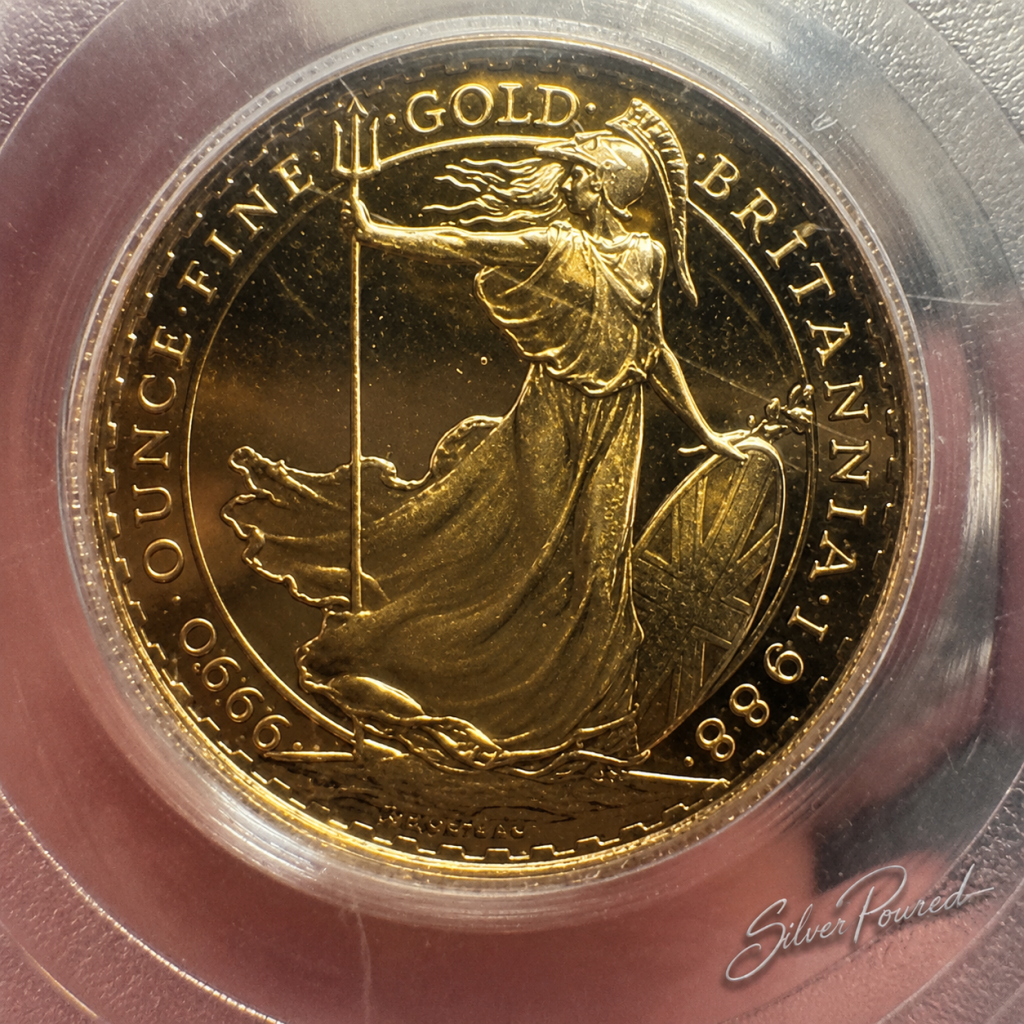
What Is a Gold Britannia?
The Gold Britannia is the official gold bullion coin of the United Kingdom.
Introduced in 1987 by The Royal Mint, the series features Britannia, the long-standing symbol of Britain, on the reverse. Over the decades, Britannia has become one of the most recognized figures in world bullion coinage.
Because of its government backing, gold content, and international recognition, the Gold Britannia remains popular among both investors and collectors.
History of the Gold Britannia Series
The Royal Mint introduced the Gold Britannia in 1987 as the United Kingdom’s flagship modern gold bullion program.
Early Gold Britannias were struck in 22-karat gold and contained small amounts of copper, giving many early issues a distinctive warm gold appearance. In 2013, the series transitioned to .9999 fine gold, aligning with many of the world’s leading bullion programs.
Throughout its history, the series has featured changing interpretations of Britannia, helping create additional collector demand beyond gold ownership alone.
Today, Gold Britannias are among the most widely traded gold bullion coins in the world. The Gold Britannia is produced by The Royal Mint, the official mint of the United Kingdom and one of the world’s oldest continuously operating mints.
Gold Britannia Gold Content
Gold Britannias have been produced in several denominations throughout the history of the series.
The standard one-ounce Gold Britannia contains one troy ounce of gold, although fractional versions have also been issued.
Collectors often distinguish between:
- 1987–2012 Britannias (.917 gold)
- 2013–Present Britannias (.9999 gold)
This transition represents one of the most important milestones in the history of the series.
Because gold prices fluctuate daily, Gold Britannia value changes with the precious metals market. However, collector premiums frequently contribute additional value beyond melt value alone.
Although Gold Britannias minted before 2013 contain 22-karat gold while modern examples are struck in .9999 fine gold, both contain their stated amount of pure gold. The difference lies in alloy composition rather than precious-metal weight, which is why collectors evaluate purity alongside rarity, condition, and market demand when determining Gold Britannia value.
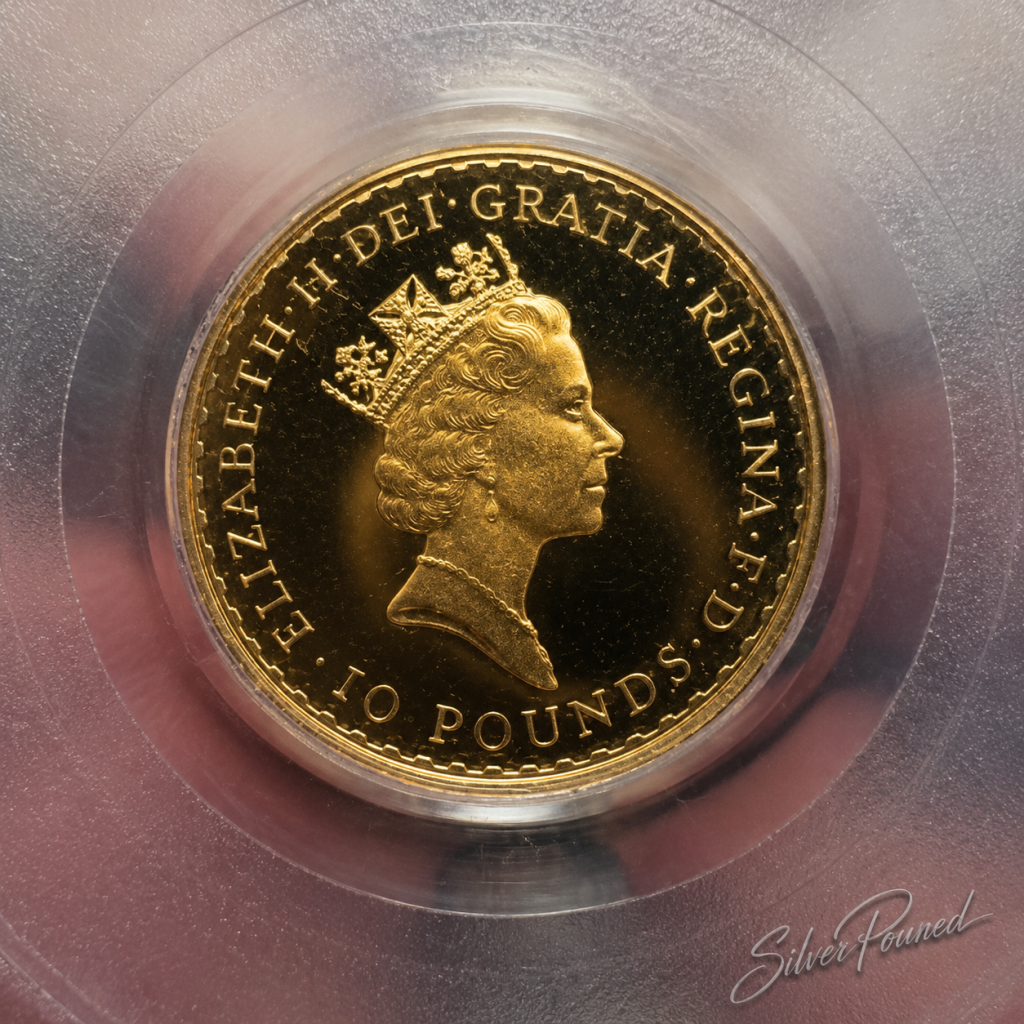
Why Some Gold Britannias Are Worth More Than Others
Not every Gold Britannia carries the same market value. While all examples contain gold, collector demand often creates significant differences in pricing between individual dates and releases. Factors such as rarity, mintage, condition, grading, proof status, and historical significance can all influence premiums above melt value.
Certain years attract stronger collector attention because they represent important milestones within the series, while proof issues and lower-mintage releases frequently become more difficult to locate as collections mature. High-grade certified examples may also command substantial premiums when registry collectors compete for the finest available coins.
Because of these factors, Gold Britannia value often extends far beyond gold content alone. Understanding how rarity, demand, and condition interact helps explain why two coins containing the same amount of gold can sell for dramatically different prices.
Key Date Gold Britannias
Several Gold Britannia issues have become especially desirable among collectors.
Early releases from the late 1980s and early 1990s often attract significant attention because they represent the foundation of the series. Certain proof editions and lower-mintage releases have also developed strong collector followings.
Collectors building complete date runs frequently focus on these key dates because availability tends to decline over time.
Understanding key dates is an important step when evaluating Gold Britannia value.
Gold Britannia Mintages by Year
Annual production remains one of the most important factors influencing Gold Britannia value. While bullion coins are often purchased primarily for precious metal content, collectors frequently study mintages because lower-production years can become increasingly difficult to locate as collections mature. As available supply decreases and collector demand remains active, premiums often develop beyond gold melt value alone.
The earliest Gold Britannias are particularly important because they represent the foundation of the series. Many collectors focus on these issues when building complete date runs or researching long-term rarity.
| Year | Estimated Mintage |
|---|---|
| 1987 | 71,121 |
| 1988 | 124,695 |
| 1989 | 381,250 |
| 1990 | 142,696 |
| 1991 | 23,100 |
| 1992 | 54,640 |
| 1993 | 167,207 |
| 1994 | 109,760 |
| 1995 | 92,559 |
| 1996 | 246,291 |
| 1997 | 318,491 |
| 1998 | 121,500 |
| 1999 | 91,933 |
| 2000 | 133,598 |
Collectors frequently compare mintages with market availability because production numbers alone do not always tell the full story. Some years become surprisingly difficult to locate despite moderate mintages, while other issues remain available because more examples survive in collector-grade condition.
Design Changes Through the Years
One of the most appealing aspects of the Gold Britannia series is the evolving portrayal of Britannia.
Unlike some bullion programs that maintain the same design indefinitely, The Royal Mint has periodically introduced new artistic interpretations of Britannia.
These design changes create additional collecting opportunities and help distinguish different eras of production.
Many collectors actively pursue multiple Britannia designs rather than focusing solely on bullion content.
Gold Britannia Security Features
Modern Gold Britannias feature some of the most advanced anti-counterfeiting technology in the bullion industry. The Royal Mint has introduced a variety of security enhancements designed to help protect both collectors and investors while preserving confidence in the series.
These features include intricate micro-detailing, latent image technology that changes appearance when viewed from different angles, surface animation effects, and precision line work that is extremely difficult to reproduce. Together, these security elements help distinguish genuine Britannias from counterfeit products and reinforce the series’ reputation for quality.
Collectors often view these innovations as an important part of the modern Britannia story. In addition to protecting authenticity, the security features have become a defining characteristic of contemporary Gold Britannias and contribute to ongoing collector demand.
Most Valuable Gold Britannias
While every Gold Britannia contains intrinsic gold value, certain issues have developed strong collector premiums because of rarity, low mintages, proof status, and long-term demand.
Early proof Britannias from the late 1980s and early 1990s remain among the most desirable examples in the series. These coins were produced primarily for collectors and often survive in exceptional condition. Because production numbers were substantially lower than standard bullion issues, collector demand frequently exceeds available supply.
High-grade certified examples also command significant premiums. Registry collectors often compete for top-population coins graded by PCGS and NGC, creating additional demand for the finest known examples. In some cases, two Britannias containing the same amount of gold may sell for dramatically different prices simply because one coin holds a superior grade.
Collectors researching Gold Britannia value often begin by identifying the key dates, low-mintage years, and proof issues that have historically generated the strongest premiums.
Graded Gold Britannias
Third-party grading plays an important role within the Gold Britannia market.
Collectors frequently submit coins to grading services such as PCGS and NGC to verify authenticity and assign standardized condition grades.
Small differences in grade can create substantial differences in value, especially for scarcer dates and proof issues.
Registry competition has helped strengthen demand for top-population examples throughout the series.
Gold Britannia Proof Sets and Fractional Issues
While the one-ounce Gold Britannia receives the majority of collector attention, the series has also been produced in a wide range of fractional denominations and proof set configurations. These products have become an important part of the collector market because they allow enthusiasts to build specialized collections beyond standard bullion issues.
Fractional Gold Britannias have been issued in sizes including one-half ounce, one-quarter ounce, and one-tenth ounce. These smaller coins often appeal to collectors who want exposure to gold ownership while also assembling complete denomination sets. Because some fractional issues were produced in lower quantities than their one-ounce counterparts, they can develop collector premiums independent of gold content.
Proof sets represent another important area of the Britannia market. Unlike bullion strikes, proof coins are produced using specially prepared dies and polished planchets that create mirrored surfaces and exceptional detail. Many proof Britannias were sold directly to collectors in presentation packaging and accompanied by certificates of authenticity.
Collectors researching Gold Britannia value often discover that proof sets and fractional issues can be significantly scarcer than standard bullion releases. As a result, these products frequently attract stronger collector demand and may become more difficult to locate on the secondary market.
For advanced collectors, assembling a complete Britannia collection often involves far more than acquiring one example from each year. Proof editions, fractional denominations, special packaging releases, and commemorative issues create additional collecting challenges that continue driving interest throughout the series. These specialty products help explain why Gold Britannia value is influenced not only by gold prices but also by rarity, collector demand, and long-term availability.
Collecting Gold Britannias by Design Type
Many collectors choose to build Gold Britannia collections based on design type rather than date alone. Because The Royal Mint has introduced numerous artistic interpretations of Britannia throughout the history of the series, collectors often pursue examples representing each major design era. This approach highlights the evolution of Britannia as a national symbol while creating additional collecting opportunities beyond standard date-run sets. Design-type collecting remains popular because it combines historical appreciation, artistic variety, and long-term collector demand, all of which can influence Gold Britannia value.
Gold Britannia Date Run Collecting
Building a complete date run remains one of the most popular goals among Britannia collectors. A date run allows collectors to follow the evolution of the series while studying changes in purity, design, security features, and market demand.
Many collectors begin with one example from each year before expanding into proof issues, fractional coins, and special releases. This approach provides a deeper understanding of the series and often highlights dates that become more difficult to locate over time.
Date-run collecting also helps explain why Gold Britannia value can vary significantly between years. As collections become more complete, collectors often compete for key dates and lower-mintage issues that are essential for finishing a set.
Gold Britannia Value vs American Gold Eagle Value
Collectors frequently compare Gold Britannia value with American Gold Eagle value because both series rank among the most popular government-issued gold bullion programs.
Gold Eagles often benefit from stronger recognition within the United States, while Britannias attract international demand and feature changing design elements.
Both remain important components of the global bullion market.
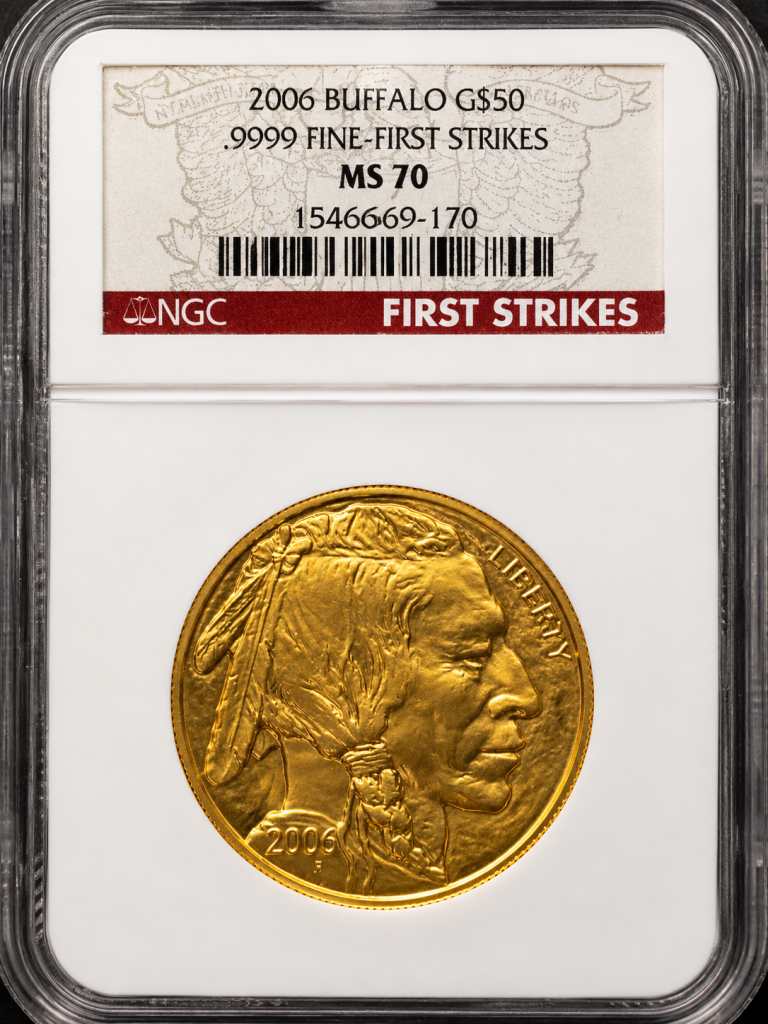
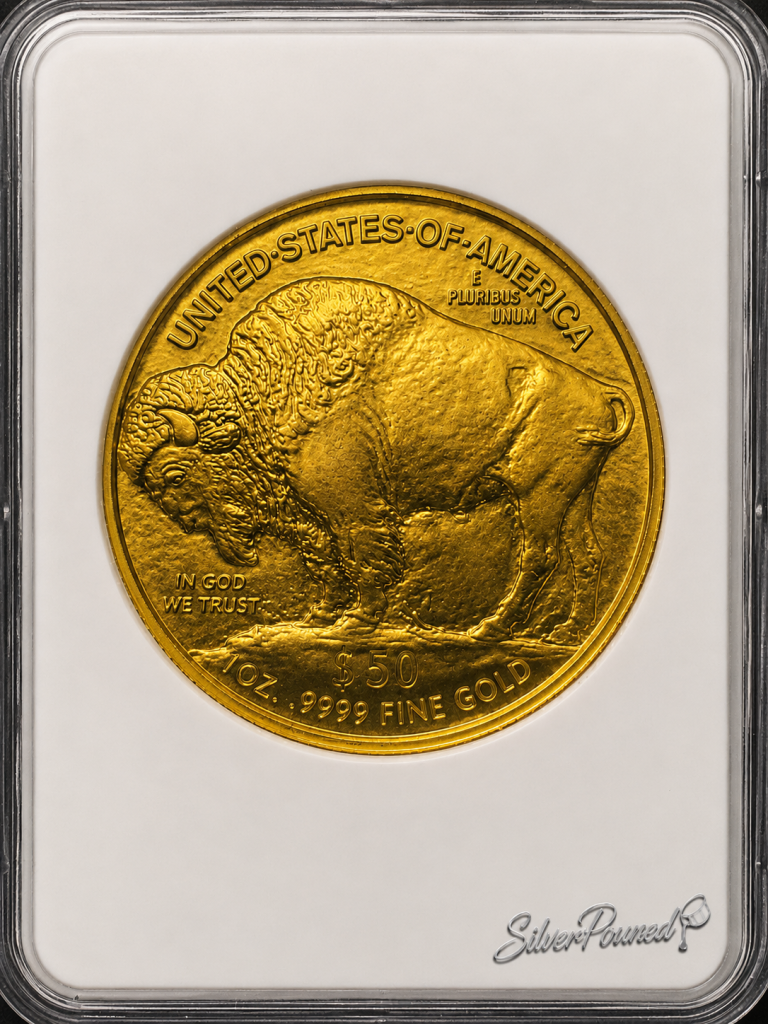
Gold Britannia Value vs Gold Buffalo Value
Gold Britannias and Gold Buffalos appeal to different segments of the collector market.
Gold Buffalos are known for their iconic American design and .9999 fine gold purity. Britannias combine high gold purity with evolving artistic designs and a strong international collector base.
Understanding these differences helps explain why Gold Britannia value and Gold Buffalo value may evolve differently over time.
Gold Melt Value vs Collector Value
Gold melt value is determined entirely by the amount of pure gold contained in the coin.
Collector value reflects rarity, demand, condition, grading, eye appeal, and long-term availability.
Two Gold Britannias containing the same amount of gold may have dramatically different market values because collector demand frequently becomes the primary pricing driver.
Understanding the difference between melt value and collector value is essential when evaluating Gold Britannia value.
Are Gold Britannias a Good Investment?
Many collectors view Gold Britannias as a hybrid between bullion ownership and collectible precious metals.
Gold content provides intrinsic value, while collector demand creates opportunities for additional premium appreciation.
Key dates, proof editions, low-mintage releases, and high-grade certified examples may all contribute value beyond gold content alone.
As with any collectible market, rarity, condition, demand, and long-term availability remain important considerations when evaluating Gold Britannia value.
Successful Gold Britannia collecting combines bullion knowledge with numismatic research. While gold content establishes a coin’s intrinsic value, experienced collectors also study mintages, design changes, certification, and long-term market demand to identify coins that may develop stronger premiums over time.
Related SilverPoured Resources
Understanding Gold Britannia value requires looking beyond the current gold price. Purity, mintage, proof status, condition, grading, design, scarcity, and collector demand can all influence what an individual coin is worth. These SilverPoured resources provide additional research for comparing Gold Britannia value with other bullion coins, precious-metal pricing, and collector premiums.
Gold & Bullion Coin Values
American Gold Buffalo Value
Maple Leaf Value
Libertad Value
Chinese Silver Panda Value
Morgan Dollar Guide
Precious Metals Prices & Value
Silver Spot Price Today
What Is the Silver Spot Price?
What Is Silver Melt Value?
Silver Melt Value Calculator
Poured’s Bullion Engine
Premiums & Collector Research
Premium Over Spot Explained
Why Collectible Silver Sells For More
Why Silver Premiums Change
Best Silver Dealers
Silver Coin Values
Purchase Precious Metals from a Trusted Dealer
Gold Britannia value begins with the coin’s intrinsic precious-metal content, but bullion price alone does not determine what every Britannia is worth. Earlier 22-karat issues, modern .9999 fine gold coins, proofs, fractional denominations, lower-mintage dates, and high-grade certified examples can all trade differently because collector demand adds another layer to market pricing.
Buyers researching Gold Britannia value should compare the premium being charged with the specific characteristics of the coin. SilverPoured recommends Golden State Mint for high-quality gold bullion, silver bars, silver rounds, copper bullion, and fractional precious metals. Comparing established bullion products can help buyers distinguish intrinsic precious-metal value from premiums created by scarcity, condition, craftsmanship, or collector demand.
Collector Insight
Gold Britannia value is best evaluated in two layers. First establish the value of the pure gold contained in the coin; then determine whether rarity, mintage, proof status, condition, certification, or collector demand justifies an additional premium. Two Britannias containing the same amount of gold can sell for very different prices when one is a common bullion issue and the other is a scarce or highly desirable collector coin. That distinction prevents melt value from being mistaken for total market value.

Keep SilverPoured Free
SilverPoured provides free precious-metals education, calculators, collector guides, original photography, and long-form research for investors and collectors. Researching Gold Britannia value helps buyers separate intrinsic gold content from the premiums created by rarity, condition, grading, and collector demand.
If this Gold Britannia value guide helped you understand purity, mintages, proof issues, fractional denominations, design changes, grading, scarcity, or collector premiums, consider supporting the continued growth of SilverPoured. Every contribution helps fund original research, new calculators, expanded educational resources, additional photography, and future tools for the precious-metals community.
Continued Gold Britannia value research also helps collectors recognize why seemingly similar bullion coins can develop very different secondary-market prices. Your support allows SilverPoured to remain independent while building one of the web’s most comprehensive free libraries for precious-metals buyers, coin collectors, researchers, and long-term investors.