
Peace Dollar Silver Value is determined by the live silver spot price and the coin’s silver content of 0.7734 troy ounces. Because every Peace Dollar contains 90% silver, peace dollar silver value rises and falls directly with movements in the silver market. While collector demand can push prices above melt value, silver content remains the foundation of every peace dollar silver value calculation.
Peace Dollar Silver Value Calculator
Each Peace Dollar contains approximately 0.7734 troy ounces of pure silver and weighs 26.73 grams. Minted from 1921 through 1935, the series remains one of the most recognizable silver dollars ever produced by the United States Mint.
Because the silver content is fixed, peace dollar silver value changes whenever the silver spot price changes. As silver rises, peace dollar silver value increases proportionally. As silver falls, melt value declines using the same silver-content formula.
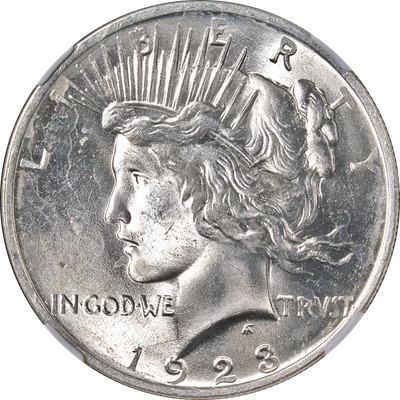
Peace Dollar Silver Value at Different Silver Prices
The melt value of a Peace Dollar changes with the silver market because its silver content remains fixed while the live spot price moves.
| Silver Price | Melt Value |
|---|---|
| $100 | $77.34 |
| $125 | $96.68 |
| $150 | $116.01 |
| $200 | $154.68 |
| $300 | $232.02 |
| $500 | $386.70 |
These examples represent melt value only and do not include collector premiums, rarity, grading premiums, or market demand.
Why Peace Dollar Silver Value Can Exceed Melt Value
Peace Dollar Silver Value begins with the coin’s intrinsic silver content, but many examples trade above melt value because they also participate in an established collector market. Every classic Peace Dollar contains approximately 0.7734 troy ounces of pure silver, creating a measurable bullion foundation before numismatic factors are considered.
Unlike generic silver rounds or bars, Peace Dollars combine precious-metal content with date, mint mark, condition, originality, historical significance, and collector demand. Common circulated coins may carry relatively modest premiums, while scarce dates, attractive Mint State examples, certified coins, and pieces with exceptional eye appeal can trade substantially above their underlying silver value.
That distinction is important when evaluating a collection. Melt value answers what the silver itself is worth at the current spot price. Market value asks what another collector or dealer may pay for the complete coin. Treating those as separate calculations helps prevent collectible Peace Dollars from being valued as ordinary 90% silver.
Two Peace Dollars can contain exactly the same amount of silver and still have dramatically different market values. Once the 0.7734-troy-ounce silver foundation is established, date, mint mark, grade, originality, strike quality, toning, certification, and collector demand determine whether an additional numismatic premium is justified.

History of the Peace Dollar
The Peace Dollar debuted in 1921 following World War I and replaced the Morgan Dollar as the nation’s circulating silver-dollar design. Its creation came during the final stages of silver-dollar production required following the Pittman Act, while its artistic theme reflected a desire to commemorate peace after the enormous human cost of the war.
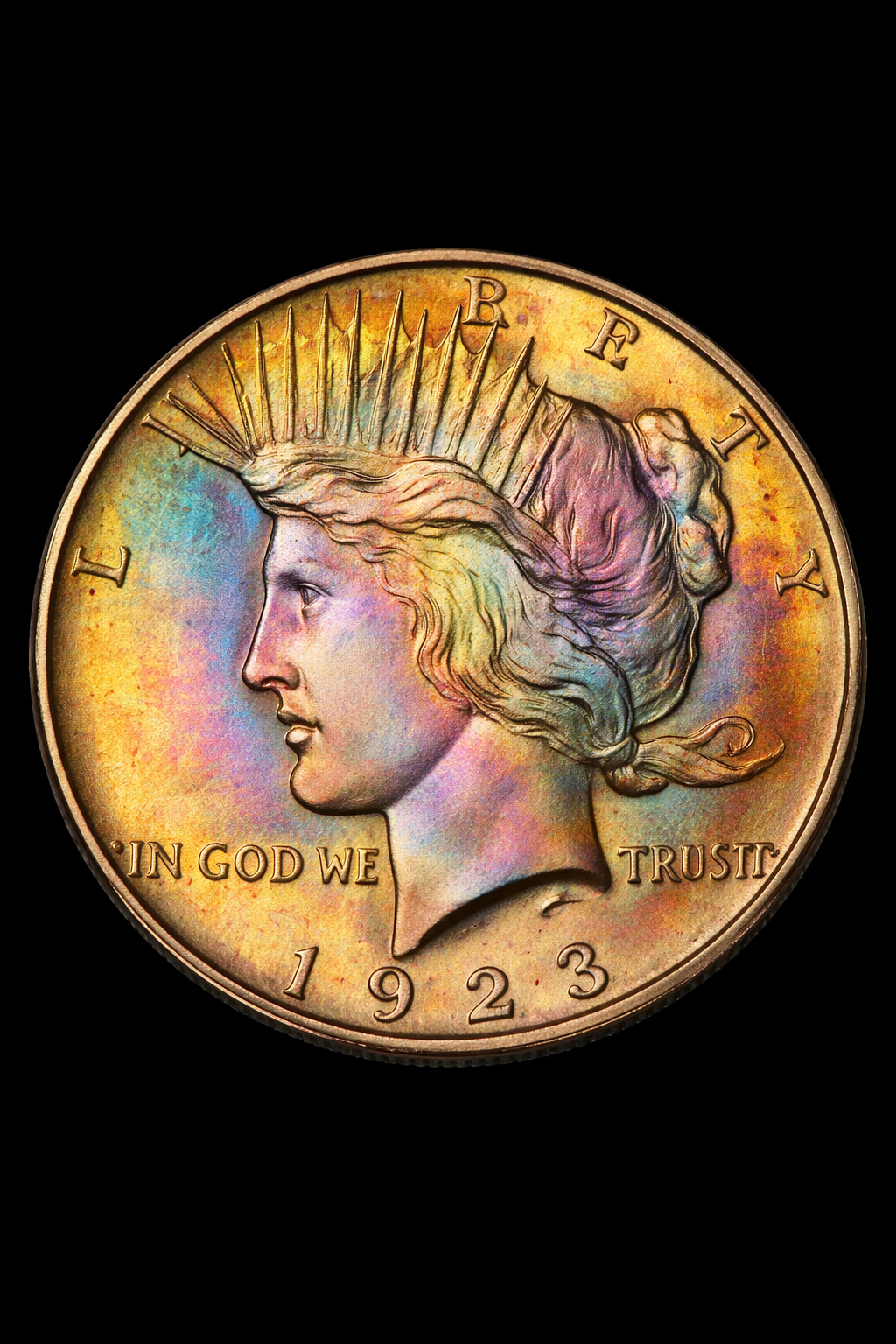
Sculptor Anthony de Francisci designed the coin. Liberty appears on the obverse wearing a radiant crown, while the reverse depicts a bald eagle at rest above the word “PEACE.” The imagery gave the new dollar a distinctly different character from the Morgan Dollar it replaced.
The 1921 High Relief Peace Dollar
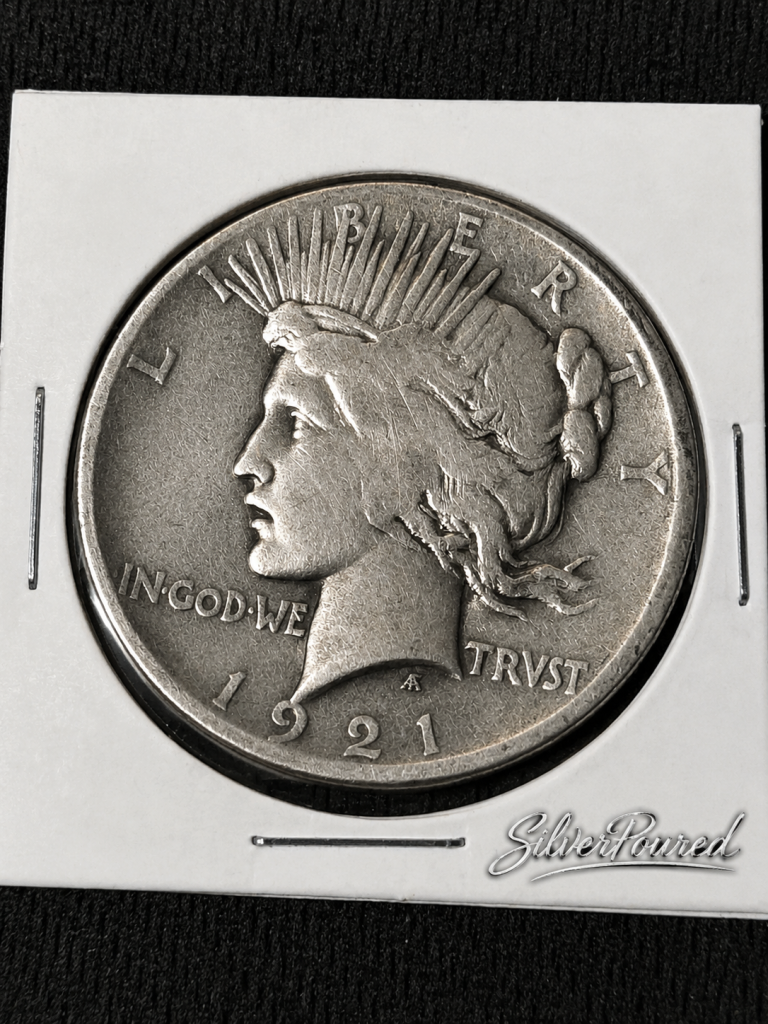
The first Peace Dollars were struck in High Relief during 1921. This first-year issue occupies an important position in Peace Dollar Silver Value research because collectors evaluate its distinctive relief, relatively limited production, strike quality, preservation, and historical significance in addition to intrinsic silver content.
Only 1,006,473 Peace Dollars were struck at Philadelphia in 1921. Collectors therefore evaluate these first-year coins not only for their silver content but also for strike quality, preservation, originality, and their special position at the beginning of the series. These factors can push Peace Dollar Silver Value well beyond its intrinsic metal foundation.
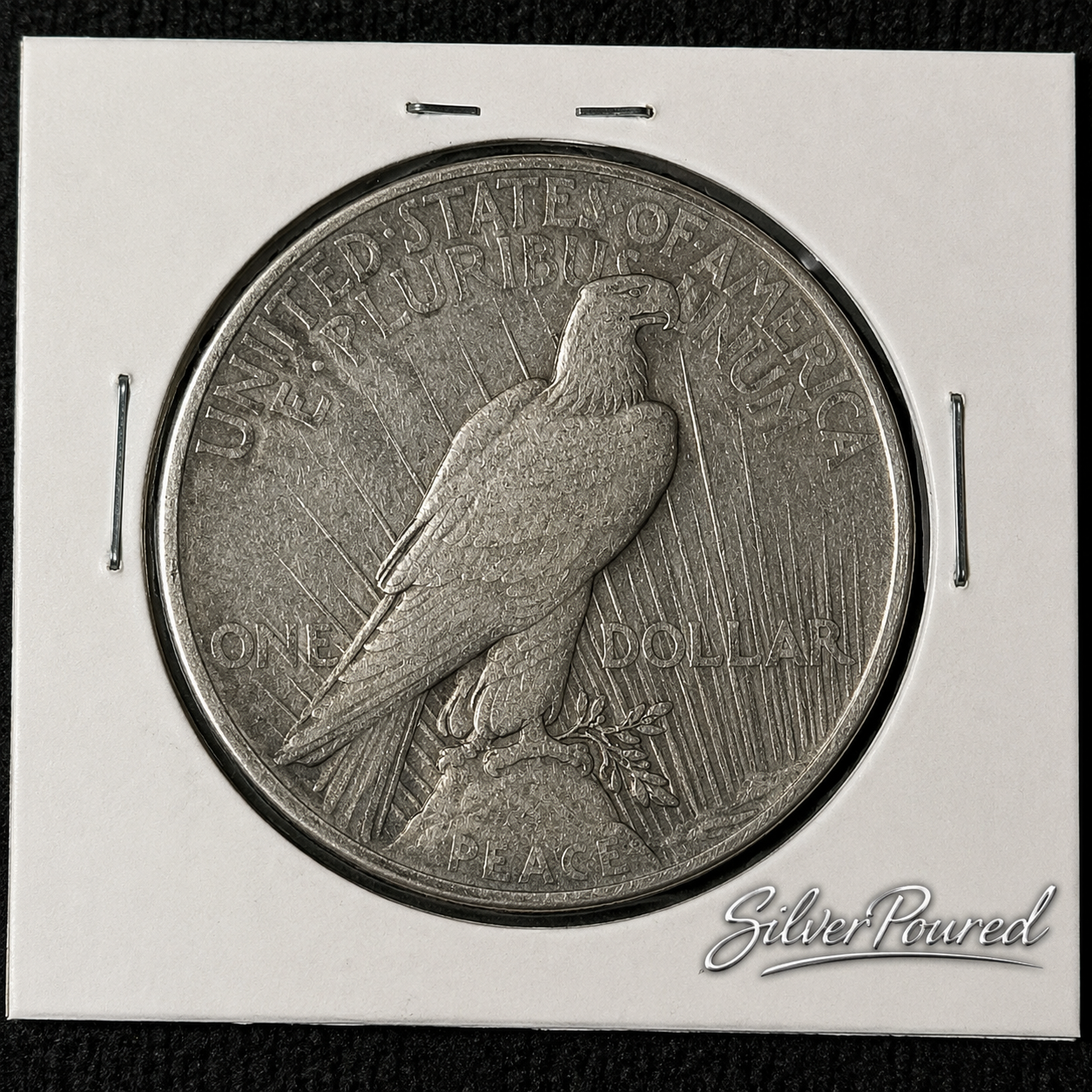
Beginning in 1922, the relief was reduced to improve production. Peace Dollars continued through 1928, when silver-dollar production stopped, before returning briefly in 1934 and 1935. The relatively compact classic series has remained popular with collectors seeking complete date-and-mint sets as well as individual high-quality examples.
Authenticating Peace Dollars
Authentication should come before assigning a substantial collector premium. Genuine classic Peace Dollars have a standard weight of approximately 26.73 grams, a diameter of 38.1 millimeters, a reeded edge, and a composition of 90% silver and 10% copper. A significant deviation from those specifications deserves additional investigation.
Physical specifications alone are not enough. Collectors should examine Liberty’s portrait, lettering, date placement, edge reeding, the reverse eagle, surface texture, and overall strike characteristics. Casting evidence, incorrect lettering, unusual texture, tooling, or other design inconsistencies can indicate a counterfeit or altered coin.
Surface condition also matters. Cleaning, polishing, harsh dipping, scratches, and other alterations do not change the amount of silver originally contained in the coin, but they can substantially reduce collector desirability. Original surfaces and natural toning are generally preferable to attempts at cosmetic improvement.
Professional certification can provide additional confidence for valuable examples. Services such as PCGS and NGC authenticate coins and assign standardized grades, making it easier to compare certified Peace Dollars with recent auction results and other market evidence.
Authentication therefore protects both sides of Peace Dollar Silver Value. It helps confirm that the underlying 90% silver coin is genuine while also providing the information needed to determine whether rarity, condition, certification, or collector demand supports a premium beyond melt value.
Building a Peace Dollar Collection
The classic Peace Dollar series offers several practical collecting strategies because its original production run is relatively compact. Collectors can begin with common circulated examples, pursue a complete date-and-mint set, focus on certified Mint State coins, or specialize in individual characteristics such as natural toning, strong strikes, and exceptional eye appeal.
Budget often determines the best starting point. Common circulated Peace Dollars provide access to historic American silver dollars while maintaining substantial intrinsic silver content. Certified Mint State examples shift more of the purchase price toward preservation, strike quality, luster, originality, and collector demand.
Collectors pursuing a complete classic set encounter issues from Philadelphia, Denver, and San Francisco. The 1921 High Relief first-year coin and the low-mintage 1928 Philadelphia issue are especially important, while condition rarity can make other date-and-mint combinations challenging in higher grades.
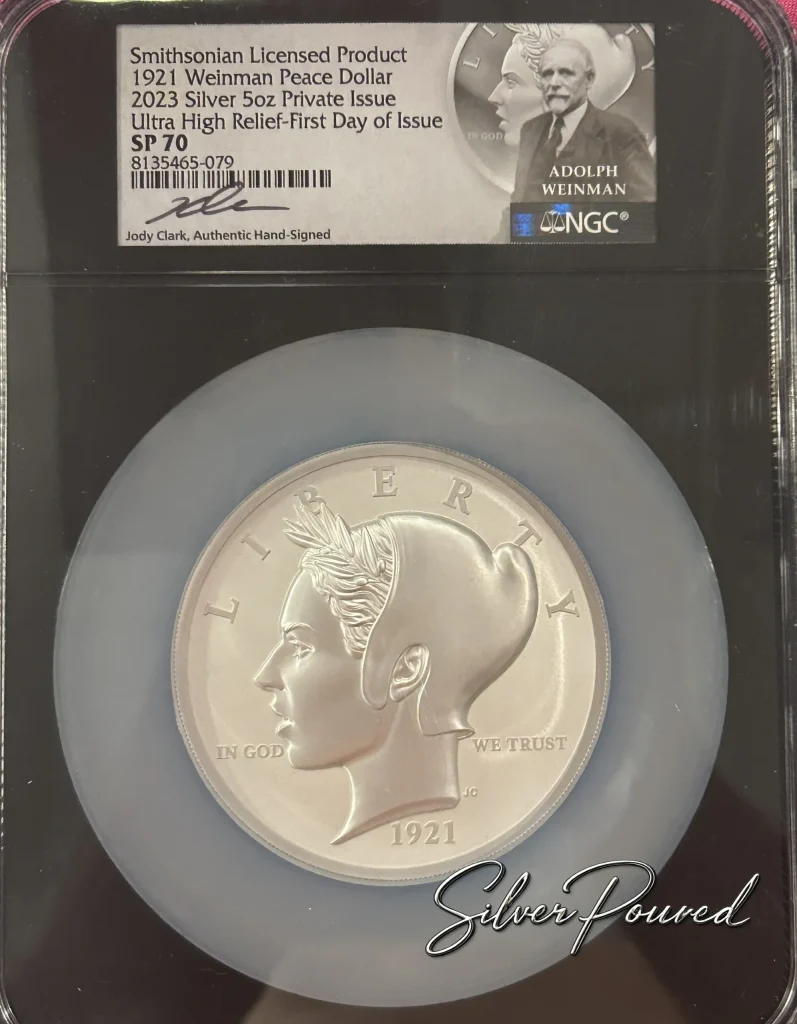
Morgan and Peace Dollars are also frequently collected together. Both classic types were struck to the same traditional silver-dollar standard of 90% silver and 10% copper, but their designs represent different periods of American history. The transition from the Morgan Dollar to the Peace Dollar in 1921 created a natural connection between the two series. The United States Mint itself highlighted that transition when commemorating their centennial in 2021.
Condition, Toning, and Peace Dollar Silver Value
Condition can have a much greater effect on Peace Dollar Silver Value than changes in the underlying silver price. A circulated example and a high-grade Mint State coin contain essentially the same original amount of silver, yet collectors may value them very differently because of preservation and scarcity at the grade level.
Collectors evaluate wear, contact marks, luster, strike quality, surface preservation, and overall eye appeal. Originality also matters. Coins that retain natural surfaces generally receive stronger collector interest than examples that have been harshly cleaned, polished, scratched, or otherwise altered.
Toning can add another dimension. Natural coloration developed over time may increase demand when collectors consider it attractive and original, but toning does not automatically create a premium. Eye appeal remains subjective, and unattractive or questionable color can reduce desirability.
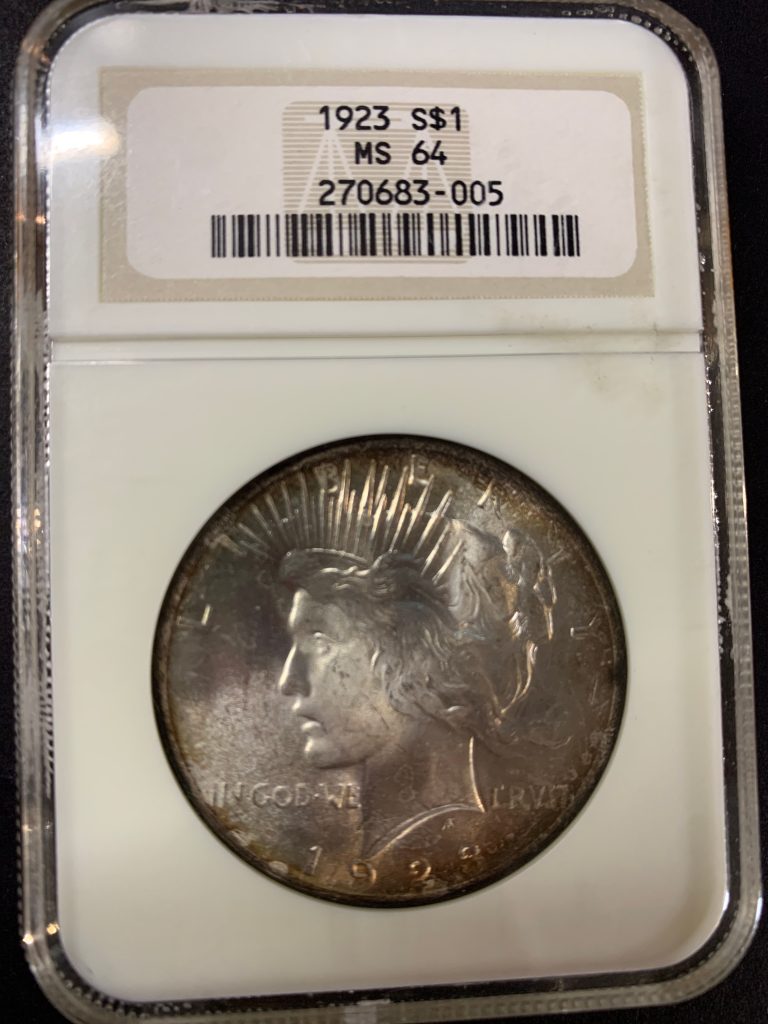
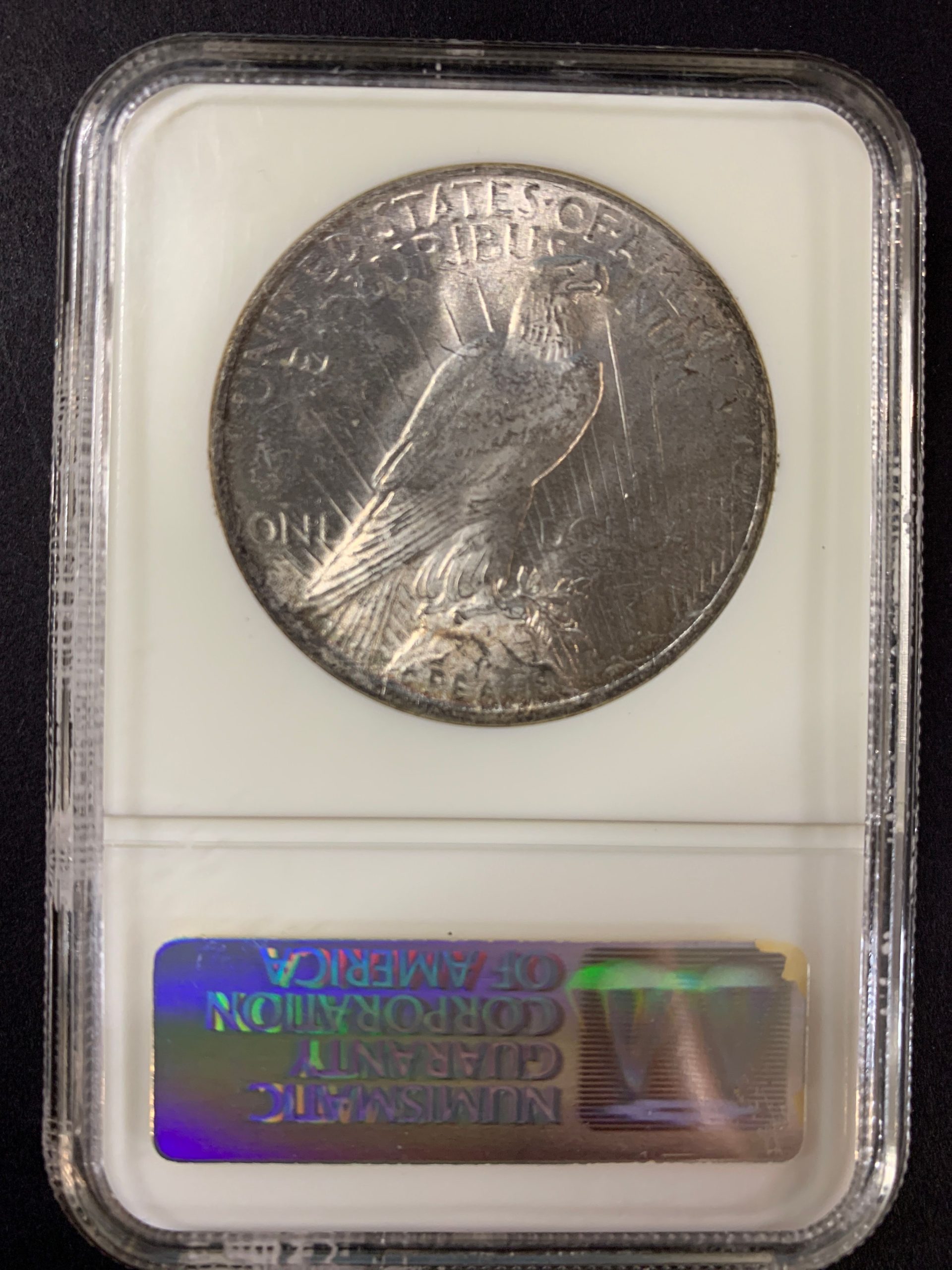
A toned Peace Dollar should not be valued from color alone. First establish the coin’s date, mint mark, grade, authenticity, and underlying market level. Attractive natural toning can strengthen demand, but originality and overall eye appeal matter more than simply having colorful surfaces.
When Should You Hold or Sell Peace Dollars?
Whether to hold or sell a Peace Dollar depends on the specific coin and the owner’s objectives. Silver spot price establishes an intrinsic-value baseline, but collector demand may have a much greater influence on scarce dates, certified Mint State examples, naturally toned coins, and other desirable pieces.
Common circulated examples are often easier to compare with current melt value and dealer buy prices. Better coins deserve additional research before accepting an offer. Recent completed sales, certification, grade, mint mark, originality, and comparable examples can provide evidence that a coin carries a meaningful numismatic premium.
Owners should be especially cautious when selling inherited groups or older collections. A group of similar-looking silver dollars can contain both common bullion-related material and individual collector coins worth substantially more than their silver content.
Peace Dollar Silver Value is therefore most useful as the beginning of a selling decision rather than the final answer. Establish melt value first, identify the exact coin, and then determine whether collector evidence supports an additional premium before accepting an offer.
Peace Dollar Specifications
Classic circulation-strike Peace Dollars share standardized physical specifications that provide the foundation for authentication and melt-value calculations. These characteristics also help distinguish the original 1921–1935 series from later modern Peace Dollar issues produced by the United States Mint.
| Specification | Classic Peace Dollar |
|---|---|
| Years Minted | 1921–1928, 1934–1935 |
| Face Value | $1.00 |
| Composition | 90% silver, 10% copper |
| Pure Silver Content | Approximately 0.7734 troy ounces |
| Total Weight | 26.73 grams |
| Diameter | 38.10 mm |
| Edge | Reeded |
| Designer | Anthony de Francisci |
| Classic Mint Marks | None (Philadelphia), D, S |
Because classic circulation-strike coins were produced to the same silver standard, their intrinsic melt-value formula does not change by date or mint mark. Peace Dollar Silver Value can therefore begin with the same approximately 0.7734-troy-ounce silver calculation throughout the classic series before collector premiums are evaluated.
Modern Peace Dollars require separate treatment. The United States Mint revived the design in 2021, and current modern issues use a different .999 silver specification rather than the classic 90% silver composition. Collectors should therefore identify whether they are evaluating a classic or modern Peace Dollar before applying a melt-value formula.
Peace Dollar Mintage Appendix
Original mintage figures provide important historical context for Peace Dollar Silver Value, but production totals should not be treated as a complete rarity ranking. The exact date and mint mark, surviving population, condition, certification, market availability, and collector demand all matter in addition to the number of coins originally struck.
The classic series was produced at Philadelphia, Denver, and San Francisco. Some dates had enormous combined production, while others were struck in much smaller quantities. Circulation, melting, losses, collector saving, and differences in preservation further changed the number and quality of coins available today.
Selected Peace Dollar Mintage Highlights
| Issue | Reported Mintage | Collector Context |
|---|---|---|
| 1921 Philadelphia | 1,006,473 | First-year High Relief issue |
| 1922 Philadelphia | 51,737,000 | Major-production common issue |
| 1922 Denver | 15,063,000 | Early Denver issue |
| 1922 San Francisco | 17,475,000 | Early San Francisco issue |
| 1927 Philadelphia | 848,000 | Lower-mintage Philadelphia issue |
| 1928 Philadelphia | 360,649 | Lowest-mintage regular classic issue |
| 1934 Philadelphia | 954,057 | Return of the series after the 1928 suspension |
| 1935 Philadelphia | 1,576,000 | Final Philadelphia issue of the classic series |
The 1928 Philadelphia issue is especially notable because its reported mintage of 360,649 is the lowest regular production figure of the classic Peace Dollar series. The 1921 Philadelphia issue also receives substantial attention because it combines a comparatively limited first-year mintage with the distinctive High Relief design.
Mintage alone does not establish market value. A higher-mintage issue can become difficult in exceptional grades, while a lower-mintage coin may remain obtainable in circulated condition. Collectors should therefore compare production figures with grade, surviving population, originality, certification, recent transactions, and actual market availability.
How Peace Dollar Silver Value Is Calculated
The intrinsic calculation for a classic Peace Dollar is straightforward because each standard circulation-strike coin contains approximately 0.7734 troy ounces of pure silver.
0.7734 × Current Silver Spot Price = Intrinsic Silver Value
For example, if silver were trading at $50 per troy ounce, the intrinsic silver calculation would be approximately $38.67. If silver moved to $75 per troy ounce, the same coin would contain approximately $58.01 worth of silver before any collector premium was considered.
This formula establishes the metal foundation only. It does not determine what a collector may pay for a specific date, mint mark, grade, certified coin, naturally toned example, or other desirable piece.
The melt calculation should be performed before the collector calculation, not instead of it. Multiplying 0.7734 by the current silver spot price establishes a consistent intrinsic baseline. The coin can then be evaluated separately for date, mint mark, grade, originality, certification, scarcity, and collector demand.
Are Peace Dollars Worth More Than Melt Value?
Many are. Peace Dollar Silver Value frequently exceeds intrinsic melt value because even common circulated examples participate in an established collector market in addition to their bullion content. The amount of that premium changes with the individual coin and current market conditions.
Scarce dates, lower-mintage issues, attractive Mint State coins, certified examples, original surfaces, natural toning, and strong eye appeal can produce substantially larger premiums. Condition rarity is particularly important because some otherwise available issues become much more difficult at higher grade levels.
This is why Peace Dollar Silver Value should be viewed as two related layers. Intrinsic silver value establishes the measurable metal baseline, while numismatic demand determines whether the market supports an additional collector premium.
Silver Spot Price and Peace Dollar Silver Value
Silver spot price directly affects the intrinsic portion of Peace Dollar Silver Value. Because the classic coin contains approximately 0.7734 troy ounces of pure silver, every movement in the silver market changes its theoretical melt value proportionally.
Collector premiums do not necessarily move at the same rate. A rising silver market can increase the bullion foundation while numismatic demand remains stable, strengthens, or weakens independently. Likewise, a desirable key date or exceptional certified coin may retain a substantial collector premium even when silver prices decline.
Tracking Peace Dollar Silver Value through both components gives collectors a clearer picture of the market. Live silver pricing explains changes in intrinsic value, while completed sales and comparable collector coins provide evidence for premiums beyond metal content.
Selling Peace Dollars at Current Silver Prices
Before selling, Peace Dollar Silver Value should be established in two stages: first calculate the intrinsic silver value, and then determine whether the individual coin deserves additional numismatic research. This approach is especially important for inherited collections or groups containing a mixture of common and better coins.
Current silver spot price provides the metal baseline. Recent completed sales, dealer buy offers, certification data, grade, date, mint mark, originality, and comparable coins can then help establish a realistic market range.
A dealer’s bullion-related offer may be appropriate for a common circulated coin but inadequate for a scarce or high-quality collector example. Conversely, an optimistic asking price does not prove that buyers are actually paying that amount. Completed transactions generally provide stronger evidence than unsold listings.
Understanding Peace Dollar Silver Value before accepting an offer helps separate the measurable silver component from any additional collector premium. That distinction reduces the risk of selling a desirable numismatic coin solely for its precious-metal content.
Frequently Asked Questions About Peace Dollar Silver Value
How much silver is in a Peace Dollar?
A classic Peace Dollar contains approximately 0.7734 troy ounces of pure silver. Its standard composition is 90% silver and 10% copper, with a total original weight of approximately 26.73 grams.
How do I calculate the silver value of a Peace Dollar?
Multiply approximately 0.7734 troy ounces by the current silver spot price. The result estimates intrinsic silver value before any collector premium is added.
Do all classic Peace Dollars contain the same amount of silver?
Standard classic circulation-strike Peace Dollars from 1921–1928 and 1934–1935 were produced to the same 90% silver standard and contain approximately 0.7734 troy ounces of pure silver at original specification weight.
What is the lowest-mintage Peace Dollar?
The 1928 Philadelphia Peace Dollar has the lowest regular mintage of the classic series, with a reported production of 360,649 coins.
Why is the 1921 Peace Dollar special?
The 1921 Peace Dollar was the first issue of the series and was struck in High Relief. Its distinctive design, first-year status, reported mintage of 1,006,473, and collector demand make it one of the most recognizable classic Peace Dollar issues.
Should I clean a Peace Dollar before selling it?
Generally, no. Cleaning or polishing can damage original surfaces and reduce collector desirability even though the underlying silver content remains unchanged.
Are modern Peace Dollars also 90% silver?
No. Modern United States Mint Peace Dollars use a different .999 silver specification. The classic 0.7734-troy-ounce calculation on this page applies to the original 1921–1935 circulation-strike series, not modern .999 silver issues.
Final Thoughts on Peace Dollar Silver Value
Peace Dollar Silver Value begins with a simple measurable foundation: approximately 0.7734 troy ounces of pure silver in each classic circulation-strike coin. Multiplying that silver content by the current spot price establishes the intrinsic baseline.
The complete market value can be considerably more complicated. Date, mint mark, mintage, surviving population, grade, originality, certification, toning, eye appeal, and collector demand can all influence the premium attached to an individual coin.
Separating those two layers provides the clearest approach to Peace Dollar Silver Value. Calculate the silver foundation first, identify the exact coin, and then determine what market evidence supports a collector premium beyond melt value.
Whether buying, selling, inheriting, or building a collection, understanding both intrinsic silver content and numismatic demand provides a more complete picture of Peace Dollar Silver Value.
Related SilverPoured Resources
Continue researching Peace Dollar Silver Value with SilverPoured resources covering classic silver dollars, silver content, melt value, live spot prices, mint marks, collector premiums, and other United States silver coins.
Silver Dollars & Coin Values
Morgan Silver Dollar Value
Walking Liberty Half Dollar Value
Franklin Half Dollar Silver Value
Kennedy Half Dollar Silver Value
Washington Quarter Silver Value
Silver Prices & Calculators
Silver Melt Value Calculator
Junk Silver Value Calculator
Live Silver Spot Price
What Is Silver Melt Value?
Poured’s Bullion Engine
Bullion & Collector Education
Premium Over Spot Explained
Why Silver Premiums Change
Why Bullion Dealers Charge Premiums
Mercury Dime Silver Value
War Nickel Value
Purchase Precious Metals from a Trusted Dealer
Collectors researching Peace Dollar Silver Value may also compare classic United States silver coins with modern bullion products. Peace Dollars can carry premiums for date, mint mark, condition, originality, certification, toning, and collector demand, while bullion generally provides a more direct way to acquire precious-metal weight.
When purchasing physical silver, compare purity, weight, current spot value, total delivered cost, dealer premiums, reputation, shipping policies, and product availability. Separating intrinsic metal value from collector value makes it easier to understand what portion of a purchase price represents silver and what portion represents a numismatic premium.
Collector Insight
Peace Dollar Silver Value begins with approximately 0.7734 troy ounces of pure silver, but that calculation establishes only the intrinsic foundation. Date, mint mark, grade, originality, certification, strike quality, toning, surviving population, and collector demand can all influence how far an individual coin trades above its underlying silver value.
Keep SilverPoured Free
SilverPoured is built to help collectors and precious-metals investors make smarter decisions through free calculators, original photography, coin research, value references, collector education, and independent market resources. Every page is created to make useful precious-metals information available without requiring a paid subscription.
This Peace Dollar Silver Value resource is designed to help collectors understand silver content, melt value, classic specifications, mintage, the 1921 High Relief issue, condition, toning, authentication, collector premiums, and the relationship between intrinsic and numismatic value. Every contribution helps support continued research, original photography, calculator development, and expansion of SilverPoured’s precious-metals education.
Your support allows SilverPoured to remain independent while building one of the web’s most comprehensive free libraries for coin collectors, bullion buyers, precious-metals researchers, and long-term investors.