
Roosevelt dime silver value begins with a simple specification: every circulation-strike Roosevelt dime dated 1946 through 1964 contains 90% silver and approximately 0.07234 troy ounces of pure silver. That standardized silver content makes these dimes one of the easiest forms of constitutional silver to identify, calculate, buy, and sell.
Because the silver weight is fixed, Roosevelt dime silver value changes directly with the current silver spot price. Circulated coins may also reflect normal wear, while higher-grade, Proof, toned, scarce, or collectible examples can trade above their intrinsic metal value because of numismatic demand.
Roosevelt Dime Silver Content
| Specification | 1946–1964 Circulation Roosevelt Dime |
|---|---|
| Face Value | $0.10 |
| Composition | 90% silver, 10% copper |
| Standard Weight | 2.50 grams when issued |
| Pure Silver Content | Approximately 0.07234 troy ounces |
| Diameter | 17.9 mm |
| Edge | Reeded |
| Silver Circulation Years | 1946–1964 |
The standard 0.07234-troy-ounce figure used in Roosevelt dime silver value calculations is based on the coin’s original specifications. Circulated Roosevelt dimes can lose a small amount of weight through normal wear, which is why bulk circulated 90% silver calculations may use a wear-adjusted convention rather than treating every circulated coin as full original weight.
How Roosevelt Dime Silver Value Is Calculated
For a full-weight silver Roosevelt dime, the basic intrinsic-value calculation is:
0.07234 troy oz × current silver spot price = approximate silver melt value
For example, at a hypothetical silver spot price of $30 per troy ounce, 0.07234 × $30 equals approximately $2.17 in intrinsic silver value before considering normal circulation wear, dealer spreads, transaction costs, or collector premiums.
Roosevelt dime silver value should therefore be separated into two questions: what is the silver worth, and does the individual coin have additional collector value? For ordinary circulated examples, metal value often dominates. For exceptional coins, numismatic demand may become much more important.
Why Roosevelt Dime Silver Value Matters
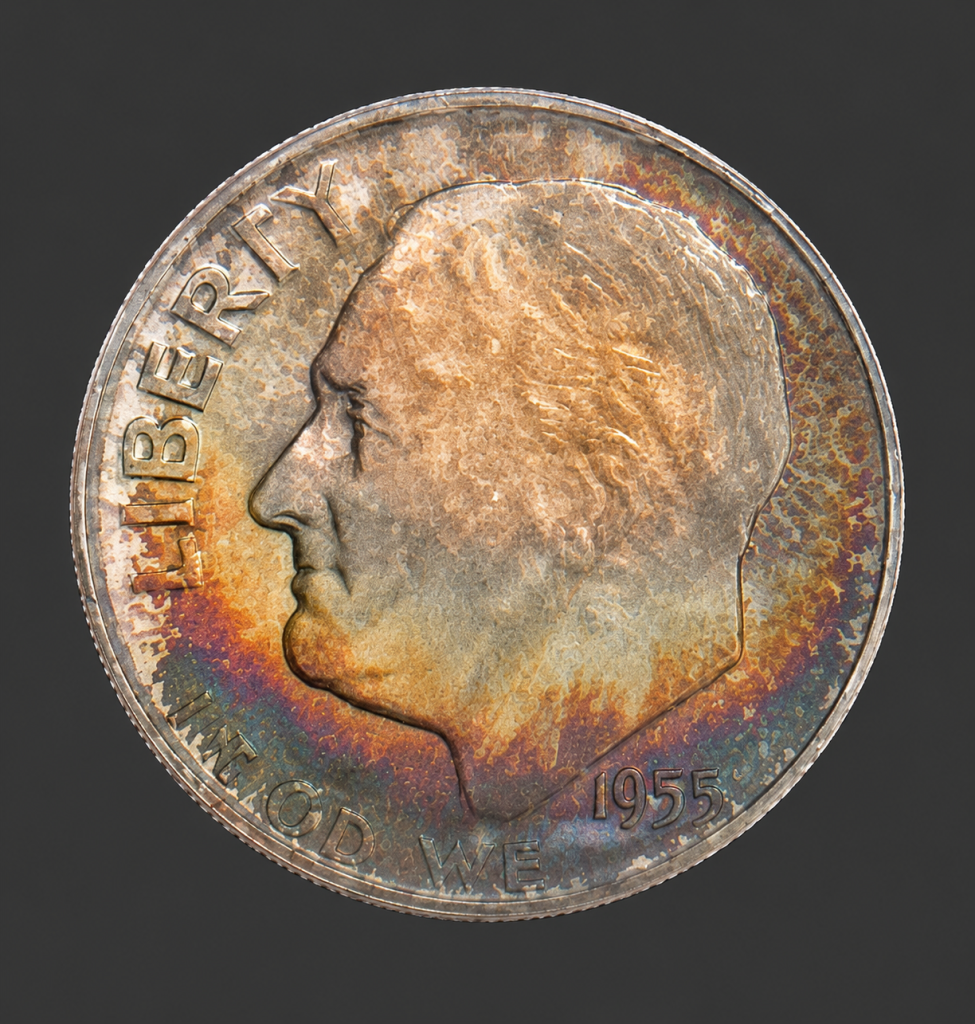
Roosevelt dime silver value matters to stackers because these coins provide recognizable fractional silver in small denominations. Instead of selling a larger bar or round, an owner can trade individual dimes or small groups while retaining the rest of the position.
The denomination is also highly recognizable. Coin shops, bullion dealers, experienced stackers, and many private buyers already understand the composition of pre-1965 Roosevelt dimes, reducing the amount of explanation normally required when buying or selling less familiar silver products.
Large original mintages also mean common circulated examples remain broadly available. That availability helps Roosevelt dimes function as practical constitutional silver, while individual dates, high-grade coins, attractive toning, Proof issues, and varieties can participate in a separate collector market.
What Affects Roosevelt Dime Silver Value?
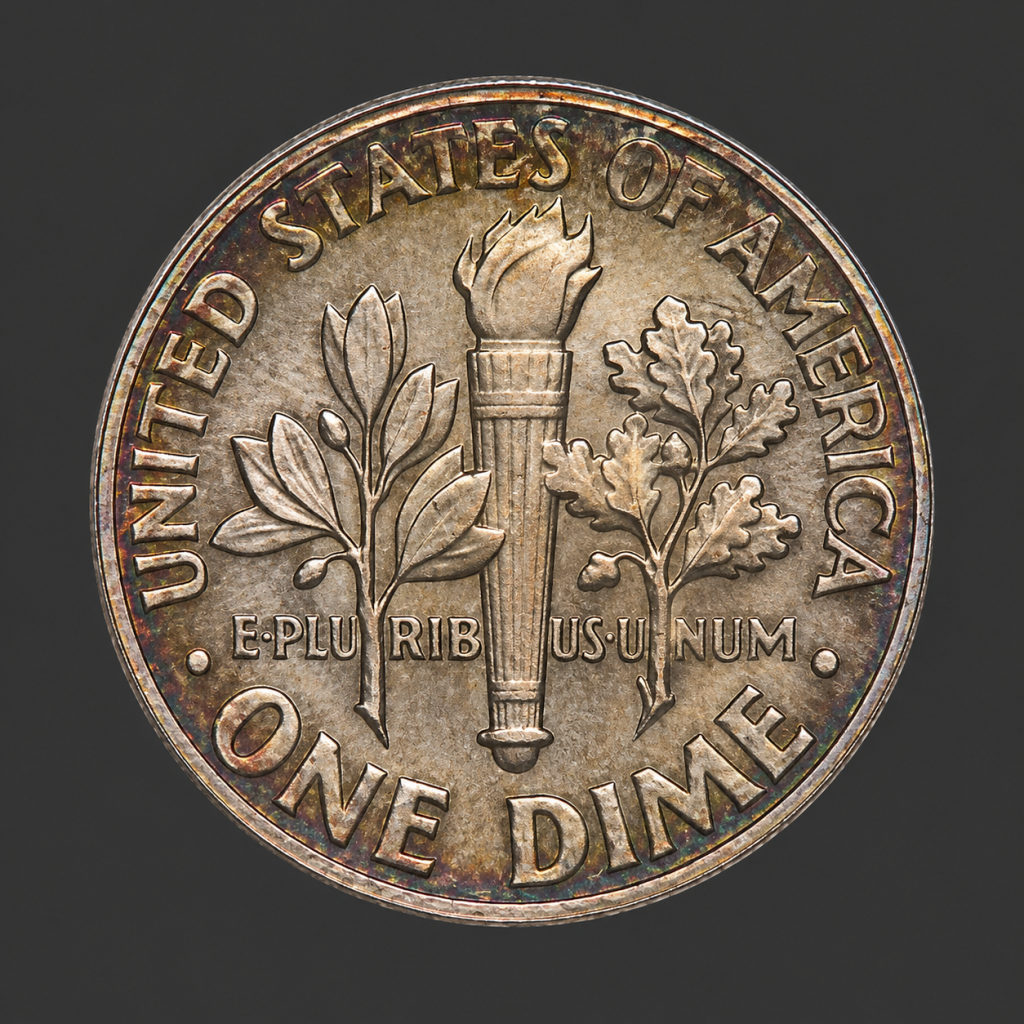
Roosevelt dime silver value reflects both intrinsic metal value and, when applicable, collector value. Silver spot price establishes the primary baseline for common circulated coins, while condition, date, mint mark, strike quality, certification, toning, Proof status, errors, varieties, and collector demand can affect individual numismatic examples.
| Value Factor | How It Can Affect the Coin |
|---|---|
| Silver Spot Price | Changes the intrinsic metal value of every silver Roosevelt dime. |
| Circulation Wear | Can slightly reduce actual remaining silver weight in heavily circulated coins. |
| Date & Mint Mark | Can influence collector demand and relative scarcity. |
| Condition | Higher-grade, original examples may command premiums above melt value. |
| Strike Quality | Strongly struck examples can receive greater collector interest. |
| Toning & Eye Appeal | Attractive natural toning may create additional collector demand. |
| Errors & Varieties | Recognized collectible varieties can trade independently of ordinary melt value. |
Dealer inventory and physical-silver demand can also affect the transaction price. During periods of heavy buying, circulated 90% silver may trade at a larger premium above intrinsic value. In quieter markets, common Roosevelt dimes may trade closer to their underlying silver value.
Roosevelt dime silver value is straightforward for ordinary circulated coins, but do not automatically treat every pre-1965 dime as junk silver. Better dates, exceptional condition, original toning, Proof coins, strong strikes, and collectible varieties deserve individual inspection before the coin is valued only for metal content.

Roosevelt Dimes and Junk Silver Investing
Roosevelt dimes are a foundation of the United States junk-silver market alongside other common 90% silver denominations. Their small size, standardized composition, broad recognition, and active secondary market make them useful for collectors and stackers seeking fractional physical silver.
For full-weight coins, Roosevelt dime silver value begins with approximately 0.07234 troy ounces of silver per dime. For circulated bulk holdings, investors should distinguish that original specification from wear-adjusted junk-silver conventions used when estimating bags or larger face-value quantities.
A standardized, familiar coin makes Roosevelt dime silver value easier for buyers and sellers to evaluate than the value of an obscure silver product because the denomination, silver years, and expected composition can be identified quickly.
Roosevelt dime silver value does not make every transaction price identical. Dealer spreads, local demand, quantity, coin condition, payment method, and broader bullion-market conditions can all affect the amount a buyer pays or a seller receives relative to calculated melt value.
For circulated 90% silver, distinguish original coin specifications from actual remaining weight. A Roosevelt dime was issued with approximately 0.07234 troy ounces of pure silver, but decades of circulation can remove a small amount of metal. That distinction becomes increasingly important when valuing larger quantities by face value.
Market Liquidity and Roosevelt Dime Silver Value
Roosevelt dime silver value benefits from a broad secondary market. Pre-1965 Roosevelt dimes are familiar to coin shops, bullion dealers, online buyers, private collectors, and experienced silver stackers, making common circulated examples relatively easy to price and trade.
Roosevelt dime silver value benefits from standardized silver content and widespread recognition. Buyers do not need to learn an unfamiliar bullion product before evaluating the coin, and sellers can readily compare melt value, dealer offers, and prevailing premiums for 90% United States silver.
Roosevelt dime silver value can still differ from the actual transaction price. Quantity, circulation wear, local demand, dealer inventory, payment method, shipping, and broader physical-silver conditions may affect the amount paid above or below the theoretical intrinsic value.
Collector-quality coins belong to a different market. Proof issues, attractive natural toning, exceptional preservation, strong strikes, recognized varieties, and certified examples can command additional premiums even when the underlying silver content is identical to an ordinary circulated dime.
Buying and Selling Roosevelt Dimes
Before buying or selling, determine whether the coin should be treated primarily as constitutional silver or evaluated individually as a collectible. For ordinary circulated coins, Roosevelt dime silver value generally begins with intrinsic metal value and the prevailing market premium for 90% silver.
Roosevelt dime silver value can change substantially when a better-preserved coin deserves individual examination. Original surfaces, attractive toning, Proof manufacture, unusual strike characteristics, scarce varieties, and exceptional condition can move an individual Roosevelt dime away from ordinary junk-silver pricing.
Inherited collections should be sorted before receiving a bulk offer. Separate Roosevelt dimes dated 1946 through 1964 from later clad circulation issues, then inspect the silver coins for potentially collectible examples before calculating the remainder as common 90% silver.
Comparing more than one current market reference can also improve a buying or selling decision. Melt value establishes the metal baseline, completed sales can provide evidence for collectible coins, and dealer quotes reveal what buyers are currently willing to pay for ordinary silver inventory.
Before selling a group of pre-1965 Roosevelt dimes as ordinary 90% silver, inspect them individually. A better date, exceptional original surface, attractive natural toning, Proof coin, strong strike, or collectible variety may deserve separate evaluation rather than being included automatically in a bulk melt-value calculation.
Authenticating a Silver Roosevelt Dime
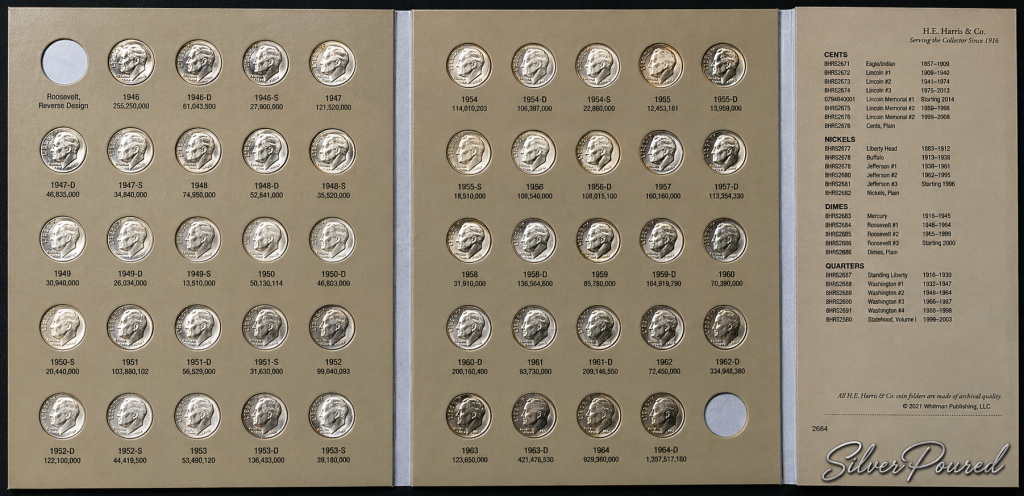
Accurate Roosevelt dime silver value begins with confirming that the coin is actually a silver issue. Roosevelt dimes struck for circulation from 1946 through 1964 contain 90% silver. Regular circulation dimes dated 1965 and later use the copper-nickel clad composition rather than the earlier silver alloy.
The date is therefore the fastest identification check when determining Roosevelt dime silver value. The edge provides another useful visual clue: a normal pre-1965 silver Roosevelt dime does not display the obvious copper-colored core commonly visible on later clad circulation dimes.
Weight, diameter, design details, edge appearance, and overall surface characteristics can provide additional evidence when a coin appears questionable. A suspicious piece should not be assigned silver value merely because it resembles a Roosevelt dime.
Potentially collectible examples require another level of evaluation. Proof coins, exceptional Mint State pieces, attractive toners, errors, and varieties may justify professional authentication or grading when the potential collector premium is significant enough to warrant the cost.
For ordinary Roosevelt dimes, identification starts with the date: 1946 through 1964 circulation strikes are the standard 90% silver issues. The edge, weight, and physical specifications provide additional checks. If a coin appears altered, unusual, or potentially collectible, verify what it is before relying on a melt-value calculation.
Roosevelt Dime Specifications
Roosevelt dime silver value can be calculated consistently because circulation-strike silver Roosevelt dimes share standardized specifications throughout the 1946–1964 silver period.
| Specification | Silver Roosevelt Dime |
|---|---|
| Years | 1946–1964 circulation strikes |
| Face Value | $0.10 |
| Composition | 90% silver, 10% copper |
| Standard Issue Weight | 2.50 grams |
| Pure Silver Content | Approximately 0.07234 troy ounces when issued |
| Diameter | 17.9 mm |
| Edge | Reeded |
These specifications describe the coin as issued. Actual circulated examples may weigh slightly less after decades of wear, which is why full-weight individual-coin calculations and wear-adjusted bulk junk-silver calculations should not automatically be treated as identical measurements.
Condition does not change the original composition, but it can change Roosevelt dime silver value in the collector market. A common worn dime may trade primarily as silver, while a superior collectible example can carry a premium based on preservation, strike, originality, variety, or collector demand.
Roosevelt Dime Mintages
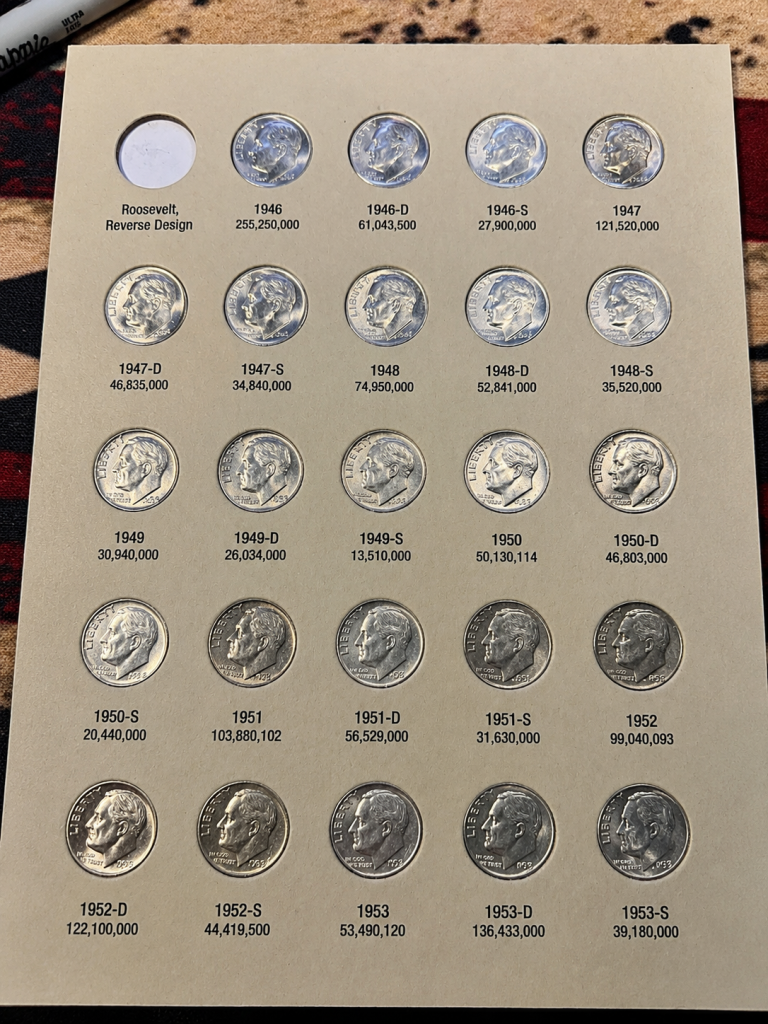
Original mintage figures provide valuable historical context for the Roosevelt dime series, but they should not be confused with rarity. While lower mintages can contribute to stronger collector demand, survival rates, Full Bands designation, condition, certification, and overall market demand frequently have a much greater influence on Roosevelt dime silver value than production totals alone.
Roosevelt Dime Annual Mintages (Silver Years)
| Year | Total Mintage |
|---|---|
| 1946 | 344,985,740 |
| 1947 | 255,250,920 |
| 1948 | 131,076,500 |
| 1949 | 153,132,180 |
| 1950 | 209,929,520 |
| 1951 | 109,975,520 |
| 1952 | 122,181,180 |
| 1953 | 136,500,180 |
| 1954 | 195,082,900 |
| 1955 | 125,062,000 |
| 1956 | 241,669,000 |
| 1957 | 277,240,000 |
| 1958 | 334,948,000 |
| 1959 | 279,540,000 |
| 1960 | 410,505,000 |
| 1961 | 482,540,000 |
| 1962 | 1,218,019,000 |
| 1963 | 1,270,360,000 |
| 1964 | 2,286,867,184 |
Mintage Highlights
Original mintage figures provide useful historical context, but Roosevelt dime silver value is not determined by production totals alone. Date, mint mark, surviving population, condition, strike quality, Full Bands designation, certification, originality, and collector demand can all influence the market for an individual coin.
Production increased substantially during the early 1960s as demand for circulating coinage grew. The enormous 1964 production total did not prevent those dimes from becoming one of the most actively traded forms of 90% silver because 1964 was the final regular circulation year of the silver Roosevelt dime.
Lower mintage can contribute to collector interest, but it should not automatically be treated as rarity. A coin’s surviving population and availability in desirable grades can matter more than the original number struck.
Roosevelt Dime vs. Other Silver Coins
| Coin | Original Silver Content |
|---|---|
| Roosevelt Dime | 0.07234 oz |
| Mercury Dime | 0.07234 oz |
| Washington Quarter | 0.18084 oz |
| Franklin Half Dollar | 0.36169 oz |
| 1964 Kennedy Half Dollar | 0.36169 oz |
| Morgan Dollar | 0.77344 oz |
Roosevelt and Mercury dimes share the same original silver content, but their collector markets can differ. Common circulated Roosevelt dimes are frequently favored by stackers seeking recognizable fractional silver, while Mercury dimes can attract additional premiums for design, age, date, mint mark, and collector demand.
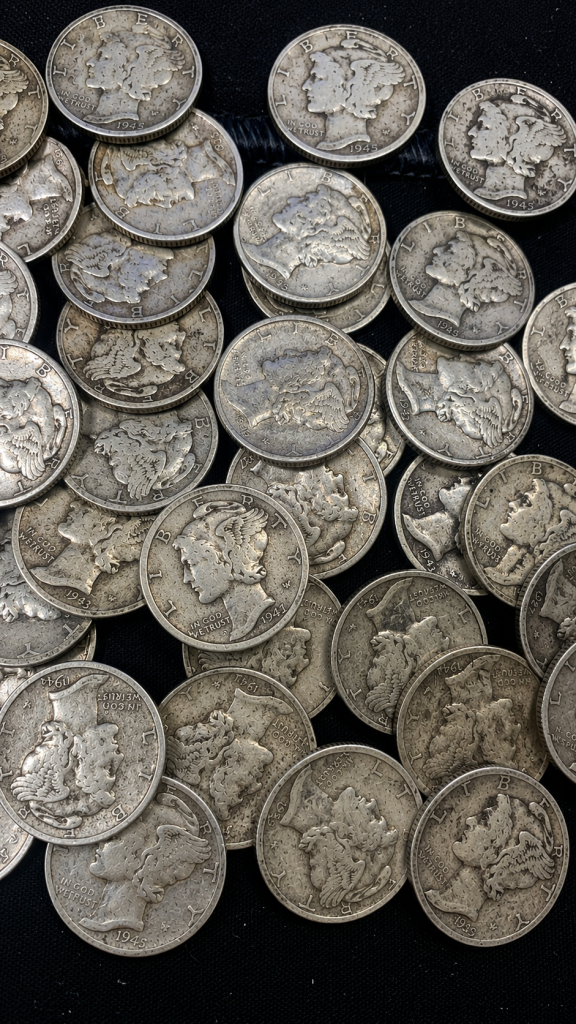
How to Identify a Silver Roosevelt Dime
The simplest identification rule is the date. Roosevelt dimes struck for circulation from 1946 through 1964 contain 90% silver. Regular circulation Roosevelt dimes dated 1965 and later use a copper-nickel clad composition rather than the earlier silver alloy.
The edge provides a useful secondary check. A normal silver Roosevelt dime does not display the obvious copper-colored core commonly visible on later clad dimes. Weight and physical specifications can provide additional evidence when a coin appears questionable.
Always identify the coin before calculating Roosevelt dime silver value. Mixed collections, jars, rolls, and estate lots can contain both silver and clad issues, and a date or composition mistake immediately invalidates the melt-value calculation.
Valuable Roosevelt Dime Errors and Varieties
Most circulated silver Roosevelt dimes trade primarily according to metal value and prevailing 90% silver premiums, but collectible errors and varieties can command substantially more.
Collectors may encounter doubled dies, repunched mint marks, off-center strikes, clipped planchets, broadstrikes, misaligned dies, and other production anomalies. The importance and value of an error depend on the exact attribution, visibility, rarity, condition, and collector demand.
Potential errors should not be assigned a premium merely because something looks unusual. Damage, circulation wear, environmental effects, and post-mint alterations can resemble Mint-made errors. Significant examples may warrant professional attribution or certification.
For collectible errors and varieties, Roosevelt dime silver value becomes only the intrinsic baseline. A legitimately scarce or dramatic Mint error can trade primarily on numismatic demand rather than the silver contained in the coin.
Mintage, silver content, and date are only the beginning when a Roosevelt dime appears unusual. Before treating a possible error or variety as valuable, distinguish genuine Mint-made characteristics from circulation damage or post-mint alteration. Correct attribution can matter far more than melt value for a genuinely collectible example.
Roosevelt Dime Value and Future Silver Prices
Roosevelt dime silver value changes with silver because each genuine silver circulation issue contains a known amount of precious metal. When spot price rises, the intrinsic value of the coin rises; when spot price falls, the metal-value baseline falls.
No one can reliably predict future silver prices, so a Roosevelt dime should not be assigned a future value based on a speculative spot-price forecast. Current melt value can be calculated; future metal prices remain uncertain.
Collector-quality Roosevelt dimes may also move independently of silver. A desirable toned coin, Proof, error, variety, Full Bands example, or exceptional certified piece can have numismatic demand that becomes more important than fluctuations in its underlying metal value.
For stackers, monitoring current silver prices remains useful when comparing Roosevelt dime silver value with dealer premiums, other constitutional-silver denominations, and modern bullion alternatives.
Related SilverPoured Resources
Continue researching Roosevelt dime silver value with SilverPoured resources covering silver melt calculations, constitutional silver, related United States coinage, live precious-metal pricing, and collector education.
Silver Values & Calculators
Silver Melt Value Calculator
Silver Spot Price Today
Junk Silver Value
Live Silver Values
Poured’s BullionEngine
United States Silver Coins
Mercury Dime Silver Value
Washington Quarter Silver Value
Walking Liberty Half Dollar Silver Value
Kennedy Half Dollar Silver Value
Morgan Silver Dollar Value
Silver Coin & Collector Research
Peace Dollar Silver Value
Silver Coin Values
Proof Set Mintages
Coin Mint Marks
Precious Metals IRA Guides
Purchase Precious Metals from a Trusted Dealer
Roosevelt dimes provide fractional exposure to historic 90% United States silver, while modern bullion offers another way to purchase precious metals by standardized weight and purity. Comparing the two can help buyers understand differences in premiums, liquidity, condition, and product format.
After researching Roosevelt dime silver value, buyers considering modern bullion can compare current metal value, purity, weight, product premium, total delivered cost, dealer reputation, payment policies, shipping, and availability before purchasing.
Collector Insight
Roosevelt dime silver value is easiest to understand by separating metal value from collector value. Common circulated coins generally follow silver content and physical-market premiums, while exceptional condition, Proof manufacture, attractive toning, Full Bands characteristics, recognized varieties, or genuine Mint errors can create a separate numismatic market. Identify the coin first, calculate the silver second, and then determine whether collector demand adds more.
Keep SilverPoured Free
SilverPoured is built to help collectors and precious-metals investors make smarter decisions through free calculators, original photography, bullion research, coin-value references, historical data, and independent collector education.
This Roosevelt dime silver value guide is designed to help readers understand silver content, melt value, circulation wear, mintages, authentication, collector premiums, errors, varieties, and the market for pre-1965 Roosevelt dimes. Every contribution helps support continued research, original photography, calculator development, and expansion of SilverPoured’s free precious-metals resources.
Maintaining independent Roosevelt dime silver value research alongside SilverPoured’s calculators and coin-reference library helps collectors distinguish intrinsic metal value from genuine numismatic value. Your support helps keep those resources free for collectors, stackers, bullion buyers, and precious-metals researchers.