
Silver coin values begin with the amount of silver contained in each coin and the current silver spot price, but melt value is only the starting point. Date, mint mark, condition, rarity, certification, collector demand, and market premiums can all influence what an individual U.S. silver coin is actually worth.
This SilverPoured silver coin values guide helps collectors identify common U.S. silver coins, compare known silver content, estimate intrinsic melt value, and understand when numismatic characteristics may push market value above the underlying metal price.
Use our silver melt value calculator to calculate current melt values using live silver prices. Accurate identification matters because a Mercury dime, Washington quarter, Kennedy half dollar, Morgan dollar, Peace dollar, and wartime Jefferson nickel each contain different amounts of silver.
Silver Spot Price: Updates live — Track current silver price
How Silver Coin Values Are Calculated
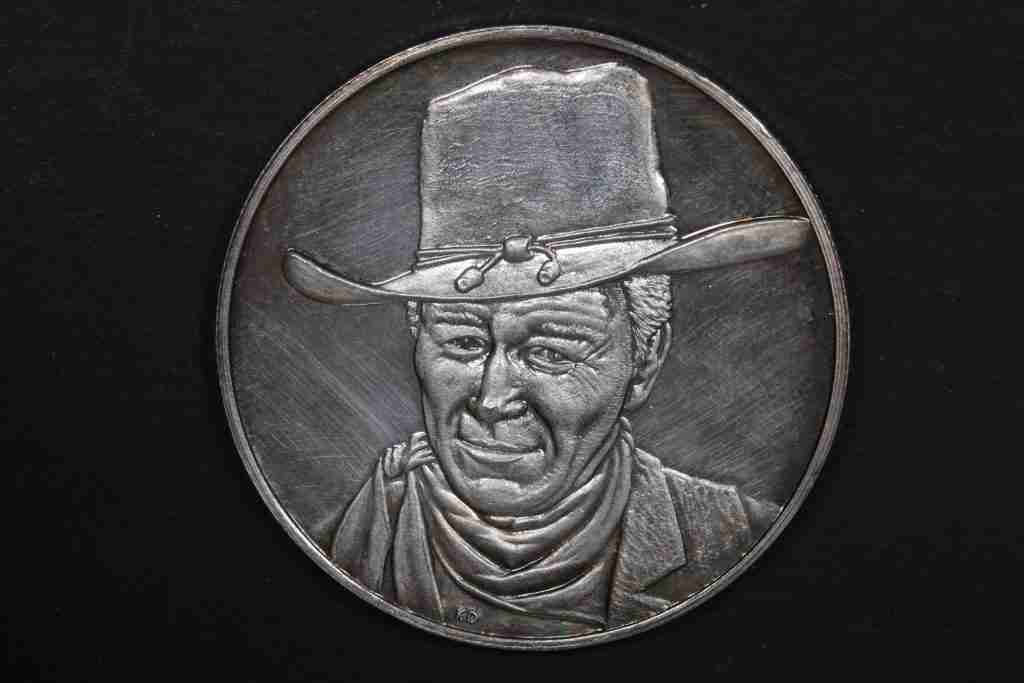
The intrinsic portion of silver coin values is calculated from fine-silver content and the current market price of silver. If a coin contains 0.36169 troy ounce of silver, its theoretical melt value is that silver weight multiplied by the current price per troy ounce.
This calculation establishes a useful baseline, particularly for common circulated coins whose value is closely tied to precious-metal content. It does not automatically establish the final selling price because dealers, collectors, and secondary-market buyers may pay above or below theoretical melt depending on demand, transaction size, condition, and current market spreads.
Silver coin values can therefore be separated conceptually into intrinsic metal value and any additional market or collector premium. Common circulated silver may trade primarily on metal value, while a key-date Morgan Dollar or high-grade certified coin can derive most of its value from numismatic demand.
Identifying U.S. Silver Coins
Correct identification comes before calculation. The denomination, date, and composition determine how much silver is present, and using the wrong composition can produce a materially incorrect estimate. This is particularly important for coin series whose metal content changed during production.
Most circulating U.S. dimes, quarters, and half dollars dated 1964 and earlier contain 90% silver. Kennedy half dollars dated 1965 through 1970 contain 40% silver. Wartime Jefferson nickels produced from 1942 through 1945 with the qualifying wartime composition contain 35% silver. Morgan and Peace dollars contain 90% silver and approximately 0.77344 troy ounce of silver when produced to original specifications.
Collectors checking silver coin values should also verify that the piece actually belongs to the silver issue being evaluated. Similar denominations from later years may use copper-nickel clad compositions and should not be assigned the silver weight of earlier coins.
Silver Content by Coin Type
The following reference table provides the standard silver purity and approximate original silver weight commonly used when comparing major U.S. silver coin values.
| Coin | Silver Purity | Approx. Silver Weight |
|---|---|---|
| Mercury Dime | 90% | 0.07234 Troy oz |
| Roosevelt Dime (Pre-1965) | 90% | 0.07234 Troy oz |
| Washington Quarter (Pre-1965) | 90% | 0.18084 Troy oz |
| Standing Liberty Quarter | 90% | 0.18084 Troy oz |
| Walking Liberty Half Dollar | 90% | 0.36169 Troy oz |
| Franklin Half Dollar | 90% | 0.36169 Troy oz |
| Kennedy Half Dollar (1964) | 90% | 0.36169 Troy oz |
| Kennedy Half Dollar (1965–1970) | 40% | 0.14790 Troy oz |
| Morgan Silver Dollar | 90% | 0.77344 Troy oz |
| Peace Silver Dollar | 90% | 0.77344 Troy oz |
| War Nickel | 35% | 0.05626 Troy oz |
These figures provide the metal-content foundation for melt calculations. Actual silver coin values may be higher because of condition, date, mint mark, rarity, certification, dealer premiums, or collector demand.
Melt value is a starting point, not a universal appraisal. Two coins with identical silver content can have dramatically different silver coin values when one is a common circulated example and the other has a scarce date, desirable mint mark, exceptional condition, recognized variety, or strong collector demand.

90%, 40%, and 35% Silver Coins
Composition is one of the most important distinctions in U.S. silver coinage. Traditional circulating dimes, quarters, and half dollars minted through 1964 generally use the familiar 90% silver composition, but later Kennedy half dollars and wartime Jefferson nickels require different calculations.
A 1964 Kennedy half dollar contains approximately 0.36169 troy ounce of silver, while a 1965–1970 Kennedy half contains approximately 0.14790 troy ounce. A qualifying wartime Jefferson nickel contains approximately 0.05626 troy ounce. Applying one formula to all three would produce incorrect silver coin values.
Wear also deserves context. The table uses approximate original silver weights. Circulated coins can lose a small amount of mass through decades of use, which is why bulk circulated 90% silver is sometimes evaluated using practical face-value conventions rather than assuming every worn coin remains at full original weight.
Junk Silver and Constitutional Silver
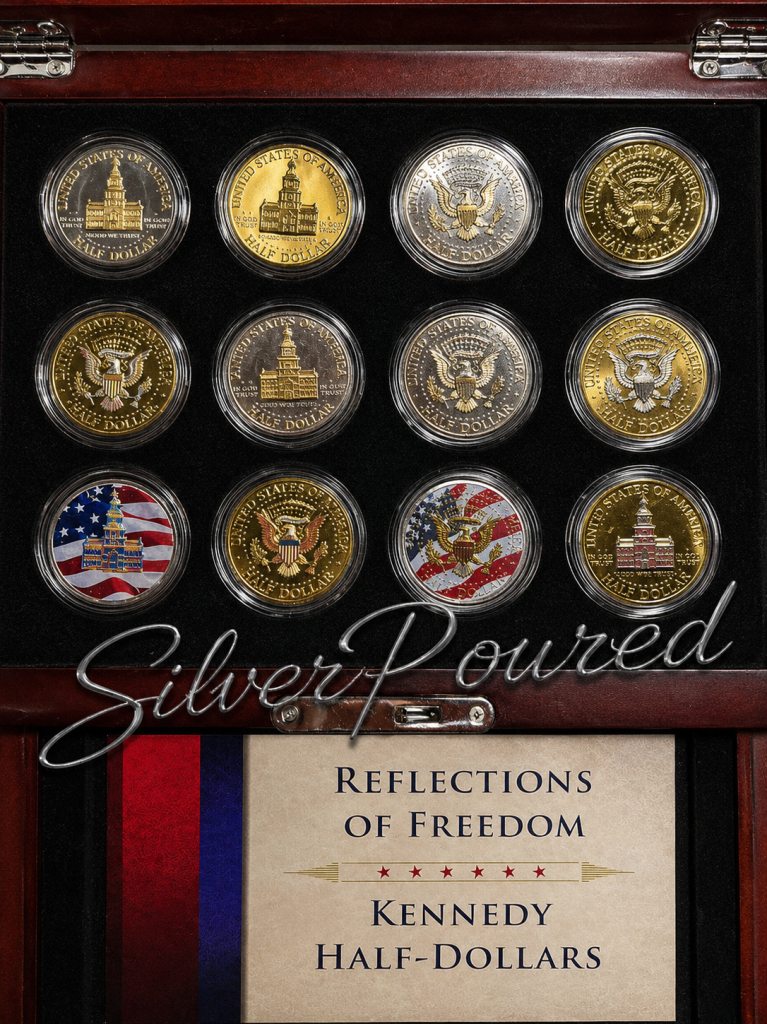
The terms “junk silver” and “constitutional silver” are commonly used for circulated U.S. coins whose market value is driven largely by precious-metal content rather than individual numismatic rarity. Typical examples include pre-1965 dimes, quarters, and half dollars that have experienced normal circulation wear.
These coins remain popular because they combine recognizable U.S. coinage with fractional silver denominations. Buyers can hold silver in dime, quarter, and half-dollar increments rather than relying only on one-ounce bullion products.
Bulk 90% silver is often bought and sold by total face value. When evaluating circulated lots, collectors should understand whether the market convention being quoted assumes original theoretical silver content or an allowance for normal circulation wear. That distinction becomes increasingly important as the size of the lot grows.
Melt Value vs Collector Value
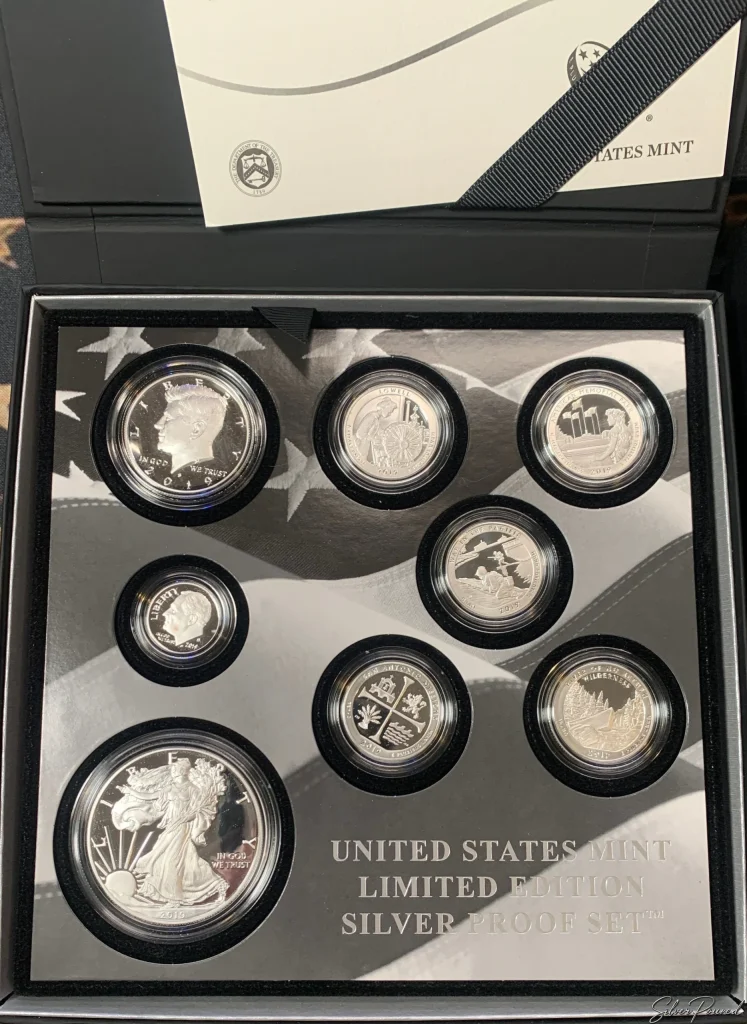
Melt value measures the worth of a coin’s silver content. Collector value measures what the market may pay for the complete numismatic object. For ordinary circulated silver, those figures can be relatively close. For scarce or desirable coins, they can be separated by hundreds or even thousands of dollars.
Date and mint mark can dramatically alter silver coin values. A common Morgan Dollar and a scarce Carson City issue may contain essentially the same amount of silver while occupying completely different collector markets. Grade, originality, strike quality, eye appeal, certification, variety, and provenance can create additional differences.
Collectors should therefore avoid automatically selling every old silver coin by weight. Establish the intrinsic value first, then determine whether the coin deserves numismatic research before accepting a bullion-based offer.
Why Silver Coin Values Matter When Buying and Selling
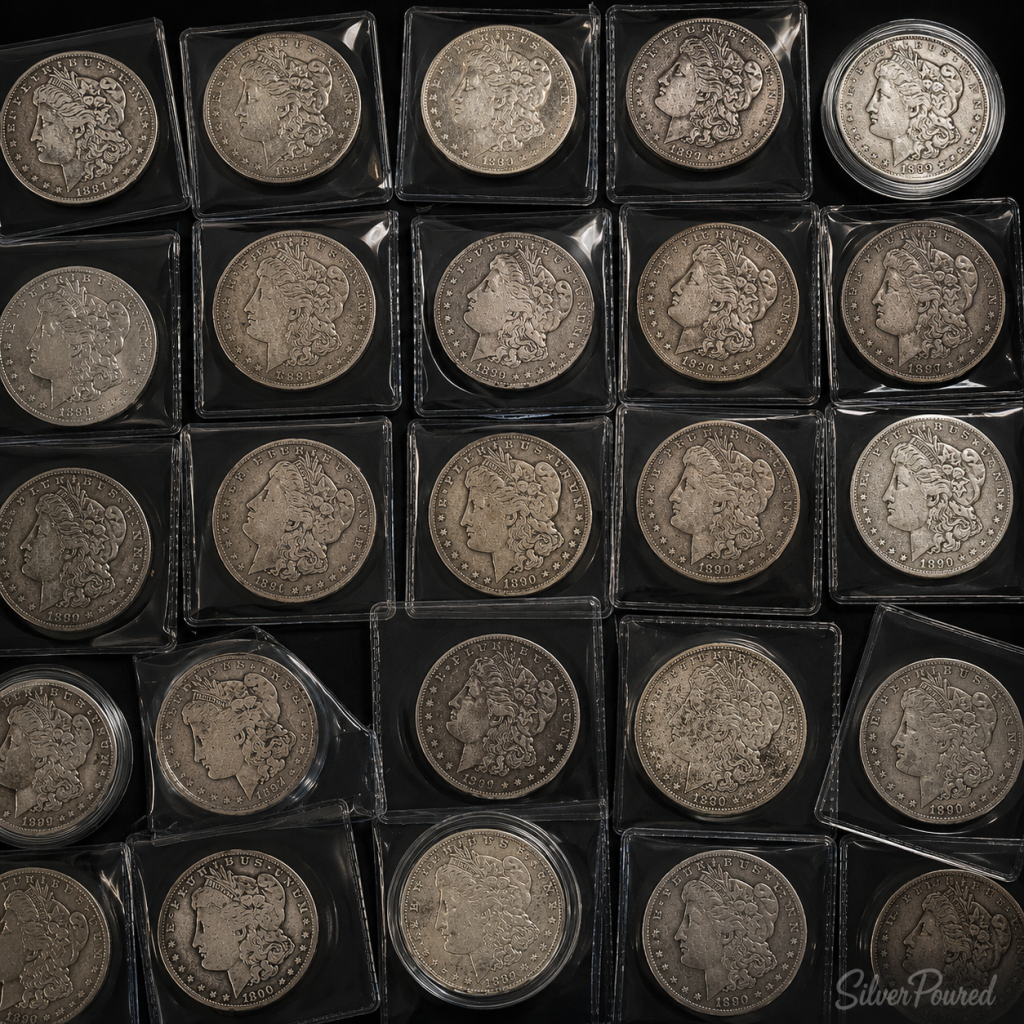
Knowing the intrinsic baseline gives buyers and sellers a common reference point. Before purchasing a group of circulated coins, a buyer can estimate the contained silver and then determine how much additional premium the seller is asking. Before selling, an owner can establish the same baseline and compare it with dealer or private-market offers.
Silver coin values are particularly useful when evaluating mixed collections. A box containing dimes, quarters, half dollars, dollars, and war nickels cannot be accurately valued from face value alone because the denominations and compositions contain different amounts of silver.
Numismatic coins require another step. Once intrinsic value is established, research the date, mint, condition, certification, variety, and recent collector-market activity. That prevents a valuable collectible from being treated as ordinary bullion and also prevents an ordinary coin from being assigned an unsupported collector premium.
A reliable valuation process works in layers: identify the coin, establish its silver content, calculate intrinsic value, and only then investigate numismatic characteristics. This sequence keeps silver coin values grounded in measurable metal content while preserving the possibility that rarity, condition, or collector demand makes an individual coin worth substantially more.
Inherited Silver Coins
Inherited collections are one of the most common ways people first encounter older U.S. silver coins. Boxes of dimes, quarters, half dollars, dollars, and wartime nickels may contain ordinary bullion pieces, collectible coins, or a mixture of both. Before selling anything, identify each denomination, confirm the date, determine the composition, and separate coins that may require additional numismatic research.
Grouping inherited coins by denomination makes silver coin values easier to compare because each coin type contains a known amount of silver. Mercury dimes, Washington quarters, Walking Liberty half dollars, Kennedy half dollars, Morgan dollars, Peace dollars, and war nickels should not be mixed into one calculation without accounting for their different compositions.
Collectors should also avoid cleaning inherited coins. Tarnish, toning, and circulation wear do not automatically reduce numismatic value, while polishing or chemical cleaning can permanently alter the surface. Evaluate the coin first and preserve its original appearance whenever possible.
Cleaning an inherited coin before identifying it can turn a potentially desirable collectible into a damaged example. Silver coin values should be established before any attempt is made to brighten, polish, dip, or otherwise alter the surface. Original surfaces are generally preferred because they preserve the coin’s history, authenticity, and collector appeal.
Common Mistakes When Evaluating Silver Coins
| Common Mistake | Better Approach |
|---|---|
| Assuming every old coin contains silver | Verify the date and composition first |
| Valuing every coin by melt alone | Check for key dates, mint marks, condition, and collector premiums |
| Cleaning coins before evaluation | Preserve original surfaces whenever possible |
| Ignoring current silver prices | Use live market pricing when calculating intrinsic value |
| Mixing 90%, 40%, and 35% issues | Separate compositions before calculating |
| Assuming rarity from age alone | Verify actual mintage, survival, condition, and demand |
Taking a consistent approach to identification prevents many valuation errors. Date, denomination, composition, condition, and collector demand should be considered before appearance alone. A dark or heavily toned coin may still be collectible, while a bright coin may have been cleaned and lost part of its numismatic appeal.
Market Factors That Influence Silver Coin Values
Intrinsic silver content establishes the baseline for many common coins, but physical-market conditions can influence what buyers are willing to pay above that amount. Dealer inventory, investor demand, product availability, transaction size, and overall precious-metals activity can all affect silver coin values in the marketplace.
During periods of strong physical demand, circulated U.S. silver may trade at larger premiums because buyers value recognizable government-issued fractional silver. When demand moderates and inventory becomes easier to replace, premiums may contract even if the underlying silver price remains relatively stable.
Collector demand operates separately from bullion demand. Morgan Dollars, Peace Dollars, Mercury dimes, Walking Liberty half dollars, and other historic series have established collector communities, so specific dates and grades can behave very differently from ordinary melt-based silver.
Understanding this distinction helps collectors separate temporary market premiums from long-term numismatic characteristics when evaluating silver coin values.
Choosing Silver Coins for Different Goals
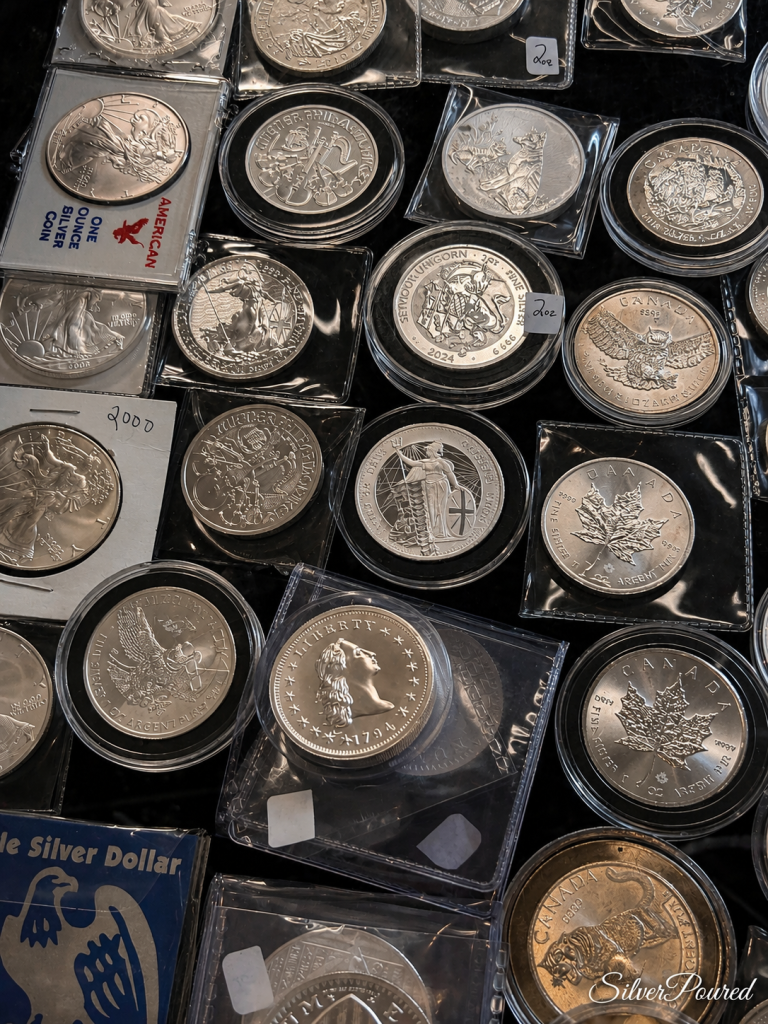
Different denominations can serve different collecting and stacking goals. Dimes offer small fractional units, quarters are widely recognized, half dollars provide more silver per coin, and Morgan and Peace dollars combine substantial silver content with strong historical and collector appeal.
| Collecting Goal | Common Choice | Why Buyers Consider It |
|---|---|---|
| Small fractional silver | Mercury and Roosevelt Dimes | Low denomination and easy divisibility |
| Everyday 90% stacking | Washington Quarters | Recognizable and widely available |
| More silver per coin | Walking Liberty and Franklin Half Dollars | Higher silver content in each piece |
| Historic collecting | Morgan Silver Dollars | Broad collector market and many date/mint combinations |
| Classic silver-dollar design | Peace Silver Dollars | Popular with collectors and stackers |
| Lower-cost silver entry | War Nickels | Smaller amount of silver per coin |
No denomination is automatically best for every buyer. Silver coin values should be considered alongside divisibility, premium, recognition, collector interest, storage, and the purpose of the collection.
Why Live Silver Prices Matter
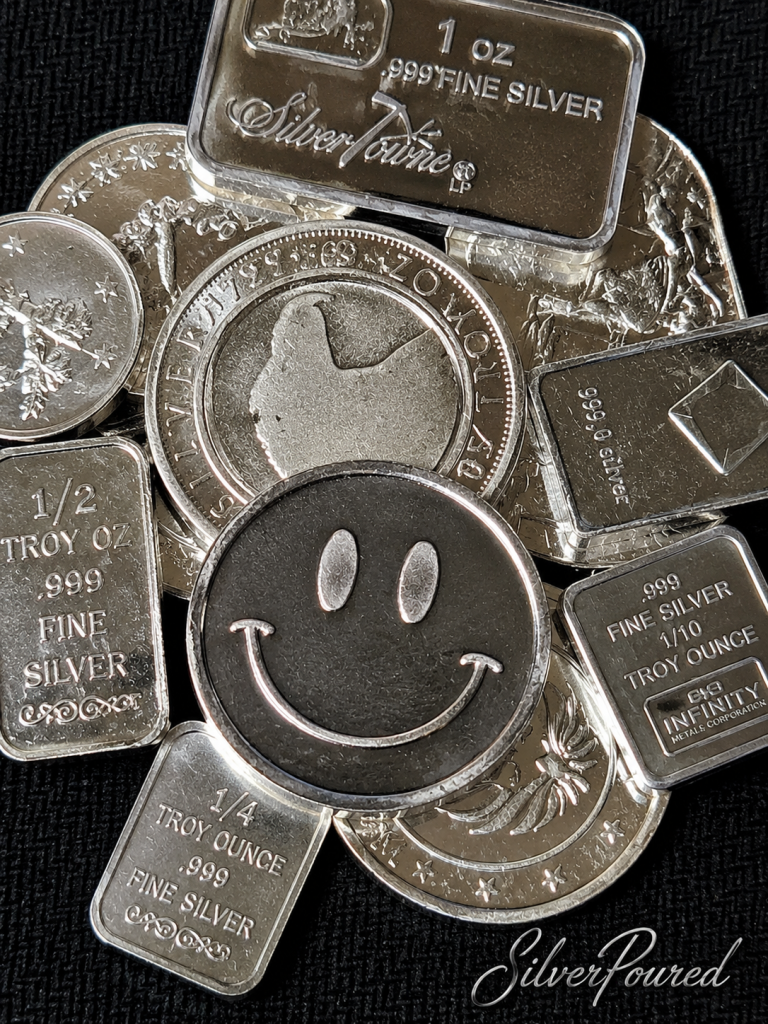
Live silver prices influence every intrinsic-value calculation. Even a modest market move can materially change the total melt value of a large bag of 90% silver, an inherited estate collection, or a substantial group of Morgan and Peace dollars.
Experienced buyers often check the current silver price before attending a coin show, visiting a dealer, bidding at auction, or evaluating an estate lot. That provides a current metal-value reference before premiums or collector characteristics are considered.
Tracking silver coin values over time also helps collectors recognize when dealer premiums widen or narrow independently of the metal price. A coin can become more or less expensive relative to melt even when its silver content never changes.
Dealer Premiums and Transaction Pricing
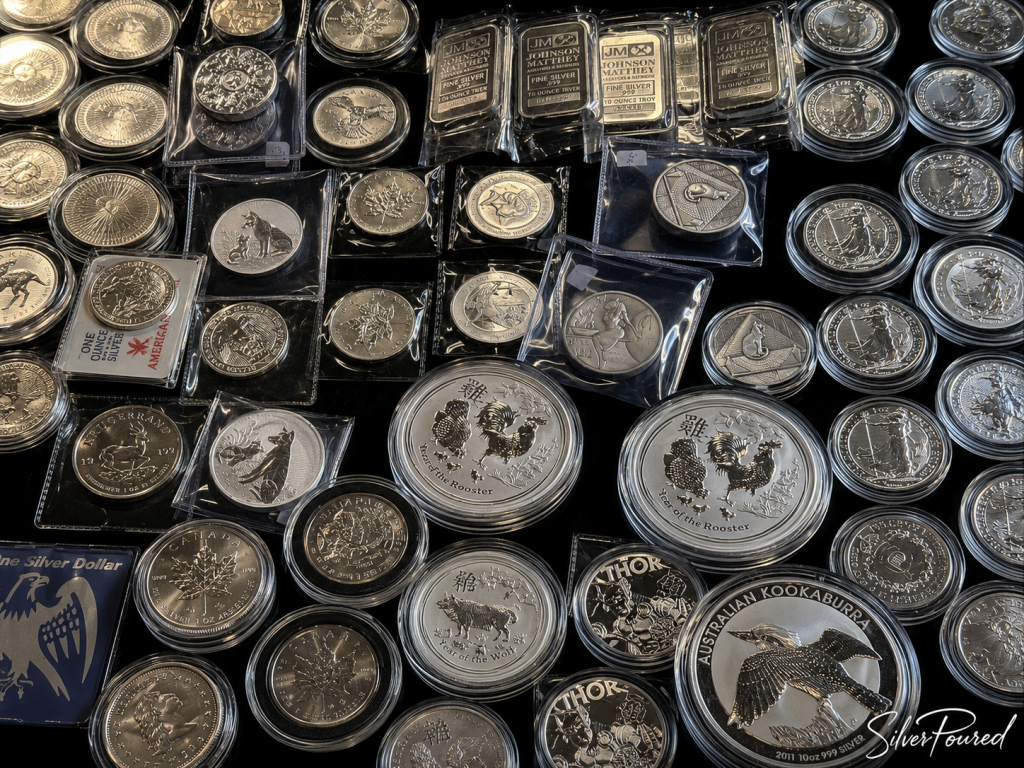
Physical silver coins rarely trade at exactly theoretical melt value. Dealers must account for acquisition cost, sorting, authentication, inventory risk, operating expenses, replacement cost, and expected resale margin. These realities create a spread between what a dealer sells a coin for and what that dealer may pay to buy it back.
Silver coin values therefore should not be confused with a guaranteed cash offer. A melt calculation estimates intrinsic metal value, while an actual transaction depends on the buyer, seller, quantity, coin type, market conditions, and whether additional numismatic value is present.
Collectors comparing offers should ask whether the transaction is being evaluated as bullion or as numismatic material. A rare date or certified coin deserves a different valuation process from an ordinary circulated quarter or dime.
A melt calculator tells you what the silver is worth; it does not automatically tell you what a dealer, collector, or auction bidder will pay. Silver coin values become more useful when intrinsic metal value is treated as the baseline and actual market premiums are evaluated separately.
Organizing and Tracking a Silver Coin Collection
Organization becomes increasingly important as a collection grows. Sorting coins by denomination, series, date, mint, composition, or collecting purpose makes silver coin values easier to monitor and reduces the chance that potentially collectible pieces are mixed into ordinary bullion holdings.
Many collectors maintain records containing purchase date, seller, price paid, silver content, certification information, photographs, storage location, and notes about condition. Those records can simplify insurance documentation, estate planning, future sales, and periodic collection reviews.
Maintaining current records is particularly useful when silver prices move sharply. The owner can update the intrinsic value of bullion-oriented holdings without having to rebuild the entire collection inventory from scratch.
Using Silver Coin Values Throughout Your Collecting Journey
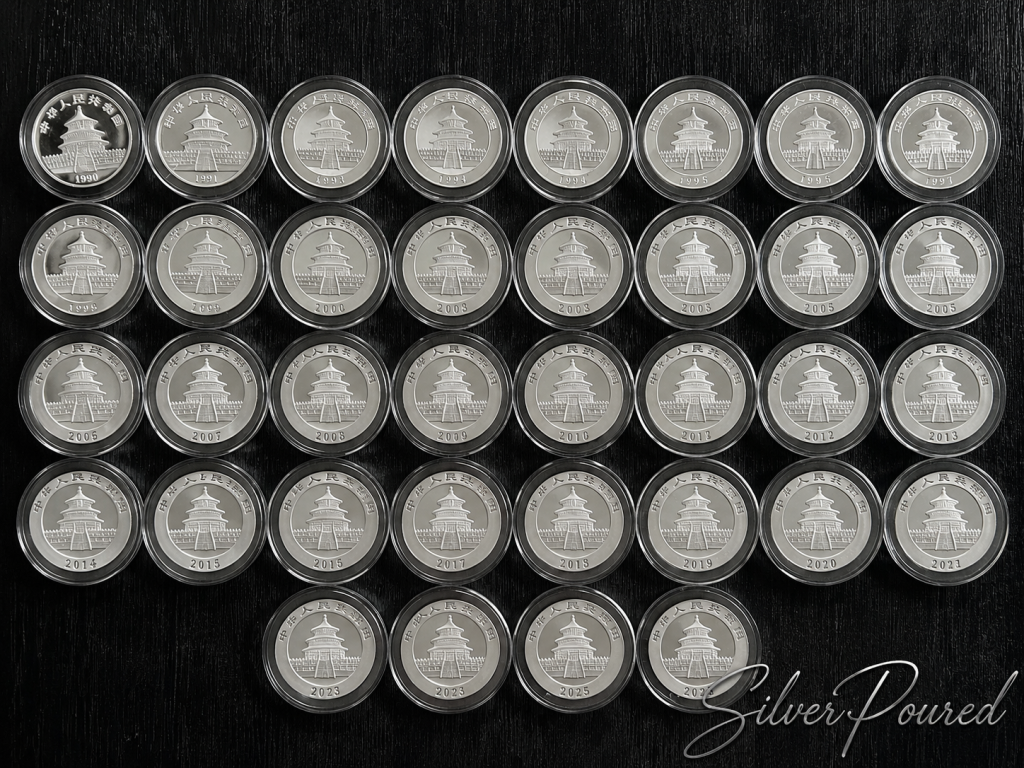
Silver coin values can support decisions at every stage of ownership. New collectors may use them to identify basic melt value, while experienced buyers use the same intrinsic baseline before evaluating premiums, grades, varieties, provenance, and specialized collector demand.
Buyers can review silver coin values before visiting coin shops, attending shows, bidding at auction, or purchasing collections online. Sellers can use the same information to recognize offers that fall materially below intrinsic value or to identify coins that require additional numismatic research.
Estate owners and long-term collectors can also use silver coin values when documenting insurance inventories, organizing holdings, or estimating the bullion component of a precious-metals portfolio.
The strongest valuation process combines current silver prices with accurate coin identification and an understanding of collector premiums. Melt value provides consistency; numismatic research determines whether the individual coin deserves more.
Frequently Asked Questions
Do all old United States coins contain silver?
No. Composition depends on denomination and year. Many older dimes, quarters, half dollars, dollars, and qualifying wartime nickels contain silver, but later issues may use copper-nickel or other compositions. Verify the date and coin type before assigning silver content.
Why can two coins with the same silver content sell for different prices?
Rarity, date, mint mark, condition, certification, variety, eye appeal, provenance, and collector demand can all create value beyond intrinsic silver content.
Is melt value the same as collector value?
No. Melt value represents the value of the silver contained in the coin. Collector value may be much higher when numismatic characteristics support additional demand.
Why do collectors monitor live silver prices?
Live silver prices establish the metal-value baseline used in melt calculations. As the market changes, the intrinsic silver portion of silver coin values changes with it.
Should silver coins be cleaned before selling?
No. Cleaning can permanently alter original surfaces and reduce collector appeal. Coins should normally be identified and evaluated in their existing condition before any conservation or cleaning decision is considered.
Final Thoughts on Silver Coin Values
Understanding silver coin values begins with accurate identification, known silver content, and current market pricing. Those factors establish intrinsic value, while date, mint mark, condition, rarity, certification, collector demand, and dealer premiums determine whether an individual coin deserves a higher market price.
Whether you are evaluating inherited coins, comparing denominations, calculating melt value, buying junk silver, or building a long-term collection, a consistent valuation framework makes decision-making easier. Identify the coin, establish intrinsic value, investigate collector characteristics, and compare the result with the actual market.
Silver coin values are most useful when they are treated as part of that complete process rather than as a single number. Combining live silver prices with accurate composition data and disciplined numismatic research gives collectors a stronger foundation for buying, selling, organizing, and preserving physical silver.
Related SilverPoured Resources
Continue researching U.S. silver coins through SilverPoured resources covering live silver prices, melt value, junk silver, historic coin denominations, silver dollars, and collector-focused valuation.
Silver Prices and Melt Value Tools
Silver Spot Price Today
What Is the Silver Spot Price?
What Is Silver Melt Value?
Silver Melt Value Calculator
Junk Silver Value
U.S. Silver Coin Guides
Mercury Dime Silver Value
Roosevelt Dime Silver Value
Washington Quarter Silver Value
Kennedy Half Dollar Silver Value
War Nickel Value
Silver Dollars and Collector Research
Morgan Silver Dollar Value
Peace Silver Dollar Value
Standing Liberty Quarter Silver Value
Walking Liberty Half Dollar Silver Value
What Is My Silver Worth?
Purchase Precious Metals from a Trusted Dealer
Collectors researching U.S. coinage often compare traditional circulating silver with modern bullion products. Historic dimes, quarters, half dollars, and silver dollars provide recognizable government-issued precious metal, while modern bars and rounds can offer different combinations of purity, weight, premium, and availability.
Golden State Mint offers silver bars, silver rounds, gold, copper, fractional precious metals, and other modern bullion products for collectors and stackers. Comparing modern bullion with historic U.S. coinage can help buyers understand how metal content, fabrication, recognition, premiums, and collector demand influence physical precious-metals pricing.
Collector Insight
The strongest coin valuation starts with something measurable: identify the coin and establish its intrinsic silver content. Only after that baseline is known should rarity, date, mint mark, condition, certification, variety, provenance, and collector demand be added to the analysis. This prevents ordinary bullion coins from receiving unsupported premiums while protecting genuinely collectible coins from being valued only for melt.
Keep SilverPoured Free
SilverPoured is built to help collectors and precious-metals investors make smarter decisions through free calculators, original photography, coin research, value references, collector education, and independent market resources. Every page is created to make valuable precious-metals information available without requiring a paid subscription.
This Silver Coin Values resource combines live-price education, U.S. coin-composition data, melt-value methodology, numismatic research, inherited-collection guidance, and collector-focused valuation principles. Every contribution helps fund continued precious-metals research, original photography, calculator development, and expansion of the free SilverPoured Authority Library.
Your support allows SilverPoured to remain independent while building one of the web’s most comprehensive free libraries for coin collectors, bullion buyers, precious-metals researchers, and long-term investors.