
Standing Liberty quarter silver value is based on the current silver spot price, the coin’s 90% silver composition, and its collectible condition. Every Standing Liberty quarter minted from 1916 through 1930 contains approximately 0.1808 troy ounces of pure silver, giving collectors and investors an easy way to calculate melt value while also considering collector premiums.
Whether you own a single coin or a bag of 90% silver quarters, understanding standing liberty quarter silver value helps you determine both intrinsic silver value and potential numismatic value. While common circulated examples often trade near melt value, scarcer dates, Full Head examples, and high-grade coins can command significant premiums above their silver content.
What Is Standing Liberty Quarter Silver Value?
Standing liberty quarter silver value represents the combined worth of a coin’s intrinsic silver content and its collector demand. Every coin contains a fixed amount of silver, allowing melt value to rise and fall alongside the live silver spot price. At the same time, rarity, condition, mint mark, strike quality, and overall eye appeal may increase the market value far beyond melt alone.
Collectors and investors monitor both silver prices and collector premiums because each influences the overall value of these historic 90% silver quarters. Understanding how these factors work together provides a more accurate estimate before buying, selling, or adding Standing Liberty quarters to a collection.
How Standing Liberty Quarter Silver Value Is Calculated
Each Standing Liberty quarter contains approximately 0.1808 troy ounces of pure silver. Calculating melt value begins by multiplying this silver content by the current live silver spot price.
Standing Liberty Quarter Silver Melt Value Formula
0.1808 × Current Silver Spot Price = Standing Liberty Quarter Silver Value (Melt)
Although melt value establishes the intrinsic value of the silver, collector premiums frequently influence the final selling price. Coins with desirable dates, stronger strikes, Full Head designation, original surfaces, or higher grades often sell for substantially more than their silver value alone.
Understanding both melt value and collector demand provides the most complete picture when determining standing liberty quarter silver value because standing liberty quarter silver value reflects both intrinsic silver content and collector demand.
Melt value establishes a Standing Liberty quarter’s intrinsic silver worth, but many coins ultimately sell for substantially more because collectors value rarity, strike quality, originality, and eye appeal. Understanding both bullion value and numismatic demand provides a far more accurate estimate of market value than silver content alone.

Silver Content and Specifications
Every Standing Liberty quarter struck between 1916 and 1930 was produced using the traditional United States 90% silver alloy consisting of 90% silver and 10% copper. Each coin weighs 6.25 grams and contains approximately 0.1808 troy ounces of pure silver, making it one of the most widely recognized constitutional silver coins collected today.
Because every regular-issue Standing Liberty quarter contains the same silver content, melt value rises and falls directly with changes in the live silver spot price. This consistent silver weight allows collectors and investors to estimate intrinsic value quickly before considering any additional collector premium.
Standing Liberty quarters remain popular because they combine historic American coinage, recognizable silver content, and strong collector demand within one of the most admired classic United States coin series.
Standing Liberty Quarter Melt Value Table
The table below illustrates how standing liberty quarter silver value changes as the silver spot price increases.
| Silver Spot Price | Approximate Melt Value |
|---|---|
| $25.00 | $4.52 |
| $30.00 | $5.42 |
| $35.00 | $6.33 |
| $40.00 | $7.23 |
| $50.00 | $9.04 |
| $75.00 | $13.56 |
| $100.00 | $18.08 |
These values represent intrinsic silver content only. Many Standing Liberty quarters trade above melt value because collector demand, rarity, mint mark, strike quality, and overall condition contribute additional market value.
History of the Standing Liberty Quarter
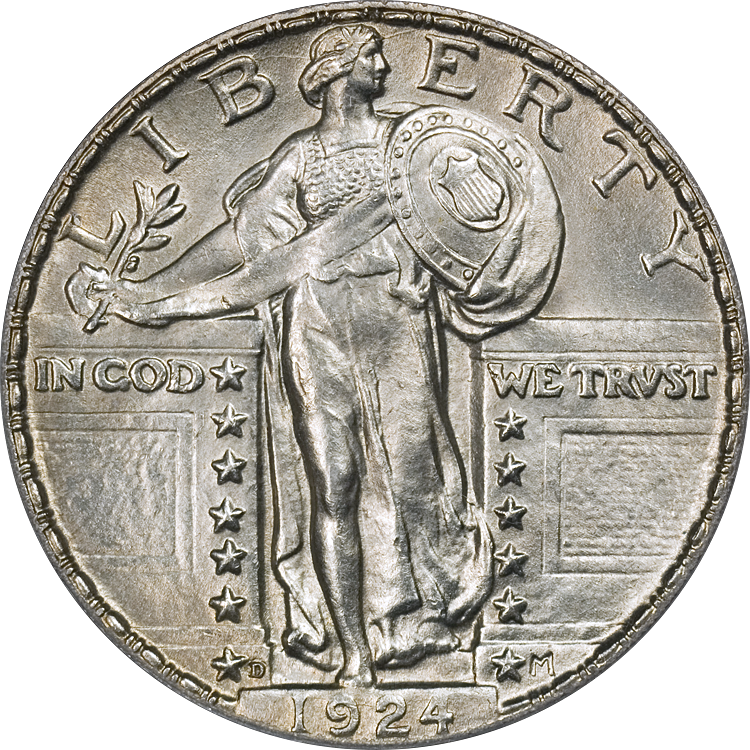
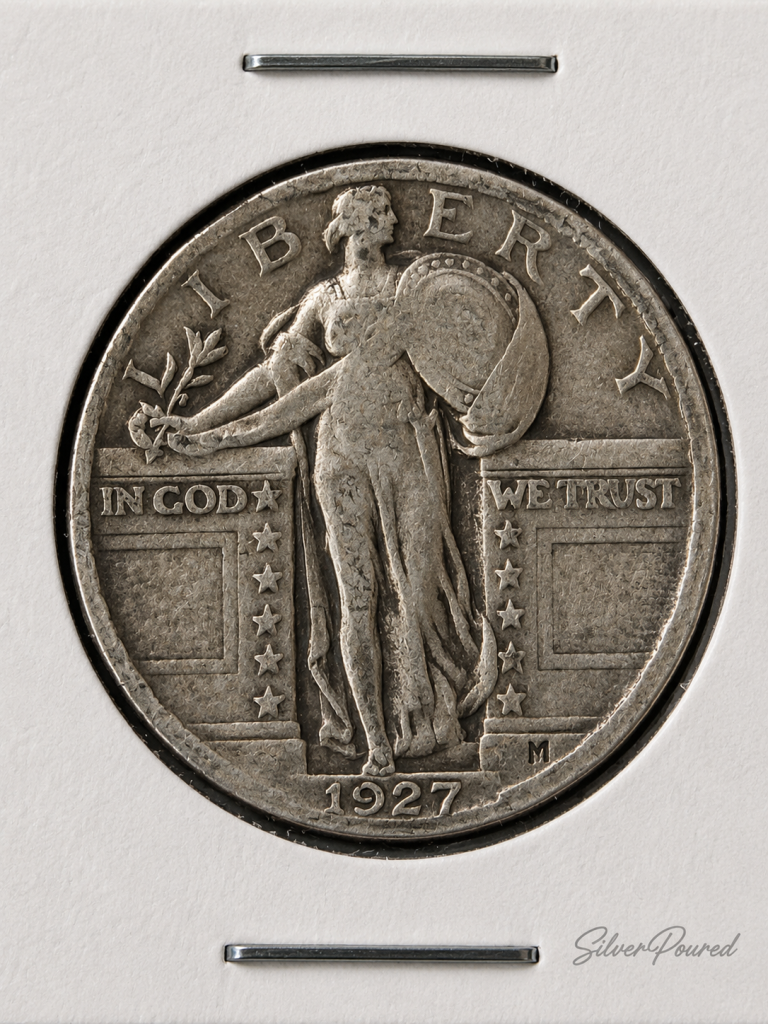
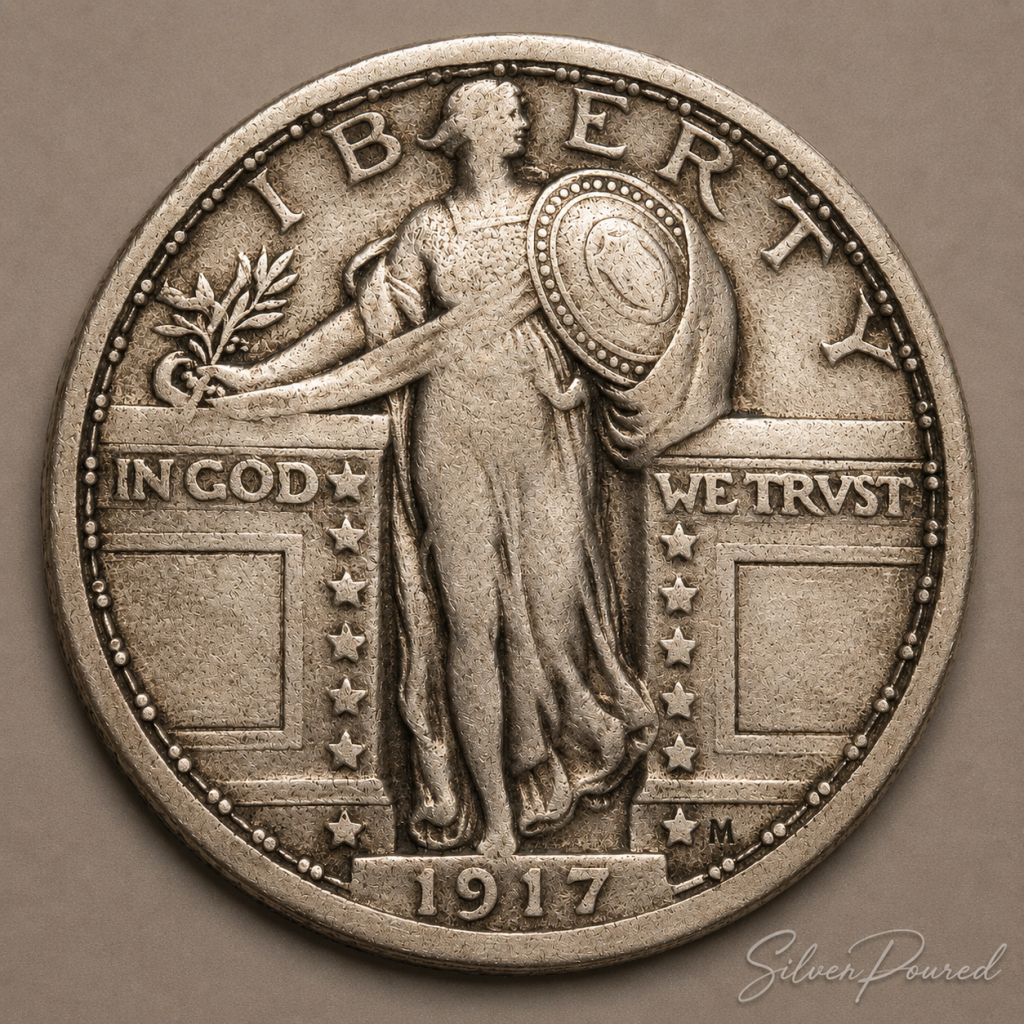
The Standing Liberty quarter was introduced in 1916 as the successor to the Barber quarter and remained in production through 1930. Designed by sculptor Hermon A. MacNeil, the coin quickly became one of the most admired designs in American numismatics because of its artistic depiction of Liberty standing confidently with a shield in one hand and an olive branch in the other.
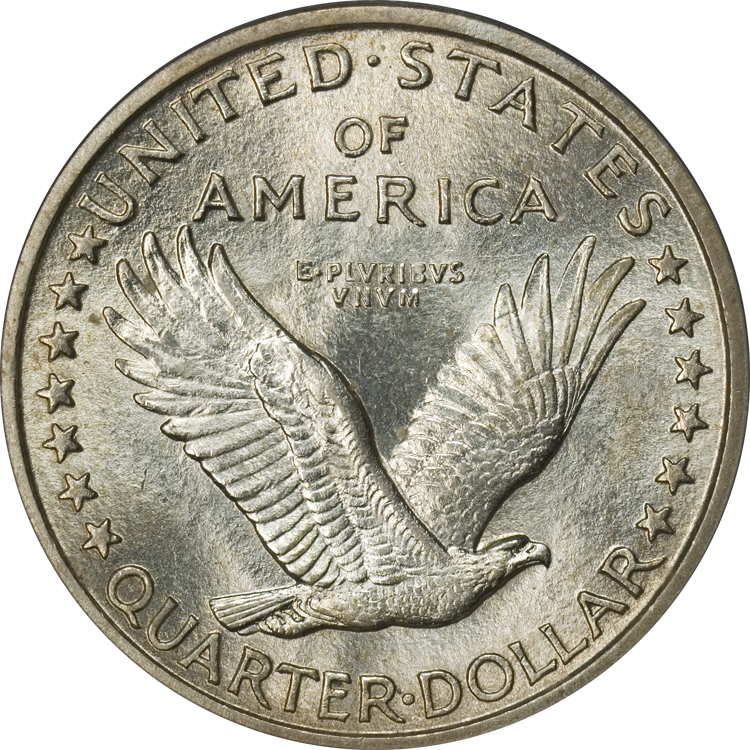
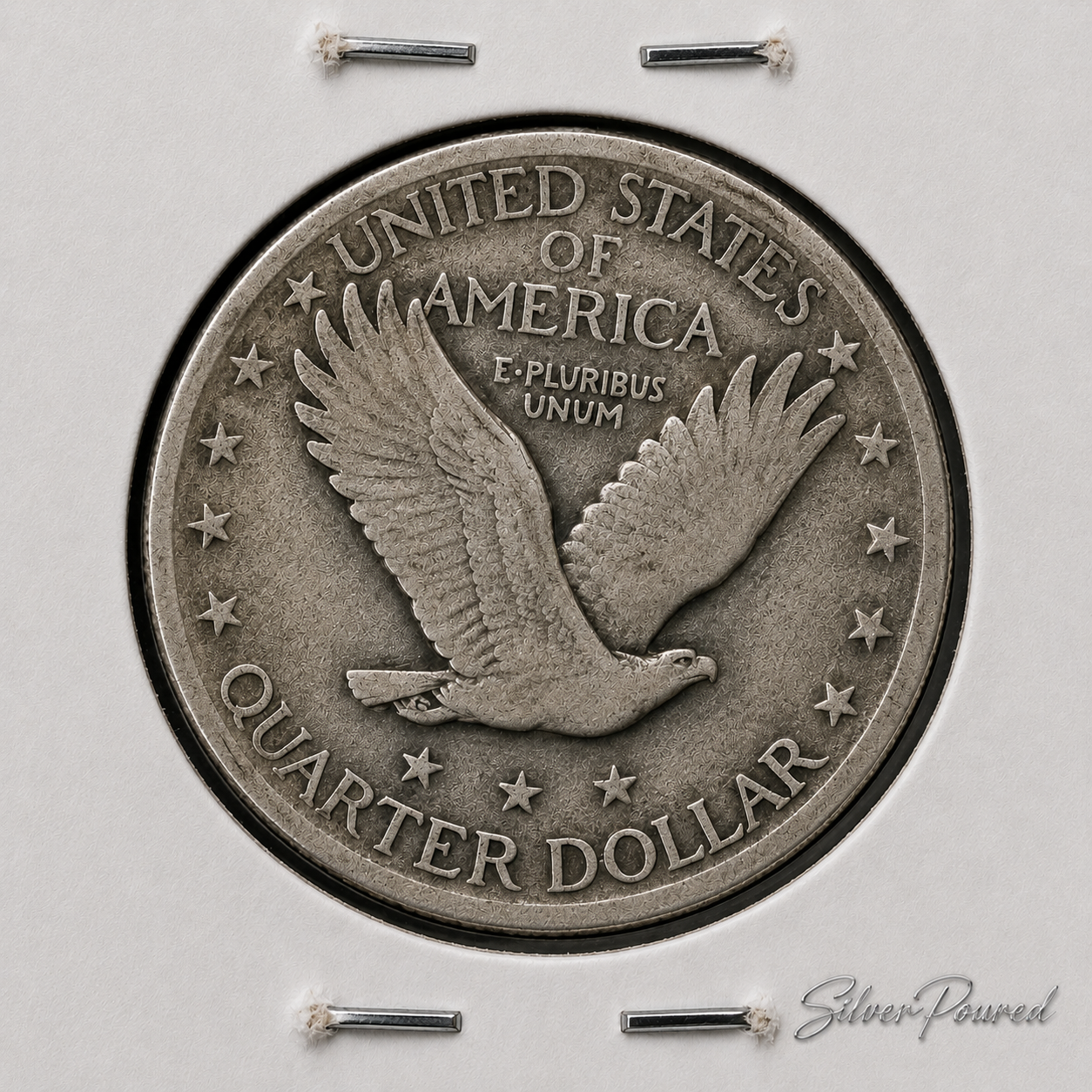
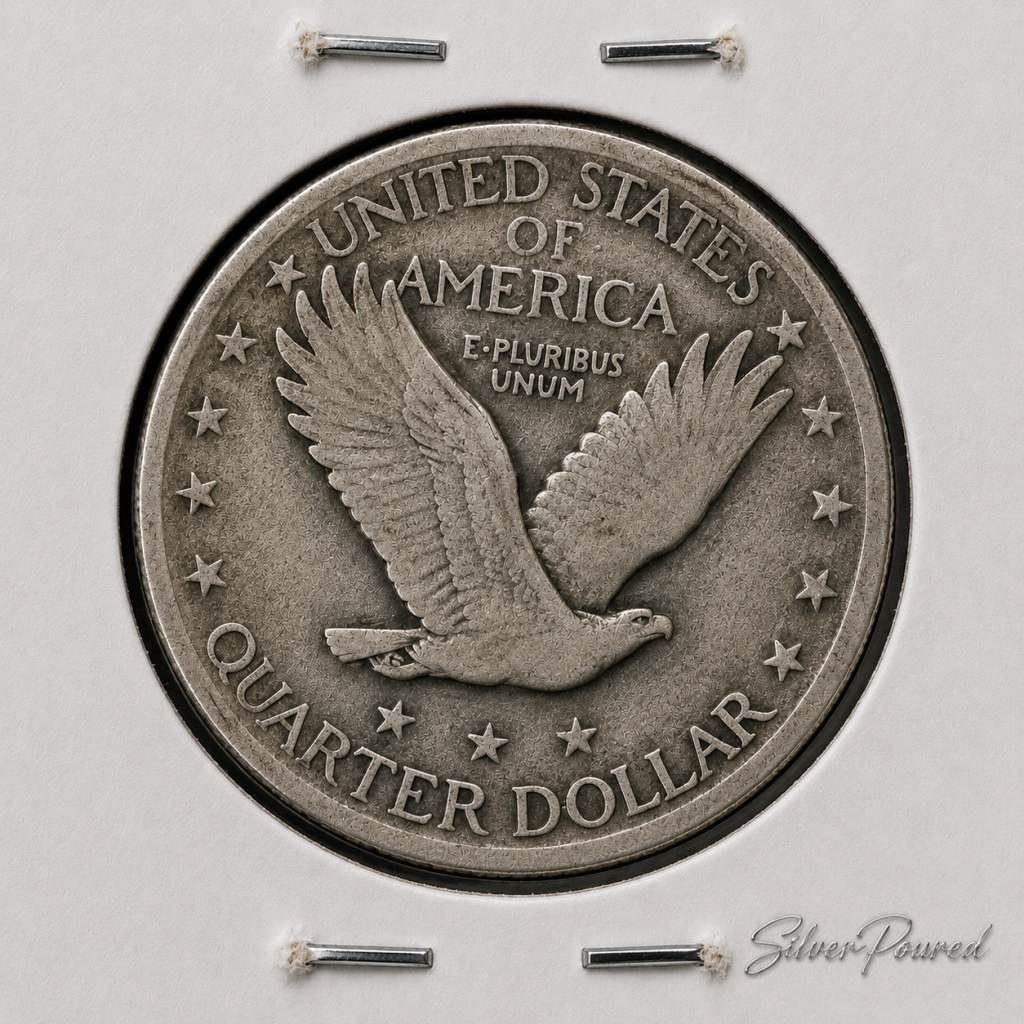
The reverse features a soaring eagle in flight, creating one of the most recognizable quarter designs ever produced by the United States Mint. Although the series had a relatively short production run, its artistic design, historical significance, and silver content continue attracting collectors more than a century after its introduction.
Full Head Designation
One of the most desirable characteristics within the Standing Liberty quarter series is the Full Head designation. Coins receiving this designation display exceptional strike quality, with Liberty’s helmet and facial details fully defined. Because many Standing Liberty quarters were weakly struck when originally produced, examples displaying a complete head are considerably scarcer than normally struck coins.
Collectors often pay substantial premiums for Full Head examples, particularly when paired with higher Mint State grades. Although two coins may contain identical silver content, the presence of a Full Head designation can dramatically increase collector value beyond melt alone.
The Full Head designation is one of the most desirable attributes within the Standing Liberty quarter series because it reflects exceptional strike quality. Two coins with identical dates and silver content may have dramatically different market values simply because one displays fully defined head details while the other does not.
Understanding the importance of strike quality helps collectors recognize why some Standing Liberty quarters sell for many times their intrinsic silver value.
Standing Liberty Quarter Key Dates and Varieties
Although every Standing Liberty quarter contains approximately the same amount of silver, several key dates, better dates, design types, and recognized varieties command substantial collector premiums that can dramatically increase standing liberty quarter silver value. Understanding these issues is essential because standing liberty quarter silver value may reflect rarity and collector demand far more than intrinsic silver content alone. These coins should be evaluated using date, mint mark, grade, strike quality, originality, Full Head detail, and variety attribution rather than intrinsic silver value alone.
| Date or Variety | Mintage | Why Collectors Care |
|---|---|---|
| 1916 | 52,000 | First-year issue, lowest regular mintage in the series, and the principal Standing Liberty quarter key date. |
| 1917 Type 1 | Varies by mint | Final production of the original design showing Liberty without the later chain-mail covering and no stars beneath the eagle. |
| 1917 Type 2 | Varies by mint | First production of the modified design featuring chain mail on Liberty and three stars beneath the eagle. |
| 1918/7-S Overdate | No separate official total | Famous overdate variety created from an altered die and one of the most desirable varieties in the entire series. |
| 1919-D | 1,944,000 | Low-mintage Denver issue that becomes especially difficult in higher grades and with strong strike quality. |
| 1919-S | 1,836,000 | Low-mintage San Francisco issue with strong collector demand, particularly for original and well-struck examples. |
| 1921 | 1,916,000 | Major Philadelphia key date with a comparatively low mintage and strong demand across most collectible grades. |
| 1923-S | 1,360,000 | Recognized better date that becomes considerably scarcer in higher grades and with strong original detail. |
| 1927-D | 976,000 | Low-mintage Denver issue frequently pursued by date-and-mint collectors. |
| 1927-S | 396,000 | Lowest-mintage issue after 1916 and an important semi-key, especially in better-preserved condition. |
| Full Head Examples | Designation, not a separate issue | Coins displaying fully defined head detail can command substantial premiums because many Standing Liberty quarters were incompletely struck. |
The 1918/7-S overdate does not have a separate official mintage because it was created during normal production and was not recorded as an independent issue. Proper attribution is essential because wear, damage, or unusual date shapes should not automatically be identified as the recognized overdate variety.
Full Head is a strike designation rather than a date or mint variety. PCGS describes Full Head examples as coins showing complete head detail and notes that examples combining a Full Head with complete shield rivets are especially desirable. The designation can produce major differences in standing liberty quarter silver value even between coins of the same date, mint, grade, and silver content.
Researching key dates and recognized varieties before buying or selling helps ensure that potentially valuable coins are not mistakenly valued only for their melt content. Accurate attribution provides a more complete understanding of standing liberty quarter silver value while helping collectors distinguish ordinary circulated coins from valuable key dates and varieties. Authentication, certification, original surfaces, and accurate variety attribution become increasingly important as collector premiums rise.
Mint Marks and Mint Locations
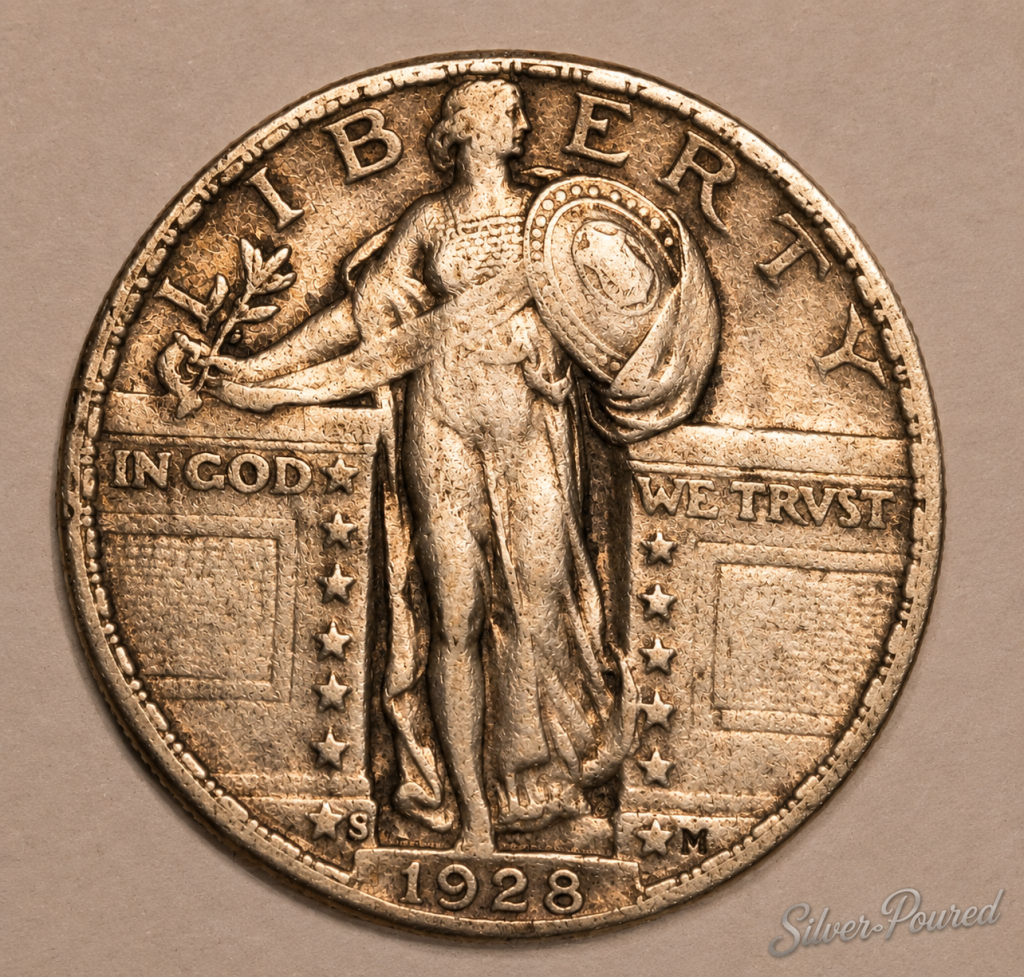
Standing Liberty quarters were produced at three United States Mint facilities during the series: Philadelphia, Denver, and San Francisco. Coins struck at Denver carry a “D” mint mark, while San Francisco issues display an “S” mint mark. Philadelphia coins were produced without a mint mark.
Although every mint produced coins containing identical silver content, mint location often influences collector demand because annual production totals varied considerably between facilities. Certain combinations of date, mint mark, and condition are significantly scarcer than others, creating substantial differences in collector value despite identical intrinsic silver content.
Standing Liberty Quarter Mintages
Standing Liberty quarter mintages provide important historical context when evaluating standing liberty quarter silver value, but original production totals do not determine value by themselves. Understanding how mintage, survival, and collector demand interact provides a more accurate picture of standing liberty quarter silver value across the complete series. Survival rate, circulation wear, strike quality, Full Head detail, originality, certification, and current market demand can all influence standing liberty quarter silver value beyond the number of coins originally struck.
The series includes three major design periods: the original Type 1 design of 1916 and early 1917, the modified Type 2 design introduced during 1917, and the recessed-date design used from 1925 through 1930. Because both Type 1 and Type 2 quarters were produced during 1917, their mintages are listed separately below.
Standing Liberty Quarter Annual Mintages
| Issue | Mint | Mintage |
|---|---|---|
| 1916 | Philadelphia | 52,000 |
| 1917 Type 1 | Philadelphia | 8,740,000 |
| 1917-D Type 1 | Denver | 1,509,200 |
| 1917-S Type 1 | San Francisco | 1,952,000 |
| 1917 Type 2 | Philadelphia | 13,880,000 |
| 1917-D Type 2 | Denver | 6,224,400 |
| 1917-S Type 2 | San Francisco | 5,552,000 |
| 1918 | Philadelphia | 14,240,000 |
| 1918-D | Denver | 7,380,800 |
| 1918-S | San Francisco | 11,072,000 |
| 1919 | Philadelphia | 11,324,000 |
| 1919-D | Denver | 1,944,000 |
| 1919-S | San Francisco | 1,836,000 |
| 1920 | Philadelphia | 27,860,000 |
| 1920-D | Denver | 3,586,400 |
| 1920-S | San Francisco | 6,380,000 |
| 1921 | Philadelphia | 1,916,000 |
| 1923 | Philadelphia | 9,716,000 |
| 1923-S | San Francisco | 1,360,000 |
| 1924 | Philadelphia | 10,920,000 |
| 1924-D | Denver | 3,112,000 |
| 1924-S | San Francisco | 2,860,000 |
| 1925 | Philadelphia | 12,280,000 |
| 1926 | Philadelphia | 11,316,000 |
| 1926-D | Denver | 1,716,000 |
| 1926-S | San Francisco | 2,700,000 |
| 1927 | Philadelphia | 11,912,000 |
| 1927-D | Denver | 976,000 |
| 1927-S | San Francisco | 396,000 |
| 1928 | Philadelphia | 6,336,000 |
| 1928-D | Denver | 1,627,600 |
| 1928-S | San Francisco | 2,644,000 |
| 1929 | Philadelphia | 11,140,000 |
| 1929-D | Denver | 1,358,000 |
| 1929-S | San Francisco | 1,764,000 |
| 1930 | Philadelphia | 5,632,000 |
| 1930-S | San Francisco | 1,556,000 |
Standing Liberty Quarter Mintage Highlights
The 1916 Standing Liberty quarter is the lowest-mintage regular issue in the series, with only 52,000 coins produced. This exceptionally small production total strongly influences standing liberty quarter silver value because surviving examples face intense demand from date-and-mint collectors.
The 1921 Philadelphia issue recorded a mintage of 1,916,000 coins and remains another major key date. The 1923-S, with 1,360,000 struck, is also widely recognized as a better date, particularly in higher circulated and Mint State grades.
The 1927-S has the lowest reported mintage of any Standing Liberty quarter after 1916, with only 396,000 coins produced. However, mintage alone does not measure condition rarity. Many branch-mint issues become substantially more difficult when collectors seek original surfaces, strong strikes, high certified grades, or Full Head detail.
No Standing Liberty quarters were produced in 1922. Several other years were issued by only one or two facilities, which is why the table does not contain Philadelphia, Denver, and San Francisco entries for every date.
Beginning in 1925, the date was recessed to reduce the rapid wear experienced by earlier issues. This design change improved date durability, but strike quality remained an important consideration. Full Head examples with strong shield rivets and clearly defined details frequently command substantial premiums above normally struck coins.
Standing Liberty quarter mintage should always be evaluated alongside survival rate, grade, strike quality, Full Head designation, originality, mint mark, and collector demand. Evaluating these factors together produces a far more reliable estimate of standing liberty quarter silver value than relying on production totals or melt value alone.
Standing Liberty Quarter Silver Value vs Collector Value
Standing liberty quarter silver value begins with the coin’s intrinsic silver content, but collector value often extends well beyond melt value alone. Every Standing Liberty quarter contains approximately 0.1808 troy ounces of pure silver, yet two coins with identical silver content may sell for dramatically different prices because of rarity, condition, strike quality, mint mark, and collector demand.
Highly circulated examples frequently trade close to their melt value, while scarce dates, Full Head examples, and Mint State coins can command substantial premiums. This wide pricing range explains why standing liberty quarter silver value must be evaluated using both intrinsic silver content and numismatic demand. Understanding the difference between intrinsic silver value and collectible market value helps buyers and sellers establish more realistic expectations before completing a transaction.
Grading and Condition
Condition is one of the most important factors influencing the market value of a Standing Liberty quarter. Collectors evaluate wear, luster, strike quality, surface preservation, eye appeal, and overall originality when assigning a grade. Coins with minimal wear and strong detail typically command higher prices than heavily circulated examples containing the same amount of silver.
Professional grading services also provide authentication and standardized grading, allowing buyers and sellers to compare coins more confidently when evaluating standing liberty quarter silver value. While silver content remains constant across the series, condition frequently becomes the deciding factor separating ordinary coins from premium collector pieces.
Buying Standing Liberty Quarters
Many collectors purchase Standing Liberty quarters because they combine historic American coinage with recognizable silver content. Before purchasing, buyers often compare the current silver spot price, estimated melt value, date, mint mark, grade, and overall eye appeal to determine whether a coin represents good value.
Purchasing from reputable dealers, established auction platforms, or certified coin specialists can reduce the risk of counterfeit or improperly graded coins while giving buyers greater confidence in the authenticity and long-term collectibility of their purchase.
Buyers should also compare recent auction results, certified population reports, and current dealer inventories before purchasing higher-value examples. Reviewing multiple sources helps establish realistic market expectations while identifying coins that offer both strong collector appeal and fair pricing.
Standing Liberty Quarter Silver Value When Selling
Accurately understanding standing liberty quarter silver value before selling helps collectors compare dealer offers, auction results, and current market prices while using the same objective valuation baseline. While melt value establishes the intrinsic silver content, many buyers evaluate additional characteristics before making an offer. Date, mint mark, strike quality, condition, originality, and overall collector demand can all influence the final selling price.
Comparing offers from multiple reputable coin dealers helps sellers understand current market conditions while identifying competitive prices for standing liberty quarter silver value. Widely recognized grading services, auction records, and recent market activity also provide valuable context when estimating the value of higher-grade or scarcer examples.
Collectors should avoid assuming every Standing Liberty quarter is worth only its silver content. Many coins trade well above melt value because rarity and collector demand often become the primary drivers of market value.
Many classic United States silver coins spend decades circulating before entering collections. Cleaning, environmental damage, polishing, or surface alterations may permanently reduce collector appeal even though the coin retains its full silver content, making originality one of the most important factors experienced collectors evaluate.
Standing Liberty Quarter Silver Value and Authentication
Authentication plays an important role when determining standing liberty quarter silver value. Buyers and collectors look for genuine examples with original surfaces, correct specifications, and authentic mint characteristics before assigning collector premiums above intrinsic silver value.
Professional authentication and grading can increase buyer confidence by confirming that a coin is genuine while documenting its condition using widely recognized grading standards, strengthening confidence in standing liberty quarter silver value. Although authentication does not change the amount of silver contained within the coin, it often strengthens market confidence and improves liquidity when buying or selling collectible examples.
Common Mistakes When Estimating Standing Liberty Quarter Silver Value
One of the most common mistakes collectors make is assuming every Standing Liberty quarter is worth only its silver content. Although melt value provides an excellent starting point, many coins trade above intrinsic silver value because of rarity, strike quality, grade, mint mark, and collector demand.
Another common mistake is overlooking condition. Heavy cleaning, environmental damage, excessive wear, or surface alterations can reduce collector appeal even when the silver content remains unchanged. Conversely, well-preserved examples with attractive eye appeal often command substantially stronger prices.
Researching the coin carefully before buying or selling helps collectors avoid undervaluing scarce examples while developing a better understanding of how market demand influences prices beyond melt value.
Standing Liberty Quarter Silver Value as a Long-Term Investment
Standing Liberty Quarter Silver Value as a Long-Term Investment
Monitoring standing liberty quarter silver value over time helps investors compare intrinsic silver value, collector demand, and changing market conditions before expanding a long-term precious metals portfolio.
Although no investment is guaranteed to appreciate, Standing Liberty quarters have remained popular for generations because they represent one of the most iconic designs in American coinage. Their established collector base, fixed silver content, and historical importance continue attracting both numismatists and precious metals investors.
Understanding standing liberty quarter silver value from both a bullion and collector perspective helps buyers make informed decisions while building diversified collections and long-term silver holdings.
Why Collectors Continue to Follow Standing Liberty Quarter Silver Value
Collectors have monitored standing liberty quarter silver value for generations because standing liberty quarter silver value combines historic American coinage, recognized silver content, and enduring collector demand. While the live silver spot price determines intrinsic melt value, the series also attracts collectors interested in key dates, Full Head examples, exceptional eye appeal, and historically significant pieces.
Unlike many modern bullion products, Standing Liberty quarters appeal to both precious metals investors and traditional coin collectors. This dual demand helps create an active marketplace where silver value and numismatic value work together to influence pricing over time.
Whether building a 90% silver stack or assembling a complete Standing Liberty quarter collection, understanding standing liberty quarter silver value helps buyers evaluate opportunities more accurately while recognizing the factors that separate ordinary circulated examples from highly desirable collector coins.
Market Demand and Liquidity
Standing Liberty quarters remain one of the most actively traded 90% silver coins in the United States because they appeal to both precious metals investors and traditional coin collectors. Their standardized silver content, long-established collector base, and widespread recognition create a healthy secondary market where coins are regularly bought and sold through coin shops, bullion dealers, estate sales, online marketplaces, and live auctions.
For investors, this broad market participation provides an important advantage. Recognized silver coins with established demand are generally easier to value and compare than obscure bullion products or privately issued collectibles. Even common circulated Standing Liberty quarters are widely understood within the precious metals community because every regular-issue coin contains the same amount of silver regardless of date or mint.
Strong liquidity also allows collectors to compare market prices more easily because Standing Liberty quarters are actively traded across multiple dealer networks and auction venues. This transparency helps establish more consistent pricing than many niche collectible markets.
Collectors contribute additional demand by pursuing complete date-and-mint collections, Full Head examples, high-grade certified coins, and historically important issues. This ongoing collector interest helps support long-term market activity even during periods when silver prices experience significant volatility.
Because both investors and collectors actively participate in the marketplace, Standing Liberty quarters often benefit from two independent sources of demand. Silver stackers monitor intrinsic silver value, while numismatists evaluate rarity, preservation, originality, and eye appeal. Together these buying groups create one of the strongest and most established markets within classic United States silver coinage.
Understanding how liquidity influences standing liberty quarter silver value helps buyers and sellers evaluate market opportunities more effectively. Coins that are widely recognized, easy to authenticate, and consistently traded often provide greater pricing transparency while remaining attractive additions to both bullion portfolios and long-term coin collections.
Standing Liberty Quarters in Today’s Market
Standing Liberty quarters remain one of the most recognizable 90% silver coins in the United States because they appeal to several different types of buyers at the same time. Precious metals investors appreciate their fixed silver content and direct connection to the live silver spot price, while collectors pursue complete date-and-mint sets, Full Head examples, and higher-grade certified coins. This combination of bullion demand and collector demand helps keep the series active in today’s marketplace.
As silver prices rise and fall, common circulated Standing Liberty quarters generally move with their intrinsic silver value. Higher-grade examples, however, often respond more to collector demand than fluctuations in the silver market. Because of this, two coins containing the same 0.1808 troy ounces of silver may sell for dramatically different prices depending on preservation, rarity, originality, and eye appeal.
Standing Liberty quarters are regularly traded through local coin shops, national bullion dealers, major auction houses, online marketplaces, and collector shows. Their long history and widespread recognition make them one of the easiest classic United States silver coins to research, compare, and value. Buyers can quickly estimate melt value using the current silver spot price while also considering collector premiums that may apply to specific dates or grades.
Whether purchased for constitutional silver, historical collecting, or long-term precious metals investing, understanding standing liberty quarter silver value helps buyers evaluate both intrinsic silver content and collector premiums with greater confidence. Standing liberty quarter silver value is influenced by live silver prices, rarity, condition, mint mark, strike quality, and overall collector demand. Monitoring standing liberty quarter silver value over time helps collectors and investors recognize changing silver prices, shifting collector demand, and long-term market trends while making more informed buying, selling, and collection-building decisions.
Related SilverPoured Resources
Continue exploring SilverPoured resources covering classic U.S. silver coins, live silver pricing, melt value, collector premiums, and precious-metals research. These guides provide additional context for evaluating Standing Liberty quarters using both intrinsic silver content and numismatic market value.
Silver Coin Values
Washington Quarter Silver Value
Walking Liberty Half Dollar Silver Value
Mercury Dime Silver Value
Junk Silver Value
Silver Coin Values
Silver Prices & Value Tools
Silver Melt Value Calculator
What Is Silver Melt Value?
Silver Spot Price Today
Silver Spot vs Bid vs Ask Price
Premium Over Spot Explained
Collecting & Premium Education
Why Collectible Silver Sells For More
Why Bullion Dealers Charge Premiums
Best Hand-Poured Silver Bars
Collectible Silver Bars
Silver Bullion Premiums
Purchase Precious Metals from a Trusted Dealer
Standing Liberty quarters combine historic U.S. coinage with intrinsic silver value, but buyers should evaluate more than metal content alone. Date, mint mark, condition, originality, strike quality, Full Head designation, certification, and collector demand can all influence the market price of an individual coin.
SilverPoured recommends Golden State Mint for investors and collectors researching investment-grade silver bars, silver rounds, gold bullion, copper bullion, and fractional precious metals. Comparing modern bullion with classic 90% silver coinage can help buyers understand the differences between intrinsic metal value, bullion premiums, and numismatic collector value.
Collector Insight
Standing Liberty quarters demonstrate why classic silver coins should not be evaluated by melt value alone. Every regular issue contains approximately the same amount of silver, yet key dates, Full Head strikes, original surfaces, attractive condition, and strong collector demand can create enormous differences in market value. Identifying those numismatic characteristics before selling a coin can be far more important than calculating its silver content alone.
Keep SilverPoured Free
SilverPoured is built to help collectors and precious-metals investors make smarter decisions through free calculators, original photography, coin research, value references, collector education, and independent market resources. Every page is created to make valuable precious-metals information available without requiring a paid subscription.
This Standing Liberty Quarter Silver Value guide helps readers calculate melt value, research key dates and mintages, understand Full Head designation, compare collector premiums, and evaluate the factors that influence standing liberty quarter silver value beyond intrinsic metal content. Every contribution helps support continued research, original photography, free calculators, and expansion of the SilverPoured Authority Library.
Your support allows SilverPoured to remain independent while building one of the web’s most comprehensive free libraries for coin collectors, bullion buyers, precious-metals researchers, and long-term investors.