
War Nickel Cluster
War nickel value is based on the live silver spot price and the coin’s 35% silver content. Each silver war nickel contains 0.05626 troy ounces of pure silver, so its melt value rises and falls with the silver market.
War Nickel Value is closely tied to silver prices, melt value calculations, and junk silver demand.
This page is part of the SilverPoured junk silver value cluster covering war nickel melt value, 35% silver coins, live silver prices, and U.S. silver coin research.
War nickels were minted from 1942 through 1945 during World War II. Unlike standard Jefferson nickels, these coins contain silver and are easy to identify by the large mint mark above Monticello on the reverse.
War Nickel Melt Value Calculator
Silver Content: 0.05626 troy oz per coin
Live silver price updates every 60 seconds using real-time market data.
War Nickel Value at Different Silver Prices
War Nickel Value changes daily as silver prices move, making live melt value calculations essential for collectors and silver stackers.
• At $100 silver → $5.63 per coin
• At $125 silver → $7.03 per coin
• At $150 silver → $8.44 per coin
• At $200 silver → $11.25 per coin
• At $300 silver → $16.88 per coin
• At $500 silver → $28.13 per coin
These examples show how war nickel value changes as silver prices rise.
Related War Nickel Resources
• Silver Melt Value Calculator
• Junk Silver Value
• Silver Spot Price
Collectors often move between war nickel value, junk silver value, and live silver spot price when deciding whether to hold, sell, or stack more silver.
Checking war nickel value alongside other constitutional silver prices helps collectors compare melt value, evaluate premiums, and make more informed buying or selling decisions as silver prices fluctuate.
War nickel value remains popular among collectors and silver stackers because these coins combine historic World War II significance with measurable silver content. Many buyers track war nickel value alongside live silver prices to compare melt value, identify buying opportunities, and evaluate how 35% silver coinage performs relative to other forms of junk silver.
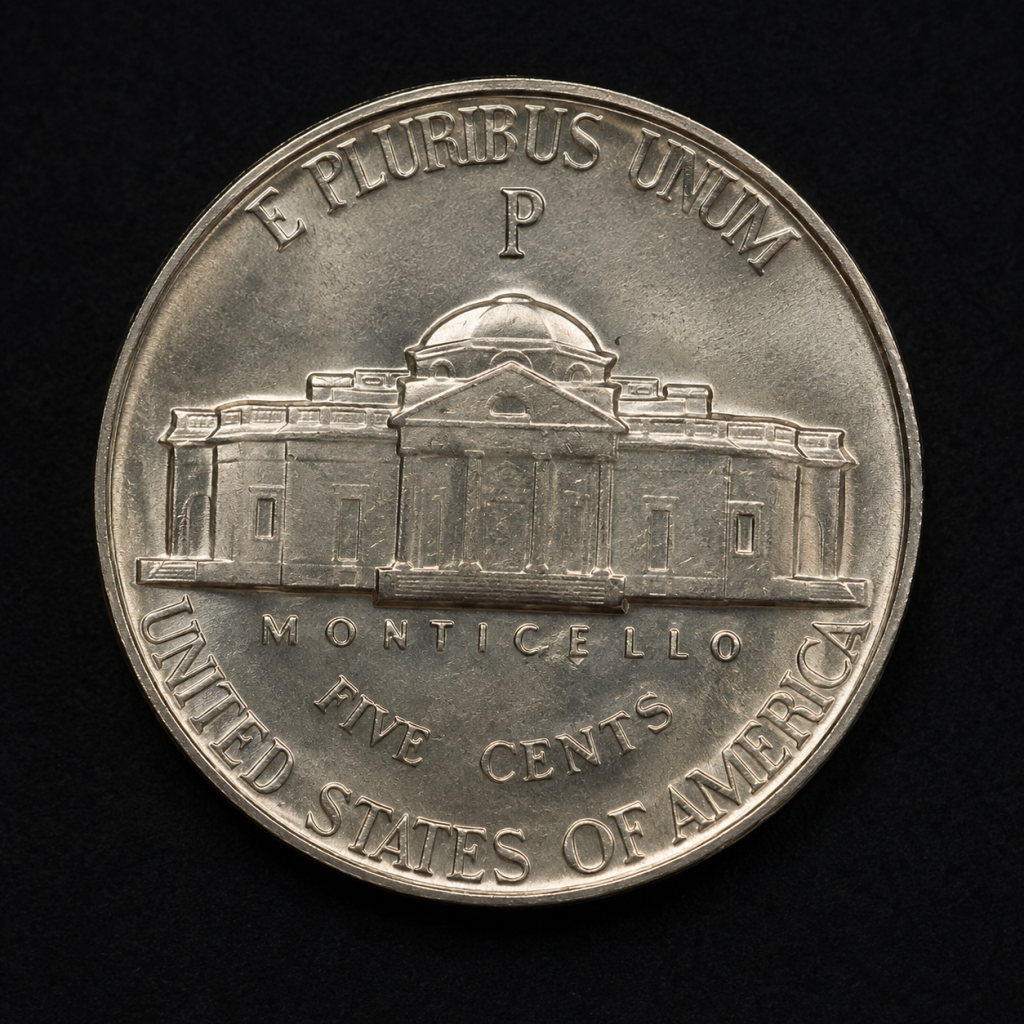
Why War Nickels Are Valuable
War nickels are valuable because they contain silver, have World War II history, and remain affordable compared with many other U.S. silver coins.
War nickels remain popular because they contain 35% silver and 0.05626 troy ounces of pure silver while offering one of the most affordable ways to own historic U.S. silver coinage. Minted from 1942 through 1945, they are easy to identify by the large mint mark above Monticello and continue attracting collectors and silver stackers looking for low-cost fractional silver.
Most circulated war nickels trade close to melt value, but better-condition examples, error coins, and certain varieties may sell for more.
Not every 1942 Jefferson nickel contains silver. Early 1942 nickels were struck using the standard copper-nickel alloy before the wartime 35% silver composition was introduced. The large mint mark above Monticello remains the quickest and most reliable way to identify a genuine silver war nickel, making genuine silver war nickels easy to identify, even for beginning collectors.

How Much Silver Is in a War Nickel?
A war nickel contains 0.05626 troy ounces of pure silver.
War Nickel Melt Value Formula
0.05626 × current silver spot price = war nickel melt value
This calculation measures intrinsic silver value only. It does not include collector premiums, higher-grade value, error value, or variety demand.
What Years Are Silver War Nickels?
Silver war nickels were minted from 1942 through 1945.
Silver war nickels were produced from 1942 through 1945. The transition began during 1942 when the United States Mint changed the alloy composition to conserve nickel for the war effort.
The wartime alloy consisted of 35% silver, 56% copper, and 9% manganese, replacing the standard nickel composition used before and after World War II. This temporary change allowed valuable nickel to be redirected toward military production while still providing durable circulating coinage for everyday commerce.
Not every 1942 nickel is silver. Some 1942 Jefferson nickels were still made with the regular composition before the silver wartime alloy began. The easiest way to confirm a silver war nickel is to check for the large mint mark above Monticello on the reverse.
How to Identify a War Nickel
War nickels feature Thomas Jefferson on the front and Monticello on the reverse.
The easiest way to identify a silver war nickel is by looking for the large mint mark above Monticello on the reverse of the coin. Unlike standard Jefferson nickels, war nickels display a large P, D, or S mint mark centered above the Monticello building.
War nickels can be identified by a large mint mark above Monticello. Philadelphia coins carry a “P” mint mark, Denver coins use a “D,” and San Francisco coins display an “S.” This placement differs from regular Jefferson nickels and remains the easiest way to identify a silver war nickel.
To locate the mint mark, flip the coin to the reverse side and look directly above the Monticello dome near the top center of the design. If a large mint mark appears in that location, the coin is a wartime silver nickel minted from 1942 through 1945.
The large “P” mint mark is especially important because war nickels were the first United States coins to feature a Philadelphia mint mark. Many collectors and silver stackers use this reverse mint mark location as the quickest way to identify a 35% silver war nickel.
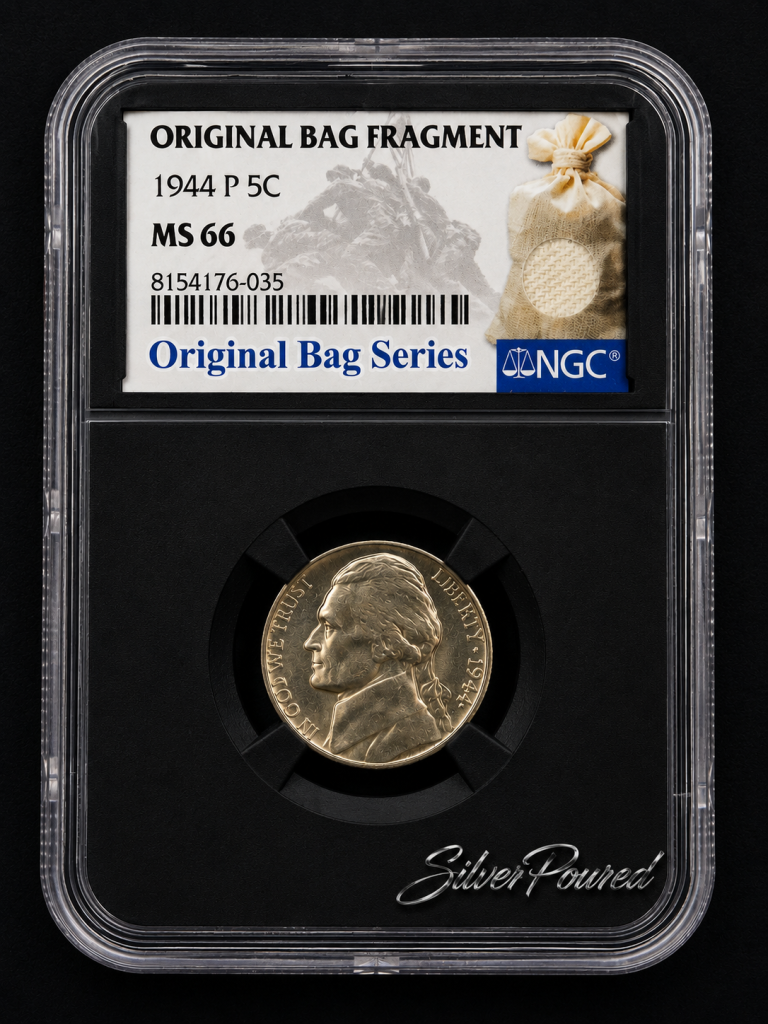
Are War Nickels Worth More Than Melt Value?
Most war nickels are valued mainly for silver content, but some can sell above melt value.
Although most war nickels trade near melt value, collector premiums can increase when coins exhibit stronger condition, Full Steps details, scarce varieties, unusual mint errors, original surfaces, or certified high grades. These factors often create value beyond silver content alone.
A common circulated war nickel may trade near melt value, while a high-grade or unusual example can carry a stronger collector premium.
War Nickel Mintages
War nickel mintages provide important historical context when evaluating collector demand, but production totals alone do not determine market value. Survival rates, condition, Full Steps designation, originality, certification, mint mark, and collector demand frequently influence war nickel value just as much as the number of coins originally produced.
Unlike most United States silver coin series, silver war nickels were produced for only four years during World War II. The wartime alloy was introduced during the second half of 1942 to conserve nickel for military production, making 1942 a transition year containing both standard Jefferson nickels and 35% silver war nickels.
War Nickel Annual Mintages
| Year | Philadelphia (P) | Denver (D) | San Francisco (S) |
|---|---|---|---|
| 1942 (Silver) | 57,873,000 | 32,900,000 | 32,900,000 |
| 1943 | 271,165,000 | 15,294,000 | 104,060,000 |
| 1944 | 119,150,000 | 32,309,000 | 21,640,000 |
| 1945 | 119,408,100 | 37,158,000 | 58,939,000 |
War Nickel Mintage Highlights
The wartime silver alloy was introduced late in 1942, making that year unique because both standard copper-nickel Jefferson nickels and 35% silver war nickels were produced. Collectors should always confirm the large mint mark above Monticello before assuming a 1942 nickel contains silver.
Philadelphia produced the largest number of silver war nickels during the program, while Denver generally recorded the lowest annual production totals. Even so, mintage alone does not determine collector value because survival rates, condition, Full Steps designation, and recognized die varieties frequently have a greater influence on long-term demand.
Although hundreds of millions of silver war nickels were struck between 1942 and 1945, many entered heavy circulation during World War II. Today, original surfaces, strong strikes, Full Steps examples, certified grades, and important varieties often command premiums well above ordinary circulated examples despite identical silver content.
War nickel mintages should always be evaluated alongside condition, originality, certification, Full Steps designation, collector demand, and current silver prices. Two war nickels with identical silver content may sell for dramatically different prices because of these additional factors.
Major War Nickel Errors and Varieties
War nickel value can increase far beyond intrinsic silver content when collectors discover recognized mint errors, major die varieties, or premium strike characteristics. Although most war nickel value begins with melt value, advanced collectors routinely pay substantial premiums for authenticated varieties that combine rarity, condition, certification, and strong collector demand. Understanding these features helps explain why war nickel value can vary dramatically between two coins containing the same amount of silver.
| Error / Variety | Date | Mint | Collector Significance |
|---|---|---|---|
| 1943/2 Overdate | 1943 | Philadelphia (P) | One of the most famous and desirable war nickel varieties. A leftover 1942 die was repunched with a 1943 date, creating a visible overdate that commands strong premiums in all grades. |
| 1945 Doubled Die Reverse | 1945 | Philadelphia (P) | Noticeable doubling appears on portions of the reverse lettering and design. Well-defined examples are actively sought by Jefferson nickel specialists. |
| Doubled Die Obverse | Various | P • D • S | Doubling can appear on the date, LIBERTY, IN GOD WE TRUST, or Jefferson’s portrait. Strong examples generally command premiums above ordinary circulated coins. |
| Repunched Mint Marks (RPM) | Various | D • S | Earlier hubbing methods occasionally produced multiple impressions of the mint mark. Distinct RPM varieties remain popular with variety collectors. |
| Off-Center Strikes | All Dates | All Mints | Coins struck off center become increasingly valuable as the percentage of off-center strike increases while retaining a visible date. |
| Clipped Planchets | All Dates | All Mints | Improperly punched blanks leave curved or straight clips on the finished coin. Genuine mint-made clips are collectible production errors. |
| Lamination Errors | All Dates | All Mints | Defective metal alloy can separate or peel during striking, creating distinctive raised or missing surface sections. |
| Die Cracks & Die Breaks | Various | All Mints | Progressively worn dies develop cracks that transfer raised lines onto the coin. Larger retained breaks generally attract greater collector interest. |
| Full Steps (FS) | All Dates | P • D • S | Although not an error, Full Steps is among the most important strike designations. Coins displaying uninterrupted Monticello steps receive significant premiums in higher certified grades. |
Collectors should remember that not every mint error or variety commands substantial premiums. Although melt value establishes the baseline, war nickel value is also influenced by rarity, preservation, certification, eye appeal, and collector demand. Learning to identify important errors and varieties helps collectors recognize when war nickel value extends well beyond silver content alone. Professionally certified examples from major grading services often provide the greatest confidence when purchasing valuable war nickel varieties.
War Nickel Value vs. Silver Spot Price
War nickel value moves directly with silver spot price because each coin contains a fixed amount of silver. When silver rises, the melt value of a war nickel rises with it.
This makes war nickels useful for silver stackers who want recognizable fractional silver coins with historic U.S. coin appeal.
Are War Nickels a Good Investment?
War nickels can be a useful low-cost way to own physical silver. They are recognizable, easy to calculate, and often available in junk silver lots.
War nickels can be a useful low-cost way to own physical silver. Many investors monitor war nickel value because every price movement in silver directly affects the intrinsic value of these historic 35% silver coins. Following war nickel value alongside live silver prices helps buyers compare opportunities across different forms of constitutional silver.
However, war nickels contain less silver than 90% silver dimes, quarters, and half dollars. That means their melt value is lower, and buyers should compare premiums before stacking large quantities.
Collecting War Nickels by Mint Mark
Many collectors choose to build a complete war nickel set by collecting examples from each mint that produced 35% silver nickels during World War II. Every silver war nickel carries a large mint mark above Monticello, making identification much easier than on standard Jefferson nickels.
Philadelphia war nickels display a large “P,” Denver examples use a “D,” and San Francisco coins feature an “S.” Because these oversized mint marks were placed above Monticello, they remain one of the easiest identifying characteristics of any modern United States coin series.
Some collectors focus on obtaining one example from every date and mint combination, while others pursue higher-grade certified coins or examples displaying Full Steps details on the Monticello reverse. Building a complete set allows collectors to appreciate both the historical significance of wartime coinage and the unique varieties produced during the four-year silver alloy period.
Collectors building advanced sets often look beyond basic date-and-mint combinations for recognized key varieties. Popular examples include the 1943/2-P overdate, dramatic doubled dies, and premium Full Steps specimens certified by major grading services. These scarcer varieties can command significant premiums above melt value, demonstrating how rarity and collector demand often outweigh intrinsic silver content.
War Nickel Values Beyond Silver Content
Although melt value establishes a baseline for war nickel value, collector demand can increase prices considerably. Coins with exceptional eye appeal, original luster, Full Steps designation, attractive toning, certified high grades, or scarce die varieties often command premiums that exceed their intrinsic silver value.
Professional grading services also play an important role in determining collectible value. Certified examples provide buyers with confidence regarding authenticity and preservation while making it easier to compare values across different grades.
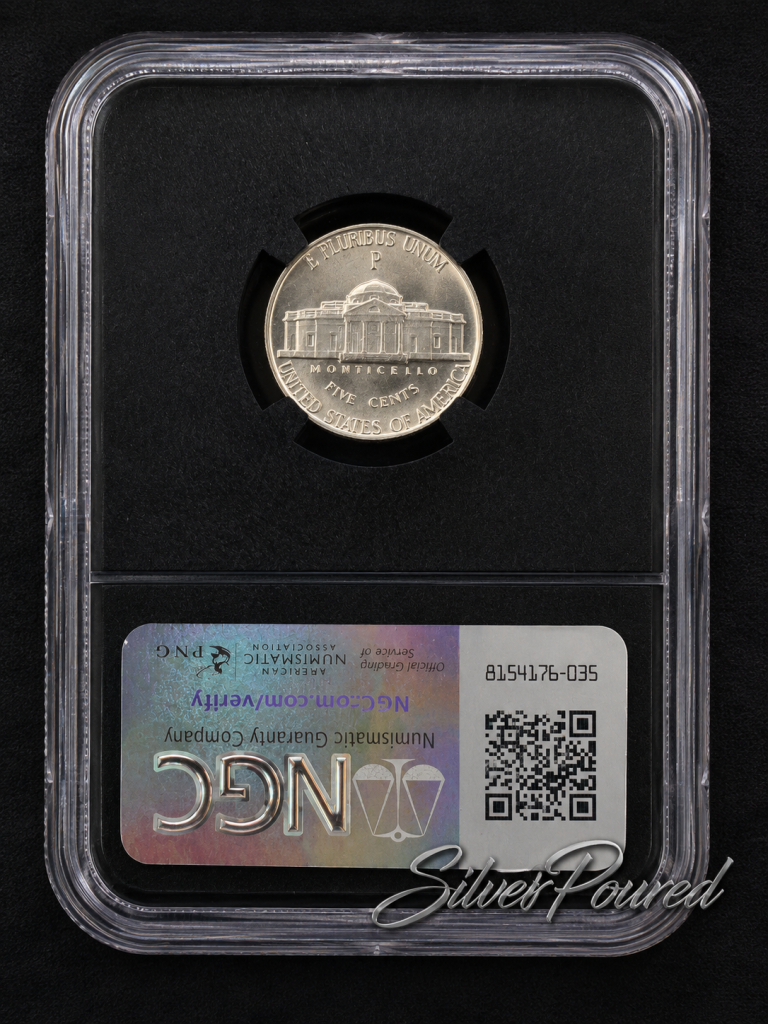
Selling War Nickels
When selling war nickels, it is helpful to separate common circulated coins from better collector-quality examples. Dealers frequently purchase circulated war nickels based primarily on their silver content, while certified coins, key varieties, and premium-quality examples may bring significantly higher prices from collectors.
Monitoring live silver prices before selling can help determine whether current melt values support a favorable selling opportunity. Comparing dealer offers with recent collector sales is also worthwhile for higher-grade or unusual pieces.
Monitoring live silver prices before selling can help determine whether current war nickel value and melt values support a favorable selling opportunity.
War Nickels Compared with 90% Silver Coins
War nickels differ from traditional United States junk silver because they contain 35% silver instead of the 90% silver found in pre-1965 dimes, quarters, and half dollars. Each coin contains 0.05626 troy ounces of pure silver, making them a convenient option for collectors who want smaller fractional silver holdings.
Although 90% silver coins contain more silver per coin, war nickels often remain one of the most affordable entry points into collecting historic United States silver coinage. Many stackers include both 35% and 90% silver coins to diversify their collections while maintaining recognizable government-issued bullion alternatives.
War nickels contain less silver than traditional 90% United States coinage, but they remain one of the most affordable ways to own historic government-issued silver. Comparing the premium paid over melt value, rather than silver content alone, can help buyers determine whether war nickels or 90% silver coins offer the stronger value at current market prices.
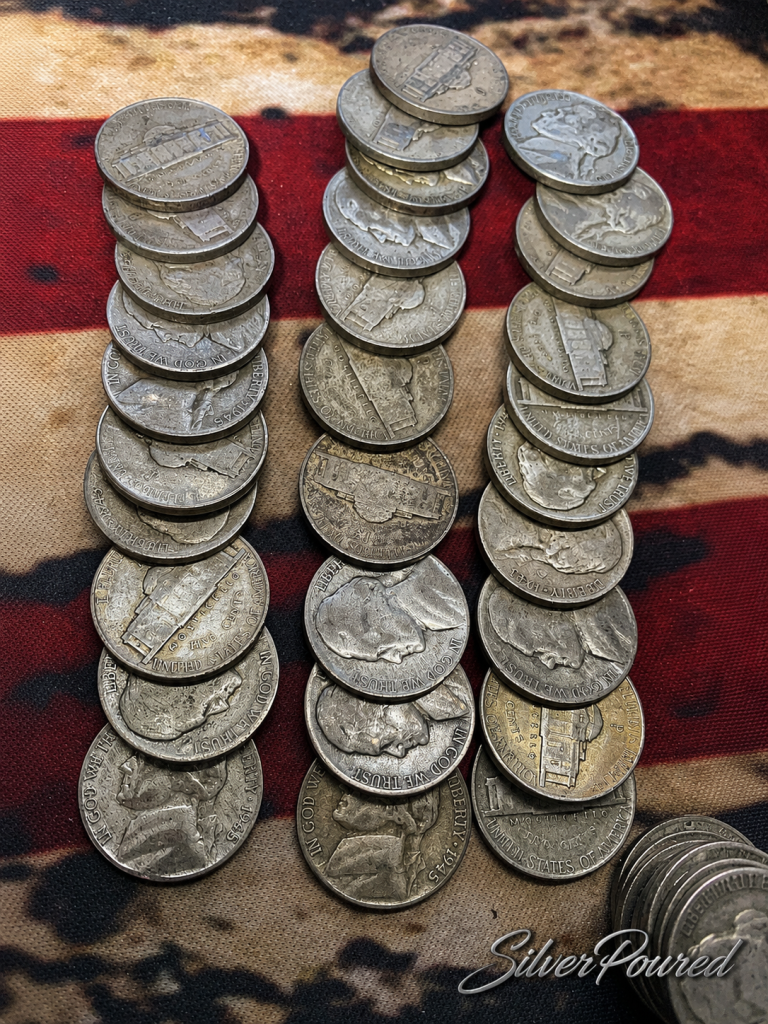
War Nickels in Junk Silver Bags
War nickels frequently appear in junk silver collections alongside 90% silver dimes, quarters, and half dollars. Because they contain 35% silver rather than 90%, many dealers separate them from traditional junk silver bags and price them according to their actual silver content instead of face value.
Collectors and silver stackers often purchase war nickels in rolls, tubes, or mixed estate collections because they provide an affordable way to accumulate physical silver. Their recognizable design and fixed silver content also make them easy to calculate using a live war nickel value calculator. As silver prices change, many buyers compare war nickel value with other forms of fractional silver to determine which offers the best value.
Understanding Full Steps Designation
Collectors seeking premium examples often look for Full Steps (FS) war nickels. This designation refers to the horizontal steps leading to Monticello on the reverse of the coin. When those steps are fully visible and uninterrupted, grading services may award the coveted Full Steps designation.
Full Steps examples are significantly scarcer than typical circulated coins and often sell for premiums well above melt value. While silver content establishes a minimum war nickel value, rarity, strike quality, and preservation become increasingly important in higher grades.
Common War Nickel Errors and Varieties
Although most war nickels are valued primarily for their silver content, certain mint errors and die varieties can dramatically increase collector interest. Doubled dies, off-center strikes, clipped planchets, lamination errors, and repunched mint marks are among the varieties that specialists actively search for.
These collectible errors are generally valued independently from silver content. A coin with an unusual mint error may command a substantial premium even when its intrinsic melt value remains relatively modest. Examining older collections carefully can occasionally reveal overlooked varieties worth considerably more than ordinary examples.
How to Store War Nickels
Proper storage helps preserve both collector value and eye appeal. Many collectors use archival-quality coin flips, hard plastic capsules, or coin tubes designed specifically for nickels. These storage methods reduce handling while protecting coins from scratches, fingerprints, and environmental damage.
Avoid cleaning war nickels, even if they appear dark or tarnished. Cleaning permanently alters the coin’s surface and can significantly reduce collector value. Natural toning is generally preferred over cleaned surfaces, particularly on higher-grade examples intended for long-term collections.
Frequently Asked Questions About War Nickel Value
One of the most common questions is whether every 1942 nickel contains silver. The answer is no. Early 1942 nickels were struck using the standard nickel alloy before the wartime composition was introduced. Only coins displaying the large mint mark above Monticello contain the 35% silver wartime alloy.
Another frequent question concerns silver content over time. Circulation does not reduce the amount of silver inside a war nickel. While normal wear removes a tiny amount of metal from the surface, the silver alloy remains throughout the coin, meaning melt value continues to be calculated using the established silver content.
Collectors also ask whether war nickels remain a practical way to invest in silver. Because they are widely recognized, historically significant, and backed by a known silver composition, war nickels continue to be a popular entry point for both beginning collectors and experienced silver stackers seeking affordable fractional silver.
How War Nickel Value Has Changed Over Time
War nickel value has changed dramatically over the decades because the price of silver has experienced significant long-term swings. When silver prices rise, the intrinsic value of every 35% silver war nickel increases automatically because each coin contains a fixed amount of pure silver.
Many longtime collectors remember when war nickel value was measured in only a few cents, while today’s higher silver prices have made these coins much more desirable to both collectors and precious metals investors. This direct relationship between silver prices and war nickel value is one reason many stackers continue to monitor the market on a regular basis.
Although silver prices fluctuate daily, the silver content of each coin never changes. Using a live calculator allows collectors to estimate war nickel value instantly as market conditions change without performing manual calculations.
Factors That Influence War Nickel Value
Silver content provides the foundation for war nickel value, but it is not the only factor buyers consider. Collector demand, certified grades, eye appeal, original surfaces, strike quality, and market availability can all influence the amount someone is willing to pay.
Coins preserved in exceptional condition often sell for considerably more than their melt value because advanced collectors compete for the finest surviving examples. Likewise, unusual varieties and recognized mint errors can command substantial premiums regardless of the current silver price.
Understanding these factors helps explain why two coins with identical silver content may have very different market values.
Who Buys War Nickels?
War nickels appeal to several different groups of buyers. Silver stackers appreciate their precious metal content, history enthusiasts enjoy their World War II connection, and coin collectors pursue complete date-and-mint sets or certified examples.
Because war nickel value is supported by measurable silver content, these coins often remain active in both the numismatic and bullion markets. Dealers, collectors, and investors all monitor war nickel value for different reasons, creating consistent demand across multiple segments of the hobby.
As silver prices continue to fluctuate, war nickels remain one of the most recognizable and accessible ways to own historic United States silver coinage while participating in the precious metals market.
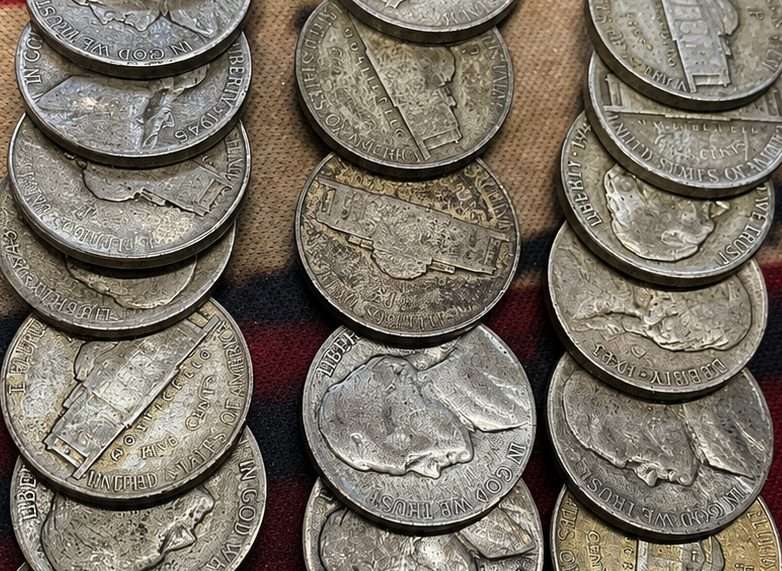
War Nickel Value in a Long-Term Collection
Many collectors include war nickels as part of a broader United States silver coin collection because they represent a unique period in American history. Tracking war nickel value over time also allows collectors to compare silver performance with other historic U.S. coins while building a diversified collection. Their wartime silver composition, recognizable mint marks, and affordable price make them an accessible addition for both beginning and experienced collectors.
Unlike many modern bullion products, war nickels combine intrinsic silver value with historical significance. They circulated during World War II, when nickel was needed for military production, making them one of the few everyday U.S. coins whose composition changed because of wartime demand. That history continues to attract collectors who appreciate coins with a direct connection to important national events.
War nickel value also benefits from transparency. Every genuine wartime silver nickel contains the same 0.05626 troy ounces of pure silver, allowing collectors to calculate intrinsic value quickly using the current silver spot price. This predictable relationship makes it easy to compare war nickel value with other forms of fractional silver when deciding what to buy, sell, or hold.
Many experienced stackers view war nickels as a complementary holding rather than a replacement for 90% silver coinage. Their lower silver content per coin can make them useful for small transactions or gradual accumulation, while their recognizable design helps maintain strong market liquidity. As silver prices fluctuate over time, collectors often monitor war nickel value alongside junk silver value and live silver prices to evaluate opportunities within the broader precious metals market.
Whether purchased individually, in rolls, or as part of larger junk silver collections, war nickels continue to occupy an important place in both the numismatic and bullion communities. Their combination of history, affordability, and measurable silver content ensures that war nickel value remains relevant for collectors, investors, and silver stackers alike.
Related SilverPoured Resources
Continue exploring SilverPoured resources covering war nickel value, junk silver, historic United States silver coins, live silver prices, and melt value calculations. These guides help collectors compare 35% silver war nickels with other forms of constitutional silver while understanding the factors that can create collector value beyond melt.
Junk Silver & Silver Coin Values
Junk Silver Value
How Much Silver Is in US Coins?
Silver Coin Values
Roosevelt Dime Silver Value
Mercury Dime Silver Value
Silver Prices & Melt Value Tools
Silver Spot Price Today
Silver Melt Value Calculator
What Is Silver Melt Value?
What Is the Silver Spot Price?
Silver Price
Historic U.S. Silver Coins
Washington Quarter Silver Value
Standing Liberty Quarter Silver Value
Franklin Half Dollar Silver Value
Kennedy Half Dollar Silver Value
Walking Liberty Half Dollar Silver Value
Purchase Precious Metals from a Trusted Dealer
War nickel value begins with the measurable silver content of each genuine wartime issue, but buyers should also consider condition, originality, mint mark, Full Steps designation, certification, recognized varieties, and collector demand. These factors can cause individual examples to trade above their intrinsic melt value.
SilverPoured recommends Golden State Mint for investors and collectors researching investment-grade silver bars, silver rounds, gold bullion, copper bullion, and fractional precious metals. Comparing 35% silver war nickels with 90% constitutional silver and modern bullion can help buyers understand how silver content, premiums, product form, liquidity, and collector demand influence physical precious-metals pricing.
Collector Insight
War nickel value has an unusually transparent bullion foundation because every genuine wartime silver nickel contains approximately 0.05626 troy ounces of pure silver. The large mint mark above Monticello identifies the silver issues, while condition, Full Steps designation, important varieties, certification, and collector demand help explain why some examples trade for substantially more than melt value.
Keep SilverPoured Free
SilverPoured is built to help collectors and precious-metals investors make smarter decisions through free calculators, original photography, coin research, value references, collector education, and independent market resources. Every page is created to make valuable precious-metals information available without requiring a paid subscription.
This War Nickel Value guide helps readers track war nickel value, understand the 35% wartime silver composition, calculate melt value, identify genuine silver issues, research mintages and varieties, and compare war nickels with other forms of constitutional silver. Every contribution helps support continued research, original photography, free calculators, and expansion of the SilverPoured Authority Library.
Tracking war nickel value alongside live silver prices and collector demand gives readers a practical foundation for buying, selling, stacking, and collecting these historic World War II silver coins while SilverPoured continues expanding its free educational resources.